
How to Verify a Legitimate Compounding Pharmacy

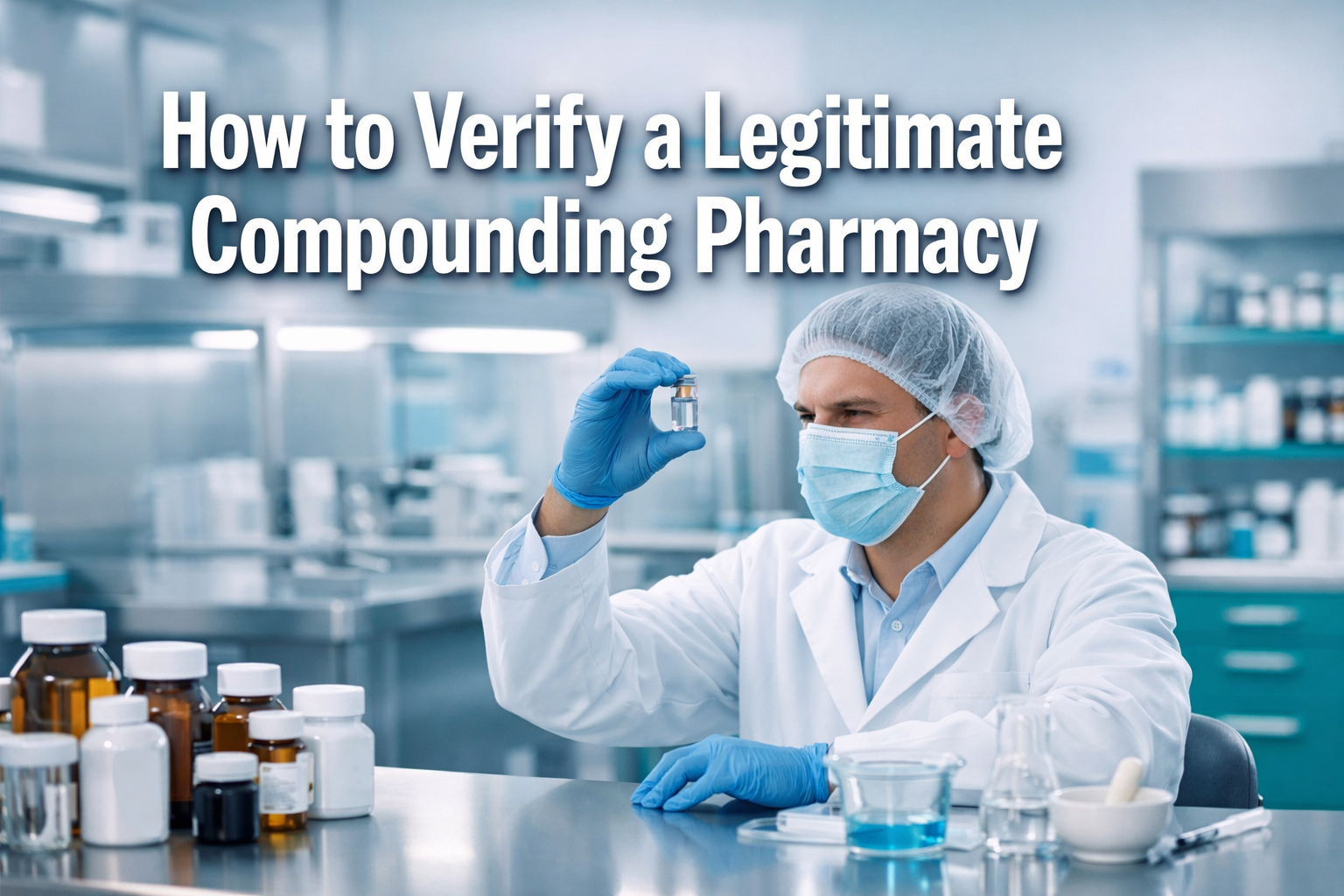
Don’t let a slick website fool you. In March 2026, the FDA issued dozens of warning letters to companies selling what they claimed was ‘generic’ GLP-1, only to find inconsistent dosages and unauthorized ingredients.
If you want to avoid the risks of counterfeit meds, you need to know exactly how to verify a legitimate compounding pharmacy before you hit ‘buy.’ We’ve broken down the three essential credentials—state licensure, pharmacist availability, and batch-specific lab results—that separate life-changing medicine from dangerous imitations.
Quick Answer: To verify a legitimate compounding pharmacy, check its active state pharmacy board license in your state, confirm PCAB or NABP accreditation, request Certificates of Analysis for potency testing, and ensure it requires a valid prescription from a licensed provider. A pharmacy that skips any of these steps is a red flag you should not ignore.
Key Takeaways
- Every legitimate compounding pharmacy must hold an active license in the state where you live, not just where it operates.
- PCAB accreditation is the gold standard for compounding pharmacies; NABP’s Compounding Pharmacy Accreditation is a strong second.
- Always request a Certificate of Analysis (COA) before accepting any compounded medication. Refusal to share one is a serious warning sign.
- The FDA warned 30 telehealth companies in 2023–2024 for illegally marketing compounded GLP-1 drugs like semaglutide and tirzepatide. [5]
- Compounded drugs are not FDA-approved, meaning no federal safety review of their potency, quality, or effectiveness occurs before they reach you. [5]
- Legitimate pharmacies always require a real prescription from a licensed provider who has reviewed your medical history.
- Beyond-use dates must be clearly labeled based on USP guidelines — not guessed.
- Your prescribing provider is often your best resource for a trusted pharmacy referral. [8]
Why This Question Matters More Than Ever in 2026
Thousands of people searching for affordable GLP-1 weight loss medications like compounded semaglutide and tirzepatide are landing on websites that look professional but operate outside the law. The price difference between brand-name GLP-1 drugs and compounded versions can be dramatic — sometimes $800 or more per month — which makes the temptation to buy from the cheapest source very real.
But here’s what that price gap can hide: subpotent doses, contaminated vials, and pharmacies that have never passed a single inspection. Knowing how to verify a legitimate compounding pharmacy is not a bureaucratic checkbox. It is the difference between a medication that works and one that harms you.
This guide walks you through every verification step, explains what the red flags actually look like, and helps you find affordable compounded GLP-1 options without gambling with your health.
What Is a Compounding Pharmacy and Why Are GLP-1 Users Turning to Them?
A compounding pharmacy custom-makes medications that are not commercially available in the exact form, dose, or combination a patient needs. For GLP-1 weight loss drugs, compounding became especially relevant when brand-name semaglutide (Ozempic, Wegovy) and tirzepatide (Mounjaro, Zepbound) faced severe shortages in 2023 and 2024.
During a federally declared drug shortage, FDA regulations allow state-licensed compounding pharmacies to produce copies of shortage drugs under Section 503A of the Food, Drug & Cosmetic Act. [7] This opened a legal — but tightly regulated — window for patients to access compounded semaglutide and tirzepatide at significantly lower prices.
If you want to understand the full cost landscape before choosing a compounding pharmacy, our guide on semaglutide pricing and how to get the best GLP-1 deal breaks down what you should realistically expect to pay in 2026.
The key distinction: compounded drugs are not FDA-approved. The FDA does not review their safety, effectiveness, or manufacturing quality before they reach you. [5] That is why verifying the pharmacy yourself is essential.
The 3 Most Affordable GLP 1 Semaglutide Without Insurance “TrumpRX (2026 Ranked)
🥇 #1 Best Overall: Zepbound (Triple-Action Option)
🥇 Best Overall (9.9/10)
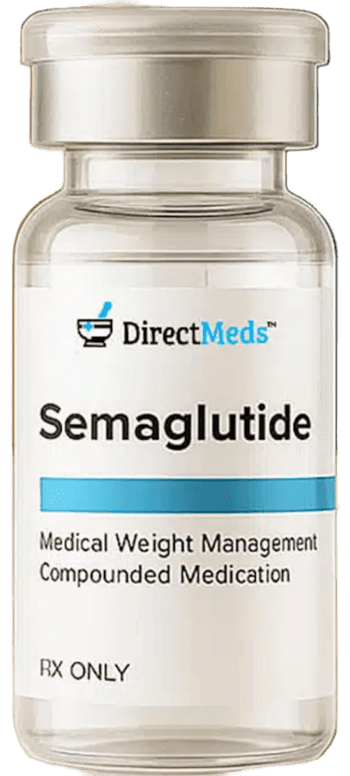
DirectMeds GLP1 provides a budget-friendly alternative to Ozempic/Wegovy while maintaining strong appetite control and weekly fat loss results. Everything is included—from telehealth visits to medication shipping—making it ideal for people wanting premium results at the lowest cost.
DirectMeds is a LegitScript-certified telehealth platform that connects patients with licensed U.S. physicians who evaluate whether compounded GLP-1 medications are clinically appropriate.
It is one of the most established providers in this space and is particularly well-suited to patients who want high-touch clinical oversight without paying brand-name prices.
How it works: Complete a secure online health intake form. A licensed medical provider reviews your profile and determines eligibility. If approved, your prescription is sent to a certified U.S. compounding pharmacy and medication is shipped directly to your door. All-inclusive pricing covers medical consultation, medication, and 24/7 support — no surprise charges.
◉ Clinical Note: DirectMeds’ LegitScript certification is a meaningful differentiator in this market. It requires compliance with pharmacy laws, prescription standards, and advertising guidelines — reducing the risk of receiving substandard compounded medications. For patients new to telehealth GLP-1 programs, this certification provides a meaningful layer of accountability. — Dr. Sarah Jenkins, Co-Author
🎯 Ideal for: Patients who want an established, verified provider with strong clinical support and are comfortable paying slightly more than the absolute floor price for greater peace of mind.
🥈#2 Best for Long-Term Cost Certainty: MyStart GLP-1
🥈 Silver Standard — Best Flat-Rate Pricing
- Rating: ⭐️⭐️⭐️⭐️⭐️ – (9.9/10) High Potency GLP1
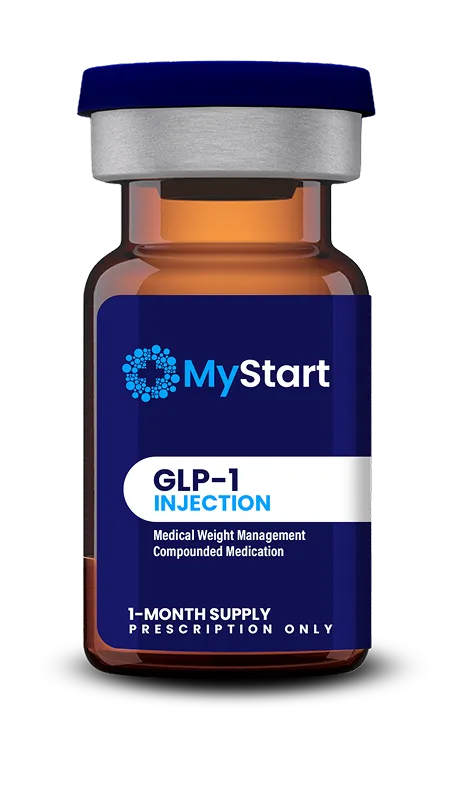
MyStart GLP-1 offers a smooth, beginner-friendly GLP-1 program using FDA-backed medications and simple weekly injections or tablets. Great for people wanting easy onboarding, rapid fat loss, and physician oversight—without the high price of traditional clinics.
MyStart GLP-1 uses a unique flat-rate membership model where your medication cost is fixed regardless of how high your therapeutic dose increases over time. For patients who will be on GLP-1 therapy for 12 months or more, this pricing structure can save $600 to $1,800 annually compared to platforms that charge progressively more as doses escalate.
How it works: Pay a monthly membership ($79) plus a flat medication fee (e.g., $175 for compounded semaglutide). The combined total stays fixed at $254 per month from starter dose through maximum maintenance dose. Medical consultation, all medication, dedicated care team access, and nutritional coaching are included.
◉ Clinical Note: The flat-rate model is financially sound for long-term GLP-1 use. GLP-1 therapy is most effective when sustained for 12+ months, and avoiding dose-related price increases removes a common reason patients discontinue treatment early. The included nutritional coaching adds meaningful clinical value, as sustainable weight loss requires both medication and lifestyle change. — Dr. Sarah Jenkins, Co-Author
🎯 Ideal for: Patients committed to long-term treatment (12+ months) who want price certainty as doses increase, and who value behavioral coaching as part of their program.
Best for: People who want a more advanced GLP-1 approach at a reduced price. 👉 SKIP THE WAITLIST. START FOR $199
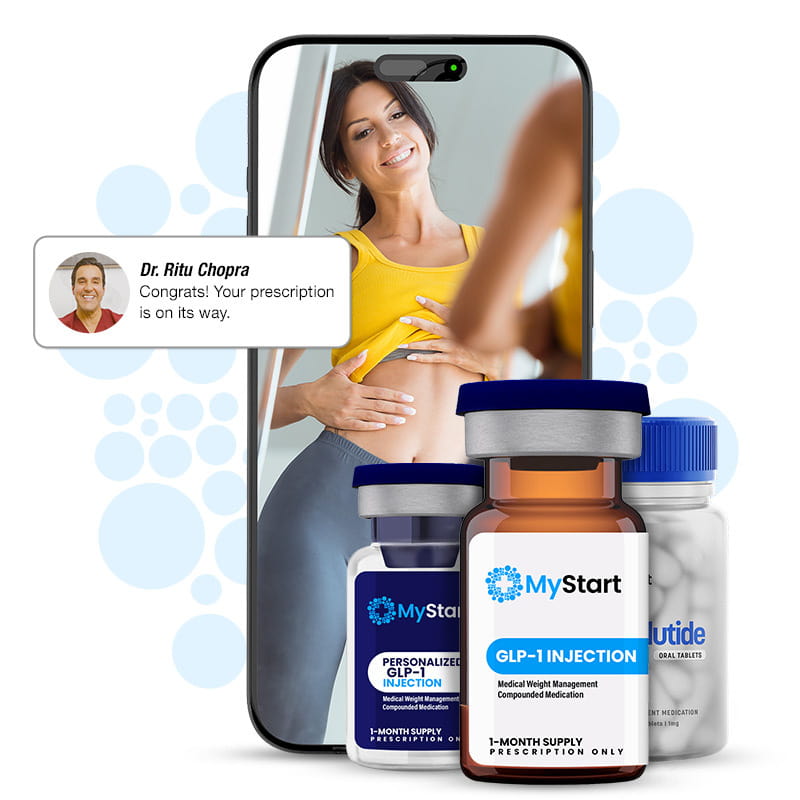
Thousands of people are losing weight with MyStart GLP-1 medications. People like you are transforming their lives, feeling better, and looking their best with the help of GLP-1 (Dual-Action Option) medications.
🥉 #3 Best for Absolute Lowest Entry Cost: MEDVi GLP-1
🥉 Bronze Standard — Lowest Entry Price
- Rating: ⭐️⭐️⭐️⭐️⭐️ – (9.9/10) Excellent
MEDVi GLP-1 delivers fast, medical-grade weight loss with doctor-guided dosing and personalized coaching. Patients report losing 1–3 lbs per week with steady appetite control and reduced cravings. Qualify in minutes and access 600+ U.S. doctors with no membership fees.
MEDVi offers the most accessible entry price point in the compounded GLP-1 market, with starter doses beginning as low as $99 per month and a published price-match guarantee.
The platform provides both injectable and oral compounded GLP-1 options, giving prescribers flexibility to match the medication form to the patient. Clinical follow-up is primarily quarterly rather than monthly, which keeps costs lower but means less frequent dose adjustment guidance than the two options above.
How it works: Complete an online consultation. If qualified, your prescription is sent to a partner compounding pharmacy and medication is shipped to you within 48 hours. Customer support is available, and clinical check-ins are typically quarterly. No membership fees are charged on top of medication pricing.
◉ Clinical Note: MEDVi is a legitimate, cost-effective option for budget-focused patients who have researched compounded medications and are comfortable with less frequent clinical contact. Always ask your provider which specific compounding pharmacy fulfills your prescription — a reputable 503A or 503B state-licensed pharmacy is non-negotiable for safety. — Dr. Sarah Jenkins, Co-Author
🎯 Ideal for: Budget-focused patients who have done their research on compounded GLP-1 medications, are comfortable managing more of their own care independently, and want the lowest possible entry price with a price-match guarantee.
How to Verify a Legitimate Compounding Pharmacy: The Core Checklist
Verifying a compounding pharmacy takes less than 20 minutes if you know where to look. Here is the step-by-step process.
Step 1: Confirm State Pharmacy Board Licensure
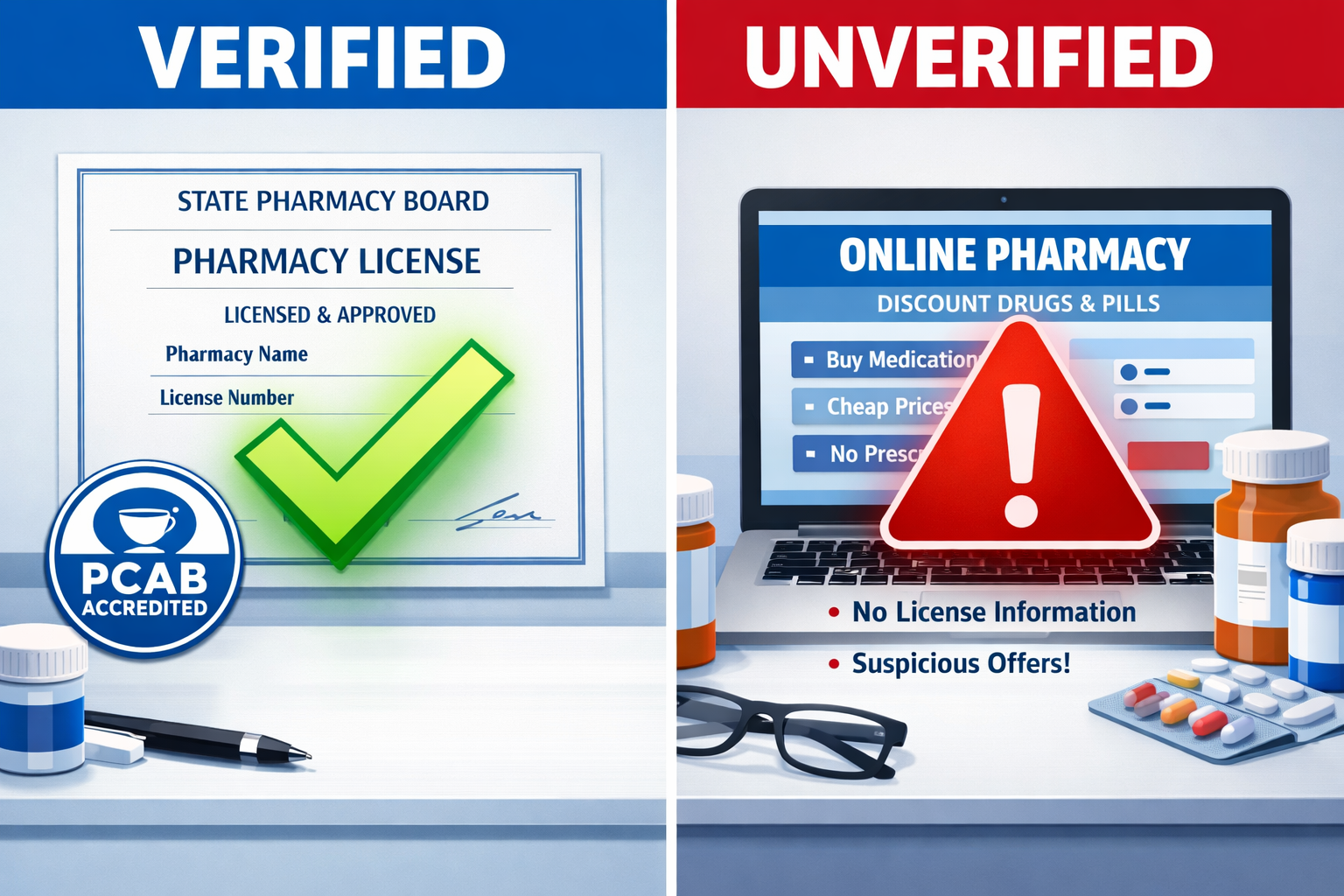
Every legitimate compounding pharmacy must hold an active license from the state board of pharmacy in your state — not just the state where the pharmacy is physically located. A pharmacy must be licensed in your state to legally ship medications to you. [3]
How to check:
- Go to your state’s board of pharmacy website (search “[your state] board of pharmacy license lookup”).
- Search the pharmacy by name or license number.
- Confirm the license status shows “active.”
- Check for any disciplinary actions, suspensions, or consent orders. [1]
⚠️ Common mistake: Many patients only check whether the pharmacy is licensed in its home state. That is not enough. If it is not licensed in your state, the shipment is illegal regardless of how legitimate the pharmacy looks. [2]
Step 2: Verify PCAB or NABP Accreditation
Accreditation is voluntary, but it is the clearest signal that a pharmacy has been independently inspected and meets rigorous quality standards.
How to Verify Pharmacy Legitimacy & Accreditation
| Accreditation Body | What It Covers | How to Verify |
| PCAB (ACHC) | Facility design, staff training, potency testing, and sterility standards. | Search the ACHC Directory (Select “Compounding Pharmacy”). |
| NABP Accreditation | Full compliance with USP <795>, <797>, and <800> standards. | Use the NABP Verify tool to request status. |
| The Joint Commission | Medication Compounding Certification for hospital and home-infusion sites. | Use the Quality Check search to view certification reports. |
PCAB accreditation is widely considered the gold standard. Pharmacies earn it only after full on-site inspections covering everything from facility design to how staff are trained. [1] NABP’s 3-year certification specifically demonstrates compliance with USP standards that govern non-sterile, sterile, and hazardous drug compounding. [6]
Choose a PCAB- or NABP-accredited pharmacy if: you are ordering injectable medications like compounded semaglutide or tirzepatide, which require sterile compounding conditions.
Step 3: Request a Certificate of Analysis (COA)
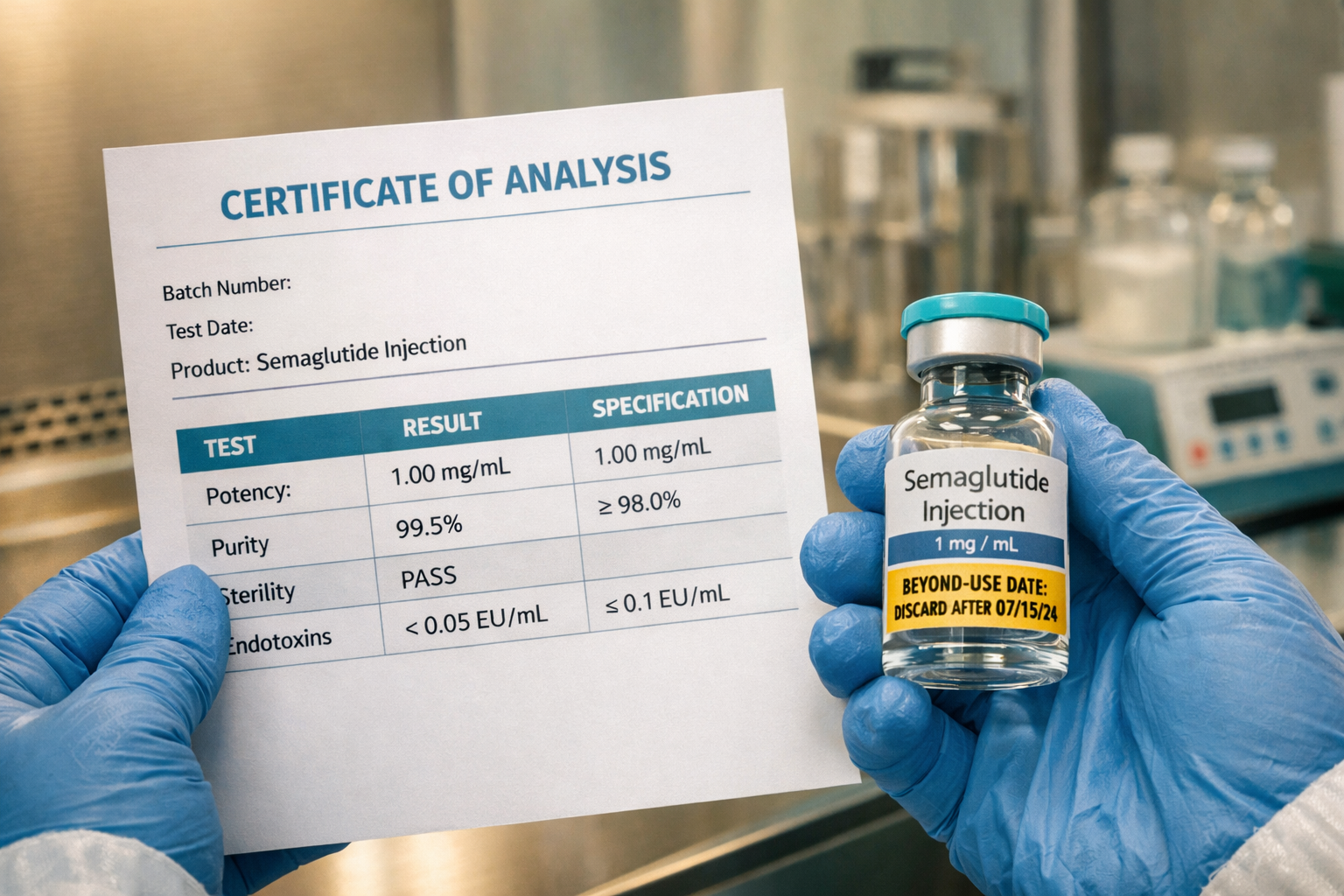
A Certificate of Analysis is a lab document that confirms the compounded medication contains the active ingredient at the labeled dose. Any legitimate pharmacy will provide one on request. [1]
What to look for in a COA:
- Potency result (should match the labeled dose within an acceptable range)
- Sterility testing results (critical for injectables)
- Endotoxin testing (for sterile preparations)
- The name of the third-party laboratory that ran the tests
- A batch or lot number that matches your medication
Pharmacies that refuse to share COAs, claim the results are proprietary, or provide documents from in-house labs only (without third-party verification) may be hiding quality problems. [1]
Step 4: Check Beyond-Use Dating
Compounded medications have shorter shelf lives than commercially manufactured drugs. A legitimate pharmacy labels every compounded product with a beyond-use date (BUD) based on USP guidelines and actual stability testing — not an arbitrary guess. [1]
If a pharmacy ships you a medication without a clearly labeled BUD, or if the BUD seems unusually long for a compounded product, contact your prescriber before using it.
Step 5: Confirm a Valid Prescription Is Required
This is non-negotiable. Legitimate compounding pharmacies require a valid prescription from a licensed healthcare provider who has conducted a real clinical evaluation — meaning they reviewed your medical history, current medications, and health status. [1]
Red flags that suggest an illegal operation:
- No prescription required at checkout
- “Prescriptions” issued after answering a 2-minute online quiz with no provider review
- Rubber-stamp approvals where no licensed provider actually evaluates your case
The FDA specifically cited this pattern when it issued warning letters to 30 telehealth companies between 2023 and 2024 for illegally marketing compounded GLP-1 products. [5]
For guidance on finding a legitimate provider who can prescribe GLP-1 medications properly, see our article on how to get semaglutide with a real prescription in 2026.
What Are the Biggest Red Flags of an Illegitimate Compounding Pharmacy?
A pharmacy can look credible online while operating well outside legal boundaries. Watch for these specific warning signs.
🚩 Red flags to avoid:
- No verifiable state license in your state or the pharmacy’s home state
- No accreditation (PCAB, NABP, or Joint Commission) and no explanation for why
- Refuses to provide COAs or provides documents without third-party lab verification
- Sells without a prescription or uses a telehealth partner that approves everyone instantly
- Unusually low prices with no transparency about sourcing or testing
- No physical address or a PO box listed as the pharmacy location
- Claims the compounded drug is “FDA-approved” — compounded drugs are never FDA-approved [5]
- No licensed pharmacist contact information available
The FDA’s enforcement actions in 2023 and 2024 specifically targeted pharmacies and telehealth companies making false claims about compounded semaglutide and tirzepatide, including misrepresenting the drugs as equivalent to brand-name products. [4][5]
How to Verify a Legitimate Compounding Pharmacy for GLP-1 Weight Loss Drugs Specifically
GLP-1 medications present a unique verification challenge because they are injectable sterile preparations. The standards for sterile compounding are stricter than for oral medications, and the consequences of a contaminated or subpotent injectable are more serious.
Additional checks for compounded GLP-1s:
- Confirm the pharmacy operates under USP <797> standards for sterile compounding. [6]
- Ask whether the pharmacy is a 503A or 503B facility. A 503B outsourcing facility is registered with the FDA and subject to current Good Manufacturing Practice (cGMP) standards — a higher bar than 503A pharmacies.
- Verify that the active pharmaceutical ingredient (API) used is from an FDA-registered supplier.
- Ask specifically about endotoxin and sterility testing for each batch.
For a broader look at how GLP-1 medications work and what makes them effective for weight loss, our complete GLP-1 medication guide covers the clinical details in plain language.
If cost is a primary concern, our guide to the most affordable GLP-1 options without insurance identifies providers that use verified compounding pharmacies while keeping monthly costs manageable.
Can I Trust Telehealth Companies That Offer Compounded GLP-1s?
Some telehealth companies are legitimate partners of accredited compounding pharmacies. Others are not. The FDA’s 2023–2024 enforcement actions drew a clear line between the two. [5]
How to evaluate a telehealth GLP-1 provider:
- Ask which compounding pharmacy fills their prescriptions and verify that pharmacy independently using the steps above.
- Confirm a licensed provider (MD, DO, NP, or PA) reviews your case — not just an algorithm.
- Check whether the telehealth company is transparent about the pharmacy’s accreditation status.
- Look for published COAs or a clear policy stating they are available on request.
Our detailed MEDVi semaglutide weight loss review is one example of how we evaluate specific GLP-1 telehealth providers against these standards.
Also worth reading: our analysis of GLP-1s without insurance in 2026 explains which providers offer the best combination of verified sourcing and affordable pricing.
What Does the FDA Say About Compounded GLP-1 Medications?
The FDA’s position is clear and has not changed: compounded drugs are not FDA-approved, and the agency does not review their safety, effectiveness, or quality before they reach patients. [5]
Between 2023 and 2024, the FDA issued warning letters to 30 telehealth companies for making false or misleading claims about compounded GLP-1 products. FDA Commissioner Marty Makary stated directly that “compounders should not try to compound drugs in a way that circumvents FDA’s approval process.” [5]
The agency also stepped up enforcement against pharmacies marketing compounded semaglutide and tirzepatide as equivalent to brand-name drugs, citing violations of the FD&C Act. [4]
What this means for you: using a compounded GLP-1 from a properly licensed and accredited pharmacy is legal and can be safe. Using one from an unverified source is a legal and health risk that the FDA is actively working to eliminate.
Frequently Asked Questions
Q: How do I find my state’s pharmacy board website? Search “[your state name] board of pharmacy” and look for the .gov domain. Most state boards have a public license lookup tool that takes under 5 minutes to use.
Q: Is PCAB accreditation required by law? No, PCAB accreditation is voluntary. But its absence — especially for a pharmacy selling injectable compounded medications — is a meaningful red flag worth investigating further. [1]
Q: Can a compounding pharmacy ship to any state? Only if it holds an active license in the destination state. A pharmacy licensed in Texas cannot legally ship to you in Florida unless it also holds a Florida license. [3]
Q: What is a 503B outsourcing facility and is it safer than a 503A pharmacy? A 503B facility is registered with the FDA and must follow cGMP standards, which are stricter than the state-board oversight that applies to 503A pharmacies. For sterile injectables like compounded semaglutide, a 503B source generally carries lower risk.
Q: Should I ask my doctor which compounding pharmacy to use? Yes. Healthcare providers who frequently prescribe compounded medications are usually familiar with trustworthy pharmacies and can give you a direct recommendation. [8]
Q: What if a pharmacy says its products are FDA-approved? That claim is false. Compounded medications are never FDA-approved. A pharmacy making this claim is either misinformed or deliberately misleading you, and you should not use it. [5]
Q: How do I know if a COA is legitimate? Look for the name and contact information of the third-party laboratory, a batch number, and specific test results with numeric values. A legitimate COA is not a generic document — it is specific to a lot of medication you can trace.
Q: Are compounded GLP-1s legal in 2026? Compounded GLP-1s occupy a complex legal space in 2026 following the resolution of the FDA shortage designation for semaglutide and tirzepatide. Consult your prescriber and verify current FDA guidance, as the legal status of compounding specific GLP-1 drugs can change based on shortage status.
Q: What is the difference between compounded semaglutide and brand-name Ozempic? Brand-name Ozempic and Wegovy are FDA-approved with verified manufacturing standards. Compounded semaglutide is custom-made by a pharmacy, is not FDA-approved, and varies in quality depending on the pharmacy’s standards and testing practices.
Q: Can I get GLP-1 medications covered by insurance instead of using a compounding pharmacy? Possibly. Our guide on how to get GLP-1 medications covered by insurance walks through the documentation and prior authorization steps that give you the best chance of coverage.
Conclusion: Verify First, Then Save
The appeal of compounded GLP-1 medications is real. The cost savings compared to brand-name drugs can be significant, and for many people without insurance coverage, a verified compounding pharmacy is the most practical path to treatment.
But “affordable” and “safe” only go together when you do the verification work upfront.
Your action steps:
- Check state licensure at your state board of pharmacy website before anything else.
- Confirm PCAB or NABP accreditation using the official accreditation body’s directory.
- Request a COA with third-party lab results before accepting any compounded injectable.
- Verify your prescription came from a real clinical evaluation, not a rubber-stamp approval.
- Ask your prescriber for a pharmacy recommendation — they often know which sources are trustworthy.
- Stay current on FDA guidance, especially regarding GLP-1 shortage status and compounding legality.
Taking 20 minutes to verify a pharmacy properly is a small investment compared to the health risks of using one that cuts corners. The legitimate options are out there — you just need to know how to find them.
References
[1] How To Verify Compounding Pharmacy – [1]
[2] State Licensing Pharmacy Regulations What Patients Need To Know – [2]
[3] Isitlegit – https://a4pc.org/isitlegit
[4] Compounding Pharmacy Industry Responds To GLP-1 Regulations – [3]
[5] FDA Warns 30 Telehealth Companies Against Illegal Marketing Compounded GLP-1s – [5]
[6] Compounding Pharmacy Accreditation – [6]
[7] Involved Compound Pharmaceuticals Beware Law Enforcement Focused – [7]
[8] Compounded Tirzepatide – [8]

With over 13 years of experience in holistic health blogging, I aim to help you navigate your wellness journey with honest insights, expert-backed advice, and a sprinkle of real-world practicality.
Certified Wellness Writer | Herbal Nutrition Advocate | Wellness Research Enthusiast


