
The Definitive MASH Liver Disease Diet: The 2026 Blueprint for Liver Reversal

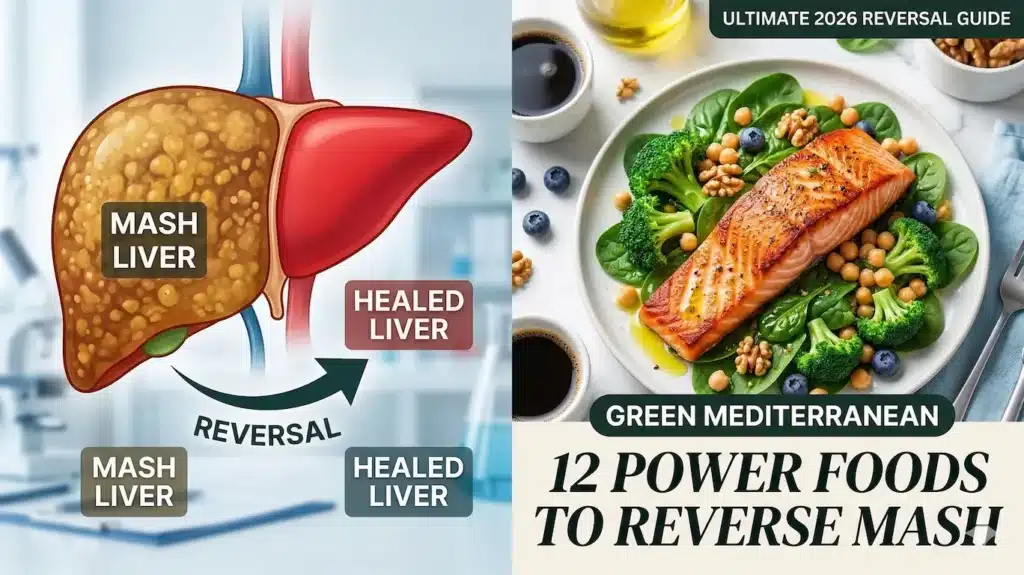
If you have been diagnosed with Metabolic-Associated Steatohepatitis (MASH), you are likely facing a flood of confusing advice. You’ve been told to “lose weight” and “eat healthy,” but when the threat of liver scarring (fibrosis) or cirrhosis is real, vague advice isn’t enough.
You need to know exactly which foods act as medicine for your liver cells and which “healthy” habits are secretly fueling inflammation.
The good news? Your liver is the only organ in the human body capable of total regeneration—but only if you provide the specific metabolic environment it needs to heal. In this 2026 guide, we break down the clinical gold standard for the MASH liver disease diet, moving beyond basic calorie counting to a targeted, nutrient-dense protocol designed to halt and reverse liver damage.
The 2026 Standard: Why “Green” Mediterranean is the New Gold
For years, the standard Mediterranean diet was the recommendation. In 2026, clinical consensus has shifted toward the “Green Mediterranean” pattern. This variant emphasizes high polyphenol intake from plant sources, which directly combats the oxidative stress that turns a “fatty liver” into a “scarred liver.”
Research highlights that while any weight loss helps, the composition of your fat intake determines how quickly your liver can export triglycerides. In fact, a “Green” Mediterranean approach—rich in walnuts, green tea, and Mankai—has been shown to reduce intrahepatic fat by more than double the rate of standard low-fat diets.
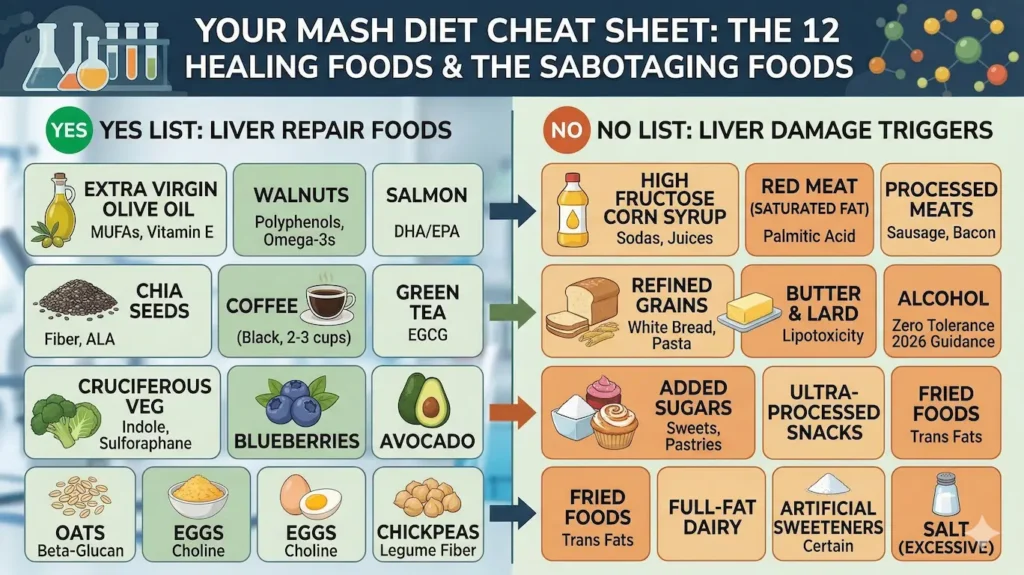
The 12 Foundation Foods of the MASH Diet
To repair a liver under siege by MASH, your diet must focus on three pillars: reducing de novo lipogenesis (fat creation), increasing beta-oxidation (fat burning), and quenching inflammation.
- Extra Virgin Olive Oil (EVOO): High in oleic acid, it improves insulin sensitivity and stimulates the body’s natural GLP-1 release.
- Fatty Fish (Salmon, Mackerel, Sardines): The primary source of EPA/DHA omega-3s which lower liver triglycerides and reduce fibrogenesis.
- Walnuts: The “king” of nuts for MASH, containing both polyphenols and essential ALA fats.
- Cruciferous Vegetables (Broccoli, Brussels Sprouts): Contain indole and sulforaphane, which help fight fatty liver and promote detoxification.
- Coffee (Black): In 2026, coffee is a medical recommendation; 2-3 cups daily are linked to lower fibrosis scores (FIB-4).
- Legumes (Lentils, Chickpeas): High fiber content stabilizes blood sugar spikes and feeds the gut microbiome.
- Green Tea (Matcha): Provides EGCG, which blocks the pathways that lead to liver scarring.
- Leafy Greens (Spinach, Arugula): Loaded with inorganic nitrates to reduce hepatic steatosis.
- Avocados: Rich in monounsaturated fats (MUFAs) that are less “lipotoxic” than saturated fats.
- Berries (Blueberries, Raspberries): High in anthocyanins to prevent oxidative damage to hepatocytes.
- Whole Grains (Steel-Cut Oats): Beta-glucans in oats have been shown to improve liver enzyme levels ($ALT/AST$).
- Eggs: A critical source of Choline, a nutrient necessary for the liver to package and export fat out of the organ.
The 7-Day MASH Reversal Meal Plan
This plan focuses on high protein, low fructose, and healthy fats to trigger liver repair.
| Day | Breakfast | Lunch | Dinner |
| 1 | Steel-cut oats with walnuts & berries | Chickpea & spinach salad with EVOO | Baked Salmon with roasted asparagus |
| 2 | Greek yogurt with chia seeds & kiwi | Tuna salad (olive oil based) on greens | Chicken & vegetable stir-fry with brown rice |
| 3 | Scrambled eggs with mushrooms & spinach | Turkey & avocado wrap (whole-wheat) | Quinoa bowl with black beans & pico de gallo |
| 4 | Smoothie: Kale, berries, & almond butter | Lentil soup with a side of arugula | Baked Cod with lemon, dill, & broccoli |
| 5 | Avocado toast on sprouted grain bread | Grilled chicken breast with Greek salad | Turkey lettuce wraps with ginger & garlic |
| 6 | Poached egg over savory oats & peppers | White bean & kale soup | Grilled Sardines with Mediterranean slaw |
| 7 | Chia seed pudding with raspberries | Roast turkey & vegetable quinoa salad | Stir-fried tofu with bok choy & walnuts |
The “Silent Saboteurs”: Foods to Purge Immediately
Fructose is unique because it is metabolized exclusively in the liver. When you consume high-fructose corn syrup, the liver is hit with a surge of energy it must instantly convert into fat. This process, called de novo lipogenesis (DNL), is the primary driver of MASH inflammation.
- Avoid: High-fructose corn syrup, agave, white bread, and ultra-processed “diet” snacks.
- The Alcohol Rule: In 2026, the clinical recommendation for MASH patients is zero alcohol. Even moderate drinking significantly accelerates the progression from MASH to cirrhosis.
- Saturated Fats: Red meat and butter contain palmitic acid, which triggers “lipotoxicity”—a state where liver cells literally begin to die from fat overload.
The 7-10% Rule: The Magic Number for Reversal
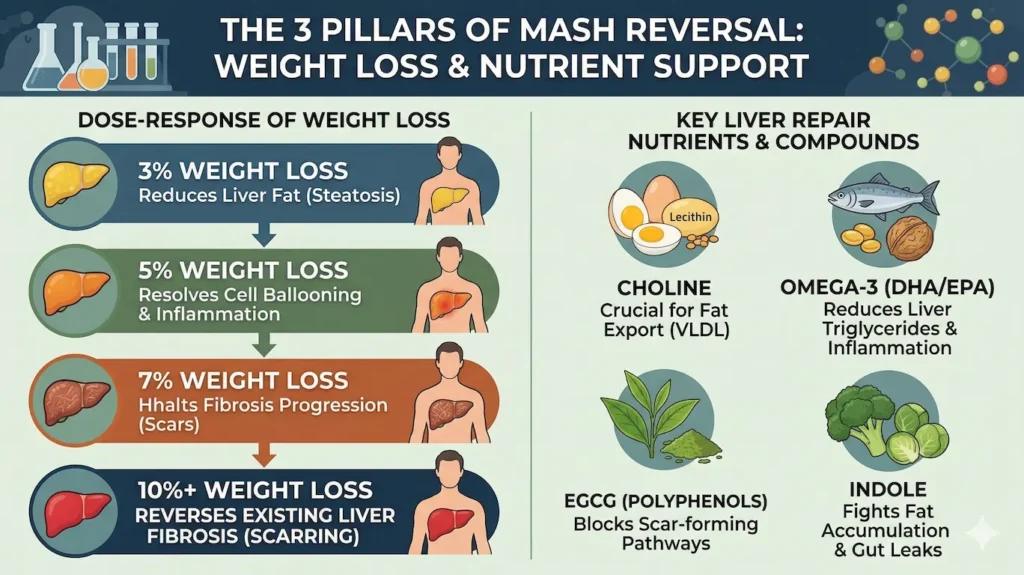
Clinical consensus from AASLD and EASL confirms that weight loss is the most potent “drug” for MASH. However, different percentages yield different results:
- 3% Loss: Reduces simple fat (steatosis).
- 5% Loss: Resolves inflammation and “ballooning” of liver cells.
- 7-10% Loss: The clinical threshold for reversing liver fibrosis and achieving MASH resolution.
Advanced Nutritional Support: Vitamins and Micronutrients
In 2026, doctors often supplement the MASH diet with specific high-dose micronutrients:
- Vitamin E (800 IU/day): Recommended for non-diabetic adults with biopsy-confirmed MASH to reduce inflammation.
- Omega-3 Supplementation: Used when dietary fish intake is insufficient to lower severe triglyceride levels.
- Choline: Essential for VLDL production, which is how the liver “cleans” itself of fat.
MASH Diet vs. Keto Diet: Which is Better for Liver Health?
While the Keto diet is popular for rapid weight loss, it can be controversial for liver patients. Below is a comparison table to help your readers understand why the Green Mediterranean (MASH Diet) is the clinically preferred choice in 2026.
| Feature | Green Mediterranean (MASH Diet) | Ketogenic (Keto) Diet |
| Primary Fat Source | Monounsaturated (Olive oil, nuts) | Saturated (Butter, red meat, lard) |
| Liver Impact | Reduces liver fat and inflammation. | May increase liver fat if saturated fats are high. |
| Fiber Content | Very High (Legumes, grains, greens) | Very Low (Restricts many vegetables/fruits) |
| Insulin Sensitivity | Dramatically improves. | Improves, but may cause metabolic “acidosis.” |
| Sustainability | High (Diverse food groups) | Low (Difficult to maintain long-term) |
| Clinical Consensus | Recommended by AASLD/EASL. | Not recommended for advanced MASH/Cirrhosis. |
Why Keto Can Be Risky for MASH Patients
The “Keto Flu” isn’t the only risk. For someone with MASH, the liver is already struggling to process fat.
- The Saturated Fat Trap: High intake of saturated fats (common in Keto) can lead to lipotoxicity, where the liver cells become overwhelmed and undergo programmed cell death (apoptosis).
- The Fiber Gap: Fiber is essential for a healthy gut-liver axis. By removing grains and legumes, Keto can disrupt the gut microbiome, leading to more “leaky gut” issues that trigger liver inflammation.
FAQ: MASH Liver Disease Diet
1. What is the best diet to reverse MASH liver disease?
The Green Mediterranean Diet is the current clinical gold standard for reversing MASH. It focuses on high polyphenol intake from walnuts and green tea, lean proteins, and extra virgin olive oil to reduce liver fat and inflammation.
2. Which foods should I avoid with MASH?
The most critical foods to avoid are added fructose (sodas, juices, sweets) and saturated fats (red meat, butter). Fructose is metabolized only in the liver and directly fuels the production of new liver fat.
3. Can drinking coffee help MASH liver disease?
Yes. Clinical studies show that drinking 2 to 3 cups of black coffee daily significantly reduces the risk of liver fibrosis and slows down the progression of MASH.
4. Is fruit sugar (fructose) bad for MASH?
While whole fruits are safe in moderation, concentrated fructose (found in soda, juices, and processed snacks) is a major driver of liver inflammation and should be eliminated.
5. How much weight do I need to lose to fix MASH?
Losing 7% to 10% of your total body weight is the target for MASH resolution and is often the only way to reverse existing liver scarring (fibrosis) without medication.
6. Are eggs allowed on a MASH liver diet?
Yes. Eggs are an excellent source of choline, which helps the liver export fat. However, they should be eaten in moderation as part of a plant-forward Mediterranean pattern.
7. Can MASH be reversed through diet alone?
For many patients in stages F0-F2, MASH is fully reversible through a combination of a 10% weight loss and a strict adherence to a Mediterranean-style nutritional plan.
5 Medical Sources & Citations
- Mayo Clinic: Fatty liver disease (MASLD) diet – Comprehensive Guide
- AASLD: Updated Practice Guidance on MASH Management
- MDPI Journal: Diet and Lifestyle Interventions in Metabolic Liver Disease
- Diabetes Canada: New Clinical Practice Guidelines for MASLD and MASH
- Linus Pauling Institute: Choline and Liver Function
Medical Disclaimer
Disclaimer: The information provided in this article, including text, graphics, images, and other materials, is for informational and educational purposes only. It is not intended to be a substitute for professional medical advice, diagnosis, or treatment.
Always seek the advice of your physician or another qualified health provider with any questions you may have regarding a medical condition or treatment, particularly before undertaking a new health care regimen or making significant dietary changes. Never disregard professional medical advice or delay in seeking it because of something you have read on this website.
Health Facts Journal does not recommend or endorse any specific tests, physicians, products, procedures, opinions, or other information that may be mentioned in this article. Reliance on any information appearing on this website is solely at your own risk.

With over 13 years of experience in holistic health blogging, I aim to help you navigate your wellness journey with honest insights, expert-backed advice, and a sprinkle of real-world practicality.
Certified Wellness Writer | Herbal Nutrition Advocate | Wellness Research Enthusiast


