
Best Foods to Eat on GLP-1 (Ozempic, Wegovy, Mounjaro, Zepbound Diet Guide)

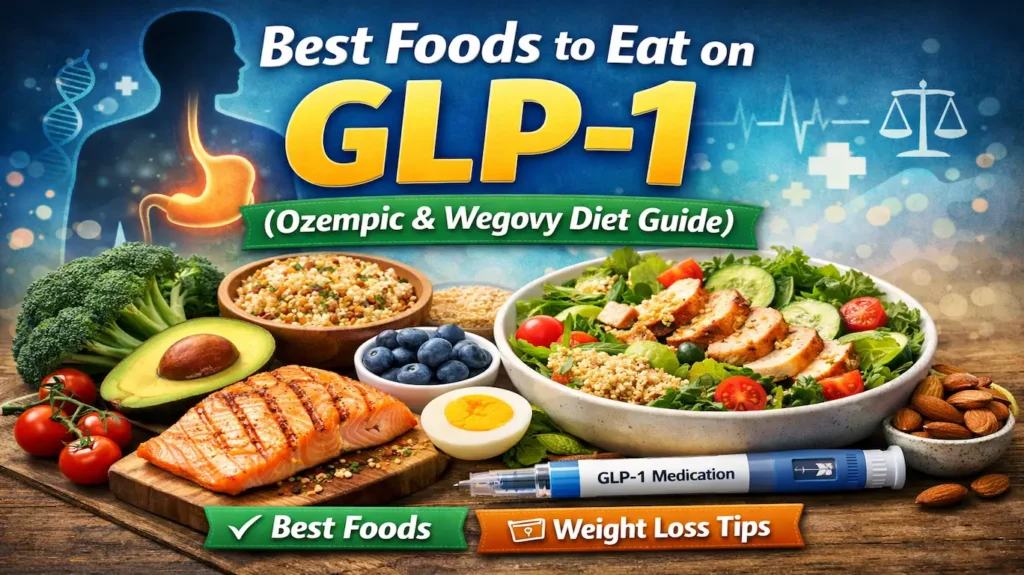
If you’re taking GLP-1 medications like Ozempic, Wegovy, Mounjaro, or Zepbound, your diet plays a much bigger role in your success than most people realize.
These medications work by reducing appetite and slowing digestion, which helps many people consume fewer calories and lose weight.
However, eating less food creates a new challenge.
When your appetite drops dramatically, you have fewer opportunities to provide your body with the nutrients it needs to function properly.
This is why many GLP-1 users experience problems like:
- Constipation
- Fatigue
- Muscle loss
- Hair thinning
- Low energy
The surprising truth is that these side effects are rarely caused by the medication itself.
Instead, they usually happen because people aren’t eating the right foods while their calorie intake decreases.
To lose weight safely and sustainably on GLP-1 medications, you must focus on nutrient-dense eating.
In this guide, you’ll learn:
- The most important nutrient while using GLP-1 medications
- The best foods to eat for faster weight loss
- How to build balanced GLP-1 meals
- How to avoid common diet mistakes that stall results
- What to eat to reduce side effects like nausea and constipation
By the end of this guide, you’ll understand exactly how to fuel your body while maximizing your GLP-1 weight-loss results.
What Are the Best Foods to Eat on GLP-1 Medications?
The best foods to eat on GLP-1 medications like Ozempic, Wegovy, Mounjaro, and Zepbound are nutrient-dense foods high in fiber, lean protein, and water content. Ideal choices include vegetables, berries, beans, whole grains, eggs, fish, chicken, and Greek yogurt, which help prevent constipation, maintain muscle, and support sustainable weight loss.
Best Foods to Eat on GLP-1 Medications
| Food Category | Best Options | Benefits |
|---|---|---|
| Lean Protein | Chicken, fish, eggs, Greek yogurt | Preserves muscle and boosts metabolism |
| Fiber-Rich Vegetables | Spinach, broccoli, kale | Prevents constipation and improves digestion |
| Fruits | Berries, apples, pears | Provides fiber and antioxidants |
| Legumes | Lentils, chickpeas, beans | High fiber and plant protein |
| Whole Grains | Oatmeal, quinoa, brown rice | Supports energy and gut health |
Why Diet Matters So Much on GLP-1 Medications
GLP-1 medications work by mimicking a hormone in your body that regulates appetite and blood sugar.
These medications help weight loss by:
- Slowing stomach emptying
- Reducing hunger signals in the brain
- Improving blood sugar regulation
Because digestion slows and appetite drops, most people naturally eat fewer calories.
While this helps with weight loss, it also creates a potential nutritional gap.
You may go from eating three large meals and snacks each day to eating much smaller portions.
That means you must start thinking differently about food.
Instead of focusing on quantity, your focus should shift to quality and nutrient density best meal plans while taking GLP-1.
Every bite should provide valuable nutrients that support:
- Metabolism
- Energy production
- Muscle maintenance
- Hormone balance
- Digestive health
When people ignore this principle, problems begin to appear.
What to Eat on Ozempic, Wegovy, or Mounjaro
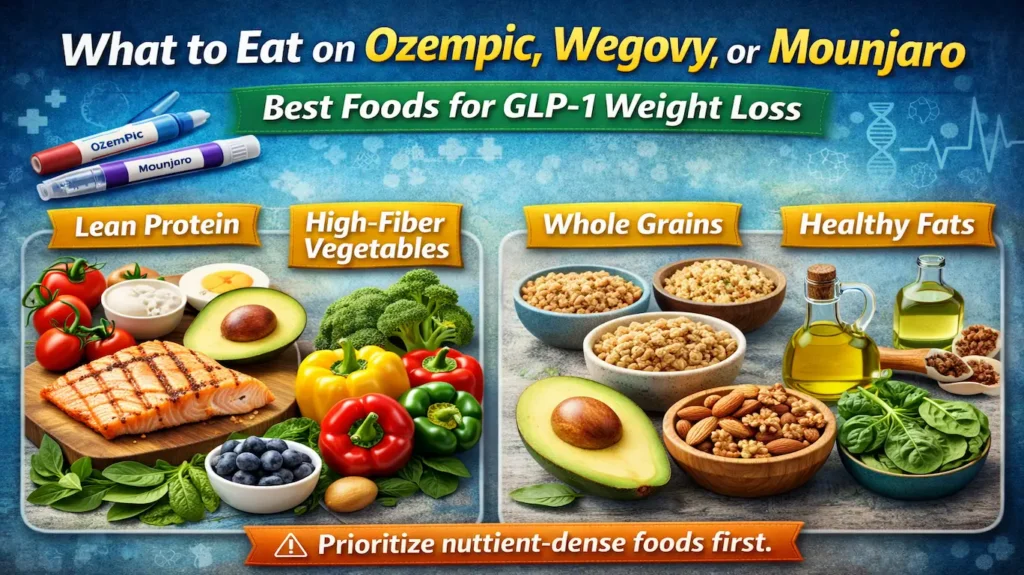
If you’re wondering what to eat on Ozempic, Wegovy, or Mounjaro, the most effective diet focuses on high-fiber foods, lean protein, and nutrient-dense whole foods. These glp1 medications reduce appetite and slow digestion, so every meal should provide maximum nutrition while remaining easy to digest.
A well-structured GLP-1 diet plan helps reduce side effects like constipation and fatigue while supporting healthy, sustainable weight loss.
The best diet while taking GLP-1 medications typically includes:
- Lean proteins like chicken, fish, eggs, and Greek yogurt
- High-fiber foods such as vegetables, fruits, beans, and whole grains
- Healthy fats like avocado, olive oil, and nuts
- Plenty of water and low-calorie beverages
This approach ensures your body receives essential nutrients even when your appetite is lower.
Best Foods to Include in an Ozempic or Wegovy Diet Plan
The most effective Ozempic diet plan or Wegovy diet plan prioritizes foods that keep you full longer and support digestive health.
Some of the best foods to eat include:
Lean Protein
- Chicken breast
- Turkey
- Eggs
- Greek yogurt
- Cottage cheese
- Fish such as salmon or tuna
Protein helps preserve muscle mass during weight loss and supports metabolism.
High-Fiber Vegetables
- Broccoli
- Spinach
- Zucchini
- Bell peppers
- Kale
Fiber helps prevent constipation, which is a common issue for people using GLP-1 medications.
Fruits
- Berries
- Apples
- Pears
- Peaches
These fruits provide fiber, antioxidants, and vitamins while remaining relatively low in calories.
Legumes and Plant Proteins
- Lentils
- Chickpeas
- Black beans
- Edamame
These foods provide both fiber and protein, making them ideal additions to a GLP-1 diet.
Whole Grains
- Oatmeal
- Quinoa
- Brown rice
- Whole-grain bread
Whole grains provide long-lasting energy and help stabilize blood sugar.
Example GLP-1 Meal Plan for a Typical Day
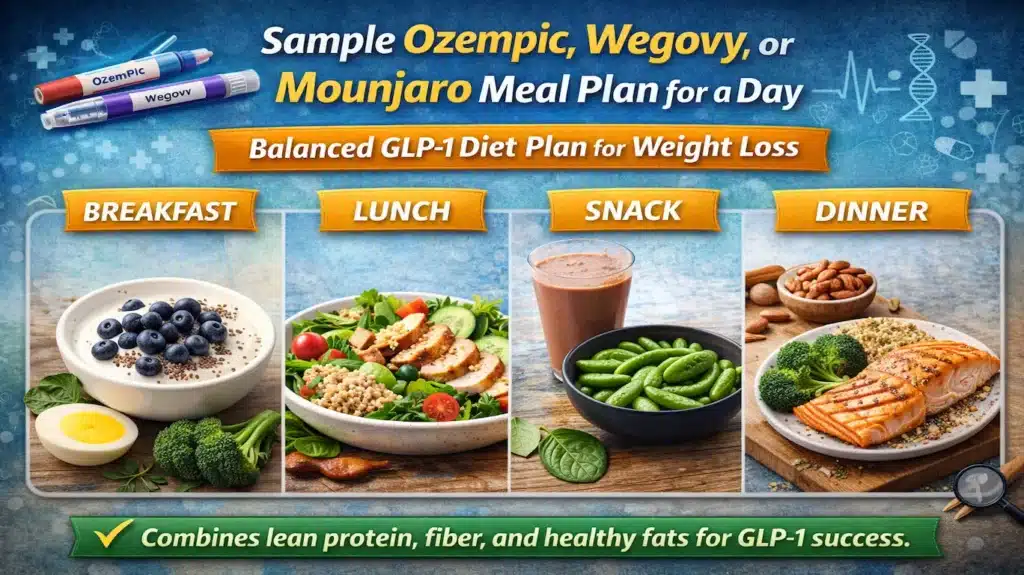
A balanced Mounjaro diet or Ozempic diet plan doesn’t need to be complicated. The goal is simply to combine protein, fiber, and healthy carbohydrates.
Breakfast
Greek yogurt with berries and chia seeds
Lunch
Grilled chicken salad with olive oil dressing and mixed vegetables
Snack
Edamame or a protein shake
Dinner
Baked salmon with quinoa and roasted vegetables
This type of meal structure provides protein, fiber, and healthy fats, helping you stay full while supporting weight loss.
Foods to Limit on GLP-1 Medications
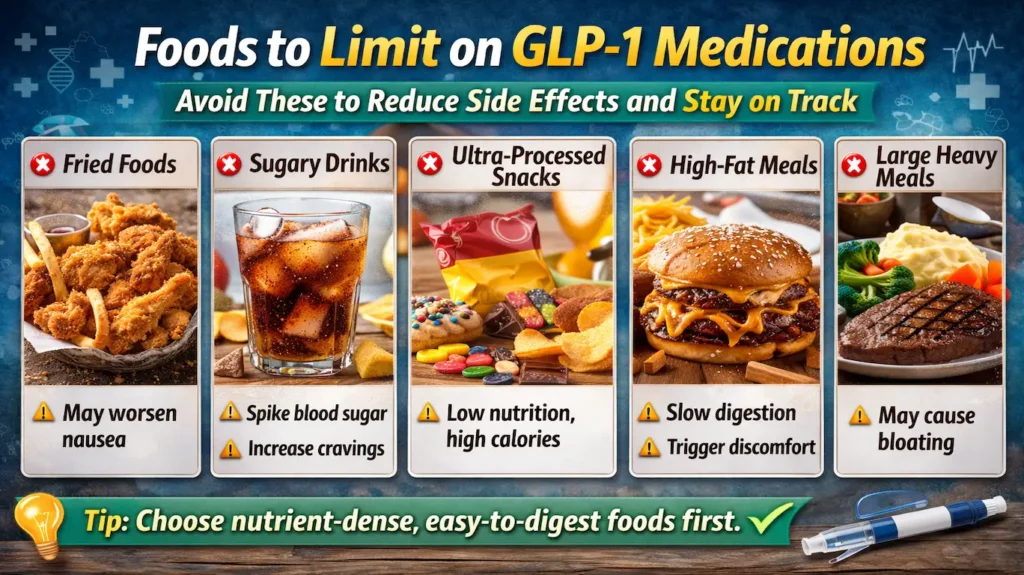
While there are no strict food bans, certain foods may worsen side effects or slow weight loss.
Try to limit:
- Fried foods
- Sugary drinks
- Ultra-processed snacks
- High-fat fast food
- Large heavy meals
These foods can increase nausea and reduce the effectiveness of GLP-1 medications.
The Key Rule for Eating on GLP-1
The most important principle is simple:
Prioritize nutrient-dense foods first.
Because GLP-1 medications reduce appetite, every meal should provide meaningful nutrition.
When your meals consistently include protein, fiber, and whole foods, you’ll experience:
- Better digestion
- Fewer side effects
- More stable energy
- Faster fat loss
This is why the most successful GLP-1 users focus not just on eating less — but on eating smarter.
Common Nutrition Problems GLP-1 Users Experience
When diet quality is poor, GLP-1 users often experience several common issues.
These include:
Constipation
GLP-1 medications slow digestion, which means food moves through the digestive system more slowly.
Without enough fiber and water, constipation becomes very common.
Fatigue
Eating too little or skipping nutrient-dense foods can lead to low energy levels.
Your body still needs calories and nutrients to function properly.
Muscle Loss
Rapid weight loss without adequate protein and resistance training can cause loss of lean muscle mass.
Maintaining muscle is essential for metabolism.
Hair Loss
Hair loss during weight loss is often caused by nutritional deficiencies, particularly low protein or micronutrient intake.
These issues are not inevitable.
With the right nutrition strategy, you can prevent most of them.
The Most Important Nutrient on GLP-1: Fiber
Most people assume that protein is the most important nutrient during weight loss.
While protein is important, the most overlooked nutrient for GLP-1 users is fiber.
Fiber plays several critical roles in the body.
It helps:
- Prevent constipation
- Improve digestion
- Increase satiety
- Stabilize blood sugar
- Support gut health
Because GLP-1 medications slow digestion, a low-fiber diet can easily cause digestive problems.
Many people focus heavily on protein foods while ignoring fruits, vegetables, and whole grains.
This imbalance often leads to severe constipation.
For optimal digestive health, most adults should aim for:
25–30 grams of fiber per day.
Unfortunately, most people consume less than half of this amount.
Best High-Fiber Foods for GLP-1 Users
Increasing fiber intake is one of the easiest ways to improve your results on GLP-1 medications.
Here are the best foods to include.
High-Fiber Fruits
Fruit is often misunderstood in weight-loss diets.
Some people avoid fruit because of its natural sugar content.
However, fruit provides fiber, vitamins, antioxidants, and hydration.
The best high-fiber fruits include:
- Apples
- Pears
- Peaches
- Berries
- Raspberries
- Blackberries
Fruits with edible skins typically contain more fiber.
Berries are especially beneficial because they provide high fiber with relatively low calories.
Fiber-Rich Vegetables
Vegetables are one of the most important components of a GLP-1 diet.
They provide:
- Fiber
- Vitamins
- Minerals
- Antioxidants
Some of the best choices include:
- Spinach
- Broccoli
- Kale
- Zucchini
- Carrots
- Bell peppers
- Brussels sprouts
Try to include multiple colors of vegetables each day to maximize nutrient intake.
If vegetables are difficult to eat, consider:
- Adding spinach to smoothies
- Mixing vegetables into soups
- Blending vegetables into sauces
Legumes and Beans
Legumes are one of the most nutrient-dense foods available.
They provide both fiber and protein, making them ideal for GLP-1 users.
Examples include:
- Lentils
- Chickpeas
- Black beans
- Kidney beans
- Edamame
Adding legumes to meals can improve satiety and stabilize blood sugar.
Whole Grains
Whole grains provide fiber along with complex carbohydrates that support energy levels.
Examples include:
- Oatmeal
- Quinoa
- Brown rice
- Whole wheat bread
- Barley
These foods digest more slowly than refined grains and help maintain stable blood sugar.
GLP-1 Diet Table: Best Nutrient Balance for Weight Loss
The most effective diet while taking GLP-1 medications like Ozempic, Wegovy, or Mounjaro focuses on a balance of protein, fiber, healthy fats, and hydration.
Because GLP-1 medications reduce appetite, each meal should deliver maximum nutritional value with fewer calories.
Below is a simple nutrition framework used by many doctors and dietitians to support healthy weight loss during GLP-1 treatment.
| Nutrient | Recommended Amount Per Meal | Best Food Sources | Why It Matters |
|---|---|---|---|
| Protein | 20–30 g | chicken, fish, eggs, greek yogurt, tofu | preserves muscle and supports metabolism |
| Fiber | 8–10 g | vegetables, berries, beans, whole grains | prevents constipation and improves digestion |
| Healthy Fats | small portion | avocado, olive oil, nuts, seeds | improves satiety and hormone balance |
| Hydration | 16–20 oz water | water, herbal tea, infused water | supports digestion and prevents dehydration |
This balanced approach helps GLP-1 users:
- maintain lean muscle mass
- avoid digestive side effects
- improve long-term fat loss results
Simple GLP-1 Nutrition Calculator
Use this simple guideline to estimate your daily nutrition targets while using GLP-1 medications for weight loss.
Protein Calculator
A common recommendation for weight loss is:
0.7–1 gram of protein per pound of goal body weight
Example:
If your goal weight is 150 lbs
150 × 0.8 = 120 grams of protein per day
This amount helps preserve muscle during weight loss.
Fiber Target
Most adults should aim for:
25–35 grams of fiber per day
Fiber helps:
- reduce constipation
- improve gut health
- increase fullness
Example daily fiber sources:
- vegetables: 10 g
- fruit: 8 g
- legumes or whole grains: 10–15 g
Daily Water Target
Hydration is extremely important when taking GLP-1 medications.
A simple guideline is:
Half your body weight (lbs) in ounces of water daily
Example:
If you weigh 180 lbs
180 ÷ 2 = 90 ounces of water per day
Adequate hydration helps reduce:
- nausea
- fatigue
- constipation
Example Daily GLP-1 Nutrition Targets
| Goal Weight | Protein | Fiber | Water |
|---|---|---|---|
| 140 lbs | 100–110 g | 25–30 g | 70 oz |
| 160 lbs | 110–130 g | 25–35 g | 80 oz |
| 180 lbs | 130–150 g | 30–35 g | 90 oz |
These ranges provide a general framework for most GLP-1 users.
Always consult a healthcare professional for personalized recommendations.
Why This Nutrition Framework Works
GLP-1 medications like semaglutide and tirzepatide help reduce hunger, but nutrition still determines how successful your weight loss will be.
Combining protein, fiber, healthy fats, and hydration helps:
- maintain muscle mass
- stabilize blood sugar
- improve digestion
- support sustainable fat loss
When used alongside GLP-1 medications, this balanced diet strategy can dramatically improve long-term weight loss outcomes.
The Second Essential Nutrient: Protein
Although fiber is extremely important, protein is still critical during weight loss.
When your body loses weight, it naturally loses both fat and muscle tissue.
Consuming adequate protein helps preserve muscle mass.
Maintaining muscle is important because muscle supports:
- Metabolic health
- Strength
- Physical function
- Long-term weight maintenance
Protein also increases feelings of fullness, which can help control hunger.
Best Protein Foods for GLP-1 Diets
The highest quality protein sources include both animal and plant-based foods.
Animal Protein Sources
Animal proteins contain complete amino acid profiles, making them excellent choices.
Examples include:
- Chicken breast
- Turkey
- Fish
- Eggs
- Greek yogurt
- Cottage cheese
- Lean beef
These foods are rich in protein and relatively low in calories.
Plant-Based Protein Sources
Plant proteins can also support muscle health.
Examples include:
- Tofu
- Tempeh
- Lentils
- Beans
- Edamame
Plant proteins often provide fiber along with protein, which can benefit digestion.
How Much Protein Do You Need?
Most GLP-1 users should aim for:
20–30 grams of protein per meal
This amount supports muscle maintenance and helps you stay satisfied.
A simple visual guideline is a portion about the size of your palm.
Protein should also be included in snacks when possible.
Examples of high-protein snacks include:
- Greek yogurt
- Cheese sticks
- Edamame
- Protein shakes
- Tuna packets
Convenient protein options can be helpful on days when appetite is low.
Hydration: The Third Critical Component
Water is another essential part of the GLP-1 nutrition strategy.
Because appetite decreases on these medications, many people forget to drink enough fluids.
This can lead to:
- Dehydration
- Headaches
- Fatigue
- Digestive issues
Hydration is especially important because fiber requires water to move through the digestive system.
Without adequate water, fiber may actually worsen constipation.
Tips to Stay Hydrated on GLP-1
If drinking plain water feels difficult, try these strategies:
- Drink herbal teas
- Add fruit slices to water
- Infuse water with cucumber or mint
Some people also benefit from electrolyte drinks.
Options like Liquid IV or LMNT can help if you’re struggling with hydration.
However, electrolytes are not necessary for most people unless fluid intake is very low.
The main goal is to drink water consistently throughout the day.
How to Build Balanced GLP-1 Meals
Creating balanced meals doesn’t need to be complicated.
A simple structure can help ensure you meet your nutritional needs.
Step 1: Choose a Protein Source
Start your meal with a protein foundation.
Examples include:
- Chicken
- Fish
- Eggs
- Greek yogurt
- Protein shake
Step 2: Add Fiber-Rich Foods
Next, add foods that provide fiber.
Examples include:
- Vegetables
- Fruits
- Whole grains
- Legumes
Step 3: Add Optional Foods
Once protein and fiber are included, you can add foods you enjoy.
These might include:
- Rice
- Pasta
- Bread
- Occasional desserts
The key is prioritizing nutrient-dense foods first.
What Are Nutrient-Dense Foods?
Nutrient-dense foods contain a high concentration of nutrients relative to calories.
Examples include:
- Lean proteins
- Fruits
- Vegetables
- Whole grains
- Legumes
Even without GLP-1 medications, these foods should form the foundation of a healthy diet.
When appetite is low, choosing nutrient-dense foods becomes even more important.
Should GLP-1 Users Take Supplements?
Some people struggle to eat enough food while taking GLP-1 medications.
In these situations, supplements may help support nutritional needs.
A daily multivitamin can help provide vitamins and minerals.
However, supplements cannot replace food.
Vitamins do not provide calories or protein, which your body still needs.
If full meals feel difficult, consider:
- Protein shakes
- Smoothies
- Small frequent meals
These strategies can help prevent nutritional deficiencies.
The Biggest Diet Mistake GLP-1 Users Make
One of the most dangerous mistakes people make on GLP-1 medications is not eating enough food at all.
Some individuals assume that eating less will accelerate weight loss.
However, extreme calorie restriction can cause:
- Malnutrition
- Muscle loss
- Hormonal imbalances
- Severe fatigue
In extreme cases, malnutrition can be more dangerous than obesity.
The goal is healthy weight loss, not starvation.
Balanced nutrition is the key to sustainable success.
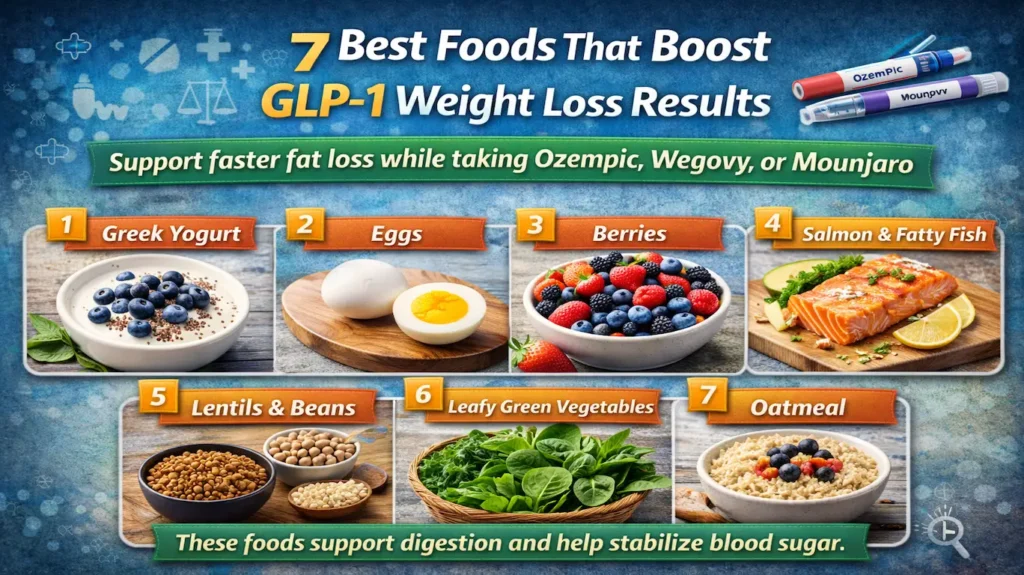
7 Best Foods That Boost GLP-1 Weight Loss Results
While GLP-1 medications like Ozempic, Wegovy, and Mounjaro reduce hunger and help regulate blood sugar, the foods you eat can significantly influence how effective the medication is.
Choosing foods that support digestion, stabilize blood sugar, and maintain muscle mass can help you lose fat faster while avoiding common GLP1 side effects.
Here are seven of the best foods to include in a GLP-1 diet plan.
1. Greek Yogurt
Greek yogurt is one of the best foods for people using GLP-1 medications because it provides high-quality protein with relatively few calories.
Benefits include:
- Supports muscle preservation during weight loss
- Helps keep you full longer
- Provides probiotics that support gut health
Choose plain Greek yogurt to avoid added sugars.
2. Eggs
Eggs are highly nutritious and contain complete protein along with important vitamins and minerals.
They are also easy to digest, which makes them ideal when appetite is low.
Benefits include:
- Supports muscle maintenance
- Helps stabilize blood sugar
- Provides long-lasting satiety
Eggs are especially useful as part of a high-protein breakfast.
3. Berries
Berries are among the best fruits for weight loss.
They contain fiber, antioxidants, and relatively low sugar compared to many other fruits.
Good options include:
- Blueberries
- Strawberries
- Raspberries
- Blackberries
Berries help satisfy sweet cravings while supporting digestive health.
4. Salmon and Fatty Fish
Fatty fish like salmon provide high-quality protein and omega-3 fatty acids, which support metabolic health.
Benefits include:
- Helps preserve lean muscle
- Reduces inflammation
- Supports heart health
Including fish in your diet two to three times per week can improve overall nutrition.
5. Lentils and Beans
Legumes are an excellent source of fiber and plant-based protein.
They help promote fullness and support healthy digestion.
Examples include:
- Lentils
- Chickpeas
- Black beans
- Kidney beans
Because they contain both protein and fiber, legumes are one of the most powerful foods for appetite control.
6. Leafy Green Vegetables
Leafy greens provide essential nutrients with very few calories.
Examples include:
- Spinach
- Kale
- Arugula
- Swiss chard
These vegetables contain fiber, vitamins, and antioxidants that support overall health.
They are easy to add to meals, salads, or smoothies.
7. Oatmeal
Oatmeal is a high-fiber whole grain that helps regulate blood sugar and improve satiety.
Benefits include:
- Provides slow-digesting carbohydrates
- Supports digestive health
- Helps control hunger
For best results, choose plain rolled oats instead of instant flavored varieties.
The Real Secret to Maximizing GLP-1 Results
While these foods can support weight loss, the most important principle is building balanced meals that combine protein, fiber, and hydration.
This combination helps:
- Reduce hunger
- Prevent constipation
- Maintain muscle mass
- Improve long-term weight loss success
When paired with GLP-1 medications, this nutrition strategy allows your body to burn fat efficiently while maintaining overall health.
Doctor-Recommended GLP-1 Diet Guidelines
Healthcare professionals generally recommend focusing on nutrient-dense, balanced meals when using GLP-1 medications such as Ozempic, Wegovy, or Mounjaro.
Because these medications reduce appetite and slow digestion, doctors emphasize the importance of getting enough protein, fiber, and fluids to maintain overall health during weight loss.
According to clinical nutrition guidance, the most effective GLP-1 diet strategies include:
Prioritize protein at every meal
Protein helps preserve muscle mass and supports metabolism during weight loss. Most patients should aim for 20–30 grams of protein per meal.
Increase fiber intake gradually
Fiber supports digestive health and helps prevent constipation, which is one of the most common side effects of GLP-1 medications. Doctors often recommend 25–35 grams of fiber per day.
Stay well hydrated
Because GLP-1 medications slow digestion, drinking enough water is essential to maintain healthy digestion and prevent dehydration.
Choose nutrient-dense whole foods
Medical experts recommend prioritizing foods such as:
- lean proteins
- fruits and vegetables
- legumes
- whole grains
- healthy fats
These foods provide essential vitamins, minerals, and nutrients even when calorie intake is reduced.
Avoid large heavy meals
Large meals can increase nausea while using GLP-1 medications. Instead, doctors often suggest smaller balanced meals throughout the day.
Following these doctor-recommended nutrition strategies can help patients maximize the effectiveness of GLP-1 medications while supporting long-term health and sustainable weight loss.
Frequently Asked Questions About Eating on GLP-1
What should you eat while taking Ozempic or Wegovy?
The best foods to eat while taking Ozempic or Wegovy are high-fiber vegetables, lean protein, fruits, and whole grains. These foods support digestion, prevent constipation, and help maintain muscle while reducing hunger during GLP-1 treatment.
How much protein should you eat on GLP-1 medications?
Most people taking GLP-1 medications should aim for 20–30 grams of protein per meal. Protein helps preserve muscle mass, supports metabolism, and improves satiety during weight loss.
Why do GLP-1 medications cause constipation?
GLP-1 medications slow digestion, which can cause constipation if fiber and water intake are too low. Increasing fiber-rich foods and hydration helps food move through the digestive system more efficiently.
Can you eat fruit on Ozempic or Mounjaro?
Yes. Fruits like berries, apples, pears, and peaches are excellent choices because they provide fiber, vitamins, and antioxidants while helping control hunger.
What foods should you avoid on GLP-1 medications?
Highly processed foods, fried foods, sugary drinks, and ultra-refined carbohydrates should be limited. These foods can worsen nausea, reduce satiety, and interfere with healthy weight loss.
Do you need vitamins while taking GLP-1 drugs?
Some people benefit from a daily multivitamin if their appetite decreases significantly. However, vitamins should supplement a healthy diet, not replace nutrient-dense foods.
Can you lose muscle on GLP-1 medications?
Yes. Rapid weight loss can cause muscle loss if protein intake and strength training are inadequate. Eating enough protein and performing resistance exercise can help preserve lean muscle mass.
Final Takeaway
GLP-1 medications can be powerful tools for weight loss.
However, the medication alone is not enough.
Your results depend heavily on what you eat while using these medications.
For the best outcomes, focus on three priorities:
Fiber – supports digestion and prevents constipation
Protein – preserves muscle and boosts metabolism
Water – keeps digestion functioning properly
When you build meals around nutrient-dense foods, you maximize fat loss while protecting your health.
With the right approach, GLP-1 medications can become part of a sustainable long-term strategy for weight management.
Medical Sources & References
1. Nutritional Priorities to Support GLP-1 Therapy for Obesity
https://pmc.ncbi.nlm.nih.gov/articles/PMC12125019/
This clinical review discusses how proper nutrition strategies—including adequate protein, fiber, and nutrient-dense foods—help support safe and effective GLP-1 therapy for obesity treatment.
2. Clinical Impact of Semaglutide in Weight Management
https://pmc.ncbi.nlm.nih.gov/articles/PMC9357557/
This peer-reviewed article explains how semaglutide promotes weight loss by reducing appetite, decreasing energy intake, and slowing gastric emptying, making it one of the most effective GLP-1 receptor agonists for obesity treatment.
3. Nutritional Approaches to Enhance GLP-1 Therapy
https://www.mdpi.com/2673-4168/5/4/88
Research indicates that dietary fiber intake and balanced nutrition can help manage gastrointestinal side effects like constipation while improving adherence to GLP-1 medications.
4. Nutrition and Lifestyle Recommendations for Patients Using GLP-1 Drugs
https://my.clevelandclinic.org/watch/glp-1-diet
The Cleveland Clinic recommends diets rich in lean protein, fruits, vegetables, and whole grains for patients using GLP-1 medications to support weight loss and reduce side effects.
5. GLP-1 Medications and Weight Reduction Mechanisms
https://www.mdpi.com/1424-8247/18/3/399
Scientific reviews show GLP-1 receptor agonists like semaglutide improve metabolic health by increasing satiety, regulating glucose metabolism, and supporting significant weight reduction in clinical trials.

With over 13 years of experience in holistic health blogging, I aim to help you navigate your wellness journey with honest insights, expert-backed advice, and a sprinkle of real-world practicality.
Certified Wellness Writer | Herbal Nutrition Advocate | Wellness Research Enthusiast


