
GLP-1 Compounding Pharmacy: The Complete 2026 Guide For Big Savings

Weight loss drug shortages may be easing, but the high cost of brand-name pens is still keeping life-changing treatment out of reach for millions.
A certified GLP-1 compounding pharmacy offers a bridge to affordability—if you know where to look. While some telehealth giants have pulled back their offerings due to regulatory pressure, select PCAB-accredited pharmacies continue to provide high-purity Semaglutide and Tirzepatide under strict physician oversight.
Discover how to verify your provider’s credentials and secure a safe, 503A-compliant prescription that fits your budget without compromising your health.
Quick Answer: A GLP-1 compounding pharmacy is a licensed facility that prepares customized versions of GLP-1 receptor agonist medications — such as semaglutide or tirzepatide — outside the standard brand-name manufacturing process.
In 2026, compounded GLP-1s remain available through select 503A and 503B pharmacies, but FDA enforcement has tightened significantly since spring 2025. Prices typically range from $199 to $499 per month, compared to $900–$1,300+ for brand-name options without insurance.
Key Takeaways
- ✅ Compounded GLP-1s can cost 60–80% less than brand-name Ozempic, Wegovy, or Zepbound
- ⚠️ The FDA resolved GLP-1 drug shortages by late 2024/spring 2025, which eliminated the main legal basis for routine compounding
- 🚨 The FDA issued 30 warning letters to telehealth companies in March 2026 for misleading marketing of compounded GLP-1 products [2]
- 🔬 Compounded GLP-1s are not FDA-approved and are not identical to brand-name drugs
- 📋 Lawful compounding still exists for patients with documented medical necessity through state-licensed 503A pharmacies
- 💊 Common compounded formats include injectables, lozenges, and oral drops [6]
- 🏥 503B outsourcing facilities face stricter rules than 503A pharmacies
- 💡 Choosing a legitimate compounding pharmacy requires verifying PCAB accreditation, state licensure, and API sourcing documentation
What Is a GLP-1 Compounding Pharmacy and How Does It Work?
A GLP-1 compounding pharmacy is a licensed pharmacy that formulates GLP-1 receptor agonist medications — most commonly semaglutide or tirzepatide — from bulk active pharmaceutical ingredients (API) rather than dispensing pre-manufactured brand-name products.
These pharmacies operate under either Section 503A (patient-specific, prescription-based) or Section 503B (large-scale outsourcing facilities) of the Federal Food, Drug and Cosmetic Act.
How the process works:
- A licensed prescriber evaluates the patient and documents medical necessity
- The prescription is sent to a licensed compounding pharmacy
- The pharmacy sources API from an FDA-registered supplier
- The medication is compounded to the prescribed dose and formulation
- The finished product is shipped directly to the patient (in most cases)
Key distinction: Compounded GLP-1 medications are not FDA-approved. They are not tested for safety, efficacy, or quality by the FDA the same way brand-name drugs are. However, when prepared by a legitimate, licensed pharmacy following USP standards, they can be a legal and cost-effective alternative for qualifying patients.
The most common compounded GLP-1 alternatives come in injectable vials, lozenges, or oral drops, giving patients options beyond the standard auto-injector pens used for Ozempic and Wegovy [6].
Choose compounded GLP-1s if: You have a documented medical need, your prescriber supports it, brand-name drugs are unaffordable or unavailable to you, and you can verify the pharmacy’s credentials.
For a broader overview of all available options, see our complete GLP-1 medication guide.
The 3 Most Affordable GLP 1 Semaglutide Without Insurance “TrumpRX (2026 Ranked)
🥇 #1 Best Overall: Zepbound (Triple-Action Option)
🥇 Best Overall (9.9/10)
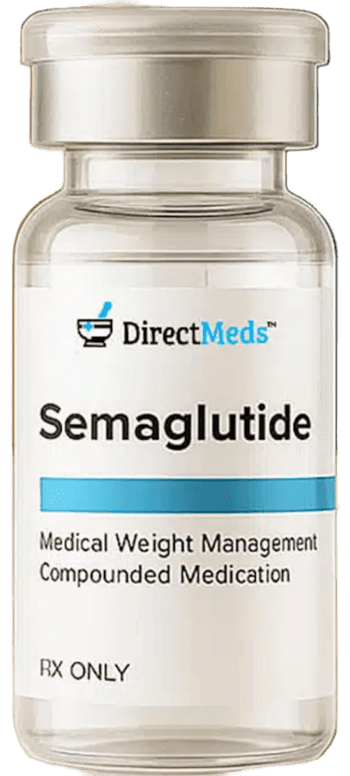
DirectMeds GLP1 provides a budget-friendly alternative to Ozempic/Wegovy while maintaining strong appetite control and weekly fat loss results. Everything is included—from telehealth visits to medication shipping—making it ideal for people wanting premium results at the lowest cost.
DirectMeds is a LegitScript-certified telehealth platform that connects patients with licensed U.S. physicians who evaluate whether compounded GLP-1 medications are clinically appropriate.
It is one of the most established providers in this space and is particularly well-suited to patients who want high-touch clinical oversight without paying brand-name prices.
How it works: Complete a secure online health intake form. A licensed medical provider reviews your profile and determines eligibility. If approved, your prescription is sent to a certified U.S. compounding pharmacy and medication is shipped directly to your door. All-inclusive pricing covers medical consultation, medication, and 24/7 support — no surprise charges.
◉ Clinical Note: DirectMeds’ LegitScript certification is a meaningful differentiator in this market. It requires compliance with pharmacy laws, prescription standards, and advertising guidelines — reducing the risk of receiving substandard compounded medications. For patients new to telehealth GLP-1 programs, this certification provides a meaningful layer of accountability. — Dr. Sarah Jenkins, Co-Author
🎯 Ideal for: Patients who want an established, verified provider with strong clinical support and are comfortable paying slightly more than the absolute floor price for greater peace of mind.
🥈#2 Best for Long-Term Cost Certainty: MyStart GLP-1
🥈 Silver Standard — Best Flat-Rate Pricing
- Rating: ⭐️⭐️⭐️⭐️⭐️ – (9.9/10) High Potency GLP1
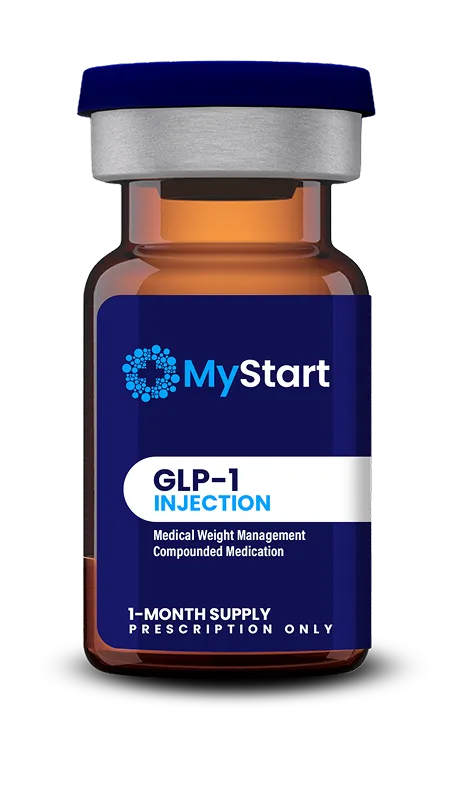
MyStart GLP-1 offers a smooth, beginner-friendly GLP-1 program using FDA-backed medications and simple weekly injections or tablets. Great for people wanting easy onboarding, rapid fat loss, and physician oversight—without the high price of traditional clinics.
MyStart GLP-1 uses a unique flat-rate membership model where your medication cost is fixed regardless of how high your therapeutic dose increases over time. For patients who will be on GLP-1 therapy for 12 months or more, this pricing structure can save $600 to $1,800 annually compared to platforms that charge progressively more as doses escalate.
How it works: Pay a monthly membership ($79) plus a flat medication fee (e.g., $175 for compounded semaglutide). The combined total stays fixed at $254 per month from starter dose through maximum maintenance dose. Medical consultation, all medication, dedicated care team access, and nutritional coaching are included.
◉ Clinical Note: The flat-rate model is financially sound for long-term GLP-1 use. GLP-1 therapy is most effective when sustained for 12+ months, and avoiding dose-related price increases removes a common reason patients discontinue treatment early. The included nutritional coaching adds meaningful clinical value, as sustainable weight loss requires both medication and lifestyle change. — Dr. Sarah Jenkins, Co-Author
🎯 Ideal for: Patients committed to long-term treatment (12+ months) who want price certainty as doses increase, and who value behavioral coaching as part of their program.
Best for: People who want a more advanced GLP-1 approach at a reduced price. 👉 SKIP THE WAITLIST. START FOR $199
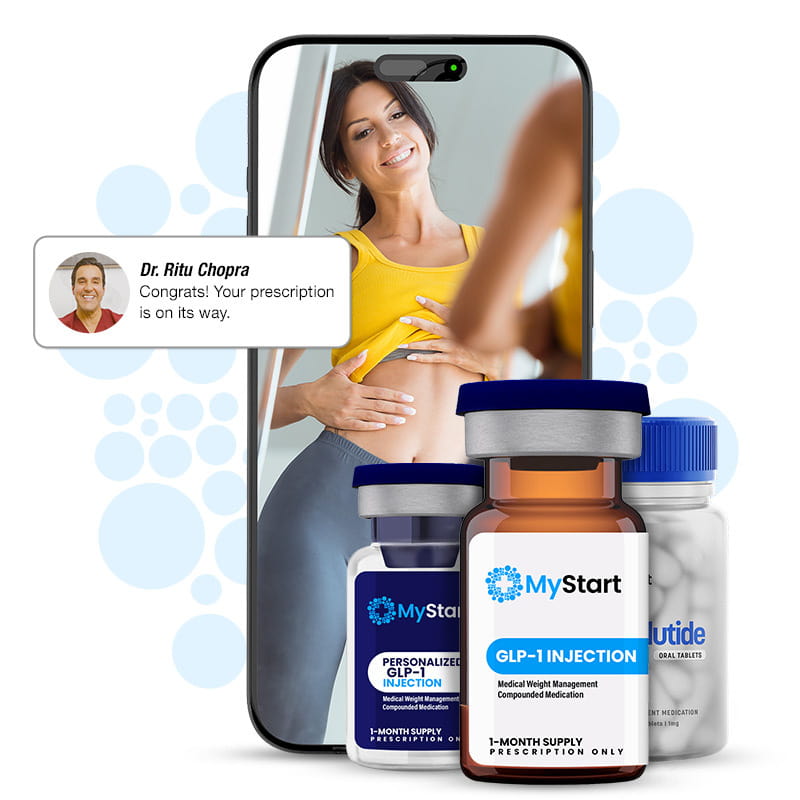
Thousands of people are losing weight with MyStart GLP-1 medications. People like you are transforming their lives, feeling better, and looking their best with the help of GLP-1 (Dual-Action Option) medications.
🥉 #3 Best for Absolute Lowest Entry Cost: MEDVi GLP-1
🥉 Bronze Standard — Lowest Entry Price
- Rating: ⭐️⭐️⭐️⭐️⭐️ – (9.9/10) Excellent
MEDVi GLP-1 delivers fast, medical-grade weight loss with doctor-guided dosing and personalized coaching. Patients report losing 1–3 lbs per week with steady appetite control and reduced cravings. Qualify in minutes and access 600+ U.S. doctors with no membership fees.
MEDVi offers the most accessible entry price point in the compounded GLP-1 market, with starter doses beginning as low as $99 per month and a published price-match guarantee.
The platform provides both injectable and oral compounded GLP-1 options, giving prescribers flexibility to match the medication form to the patient. Clinical follow-up is primarily quarterly rather than monthly, which keeps costs lower but means less frequent dose adjustment guidance than the two options above.
How it works: Complete an online consultation. If qualified, your prescription is sent to a partner compounding pharmacy and medication is shipped to you within 48 hours. Customer support is available, and clinical check-ins are typically quarterly. No membership fees are charged on top of medication pricing.
◉ Clinical Note: MEDVi is a legitimate, cost-effective option for budget-focused patients who have researched compounded medications and are comfortable with less frequent clinical contact. Always ask your provider which specific compounding pharmacy fulfills your prescription — a reputable 503A or 503B state-licensed pharmacy is non-negotiable for safety. — Dr. Sarah Jenkins, Co-Author
🎯 Ideal for: Budget-focused patients who have done their research on compounded GLP-1 medications, are comfortable managing more of their own care independently, and want the lowest possible entry price with a price-match guarantee.
Are Compounded GLP-1s Still Legal in 2026?
Yes — but with important limitations. Compounded GLP-1 medications are still legal in 2026 under specific, narrow conditions. The short answer is that patient-specific compounding by state-licensed 503A pharmacies remains lawful when a prescriber documents genuine medical necessity. Large-scale commercial compounding, however, is under active FDA enforcement [1].
What changed:
- The FDA formally declared GLP-1 drug shortages resolved in late 2024 and spring 2025 [1]
- Once shortages were resolved, the statutory basis for routine compounding under Sections 503A and 503B largely disappeared
- By May 2025, the FDA’s notice period for large-scale compounding facilities ended, enabling direct enforcement action [4]
- In March 2026, the FDA issued 30 warning letters to telehealth companies marketing compounded GLP-1 products with misleading claims [2]
What is still lawful:
| Scenario | Legal Status (April 2026) | Regulatory Note |
| Patient-specific 503A Compounding | ✅ Generally Lawful | Requires documented medical necessity and a valid prescription for a specific patient. |
| 503B Outsourcing Facility Compounding | ⚠️ Narrowly Scrutinized | Primarily intended for hospital/clinic supply; individual patient dispensing is highly regulated. |
| Mass-Marketing as “Equivalent” | 🚫 Unlawful | Marketing compounded drugs as “FDA-approved” or “bioequivalent” to brand names is prohibited. |
| Using Salt Forms or Research Agents | 🚫 Explicitly Prohibited | The use of Semaglutide Sodium/Acetate or agents like Retatrutide is strictly banned [2]. |
| Obscured Private-Label Branding | 🚫 Prohibited | Telehealth brands must clearly disclose the name and location of the actual compounding pharmacy [2]. |
FDA Commissioner Makary stated clearly that “compounders should not try to circumvent the FDA’s approval process by mass-marketing compounded drugs” [2]. This signals that commercial-scale operations face the highest enforcement risk in 2026.
Common mistake: Assuming that because a telehealth company is still selling compounded GLP-1s, it must be legal. Some vendors have shifted to slightly modified formulations to avoid “copycat” classification, but the FDA’s regulatory approach to these variations remains unresolved [4].
How Much Do Compounded GLP-1s Cost vs. Brand-Name Drugs?
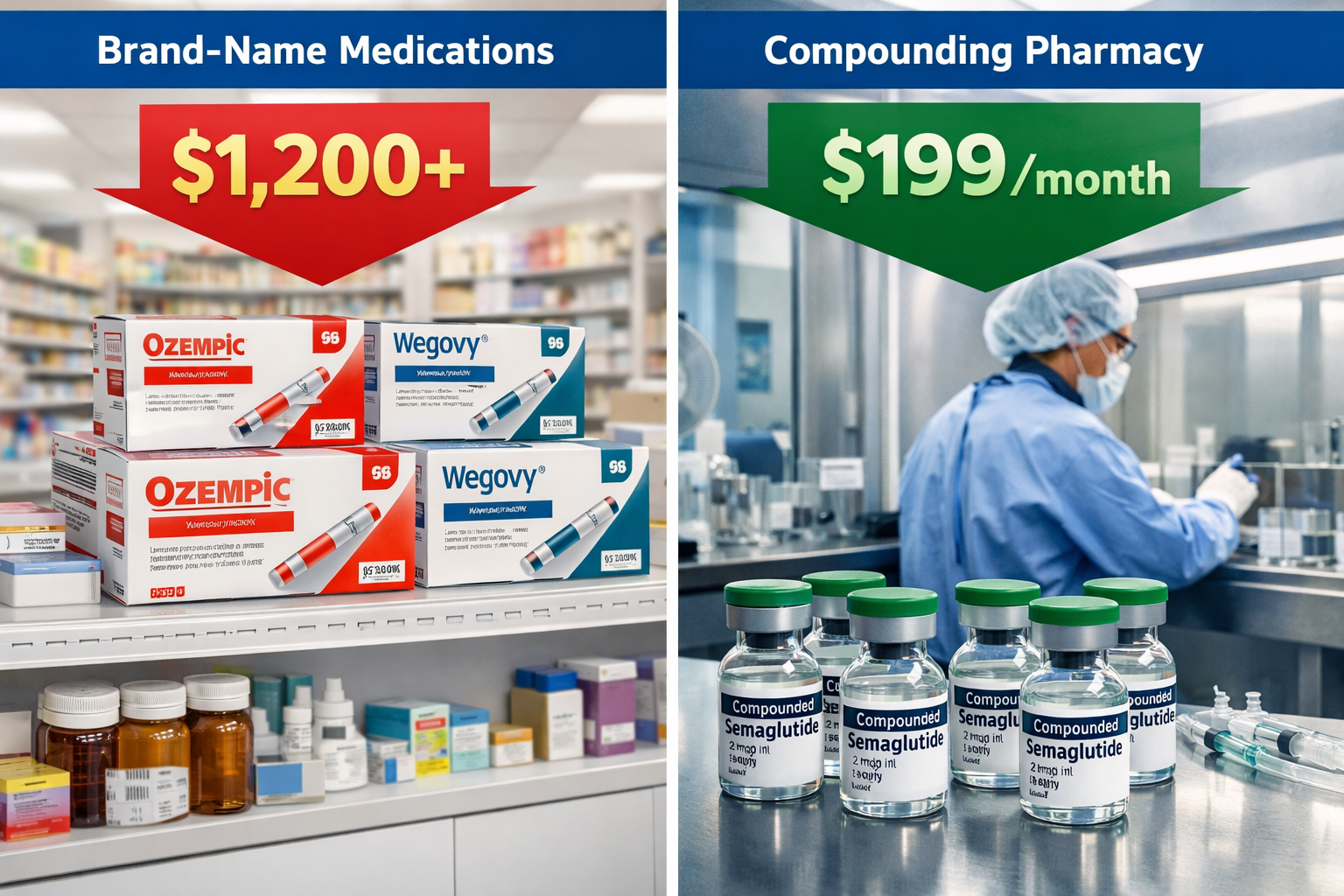
Compounded GLP-1 medications typically cost $199 to $499 per month, compared to $900–$1,300+ per month for brand-name Ozempic, Wegovy, or Zepbound without insurance. That price gap is the primary reason millions of people seek out a GLP-1 compounding pharmacy.
2026 price comparison (without insurance):
| Medication | Type | Estimated Monthly Cost |
| Ozempic (Semaglutide) | Brand-Name | $900 – $1,100 |
| Wegovy (Semaglutide) | Brand-Name | $1,100 – $1,350 |
| Zepbound (Tirzepatide) | Brand-Name | $1,000 – $1,300 |
| Compounded Semaglutide | 503A Pharmacy | $199 – $399 |
| Compounded Tirzepatide | 503A Pharmacy | $249 – $499 |
Note: Brand-name prices are list prices. With insurance or manufacturer savings programs, costs vary significantly.
Why the price difference exists:
- Compounding pharmacies source bulk API directly, bypassing brand-name manufacturing and marketing costs
- No FDA approval process costs are embedded in the price
- Telehealth platforms often bundle the prescriber visit and medication into one monthly fee
For a detailed breakdown of how to find the lowest prices, see our guide on cheapest GLP-1 medications in 2026 and our resource on semaglutide without insurance cost.
Also worth noting: CVS announced it will exclude Zepbound from its formulary starting July 1, 2026, while other major pharmacy benefit managers continue to cover both Zepbound and Wegovy [4]. This coverage shift may push more patients toward compounded alternatives.
What Are the FDA’s Specific Concerns About GLP-1 Compounding Pharmacies?
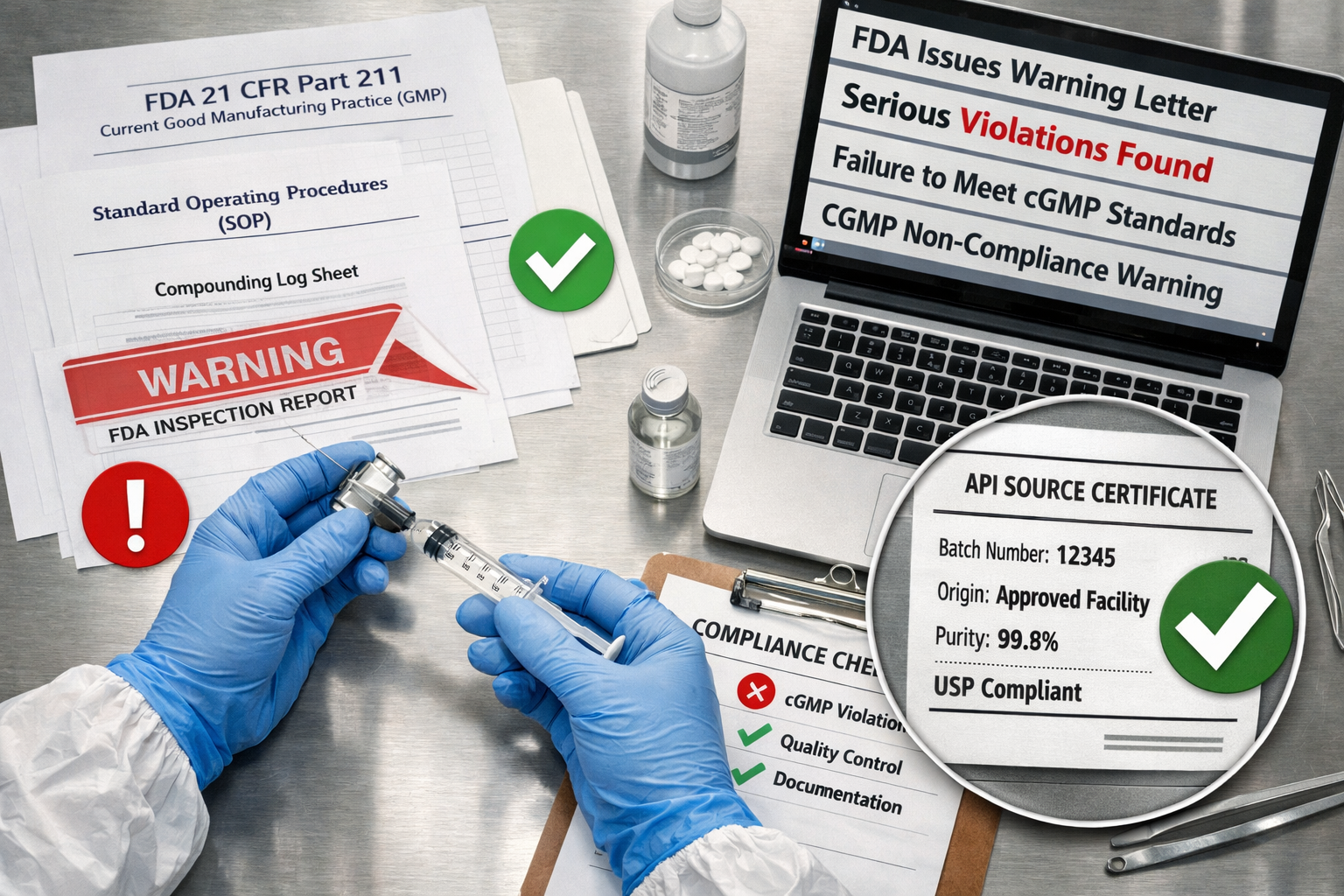
The FDA has raised multiple documented safety and legal concerns about compounded GLP-1 products over the past two years. These are not vague warnings — they are specific, enforcement-backed objections [2][3].
The FDA’s primary enforcement targets:
- Misleading marketing — Online claims presenting compounded GLP-1s as effectively the same as FDA-approved drugs [2]
- Private-label branding — Labels that obscure which entity is actually compounding the product [2]
- Prohibited ingredients — Salt forms of semaglutide, retatrutide, and cagrilintide cannot lawfully be used in compounding [2]
- Poor API sourcing — Using research-grade ingredients not intended for human use [1]
- Dosing errors — Compounded products have been linked to serious adverse events from incorrect dosing [2]
- Compounding without documented medical necessity — Especially from large-scale operations [1]
Pull quote: “Over the past two years, the FDA has documented dosing errors, questionable API sourcing, and serious adverse events tied to compounded semaglutide and tirzepatide.” [2]
Edge case to watch: Some compounders are now creating slight variations of existing products to avoid classification as “copycats” under FDA enforcement criteria [4]. Whether these variations are lawful is not yet settled, and patients using these products carry regulatory uncertainty risk.
The FDA does not prohibit all compounding. It specifically targets operations that lack documented medical necessity, use unlicensed manufacturing, engage in misleading marketing, or use improper ingredients [1].
How Do You Choose a Legitimate GLP-1 Compounding Pharmacy?
A legitimate GLP-1 compounding pharmacy will have verifiable credentials, transparent sourcing, and a licensed prescriber involved in your care. Here is a practical checklist to evaluate any pharmacy before you order.
Verification checklist:
- State pharmacy board license — Verify on your state’s pharmacy board website
- PCAB accreditation — Pharmacy Compounding Accreditation Board certification is the gold standard
- 503A or 503B designation — Understand which category the pharmacy operates under
- FDA-registered API supplier — Ask for documentation of where the active ingredient comes from
- Certificate of Analysis (CoA) — Each batch should have third-party testing documentation
- Prescriber involvement — A licensed physician or NP must evaluate you and issue a real prescription
- No “equivalent to Ozempic” claims — This language is a red flag for FDA violations [2]
- Clear labeling — The actual compounding pharmacy name must appear on the label
Red flags to avoid:
- Pharmacies that sell without a prescription
- Products marketed as “generic semaglutide” or “same as Wegovy”
- No verifiable physical address or state license number
- Prices that seem impossibly low (under $100/month)
- No CoA available upon request
For a curated list of vetted providers, our GLP-1 buy online safety guide and best affordable GLP-1 weight loss programs cover what to look for in 2026.
What Are the Pros and Cons of Using a GLP-1 Compounding Pharmacy?
Pros:
- 💰 Cost savings of 60–80% vs. brand-name options
- 📦 Custom dosing — Useful for patients who need titration schedules not available in standard pens
- 🚫 Avoids insurance barriers — No prior authorization required
- 💊 Alternative delivery forms — Lozenges and drops for patients who cannot tolerate injections [6]
- 🩺 Telehealth access — Many platforms offer same-week prescriber consultations
Cons:
- ⚠️ Not FDA-approved — No guarantee of potency, sterility, or consistency
- 🔬 Quality varies by pharmacy — Without CoA verification, you cannot confirm what you’re getting
- 🚨 Regulatory risk — The legal landscape is shifting; your pharmacy could face enforcement action
- 💉 Documented adverse events — Dosing errors have caused serious harm in some cases [2]
- 📋 Requires documented medical necessity — Not every patient will qualify under 2026 standards
Who Qualifies for Compounded GLP-1 Medications in 2026?
Patients most likely to qualify for compounded GLP-1 medications in 2026 are those with documented medical necessity who cannot access or afford brand-name alternatives. A prescriber must evaluate and document this need.
Typical qualifying criteria:
- BMI ≥ 30 (obesity), or BMI ≥ 27 with a weight-related comorbidity (type 2 diabetes, hypertension, sleep apnea)
- Unable to afford brand-name GLP-1 drugs and does not qualify for manufacturer savings programs
- Allergic or intolerant to inactive ingredients in brand-name formulations
- Requires a dose or formulation not commercially available
Who likely does NOT qualify:
- Patients who can access brand-name drugs through insurance or savings programs
- Patients seeking compounded GLP-1s for cosmetic weight loss without a documented comorbidity
- Patients working with prescribers who do not document medical necessity
For context on how semaglutide dosing works and what doses are typically prescribed, see our semaglutide dose for weight loss guide.
What Are the Best Alternatives If Compounded GLP-1s Become Unavailable?
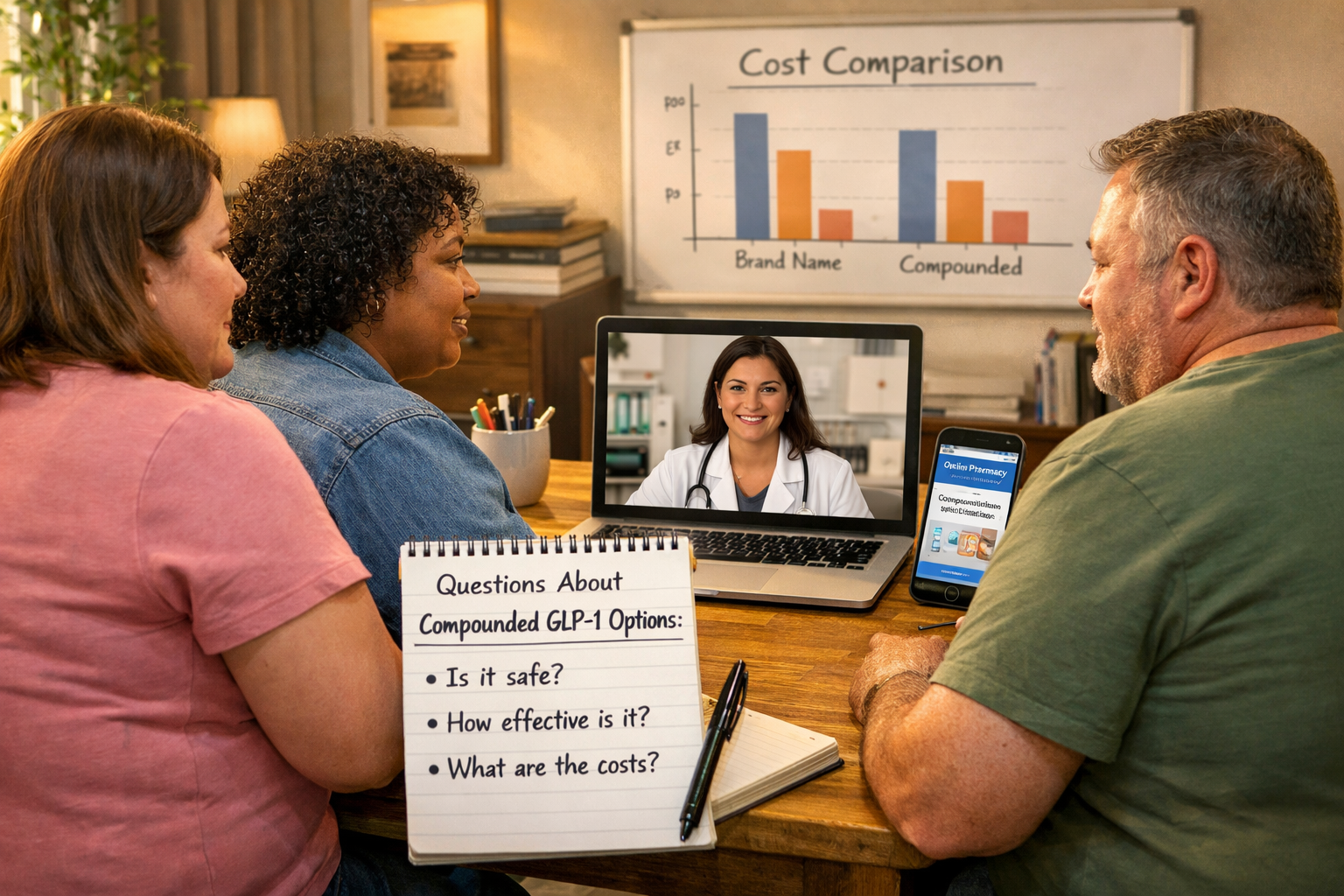
If compounded GLP-1 access is restricted further in 2026, several alternatives exist that can significantly reduce costs for brand-name medications.
Practical alternatives:
- Manufacturer savings programs — Novo Nordisk and Eli Lilly offer savings cards that can reduce Wegovy and Zepbound costs to $0–$99/month for eligible commercially insured patients
- GLP-1 direct pay programs — Some clinics offer bundled pricing outside insurance; see our best GLP-1 direct pay programs guide
- Zepbound vials vs. pens — Zepbound vials cost significantly less than pens; our Zepbound vial vs. pen price comparison shows potential savings of over $8,000 per year
- Oral semaglutide (Rybelsus) — FDA-approved oral tablet option; see our Rybelsus complete guide
- Patient assistance programs — Both manufacturers have income-based programs for uninsured patients
- Tirzepatide vs. semaglutide comparison — Understanding which drug is right for you can affect cost; see our semaglutide vs. tirzepatide comparison
Bottom line: Even if compounded GLP-1s are no longer accessible, brand-name options with proper cost strategies can be made affordable for many patients.
Frequently Asked Questions: Compounded GLP-1 Regulations & Safety (2026)
Is Compounded Semaglutide the same as Ozempic or Wegovy?
No. Compounded semaglutide is prepared from bulk API (Active Pharmaceutical Ingredient) by a licensed pharmacy and is not FDA-approved. Unlike Ozempic or Wegovy, these compounded versions are not tested for bioequivalence to brand-name products and may differ significantly in potency, purity, or specific formulation. [2]
Can I still get compounded GLP-1s in 2026?
Yes, but access has narrowed significantly. Patient-specific compounding through a 503A pharmacy with documented medical necessity remains lawful. However, the FDA has increased enforcement against large-scale commercial compounding and “wellness clinics” that do not meet strict federal guidelines. [1][2]
What are the risks of using a compounding pharmacy for GLP-1 medications?
Documented risks in the 2026 market include dosing errors, inconsistent potency across batches, and adverse events stemming from poorly sourced API. To protect yourself, always request a Certificate of Analysis (CoA) and verify that the pharmacy holds a valid state license and PCAB accreditation. [2]
Why did the FDA issue warning letters in March 2026?
In March 2026, the FDA issued 30 warning letters to telehealth companies. The primary violations included marketing compounded GLP-1 products as “equivalent” to FDA-approved drugs and using private-label branding that obscured the identity of the actual compounding pharmacy. [2]
Are lozenges or drops as effective as injectable compounded GLP-1s?
Clinical evidence for non-injectable compounded GLP-1 formulations (like sublingual drops) remains limited. Injectable semaglutide and tirzepatide have the strongest clinical evidence base. While oral alternatives are available, they currently lack the documented efficacy data associated with subcutaneous injections. [6]
What ingredients are banned in GLP-1 compounding?
The FDA has explicitly prohibited the use of salt forms (such as semaglutide sodium or acetate). Additionally, investigational agents like retatrutide and cagrilintide are strictly prohibited from being used in any compounded formulation at this time. [2]
How do I verify a compounding pharmacy is legitimate?
Before ordering, perform these four checks:
- Use your State Pharmacy Board’s license lookup tool.
- Confirm the facility has PCAB accreditation.
- Request the FDA registration number of their API supplier.
- Ask for a Certificate of Analysis for the specific batch you are receiving.
What happens if my telehealth provider stops offering compounded GLP-1s?
If your provider ceases compounded options, ask about brand-name savings programs or Zepbound vials (which often cost significantly less than the auto-injector pens). Many patients are transitioning to direct-pay models that offer up to 80% savings compared to retail.
Can compounded GLP-1s be shipped across state lines?
Generally, 503A pharmacies are restricted to dispensing within their home state or to patients where a specific prescriber relationship exists. 503B outsourcing facilities have broader distribution rights but face much stricter federal oversight. Shipping rules vary significantly by state law.
Is Tirzepatide available from compounding pharmacies in 2026?
Compounded tirzepatide faces the same heightened enforcement environment as semaglutide. Now that Zepbound shortages have largely been resolved, routine compounding is under heavy legal pressure. Compounding may still be permissible for specific patients with documented medical necessity (e.g., allergies to inactive ingredients in the brand-name version).
Conclusion
The GLP-1 compounding pharmacy landscape in 2026 is not what it was in 2023 or 2024. The legal window that opened during drug shortages has largely closed, and the FDA is actively enforcing against mass-marketing operations and misleading claims. That said, legitimate, patient-specific compounding still exists and can offer meaningful cost savings for people who genuinely cannot afford brand-name alternatives.
Your actionable next steps:
- Talk to a licensed prescriber who can document your medical necessity and guide you to a compliant pharmacy
- Verify any pharmacy using the checklist in this guide before ordering
- Explore brand-name cost strategies — savings cards, vial options, and direct pay programs can close the price gap significantly
- Stay current — FDA enforcement in this space is evolving monthly; check back for updates
If you’re comparing all your options, start with our complete GLP-1 drugs list and our most affordable GLP-1 without insurance guide to see what fits your budget and health profile in 2026.
Medical Sources/Citations
[1] Oral Semaglutide And The GLP-1 Compounding Reckoning From Regulatory Ambiguity To FDA Enforcement, DOJ Referrals, And Novo Nordisk’s Case Against Hims And Hers -[1]
[2] FDA’s Latest GLP-1 Crackdown: What Compounders Need To Know – [2]
[3] FDA Intends To Take Action Against Non-FDA-Approved GLP-1 Drugs – [3]
[4] GLP-1 Considerations For 2026: Your Questions Answered – [4]
[5] The Drug Compounding Policy Standoff – [5]
[6] 2026 Oral GLP-1 Medication Options: A Complete Guide – [6]
[7] FDA’s Enforcement And Compounded Drug: The GLP-1 Test Case – [7]

With over 13 years of experience in holistic health blogging, I aim to help you navigate your wellness journey with honest insights, expert-backed advice, and a sprinkle of real-world practicality.
Certified Wellness Writer | Herbal Nutrition Advocate | Wellness Research Enthusiast


