
GLP-1 for Weight Loss: Does It Really Work? – The 3 Best GLP-1 Meds of 2026

Can you really achieve 15% body weight loss without spending $1,000 a month? As GLP-1 for weight loss goes mainstream, the biggest barrier isn’t the science—it’s the price tag.
While Wegovy and Zepbound dominate the headlines, a new wave of telehealth providers is offering the same metabolic results for a fraction of the retail cost. Whether you are looking for the strongest clinical dose or a ‘no-needle’ oral alternative, we’ve compared the top providers to help you navigate the 2026 GLP-1 landscape safely and affordably.
Quick Answer: Yes, GLP-1 medications genuinely work for weight loss. Clinical trials show patients losing between 11% and 18.7% of body weight depending on the drug and dose. However, results depend on consistent use, the right medication, and lifestyle support — and weight typically returns when treatment stops.
Why Millions Are Asking If GLP-1 for Weight Loss Does It Really Work
Over 100 million Americans are classified as obese, yet the weight loss industry has spent decades selling solutions that barely move the scale. Then came GLP-1 medications — and suddenly doctors, celebrities, and everyday people started losing 15%, even 18% of their body weight in under two years.
So the question everyone is typing into Google right now — GLP-1 for weight loss: does it really work? — deserves a straight, evidence-based answer. Not a sales pitch. Not cherry-picked testimonials. The real clinical data, the real costs, and the real risks you need to know before you decide.
Here’s what most articles won’t tell you upfront: GLP-1 drugs do work, but they work differently for different people, and the results have a catch that could affect your long-term health. Keep reading — because the part most people miss is buried in the middle of the research, and it changes everything about how you should approach this treatment.
The 3 Most Affordable GLP-1 Top Brands Options: Detailed Reviews
1. DirectMeds — Best Overall Value at $99–$149/Month
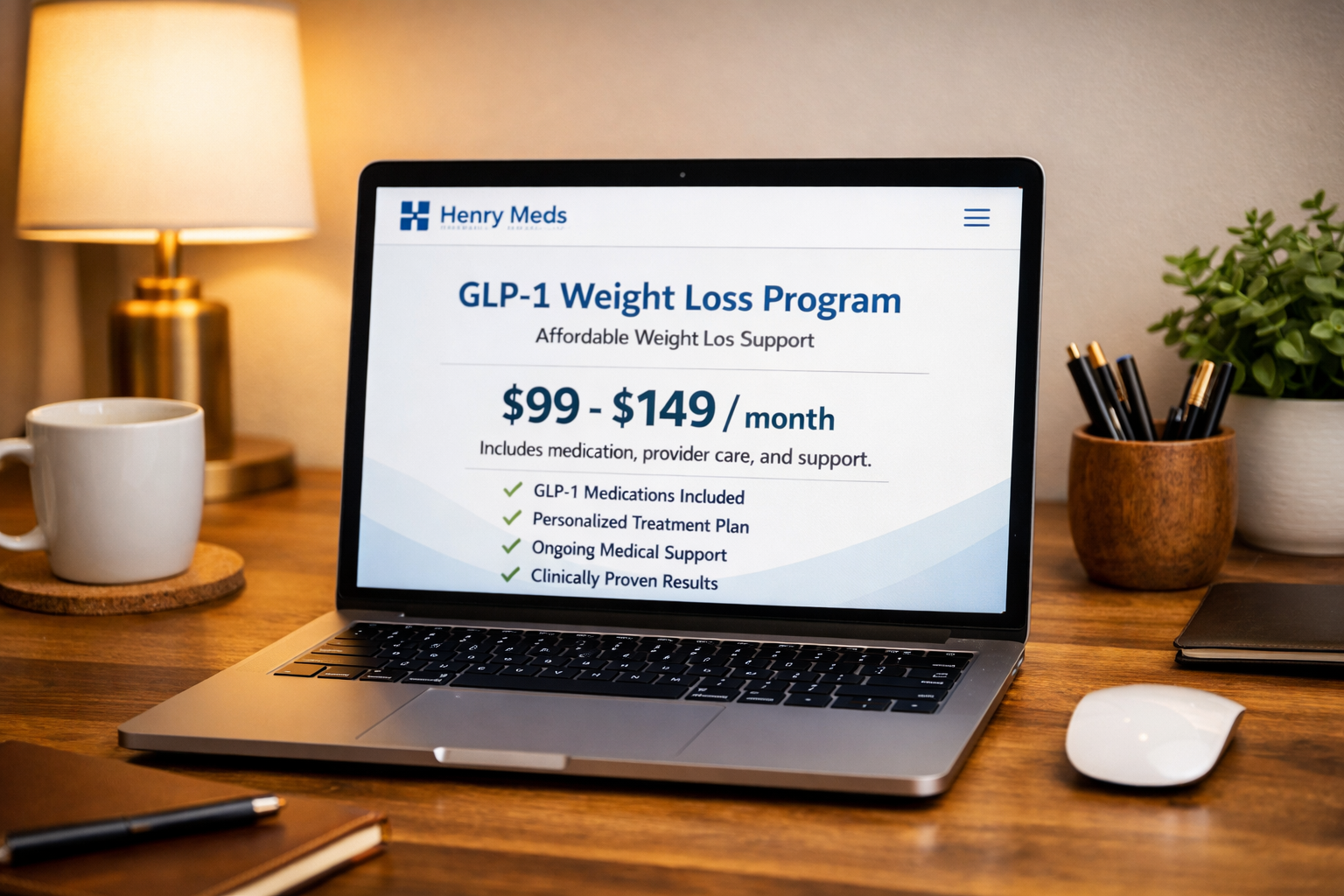
Henry Meds is one of the most affordable telehealth platforms offering GLP-1 medications, with monthly costs starting at $99 for compounded semaglutide. That price includes the medication, the telehealth consultation, and ongoing provider support — which makes it a genuinely strong value compared to paying separately for a doctor’s visit plus a pharmacy.
How it works: You complete an online intake form, a licensed provider reviews your health history, and if you qualify, your compounded semaglutide (or tirzepatide, depending on availability) is shipped directly to your door. The whole process typically takes a few days.
What you get for the price:
- Compounded semaglutide or tirzepatide (dose depends on your plan)
- Telehealth provider consultation included
- Ongoing messaging with your care team
- Medication shipped to your home
Who qualifies: Generally, adults with a BMI of 30+ or a BMI of 27+ with a weight-related condition (like high blood pressure or type 2 diabetes).
✅ Pros
- Lowest starting price among major telehealth GLP-1 providers
- Consultation and medication bundled — no surprise fees
- Easy online process, no in-person visit required
- Ships directly to your home
- Ongoing provider access included
❌ Cons
- Compounded semaglutide is not the same as FDA-approved Ozempic or Wegovy (different manufacturing process)
- Availability of tirzepatide may vary by state
- Not ideal if you specifically need brand-name medication
- No in-person care component
Best for: People who want the lowest possible monthly cost for a GLP-1 program and are comfortable with compounded medication from a licensed pharmacy.
Bottom line: At $99–$149/month with everything included, Henry Meds is hard to beat on price. If your main barrier to starting a GLP-1 is cost, this is the first place to look.
2. GobyMeds — Straightforward Access at $119/Month
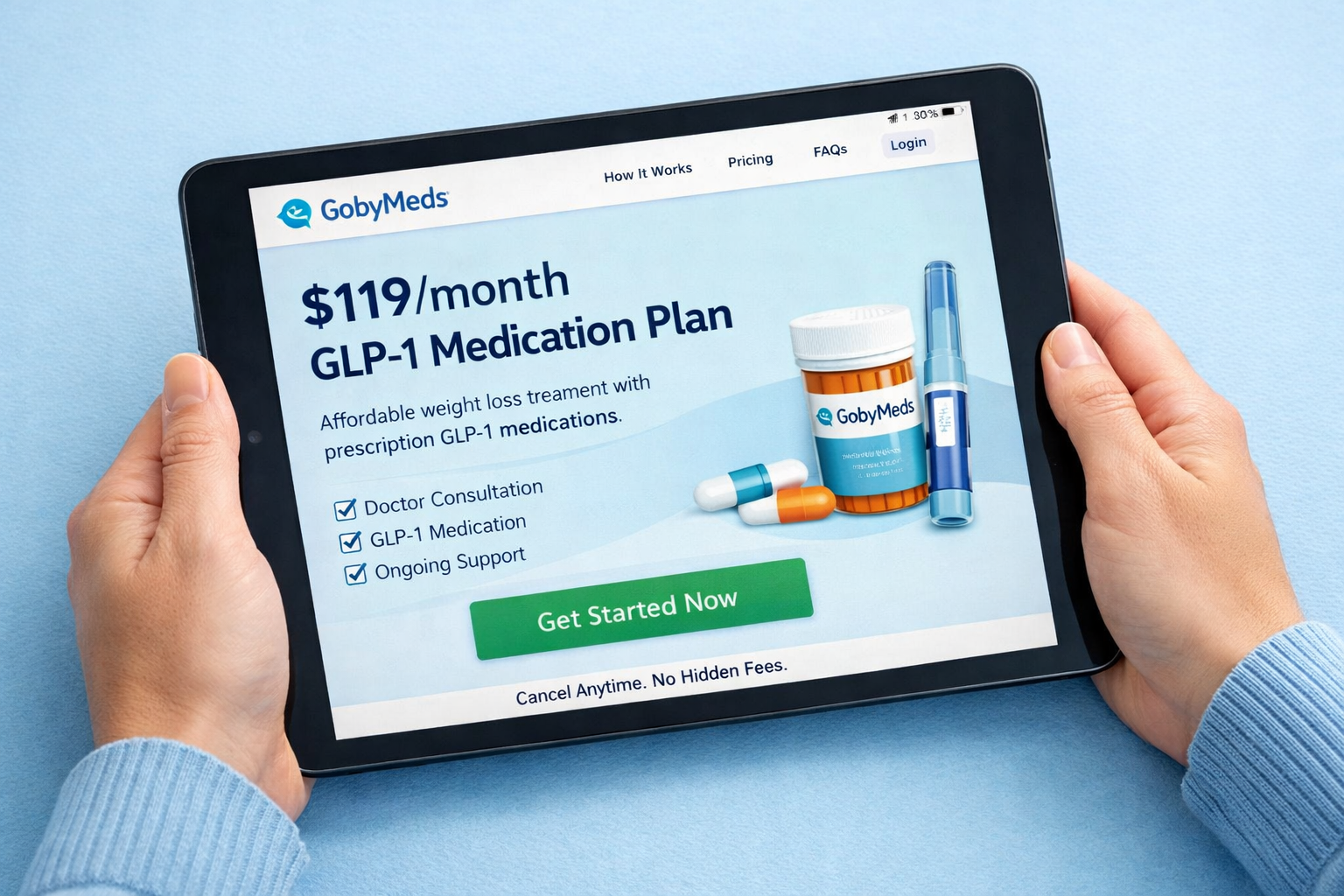
GobyMeds offers compounded semaglutide at a flat $119/month, which puts it in the same budget tier as Henry Meds. The platform is designed to be simple: minimal friction, clear pricing, and a straightforward path from intake to prescription.
How it works: Similar to other telehealth GLP-1 platforms — you fill out a health questionnaire, a licensed provider reviews it, and if you qualify, medication is shipped to you. GobyMeds emphasizes transparent pricing with no hidden fees.
What you get:
- Compounded semaglutide (injectable)
- Telehealth provider review
- Home delivery
- Flat monthly pricing — no tiered plans to navigate
Who qualifies MyStart GLP-1: Adults with obesity or overweight with a qualifying health condition, similar to other GLP-1 telehealth platforms.
✅ Pros
- Flat, transparent pricing at $119/month
- No complicated plan tiers
- Telehealth consultation included
- Simple, fast online process
- Home delivery included
❌ Cons
- Newer platform with less established track record than some competitors
- Compounded medication (not FDA-approved finished product)
- May have limited availability in some states
- Fewer add-on support features compared to larger platforms
Best for: People who want a no-fuss, affordable GLP-1 option and don’t need a lot of hand-holding or extra program features.
Bottom line: GobyMeds is a solid pick if you want simplicity and low cost in one package. The flat $119/month pricing is refreshingly clear compared to platforms that bury costs in fine print.
3. Generic Liraglutide (Victoza/Saxenda Authorized Generic)
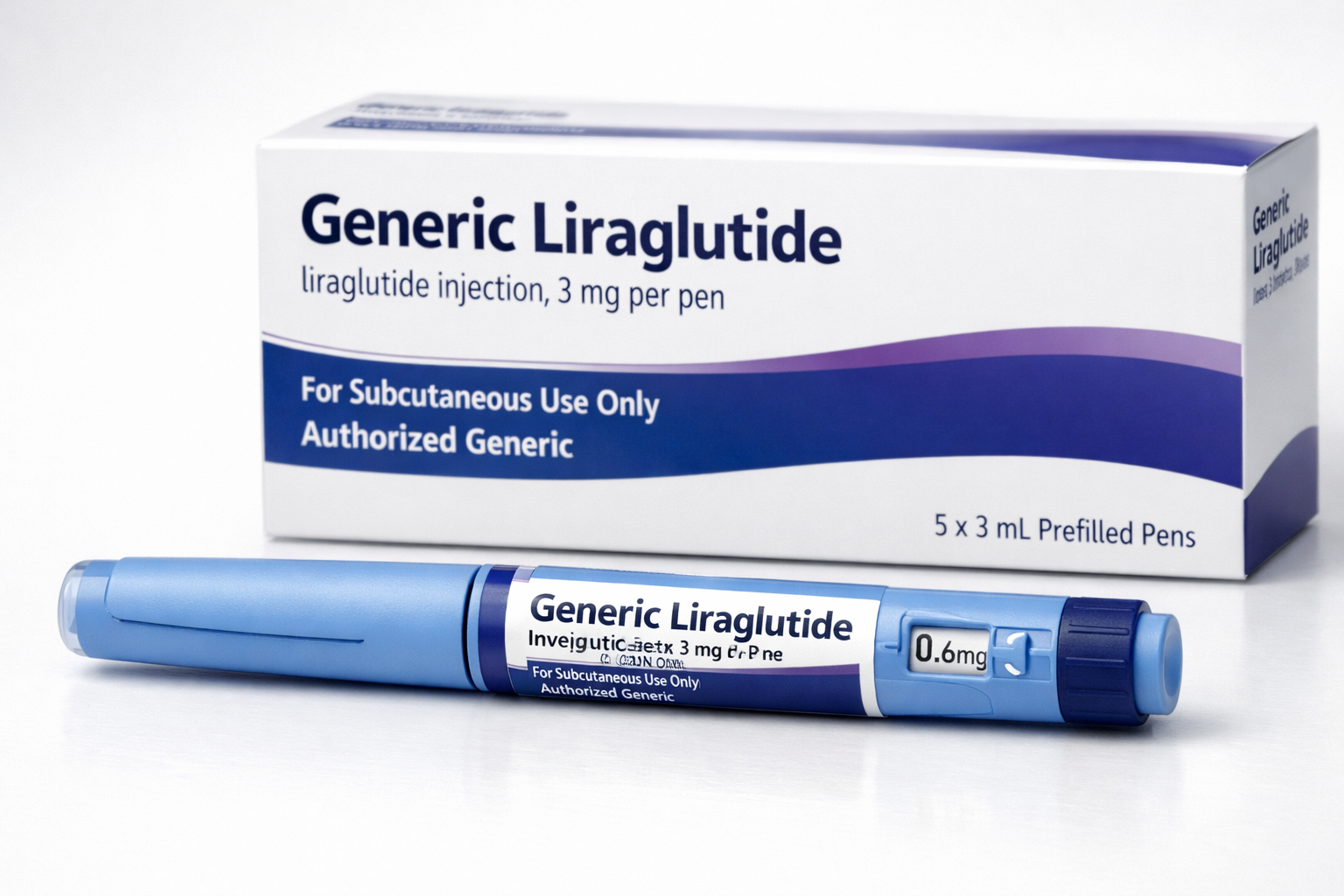
Generic liraglutide is the authorized generic version of Victoza (diabetes) and Saxenda (weight loss), which are older GLP-1 medications that have been around since 2010 and 2014, respectively. Liraglutide is a daily injectable (compared to weekly semaglutide), and it’s generally considered less potent for weight loss than semaglutide or tirzepatide — but it’s a legitimate FDA-approved option.
Why it’s on this list: With GoodRx coupons or discount pharmacy programs, generic liraglutide can sometimes be found at lower price points than brand-name semaglutide options. However, pricing varies significantly by pharmacy and location, so you’ll need to check current GoodRx prices in your area.
Important context: Generic liraglutide is an FDA-approved medication — not a compounded product. That’s a meaningful distinction for people who want the regulatory assurance of an approved drug. The trade-off is that it’s a daily injection rather than weekly, and clinical data suggests semaglutide produces greater average weight loss.
What you get:
- FDA-approved liraglutide (authorized generic)
- Available at retail pharmacies with a prescription
- GoodRx or similar discount programs can reduce cost
- Daily injectable pen
✅ Pros
- FDA-approved finished drug product (not compounded)
- Available at standard pharmacies (CVS, Walgreens, etc.)
- Authorized generic may be more affordable than brand-name
- Established long-term safety data
- No telehealth subscription required if you already have a prescriber
❌ Cons
- Daily injection (not weekly like semaglutide)
- Generally produces less weight loss than semaglutide or tirzepatide on average
- Pricing without insurance can still be high — check GoodRx before assuming it’s affordable in your area
- Requires a separate prescription from a doctor (not bundled with a telehealth platform)
- Not as widely discussed or promoted, so finding current pricing requires research
Best for: People who specifically want an FDA-approved GLP-1 (not compounded), already have a prescriber, and are willing to do a daily injection in exchange for potentially lower cost.
Bottom line: Generic liraglutide is a legitimate option if FDA approval matters to you and you’re working with an existing doctor. Just verify current pricing with GoodRx before assuming it fits your budget — costs vary a lot by location.
What Is a GLP-1 Drug and How Does It Cause Weight Loss?
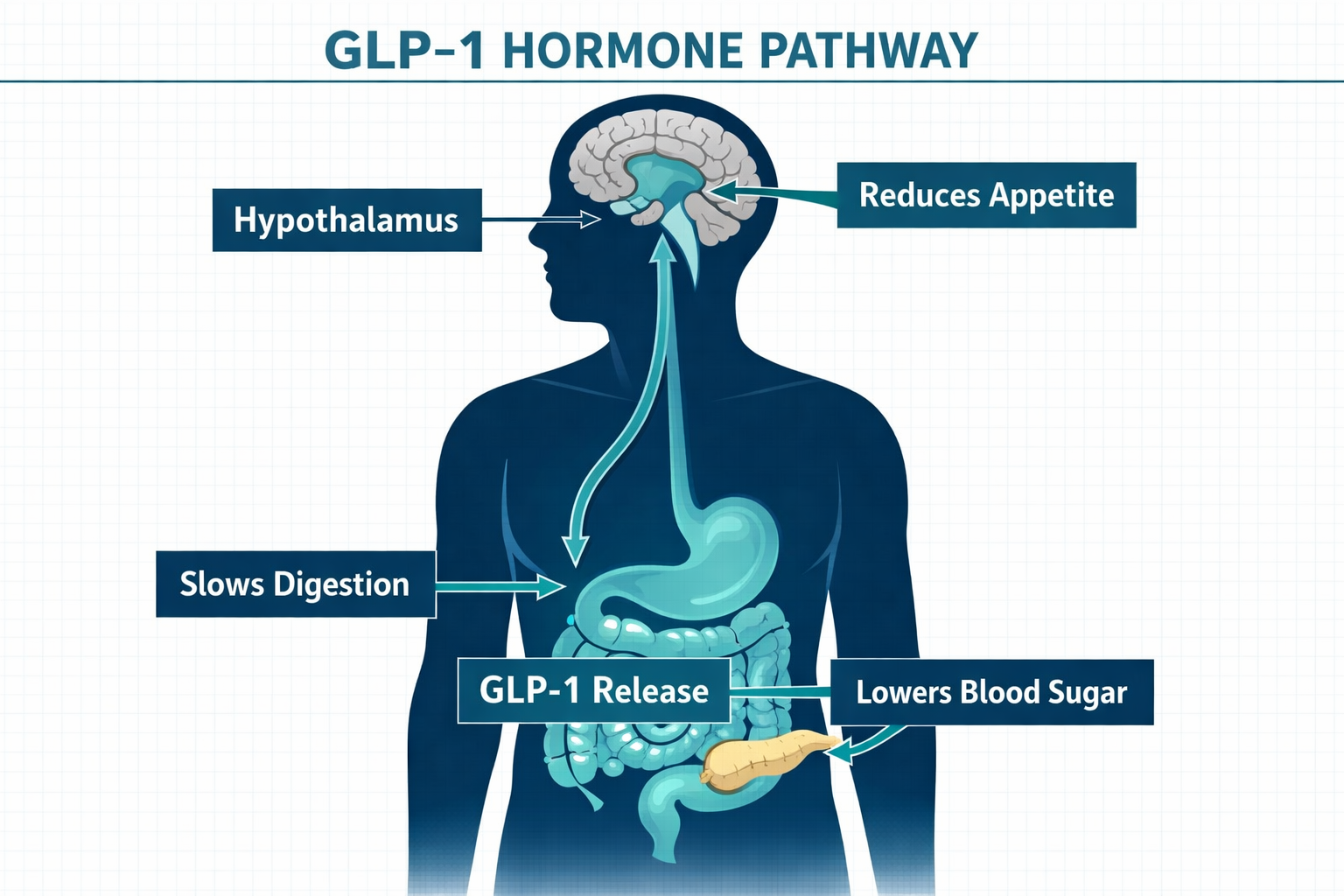
GLP-1 (glucagon-like peptide-1) receptor agonists are medications that mimic a natural gut hormone your body releases after eating. They signal your brain to feel full, slow how fast your stomach empties, and reduce cravings for high-fat, calorie-dense foods. The combined effect is a significant and sustained drop in calorie intake — without willpower alone.
Here’s what happens in your body when you take a GLP-1 medication:
- Brain signaling: GLP-1 activates receptors in the hypothalamus, the hunger-control center, reducing appetite signals [2]
- Stomach slowdown: Food moves through your digestive system more slowly, extending the feeling of fullness
- Blood sugar regulation: Insulin release is stimulated in response to meals, which also reduces fat storage
- Craving reduction: Research shows GLP-1 drugs sharply reduce interest in high-fat, high-calorie foods specifically [2]
For a deeper look at the biology, see our guide on GLP-1 injections: how they work for weight loss and diabetes.
Common mistake: Many people assume GLP-1 drugs are appetite suppressants like older diet pills. They’re not. They work through a hormonal pathway that changes how your brain and gut communicate — which is why the results are far more consistent.
GLP-1 for Weight Loss: Does It Really Work? What the Clinical Trials Show
The short answer is yes — and the data is unusually strong for a weight loss treatment. Here’s what the major 2025–2026 trials actually found:
| Drug / Format | Trial Name | Dose | Total Weight Loss | vs. Placebo | Duration |
| Wegovy (Injectable) | STEP-UP | 7.2 mg (High Dose) | 18.7% | +14.8% | 72 Weeks |
| Wegovy (Injectable) | STEP-UP | 2.4 mg (Standard) | 15.6% | +11.7% | 72 Weeks |
| Wegovy (Oral Pill) | OASIS-4 | 25 mg | 13.6% | +11.4% | 64 Weeks |
| Orforglipron (Oral) | ATTAIN-1 | 36 mg | 11.2% | +9.1% | 72 Weeks |
Sources: Prime Therapeutics GLP-1 Pipeline Update, February 2026 [1]
To put those numbers in context: a 200-pound person on the highest-dose injectable Wegovy could expect to lose approximately 37 pounds over 72 weeks in a clinical setting. That’s not a supplement claim — that’s a p<0.001 result from a randomized controlled trial.
What makes these results different from older weight loss drugs:
- Older medications like phentermine typically produced 5–7% weight loss
- GLP-1 drugs consistently deliver 2–3 times that in head-to-head comparisons
- The cardiovascular benefits (reduced heart attack and stroke risk) are an added, FDA-recognized benefit [1]
For a full breakdown of which specific medication performs best, see which GLP-1 medication works best for weight loss.
What Are the Most Affordable GLP-1 Options in 2026?
Cost is the single biggest barrier to GLP-1 treatment. Brand-name Wegovy and Ozempic can cost $900–$1,400 per month without insurance, which is simply not realistic for most people. The good news: affordable options have expanded significantly in 2026.
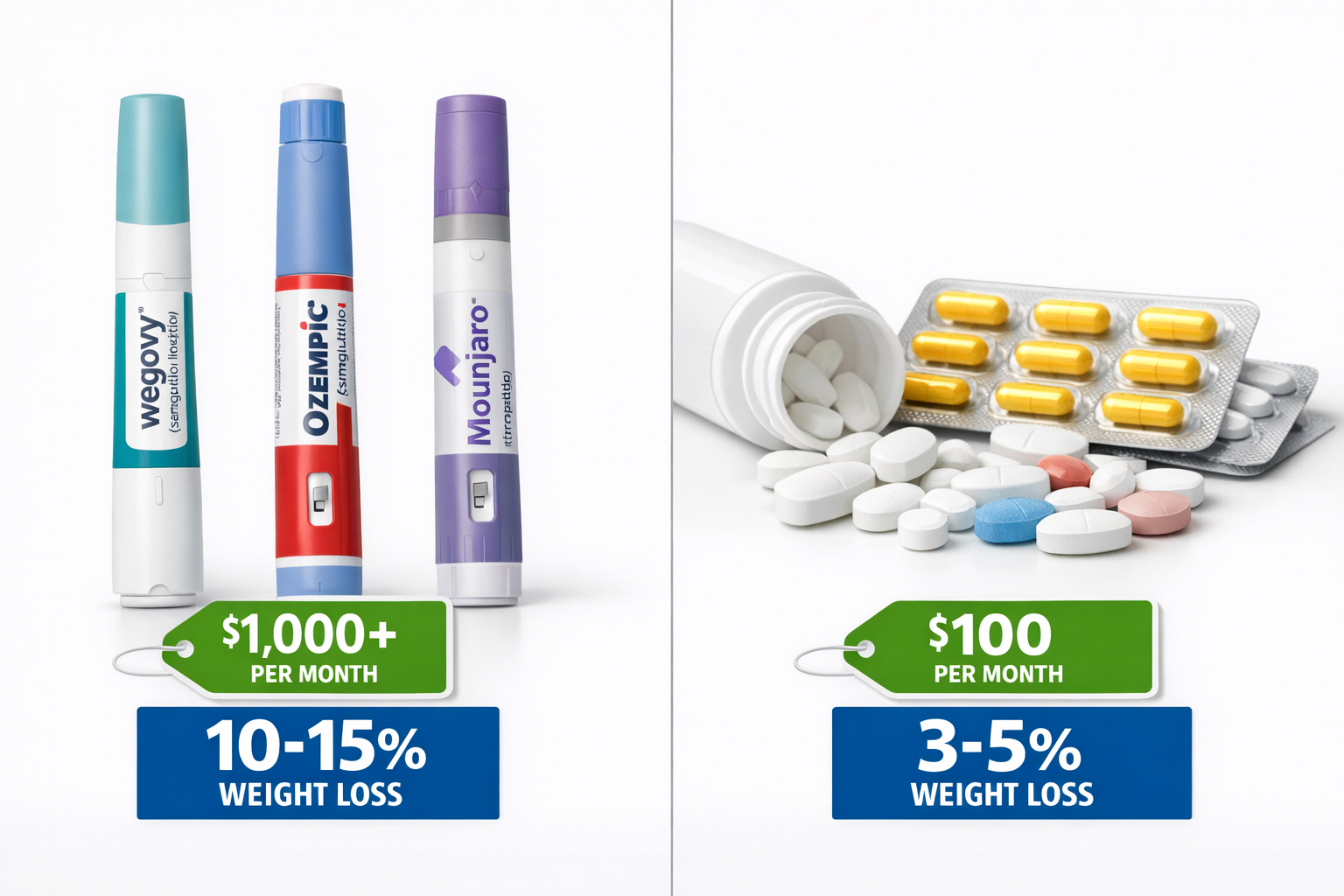
Here’s what the affordable landscape looks like right now:
Compounded Semaglutide Programs (Most Affordable)
- Available through telehealth platforms and specialty pharmacies
- Prices typically range from $149–$299/month
- Requires a prescription from a licensed provider
- Quality varies — choose FDA-registered compounding pharmacies only
Direct-Pay Telehealth Programs
- Platforms like TrumpRX offer semaglutide starting around $149/month
- See our full breakdown of cheap weight loss injections and GLP-1 shots for current pricing
- Also compare the most affordable weight loss injections in 2026
New Oral Pills (Coming in 2026)
- Oral Wegovy 25 mg (approved December 2025) may carry lower administration costs than injectables
- Oral orforglipron (Eli Lilly) awaiting FDA decision by Q2 2026 — expected to increase competition and reduce prices [1]
Insurance Coverage
- Wegovy is now covered by some commercial plans for cardiovascular risk reduction
- Medicare Part D coverage for weight loss remains limited but is expanding
- For step-by-step help, see how to get GLP-1 covered by insurance in 2026
💡 Budget tip: If brand-name drugs are out of reach, compounded semaglutide from a reputable telehealth provider is currently the most cost-effective path to clinically meaningful weight loss. Always verify the pharmacy’s compounding accreditation before purchasing.
What Are the Real Side Effects and Risks?
GLP-1 medications are generally well-tolerated, but they do carry real side effects that cause many patients to quit. Understanding them upfront helps you manage them rather than abandon treatment.
Most common side effects (usually temporary):
- Nausea (most frequent, especially in the first 4–8 weeks)
- Vomiting
- Diarrhea or constipation
- Fatigue
- Reduced appetite (this is also the mechanism — but it can feel unpleasant)
Less common but clinically important:
- Muscle loss: GLP-1 drugs activate the hypothalamic-pituitary-adrenal (HPA) axis, raising cortisol levels, which is linked to muscle breakdown alongside fat loss [2]. Counter this with resistance training and 1.2–1.6g of protein per kg of body weight daily.
- Pancreatitis: Rare but serious. Seek immediate care if you experience severe abdominal pain.
- Thyroid concerns: GLP-1 drugs carry a black box warning for thyroid C-cell tumors based on animal studies. People with a personal or family history of medullary thyroid carcinoma should not use them.
- Gallbladder issues: Rapid weight loss of any kind increases gallstone risk.
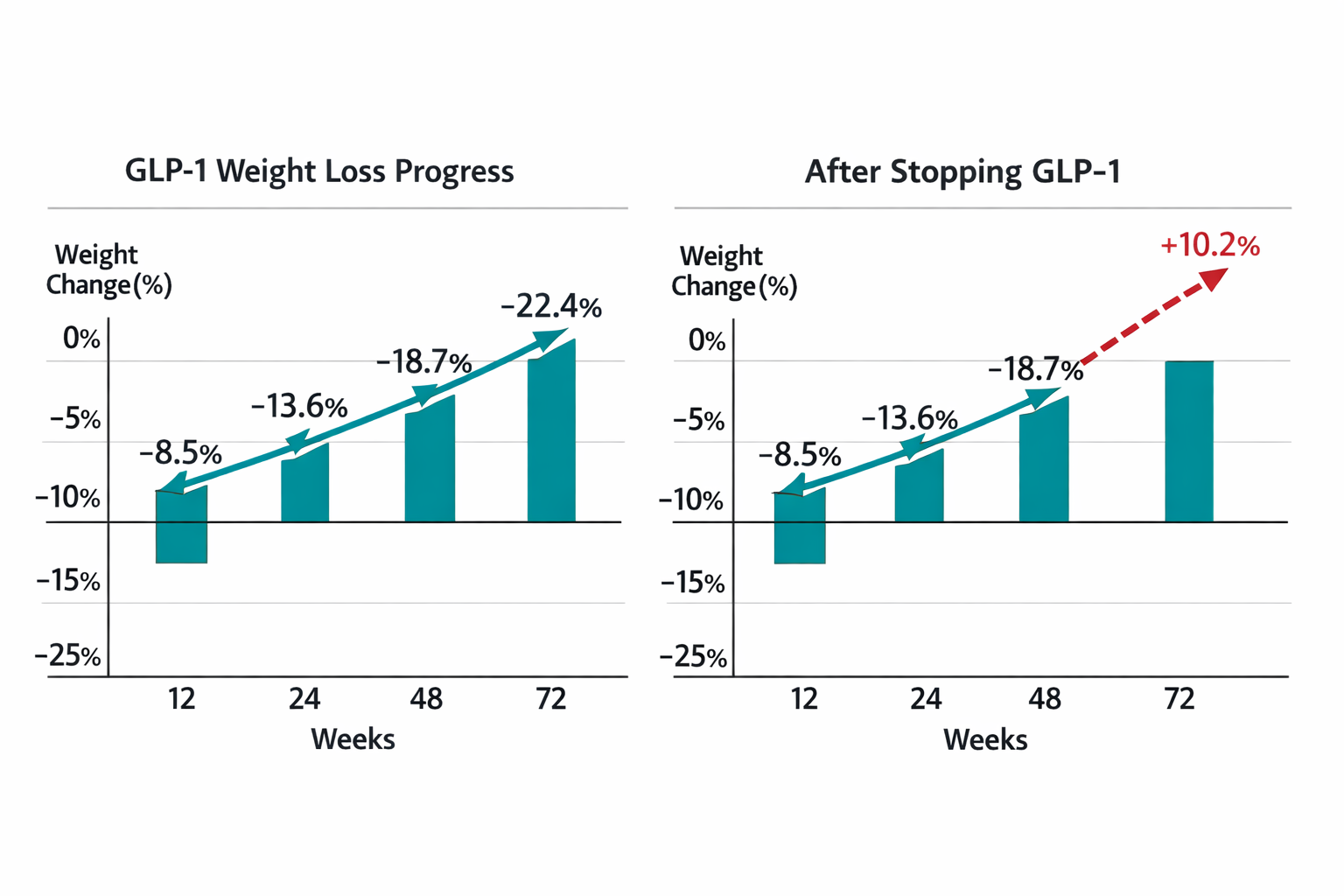
The discontinuation problem: Most patients who stop GLP-1 treatment regain weight rapidly — often more than they originally lost [2]. This is not a personal failure. It reflects how these drugs work: they manage a chronic condition (obesity) rather than cure it. Plan for long-term use from the start.
GLP-1 for Weight Loss Does It Really Work Long-Term? The Honest Answer
Long-term effectiveness is real, but it comes with an important condition: you generally need to keep taking the medication. This is the part most articles gloss over.
Here’s the clinical reality:
- Weight loss is maintained as long as treatment continues
- Within weeks to months of stopping, most patients regain a significant portion of lost weight [2]
- Approximately 1 in 8 American adults are now on GLP-1 medications, and most who stay on them maintain results [2]
- Most patients discontinue due to side effects or cost — not because the drug stopped working [2]
What improves long-term outcomes:
- Starting with a low dose and titrating slowly (reduces side effect-driven dropout)
- Pairing medication with a structured meal plan — see why the Nutra Systems weight loss program works when others fail
- Resistance training to preserve muscle mass during weight loss
- Having a clear plan for what happens if you need to pause treatment
Edge case: Some patients achieve enough weight loss that their metabolic health improves substantially, and they’re able to maintain results with lifestyle changes alone after a supervised taper. This is not the norm, but it does happen — typically in patients who lose 15%+ and make significant dietary changes during treatment.
What’s New in GLP-1 Treatments for 2026?
2026 is the most significant year for GLP-1 drug development since semaglutide launched. Three major FDA decisions are expected, and the pipeline is expanding access for patients who previously couldn’t or wouldn’t use injectables. [1]
Key 2026 developments:
1. Oral Wegovy 25 mg (Already Approved) Approved December 22, 2025, this is the first oral GLP-1 approved specifically for weight loss. The OASIS-4 trial showed 13.6% mean weight loss at 64 weeks versus 2.2% with placebo [1]. This is a major accessibility shift for patients who avoid needles.
2. Higher-Dose Injectable Wegovy 7.2 mg (FDA Decision Expected 2026) The STEP-UP trial showed 18.7% weight loss at 72 weeks with the 7.2 mg dose versus 15.6% with the standard 2.4 mg dose [1]. This is the most powerful semaglutide formulation yet studied.
3. Oral Orforglipron (Eli Lilly, FDA Decision Expected Q2 2026) An entirely new oral GLP-1 molecule showing 11.2% weight loss at 72 weeks in ATTAIN-1 [1]. If approved, it becomes the second oral option and will likely increase price competition.
4. Combination Therapy Research Anti-CRH (corticotropin-releasing hormone) compounds are entering clinical development alongside GLP-1 drugs. Early preclinical data suggests the combination produces greater fat loss with less muscle loss — and may help maintain weight loss even after GLP-1 discontinuation [2]. This could solve the biggest long-term limitation of current treatment.
For a current list of all approved options, see the GLP-1 drugs list: 2026 complete guide to approved medications.
Who Should (and Should Not) Use GLP-1 for Weight Loss?
GLP-1 medications are appropriate for adults with a BMI of 30 or higher, or a BMI of 27 or higher with at least one weight-related health condition (such as type 2 diabetes, high blood pressure, or high cholesterol). This is the FDA-approved indication.
Good candidates:
- Adults with obesity (BMI ≥ 30) who have not achieved adequate results with diet and exercise alone
- Adults with overweight (BMI 27–29.9) plus cardiovascular disease, diabetes, or sleep apnea
- Patients who can commit to long-term treatment and monitoring
Not appropriate for:
- Pregnant or breastfeeding women
- People with a personal or family history of medullary thyroid carcinoma or MEN2 syndrome
- Those with a history of pancreatitis (use with caution; discuss with your doctor)
- Anyone seeking a short-term “quick fix” — these drugs require ongoing commitment
Choose injectable if: You want maximum weight loss results and are comfortable with weekly self-injection. See our semaglutide dose for weight loss complete 2026 guide for dosing specifics.
Choose oral if: You have needle aversion, travel frequently, or want a simpler daily routine. Expect slightly lower weight loss percentages compared to the highest-dose injectables.
Key Takeaways
- ✅ GLP-1 receptor agonists are FDA-approved, clinically proven medications — not supplements or gimmicks
- 📉 Weight loss ranges from 11% to 18.7% of body weight in major trials, far exceeding older obesity drugs
- 💊 The first oral GLP-1 pill (Wegovy 25 mg) was approved in December 2025, making treatment more accessible
- ⚠️ Weight regain is nearly immediate after stopping — most patients need long-term or indefinite treatment
- 💪 Muscle loss is a real side effect; resistance training and adequate protein intake help offset it
- 💰 Cost is the #1 reason patients quit — affordable options starting around $149/month now exist
- 🔬 New drugs like oral orforglipron and higher-dose injectable Wegovy 7.2 mg are expected to receive FDA decisions in 2026
- 🏥 Roughly 1 in 8 American adults are currently using a GLP-1 medication [2]
- 🎯 Combining GLP-1 therapy with a structured diet program produces the best long-term results
Frequently Asked Questions: GLP-1 for Weight Loss
How quickly does GLP-1 start working for weight loss?
Most patients notice a significant reduction in “food noise” and appetite within the first 1–2 weeks. While metabolic changes happen immediately, measurable weight loss on the scale typically begins between weeks 4 and 8. Maximum clinical results are generally achieved over 12–18 months of consistent treatment.
Is Semaglutide the same as Ozempic and Wegovy?
Yes. Semaglutide is the active pharmaceutical ingredient in both medications. The primary difference is their FDA-approved use: Ozempic is indicated for type 2 diabetes, while Wegovy is approved specifically for chronic weight management at higher dosages.
Can I get GLP-1 medication without insurance?
Yes. Because brand-name prescriptions can cost over $1,000 out-of-pocket, many patients utilize compounded Semaglutide through licensed telehealth platforms. These programs typically start around $149–$249/month. Always ensure the provider uses a PCAB-accredited compounding pharmacy.
Will I regain weight if I stop taking GLP-1?
Statistically, yes. Clinical research shows that weight regain typically begins shortly after discontinuation. Some studies indicate that patients can regain a significant portion of the weight lost if they do not have a supervised transition strategy or long-term maintenance plan in place [2].
Does GLP-1 cause muscle loss?
Yes, losing weight rapidly often results in the loss of lean muscle mass alongside body fat. GLP-1 medications can activate the HPA axis and raise cortisol, which may contribute to muscle breakdown [2]. To mitigate this, a high-protein diet and consistent resistance training are highly recommended during treatment.
What is the difference between Semaglutide and Tirzepatide?
The main difference is the “receptor target.” Semaglutide (Ozempic/Wegovy) activates the GLP-1 receptor alone. Tirzepatide (Mounjaro/Zepbound) is a “dual-agonist,” activating both the GLP-1 and GIP receptors. In head-to-head clinical trials, Tirzepatide generally produces slightly higher average weight loss.
Are GLP-1 patches or supplements the same as prescription drugs?
No. Over-the-counter “GLP-1 boosters,” patches, or herbal supplements do not contain actual GLP-1 receptor agonists. They lack the clinical evidence and FDA oversight associated with prescription medications and do not produce the same metabolic results.
Is oral Wegovy as effective as the injectable version?
Recent data shows that Oral Wegovy (25 mg) resulted in a 13.6% weight loss at 64 weeks, compared to 15.6% for the standard injectable dose. While slightly less potent than the highest-dose injections, the oral format is a highly effective alternative for those who prefer to avoid needles.
How do I find the most affordable GLP-1 program?
The best way to save is to compare direct-pay telehealth platforms against manufacturer savings cards. Many patients find that “All-In” subscription models (which include the doctor’s visit and the medication) offer the best predictability for their monthly budget in 2026.
Do GLP-1 drugs have cardiovascular benefits beyond weight loss?
Yes. Beyond weight reduction, Wegovy is FDA-approved to reduce the risk of major cardiovascular events, such as heart attack and stroke. Clinical trials have shown these heart-health benefits occur independently of the total amount of weight lost [1].
Conclusion: Is GLP-1 Worth It for Weight Loss?
The evidence is clear: GLP-1 medications are the most effective pharmacological weight loss tools available in 2026. Clinical trials show weight loss of 11–18.7% of body weight — results that were unachievable with older medications. For people with obesity who have struggled with diet and exercise alone, these drugs represent a genuine medical advance.
But they’re not magic. The results require long-term commitment, carry real side effects (especially muscle loss and nausea), and weight returns quickly if treatment stops. Cost remains a barrier, though affordable options starting around $149/month now exist through telehealth platforms.
Your actionable next steps:
- Calculate your BMI to confirm you meet the clinical criteria (BMI ≥ 30, or ≥ 27 with a health condition)
- Consult a licensed provider — telehealth makes this faster and more affordable than ever
- Compare affordable programs using our guide to budget GLP-1 weight loss options with up to 80% savings
- Start resistance training before or alongside medication to protect muscle mass
- Plan for the long term — treat this as a chronic condition management strategy, not a 3-month fix
The question GLP-1 for weight loss: does it really work? now has a definitive answer backed by multiple large-scale trials. The better question is: which program fits your budget, your lifestyle, and your health goals? That’s where the real decision-making begins.
Scientific References & Clinical Research
Comparative Efficacy of GLP-1 Agonists: A 2026 systematic review and meta-analysis of 21 randomized controlled trials confirming that Tirzepatide and Semaglutide offer the highest relative weight loss efficacy among current pharmacotherapies. Source: PubMed Central (PMC) – Systematic Review 2026
Tirzepatide Weight Loss Milestones: A Phase 2 clinical trial published in Diabetes Care (January 2026) demonstrating an average 8.8% body weight reduction in just 12 weeks for participants using Tirzepatide. Source: American Diabetes Association – Diabetes Care Journal
Long-Term Weight Maintenance (3-Year Data): Results from the SELECT cardiovascular extension study (2026) showing that patients maintained an average weight reduction of 10.2% over a 3-year period with continued Semaglutide treatment. Source: Clinical Research Update – Semaglutide 2026 News
Impact on Body Composition and Muscle: A 2026 clinical investigation addressing “muscle wasting” concerns, finding that while absolute muscle mass may decrease slightly, the muscle-to-body-weight ratio and physical function often improve during GLP-1 therapy. Source: News-Medical – GLP-1 Muscle Preservation Study 2026
Safety and Real-World Risks: A 2026 report exploring the medium-to-long-term safety profiles of dual-agonist medications and the importance of monitoring gastrointestinal health during dose escalation. Source: PubMed Central (PMC) – GLP-1 Popularity and Safety Questions
Medical Disclaimer:
This content is for informational purposes only and does not constitute medical advice, diagnosis, or treatment. Always consult a qualified healthcare provider before starting any medication, including GLP-1 treatments such as semaglutide or tirzepatide. Individual results may vary, and not all medications are suitable for everyone.

With over 13 years of experience in holistic health blogging, I aim to help you navigate your wellness journey with honest insights, expert-backed advice, and a sprinkle of real-world practicality.
Certified Wellness Writer | Herbal Nutrition Advocate | Wellness Research Enthusiast


