
GLP-1 Medications: Complete Guide to Metabolic Health Weight Loss Drugs


If you’ve been researching GLP-1 medications, you’ve probably seen them described as the biggest breakthrough in weight loss and diabetes treatment in decades.
Drugs like Ozempic, Wegovy, Mounjaro, and Zepbound are now helping millions of people lose significant weight while improving blood sugar control and metabolic health.
But here’s the part many articles don’t explain clearly. GLP-1 medications don’t simply “make you eat less.”
They actually change how your brain, stomach, hormones, and metabolism communicate with each other.
Whether you are considering Wegovy, Zepbound, or the new wave of oral GLP-1 pills, you need to understand the science of “food noise” and the metabolic shifts that willpower alone cannot fix.
This is why people taking GLP-1 drugs often report something remarkable:
They suddenly stop obsessing about food. Cravings drop. Hunger becomes manageable. And weight loss that once felt impossible becomes achievable.
However, GLP-1 medications are not magic injections. Understanding how they work, their benefits, side effects, and the best way to use them can make a massive difference in your results.
In this comprehensive guide, you’ll learn:
• What GLP-1 medications are
• How GLP-1 drugs work for weight loss
• The most popular GLP-1 medications available today
• Benefits and possible side effects
• Who should consider GLP-1 treatment
• What to expect during treatment
By the end of this guide, you’ll understand why GLP-1 medications are transforming obesity treatment worldwide.
What Are GLP-1 Medications?
GLP-1 (Glucagon-like peptide-1) receptor agonists are a class of medications that mimic a natural hormone in your gut. While originally designed for Type 2 diabetes, they have become the gold standard for obesity treatment due to their multi-organ impact.
They primarily function through three pathways:
- The Brain: They target the “satiety centers,” effectively silencing “food noise” and cravings.
- The Stomach: They slow gastric emptying, making you feel full longer after small meals.
- The Pancreas: They optimize insulin secretion, making them a powerful tool for reversing insulin resistance.
When GLP-1 medications are taken, they activate the same receptors as this hormone. This triggers several powerful effects that help with weight management and metabolic health.
The most important effects include:
• reducing appetite
• slowing stomach emptying
• improving insulin response
• lowering blood sugar levels
Because of these combined effects, GLP-1 medications were originally developed to treat type 2 diabetes. However, clinical trials quickly revealed something unexpected.
Important distinction: While all GLP-1 medications share these mechanisms, they are not identical. Some are “mono-agonists” (targeting only GLP-1), while newer options like tirzepatide (Mounjaro/Zepbound) are “dual agonists” that also target GIP receptors, producing greater weight loss and metabolic benefits .
Many patients taking GLP-1 drugs experienced significant weight loss. This discovery led to the development of several GLP-1 medications specifically approved for obesity treatment.
How GLP-1 Medications Work for Weight Loss
To understand why GLP-1 drugs are so effective, it helps to understand how weight regulation works in the body.
Weight gain is often influenced by complex interactions between:
• hormones
• metabolism
• brain hunger signals
• insulin resistance
GLP-1 medications address several of these factors simultaneously.
Appetite Suppression
GLP-1 medications act on appetite centers in the brain, particularly the hypothalamus. This reduces hunger signals and helps people feel satisfied with smaller portions.
Many users report a dramatic reduction in what researchers call “food noise” — constant thoughts about eating.
Slower Digestion
These medications also slow the rate at which food leaves the stomach. This process, known as gastric emptying, increases feelings of fullness after meals. As a result, people naturally eat fewer calories.
Improved Blood Sugar Control
GLP-1 medications stimulate insulin release when blood sugar levels rise. They also reduce glucagon secretion, helping stabilize blood glucose. This makes them highly effective for people with type 2 diabetes.
Increased Satiety Hormones
GLP-1 drugs enhance hormonal signals that tell the brain the body has eaten enough food. This helps reduce overeating and late-night cravings.
The Major GLP-1 Medications: Comparison and Clinical Evidence
Understanding the differences between available options is crucial for treatment decisions. Here is what the latest clinical trials show :
Semaglutide (Ozempic, Wegovy, Rybelsus)
- Weight loss: 13.9% with 2.4 mg subcutaneous weekly
- Cardiovascular benefit: Proven reduction in major adverse cardiovascular events (MACE)
- Administration: Weekly injection (Ozempic/Wegovy) or daily pill (Rybelsus)
- Best for: Patients with type 2 diabetes or obesity who also need cardiovascular protection
Tirzepatide (Mounjaro, Zepbound)
- Weight loss: 17.8% with 15 mg weekly (SURMOUNT trials)
- Mechanism: Dual GIP/GLP-1 receptor agonist
- Administration: Weekly injection
- Best for: Patients seeking maximum weight loss; those who did not respond adequately to semaglutide
Liraglutide (Saxenda, Victoza)
- Weight loss: 5.8% with 3.0 mg daily
- Administration: Daily injection
- Best for: Patients who prefer daily dosing or cannot tolerate weekly medications
Emerging Options
- Retatrutide: Investigational triple agonist (GLP-1/GIP/glucagon) showing up to 24.2% weight loss in clinical trials
- Orforglipron: Oral non-peptide GLP-1 agonist in development
Clinical pearl: A 2025 comprehensive evaluation ranked semaglutide and dulaglutide as “Strong Recommendations” based on efficacy, safety, and cardio-renal protection .
The 3 Most Affordable GLP 1 Without Insurance “TrumpRX (2026 Ranked)
🥇 #1 Best Overall: Zepbound (Triple-Action Option)
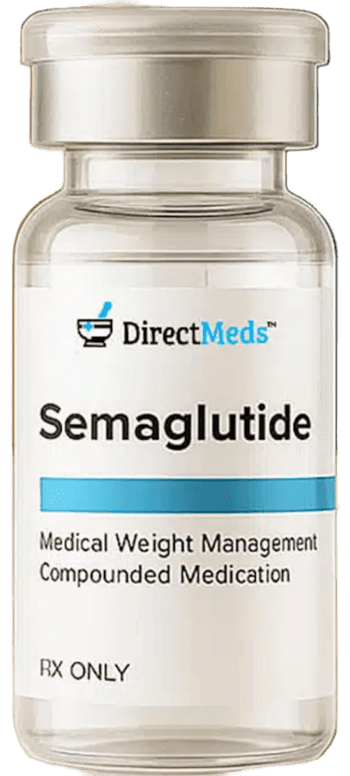
🥇 Best Overall (9.9/10)
DirectMeds GLP1 provides a budget-friendly alternative to Ozempic/Wegovy while maintaining strong appetite control and weekly fat loss results. Everything is included—from telehealth visits to medication shipping—making it ideal for people wanting premium results at the lowest cost.
DirectMeds is a LegitScript-certified telehealth platform that connects patients with licensed U.S. physicians who evaluate whether compounded GLP-1 medications are clinically appropriate.
It is one of the most established providers in this space and is particularly well-suited to patients who want high-touch clinical oversight without paying brand-name prices.
How it works: Complete a secure online health intake form. A licensed medical provider reviews your profile and determines eligibility. If approved, your prescription is sent to a certified U.S. compounding pharmacy and medication is shipped directly to your door. All-inclusive pricing covers medical consultation, medication, and 24/7 support — no surprise charges.
◉ Clinical Note: DirectMeds’ LegitScript certification is a meaningful differentiator in this market. It requires compliance with pharmacy laws, prescription standards, and advertising guidelines — reducing the risk of receiving substandard compounded medications. For patients new to telehealth GLP-1 programs, this certification provides a meaningful layer of accountability. — Dr. Sarah Jenkins, Co-Author
🎯 Ideal for: Patients who want an established, verified provider with strong clinical support and are comfortable paying slightly more than the absolute floor price for greater peace of mind.
🥈#2 Best for Long-Term Cost Certainty: MyStart GLP-1
🥈 Silver Standard — Best Flat-Rate Pricing
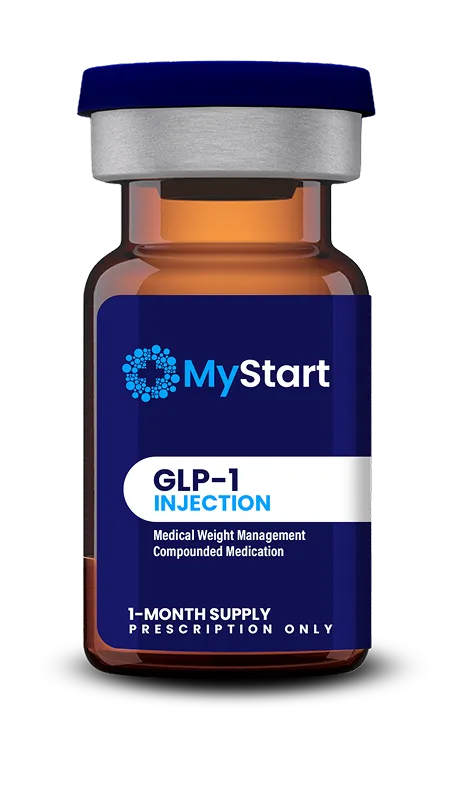
- Rating: ⭐️⭐️⭐️⭐️⭐️ – (9.9/10) High Potency GLP1
MyStart GLP-1 offers a smooth, beginner-friendly GLP-1 program using FDA-backed medications and simple weekly injections or tablets. Great for people wanting easy onboarding, rapid fat loss, and physician oversight—without the high price of traditional clinics.
MyStart GLP-1 uses a unique flat-rate membership model where your medication cost is fixed regardless of how high your therapeutic dose increases over time. For patients who will be on GLP-1 therapy for 12 months or more, this pricing structure can save $600 to $1,800 annually compared to platforms that charge progressively more as doses escalate.
How it works: Pay a monthly membership ($79) plus a flat medication fee (e.g., $175 for compounded semaglutide). The combined total stays fixed at $254 per month from starter dose through maximum maintenance dose. Medical consultation, all medication, dedicated care team access, and nutritional coaching are included.
◉ Clinical Note: The flat-rate model is financially sound for long-term GLP-1 use. GLP-1 therapy is most effective when sustained for 12+ months, and avoiding dose-related price increases removes a common reason patients discontinue treatment early. The included nutritional coaching adds meaningful clinical value, as sustainable weight loss requires both medication and lifestyle change. — Dr. Sarah Jenkins, Co-Author
🎯 Ideal for: Patients committed to long-term treatment (12+ months) who want price certainty as doses increase, and who value behavioral coaching as part of their program.
Best for: People who want a more advanced GLP-1 approach at a reduced price. 👉 SKIP THE WAITLIST. START FOR $199
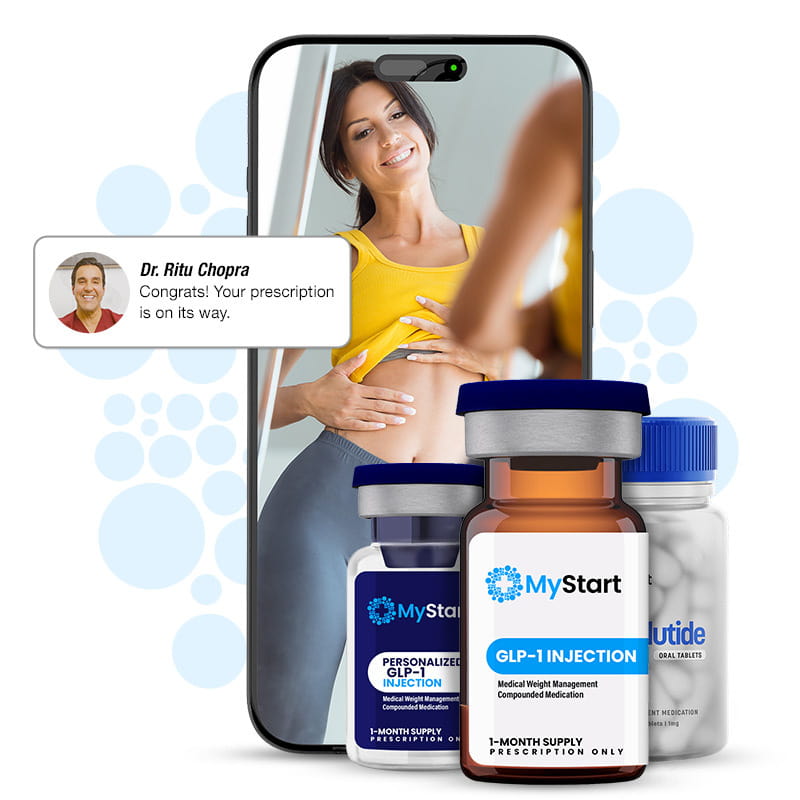
Thousands of people are losing weight with MyStart GLP-1 medications. People like you are transforming their lives, feeling better, and looking their best with the help of GLP-1 (Dual-Action Option) medications.
🥉 #3 Best for Absolute Lowest Entry Cost: MEDVi GLP-1
🥉 Bronze Standard — Lowest Entry Price
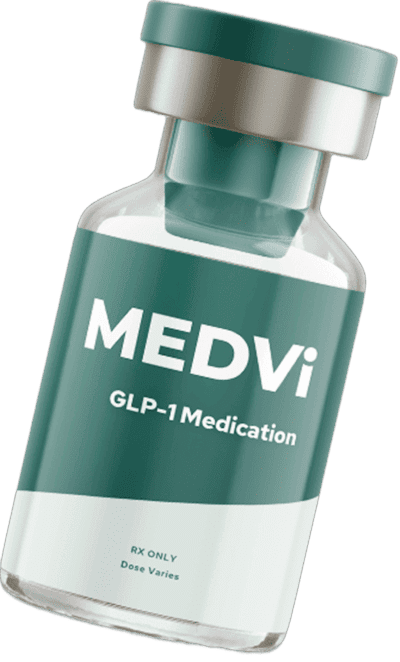
- Rating: ⭐️⭐️⭐️⭐️⭐️ – (9.9/10) Excellent
MEDVi GLP-1 delivers fast, medical-grade weight loss with doctor-guided dosing and personalized coaching. Patients report losing 1–3 lbs per week with steady appetite control and reduced cravings. Qualify in minutes and access 600+ U.S. doctors with no membership fees.
MEDVi offers the most accessible entry price point in the compounded GLP-1 market, with starter doses beginning as low as $99 per month and a published price-match guarantee.
The platform provides both injectable and oral compounded GLP-1 options, giving prescribers flexibility to match the medication form to the patient. Clinical follow-up is primarily quarterly rather than monthly, which keeps costs lower but means less frequent dose adjustment guidance than the two options above.
How it works: Complete an online consultation. If qualified, your prescription is sent to a partner compounding pharmacy and medication is shipped to you within 48 hours. Customer support is available, and clinical check-ins are typically quarterly. No membership fees are charged on top of medication pricing.
◉ Clinical Note: MEDVi is a legitimate, cost-effective option for budget-focused patients who have researched compounded medications and are comfortable with less frequent clinical contact. Always ask your provider which specific compounding pharmacy fulfills your prescription — a reputable 503A or 503B state-licensed pharmacy is non-negotiable for safety. — Dr. Sarah Jenkins, Co-Author
🎯 Ideal for: Budget-focused patients who have done their research on compounded GLP-1 medications, are comfortable managing more of their own care independently, and want the lowest possible entry price with a price-match guarantee.
Cardiovascular Benefits Beyond Weight Loss
Here is something many articles miss: GLP-1 medications improve cardiovascular outcomes through mechanisms independent of weight loss .
Proven cardiovascular effects:
- Reduction in major adverse cardiovascular events (MACE)
- Decreased myocardial infarction and stroke risk
- Improved heart failure outcomes
- Anti-inflammatory and anti-atherogenic effects on blood vessels
- Endothelial protection
The landmark SELECT trial confirmed these benefits in patients with obesity and established cardiovascular disease without diabetes—expanding the indication beyond glycemic control .
Mechanistically, GLP-1 agonists reduce inflammation, improve endothelial function, and may directly protect cardiomyocytes. These effects begin soon after treatment initiation, before significant weight loss occurs .

Side Effects: What the Science Actually Says
No medication is without risks. Understanding the safety profile helps you make informed decisions and manage expectations.
Gastrointestinal Effects (Most Common)
- Nausea (affects 20-40% initially)
- Diarrhea or constipation
- Vomiting
- These are typically dose-dependent and transient, often improving with gradual dose escalation
Serious Adverse Events (Rare but Important)
Pancreatitis and Pancreatic Cancer: Long-term clinical trials have dispelled concerns that GLP-1 medications increase risk. Current evidence shows no causal link .
Thyroid Cancer: Unlike pancreatic concerns, there may be an increased risk for thyroid cancer. Patients with personal or family history of medullary thyroid carcinoma should not use these medications .
Gastroparesis and Anesthesia Risk: Slowed gastric emptying increases risk of retained gastric contents during general anesthesia or endoscopy. Critical: Inform your anesthesiologist if you take GLP-1 medications before any procedure .
Diabetic Retinopathy: Rapid glycemic improvement can temporarily worsen retinopathy. Baseline eye exams are recommended before starting treatment .
Top GLP-1 Medications Comparison (2026 Data)
| Brand Name | Active Ingredient | Usage | Form | Avg. Weight Loss |
| Wegovy | Semaglutide | Weight Loss | Injection | 15% – 17% |
| Zepbound | Tirzepatide | Weight Loss | Injection | 22% – 25% |
| Ozempic | Semaglutide | Diabetes | Injection | 12% – 15% |
| Mounjaro | Tirzepatide | Diabetes | Injection | 20% – 22% |
| Rybelsus | Semaglutide | Diabetes | Oral Pill | 8% – 10% |
Medication-Specific Safety Profiles
A 2026 comprehensive evaluation of long-acting GLP-1 agonists found:
- Semaglutide: Superior efficacy with well-characterized safety profile
- Tirzepatide: Outstanding potential but limited by cost and real-world experience
- Polyethylene glycol loxenatide: Economic advantages but lacks high-level cardiovascular outcome data
Real-World Implementation: What to Expect
Starting Treatment
Most providers initiate at low doses and titrate slowly over weeks to months. This minimizes gastrointestinal side effects and allows your body to adapt .
Duration of Therapy
Obesity is a chronic disease. When GLP-1 medications are discontinued, weight regain typically occurs. Long-term management, not short-term use, is the goal .
Cost and Access
Medication costs vary significantly. Some insurers cover GLP-1 agonists for diabetes but not obesity. Patient assistance programs may be available through manufacturers .
Monitoring
Regular follow-up includes:
- Weight and metabolic parameters
- Gastrointestinal tolerability
- Blood pressure (these medications often lower BP)
- Consider baseline eye exam
In 2026, the cost landscape for GLP-1 medications has shifted significantly due to new “direct-to-patient” pricing models and expanded Medicare pilot programs. Below is a comprehensive comparison of costs, savings programs, and insurance benchmarks for the leading treatments.
2026 GLP-1 Cost & Savings Comparison Chart
| Medication | Estimated List Price (Monthly) | Insurance Copay (with Savings Card) | Uninsured / Self-Pay (Discounted) | Primary Savings Program |
| Wegovy (Inj) | $1,638 | As low as $25 | $199 – $349 | NovoCare® Savings Card / TrumpRx |
| Wegovy (Pill) | $1,619 | As low as $25 | $149 – $299 | “Wegovy Pill” Starter Offer |
| Zepbound | $1,271 | As low as $25 | $299 – $499 | LillyDirect™ Self-Pay Journey |
| Ozempic | $1,201 | As low as $25 | $199 – $499 | Novo Nordisk Diabetes Savings |
| Mounjaro | $1,513 | As low as $25 | $895 – $1,050 | Mounjaro Savings Card |
| Rybelsus | $1,011 | As low as $25 | $967+ | Rybelsus Copay Program |

Key 2026 Savings Opportunities
1. The “Medicare GLP-1 Bridge” (July – Dec 2026)
For the first time, Medicare has launched a short-term demonstration program that reduce cost GLP1 drugs .
- The Benefit: Eligible Part D beneficiaries can access Wegovy or Zepbound for a flat $50 copay.
- Eligibility: BMI $\ge 35$, or BMI $\ge 27$ with specific comorbidities (e.g., pre-diabetes, heart disease, or hypertension).
2. Direct-to-Consumer (DTC) Platforms
Both Eli Lilly (LillyDirect) and Novo Nordisk have expanded their “Self-Pay” portals. By bypassing traditional pharmacy markups, they offer “vial” or “starter” versions of their drugs (like the Zepbound 2.5mg vial) for as low as $299 per month for those without coverage.
3. TrumpRx & Government Initiatives
The newly launched TrumpRx platform connects cash-pay patients directly to manufacturer-negotiated rates. This platform targets a sub-$350 monthly price point for name-brand injectables, specifically aimed at patients who previously relied on compounded versions due to high costs.
4. The “Pill” Advantage
With the 2026 rollout of high-dose Wegovy tablets, Novo Nordisk has introduced aggressive introductory pricing. New patients can often secure the starting dose for $149, significantly lower than the injection’s entry price.
Important Cost Considerations
- Dose Escalation: Be aware that “starter” prices (e.g., $199 for Wegovy) often only apply to the first 2 months. As you titrate to higher maintenance doses, your out-of-pocket cost may increase.
- Commercial Insurance: If your plan excludes weight loss “benefits,” you are still eligible for the “Self-Pay” discounts, which typically cap your monthly spend at $499 – $650 rather than the full $1,300+ list price.
The Future: Next-Generation Therapies
The therapeutic landscape is evolving rapidly :
Dual and Triple Agonists: Combining GLP-1 with GIP (tirzepatide) or glucagon (retatrutide) produces synergistic effects on weight loss and metabolic flexibility.
Biased Signaling: Investigational agents like CT-859 selectively activate cAMP pathways while minimizing beta-arrestin recruitment, potentially enhancing efficacy and reducing side effects .
Oral Formulations: High-dose oral semaglutide (50 mg) shows 12.7% weight loss, and novel small molecules like orforglipron may expand access .
Managing Side Effects and “The Muscle Trap”
The most discussed side effects of GLP-1 medications include nausea, constipation, and fatigue. However, a growing concern in 2026 is Sarcopenic Obesity—losing muscle mass instead of fat. To see long-term success, your protocol must include:
- High-Protein Focus: Aiming for 1.2g of protein per kg of body weight.
- Resistance Training: Essential to signal your body to keep muscle while burning fat.
- Hydration & Electrolytes: Critical to combat the “GLP-1 fatigue” caused by rapid metabolic changes.
7 Frequently Asked Questions (FAQs)
1. Which GLP-1 medications are best for weight loss?
Currently, Tirzepatide (Zepbound) and Semaglutide (Wegovy) are the top-performing GLP-1 medications for weight loss. Clinical trials show Tirzepatide leads to an average of 22% weight loss, while Semaglutide typically results in 15%. Your choice depends on your medical history and insurance coverage.
2. How do GLP-1 medications work in the body?
GLP-1 medications mimic the GLP-1 hormone released after eating. They stimulate insulin production, slow down stomach emptying, and signal to the brain that you are full. This helps regulate blood sugar and reduces the total calories consumed by eliminating cravings.
3. Are there oral GLP-1 medications available?
Yes, Rybelsus is an FDA-approved oral version of semaglutide. While traditionally used for diabetes, new high-dose oral GLP-1 medications are currently entering the market in 2026 specifically for weight management, providing an alternative for those who dislike needles.
4. What exactly are GLP-1 medications and how do they cause weight loss?
GLP-1 medications (glucagon-like peptide-1 receptor agonists) are drugs that mimic a natural hormone involved in appetite regulation. They cause weight loss through three primary mechanisms: suppressing appetite via brain receptors, slowing gastric emptying to increase fullness, and improving insulin regulation .
5. Which GLP-1 medication is most effective for weight loss?
According to recent network meta-analyses, tirzepatide (15 mg weekly) produces the greatest weight loss at 17.8%, followed by semaglutide 2.4 mg at 13.9% . Investigational agents like retatrutide have shown up to 24.2% weight loss in clinical trials .
6. What are the most common side effects of GLP-1 medications?
Gastrointestinal effects are most common, including nausea, diarrhea, constipation, and vomiting. These are typically mild to moderate and transient, often improving with continued use and gradual dose escalation .
7. Do GLP-1 medications increase the risk of thyroid cancer?
Current evidence suggests GLP-1 medications may confer an increased risk for thyroid cancer. They are contraindicated in patients with personal or family history of medullary thyroid carcinoma or Multiple Endocrine Neoplasia syndrome type 2 .
8. Can I take GLP-1 medications if I don’t have diabetes?
Yes. Several GLP-1 medications (Wegovy, Zepbound, Saxenda) are FDA-approved specifically for weight management in individuals with obesity or overweight with at least one weight-related comorbidity, regardless of diabetes status .
9. Do I need to stop GLP-1 medications before surgery?
Yes—this is critical. GLP-1 medications slow gastric emptying and increase the risk of retained gastric contents during anesthesia, raising aspiration risk. Guidelines recommend holding these medications before procedures requiring general anesthesia or deep sedation .
10. What happens when you stop taking GLP-1 medications?
Weight regain typically occurs after discontinuation because obesity is a chronic disease requiring ongoing management. Studies show that metabolic benefits reverse and appetite returns to baseline when medication stops .
Medical Sources and Citations
- New England Journal of Medicine (NEJM): Tirzepatide once weekly for the treatment of obesity
- Mayo Clinic: GLP-1 agonists: Diabetes drugs and weight loss
- Cleveland Clinic: GLP-1 Agonists: What They Are & How They Work
- Nature Medicine: The Role of Incretin Hormones in Metabolic Health
- Journal of the American Medical Association (JAMA): Effect of GLP-1 on Cardiovascular Outcomes
Medical Disclaimer: The information provided in this article is for educational and informational purposes only and is not intended as medical advice, diagnosis, or treatment. Always seek the advice of a qualified healthcare professional with any questions regarding a medical condition or before starting any new medication, including GLP-1 receptor agonists. Never disregard professional medical advice or delay seeking it because of something you have read here. Individual results vary, and the use of these medications carries potential risks and side effects that must be managed by a licensed physician.

With over 13 years of experience in holistic health blogging, I aim to help you navigate your wellness journey with honest insights, expert-backed advice, and a sprinkle of real-world practicality.
Certified Wellness Writer | Herbal Nutrition Advocate | Wellness Research Enthusiast


