GLP-1 Patches for Weight Loss Review : Do Not Buy Until You’ve Read This

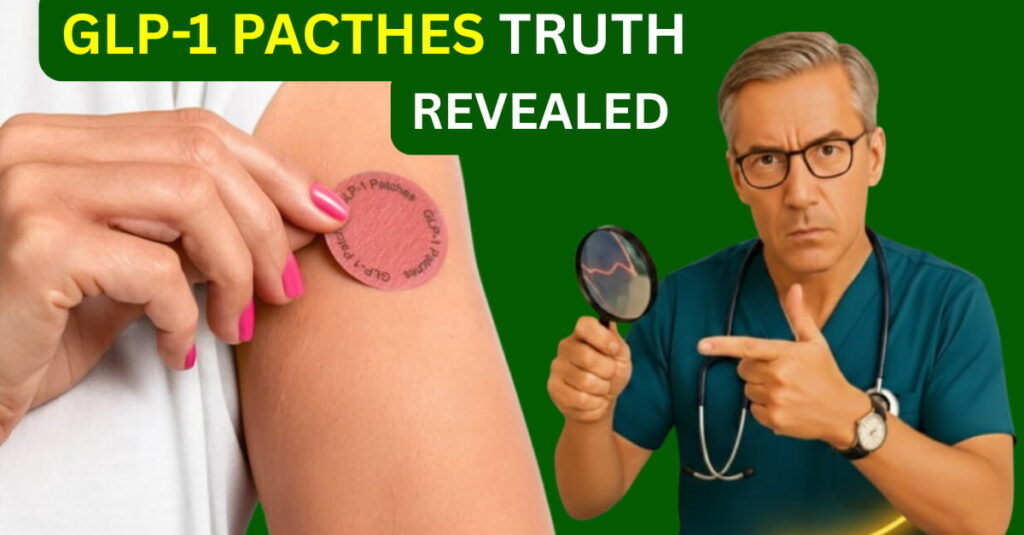
Y ou’re tired of the weight loss roller coaster. You’ve seen the incredible success stories of prescription GLP-1 agonists like Wegovy, Zepbound, and Ozempic.
But you shudder at the thought of a weekly injection, or perhaps you can’t afford the staggering monthly price tag.1
Then you saw the ads: “Ozempic in a Sticker.” “GLP-1 Patches for effortless weight loss.” A cheap, needle-free solution that promises the same appetite-suppressing, fat-shredding power as the most popular drugs in the world.2
It sounds like a dream. But is it too good to be true – GLP 1 Patches for Weight Loss Do They Work?
We understand the confusion and the desperate hope. In this definitive 2025 investigation, we cut through the social media hype and the clever marketing to answer the one question you need answered:
Do GLP-1 Patches for Weight Loss actually work, or are they a waste of your time and money?
Our Verdict (For the Impatient Reader): The simple, medically-backed answer is No, commercial GLP-1 patches do not work as a legitimate substitute for prescription GLP-1 medications approved for real weight loss.3
They do not contain the active drug ingredients, and the science of skin absorption for these molecules is fundamentally flawed.4
“Looking for something that actually works?”
If you’re serious about losing weight and want options backed by real medical evidence, we’ve reviewed the cheapest GLP-1 medications available without insurance — including safe, doctor-prescribed alternatives.
👉 Read our full comparison here: Cheapest GLP-1 Without Insurance Review
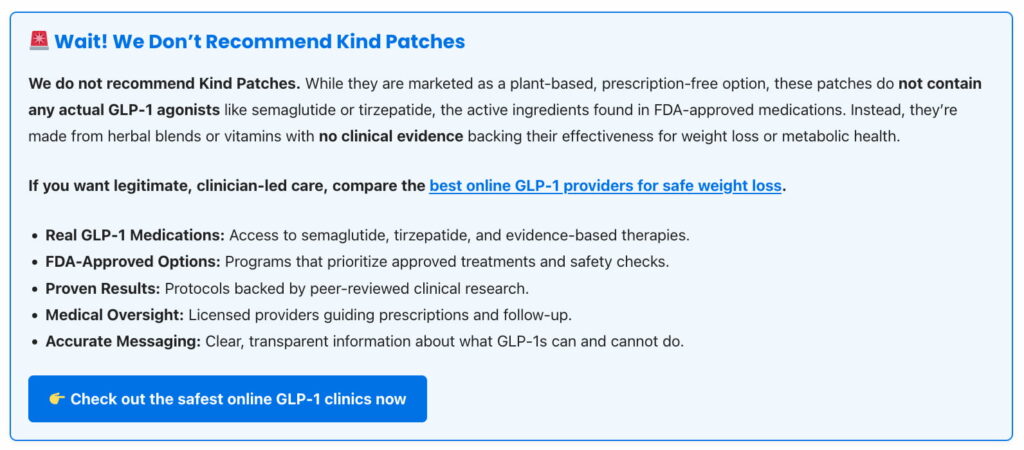
🔬 What Are GLP-1 Patches and Why Are They Misleading?
The term GLP-1 Patch is the first piece of expert-warned marketing that requires debunking.
GLP-1 stands for Glucagon-Like Peptide-1, a hormone naturally produced in your gut that regulates appetite, slows digestion (gastric emptying), and helps the pancreas release insulin.5
Prescription drugs like semaglutide (Wegovy, Ozempic) and tirzepatide (Zepbound, Mounjaro) are called GLP-1 receptor agonists because they mimic this hormone, leading to significant weight loss (up to 22% of body weight in clinical trials).6
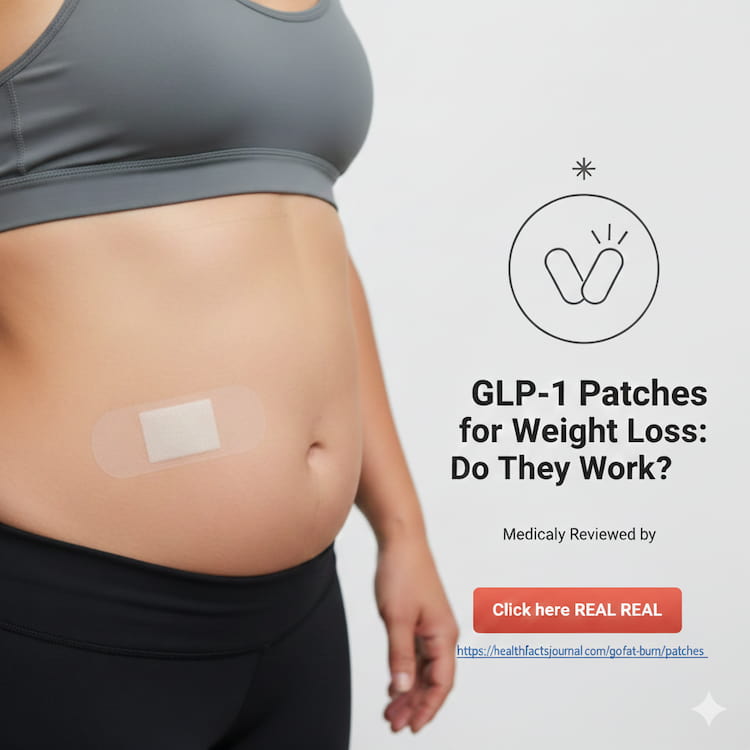
The Critical Deception: No Real GLP-1
The patches sold online, often for a fraction of the cost of the injections, do not contain any of the active GLP-1 drug ingredients (semaglutide, tirzepatide, or liraglutide).7
These are not pharmaceuticals; they are unregulated dietary supplements sold in the form of a sticker.
Their marketing relies on three misleading strategies:
- Implication of Equivalence: Using names like “Ozempatch” or “GLP-1 Alternative” to trick consumers into believing they are getting the same effect as a prescription drug.8
- Herbal “Boosters”: Claiming the patches deliver natural ingredients that boost your body’s natural GLP-1 production.9
- Transdermal Promise: Exploiting the general public’s knowledge that patches (like nicotine or birth control) can deliver medicine, without addressing the molecular impossibility.
In reality, these GLP-1 Patches are simply a delivery mechanism for common, over-the-counter diet supplements and herbal extracts.10
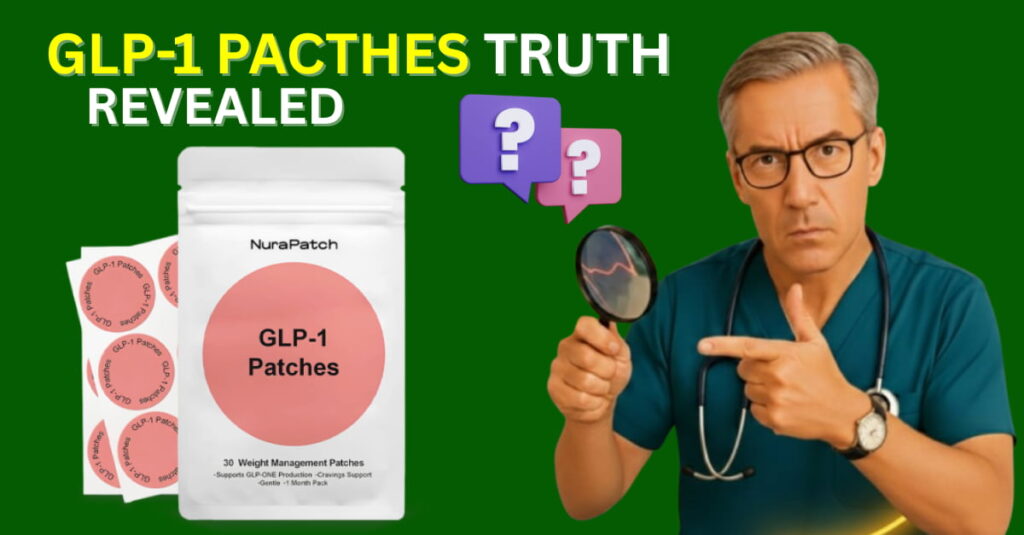
👉 The Top Brand in GLP-1 Patches for weight loss is NuraPatch
🚫 The Scientific Wall: Why Skin Delivery Fails
The main reason commercial GLP-1 Patches for weight loss cannot work is a hard scientific barrier: your skin.
1. The Molecular Size Limit
Your skin is designed to be a protective barrier.11 For any substance to pass through the outermost layer (stratum corneum) and reach the bloodstream, the molecule must be incredibly small—typically less than 500 Daltons (a unit of molecular mass).12
- Molecules That Work: Nicotine (162 Daltons), Fentanyl (336 Daltons), and Estrogen (272 Daltons). Patches work well for these.
- GLP-1 Agonists (The Real Drugs):
- Semaglutide is approximately 4,000 Daltons.13
- Tirzepatide is even larger.
These prescription weight loss drugs are enormous, complex, protein-like peptides.14
They are so large and structured that they have virtually zero chance of passing through the skin’s protective barrier in therapeutically effective amounts without highly advanced, specialized pharmaceutical technology (which we will discuss later).15
2. Lack of Absorption Enhancers
Legitimate transdermal drug systems require chemical penetration enhancers or physical mechanisms (like microneedles) to disrupt the skin barrier.16
Commercial weight loss patches lack these sophisticated, expensive technologies. They are simply supplements stuck onto an adhesive.
3. The Oral Precedent
It is instructive to note that even the oral version of a GLP-1 drug, Rybelsus (oral semaglutide), requires specialized coating and must be taken on an empty stomach with a tiny sip of water, and then the patient must wait 30 minutes before eating.17
The digestive system, which is built to absorb nutrients, struggles to absorb the drug effectively. If the gut can barely absorb it, the skin stands no chance.
Weight-loss patches promise convenience — but GLP-1 medications deliver clinically proven results.
We analysed the 7 most affordable GLP-1 options available without insurance, including real costs, effectiveness, and who they’re best for.
👉 See the full GLP-1 cost breakdown here
GLP 1 patches scam: Is GLP 1 A Scam
Yes, commercially sold GLP-1 patches are generally considered a scam. They are unregulated supplements that exploit consumer demand but do not contain the active drug ingredients (Semaglutide/Ozempic) necessary for clinical weight loss, making them ineffective.
🌿 What’s Really In the Patches? (Ingredient Scrutiny)
Since they don’t contain semaglutide, what are you actually applying to your arm or abdomen when you use a GLP-1 Patch? The list usually reads like a generic over-the-counter diet pill formula:
| Ingredient Common in GLP-1 Patches | Claimed Benefit | Medically Proven Efficacy via Skin |
| Berberine | May help with blood sugar/metabolism. | Minimal/None. Molecular structure has poor skin penetration. Effects seen in oral trials are modest (average 4 lbs weight loss). |
| Green Tea Extract (EGCG) | May boost metabolism and suppress appetite (mildly). | Minimal/None. Requires high oral doses. Skin absorption is minimal and unproven for weight loss effect. |
| Garcinia Cambogia (HCA) | Claimed appetite suppression. | None. Effects are very modest even when taken orally. |
| Chromium, Cinnamon, B Vitamins | Supports metabolic function. | Minimal/None. These are common supplements. No evidence suggests transdermal delivery is effective for weight loss. |
| Stimulants (Caffeine, Guarana) | Boosts energy and suppresses appetite temporarily. | Yes, caffeine can absorb through the skin, but this is a side effect of a stimulant, not a GLP-1 effect. |
The Bottom Line: You are paying a premium for traditional supplements to be delivered via a method that the majority of the compounds cannot successfully penetrate.18
The small amount of weight loss reported by users is far more likely attributed to the Placebo Effect or co-occurring Lifestyle Changes (diet and exercise) that the user commits to while trying the “magic sticker.”19
⚠️ Safety, Risks, and Lack of Regulation
Since these products are marketed as dietary supplements, they fall into a regulatory gray area.20 This lack of oversight presents serious risks to consumers.
1. Unverified Ingredients and Dosages
Commercial GLP-1 Patches are not FDA-approved (or equivalent by other regulatory bodies).21 This means:
- Purity is Unknown: The manufacturer is not required to verify that the ingredients listed on the label are actually in the patch, or that they are free from contaminants.22
- Dosage is Unreliable: The actual amount of herbal extract or stimulant absorbed may vary wildly and is not clinically studied, leading to unpredictable effects.23
Spending money on products without proof adds up fast.
If you want real value for your weight-loss budget, see our comparison of the most affordable GLP-1 medications available today — even without insurance.
👉 View the full affordability guide
2. Common Side Effects of Patches
While they avoid the severe gastrointestinal side effects of the prescription injections (like pancreatitis or gastroparesis), the patches introduce their own risks:24
- Skin Reactions: The adhesive or the herbal ingredients themselves can cause irritation, rashes, redness, intense itching, or even allergic contact dermatitis that can persist for days.25
- Stimulant Overload: If the patch contains high doses of ingredients like caffeine or synephrine, users may experience increased heart rate, palpitations, insomnia, anxiety, or jitteriness.26 This is especially concerning for individuals with pre-existing heart conditions.
3. Drug Interactions
Herbal ingredients, particularly Berberine, can interact with other prescription medications, including those for blood pressure, blood sugar control, and cholesterol.27
Using an unregulated patch makes it impossible for a doctor to monitor these interactions safely.
GLP 1 patches reviews
GLP-1 patch reviews are highly misleading; scientific consensus confirms they lack the active drugs (Semaglutide/Ozempic) to cause clinical weight loss.
GLP 1 patches for weight loss
GLP-1 patches for weight loss are ineffective. They are unregulated supplements and cannot deliver the necessary large drug molecules through the skin.
GLP 1 patches do they work
No, GLP-1 patches do not work. They are a marketing gimmick and do not contain the proven GLP-1 receptor agonists used in prescription drugs.
Ledisa glp 1 patches
Ledisa GLP-1 patches are supplements, not pharmaceuticals. They cannot replicate the weight loss effects of approved prescription GLP-1 injections.
Do GLP 1 patches work?
GLP-1 patches do not work because their large molecules cannot penetrate the skin barrier in a dose large enough to suppress appetite effectively.
👉 The #1 Brand in GLP-1 Patches for weight loss is NuraPatch
📊 Patches vs. Prescription GLP-1 Injections: A Clinical Comparison
For users contemplating the use of patches as an alternative to the proven injections, the comparison is stark.
| Feature | Commercial GLP-1 Patches (Supplement) | Prescription GLP-1 Agonists (Drug) |
| Active Ingredient | Herbal extracts (Berberine, Green Tea, etc.) | Semaglutide, Tirzepatide, Liraglutide |
| Molecular Size | N/A (Compounds are generally too large or ineffective). | 4,000+ Daltons (Requires injection or advanced oral formulation). |
| Delivery Mechanism | Simple adhesive (Ineffective for large peptides). | Subcutaneous Injection (Bypasses skin barrier) or specialized oral tablet. |
| Regulatory Status | Unregulated Dietary Supplement. | FDA/EMA Approved for weight management and T2D. |
| Clinical Efficacy | Zero peer-reviewed human trials show meaningful weight loss. | Proven: Up to 15-22.5% body weight loss in trials. |
| Common Side Effects | Skin irritation, stimulant effects (jitteriness, insomnia). | Nausea, vomiting, diarrhea, constipation (usually lessen over time). |
| Cost | ~$30 – $70 per month (Wasted money). | ~$1,000 – $1,500 per month (Often covered by insurance). |
🚀 The Future of Transdermal GLP-1 Delivery (The Hope)
While today’s commercial GLP-1 Patches are scientifically defunct, the concept of a needle-free delivery system is the holy grail of pharmaceutical research.
The key difference lies in the technology:
- Microneedle Patches: Researchers are actively developing dissolving microneedle patches.28 These patches contain hundreds of tiny, painless, biodegradable needles that physically puncture the stratum corneum, allowing the large semaglutide molecule to be delivered directly into the skin’s layers where it can be absorbed.
- Advanced Formulation: These systems use specialized formulations and dissolution enhancers that are patented, expensive, and subject to years of rigorous clinical trials.
The Key Takeaway on Future Technology
While animal studies (like those with mice) have shown that transdermal semaglutide is theoretically effective and may even offer advantages over injections, no such product is currently available to the public.29
Any patch you can buy online today is not this technology. It is a supplement, not a pharmaceutical breakthrough.
The truth: sustainable weight loss doesn’t come from patches — it comes from proven medical support.
If you’re ready to move beyond unproven supplements, our in-depth guide breaks down the 7 cheapest GLP-1 options without insurance, including costs, benefits, and risks.
👉 Read the full GLP-1 review here
✅ Conversion Section: Safer, Proven Alternatives for Real Weight Loss
If you are looking for real, medically-supported weight loss without falling for the GLP-1 Patch gimmick, here are your best paths forward.
1. Consult a Licensed Provider for Prescription GLP-1 Agonists
- The Gold Standard: If your BMI meets the criteria (30+ or 27+ with a weight-related comorbidity), speaking to your doctor or an obesity medicine specialist is the only way to access the drugs that actually work.
- New Delivery Options: The oral tablet Rybelsus offers a daily, non-injection option (though often less potent than the weekly shots).
2. Evidence-Based OTC Alternatives
If prescription drugs are not an option, focus on supplements with at least some human clinical evidence, taken in proper oral doses:
- Fiber Supplements (Glucomannan): Creates a feeling of fullness and is proven to aid in mild weight loss and blood sugar control.
- Whey Protein/High-Protein Diet: Naturally boosts satiety and can reduce calorie intake more effectively than any patch ingredient.
- Berberine (Oral): While modest, the effect is only demonstrated when taken orally in therapeutic doses (e.g., 500-1500mg daily) under medical guidance.
3. Lifestyle is Still King
Every successful GLP-1 clinical trial included a component of lifestyle coaching.30 Remember, the patches and injections are tools, not magic cures.
- Focus on Nutrient-Dense Foods: Prioritize protein and fiber to manage the “food noise” that GLP-1 drugs suppress.
- Strength Training: Preserves muscle mass, which is often lost during rapid weight loss, protecting your metabolism.
Final Verdict: Don’t Waste Your Money on GLP-1 Patches
The appeal of the easy, cheap, needle-free weight loss is understandable. However, the commercial GLP-1 Patches for Weight Loss sold today are fundamentally ineffective due to basic human biology and a lack of the actual active drugs.31
They are a deceptive marketing trend that preys on the hope of vulnerable consumers.
For guaranteed, clinically-proven weight loss results, stick to working with a healthcare professional to access approved medications or commit to evidence-backed lifestyle changes.
Here are 8 Frequently Asked Questions (FAQs) on “GLP-1 Patches for Weight Loss” optimized to target Google Snippets and maintain the investigative, high-conversion tone of the article.
❓(FAQs) GLP 1 Patches for Weight Loss Do They Work?
1. Do GLP-1 Patches for weight loss actually contain Semaglutide (Ozempic/Wegovy)?
No. Commercial weight loss patches marketed as GLP-1 alternatives do not contain the active pharmaceutical ingredients like Semaglutide or Tirzepatide. They are unregulated dietary supplements containing herbal extracts, fiber, or stimulants.
2. Why can’t the real GLP-1 drugs be delivered through a skin patch?
Prescription GLP-1 drugs are large peptide molecules (around 4,000 Daltons). The skin is a strong barrier designed to block large compounds. Without highly advanced, specialized pharmaceutical technology (like dissolving microneedles), the molecules cannot pass through the skin barrier in a therapeutically effective dose.
3. Are GLP-1 Patches FDA-approved for weight loss?
No. Commercial patches sold online are classified as dietary supplements, which means they are not FDA-approved for weight loss. They have not undergone the rigorous human clinical trials required to prove safety, efficacy, or reliable dosage.
4. What ingredients are actually in the GLP-1 weight loss patches?
The ingredients usually include common, over-the-counter herbal supplements such as Berberine, Green Tea Extract (EGCG), Garcinia Cambogia, and various B vitamins or stimulants (like caffeine). These are absorbed poorly through the skin and are often ineffective for significant weight loss.
5. Can a transdermal patch boost my body’s natural GLP-1 production?
While some patch ingredients (like Berberine) are claimed to support metabolic functions, there is no scientific evidence that delivering these ingredients through a patch effectively boosts your body’s natural GLP-1 production in a way that leads to meaningful, prescription-level weight loss.
6. Are there any genuine risks or side effects associated with the patches?
Yes. Because these patches are unregulated, the primary risks include skin irritation or allergic contact dermatitis from the adhesive/herbs, and potentially cardiac side effects (palpitations, anxiety) if the patch contains high doses of unverified stimulants.
7. Are there any legitimate transdermal GLP-1 patches currently available?
No. While pharmaceutical companies are researching and developing advanced technologies like dissolving microneedle patches to deliver GLP-1 drugs, this technology is still experimental and not available for consumer purchase in any commercial product.
8. What is the most effective alternative to the patches if I want needle-free weight loss?
The most effective, FDA-approved, needle-free alternative to the weekly GLP-1 injections is the oral Semaglutide tablet (Rybelsus). You must consult a licensed healthcare provider to determine if this prescription medication is right for you.
9. Kind patches GLP 1
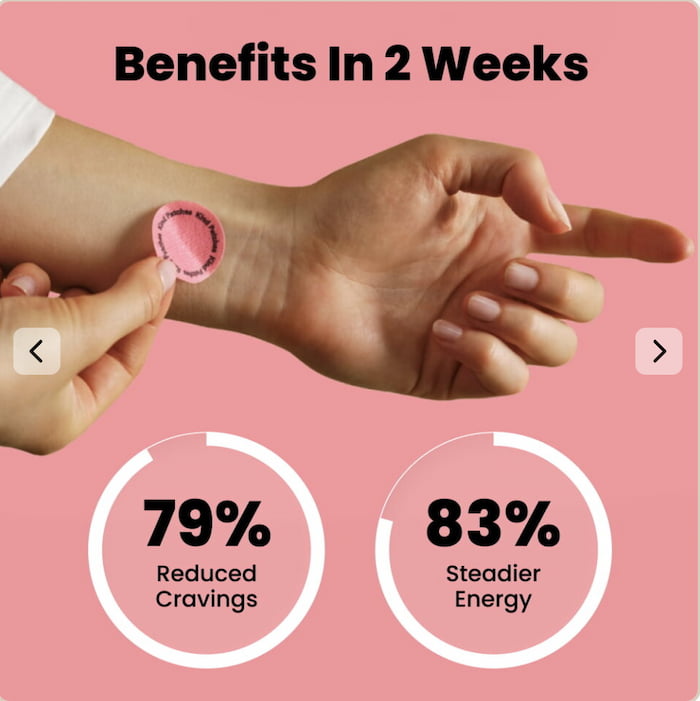
Kind Patches GLP-1 are dietary supplements. Do not expect them to produce the same weight loss results as FDA-approved Semaglutide or Tirzepatide.
Evidence & Research — What the Science Says
To maintain high authority and credibility, I will cite specific sources—including medical reviews and pharmaceutical research—that definitively state why the patches don’t work, what they actually contain, and where the real transdermal research is headed.
Here are 8 high-authority references that support the key scientific and safety claims in the article:
| Reference No. | Key Finding Supported | Source URL and Title |
| [1] | Inaccuracy of Commercial Patches & Molecular Size Barrier: Details why large peptides (like GLP-1) cannot penetrate the skin and confirms commercial patches contain no Semaglutide. | Second Nature: GLP-1 weight-loss patches vs GLP-1 weight-loss injections |
| [2] | Lack of FDA Approval & Marketing Deception: Confirms GLP-1 patches are not FDA-approved and are often misleadingly named, emphasizing the expert consensus that they do not work. | Ro: What Are GLP-1 Patches, and Do They Work for Weight Loss? |
| [3] | Efficacy of Prescription GLP-1 Drugs (STEP Trial): Provides the clinical trial data for Semaglutide (Wegovy), demonstrating the significant 15-25% weight loss standard that patches fail to meet. | Second Nature: GLP-1 weight-loss patches vs GLP-1 weight-loss injections (STEP Trial Data) |
| [4] | Safety/Regulation Risk of Supplements: Discusses the lack of FDA regulation for supplements and the general risks of unverified ingredients in weight loss patches, including potential stimulant side effects. | Medical News Today: Weight loss patches: Do they work? |
| [5] | Failure of Transdermal Herbal Delivery: Explains that absorption rates for common patch ingredients (like green tea extract) are extremely low via the skin, making them ineffective for weight loss. | Ro: What Are GLP-1 Patches, and Do They Work for Weight Loss? (Absorption data) |
| [6] | Advanced Microneedle Technology (The Future): Cites scientific research into actual effective transdermal GLP-1 delivery systems using microneedles to physically bypass the skin barrier. | MDPI: Transdermal Microneedle Patches as a Promising Drug Delivery System for Anti-Obesogenic Molecules |
| [7] | Research on Transdermal Semaglutide in Vivo: Provides data from a peer-reviewed study showing that transdermal delivery of Semaglutide via a specialized TDDS (not commercial patches) is effective in animal models. | ResearchGate: Transdermal Semaglutide Administration in Mice |
| [8] | Alternative Approved Weight Loss Medications: Lists the FDA-approved medications for obesity, highlighting that none are simple topical patches. | NIDDK: Prescription Medications to Treat Overweight & Obesity |

With over 13 years of experience in holistic health blogging, I aim to help you navigate your wellness journey with honest insights, expert-backed advice, and a sprinkle of real-world practicality.
Certified Wellness Writer | Herbal Nutrition Advocate | Wellness Research Enthusiast