
GLP-1 Receptor Agonists for Type 2 Diabetes: Benefits, Drugs, Safety & What to Know

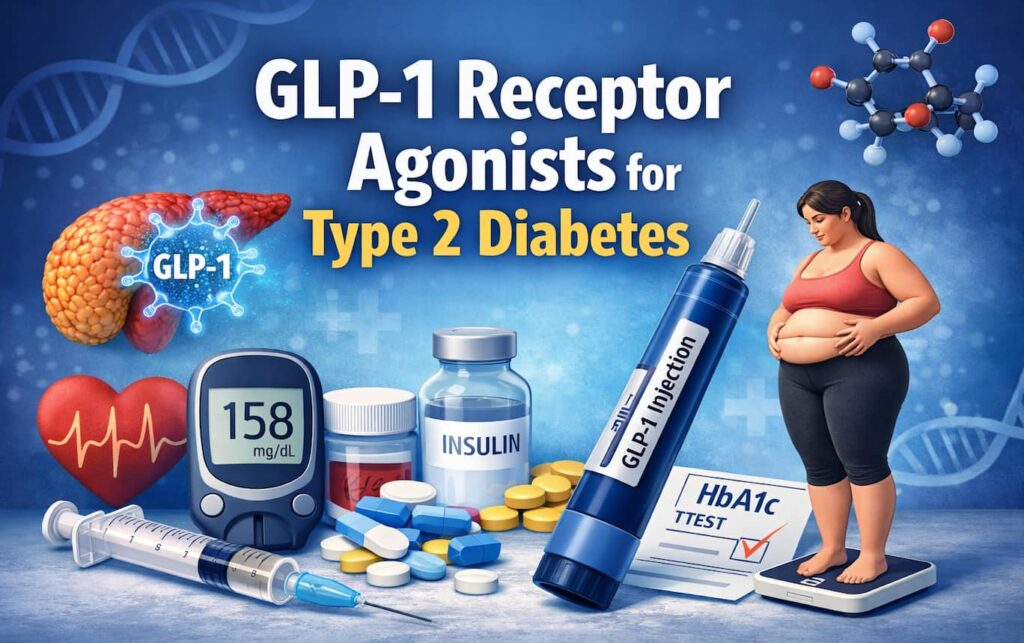
GLP-1 receptor agonists have rapidly become one of the most important treatment options for people living with type 2 diabetes.
Glp 1 Receptor Agonists For Type 2 Diabetes medications do more than lower blood sugar—they also support weight loss, reduce cardiovascular risk, and improve long-term metabolic health.
In this guide, you’ll learn what GLP-1 receptor agonists are, how they work for type 2 diabetes, which drugs are available, their benefits and risks, and who may benefit the most from them.
What Are GLP-1 Receptor Agonists?
GLP-1 receptor agonists are a class of non-insulin injectable and oral medications designed to treat type 2 diabetes.
GLP-1 receptor agonists are a class of prescription medications that mimic the action of glucagon-like peptide-1 (GLP-1), a natural hormone released in the gut after eating.: they are resistant to rapid degradation by the DPP-4 enzyme, allowing them to remain active in the body for much longer.
Their primary mechanism of action is twofold, targeting the pancreatic system and the brain:
- Glucose-Dependent Insulin Secretion: They stimulate the pancreas to release insulin only when blood glucose levels are high. This significantly reduces the risk of dangerous hypoglycemia (low blood sugar) common with older medications like sulfonylureas.
- Glucagon Suppression: They inhibit the pancreas from releasing glucagon, a hormone that raises blood sugar. This dual action helps lower fasting and post-meal glucose levels effectively.
Beyond the pancreas, GLP-1 RAs exert powerful effects on the stomach and brain:
- Slowed Gastric Emptying: Food moves from the stomach to the intestines more slowly, leading to a prolonged feeling of fullness and reduced appetite.
- Appetite Regulation: They act on appetite centers in the brain, promoting satiety and reducing food intake.
This comprehensive action profile results in the “triple benefit” for which they are renowned: improved glycemic control, weight loss, and cardiovascular protection.
What GLP-1 Does in the Body
GLP-1 helps regulate blood sugar by:
- Stimulating insulin release when glucose levels rise
- Suppressing excess glucagon (which raises blood sugar)
- Slowing stomach emptying
- Increasing feelings of fullness after meals
GLP-1 receptor agonists replicate these effects in a longer-lasting, medication form.
How GLP-1 Receptor Agonists Help Type 2 Diabetes
GLP-1 receptor agonists address multiple underlying problems in type 2 diabetes rather than focusing only on glucose numbers.
Key Benefits for Diabetes Management
- Lower A1C levels (often by 1.0–1.8%)
- Improve post-meal blood sugar control
- Reduce insulin resistance indirectly through weight loss
- Lower risk of hypoglycemia compared to insulin or sulfonylureas
Unlike some diabetes medications, GLP-1 agonists work only when blood sugar is elevated, reducing the chance of dangerous lows.
Here is the slightly reduced content:
Proven Benefits: Why GLP-1 RAs Are First-Line Therapy
Leading diabetes associations now recommend GLP-1 RAs with proven cardiovascular benefit as a first-line treatment, especially for patients with or at risk for heart disease. Their key advantages include:
- Superior Glycemic Control: They lower A1c by 1.0% to 2.2% with a low risk of hypoglycemia.
- Significant Weight Loss: Patients see an average weight reduction of 3% to 12%, a major benefit compared to many other diabetes drugs.
- Cardiovascular Protection: Landmark trials prove certain GLP-1 RAs reduce the risk of heart attack, stroke, and cardiovascular death.
- Renal Benefits: Evidence suggests they may slow kidney disease progression by reducing protein in the urine.
- Low Hypoglycemia Risk: The risk of severe low blood sugar is very low when used without insulin or sulfonylureas.
FDA-Approved GLP 1 Receptor Agonists for Type 2 Diabetes
Several GLP-1 receptor agonists are approved for managing type 2 diabetes. Some are injectable, while one is available orally.
Common GLP-1 Receptor Agonist Medications
Injectable GLP-1 Agonists
- Semaglutide (Ozempic®) – once weekly
- Dulaglutide (Trulicity®) – once weekly
- Liraglutide (Victoza®) – once daily
- Exenatide (Byetta® / Bydureon®) – daily or weekly
- Lixisenatide (Adlyxin®) – once daily
Oral GLP-1 Agonist
- Oral semaglutide (Rybelsus®) – taken daily by mouth
Each medication differs slightly in dosing schedule, potency, and side-effect profile.
Comprehensive List of FDA-Approved GLP-1 RAs for Type 2 Diabetes
The GLP-1 RA class includes several options, differing in molecular structure, duration of action, administration frequency, and specific benefits.
The following table provides a detailed comparison of the major agents available in the United States.
| Drug Name (Generic / Brand) | Administration | Frequency | Key Distinguishing Features & Notes |
|---|---|---|---|
| Exenatide / Byetta® | Subcutaneous Injection | Twice Daily | The first GLP-1 RA approved (2005). Short-acting. |
| Liraglutide / Victoza® | Subcutaneous Injection | Once Daily | Has proven cardiovascular outcome benefits (CVOT). |
| Exenatide ER / Bydureon® | Subcutaneous Injection | Once Weekly | Extended-release formulation of exenatide. |
| Dulaglutide / Trulicity® | Subcutaneous Injection | Once Weekly | Administered via a simple, single-dose pen. Strong CVOT data. |
| Lixisenatide / Adlyxin® | Subcutaneous Injection | Once Daily | Often used in combination with basal insulin. |
| Semaglutide / Ozempic® | Subcutaneous Injection | Once Weekly | Very potent for A1c reduction and weight loss. Has strong CVOT data. |
| Semaglutide / Rybelsus® | Oral Tablet | Once Daily | The first and only oral GLP-1 RA. Must be taken on an empty stomach. |
| Tirzepatide / Mounjaro® | Subcutaneous Injection | Once Weekly | A dual GLP-1/GIP receptor agonist, often showing superior efficacy for A1c and weight loss. |
GLP-1 Receptor Agonists and Weight Loss in Type 2 Diabetes
Many people with type 2 diabetes struggle with excess weight, which worsens insulin resistance. GLP-1 receptor agonists are unique because they often promote clinically meaningful weight loss.
Why Weight Loss Happens
- Reduced appetite
- Slower digestion
- Improved satiety signals in the brain
Clinical studies show that many patients lose 5–15% of body weight, depending on the drug, dosage, and duration of use.
Cardiovascular Benefits of GLP-1 Receptor Agonists
Heart disease is the leading cause of death in people with type 2 diabetes. Several GLP-1 receptor agonists have demonstrated cardiovascular risk reduction.
Proven Heart-Health Benefits
- Lower risk of major adverse cardiovascular events (MACE)
- Reduced risk of heart attack and stroke
- Improved blood pressure and lipid profiles
Drugs like semaglutide, liraglutide, and dulaglutide have strong cardiovascular outcome data supporting their use in high-risk patients.
GLP-1 Receptor Agonists vs Other Diabetes Medications
GLP-1 Agonists vs Metformin
- Metformin remains first-line therapy
- GLP-1 agonists are often added when A1C remains high
- GLP-1 drugs offer weight loss; metformin is weight-neutral
GLP-1 Agonists vs Insulin
- Lower risk of hypoglycemia
- Promote weight loss instead of weight gain
- Often delay or reduce the need for insulin
GLP-1 Agonists vs SGLT2 Inhibitors
- Both improve cardiovascular outcomes
- GLP-1 drugs focus more on appetite and weight
- SGLT2 inhibitors act through kidney glucose excretion
Side Effects of GLP-1 Receptor Agonists
Like all medications, GLP-1 receptor agonists can cause side effects, especially during the first few weeks.
Common Side Effects
- Nausea
- Vomiting
- Diarrhea
- Constipation
- Reduced appetite
These symptoms usually improve as the body adjusts and doses are increased gradually.
Rare but Serious Risks
- Pancreatitis (rare)
- Gallbladder disease
- Thyroid C-cell tumor risk (in animal studies only)
Patients with a history of medullary thyroid cancer or MEN2 should avoid GLP-1 receptor agonists.
Who Should Consider GLP-1 Receptor Agonists?
GLP-1 receptor agonists may be especially helpful for:
- Adults with type 2 diabetes and obesity
- Patients with cardiovascular disease
- Those struggling to control A1C with oral medications
- People who want to avoid insulin-related weight gain
A healthcare provider can determine suitability based on medical history and treatment goals.
How Glp 1 Receptor Agonists For Type 2 Diabetes Are Taken
Most GLP-1 receptor agonists are administered via subcutaneous injection, typically once weekly or once daily.
Oral semaglutide must be taken:
- On an empty stomach
- With a small amount of water
- At least 30 minutes before food or other medications
Proper dosing and adherence are critical for effectiveness.
Cost and Insurance Coverage
GLP-1 receptor agonists can be expensive without insurance. However:
- Many insurance plans cover them for diabetes
- Manufacturer savings programs may reduce costs
- Some patients explore telehealth options for access
Of course. It’s important to note that “best” can depend on individual patient factors like desired A1c reduction, weight loss goals, cardiovascular risk, and personal preference for dosing frequency.
However, based on efficacy, clinical trial data, and consensus in the medical community, the following five are considered top-tier options.
Here is a comparison table, including their estimated costs. Crucial Cost Note: List prices (Wholesale Acquisition Cost or WAC) are rarely what patients pay.
Actual out-of-pocket costs depend heavily on insurance coverage, pharmacy, manufacturer savings programs, and eligibility.
| Drug Name (Brand) | Key Feature & Efficacy | Typical Dosing | Estimated Monthly List Price (U.S.) |
|---|---|---|---|
| Tirzepatide (Mounjaro®) | Dual GLP-1/GIP agonist. Often shows the highest efficacy for both A1c reduction (~2.0-2.5%) and weight loss (15%+). | Once-weekly injection | ~$1,025 – $1,150 |
| Semaglutide (Ozempic®) | Very high efficacy for A1c (~1.5-2.1%) and weight loss (~10-15%). Strong cardiovascular benefit proven. | Once-weekly injection | ~$935 – $1,050 |
| Dulaglutide (Trulicity®) | Proven cardiovascular benefit. Strong A1c reduction (~1.4-1.8%) and moderate weight loss (~3-6%). Simple auto-injector pen. | Once-weekly injection | ~$880 – $995 |
| Liraglutide (Victoza®) | Proven cardiovascular benefit. Established, long-term safety data. Effective for A1c (~1.0-1.5%) and weight loss (~4-6%). | Once-daily injection | ~$1,100 – $1,250 |
| Semaglutide (Rybelsus®) | The only oral GLP-1 RA. Convenient pill form with efficacy for A1c (~1.0-1.5%) and weight loss (~4-8%). | Once-daily tablet | ~$935 – $1,050 |
Costs vary depending on brand, dosage, and coverage.
Frequently Asked Questions FAQs
What is a GLP-1 receptor agonist?
A GLP-1 receptor agonist is a prescription medication that mimics the GLP-1 hormone to lower blood sugar, improve insulin response, and support weight loss in type 2 diabetes.
Are GLP-1 receptor agonists safe for long-term use?
Yes. Large clinical trials support their long-term safety when prescribed and monitored by a healthcare provider.
Are GLP-1 agonists the same as insulin?
No. They are a completely different class of medication. While they stimulate the body’s own insulin release, they are not insulin and work through a smarter, glucose-dependent mechanism.
Can I use a GLP-1 agonist if I only have prediabetes?
Currently, GLP-1 RAs are FDA-approved for the treatment of type 2 diabetes and, for some agents (like semaglutide), chronic weight management. They are not approved for prediabetes alone, though lifestyle modification is the cornerstone of prediabetes management.
Can GLP-1 receptor agonists replace insulin?
In some patients, GLP-1 receptor agonists reduce or delay the need for insulin, but they do not replace insulin for everyone.
Do GLP-1 receptor agonists cure type 2 diabetes?
No. They help manage the disease but do not cure it. Lifestyle changes remain essential.
How fast do GLP-1 agonists lower blood sugar?
Improvements may be seen within weeks, with full A1C reduction occurring over 3–6 months.
Are these medications covered by insurance?
Most plans cover GLP-1 RAs for type 2 diabetes, but prior authorization is often required. Co-pays can vary widely, and manufacturer savings cards are frequently available to reduce out-of-pocket costs.
Final Verdict: Are GLP-1 Receptor Agonists Worth It for Type 2 Diabetes?
GLP-1 receptor agonists represent a major advancement in type 2 diabetes treatment. They offer powerful blood sugar control, meaningful weight loss, and proven cardiovascular benefits—making them one of the most effective modern therapies available.
For many patients, they provide better outcomes than traditional diabetes medications when used appropriately and under medical supervision.
The decision to start a GLP-1 RA should be made in close consultation with your healthcare provider, who can assess your individual health profile, goals, and preferences.
As research on Glp 1 Receptor Agonists For Type 2 Diabetes continues, the role of these transformative medications is likely to expand further, offering hope for even better long-term outcomes for individuals living with type 2 diabetes.
Research/Studies
Research study links about GLP-1 receptor agonists for type 2 diabetes:
- Cardiovascular outcomes with glucagon-like peptide-1 receptor agonists in patients with type 2 diabetes – A systematic review and meta-analysis showing cardiovascular risk reduction with GLP-1 RAs. Cardiovascular outcomes with GLP‑1 receptor agonists in type 2 diabetes (PubMed)
- Comparative effectiveness of GLP-1 receptor agonists on cardiovascular outcomes – Real-world emulation study assessing CV risk with different GLP-1 RAs in adults with T2D. Comparative effectiveness of GLP‑1 receptor agonists on cardiovascular outcomes in T2D (PubMed)
- GLP-1 receptor agonists and cardiovascular events in type 2 diabetes – Meta-analysis of double-blind randomized placebo-controlled trials showing reduced CV death and stroke risk.
- Comparative effectiveness of GLP-1 RAs on glycemic control and weight – Network meta-analysis showing improvements in HbA1c, fasting glucose, and weight with various GLP-1 RAs. GLP‑1 RAs effects on glycemic control and weight (PubMed)
- GLP-1 receptor agonists and cardiorenal outcomes in type 2 diabetes – Update on multiple cardiovascular outcome trials showing MACE and kidney benefit with GLP-1 RAs. Cardiorenal outcomes of GLP‑1 receptor agonists in T2D (PubMed)

With over 13 years of experience in holistic health blogging, I aim to help you navigate your wellness journey with honest insights, expert-backed advice, and a sprinkle of real-world practicality.
Certified Wellness Writer | Herbal Nutrition Advocate | Wellness Research Enthusiast