NAD+ Injections Before and After: Realistic Results

Last updated: November 24, 2026
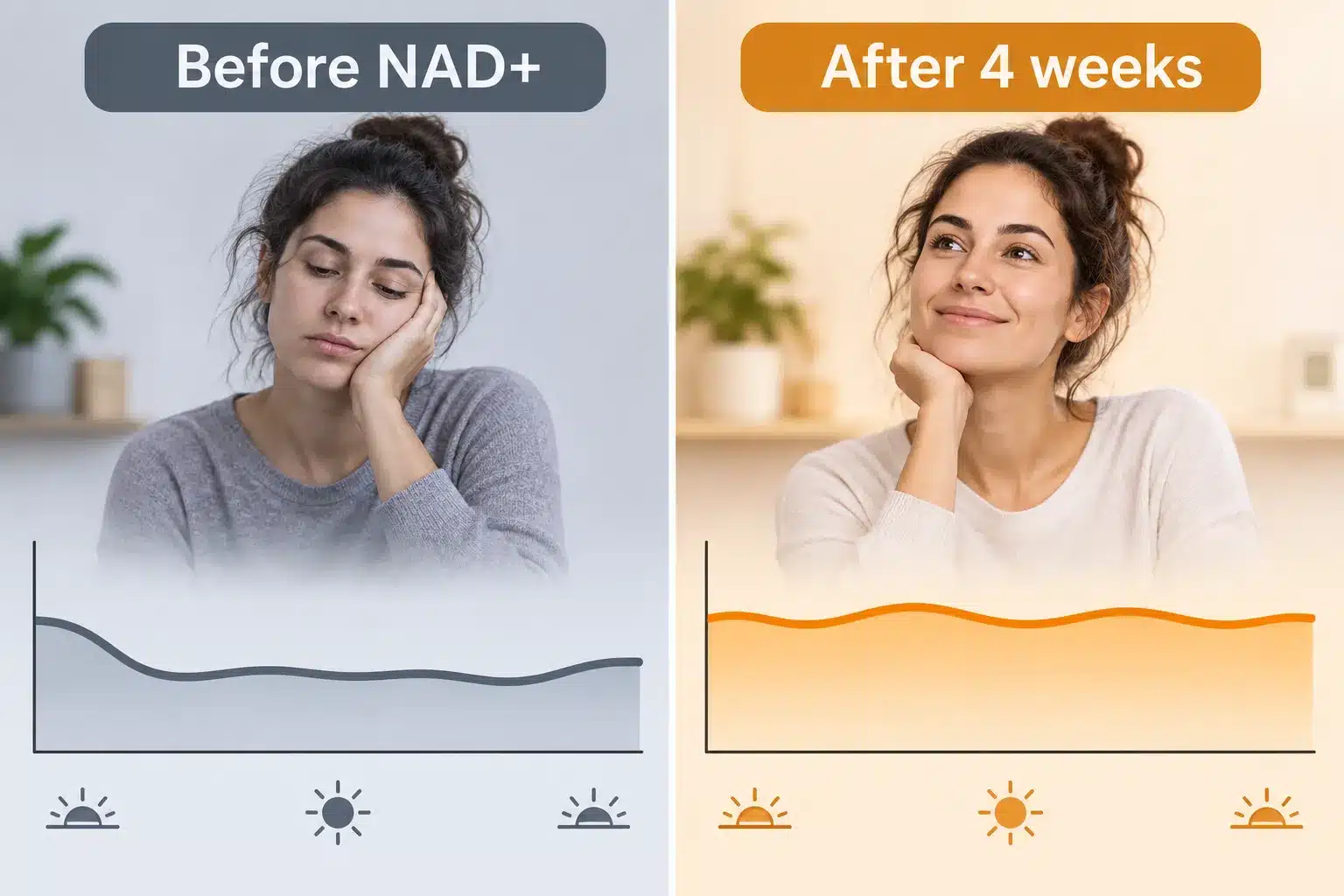
Most people who try NAD+ injections don’t wake up transformed. They notice small, specific things: steadier energy by week two, slightly clearer thinking, maybe better sleep. That’s the honest picture, and it’s worth knowing before you spend money on it.
Quick Answer
NAD+ injections before and after results typically show modest, gradual changes rather than dramatic ones. Most users report mild improvements in energy, mental clarity, and mood within two to four weeks of consistent use, but rigorous human trials on injectable NAD+ specifically are still limited. Results vary widely by dose, individual health status, and how long someone sticks with treatment.
7 Best GLP-1 Providers Ranked: Accreditation, Flexibility & Support Compared (2026 Update)
32,000+ Patients Can't All Be Wrong: See the Top-Rated GLP-1 Providers. We compared the leading online GLP-1 providers based on program features, clinical support, convenience, and overall value.
BMI MD GLP-1 Microdosing Plan
- Specialized microdosing options, including sublingual drops and low-dose injections
- Designed for people interested in maintaining weight or gradually adjusting treatment
- Bundled program structure without a separate monthly platform membership
- Online access makes the process convenient from home

DirectMeds Weight Loss Solutions
- Online weight-loss program with a straightforward patient experience
- Compounded medication options through state-licensed compounding pharmacies
- Includes clinical consultation as part of the process
- Provides shipping updates to help patients track their orders
MEDVi Flat-Rate Telehealth
- Flat-rate telehealth approach designed for easier budgeting
- No dosage-based pricing increases within the advertised program structure
- Offers injectable and oral thin-film delivery options
- Includes medical screening and asynchronous provider consultations
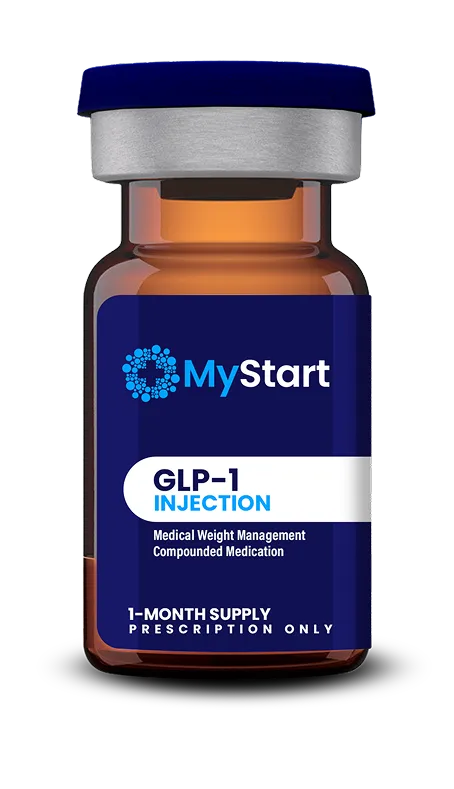
Gala GLP-1 Care Program
- Text-based access to state-licensed clinicians
- Cold-chain medication shipping included in the program
- Month-to-month program structure
- Designed for people who value convenient ongoing support
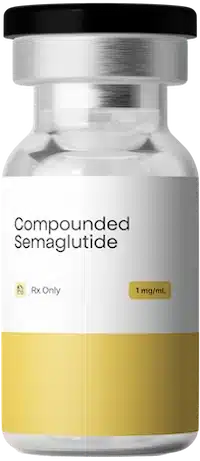
Measured GLP-1 Metabolic Health
- Comprehensive metabolic health screening and intake analysis
- Designed around longer-term metabolic health management
- Responsive dashboard with integrated health tracking tools
- Useful option for patients who value a more data-focused experience
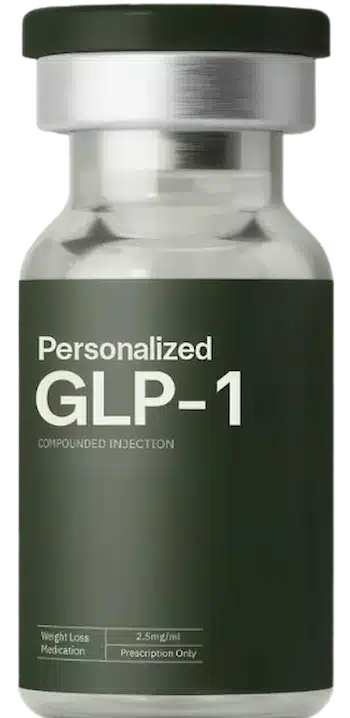
Refills GLP-1 (TryRefills Plan)
- Clinical guidance designed to help patients manage common treatment concerns
- Includes foundational nutritional strategies alongside medication
- Designed around predictable ongoing treatment
- No hidden startup or processing fees according to the program information provided
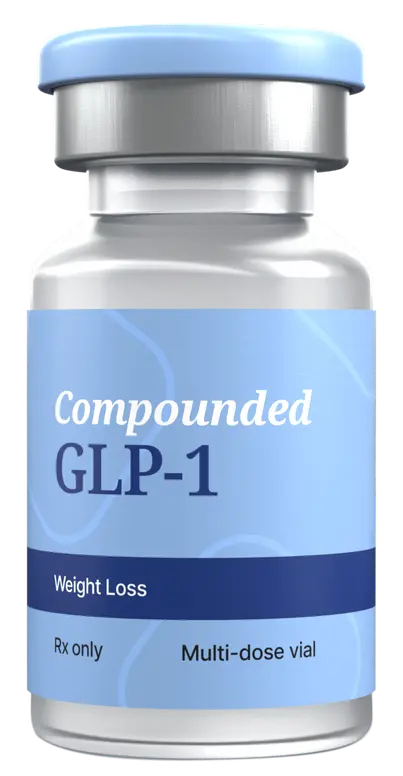
AltRx GLP-1 Transactional Reorders
- Transactional reorder model without recurring auto-billing
- Designed for patients who already understand their treatment routine
- Fast text-to-order process for convenient reorders
- Offers injectable and fast-dissolving tablet variations
Key Takeaways
- NAD+ is a coenzyme your cells need for energy production, not a classic peptide, despite how it’s marketed.
- Realistic NAD+ injections before and after timelines run four to twelve weeks for noticeable, subjective change.
- Subcutaneous injections cost less per session than IV infusions but deliver a smaller dose.
- Common side effects include injection-site soreness, mild nausea, and flushing; serious risks are rare but underreported.
- Human clinical evidence for energy, anti-aging, or addiction recovery claims is thin compared to the marketing around it.
- Pregnant people, those with certain cancers, and anyone on blood thinners should talk to a doctor first.
- Oral NMN and NR precursors are cheaper alternatives, though absorption and effectiveness comparisons are still being studied.
- Buying “research use only” NAD+ online for self-injection carries legal and safety gray areas.
What is NAD+ and why do people inject it
NAD+ (nicotinamide adenine dinucleotide) is a molecule every cell in your body uses to convert food into usable energy. It’s not a peptide in the strict biochemical sense, it’s a coenzyme built from a vitamin B3 derivative, but clinics and telehealth sites often file it under “peptide therapy” because it’s injected alongside real peptides like BPC-157.
NAD+ levels drop as people age. Researchers at institutions including the National Institute on Aging have studied this decline for years, which is part of why NAD+ gets marketed for energy, focus, and slowing visible aging.
People inject it because oral NAD+ breaks down in the digestive system before much reaches the bloodstream. Injection, either a quick shot under the skin or a slow IV drip, bypasses that problem and gets more of the molecule into circulation.
- Used for: general energy, mental clarity, workout recovery, addiction recovery support, and anti-aging routines.
- Not used for: treating any diagnosed disease. No injectable NAD+ product is FDA-approved for a medical condition.
How much do NAD+ injections cost
A single NAD+ injection typically runs $25 to $75 at a med spa or telehealth clinic, while IV infusions cost $150 to $500 per session depending on dose and add-ons [VERIFY]. Monthly injection packages or subscriptions can lower the per-dose price.
- Single subcutaneous shot: lower end of the range, often self-administered after an initial visit.
- IV infusion: higher cost because of staff time, equipment, and larger NAD+ dose (often 250mg-1000mg per bag).
- Package deals: clinics frequently bundle 4-8 sessions at a discount, assuming you’ll need repeat dosing.
Choose injections if you want a lower-cost, repeatable option you can do at home after training. Choose IV if you want a larger single dose and don’t mind the clinic time and higher price.
How long before you see results from NAD+ injections
Most people who notice anything report changes between two and six weeks of consistent dosing, not after a single shot. A single injection is unlikely to produce a noticeable before-and-after difference on its own.
Typical reported timeline:
A realistic edge case: someone who is sleep-deprived or iron-deficient may feel little from NAD+ because the underlying cause of their fatigue isn’t addressed by the injection at all.
NAD+ injections side effects and risks
Side effects are usually mild and short-lived, but they’re common enough that you should expect at least one. The most frequently reported issues are injection-site redness, nausea, and a warm flushing sensation, especially with faster IV pushes.
- Injection-site soreness or redness (most common, subcutaneous route)
- Nausea or stomach tightness, more common with IV infusion
- Headache
- Flushing or a racing-heart feeling during infusion
- Rare: allergic reaction at the injection site
A common mistake is rushing an IV infusion to save time. Faster infusion rates increase the chance of flushing and nausea. Ask your provider to slow the drip if you feel uncomfortable.
Does NAD+ really work for anti-aging and energy
Early research suggests NAD+ supplementation may support cellular energy metabolism, but human trials specifically testing injectable NAD+ for anti-aging or energy are still limited and often small. Most of the strong evidence comes from animal studies or research on oral precursors like NMN and NR, not injections.
What the evidence does show:
- Cellular studies confirm NAD+ is essential for mitochondrial energy production.
- Human trials of NAD+ precursors (not injections) have shown modest changes in blood NAD+ levels, per NIH-funded research [VERIFY].
- No large, peer-reviewed human trial has confirmed injectable NAD+ reverses visible aging signs.
What it doesn’t show: there’s no solid clinical proof that injections erase wrinkles, reverse gray hair, or add years to lifespan. If a provider promises that, treat it as a red flag.
NAD+ injections vs IV infusions: what’s the difference
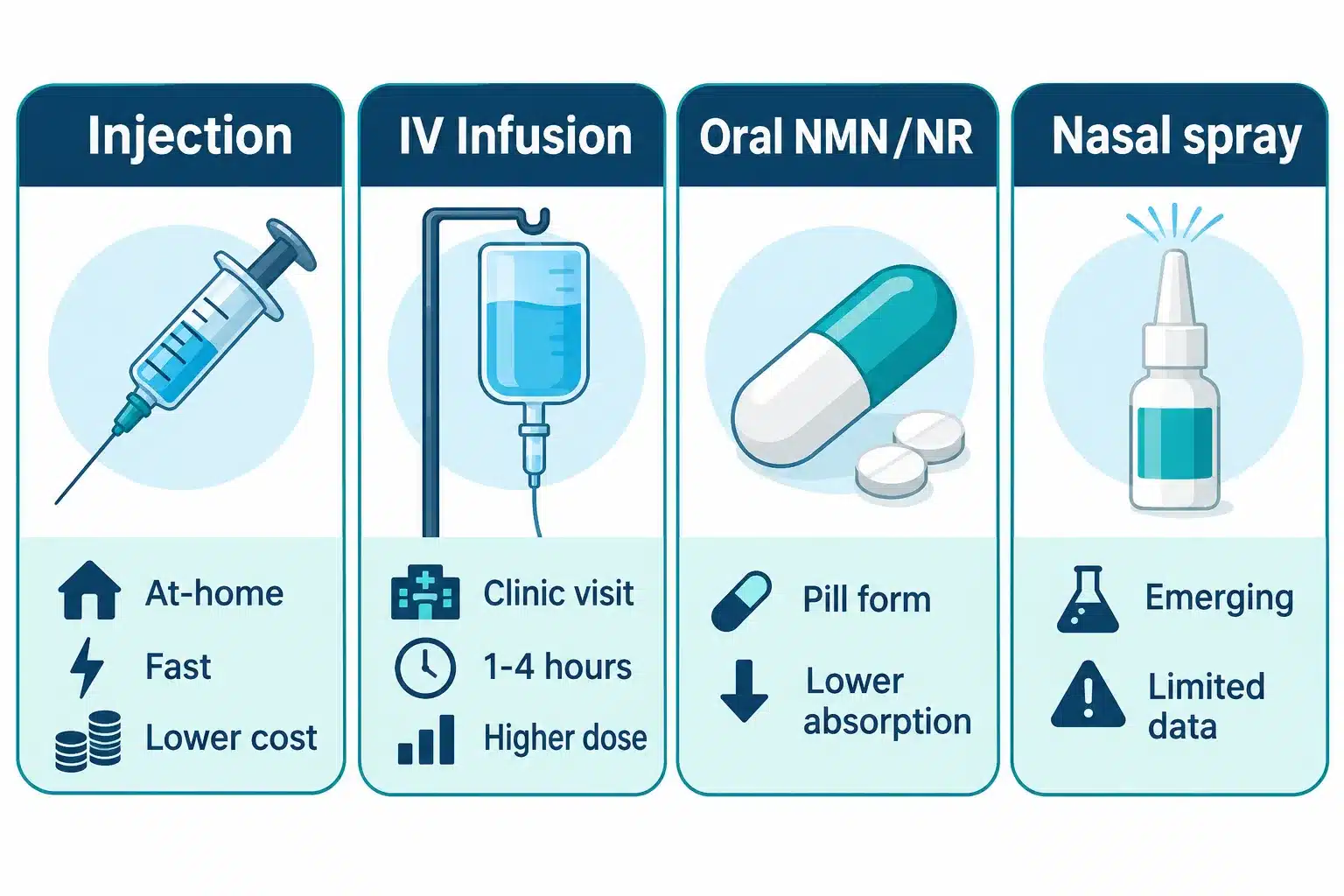
Injections deliver a smaller NAD+ dose quickly under the skin, while IV infusions deliver a much larger dose slowly into a vein over one to four hours. The dose difference is the main practical distinction, not the molecule itself.
Choose injections if you want convenience and a lower weekly cost. Choose IV if your provider recommends a higher dose for a specific goal, such as recovery support, and you can spare the clinic time.
For comparison, people researching other injectable health routines sometimes also look into MIC B12 injections for fat metabolism and energy support, which work through a different mechanism but get marketed for similar fatigue complaints.
Who shouldn’t get NAD+ injections
Pregnant or breastfeeding people, anyone with a history of certain cancers, and people on blood thinners should talk to a doctor before starting NAD+. The safety data in these groups is too thin to say it’s risk-free.
Talk to your doctor first if you:
- Are pregnant, trying to conceive, or breastfeeding
- Have a current or past cancer diagnosis, since NAD+ affects cell metabolism broadly
- Take blood thinners or have a bleeding disorder
- Have a known allergy to B-vitamin derivatives
- Are being treated for a substance use disorder through a formal program (coordinate with that provider first)
Best brands for NAD+ injections
There’s no single dominant, FDA-approved injectable NAD+ brand, because most products are compounded by individual pharmacies rather than mass-manufactured. This matters because quality and purity can vary between compounding pharmacies.
What to check before choosing a provider:
- Does a licensed pharmacy compound the product, with a certificate of analysis available on request?
- Does the clinic require a medical intake form and provider review, not just a credit card?
- Is the injection given or supervised by a licensed professional, at least for the first dose?
- Does the provider disclose the exact NAD+ dose per vial or bag?
Avoid providers who won’t answer these questions directly. That’s a bigger red flag than the price.
How often should you get NAD+ injections
Most clinics recommend starting with one to three injections per week for the first month, then tapering to a maintenance schedule of one to two per week. There’s no universally agreed-upon frequency because strong dosing trials in humans don’t yet exist.
- Loading phase: 2-3 times weekly for 2-4 weeks, as commonly used in clinical practice
- Maintenance phase: 1-2 times weekly, or as needed based on symptoms
- IV infusions: often spaced further apart, once every 1-2 weeks, because of the larger dose
Any specific schedule should be set by a licensed provider based on your health history, not copied from a forum post.
NAD+ alternatives like NMN or NR supplements
NMN (nicotinamide mononucleotide) and NR (nicotinamide riboside) are oral precursors your body converts into NAD+, and they cost far less than injections. They avoid needles entirely but may raise blood NAD+ levels less efficiently than direct injection.
Biohacking-focused readers already using NMN or NR often ask whether switching to injections is worth the jump in cost. The honest answer: switch only if you’ve tried oral precursors for at least a few months and felt no change, and you’re willing to pay more for a method with a bigger dose, not necessarily better-proven results.
Can you do NAD+ injections at home
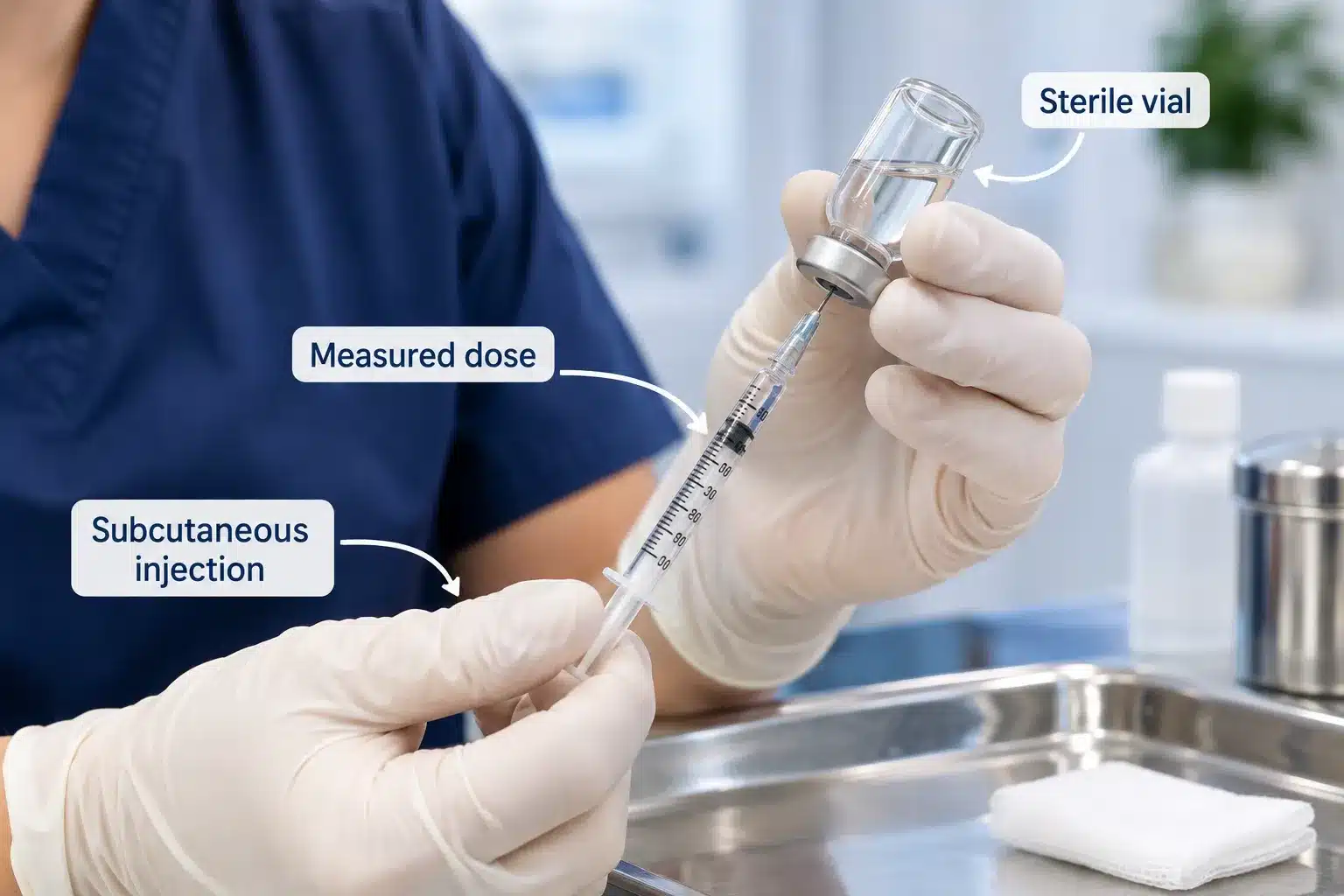
Yes, subcutaneous NAD+ injections are commonly self-administered at home after a provider supervises the first dose and confirms proper technique. IV infusions, by contrast, require a clinical setting because of the equipment and monitoring involved.
Steps typically involved in home use:
- Initial telehealth or in-person consult with a licensed provider
- First injection given or observed by clinical staff
- Provider teaches proper injection site rotation and technique
- Vials shipped to your home, stored per instructions (usually refrigerated)
- Self-injection on the agreed schedule, with check-ins as needed
A common mistake is buying “research use only” NAD+ from an online supplier with no medical oversight. Those products aren’t verified for human use, dosing, or sterility, and self-injecting them carries real risk.
Common mistakes people make with NAD+
The biggest mistake is expecting a dramatic before-and-after transformation from a treatment that, at best, produces subtle, gradual shifts. Setting expectations too high leads to disappointment and wasted money.
- Stopping after one or two sessions and concluding “it doesn’t work”
- Skipping the intake process and buying unregulated vials online
- Injecting too fast or into the same site repeatedly, causing irritation
- Ignoring basics like sleep and hydration while expecting NAD+ to fix fatigue alone
- Not tracking symptoms, so there’s no way to judge if it’s actually helping
NAD+ for energy vs NAD+ for aging: which works better
NAD+ has more consistent anecdotal support for short-term energy and focus than for visible anti-aging effects. The energy claims are easier to self-assess within weeks; aging claims take years to evaluate and aren’t well studied in humans at all.
- Energy and mental clarity: more commonly reported, shows up within weeks, plausible given NAD+’s role in cellular energy
- Workout recovery: some athletes report shorter recovery windows, though controlled human data is sparse
- Anti-aging (skin, lifespan): weakest evidence category; mostly based on animal studies and cellular biology, not human trials
If your main goal is daytime energy, injections are a reasonable thing to test for a month. If your main goal is reversing visible aging, treat marketing claims with real skepticism.
How to know if NAD+ injections are actually working for you
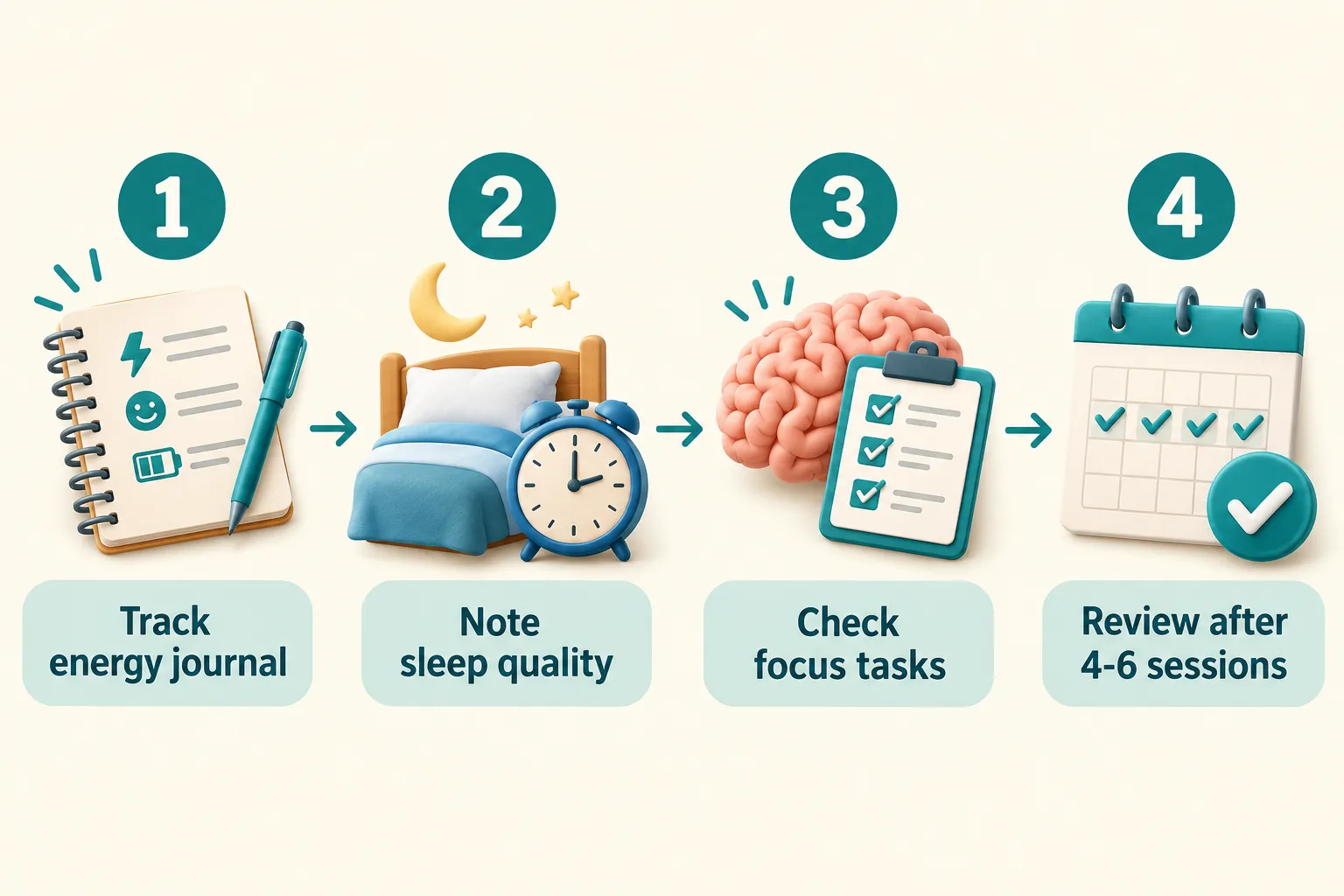
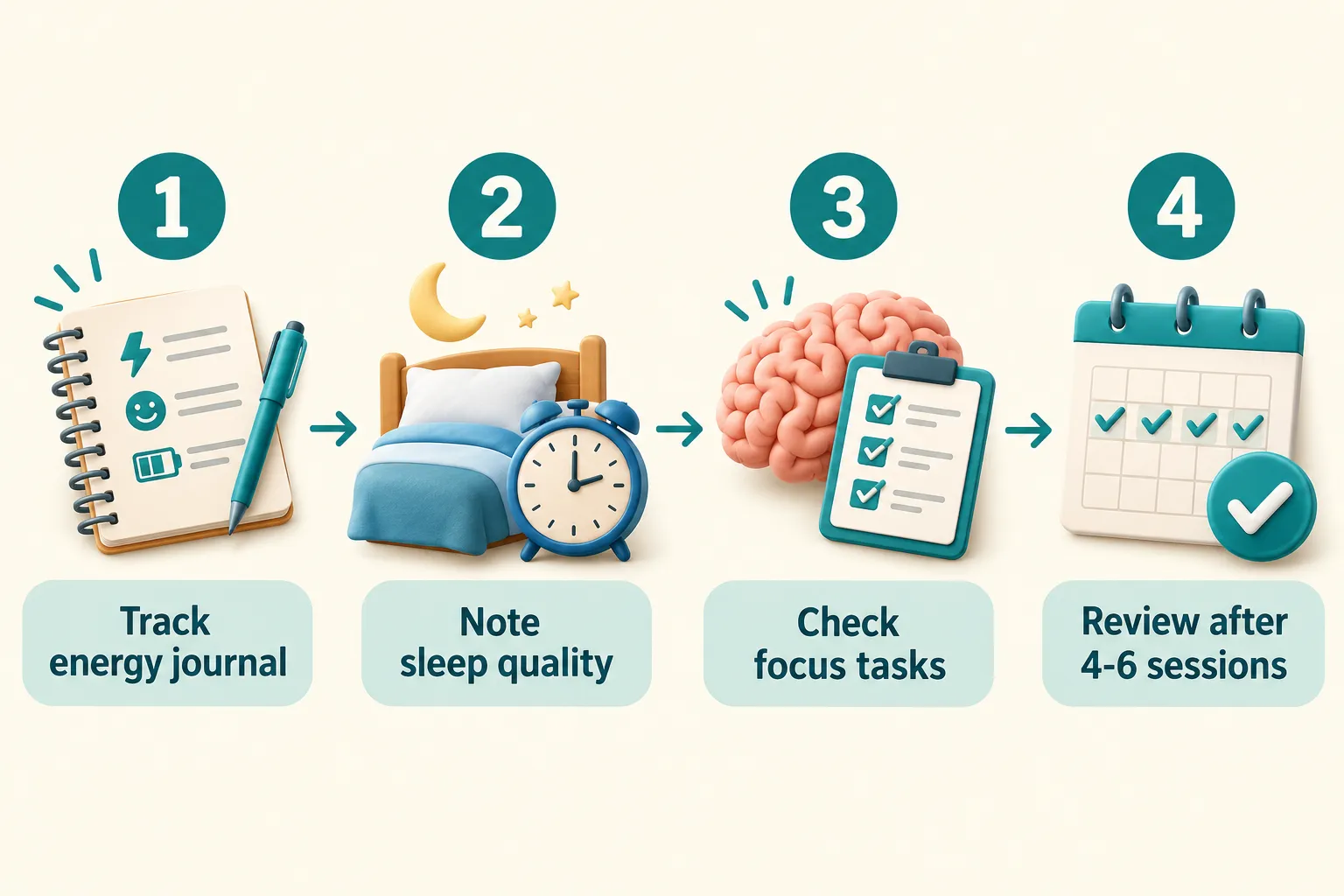
Track a short symptom log before you start and compare it after four to six sessions, rather than relying on vague impressions. Specific, dated notes are far more reliable than “I think I feel better.”
What to track:
- Energy level at 2pm, rated 1-10, daily
- Hours of sleep and subjective sleep quality
- Mental focus during a specific recurring task (a meeting, a workout, a work block)
- Mood, rated simply as better, same, or worse
Decision rule: if you see no change across any of these after six consistent sessions, it’s reasonable to stop and put that money toward sleep, diet, or a medical workup for the actual cause of your fatigue instead.
FAQ
Is NAD+ actually a peptide?
No. NAD+ is a coenzyme derived from vitamin B3, not a peptide, even though it’s often sold alongside peptides and marketed with similar language.
Do I need a prescription for NAD+ injections?
In most US states, yes, through a licensed provider or telehealth intake, since it’s typically compounded and dispensed under medical supervision.
How long does one NAD+ injection last in effect?
There’s no solid human data on exact duration. Anecdotally, people report feeling a boost for a day or two after a single shot, fading without repeat dosing.
Can NAD+ injections help with long-COVID fatigue?
Some clinics market NAD+ for this, but there’s no strong published clinical evidence confirming it helps long-COVID symptoms specifically. Talk to a doctor managing your long-COVID care before adding it.
Is NAD+ IV therapy legitimate for addiction recovery?
NAD+ IV is used in some recovery programs, but evidence for its effectiveness in withdrawal or craving reduction is limited and mixed. It should supplement, not replace, established treatment.
What’s a realistic NAD+ injections before and after outcome for most people?
Mild, gradual improvement in daytime energy and focus over four to six weeks, with no visible physical transformation. Anyone promising dramatic before-and-after photos from NAD+ alone is overselling it.
Are NAD+ injections safe long-term?
Short-term use appears generally well tolerated in healthy adults, but long-term safety data beyond a few months is limited. Ongoing use should be reviewed periodically with your provider.
7 Best GLP-1 Providers Ranked: Accreditation, Flexibility & Support Compared (2026 Update)
32,000+ Patients Can't All Be Wrong: See the Top-Rated GLP-1 Providers: Compared on accreditation, plan flexibility, and patient support — updated for 2026.
BMI MD GLP-1 Microdosing Plan
- Specialized microdosing options (sublingual drops or low-dose injections)
- Ideal for maintaining weight or tapering off higher doses safely
- Fully bundled plan with no hidden monthly platform memberships
DirectMeds Weight Loss Solutions
- Sourced from accredited, state-licensed 503A compounding pharmacies
- No-frills high-volume savings passed directly to the patient
- Includes clinical consultation and cold-chain shipping updates
MEDVi Flat-Rate Telehealth
- Flat monthly rate holds steady even at maximum maintenance doses
- No dosage upcharges or graduation fee penalties
- Offers both injectable and advanced oral thin-film delivery options
Gala GLP-1 Care Program
- All-inclusive plan with no standalone membership costs
- Continuous text-based messaging access with state-licensed clinicians
- Temperature-controlled, cold-chain medication shipping included
Measured GLP-1 Metabolic Health
- Comprehensive metabolic health screening and expert intake analysis
- Predictable long-term budgeting with stable plan pricing
- High-end responsive dashboard with integrated diagnostic support
Refills GLP-1 (TryRefills Plan)
- Flat rate holds steady as titration scales up
- Includes clinical guides for active side-effect management
- Bundles in foundational nutritional strategies alongside medication
AltRx GLP-1 Transactional Reorders
- Zero recurring auto-billing — pay entirely on a transactional basis
- Rapid text-to-order format saves time for experienced patients
- Provides both injectable forms and fast-dissolving tablet variations
Conclusion
NAD+ injections aren’t a scam, but they’re also not the dramatic before-and-after story some clinics sell. Expect subtle, gradual shifts in energy and focus over several weeks, confirm you’re buying from a licensed, compounding pharmacy-backed provider, and track your own symptoms so you can judge results honestly instead of guessing.
If you’re still comparing injectable options for energy and recovery, it’s worth reading about MIC B12 injections for fat metabolism and energy support before committing to a single clinic or product line.
Medically reviewed by [Name, Credentials, placeholder]. This article is for informational purposes only and does not replace personalized medical advice. Talk to a licensed healthcare provider before starting NAD+ injections, especially if you have an existing medical condition or take prescription medication.