NAD Injection Side Effects and How to Reduce Them

Last updated: November 24, 2026
Quick Answer
NAD injection side effects usually include flushing, nausea, headache, and injection-site soreness, and most fade within a few hours to two days. You can reduce NAD injection side effects by slowing the injection rate, staying hydrated, eating before your session, and starting with a lower dose under a licensed provider’s guidance.
Key Takeaways
- Most NAD+ injection reactions are mild: flushing, nausea, cramping, fatigue, or soreness at the injection site.
- Side effects typically resolve within a few hours, though some fatigue or soreness can linger up to 48 hours.
- Slower injection speed, proper hydration, and smaller starting doses are the main tools for reducing side effects.
- NAD+ is not technically a peptide. It’s a coenzyme made of nucleotides, but it’s commonly marketed alongside peptides at clinics and telehealth sites.
- Human research on NAD+ injections is limited. Most safety data comes from small trials, IV protocols, and clinical experience rather than large controlled studies.
- NAD+ injections cost more per dose than oral precursors like NMN or NR, but deliver NAD+ directly into the bloodstream instead of relying on absorption.
- People with pregnancy, uncontrolled chronic illness, or certain medication regimens should talk to a doctor before trying NAD+ injections.
- Buying NAD+ labeled “research use only” online carries real safety and legal risk because it skips medical oversight and quality testing.
What Exactly Is NAD and Why Do People Get Injections
NAD, short for nicotinamide adenine dinucleotide, is a coenzyme every cell needs to convert food into usable energy. It’s not a peptide at all, peptides are short chains of amino acids, while NAD+ is built from nucleotides, the same family of molecules that make up DNA.
7 Best GLP-1 Providers Ranked: Accreditation, Flexibility & Support Compared (2026 Update)
32,000+ Patients Can't All Be Wrong: See the Top-Rated GLP-1 Providers. We compared the leading online GLP-1 providers based on program features, clinical support, convenience, and overall value.
BMI MD GLP-1 Microdosing Plan
- Specialized microdosing options, including sublingual drops and low-dose injections
- Designed for people interested in maintaining weight or gradually adjusting treatment
- Bundled program structure without a separate monthly platform membership
- Online access makes the process convenient from home

DirectMeds Weight Loss Solutions
- Online weight-loss program with a straightforward patient experience
- Compounded medication options through state-licensed compounding pharmacies
- Includes clinical consultation as part of the process
- Provides shipping updates to help patients track their orders
MEDVi Flat-Rate Telehealth
- Flat-rate telehealth approach designed for easier budgeting
- No dosage-based pricing increases within the advertised program structure
- Offers injectable and oral thin-film delivery options
- Includes medical screening and asynchronous provider consultations
Gala GLP-1 Care Program
- Text-based access to state-licensed clinicians
- Cold-chain medication shipping included in the program
- Month-to-month program structure
- Designed for people who value convenient ongoing support
Measured GLP-1 Metabolic Health
- Comprehensive metabolic health screening and intake analysis
- Designed around longer-term metabolic health management
- Responsive dashboard with integrated health tracking tools
- Useful option for patients who value a more data-focused experience
Refills GLP-1 (TryRefills Plan)
- Clinical guidance designed to help patients manage common treatment concerns
- Includes foundational nutritional strategies alongside medication
- Designed around predictable ongoing treatment
- No hidden startup or processing fees according to the program information provided
AltRx GLP-1 Transactional Reorders
- Transactional reorder model without recurring auto-billing
- Designed for patients who already understand their treatment routine
- Fast text-to-order process for convenient reorders
- Offers injectable and fast-dissolving tablet variations
People get NAD+ injections because natural NAD+ levels drop with age, and some research links lower NAD+ to reduced cellular energy production. Clinics market injections and IV drips for energy, mental clarity, recovery from alcohol or substance use, and general “anti-aging” support. The appeal is simple: a direct route into the bloodstream, skipping the digestive breakdown that oral supplements face.
That said, the evidence in humans is still thin. Animal studies show clearer benefits than the handful of small human trials available so far, so treat marketing claims with some skepticism.
What Are the Most Common Side Effects of NAD Injections
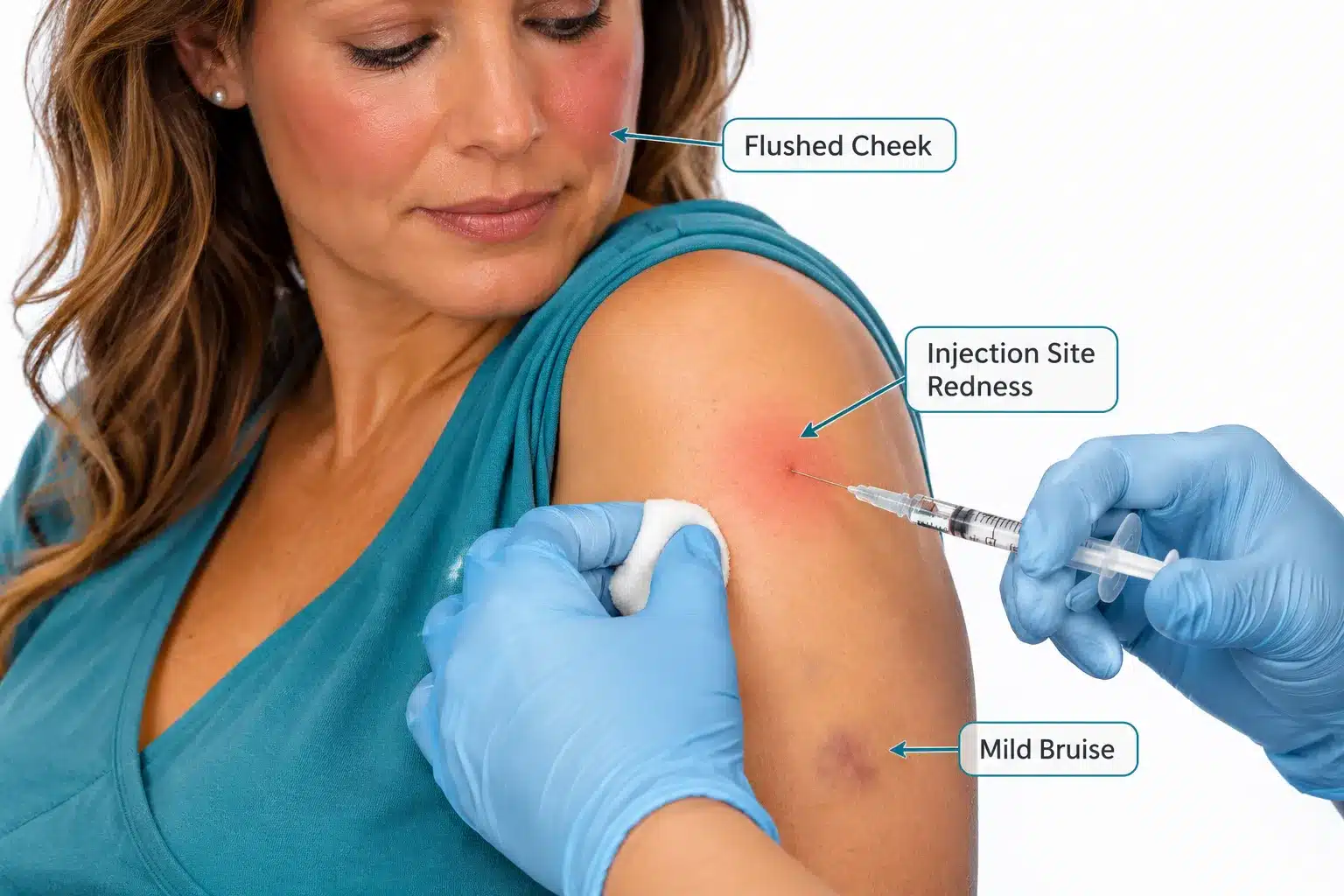
The most common NAD injection side effects are flushing, nausea, mild cramping, headache, and soreness or redness at the injection site. These reactions happen because NAD+ affects blood vessels and gut tissue almost immediately after it enters the body.
Reported reactions include:
- Facial or chest flushing, sometimes described as a warm or tingling rush
- Nausea or stomach cramping, especially with faster injections
- Headache, mild to moderate
- Fatigue or a brief energy dip a few hours after dosing
- Injection-site redness, bruising, or tenderness
- Lightheadedness, particularly if dehydrated beforehand
A smaller number of people report chest tightness or a racing heartbeat. These symptoms are usually brief, but anyone experiencing chest pain or shortness of breath should stop and seek medical care, not wait it out.
How Long Do NAD Injection Side Effects Usually Last
Most NAD injection side effects last between 30 minutes and a few hours, with flushing and nausea typically the first to pass. Soreness at the injection site can linger for one to two days, similar to a flu shot or B12 injection.
Here’s a rough timeline based on common clinical reports:
If symptoms stretch beyond 48 hours or worsen rather than fade, that’s not typical and deserves a call to the provider who administered the shot.
Can You Prevent or Avoid NAD Injection Side Effects
You can lower your risk of NAD injection side effects by starting with a smaller dose, injecting slowly, staying well hydrated, and avoiding injections on an empty stomach. None of these steps guarantee zero reaction, but together they reduce both the frequency and severity of common complaints.
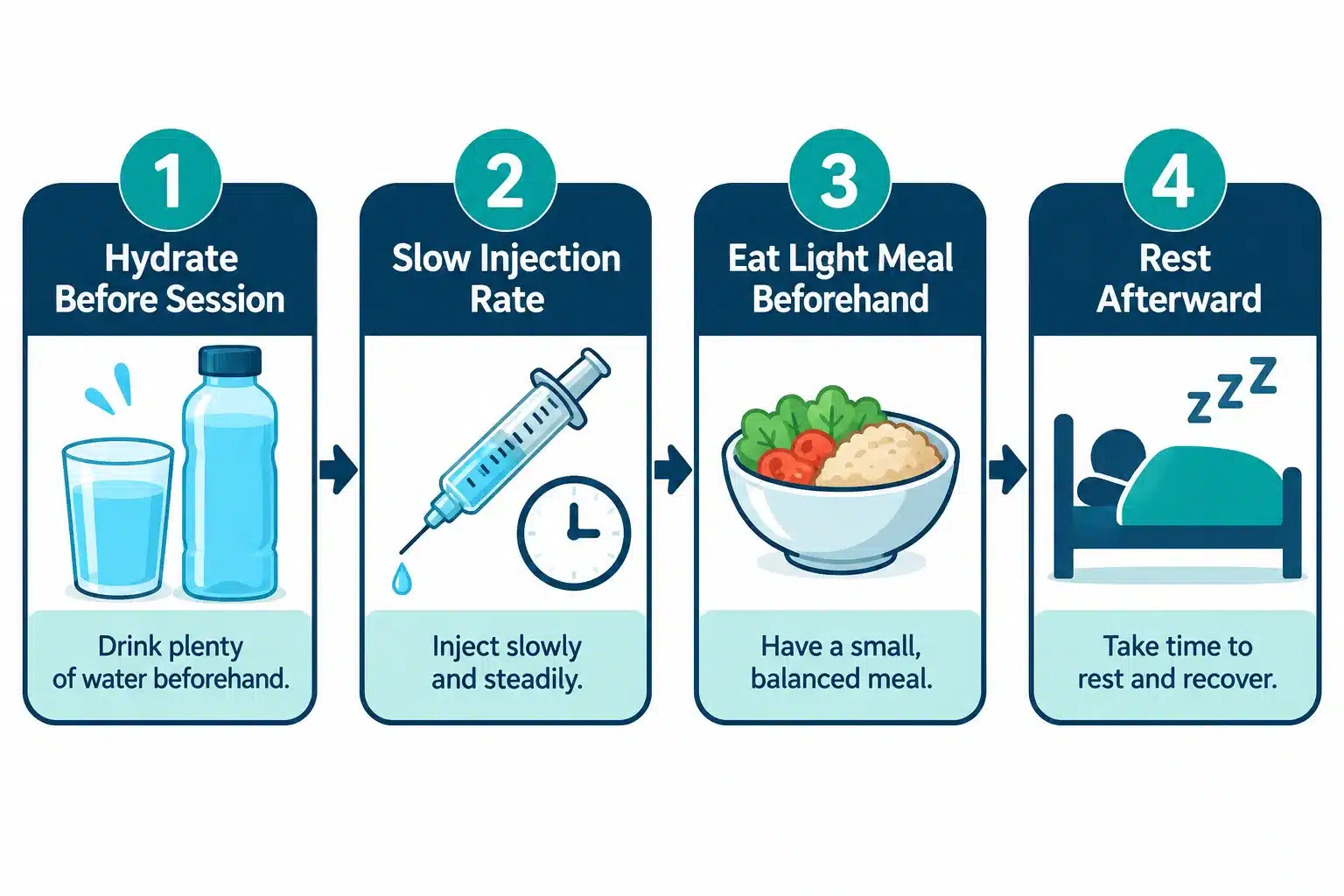
Practical prevention steps:
- Drink water in the hours before your appointment, not right before.
- Eat a light meal 1-2 hours beforehand to reduce nausea risk.
- Ask your provider to start at the low end of the typical dose range and increase gradually over future sessions.
- Request a slower push rather than a rapid injection.
- Sit or lie down for 10-15 minutes after the shot before driving or exercising.
A common mistake is treating the first session like a routine the body already knows. It doesn’t. First-time reactions tend to be stronger simply because the body hasn’t adapted yet.
What Helps Reduce Nausea and Headaches From NAD Injections
Nausea and headaches from NAD injections usually respond to slower administration, hydration, and timing the injection around meals. These two symptoms are the most frequently reported complaints at IV clinics and med spas offering NAD+.
Steps that specifically target nausea:
- Avoid caffeine right before the session; it can amplify jitteriness and nausea together.
- Ask about anti-nausea options if you have a history of motion sickness or sensitive stomach.
- Breathe slowly through the flushing sensation instead of tensing up, which can worsen nausea.
Steps that specifically target headache:
- Hydrate heavily the day before, not just the morning of.
- Avoid stacking NAD+ with other stimulants or high-dose caffeine the same day.
- Ask whether a lower concentration, slower drip, or split dose over two visits is an option.
If both symptoms show up every single session despite these adjustments, that’s a signal the dose or injection rate needs a bigger change, not just a tweak.
Is NAD Injection Safe or Should I Be Worried
NAD+ injections are generally considered low-risk when given by a licensed provider using proper sterile technique and dosing, but they’re not risk-free and long-term safety data in humans remains limited. The biggest actual risks tend to come from poor sourcing, incorrect dosing, or skipping a health screening beforehand, not from NAD+ itself at typical clinical doses.
Reasons for caution rather than panic:
- Most reported side effects are mild and short-lived, similar to B12 or other vitamin injections.
- Serious adverse events are rare in published small trials, but those trials are small, so rare risks may not have shown up yet.
- Products purchased outside licensed clinics (especially “research use only” vials) carry higher risk because there’s no guarantee of sterility, purity, or correct concentration.
If you’re comparing injectable options for other conditions, it helps to see how providers manage side effects elsewhere too, for example, the approach used in managing Ozempic side effects follows a similar pattern: start low, go slow, and track your reaction.
How Much Does NAD Injection Cost
NAD+ injections typically cost less per session than IV infusions but more per dose than oral NAD+ precursors, with single injections often running in the range of 25 to 75 dollars and IV drips running considerably higher [VERIFY exact current pricing with local providers, as costs vary widely by clinic and region]. Package deals and membership pricing at med spas can lower the per-visit cost for people doing repeated sessions.
Cost factors to ask about before booking:
- Whether the price includes a consultation or just the injection itself
- Whether the clinic uses pharmaceutical-grade NAD+ or a compounded version
- Whether follow-up visits are discounted as part of a series
- Whether a licensed provider is actually present, not just support staff
Compare this to supplements like MIC B12 injections for energy support, which are often bundled at similar clinics and priced in a comparable range.
Who Should Not Get NAD Injections
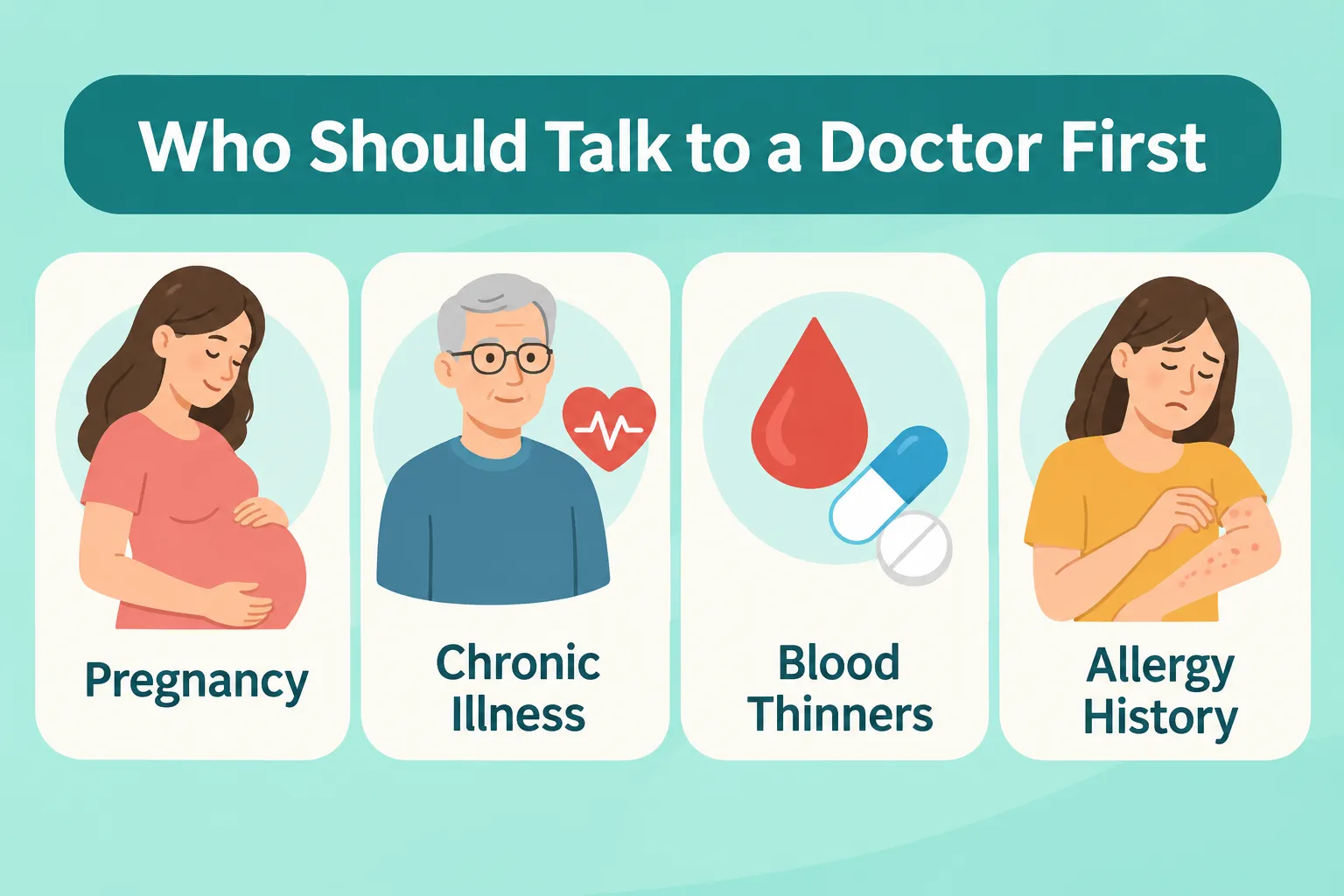
People who are pregnant or breastfeeding, have uncontrolled chronic illness, or are on certain blood thinners or seizure medications should talk to a doctor before getting an NAD+ injection. There’s not enough human safety data in these groups to call the injections routine or low-risk for them.

Talk to your doctor first if you:
- Are pregnant, trying to conceive, or breastfeeding
- Have uncontrolled heart disease, kidney disease, or liver disease
- Take prescription blood thinners or have a bleeding disorder
- Have a history of severe allergic reactions to injectable products
- Are currently in active withdrawal from alcohol or substances without medical supervision (this needs a clinical setting, not a med spa)
A common edge case: people already on multiple supplements (NMN, NR, resveratrol) sometimes assume adding an NAD+ injection is harmless layering. It may not be. Stacking isn’t automatically dangerous, but it also isn’t automatically fine, ask your provider before combining.
Is NAD Injection Better Than Taking NAD Supplements Orally
NAD+ injections deliver the coenzyme (or its precursors) directly into the bloodstream, bypassing digestion, while oral supplements like NMN and NR rely on gut absorption that’s less predictable and generally considered less efficient. Neither route has been proven in large human trials to dramatically raise usable NAD+ levels with lasting clinical benefit, so “better” depends on your goal and budget.
Choose injections if you want faster onset and are comfortable with clinic visits and higher per-session cost. Choose oral precursors if you prefer a daily routine, lower cost per dose, and fewer injection-related side effects.
What Are Natural Alternatives to Boost NAD Without Injections
You can support your body’s own NAD+ production through exercise, sleep, calorie moderation, and specific nutrients, without needing an injection at all. Early research suggests these habits influence the enzymes that make and recycle NAD+ in cells, though the effect size in humans is still being studied.
Approaches with some supporting research:
- Regular aerobic exercise, which appears to boost NAD+-related enzyme activity
- Adequate sleep, since circadian disruption affects NAD+ metabolism
- Time-restricted eating or moderate calorie reduction, both linked to NAD+ pathway activity in animal studies
- Dietary intake of niacin-rich foods (poultry, fish, peanuts), which provide a building block for NAD+ production
- Oral precursors like NMN or NR, available without a prescription in most of the US
None of these replace medical treatment for diagnosed fatigue or neurological conditions. They’re lifestyle levers, not a substitute for a diagnosis.
Why Do Some People React Worse to NAD Injections Than Others
People react differently to NAD+ injections mainly because of injection speed, dose, hydration status, and individual sensitivity to the flushing reaction NAD+ causes in blood vessels. Body weight, prior supplement use, and even anxiety about the injection itself can also shape how strong the reaction feels.
Factors that tend to predict a rougher reaction:
- First-time use (the body hasn’t adapted yet)
- Dehydration going into the session
- Faster-than-recommended injection or infusion rate
- Empty stomach
- Higher starting dose relative to body size
A useful decision rule: if your first session caused strong flushing or nausea, ask for a lower dose and slower rate next time rather than assuming you simply “can’t tolerate” NAD+. Many people who had a rough first visit do fine once the rate and dose are adjusted.
Can You Mix NAD Injections With Other Treatments or Medications
NAD+ injections can interact with certain medications and other injectable treatments, so you should tell your provider about everything you’re taking before your first session. This matters most for blood thinners, blood pressure medications, and other IV or injectable therapies scheduled close together.
Questions worth asking your provider:
- Does this interact with my current prescriptions, including blood thinners or blood pressure drugs?
- Should I space this out from other injections, like B12 or weight-loss medications such as those discussed in guides to semaglutide weight loss injections?
- Is it safe to combine NAD+ with other supplements I already take daily?
Clinics offering compounded injectable programs, similar to compounded semaglutide injection protocols, should run the same kind of intake screening before adding NAD+ to your routine. If a provider skips this step entirely, that’s a red flag.
What Does Science Actually Say About NAD Injection Safety
Published human research on NAD+ injections and IV therapy is limited to small trials and clinical case reports, which show generally mild side effects but can’t rule out rare risks or confirm long-term safety. Most of what clinics claim about benefits draws more from animal studies and NAD+’s known role in cellular metabolism than from large, controlled human trials specific to injections.
What the evidence does support:
- NAD+ is essential for mitochondrial energy production; this part is well established in basic biology.
- Small human trials and clinical reports describe short-term tolerability with mild, self-limited side effects.
What the evidence does not yet support:
- Strong, reproducible proof that injections reverse aging markers in humans
- Clear dosing standards agreed upon across clinics
- Long-term safety data beyond a few months of use
Honest framing matters here: NAD+ “may support” cellular energy production, and some people “report” improved focus or recovery, but no injectable NAD+ product is approved by the FDA to treat or prevent any disease.
How Often Is It Safe to Get NAD Injections
Most clinics schedule NAD+ injections weekly or biweekly for an initial series, then move to monthly maintenance, but there’s no universally agreed-upon frequency backed by large-scale human research. Frequency should be set by a licensed provider based on your response, not a fixed online protocol.
A reasonable framework providers often use:
- Initial phase: 1-2 sessions per week for 2-4 weeks
- Maintenance phase: every 2-4 weeks depending on how you respond
- Reassessment: stop or adjust if side effects persist or worsen over time
If a clinic pushes daily injections with no mention of monitoring side effects, that’s a mistake to avoid, not a sign of a more aggressive, more effective protocol.
FAQ
Is NAD+ actually a peptide?
No. NAD+ is a coenzyme made of nucleotides, not a chain of amino acids like a true peptide. It’s often grouped with peptides in marketing because both are sold at the same clinics.
Can NAD+ injections cause an allergic reaction?
It’s possible, though uncommon. Signs include hives, swelling, or difficulty breathing, and these require immediate medical attention rather than waiting for symptoms to pass.
Do NAD+ injections help with hangovers or alcohol recovery?
Some clinics market them this way, and people report feeling better afterward, but controlled human evidence for this specific use is limited. Treat it as anecdotal rather than proven.
Is it safe to give yourself NAD+ injections at home?
Self-injection should only happen after proper training from a licensed provider, using a legitimately sourced product. Unsupervised dosing increases the risk of infection, incorrect dosing, and missed contraindications.
How quickly do NAD+ injections start working?
Many people report feeling effects, including flushing, within minutes. Reported energy or focus benefits, where they occur, tend to show up within a few hours.
Are NAD+ injections legal in the US?
Licensed clinics administering NAD+ under medical supervision generally operate within current regulations, but products sold online as “research use only” skip the oversight that makes clinical use safer. [VERIFY current state-level regulatory status, as rules can vary.]
What should I do if side effects don’t go away after two days?
Contact the provider who gave you the injection right away. Persistent symptoms beyond 48 hours aren’t typical and need evaluation rather than waiting it out.
7 Best GLP-1 Providers Ranked: Accreditation, Flexibility & Support Compared (2026 Update)
32,000+ Patients Can't All Be Wrong: See the Top-Rated GLP-1 Providers: Compared on accreditation, plan flexibility, and patient support — updated for 2026.
BMI MD GLP-1 Microdosing Plan
- Specialized microdosing options (sublingual drops or low-dose injections)
- Ideal for maintaining weight or tapering off higher doses safely
- Fully bundled plan with no hidden monthly platform memberships
DirectMeds Weight Loss Solutions
- Sourced from accredited, state-licensed 503A compounding pharmacies
- No-frills high-volume savings passed directly to the patient
- Includes clinical consultation and cold-chain shipping updates
MEDVi Flat-Rate Telehealth
- Flat monthly rate holds steady even at maximum maintenance doses
- No dosage upcharges or graduation fee penalties
- Offers both injectable and advanced oral thin-film delivery options
Gala GLP-1 Care Program
- All-inclusive plan with no standalone membership costs
- Continuous text-based messaging access with state-licensed clinicians
- Temperature-controlled, cold-chain medication shipping included
Measured GLP-1 Metabolic Health
- Comprehensive metabolic health screening and expert intake analysis
- Predictable long-term budgeting with stable plan pricing
- High-end responsive dashboard with integrated diagnostic support
Refills GLP-1 (TryRefills Plan)
- Flat rate holds steady as titration scales up
- Includes clinical guides for active side-effect management
- Bundles in foundational nutritional strategies alongside medication
AltRx GLP-1 Transactional Reorders
- Zero recurring auto-billing — pay entirely on a transactional basis
- Rapid text-to-order format saves time for experienced patients
- Provides both injectable forms and fast-dissolving tablet variations
Conclusion
Start any NAD+ injection program with a low dose, a slow injection rate, and a provider willing to screen your health history first. Track how you feel after each session and adjust frequency or dose based on your own response rather than a generic online schedule. If side effects persist past 48 hours, or if you fall into a group that should avoid NAD+ injections altogether, talk to a licensed medical provider before your next session rather than pushing through.
This article is for informational purposes only and does not replace personalized medical advice. Talk to a licensed healthcare provider before starting NAD+ injections, especially if you have an existing health condition or take prescription medication.
Medically reviewed by [Name, MD/credentials, placeholder, to be confirmed before publication]