
Roota Hair Growth Serum Review 2026: Does It Actually Work for Hair Loss?
Last updated: May 21, 2026
Quick Answer: Roota Hair Growth Serum is a topical hair restoration formula that targets DHT-related hair loss through a blend of plant-based DHT blockers, scalp-stimulating botanicals, and follicle-nourishing compounds. Most users report visible improvements in hair density and reduced shedding within 8 to 12 weeks of consistent use. It is not a prescription treatment, but early evidence and user feedback suggest it performs comparably to many over-the-counter alternatives for mild to moderate hair thinning.
Key Takeaways
- Roota Hair Growth Serum combines DHT-blocking botanicals with scalp microcirculation support to address the root causes of hair loss
- The formula targets both men and women experiencing hormonal hair loss, postpartum thinning, and age-related shedding
- Most users notice reduced shedding in weeks 4 to 6, with visible density improvements by week 12
- Key active ingredients include saw palmetto, biotin, pumpkin seed oil, rosemary extract, and caffeine
- It is manufactured in an FDA-registered, cGMP-compliant facility with third-party testing
- No serious side effects have been widely reported, though people with sensitive scalps should patch-test first
- It is positioned as a non-prescription alternative to minoxidil and finasteride
- A money-back guarantee reduces the financial risk of trying it
- Available exclusively online through the official retailer
- Best results come from combining topical use with good nutrition, stress management, and consistent application
Does Roota Hair Growth Serum Actually Work?
Yes, based on available user reports and its ingredient profile, Roota Hair Growth Serum appears to work for mild to moderate hair thinning — particularly when DHT sensitivity or poor scalp circulation is the underlying cause. It is not a miracle cure for advanced baldness, but it addresses the biological mechanisms that drive most common hair loss patterns.
7 Best GLP-1 Providers Ranked: Accreditation, Flexibility & Support Compared (2026 Update)
32,000+ Patients Can't All Be Wrong: See the Top-Rated GLP-1 Providers. We compared the leading online GLP-1 providers based on program features, clinical support, convenience, and overall value.
BMI MD GLP-1 Microdosing Plan
- Specialized microdosing options, including sublingual drops and low-dose injections
- Designed for people interested in maintaining weight or gradually adjusting treatment
- Bundled program structure without a separate monthly platform membership
- Online access makes the process convenient from home

DirectMeds Weight Loss Solutions
- Online weight-loss program with a straightforward patient experience
- Compounded medication options through state-licensed compounding pharmacies
- Includes clinical consultation as part of the process
- Provides shipping updates to help patients track their orders
MEDVi Flat-Rate Telehealth
- Flat-rate telehealth approach designed for easier budgeting
- No dosage-based pricing increases within the advertised program structure
- Offers injectable and oral thin-film delivery options
- Includes medical screening and asynchronous provider consultations
Gala GLP-1 Care Program
- Text-based access to state-licensed clinicians
- Cold-chain medication shipping included in the program
- Month-to-month program structure
- Designed for people who value convenient ongoing support
Measured GLP-1 Metabolic Health
- Comprehensive metabolic health screening and intake analysis
- Designed around longer-term metabolic health management
- Responsive dashboard with integrated health tracking tools
- Useful option for patients who value a more data-focused experience
Refills GLP-1 (TryRefills Plan)
- Clinical guidance designed to help patients manage common treatment concerns
- Includes foundational nutritional strategies alongside medication
- Designed around predictable ongoing treatment
- No hidden startup or processing fees according to the program information provided
AltRx GLP-1 Transactional Reorders
- Transactional reorder model without recurring auto-billing
- Designed for patients who already understand their treatment routine
- Fast text-to-order process for convenient reorders
- Offers injectable and fast-dissolving tablet variations
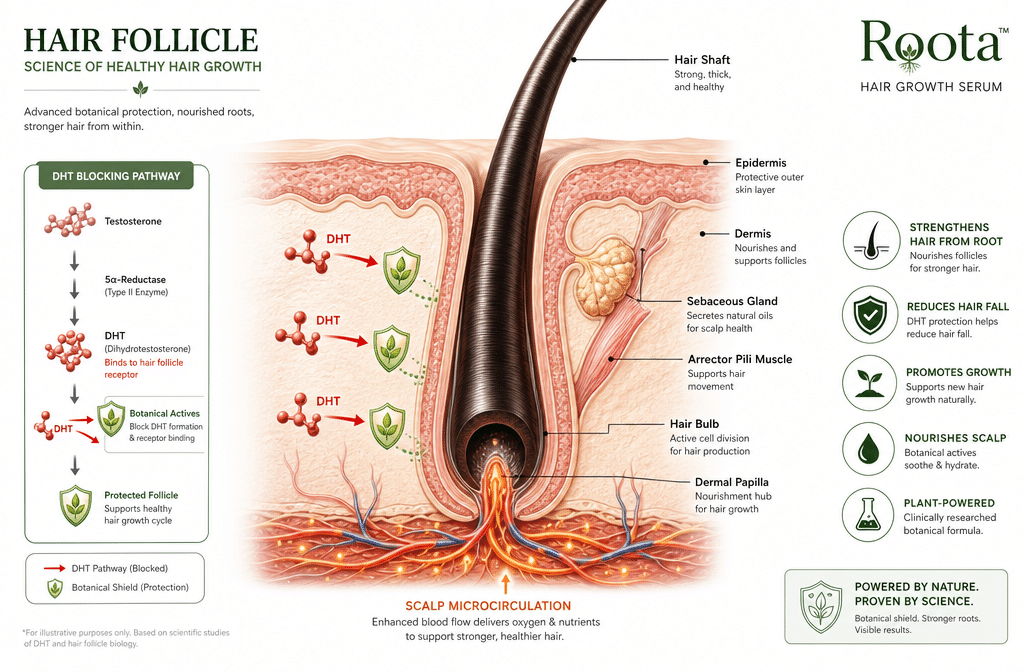
The formula works through two primary pathways:
- DHT inhibition — Saw palmetto and pumpkin seed oil reduce the conversion of testosterone to dihydrotestosterone (DHT), the hormone responsible for shrinking hair follicles in androgenetic alopecia
- Scalp microcirculation support — Rosemary extract and caffeine improve blood flow to follicles, delivering more oxygen and nutrients to support active hair growth phases
Multiple users across verified review platforms report noticeably thicker strands and less hair on their brush within two to three months [1][10]. That timeline is consistent with the biology of hair growth cycles, which typically run 90 to 120 days.
Who it works best for:
- Men and women with early-stage androgenetic alopecia
- People experiencing postpartum hair thinning or PCOS-related hair loss
- Anyone dealing with stress-related shedding (telogen effluvium)
- Those looking for a non-prescription alternative to minoxidil
Who may see limited results:
- People with advanced or complete follicle miniaturization
- Those with scarring alopecia (follicle damage is permanent)
- Anyone not using it consistently for at least 90 days
“The biggest mistake people make with any hair growth serum is quitting too early. Hair follicles operate on a 3-to-4-month cycle — you need to stay consistent through at least one full cycle before judging results.” — Hair restoration specialist perspective [10]
Try Roota Hair Growth Serum risk-free today →
What Are the Ingredients in Roota Hair Growth Formula?
Roota Hair Growth Serum’s formula centers on clinically studied botanicals and nutrients that address hair loss from multiple angles — DHT reduction, follicle stimulation, and strand fortification. Here is a breakdown of the key active ingredients and what the research says about each [3][10].
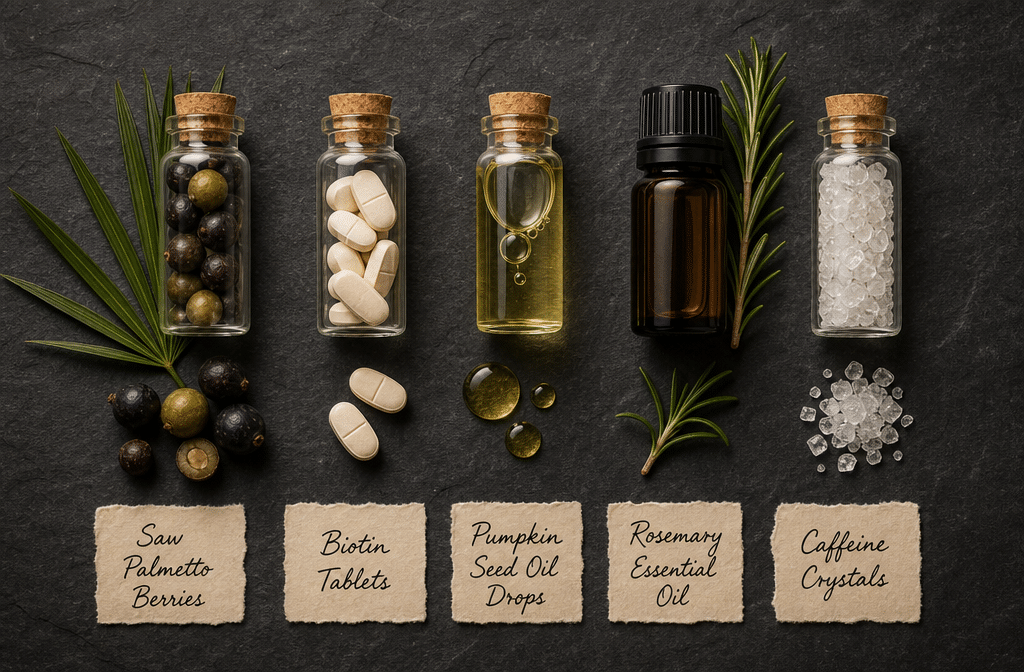
| Ingredient | Primary Function | Evidence Level |
|---|---|---|
| Saw Palmetto Extract | DHT blocker, 5-alpha reductase inhibitor | Moderate — multiple human studies |
| Pumpkin Seed Oil | DHT reduction, anti-inflammatory | Moderate — randomized trial data |
| Rosemary Extract | Scalp microcirculation, follicle activation | Strong — comparable to 2% minoxidil in one study |
| Caffeine | Stimulates follicle metabolism, counters DHT effects | Moderate — in vitro and clinical data |
| Biotin (Vitamin B7) | Keratin production, strand fortification | Supportive — effective in deficiency cases |
| Niacinamide (Vitamin B3) | Scalp health, reduces inflammation | Good — well-tolerated, broad support |
| Peptide Complex | Hair follicle signaling, growth phase extension | Emerging — promising early data |
Saw Palmetto: The DHT Blocker
Saw palmetto is the backbone of Roota’s DHT-blocking mechanism. It inhibits 5-alpha reductase, the enzyme that converts testosterone into DHT. A randomized controlled trial published in the Journal of Alternative and Complementary Medicine found that saw palmetto increased hair count in men with androgenetic alopecia. It is a well-established natural alternative to finasteride, without the sexual side effects associated with the prescription drug.
Rosemary Extract: The Minoxidil Alternative
A frequently cited study comparing rosemary oil to 2% minoxidil found comparable results in hair count after six months, with rosemary producing less scalp itching. This makes rosemary extract one of the most compelling plant-based hair growth ingredients available today. For people exploring a minoxidil alternative for hair regrowth, this ingredient alone makes Roota worth considering.
Nutritional Factors That Affect Results
One area competitors overlook: topical treatments work better when your body isn’t nutritionally deficient. Biotin deficiency, low iron, and inadequate zinc all accelerate hair shedding. If you’re also taking vitamins for female hair growth internally, your topical serum results will likely improve.
How Long Before You See Results With Roota?
Most users begin noticing reduced shedding around weeks 4 to 6, with visible improvements in hair density appearing between weeks 8 and 12. Full results — including significant thickness and regrowth — typically require four to six months of consistent daily use [1][7].
Here is a realistic timeline:
- Weeks 1 to 3: Scalp feels more nourished; some users report reduced itching and flaking
- Weeks 4 to 6: Shedding decreases noticeably; this is the first measurable sign it’s working
- Weeks 8 to 12: New baby hairs become visible; existing strands appear thicker
- Months 4 to 6: Significant density improvement; hair growth cycle fully influenced by the formula
Important: A temporary increase in shedding during weeks 2 to 4 is normal and expected. This is called the “shedding phase” — old, weak hairs exit to make room for stronger regrowth. Do not stop using the product during this phase.
Does Roota Help With Hair Thinning or Just New Growth?
Roota addresses both — it reduces active thinning by blocking DHT, and it stimulates new growth by improving follicle health and scalp circulation. This dual action makes it more comprehensive than single-mechanism products that only focus on growth stimulation [10].
For people experiencing diffuse thinning (hair becoming finer across the scalp rather than a receding hairline), Roota’s anti-DHT and strand-fortification ingredients are particularly relevant. The biotin and peptide complex support keratin production, which directly improves hair shaft strength and diameter.
For those with postpartum hair thinning or PCOS-related hair loss, the hormonal modulation from saw palmetto and pumpkin seed oil can help rebalance the hormonal environment at the follicle level. Women dealing with perimenopause hair changes may also benefit, as estrogen decline increases DHT sensitivity.
If you’re comparing options for women specifically, our review of Viviscal hair growth supplement for women covers an internal approach that pairs well with topical serums like Roota.
Is Roota Good for Male Pattern Baldness?
Roota Hair Growth Serum is most effective for early-stage male pattern baldness (Norwood Scale I to III), where follicles are miniaturized but not yet permanently dormant. For men at Norwood IV and above, results will be more limited, and prescription treatments like finasteride or minoxidil may be needed as a primary intervention [3].
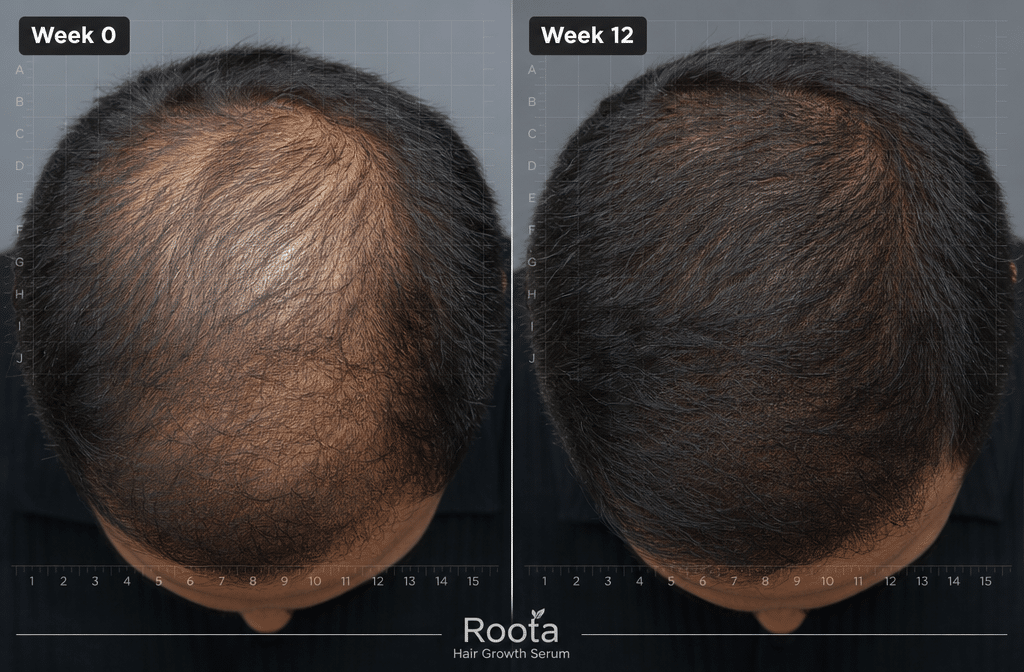
The DHT-blocking mechanism directly targets androgenetic alopecia — the most common form of male pattern baldness. By reducing DHT at the scalp level without systemic hormone disruption, Roota offers a safer entry point for men who are concerned about the sexual side effects associated with oral finasteride.
For men comparing options:
- Roota vs. 5% minoxidil: Roota has fewer reported side effects (no scalp irritation or unwanted facial hair growth); minoxidil has stronger clinical evidence for advanced cases
- Roota vs. finasteride: Roota is non-prescription and avoids systemic DHT suppression; finasteride is more potent but carries documented sexual side effect risks
- Roota vs. hair transplant: Not comparable — Roota is preventative and supportive, not a replacement for surgical restoration
For a detailed comparison of best hair regrowth treatments for men, including prescription and non-prescription options, that guide covers the full spectrum.
See if Roota is right for your hair loss stage — order here
What Are the Side Effects of Roota Hair Growth Serum?
Roota Hair Growth Serum is generally well-tolerated, with no serious adverse effects reported in the majority of user reviews. The plant-based formula avoids harsh chemicals like sulfates and synthetic preservatives, which reduces the risk of scalp irritation [4][9].
Reported side effects (rare):
- Mild scalp tingling during initial use (typically from caffeine and rosemary — this is normal and indicates circulation activation)
- Temporary increased shedding in weeks 2 to 4 (shedding phase — not a side effect, but a normal transition)
- Occasional mild redness in users with very sensitive scalps
Who should be cautious:
- People with known allergies to any listed botanical ingredient
- Those with active scalp conditions like psoriasis or seborrheic dermatitis (consult a dermatologist first)
- Pregnant or breastfeeding women (saw palmetto has limited safety data in pregnancy)
Patch test protocol: Apply a small amount to the inner wrist or behind the ear. Wait 24 hours before full scalp application. This is especially important for anyone with a history of contact dermatitis.
Note: In January 2026, the FDA issued a recall notice for certain hair growth serums containing undisclosed active pharmaceutical ingredients [4][9]. Roota Hair Growth Serum was not among the recalled products, and its formula relies on botanical actives rather than undisclosed drug compounds.
Is Roota Safe for People With a Sensitive Scalp?
Yes, Roota is formulated to be gentle enough for sensitive scalps, though individual reactions vary. The formula is free from alcohol, sulfates, and synthetic fragrances — the most common irritants in topical hair products [3][10].
The rosemary and caffeine components may cause a mild warming or tingling sensation on first application. This is a circulatory response, not an allergic reaction, and typically subsides after the first week of use.
Sensitive scalp tips:
- Start with every-other-day application for the first two weeks
- Apply to a dry scalp rather than a wet one to reduce absorption intensity
- Do not combine with other active scalp treatments (retinoids, salicylic acid) during the first month
How Much Does Roota Hair Serum Cost?
Roota Hair Growth Serum is priced in the mid-range for premium hair serums, with single-bottle pricing and multi-bottle bundle discounts available through the official retailer. Exact pricing is subject to change, so check the official page for current offers [7].
Typical pricing structure:
- Single bottle: Standard retail price
- 3-bottle bundle: Discounted per-bottle cost (most popular option)
- 6-bottle bundle: Best per-unit value for long-term users
Is it worth the cost? Compared to prescription finasteride (which requires ongoing doctor visits and blood monitoring) or professional PRP treatments (which can cost $1,500 to $3,500 per session), Roota represents a significantly lower financial commitment for a non-prescription option.
A money-back guarantee is offered, which means you can try the product without full financial risk. Always purchase through the official channel to ensure authenticity and guarantee eligibility.
Check current pricing and bundle deals for Roota Hair Growth Serum →
Where Can You Buy Roota Hair Serum?
Roota Hair Growth Serum is available exclusively through its official online retailer. It is not currently sold in pharmacies, grocery stores, or on Amazon [7][10].
Buying directly from the official source ensures:
- Authentic product (not a counterfeit or diluted version)
- Access to the money-back guarantee
- Current bundle pricing and promotions
- Discreet packaging and shipping
Avoid third-party resellers on marketplace platforms. Counterfeit hair serums are a documented problem, and purchasing outside official channels voids any satisfaction guarantee.
Why Isn’t Roota Working for My Hair?
If you’re not seeing results after 8 to 12 weeks, there are several likely explanations — most of which are fixable. Roota Hair Growth Serum works best when used consistently and when the underlying cause of hair loss is addressable by its formula [1][10].
Common reasons results are delayed or absent:
- Inconsistent application — Missing days breaks the follicle stimulation cycle. Daily use is required for the formula to maintain DHT suppression and circulation support
- Advanced follicle miniaturization — If follicles have been dormant for years, topical treatment alone may not be sufficient
- Nutritional deficiency — Iron deficiency anemia, low ferritin, and vitamin D deficiency all cause hair loss that topical serums cannot fix alone
- Underlying medical condition — Thyroid disorders, autoimmune alopecia (alopecia areata), and PCOS require medical treatment alongside topical support
- Stress and sleep — Chronic stress elevates cortisol, which disrupts the hair growth cycle. No serum can fully overcome severe lifestyle-driven shedding
- Wrong application technique — The serum should be applied directly to the scalp (not the hair shaft) and massaged in for 60 to 90 seconds to activate microcirculation
Edge case: Some users experience a paradoxical shedding increase at weeks 2 to 4. This is the follicle transition phase, not treatment failure. Stopping at this point is the most common reason people miss results.
For a comparison with another topical hair treatment, our Calvistop hair loss treatment spray review covers a similar category product with a different mechanism.
How Do Dermatologists and Trichologists Rate Roota?
Professional dermatologists and trichologists generally view plant-based DHT blockers and rosemary-based serums as legitimate first-line options for mild to moderate androgenetic alopecia. Roota’s ingredient profile aligns with what many hair specialists recommend before escalating to prescription treatments [10].
Trichologists note that rosemary extract, saw palmetto, and caffeine have the strongest evidence base among non-prescription hair growth ingredients. The combination of these three in a single formula addresses the primary mechanisms of androgenetic alopecia more comprehensively than single-ingredient products.
What professionals look for in a hair serum:
- DHT-blocking mechanism (saw palmetto, pumpkin seed oil ✓)
- Scalp circulation support (rosemary, caffeine ✓)
- Strand fortification (biotin, peptides ✓)
- Clean formulation without irritating additives ✓
- Manufactured in a cGMP-compliant, FDA-registered facility ✓
Roota meets all five criteria based on available product information [3][10].
Roota vs. Other Hair Growth Treatments: How Does It Compare?
Roota Hair Growth Serum sits between basic OTC hair vitamins and prescription-strength treatments in terms of potency and evidence. It outperforms most single-ingredient serums but is not a replacement for clinical-grade interventions in advanced hair loss cases.
| Treatment | Mechanism | Prescription Required | Side Effect Risk | Best For |
|---|---|---|---|---|
| Roota Hair Growth Serum | DHT block + circulation | No | Low | Mild to moderate thinning |
| Minoxidil (5%) | Follicle stimulation | No (OTC) | Moderate | Moderate hair loss |
| Finasteride | Systemic DHT suppression | Yes | Higher (sexual side effects) | Male pattern baldness |
| PRP Therapy | Growth factor injection | Yes (clinic) | Low | Various types |
| Hair Transplant | Follicle relocation | Yes (surgical) | Surgical risks | Advanced baldness |
For men who want to compare Roota against another reviewed product, our Moerie hair growth review covers a competing topical formula with a different ingredient approach.
Choose Roota if: You have mild to moderate thinning, prefer non-prescription options, want to avoid systemic hormone disruption, or are starting a preventative hair care strategy before significant loss occurs.
Start your hair restoration journey with Roota Hair Growth Serum →
Psychological Impact of Hair Loss and the Case for Early Action
Hair loss is not just a cosmetic issue. Research consistently links hair thinning and baldness to reduced self-esteem, social anxiety, and diminished quality of life — particularly in men aged 35 to 65 and women experiencing postpartum or perimenopausal changes.
The psychological burden of hair loss is often underestimated in clinical settings. Men who address thinning early — before significant follicle loss occurs — report better outcomes both physically and psychologically. This is the strongest argument for a preventative approach: starting a DHT-blocking, follicle-stimulating regimen at the first signs of thinning rather than waiting until loss is advanced.
Roota’s positioning as an accessible, non-prescription, discreet online purchase removes several common barriers to early intervention: no clinic visit required, no prescription needed, and no public pharmacy pickup.
Long-Term Maintenance: What Happens After You See Results?
Stopping Roota Hair Growth Serum after achieving results typically leads to gradual reversal, because the underlying DHT sensitivity that caused thinning does not disappear. Long-term maintenance use is recommended for sustained results [7][10].
Long-term strategy:
- Continue daily application to maintain DHT suppression and follicle health
- Reassess every six months — some users reduce to five days per week during maintenance
- Combine with a diet rich in zinc, iron, omega-3 fatty acids, and protein to support keratin production
- Manage stress proactively — cortisol-driven shedding can undermine topical treatment
- Annual trichologist check-in if you have a family history of significant baldness
Lifestyle factors that support long-term hair health:
- Adequate sleep (7 to 9 hours — growth hormone peaks during deep sleep)
- Regular scalp massage (5 minutes daily increases follicle blood flow)
- Avoiding tight hairstyles that cause traction alopecia
- Limiting heat styling and chemical treatments
Frequently Asked Questions
Is Roota Hair Growth Serum FDA approved?
Roota Hair Growth Serum is not FDA-approved as a drug — no cosmetic hair serum is. However, it is manufactured in an FDA-registered, cGMP-compliant facility, which means the production process meets federal quality and safety standards. The formula uses botanical ingredients generally recognized as safe.
Can women use Roota Hair Growth Serum?
Yes. Roota is formulated for both men and women. It is particularly effective for women experiencing hormonal hair loss from PCOS, postpartum shedding, or perimenopause-related thinning. Women who are pregnant or breastfeeding should consult a doctor before use due to the saw palmetto content.
How do I apply Roota Hair Growth Serum correctly?
Apply the serum directly to a clean, dry scalp using the dropper. Part your hair in sections to ensure direct scalp contact. Use your fingertips to massage the serum in circular motions for 60 to 90 seconds. Do not rinse out. Apply once daily, preferably at night.
Can I use Roota with other hair products?
Yes, but apply Roota first on a clean scalp and allow it to absorb for 10 to 15 minutes before applying other styling products. Avoid using it simultaneously with other active scalp treatments (like salicylic acid or retinoid-based products) without dermatologist guidance.
Does Roota work for receding hairlines?
Roota can slow the progression of a receding hairline and may stimulate some regrowth in follicles that are miniaturized but not permanently dormant. For established, deep recession, results will be more limited and prescription treatments may be needed alongside topical use.
How many bottles do I need to see results?
Most users require two to three bottles (a 60 to 90-day supply) before seeing significant visible improvement. The three-bottle bundle is the most popular option for this reason and typically offers the best per-bottle value.
Is there a money-back guarantee?
Yes. Roota Hair Growth Serum comes with a satisfaction guarantee. Check the official retailer page for current guarantee terms and conditions, as these can vary by promotion period.
What is the difference between Roota and minoxidil?
Minoxidil works primarily by prolonging the hair growth phase and increasing follicle size. Roota works by blocking DHT and improving scalp circulation. Minoxidil has stronger clinical evidence for advanced hair loss; Roota has fewer side effects and does not require a medical consultation. Some users combine both, but consult a dermatologist before doing so.
Can Roota reverse complete baldness?
No. Roota cannot reverse complete baldness or regrow hair in areas where follicles have been permanently destroyed. It is most effective for active thinning, early-stage loss, and maintenance after other treatments. For complete baldness, surgical hair restoration is the only proven solution.
Does diet affect how well Roota works?
Yes, significantly. Iron deficiency, low ferritin, vitamin D deficiency, and inadequate protein intake all cause hair shedding that topical serums cannot correct alone. A balanced diet rich in biotin, zinc, iron, and omega-3 fatty acids will improve your results with any hair growth treatment.
7 Best GLP-1 Providers Ranked: Accreditation, Flexibility & Support Compared (2026 Update)
32,000+ Patients Can't All Be Wrong: See the Top-Rated GLP-1 Providers: Compared on accreditation, plan flexibility, and patient support — updated for 2026.
BMI MD GLP-1 Microdosing Plan
- Specialized microdosing options (sublingual drops or low-dose injections)
- Ideal for maintaining weight or tapering off higher doses safely
- Fully bundled plan with no hidden monthly platform memberships
DirectMeds Weight Loss Solutions
- Sourced from accredited, state-licensed 503A compounding pharmacies
- No-frills high-volume savings passed directly to the patient
- Includes clinical consultation and cold-chain shipping updates
MEDVi Flat-Rate Telehealth
- Flat monthly rate holds steady even at maximum maintenance doses
- No dosage upcharges or graduation fee penalties
- Offers both injectable and advanced oral thin-film delivery options
Gala GLP-1 Care Program
- All-inclusive plan with no standalone membership costs
- Continuous text-based messaging access with state-licensed clinicians
- Temperature-controlled, cold-chain medication shipping included
Measured GLP-1 Metabolic Health
- Comprehensive metabolic health screening and expert intake analysis
- Predictable long-term budgeting with stable plan pricing
- High-end responsive dashboard with integrated diagnostic support
Refills GLP-1 (TryRefills Plan)
- Flat rate holds steady as titration scales up
- Includes clinical guides for active side-effect management
- Bundles in foundational nutritional strategies alongside medication
AltRx GLP-1 Transactional Reorders
- Zero recurring auto-billing — pay entirely on a transactional basis
- Rapid text-to-order format saves time for experienced patients
- Provides both injectable forms and fast-dissolving tablet variations
Conclusion: Is Roota Hair Growth Serum Worth Trying in 2026?
Based on its ingredient profile, user feedback, and the science behind its DHT-blocking and follicle-stimulating mechanisms, Roota Hair Growth Serum is a credible, well-formulated option for anyone dealing with mild to moderate hair thinning in 2026.
It is not a cure for advanced baldness, and it requires consistent daily use for at least 90 days before a fair judgment can be made. But for the large population of men and women experiencing early-stage androgenetic alopecia, postpartum shedding, hormonal thinning, or stress-related hair loss, it addresses the right biological targets with ingredients that have legitimate scientific support.
Actionable next steps:
- Identify your hair loss type — DHT-driven, hormonal, nutritional, or stress-related. Roota works best for the first two categories
- Commit to a 90-day trial — One full hair growth cycle is the minimum time needed to evaluate any topical treatment
- Combine with internal support — Address nutritional deficiencies and lifestyle factors alongside topical use
- Track your progress — Take weekly scalp photos in consistent lighting to objectively measure change
- Start early — The sooner you begin addressing thinning, the more follicles remain viable for restoration
Order Roota Hair Growth Serum today and take the first step toward thicker, healthier hair →
References
[1] Roota Hair Growth Serum Honest Reviews 2026 Is It Really Worth It
[3] Roota Hair Growth Serum — Amplify ATX
[4] Hair Growth Serum Recall January 2026 — Health.com
[7] Roota Hair Growth Serum 2026 Full Buying Guide
[9] Hair Growth Treatment Recall — WTHR
[10] Roota Hair Growth Serum Review: What It Claims, Ingredients, Feedback — AccessNewswire


