
Semaglutide Dosage Guide 2026: Starting, Maintenance & Max For Best Result

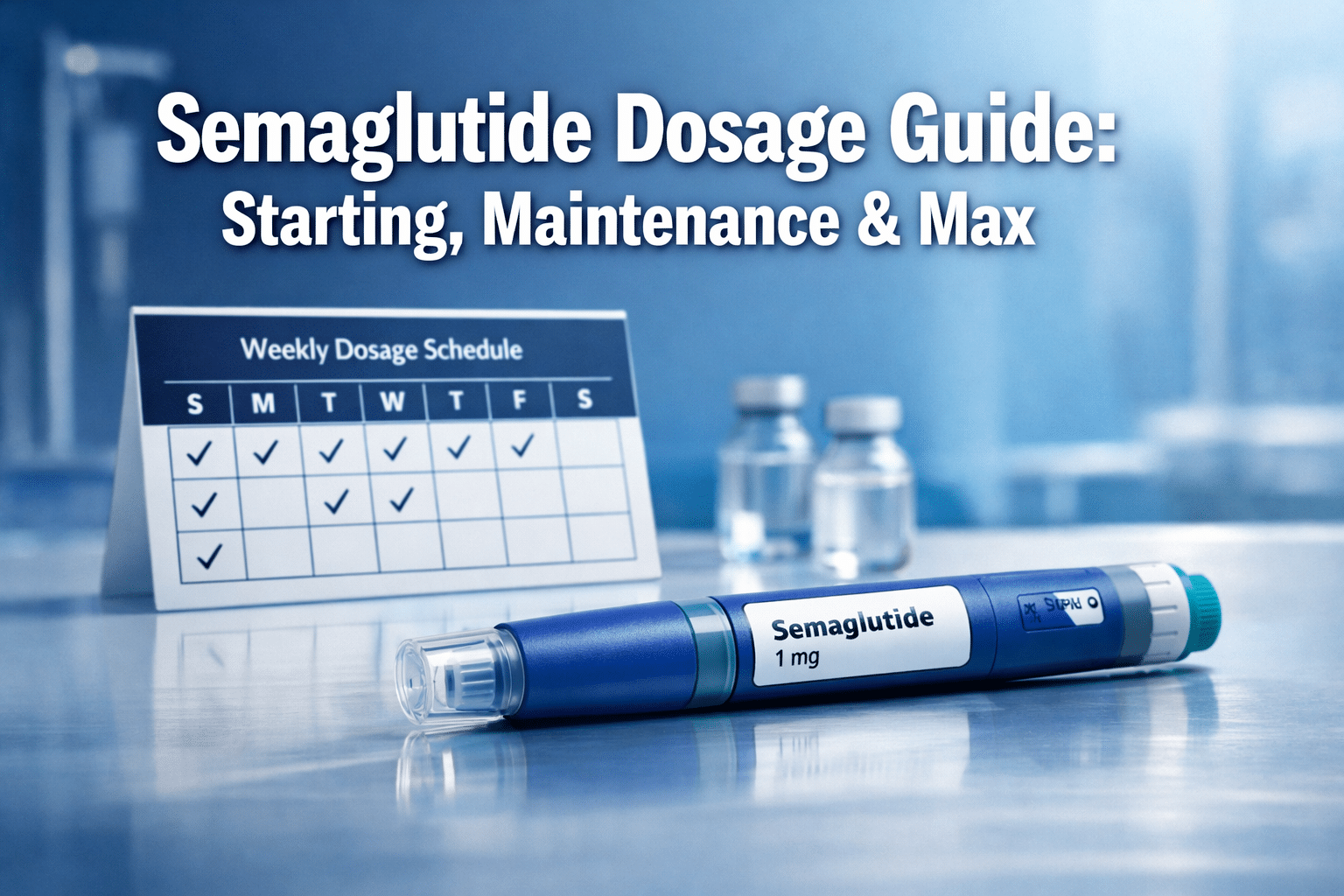
Quick Answer: The standard starting semaglutide dose is 0.25 mg once weekly, increasing every 4 weeks up to a maximum of 2.4 mg weekly (Wegovy) for weight loss or 2.0 mg weekly (Ozempic) for type 2 diabetes. Most people reach their maintenance DirectMeds Semaglutide Dosage between weeks 17 and 20, though your provider may keep you at a lower dose if it’s working well and you’re tolerating it comfortably.
Key Takeaways
- ✅ Starting dose: 0.25 mg once weekly for the first 4 weeks (all injectable forms)
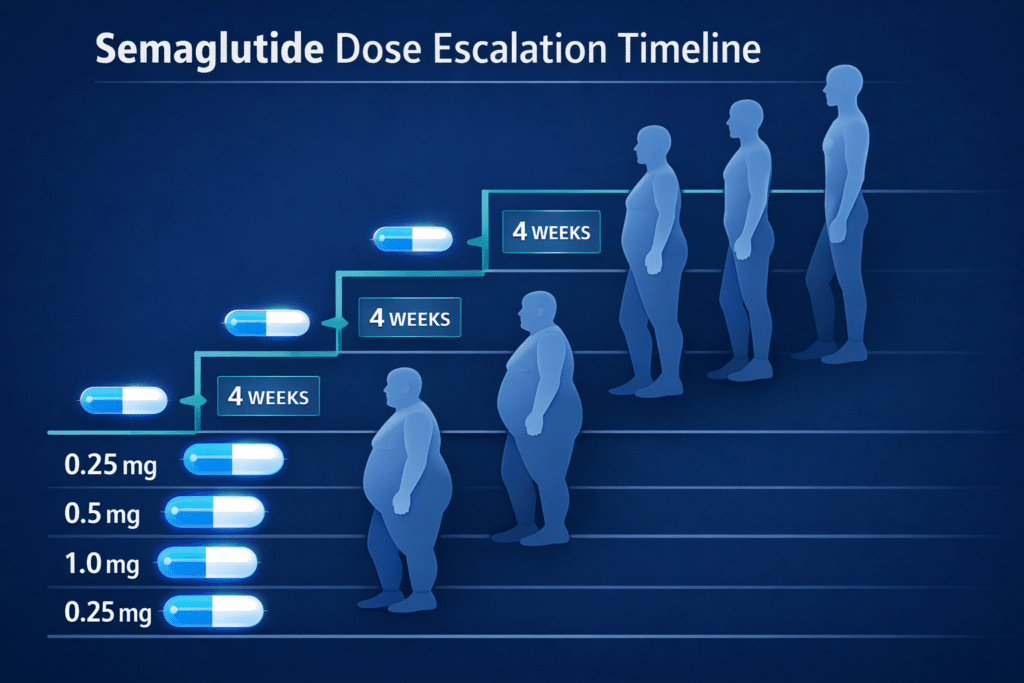
- ✅ Dose escalation: Increases every 4 weeks — 0.25 mg → 0.5 mg → 1.0 mg → 1.7 mg → 2.4 mg
- ✅ Max dose for weight loss (Wegovy): 2.4 mg weekly
- ✅ Max dose for diabetes (Ozempic): 2.0 mg weekly
- ✅ Full titration timeline: Approximately 16 weeks to reach the 2.4 mg maintenance dose
- ✅ Not everyone needs the max dose — many people maintain results at 1.0 mg or 1.7 mg
- ✅ Oral semaglutide (Rybelsus): Different schedule — starts at 3 mg daily, max 14 mg daily
- ✅ Dose delays are allowed — your provider can pause escalation for 4 extra weeks if side effects are an issue
- ✅ Compounded semaglutide uses vials instead of pens and dosing may vary by pharmacy
- ✅ Always follow your prescriber’s specific instructions — individual factors affect the right dose for you
What Is the Standard Semaglutide Dose Schedule?
The FDA-approved DirectMeds semaglutide dose schedule follows a step-up approach, starting low and increasing every 4 weeks. This gradual escalation gives your body time to adjust and significantly reduces the risk of nausea and other GI side effects. [1][3]
Here’s the full Wegovy titration schedule:
| Week | Dose | Purpose |
| 1-4 | 0.25 mg/week | Initiation (not a therapeutic dose) |
| 5-8 | 0.5 mg/week | Early therapeutic range |
| 9-12 | 1.0 mg/week | Mid-range therapeutic |
| 13-16 | 1.7 mg/week | Near-maintenance |
| 17+ | 2.4 mg/week | Full maintenance dose |
The 0.25 mg starting dose is intentionally sub-therapeutic — meaning it’s not designed to produce significant weight loss on its own. Its only job is to help your body adapt to the medication. [1][2]
Common mistake: Many people feel frustrated when they don’t see major results in the first month. That’s expected. The 0.25 mg phase is about tolerability, not weight loss.
What Is the Maximum Semaglutide Dose for Weight Loss vs. Diabetes?
The maximum approved semaglutide dose depends on what the medication is being prescribed for — and which brand you’re using.
- Wegovy (weight loss): Maximum dose is 2.4 mg once weekly [2]
- Ozempic (type 2 diabetes): Maximum dose is 2.0 mg once weekly [2][6]
- Rybelsus (oral, diabetes): Maximum dose is 14 mg once daily [2]
These aren’t interchangeable limits. Wegovy and Ozempic both contain semaglutide, but they carry different FDA approvals and different maximum doses. Using Ozempic off-label for weight loss doesn’t automatically mean you can exceed the 2.0 mg ceiling — that decision requires a prescriber’s guidance.
Pull quote: “The difference between Wegovy’s 2.4 mg ceiling and Ozempic’s 2.0 mg cap isn’t arbitrary — it reflects the distinct clinical trials and FDA approvals behind each indication.”
For a deeper comparison of semaglutide-based options, see our guide to the best semaglutide weight loss medications available in 2026.
The 3 Most Affordable GLP 1 Without Insurance “TrumpRX (2026 Ranked)
🥇 #1 Best Overall: Zepbound (Triple-Action Option)
🥇 Best Overall (9.9/10)
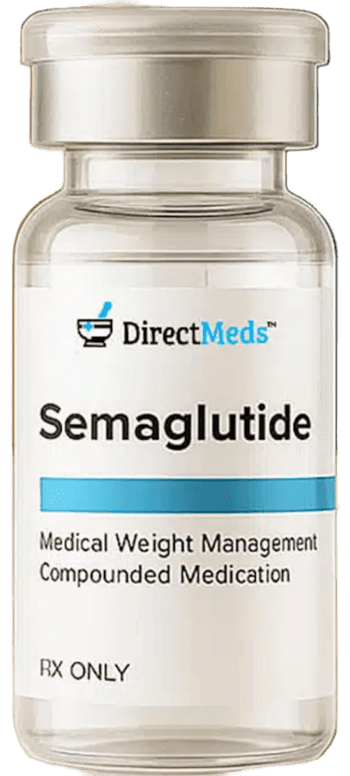
DirectMeds GLP1 provides a budget-friendly alternative to Ozempic/Wegovy while maintaining strong appetite control and weekly fat loss results. Everything is included—from telehealth visits to medication shipping—making it ideal for people wanting premium results at the lowest cost.
DirectMeds is a LegitScript-certified telehealth platform that connects patients with licensed U.S. physicians who evaluate whether compounded GLP-1 medications are clinically appropriate.
It is one of the most established providers in this space and is particularly well-suited to patients who want high-touch clinical oversight without paying brand-name prices.
How it works: Complete a secure online health intake form. A licensed medical provider reviews your profile and determines eligibility. If approved, your prescription is sent to a certified U.S. compounding pharmacy and medication is shipped directly to your door. All-inclusive pricing covers medical consultation, medication, and 24/7 support — no surprise charges.
◉ Clinical Note: DirectMeds’ LegitScript certification is a meaningful differentiator in this market. It requires compliance with pharmacy laws, prescription standards, and advertising guidelines — reducing the risk of receiving substandard compounded medications. For patients new to telehealth GLP-1 programs, this certification provides a meaningful layer of accountability. — Dr. Sarah Jenkins, Co-Author
🎯 Ideal for: Patients who want an established, verified provider with strong clinical support and are comfortable paying slightly more than the absolute floor price for greater peace of mind.
🥈#2 Best for Long-Term Cost Certainty: MyStart GLP-1
🥈 Silver Standard — Best Flat-Rate Pricing
- Rating: ⭐️⭐️⭐️⭐️⭐️ – (9.9/10) High Potency GLP1
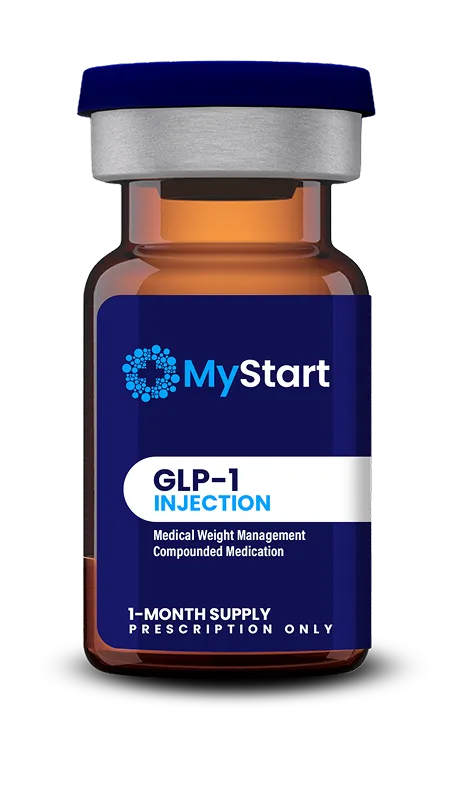
MyStart GLP-1 offers a smooth, beginner-friendly GLP-1 program using FDA-backed medications and simple weekly injections or tablets. Great for people wanting easy onboarding, rapid fat loss, and physician oversight—without the high price of traditional clinics.
MyStart GLP-1 uses a unique flat-rate membership model where your medication cost is fixed regardless of how high your therapeutic dose increases over time. For patients who will be on GLP-1 therapy for 12 months or more, this pricing structure can save $600 to $1,800 annually compared to platforms that charge progressively more as doses escalate.
How it works: Pay a monthly membership ($79) plus a flat medication fee (e.g., $175 for compounded semaglutide). The combined total stays fixed at $254 per month from starter dose through maximum maintenance dose. Medical consultation, all medication, dedicated care team access, and nutritional coaching are included.
◉ Clinical Note: The flat-rate model is financially sound for long-term GLP-1 use. GLP-1 therapy is most effective when sustained for 12+ months, and avoiding dose-related price increases removes a common reason patients discontinue treatment early. The included nutritional coaching adds meaningful clinical value, as sustainable weight loss requires both medication and lifestyle change. — Dr. Sarah Jenkins, Co-Author
🎯 Ideal for: Patients committed to long-term treatment (12+ months) who want price certainty as doses increase, and who value behavioral coaching as part of their program.
Best for: People who want a more advanced GLP-1 approach at a reduced price. 👉 SKIP THE WAITLIST. START FOR $199
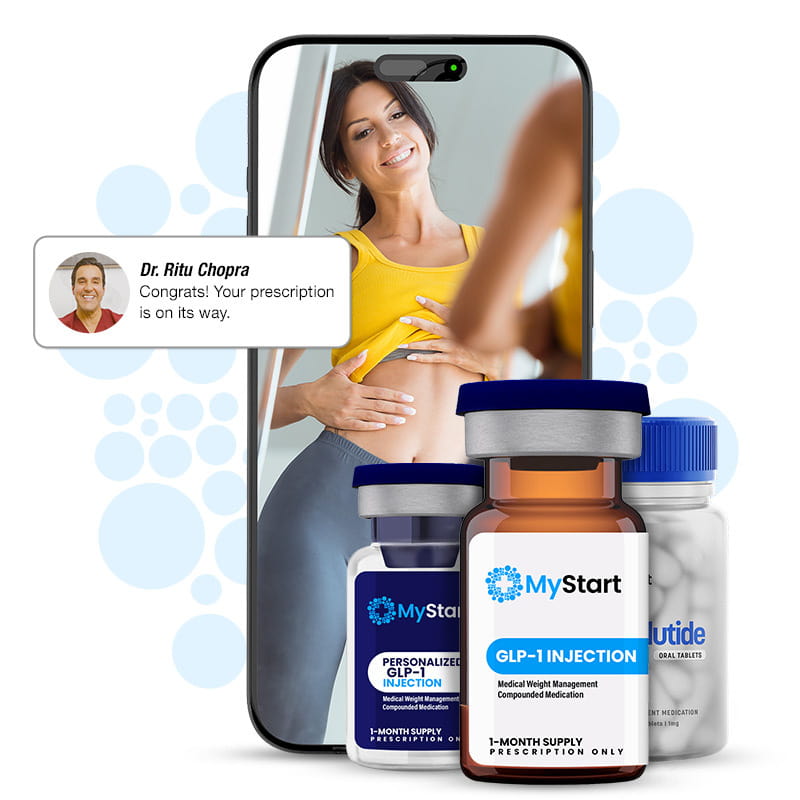
Thousands of people are losing weight with MyStart GLP-1 medications. People like you are transforming their lives, feeling better, and looking their best with the help of GLP-1 (Dual-Action Option) medications.
🥉 #3 Best for Absolute Lowest Entry Cost: MEDVi GLP-1
🥉 Bronze Standard — Lowest Entry Price
- Rating: ⭐️⭐️⭐️⭐️⭐️ – (9.9/10) Excellent
MEDVi GLP-1 delivers fast, medical-grade weight loss with doctor-guided dosing and personalized coaching. Patients report losing 1–3 lbs per week with steady appetite control and reduced cravings. Qualify in minutes and access 600+ U.S. doctors with no membership fees.
MEDVi offers the most accessible entry price point in the compounded GLP-1 market, with starter doses beginning as low as $99 per month and a published price-match guarantee.
The platform provides both injectable and oral compounded GLP-1 options, giving prescribers flexibility to match the medication form to the patient. Clinical follow-up is primarily quarterly rather than monthly, which keeps costs lower but means less frequent dose adjustment guidance than the two options above.
How it works: Complete an online consultation. If qualified, your prescription is sent to a partner compounding pharmacy and medication is shipped to you within 48 hours. Customer support is available, and clinical check-ins are typically quarterly. No membership fees are charged on top of medication pricing.
◉ Clinical Note: MEDVi is a legitimate, cost-effective option for budget-focused patients who have researched compounded medications and are comfortable with less frequent clinical contact. Always ask your provider which specific compounding pharmacy fulfills your prescription — a reputable 503A or 503B state-licensed pharmacy is non-negotiable for safety. — Dr. Sarah Jenkins, Co-Author
🎯 Ideal for: Budget-focused patients who have done their research on compounded GLP-1 medications, are comfortable managing more of their own care independently, and want the lowest possible entry price with a price-match guarantee.
How Does the Semaglutide Dose Escalation Work in Practice?
Dose escalation follows a 4-week interval schedule, and your provider can slow it down if needed. The goal is to reach the lowest effective dose with the fewest side effects — not to rush to the maximum. [3][4]
Step-by-step process:
- Week 1–4: Inject 0.25 mg once weekly. Track any nausea, vomiting, or GI discomfort.
- Week 5–8: If tolerated, increase to 0.5 mg. This is where some people start noticing appetite changes.
- Week 9–12: Increase to 1.0 mg. Many people see meaningful weight loss beginning here.
- Week 13–16: Increase to 1.7 mg. Side effects can resurface briefly at each new step.
- Week 17+: Reach 2.4 mg maintenance dose (Wegovy) or 2.0 mg (Ozempic). [3]
If side effects are a problem: Your provider can pause the escalation and keep you at the current dose for an additional 4 weeks before trying to increase again. [3]
If you can’t tolerate 2.4 mg: A reduction back to 1.7 mg for up to 4 weeks is an option. If intolerance continues, your provider may consider discontinuing the medication. [3]
Choose a slower schedule if: You experience persistent nausea, vomiting, or significant GI distress at any dose level. There’s no clinical benefit to pushing through severe side effects.
Does Everyone Need to Reach the Maximum Dose?
No — and this is one of the most misunderstood aspects of semaglutide therapy. Many people achieve and maintain meaningful weight loss at 1.0 mg or 1.7 mg weekly, and not everyone needs to reach 2.4 mg. [4]
Your provider will assess:
- How much weight you’ve lost at your current dose
- How well you’re tolerating the medication
- Your overall health goals and any coexisting conditions
If you’re losing weight steadily and tolerating your current dose well, there may be no clinical reason to increase further. The 2.4 mg maximum is a ceiling, not a target everyone must hit.
Edge case: Some patients with chronic kidney disease may follow a modified escalation schedule. After at least 4 weeks at 0.5 mg, providers may recommend moving to 1.0 mg with more careful monitoring rather than following the standard timeline. [6]
For more information on how different semaglutide options compare, our semaglutide weight loss injections guide covers what to expect at each stage.
How Is Oral Semaglutide (Rybelsus) Dosed Differently?
Oral semaglutide follows a completely different dosing schedule than injectable forms. Rybelsus starts at 3 mg daily for the first 30 days — again, not a therapeutic dose, just an acclimation phase. After 30 days, the dose increases to 7 mg daily, with a maximum of 14 mg daily if additional blood sugar control is needed. [2]
Key differences from injectable semaglutide:
- Frequency: Daily (oral) vs. weekly (injectable)
- Starting dose: 3 mg daily vs. 0.25 mg weekly
- Maximum dose: 14 mg daily vs. 2.4 mg weekly
- Administration: Must be taken on an empty stomach with no more than 4 oz of plain water, at least 30 minutes before eating or drinking anything else
Rybelsus is currently approved for type 2 diabetes management, not specifically for weight loss. If you’re interested in how oral GLP-1 options compare, see our review of oral GLP-1 medications for weight loss.

What About Compounded Semaglutide Dosing?
Compounded semaglutide is not FDA-approved and comes in vials rather than pre-filled pens. Dosing protocols vary by compounding pharmacy, which means there’s no single standardized schedule to follow. [1]
What you need to know:
- Doses are drawn from a vial using a syringe, which requires careful measurement
- Concentration of the solution can differ between pharmacies
- Some compounded formulations include additives (like B12) not found in brand-name products
- Your prescriber should provide explicit dosing instructions specific to the formulation you receive
Important: Because compounded semaglutide isn’t regulated the same way as Wegovy or Ozempic, the accuracy of the dose you’re injecting depends heavily on the quality of the compounding pharmacy and your own technique.
For a cost-focused look at accessing semaglutide, our guide to semaglutide without insurance costs breaks down what to expect in 2026.
What Are the Most Common Semaglutide Dosing Mistakes?
Getting the dose right matters — both for safety and results. Here are the mistakes that come up most often:
1. Skipping doses and then doubling up Never take two doses to make up for a missed one. If you miss a dose and your next scheduled dose is more than 2 days away, take the missed dose as soon as you remember. If it’s within 2 days of your next dose, skip it and resume your regular schedule.
2. Increasing the dose too quickly Some people (or providers) try to accelerate the titration schedule. This significantly increases the risk of severe nausea, vomiting, and GI complications.
3. Stopping abruptly and restarting at a high dose If you stop semaglutide for more than a few weeks, you’ll likely need to restart at a lower dose and re-titrate. Talk to your provider before restarting.
4. Assuming the max dose is always better Higher isn’t always more effective for every individual. Some people respond well at 1.0 mg and see diminishing returns — or worse side effects — at 2.4 mg. [4]
5. Ignoring injection site rotation Rotate between the abdomen, thigh, and upper arm to avoid skin reactions and ensure consistent absorption.
To understand how semaglutide fits into a broader GLP-1 treatment plan, our GLP-1 medications guide covers the full landscape.
How Does Semaglutide Compare to Tirzepatide Dosing?
Semaglutide and tirzepatide are both GLP-1 receptor agonists, but tirzepatide (Mounjaro/Zepbound) also activates GIP receptors, giving it a dual mechanism. Their dosing schedules are similar in structure but differ in specifics.
| Feature | Semaglutide (Wegovy) | Tirzepatide (Zepbound) |
| Starting dose | $0.25$ mg/week | $2.5$ mg/week |
| Max dose | $2.4$ mg/week | $15$ mg/week |
| Escalation interval | Every $4$ weeks | Every $4$ weeks |
| Indication | Weight loss + T2D | Weight loss + T2D |
The dose numbers look very different because the medications are measured differently — you can’t compare 2.4 mg of semaglutide to 15 mg of tirzepatide as if they’re the same unit. For a full breakdown, see our semaglutide vs. tirzepatide comparison guide.
Conclusion
Getting the semaglutide dose right is the foundation of a successful treatment outcome — whether you’re using it for weight loss or type 2 diabetes management. Starting at 0.25 mg weekly and stepping up every 4 weeks gives your body the time it needs to adjust, and most people reach their maintenance dose around week 17.
Actionable next steps:
- Talk to your prescriber before adjusting any dose — even if you feel ready to increase sooner.
- Track your side effects weekly, especially in the first 8 weeks. A simple journal or app works well.
- Don’t equate the maximum dose with the best dose — effective maintenance often happens at 1.0 mg or 1.7 mg.
- If you’re considering compounded semaglutide, verify the pharmacy’s credentials and get explicit written dosing instructions.
- Pair your medication with dietary changes — our guide to best foods to eat on GLP-1 can help you get more from your treatment.
Semaglutide works best as part of a consistent, medically supervised plan. The dose is just one piece — adherence, nutrition, and regular check-ins with your provider matter just as much.
Frequently Asked Questions
Q: What is the starting semaglutide dose for weight loss? A: The FDA-approved starting dose is 0.25 mg once weekly for the first 4 weeks. This dose is not intended to produce weight loss — it’s designed to help your body adjust to the medication and minimize side effects. [1]
Q: How long does it take to reach the full semaglutide dose? A: It typically takes about 16 weeks (4 months) to go from 0.25 mg to the 2.4 mg maintenance dose, following the standard 4-week escalation schedule. [2]
Q: Can I stay at a lower dose instead of going to 2.4 mg? A: Yes. Many people maintain effective weight loss at 1.0 mg or 1.7 mg. Your provider will assess whether increasing further is necessary based on your results and tolerance. [4]
Q: What happens if I can’t tolerate the 2.4 mg dose? A: Your provider can reduce your dose to 1.7 mg for up to 4 weeks before attempting to increase again. If intolerance continues, discontinuation may be considered. [3]
Q: Is the Ozempic dose the same as the Wegovy dose? A: No. Ozempic’s maximum dose for diabetes is 2.0 mg weekly, while Wegovy’s maximum for weight loss is 2.4 mg weekly. They contain the same active ingredient but have different FDA approvals. [2]
Q: How is oral semaglutide (Rybelsus) dosed? A: Rybelsus starts at 3 mg daily for 30 days, then increases to 7 mg daily, with a maximum of 14 mg daily. It must be taken on an empty stomach. [2]
Q: What should I do if I miss a semaglutide injection? A: If your next dose is more than 2 days away, take the missed dose as soon as you remember. If it’s within 2 days of your next scheduled dose, skip the missed dose and continue your regular schedule. Never double up.
Q: Can I speed up the dose escalation schedule? A: No. Increasing doses faster than every 4 weeks significantly raises the risk of nausea, vomiting, and other GI side effects. The schedule exists for a reason.
Q: Does kidney disease affect semaglutide dosing? A: Yes. Patients with chronic kidney disease may follow a modified escalation, with providers recommending at least 4 weeks at 0.5 mg before increasing to 1.0 mg, with closer monitoring. [6]
Q: Is compounded semaglutide dosed the same as Wegovy? A: Not necessarily. Compounded semaglutide comes in vials with varying concentrations, and dosing protocols differ by pharmacy. Always follow your prescriber’s specific instructions for your formulation. [1]
References
[1] Semaglutide Dose For Weight Loss – https://www.forhers.com/blog/semaglutide-dose-for-weight-loss
[2] Semaglutide Dose Weight Loss – https://ro.co/weight-loss/semaglutide-dose-weight-loss/
[3] NBK603723 (StatPearls) – https://www.ncbi.nlm.nih.gov/books/NBK603723/
[4] Semaglutide Weight Loss Dosage Chart – https://www.ivimhealth.com/semaglutide-weight-loss-dosage-chart/
[5] Semaglutide For Weight Loss In Non-Diabetics Dosage – https://joinmochi.com/blogs/semaglutide-for-weight-loss-in-non-diabetics-dosage
[6] Ozempic Dosing – https://www.ozempic.com/how-to-take/ozempic-dosing.html
Medical Disclaimer: The information on this site is for educational and informational purposes only and is not intended as medical advice. These statements have not been evaluated by the FDA. Always seek the advice of a qualified healthcare provider regarding any medical condition or treatment. Never disregard professional medical advice or delay seeking it because of something you have read on this website.

With over 13 years of experience in holistic health blogging, I aim to help you navigate your wellness journey with honest insights, expert-backed advice, and a sprinkle of real-world practicality.
Certified Wellness Writer | Herbal Nutrition Advocate | Wellness Research Enthusiast


