
Semaglutide Dose for Weight Loss: Comparing Injections vs. Oral Tablets in 2026

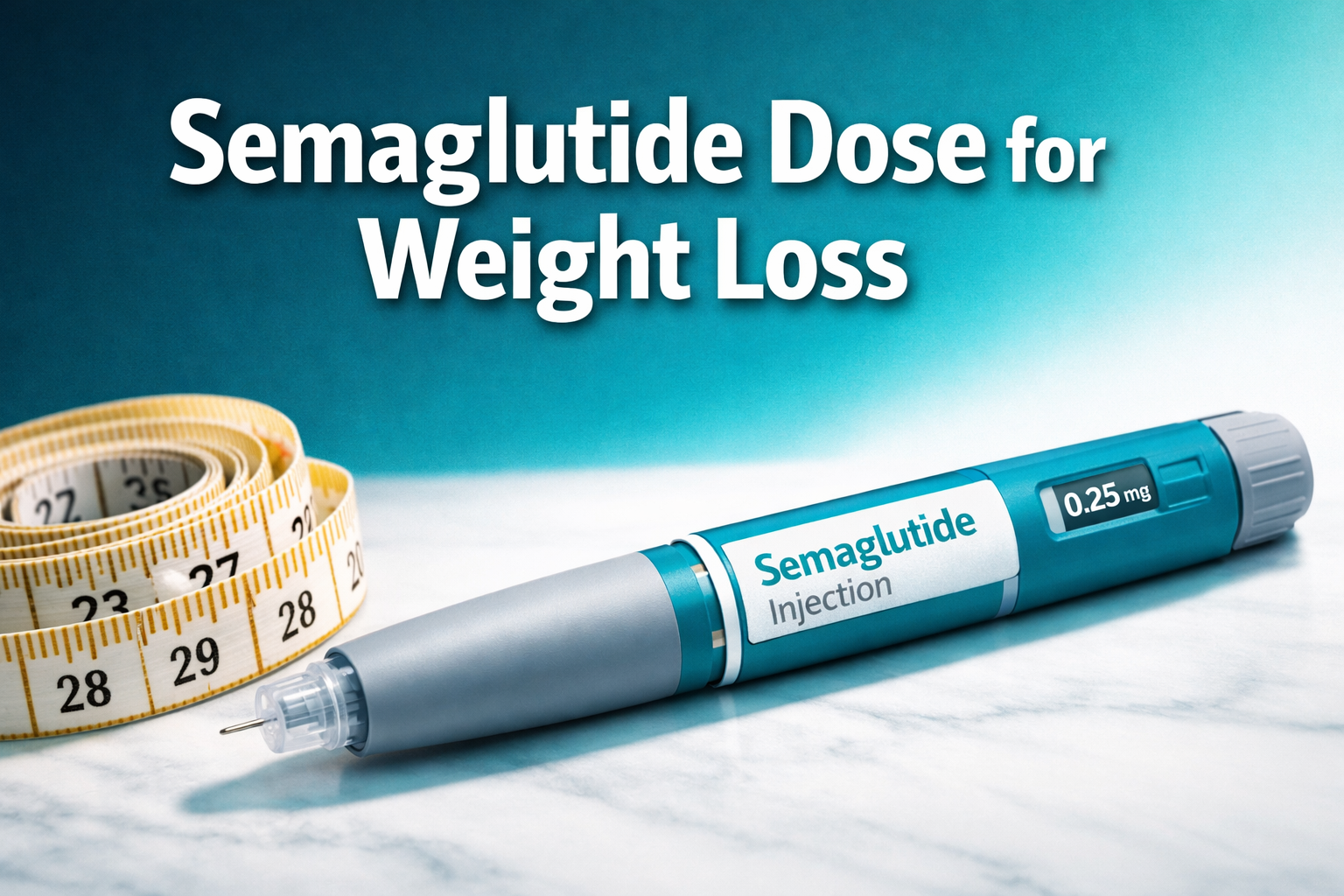
If you are starting semaglutide in 2026, you are entering a much more flexible landscape than patients did just two years ago. With the arrival of the Wegovy Pill and the brand-new Wegovy HD (7.2mg) injection, your “target dose” is now personalized to your specific metabolic response.
Quick Answer: The starting semaglutide dose for weight loss is 0.25 mg injected subcutaneously once per week for the first four weeks. Doses increase every four weeks, reaching a maximum maintenance dose of 2.4 mg weekly (Wegovy) after about 16 weeks. Most people lose an average of 15% of body weight over 68 weeks at the full dose, according to the STEP 1 clinical trial.
Key Takeaways
- Start low, go slow: The FDA-approved starting dose is 0.25 mg weekly for four weeks to reduce side effects [1]
- Five-step titration: Doses progress from 0.25 mg → 0.5 mg → 1.0 mg → 1.7 mg → 2.4 mg, with four weeks at each level [2]
- Maximum dose: 2.4 mg weekly for Wegovy (weight loss); 2.0 mg weekly for Ozempic (diabetes, used off-label for weight loss) [3]
- Not everyone needs the max: Some people achieve meaningful results at 1.0–1.7 mg and stay there [5]
- Oral semaglutide (Rybelsus) uses a different schedule: 3 mg → 7 mg → 14 mg daily [3]
- Maintenance typically begins around week 17 after completing the titration phase [2]
- Dose-dependent results: Higher doses generally produce greater weight loss, but individual response varies [2]
- Always work with a provider: Dose adjustments should be guided by a licensed healthcare professional [4]
What Is the Standard Semaglutide Dose for Weight Loss?
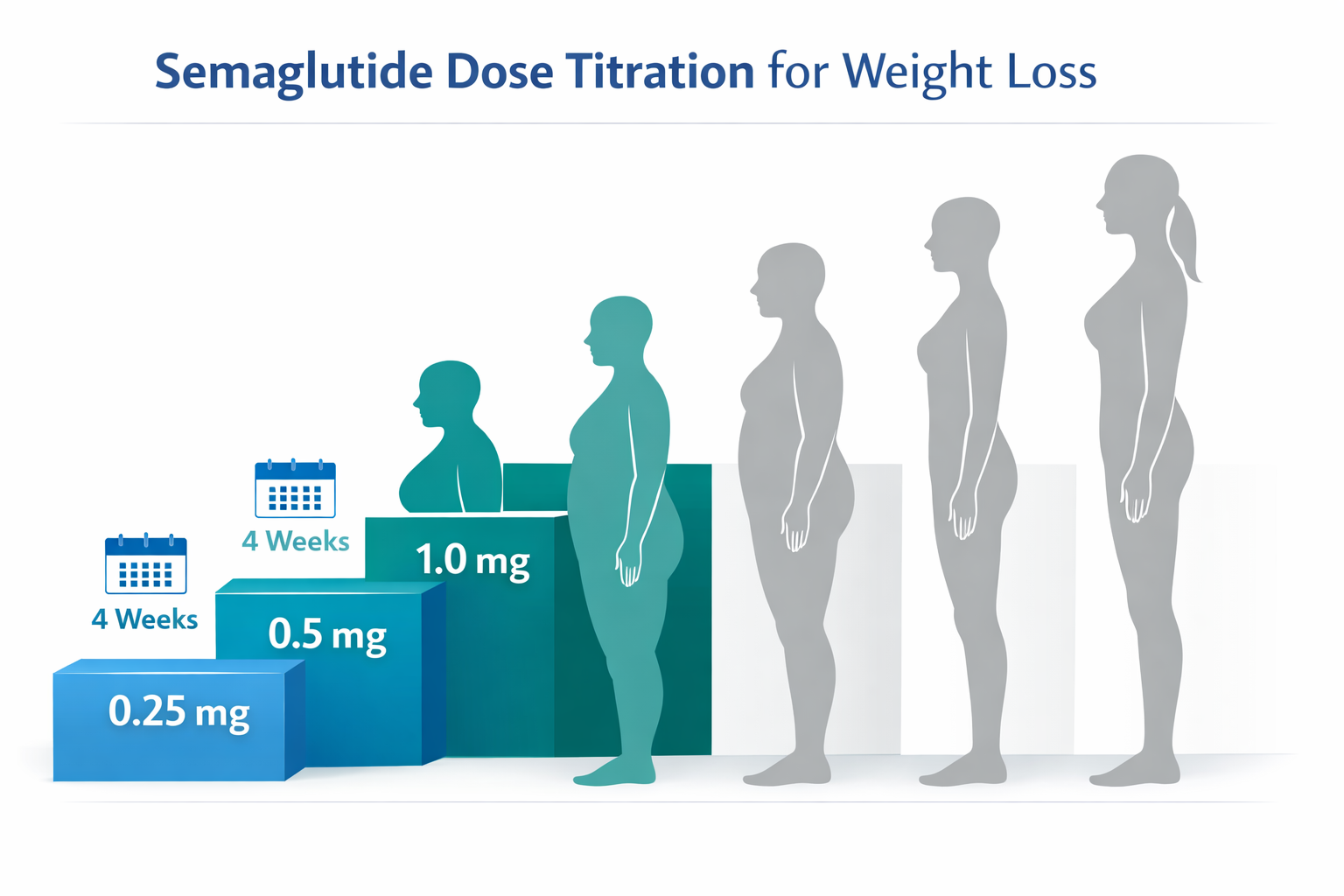
The standard semaglutide dose for weight loss follows a structured titration schedule that starts at 0.25 mg weekly and increases every four weeks until reaching the maintenance dose of 2.4 mg weekly. This gradual approach is intentional — it gives your body time to adjust and reduces the risk of nausea and other gastrointestinal side effects [1][4].
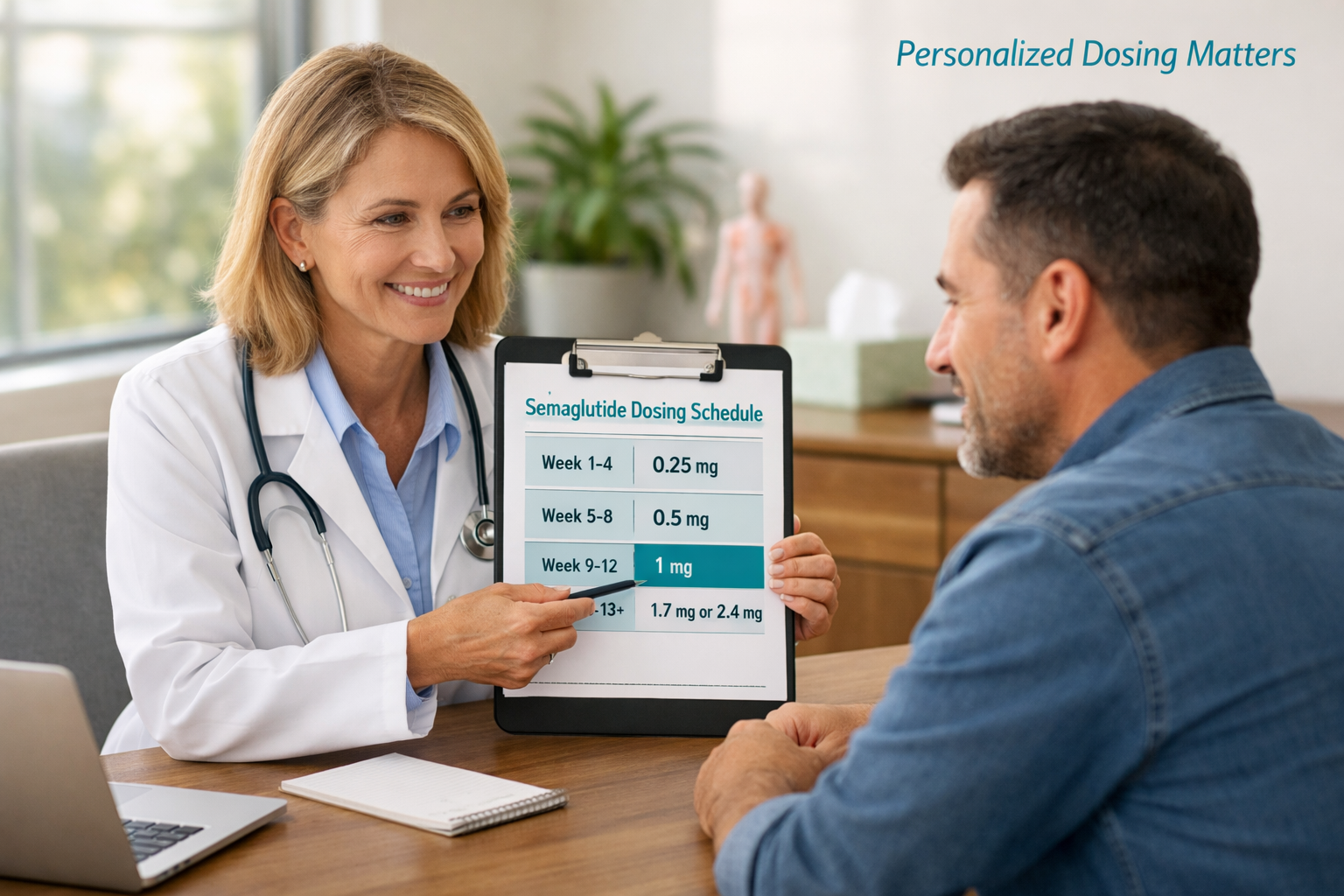
Here is the full FDA-approved titration schedule for Wegovy (semaglutide 2.4 mg):
| Weeks | Dose | Phase |
|---|---|---|
| Weeks 1–4 | 0.25 mg once weekly | Initiation |
| Weeks 5–8 | 0.5 mg once weekly | Titration |
| Weeks 9–12 | 1.0 mg once weekly | Titration |
| Weeks 13–16 | 1.7 mg once weekly | Titration |
| Week 17+ | 2.4 mg once weekly | Maintenance |
Common mistake: Skipping titration steps to get faster results. This significantly increases the risk of severe nausea and vomiting, and may cause people to stop the medication prematurely [4].
The 2026 Universal Titration Schedule
The “start low, go slow” rule is still the gold standard for avoiding severe nausea. Regardless of whether you want to reach the standard maintenance dose or the new “High Definition” dose, your first four months will look like this:
| Phase | Duration | Weekly Injection Dosage | Daily Tablet Dosage |
| Month 1 | Weeks 1–4 | 0.25 mg | 1.5 mg |
| Month 2 | Weeks 5–8 | 0.5 mg | 4 mg |
| Month 3 | Weeks 9–12 | 1.0 mg | 9 mg |
| Month 4 | Weeks 13–16 | 1.7 mg | 25 mg (Maintenance) |
Moving to Maintenance: 2.4mg vs. 7.2mg (HD)
Once you complete the 16-week titration, you and your doctor will choose a maintenance “ceiling.”
The Standard: 2.4 mg Weekly
- Average Weight Loss: ~15% to 17%.
- Who it’s for: The majority of patients who are seeing consistent results and want to minimize side effects.
The New Peak: 7.2 mg Weekly (Wegovy HD)
Approved by the FDA on March 19, 2026, Wegovy HD is designed for “non-responders” or those who have hit a plateau at the lower dose.
- Average Weight Loss: 20.7% (according to the STEP UP trials).
- The “25% Club”: In clinical studies, 1 in 3 patients on the 7.2mg dose lost a staggering 25% or more of their total body weight.
- Requirement: You must tolerate the 2.4mg dose for at least 4 weeks before escalating to 7.2mg.
The Wegovy Pill: 25mg Daily
For those who prefer a needle-free existence, the Wegovy Pill (25mg) is now a primary maintenance option.
- The Conversion: If you are currently on the 2.4mg injection and want to switch to the pill, you can initiate the 25mg tablet one week after your last shot.
- Success Factor: You must take it on an empty stomach with no more than 4 ounces of water and wait 30 minutes before eating.
How Does the Semaglutide Dose for Weight Loss Affect Results?
Higher doses produce greater weight loss, but the relationship isn’t perfectly linear — and not everyone needs to reach 2.4 mg. Clinical data shows a clear dose-dependent pattern [2]:
- 0.5–1.0 mg weekly: Approximately 5–7% body weight loss over 3–6 months
- 1.7 mg weekly: Approximately 10–12% body weight loss
- 2.4 mg weekly: Approximately 15% average body weight loss over 68 weeks (STEP 1 trial) [2]
“The best semaglutide dose is the highest dose a person can comfortably tolerate while achieving their health goals — not automatically the maximum dose.” [2]
Some patients achieve their target weight loss at 1.0 mg or 1.7 mg and, in consultation with their provider, choose to stay at that level rather than continuing to escalate [5]. This is a legitimate clinical decision, not a shortcut.
Decision rule: If you’ve been at 1.7 mg for four weeks, lost weight steadily, and tolerated the dose well, discuss with your provider whether escalating to 2.4 mg is necessary for your specific goals.
For a broader look at how semaglutide compares to other GLP-1 options, see our guide to the best semaglutide weight loss medications available in 2026.
6 Best Oral And Injections GLP-1 for Weight Loss in 2026
Based on clinical efficacy, FDA status, and current 2026 market availability, here are the top six oral options.
1. Wegovy® Oral Pill (Semaglutide 25mg/50mg)
- Rating: ⭐️⭐️⭐️⭐️⭐️ – (9.8/10)
SYNERGY RX GLP 1 GLP-1 is known for super-fast qualification, often under 3 minutes. Their no-hassle service provides access to licensed U.S. doctors and speedy delivery of GLP-1 injections or oral semaglutide. Perfect for anyone who wants to start losing weight immediately.
- Best For: Maximum FDA-approved weight loss.
- Avg. Results: 16.6% body weight reduction in 64 weeks.
- 2026 Status: FDA Approved & Broadly Available.
- Cost: $149 (Intro) to $299 (Maintenance) per month.The Wegovy pill is the “heavy hitter” of the group. Unlike its lower-dose cousin Rybelsus, the 2026 Wegovy pill comes in 25mg and 50mg strengths specifically designed to mimic the high-potency 2.4mg weekly injection.
2. Orforglipron (Lilly’s “Obesity Pill”)

- Rating: ⭐️⭐️⭐️⭐️⭐️ – (9.9/10) High Potency GLP1
MyStart GLP-1 offers a smooth, beginner-friendly GLP-1 program using FDA-backed medications and simple weekly injections or tablets. Great for people wanting easy onboarding, rapid fat loss, and physician oversight—without the high price of traditional clinics.
- Best For: Ease of use (No food/water restrictions).
- Avg. Results: 12.4% – 14.7% weight loss.
- 2026 Status: FDA Approval expected Q2 2026.Orforglipron is the most anticipated drug of the year. Unlike semaglutide pills, which require you to wait 30 minutes before eating, Orforglipron can be taken anytime. It is a “small molecule” drug, making it more predictable and often better tolerated by those with sensitive stomachs.
3. Rybelsus® (Semaglutide 7mg/14mg)
- Rating: ⭐️⭐️⭐️⭐️⭐️ – (9.9/10) Excellent
DirectMeds GLP1 provides a budget-friendly alternative to Ozempic/Wegovy while maintaining strong appetite control and weekly fat loss results. Everything is included—from telehealth visits to medication shipping—making it ideal for people wanting premium results at the lowest cost.
- Best For: Moderate weight loss and A1C control.
- Avg. Results: 5% – 7% weight loss.
- 2026 Status: FDA Approved (Diabetes); used off-label for weight.While originally for Type 2 Diabetes, Rybelsus remains a popular choice for those looking for a “gentle” start to GLP-1 therapy or those in the maintenance phase after losing weight on injectables.
4. MEDVi Oral Semaglutide (Compounded Formula)
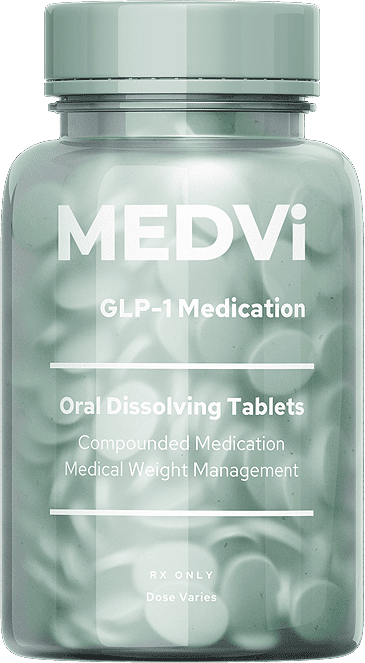
- Rating: ⭐️⭐️⭐️⭐️⭐️ – (9.9/10) Excellent
MEDVi GLP-1 delivers fast, medical-grade weight loss with doctor-guided dosing and personalized coaching. Patients report losing 1–3 lbs per week with steady appetite control and reduced cravings. Qualify in minutes and access 600+ U.S. doctors with no membership fees.
- Best For: Budget-conscious users and telehealth convenience.
- Avg. Results: Comparable to Rybelsus (approx 7-9%).
- 2026 Status: Available via licensed telehealth.MEDVi has become a 2026 leader in the “direct-to-patient” space. They offer a sublingual (under the tongue) tablet that bypasses the stomach, which some users find reduces the common “GLP-1 nausea.”
5. Amycretin (The “Double Agonist” Oral)
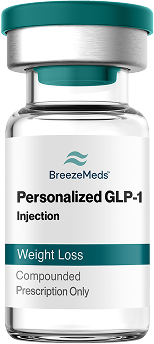
- Rating: ⭐️⭐️⭐️⭐️⭐️ – (9.5/10) Excellent
BreezeMeds focuses on simple onboarding and gentle dosing, making it great for beginners or people sensitive to side effects. Backed by a supportive care team, it helps users experience steady weekly fat loss while building long-term healthy habits.
- Best For: The future of rapid weight loss.
- Avg. Results: 13.1% in just 12 weeks (Phase 1/2 data).
- 2026 Status: Clinical Trials (Compassionate use in select markets).Amycretin targets both GLP-1 and Amylin receptors. It is currently the most powerful oral candidate in development, with early data suggesting it could eventually outperform even the strongest injections.
6. Danuglipron (Pfizer’s Oral Entry)
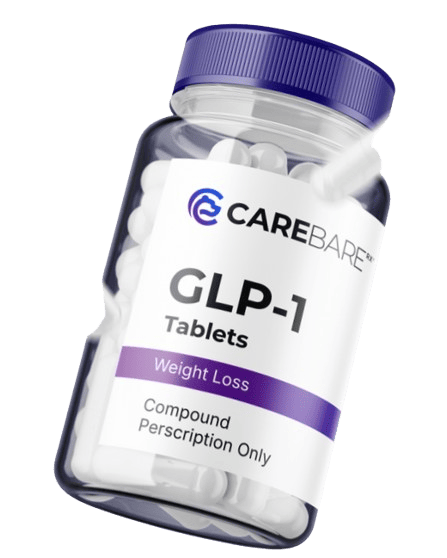
- Rating: ⭐️⭐️⭐️⭐️⭐️ – (9.0/10) Excellent
CARE BARE RX GLP-1 offers a fully remote, doctor-guided GLP-1 supplement program that makes weight loss simple and accessible. With quick online qualification and fast shipping, users can start their fat-loss journey within days — no clinic visits required. Ideal for busy people who want safe, effective weight loss at home.
- Best For: Metabolic health and blood sugar stability.
- Avg. Results: 8% – 10% weight loss.
- 2026 Status: Late-stage Phase 3 Clinical Trials.After several pivots, Pfizer’s oral entry is being marketed in 2026 as a “metabolic stabilizer” that focuses on preserving muscle mass while losing fat—a common concern with other GLP-1s.
Also Read: How Chose Most Affordable GLP 1 Med under $200/moth
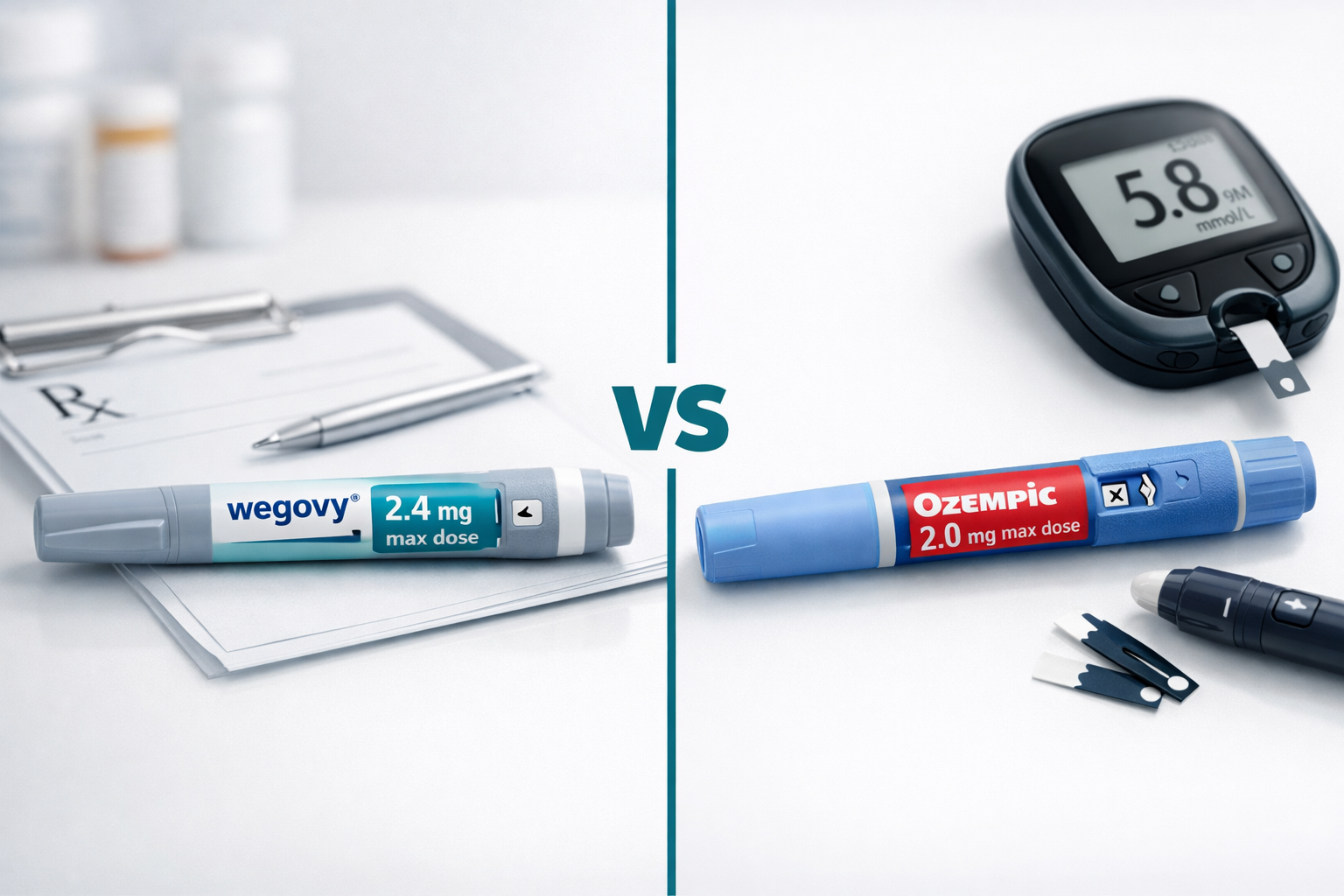
Wegovy vs. Ozempic: Are the Doses the Same?
No — and this distinction matters. Both medications contain semaglutide, but they are FDA-approved for different purposes and have different maximum doses [3].
Wegovy (semaglutide for chronic weight management):
- Approved for weight loss in adults with obesity (BMI ≥30) or overweight (BMI ≥27) with a weight-related condition
- Maximum dose: 2.4 mg weekly
- Follows the five-step titration schedule above
Ozempic (semaglutide for type 2 diabetes):
- Approved for blood sugar control in adults with type 2 diabetes
- Maximum dose: 2.0 mg weekly
- Sometimes prescribed off-label for weight loss
- Titration: 0.25 mg → 0.5 mg → 1.0 mg → 2.0 mg
Edge case: If you’re using Ozempic off-label for weight loss, your provider may cap your dose at 1.0 mg or 2.0 mg rather than the 2.4 mg available through Wegovy. This is worth clarifying upfront.
For a detailed breakdown of how these two medications compare, read our Semaglutide vs. Tirzepatide comparison — which also covers how semaglutide stacks up against the newer dual-agonist option.
What Is the Oral Semaglutide Dose for Weight Loss?
Oral semaglutide (brand name Rybelsus) uses a completely different dosing schedule than the injectable versions. Rybelsus is currently FDA-approved for type 2 diabetes, not specifically for weight loss, but it is sometimes used off-label in that context [3].
Oral semaglutide dosing schedule:
- Month 1: 3 mg once daily (initiation dose)
- Month 2: 7 mg once daily
- Month 3+: 14 mg once daily (maximum dose)
Important administration note: Oral semaglutide must be taken on an empty stomach with no more than 4 oz of plain water, at least 30 minutes before eating or drinking anything else. Food significantly reduces absorption [3].
Oral semaglutide generally produces less weight loss than injectable semaglutide at equivalent doses because of lower bioavailability.
If weight loss is the primary goal, injectable semaglutide (Wegovy) is the more effective and specifically approved option. For more on oral GLP-1 options, see our review of the best oral GLP-1s for weight loss.
Why Does Semaglutide Dosing Start So Low?
The 0.25 mg starting dose is not a therapeutic dose — it’s a tolerance dose. At 0.25 mg, most people experience minimal weight loss, but the body begins adapting to the medication’s effects on the gut and brain [1][7].
Semaglutide works by mimicking GLP-1, a hormone that slows gastric emptying, reduces appetite, and signals fullness to the brain. When introduced too quickly at high doses, these effects can cause significant nausea, vomiting, and diarrhea [4].
The gradual titration serves three purposes:
- Reduces gastrointestinal side effects during adjustment
- Allows providers to identify the lowest effective dose for each patient
- Improves long-term adherence by making the medication more tolerable [1][4]
Common mistake: Expecting weight loss during the first four weeks. Most people lose little to no weight at 0.25 mg — and that’s expected. The initiation phase is about tolerance, not results [1].
How Should You Adjust Your Semaglutide Dose If Side Effects Occur?
If side effects become difficult to manage, the right move is to pause the escalation — not stop the medication entirely. Your provider may recommend staying at your current dose for an additional four weeks before attempting to increase again [4][8].
Steps to manage dose-related side effects:
- Stay at your current dose for an extra four weeks if nausea or vomiting is significant
- Eat smaller meals and avoid high-fat or spicy foods during dose increases
- Stay hydrated — nausea is worse when dehydrated
- Take the injection at night so the peak side-effect window occurs during sleep
- Contact your provider if vomiting prevents you from keeping food or water down
Some providers also explore “microdosing” approaches — using doses smaller than the standard increments — for patients who are particularly sensitive [8]. This is not FDA-approved protocol but may be discussed as a personalized strategy.
Edge case: If you miss a dose, take it as soon as you remember within five days. If more than five days have passed, skip it and resume your regular schedule the following week [7].
Who Should Not Use Standard Semaglutide Dosing?
Semaglutide is not appropriate for everyone, and certain conditions require either modified dosing or a different medication entirely [4][7].
Semaglutide is contraindicated for people with:
- Personal or family history of medullary thyroid carcinoma (MTC)
- Multiple Endocrine Neoplasia syndrome type 2 (MEN 2)
- Known hypersensitivity to semaglutide
- Pregnancy (weight loss medications are not recommended during pregnancy)
Use with caution (requires provider oversight) in people with:
- History of pancreatitis
- Diabetic retinopathy
- Severe kidney or liver impairment
- Eating disorders
People with type 2 diabetes who are also taking insulin or sulfonylureas need careful dose coordination to avoid hypoglycemia when starting semaglutide [7]. For a deeper look at semaglutide use in diabetes management, see our complete guide to semaglutide for type 2 diabetes.
What Does the Semaglutide Dose for Weight Loss Cost, and How Do You Access It?
Cost is one of the biggest practical barriers to semaglutide treatment. Brand-name Wegovy can cost $1,300–$1,400 per month without insurance in the U.S. as of 2026. However, several pathways exist to reduce this significantly.
Cost reduction options:
- Manufacturer savings programs: Novo Nordisk offers savings cards for eligible commercially insured patients
- Telehealth providers: Many GLP-1 telehealth platforms offer compounded semaglutide at lower price points (see our affordable GLP-1 weight loss programs guide)
- Insurance coverage: Wegovy is covered by some insurance plans when BMI and comorbidity criteria are met
- Compounded semaglutide: Available through licensed compounding pharmacies, though regulatory status has shifted — verify current FDA guidance with your provider
For a full breakdown of pricing options, our semaglutide price guide covers the most current deals and savings strategies in 2026.
Managing the “Dose Jump” Side Effects
The most dangerous time for side effects is the day after you increase your dose. In 2026, we are seeing a specific side effect tied to the higher 7.2mg dose: Dysesthesia.
Note on Dysesthesia: Approximately 19% of patients on the 7.2mg dose report “skin sensitivity”—a feeling like a mild sunburn or tingling without a rash. This is generally harmless and fades as you stay on the dose, but it is a sign that your nervous system is adjusting to the higher GLP-1 levels.
Health Facts Journal’s “Dose Optimization” Tips
- Don’t Rush: If you are losing weight and feeling good at 1.0mg, stay there. There is no “prize” for reaching the highest dose faster. Moving up too quickly is the #1 cause of treatment discontinuation.
- The “Split Dose” Myth: Do not attempt to split your pens to save money or create custom doses. The 2026 single-dose pens are designed for sterility and precise delivery.
- Protein is Non-Negotiable: At the 7.2mg dose, weight loss is so rapid that muscle wasting is a high risk. You must hit a minimum of 0.8g of protein per pound of body weight to maintain your metabolism.
Which Dose is Right for You?
The “right” dose is the lowest amount that allows you to lose roughly 1–2 lbs per week while maintaining a high quality of life. For many, that is 1.7mg or 2.4mg. For others, the “HD” results of 7.2mg are worth the extra titration.
Frequently Asked Questions
Q: What is the starting semaglutide dose for weight loss? A: The FDA-approved starting dose is 0.25 mg once weekly for the first four weeks. This is a tolerance dose, not a therapeutic dose — most weight loss occurs at higher doses later in treatment [1].
Q: How long does it take to reach the full 2.4 mg dose? A: Following the standard titration schedule, it takes approximately 16 weeks (four months) to reach the 2.4 mg maintenance dose [2].
Q: Can I stay at a lower dose if I’m losing weight? A: Yes. If you’re achieving your weight loss goals at 1.0 mg or 1.7 mg with good tolerance, your provider may recommend staying at that dose rather than escalating to 2.4 mg [5].
Q: Is the dose different for people with diabetes vs. people without diabetes? A: The titration schedule is similar, but the medication and maximum dose differ. Wegovy (2.4 mg) is used for weight loss; Ozempic (max 2.0 mg) is used for diabetes. People without diabetes using semaglutide for weight loss typically use Wegovy [3].
Q: What happens if I miss a dose? A: Take the missed dose within five days. If more than five days have passed, skip it and resume your regular weekly schedule [7].
Q: Does a higher dose always mean more weight loss? A: Generally yes, but individual response varies. Some people lose significant weight at lower doses; others plateau and need the full 2.4 mg. Results depend on diet, activity, genetics, and other factors [2].
Q: How long do you stay on semaglutide for weight loss? A: Semaglutide is intended as a long-term treatment. Most clinical trials ran 68–104 weeks, and weight tends to return if the medication is stopped without lifestyle changes in place [2][3].
Q: Can I inject semaglutide anywhere on my body? A: Semaglutide is injected subcutaneously into the abdomen, thigh, or upper arm. Rotate injection sites each week to reduce skin irritation [7].
Q: Is oral semaglutide as effective as injectable for weight loss? A: Injectable semaglutide generally produces greater weight loss due to higher bioavailability. Oral semaglutide (Rybelsus) is approved for diabetes, not specifically for weight loss [3].
Q: What if I experience severe nausea at a new dose? A: Talk to your provider before stopping. They may recommend staying at the previous dose for an additional four weeks before attempting to increase again [4].
Conclusion
Getting the semaglutide dose for weight loss right is not about rushing to the maximum dose — it’s about following a structured titration schedule that balances results with tolerability. Starting at 0.25 mg weekly, increasing every four weeks, and reaching the 2.4 mg maintenance dose around week 17 is the FDA-approved path that clinical trials have validated for meaningful, sustained weight loss.
Actionable next steps:
- Talk to a licensed provider before starting or adjusting semaglutide — self-dosing carries real risks
- Set realistic expectations: Significant weight loss typically begins at 1.0 mg and above, not in the first four weeks
- Don’t skip titration steps — the slow ramp-up exists to protect you from avoidable side effects
- Track your response at each dose level so you and your provider can make informed decisions about escalation
- Combine medication with lifestyle changes — semaglutide works best alongside a healthy diet and regular physical activity
If you’re exploring your options, our guide to the best semaglutide weight loss injections and GLP-1 receptor agonists for weight loss can help you understand the full landscape of available treatments.
References
[1] The Lancet: Wharton S, et al. Once-weekly semaglutide 7.2 mg in adults with obesity (STEP UP): a randomised, controlled, phase 3b trial. The Lancet Diabetes & Endocrinology. (2025).
[2] U.S. Food and Drug Administration (FDA): Wegovy (semaglutide) Full Prescribing Information & 2026 Dosage Updates. FDA.gov. (Accessed March 2026).
[3] Mayo Clinic: Semaglutide (Subcutaneous Route): Side Effects, Dosage, and Proper Use. Mayo Clinic Drug Information Guide. (2026).
[4] New England Journal of Medicine (NEJM): Aronne LJ, et al. Tirzepatide versus Semaglutide for Weight Loss in Adults with Obesity: A Head-to-Head Trial. NEJM via EASO Archive. (2025).
[5] The Lancet (SELECT Trial): Deanfield J, et al. Semaglutide and cardiovascular outcomes by baseline and changes in adiposity: SELECT Trial Analysis. The Lancet. (2025).


