
Semaglutide Injections: Dosage, Schedule & Results (2026 Guide)
The landscape for semaglutide injections (marketed as Ozempic® and Wegovy®) has evolved. While the core “start low, go slow” philosophy remains, the 2026 approval of higher-dose maintenance options has redefined what “maximum results” look like.
Whether you are treating Type 2 diabetes or managing chronic obesity, understanding your titration schedule is the first step to avoiding side effects and hitting your goal weight.
Quick Answer: Semaglutide injections are once-weekly subcutaneous shots that start at 0.25mg and gradually increase to a maintenance dose of 2.4mg (for weight loss) or 2.0mg (for type 2 diabetes) over about 16 weeks. Clinical trials show an average weight loss of nearly 15% of body weight at 68 weeks when combined with lifestyle changes.
Key Takeaways
- Starting dose: 0.25mg once weekly for the first 4 weeks — this dose is for tolerability, not weight loss [1]
- Maintenance dose: 2.4mg weekly for Wegovy (weight loss) and 2.0mg weekly for Ozempic (diabetes) [2]
- Titration timeline: Dose increases happen every 4 weeks, reaching maintenance around week 17 [1]
- Injection sites: Rotate between the abdomen (2+ inches from the navel), front thighs, or upper arms [1]
- Timing flexibility: Inject on the same day each week — the time of day and meals don’t affect how it works [1]
- STEP 1 trial results: Average 14.9% body weight reduction at 68 weeks with the 2.4mg dose [1]
- Side effects peak: Nausea is most common during weeks 5–8 when the dose increases to 0.5mg [1]
- Individualized dosing: Some patients stay at 1.7mg if 2.4mg causes persistent side effects [1]
- Oral alternative: Oral semaglutide (Rybelsus) follows a different schedule, starting at 1.5–3mg daily [2]
- Consistency matters: Skipping doses or rushing titration increases side effect risk and slows results
What Are Semaglutide Injections and How Do They Work?
Semaglutide injections are a class of medication called GLP-1 receptor agonists. They mimic a natural gut hormone (GLP-1) that signals your brain to feel full, slows stomach emptying, and helps regulate blood sugar.
The injectable form is administered subcutaneously (under the skin) once per week. Because semaglutide has an approximately 7-day half-life, a single weekly injection maintains stable drug levels in the body without daily dosing [1]. This makes it practical for most people to stick with long-term.
Two FDA-approved injectable forms exist:
| Brand | Approved Use | Max Weekly Dose |
|---|---|---|
| Wegovy | Chronic weight management | 2.4mg |
| Ozempic | Type 2 diabetes (+ off-label weight loss) | 2.0mg |
Both use the same active ingredient. The difference is the approved indication and maximum dose [2].
For a deeper comparison of available options, see our guide to the best semaglutide weight loss medications ranked for 2026.
What Is the Standard Semaglutide Injection Dosage Schedule?
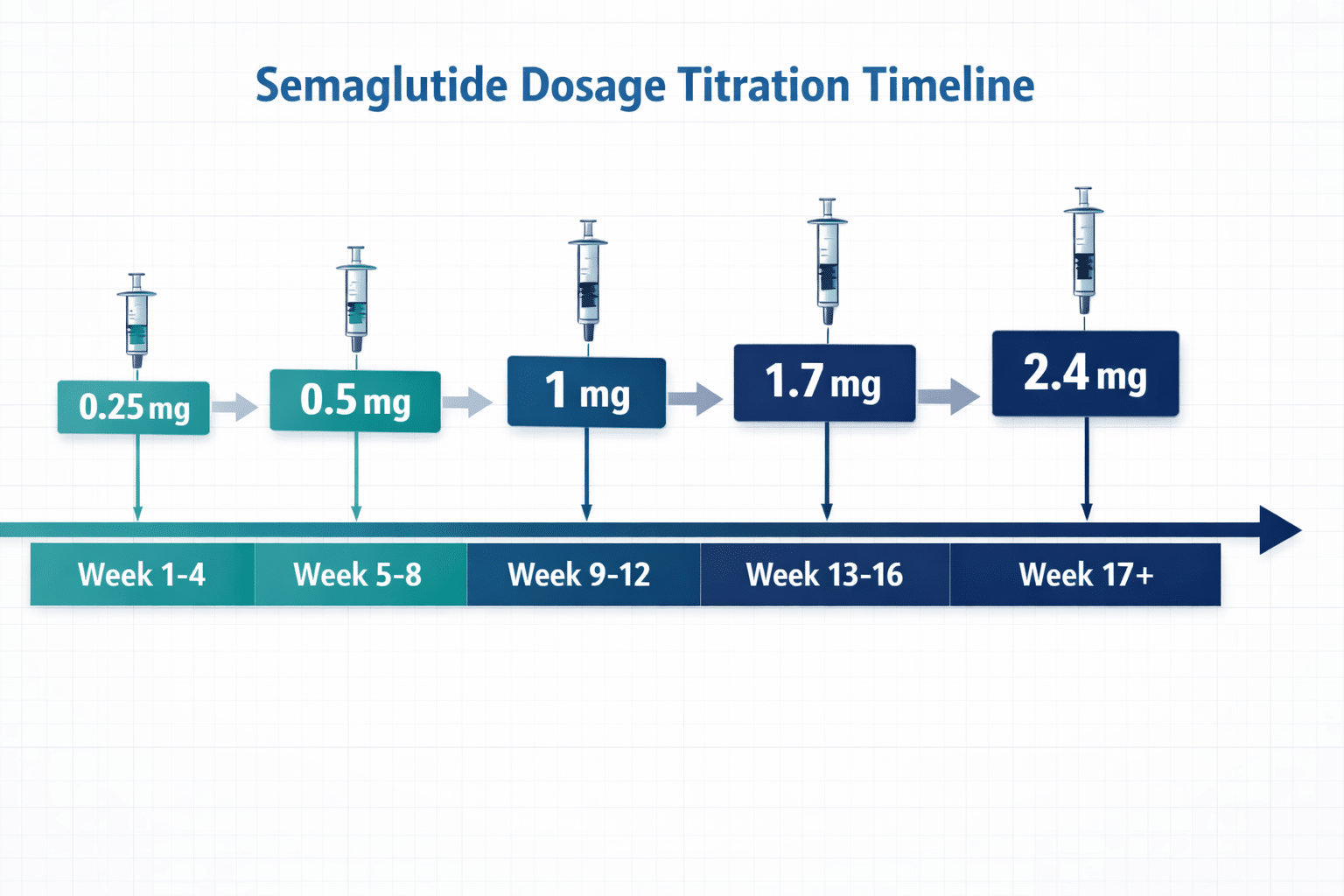
The standard titration schedule increases the dose every 4 weeks, starting low to minimize side effects and ending at a maintenance dose around week 17 [1][4].
Full Titration Schedule
| Phase | Weeks | Dose | Primary Goal |
|---|---|---|---|
| Initiation | 1–4 | 0.25mg | Tolerability |
| Escalation 1 | 5–8 | 0.5mg | Begin efficacy |
| Escalation 2 | 9–12 | 1.0mg | Increased effect |
| Escalation 3 | 13–16 | 1.7mg | Near-maintenance |
| Maintenance | 17+ | 2.4mg | Full therapeutic dose |
The 0.25mg starting dose is intentionally below the therapeutic range. Its only purpose is to let your body adjust before the dose climbs [1]. Don’t expect significant weight loss in the first month — that’s normal and expected.
Important rule: Each dose increase only happens if the current dose is well-tolerated [4]. If you’re experiencing persistent nausea, vomiting, or other GI symptoms, your provider may hold the dose at the current level for an additional 4 weeks before escalating.
Common mistake: Rushing titration to reach the maintenance dose faster. This dramatically increases nausea and often leads people to stop the medication entirely.
How Do You Administer Semaglutide Injections Correctly?
Proper injection technique reduces discomfort and ensures the medication absorbs correctly. Semaglutide is injected subcutaneously — into the fat layer just under the skin, not into muscle [1].
Step-by-Step Injection Checklist
- Wash your hands thoroughly before handling the pen
- Choose your injection site: abdomen (at least 2 inches from the navel), front of thigh, or outer upper arm [1]
- Rotate sites each week to prevent skin irritation or lipohypertrophy (lumpy tissue buildup)
- Clean the skin with an alcohol swab and let it dry
- Pinch the skin lightly if injecting into the abdomen or thigh
- Insert the pen at a 90-degree angle and press the button
- Hold for 6–10 seconds to ensure full dose delivery
- Dispose of the needle cap safely in a sharps container
Timing: Inject on the same day each week. The time of day doesn’t matter, and you don’t need to coordinate with meals [1]. Picking a consistent day (e.g., every Sunday morning) helps build the habit.
Edge case: If you miss a dose by fewer than 5 days, inject as soon as you remember. If it’s been more than 5 days, skip that dose and resume on your next scheduled day. Never double-dose [6].
What Results Can You Expect From Semaglutide Injections Week by Week?
Results build gradually. Most people see minimal weight loss in the first 4 weeks, with more noticeable changes appearing as the dose increases [1].
Expected Weight Loss by Phase
| Weeks | Dose | Typical Weekly Loss |
|---|---|---|
| 1–4 | 0.25mg | 0–2 lbs |
| 5–8 | 0.5mg | 1–3 lbs |
| 9–12 | 1.0mg | 2–4 lbs |
| 13–16 | 1.7mg | 3–5 lbs |
| 17+ | 2.4mg | Steady loss toward goal |
The landmark STEP 1 clinical trial found that participants on 2.4mg semaglutide lost an average of 14.9% of their body weight at 68 weeks, compared to about 2.4% in the placebo group [1].
💡 Pull quote: “The first four weeks are about building tolerance, not losing weight. Expecting dramatic results too early is the fastest way to feel like the medication isn’t working.”
Results also depend heavily on diet and activity. Semaglutide reduces appetite and food noise significantly, but it works best when paired with a calorie-appropriate diet. For guidance on what to eat while on GLP-1 therapy, see our GLP-1 diet guide.
If you’re specifically looking at Ozempic timelines, our 6-week Ozempic weight loss results guide covers what to realistically expect in the early weeks.
What Are the Most Common Side Effects of Semaglutide Injections?

Gastrointestinal side effects are the most common, especially during dose increases. They’re manageable for most people but are the primary reason some patients stop treatment.
Side Effects by Frequency
Very common (affecting more than 1 in 10 people):
- Nausea
- Vomiting
- Diarrhea
- Constipation
- Stomach pain
Less common but possible:
- Headache
- Fatigue
- Injection site reactions (redness, itching)
- Dizziness
When side effects peak: Nausea is most pronounced during weeks 5–8, when the dose increases to 0.5mg [1]. For many people, GI symptoms improve significantly by weeks 13–16 as the body adapts. Some patients experience a second wave of nausea during the jump to 1.0mg [1].
Serious but rare risks include pancreatitis, gallbladder disease, and a potential (theoretical) risk of thyroid C-cell tumors seen in animal studies. Semaglutide is contraindicated in people with a personal or family history of medullary thyroid carcinoma or Multiple Endocrine Neoplasia syndrome type 2 [6].
Practical tip: Eating smaller meals, avoiding high-fat or spicy foods, and staying hydrated all help reduce nausea during the escalation phases.
Who Is a Good Candidate for Semaglutide Injections?
Semaglutide injections are FDA-approved for two groups of patients, and the criteria differ slightly by brand.
Wegovy (weight loss):
- Adults with a BMI of 30 or higher, OR
- BMI of 27 or higher with at least one weight-related condition (high blood pressure, type 2 diabetes, high cholesterol)
- Also approved for adolescents aged 12 and older [6]
Ozempic (type 2 diabetes):
- Adults with type 2 diabetes who need better blood sugar control
- Also used to reduce cardiovascular risk in adults with type 2 diabetes and heart disease [6]
Choose semaglutide injections if:
- You need once-weekly dosing for convenience
- You’ve tried lifestyle changes alone without adequate results
- You prefer injections over daily oral medication
- You have type 2 diabetes and need both blood sugar and weight management
Consider alternatives if:
- You’re uncomfortable with self-injection (oral semaglutide may suit you better)
- You want stronger weight loss effects (tirzepatide may outperform semaglutide for some patients — see our semaglutide vs. tirzepatide comparison)
- You have contraindications listed above
How Much Do Semaglutide Injections Cost Without Insurance?
Cost is one of the biggest barriers to access. Brand-name Wegovy and Ozempic are expensive without insurance coverage, but compounded and telehealth options have expanded access significantly in 2026.
Approximate monthly costs (2026 estimates):
| Option | Estimated Monthly Cost |
|---|---|
| Brand-name Wegovy (retail) | $1,300–$1,600 |
| Brand-name Ozempic (retail) | $900–$1,200 |
| Compounded semaglutide (telehealth) | $150–$400 |
| With manufacturer savings card | Varies (may reduce to ~$25/month for eligible patients) |
Note: These are estimates based on current market pricing. Actual costs vary by pharmacy, location, and insurance status.
For a detailed breakdown of how to access semaglutide affordably, see our guide to semaglutide without insurance costs and our roundup of cheap weight loss injections starting at $149/month.
How Do Semaglutide Injections Compare to Oral Semaglutide?
Injectable and oral semaglutide use the same active compound but differ in dosing, absorption, and convenience.
Oral semaglutide (Rybelsus) starts at 3mg daily and titrates to a maximum of 14mg daily for diabetes, or up to 25mg daily in newer formulations for weight loss [2]. Oral absorption is much lower than injectable, so the doses look very different on paper.
Key differences:
| Factor | Injectable Semaglutide | Oral Semaglutide |
|---|---|---|
| Frequency | Once weekly | Once daily |
| Administration | Subcutaneous injection | Tablet (fasting required) |
| Bioavailability | High | Lower (~1%) |
| Max approved dose | 2.4mg/week | 25mg/day |
| Convenience | One injection per week | Daily pill, strict timing |
Choose injections if you want the most studied and highest-efficacy delivery method. Choose oral if needle aversion is a dealbreaker. For a full breakdown, our semaglutide tablets review covers how oral GLP-1s actually perform.
FAQ: Semaglutide Injections
Q: How long does it take to see weight loss results from semaglutide injections? Most people notice appetite reduction within the first 1–2 weeks, but meaningful weight loss (2–5 lbs) typically appears during weeks 5–12 as the dose increases. Significant results (10%+ body weight) generally require 4–6 months at maintenance dose [1].
Q: Can I inject semaglutide at any time of day? Yes. The time of day doesn’t affect how semaglutide works. Pick a consistent day each week and inject whenever it’s convenient — morning, afternoon, or evening [1].
Q: What happens if I stay at 1.7mg instead of going to 2.4mg? Some patients maintain adequate weight loss at 1.7mg with fewer side effects. Providers can keep you at 1.7mg if 2.4mg causes persistent adverse effects [1]. The goal is the lowest effective dose, not the highest possible dose.
Q: Do I have to refrigerate semaglutide injections? Unopened pens should be stored in the refrigerator (36–46°F). Once opened, Wegovy and Ozempic pens can be stored at room temperature (up to 77°F) for up to 28 days [6].
Q: Can semaglutide injections be used for prediabetes? Semaglutide is not currently FDA-approved specifically for prediabetes, but it’s sometimes prescribed off-label. The weight loss it produces can significantly reduce the risk of progressing to type 2 diabetes.
Q: What’s the difference between Wegovy and Ozempic injections? Both contain semaglutide. Wegovy is FDA-approved for chronic weight management (max 2.4mg/week). Ozempic is approved for type 2 diabetes (max 2.0mg/week). The titration schedules are similar, but the approved indications and maximum doses differ [2].
Q: Will I regain weight if I stop semaglutide injections? Clinical data suggests most people regain a significant portion of lost weight within 1–2 years of stopping. Semaglutide manages a chronic condition — stopping it removes the therapeutic effect.
Q: Is compounded semaglutide as effective as brand-name Wegovy? Compounded semaglutide uses the same active ingredient but isn’t FDA-approved as a finished product. Quality varies by compounding pharmacy. Always use a licensed, accredited compounding pharmacy and work with a prescribing provider.
Conclusion
Semaglutide injections offer a clinically proven path to meaningful weight loss and better blood sugar control — but results depend on following the titration schedule correctly, managing side effects through each dose increase, and pairing the medication with sustainable lifestyle habits.
Actionable next steps:
- Talk to a provider about whether Wegovy or Ozempic is appropriate for your specific health profile
- Understand the timeline — commit to at least 16 weeks before evaluating full results
- Plan for side effects during weeks 5–8 by adjusting meal size and food choices
- Track your progress weekly, including weight, appetite changes, and any side effects
- Explore cost options if insurance doesn’t cover it — telehealth compounding programs have made access far more affordable in 2026
For a curated list of vetted options, see our best semaglutide weight loss injections guide and our best semaglutide for fat loss ranking.
References
[1] Semaglutide Dosing Guide – https://glp3planner.com/resources/semaglutide-dosing-guide
[2] Semaglutide Weight Loss Dosage Chart – https://www.rivasweightloss.com/semaglutide-weight-loss-dosage-chart/
[4] Semaglutide Dose Weight Loss – https://ro.co/weight-loss/semaglutide-dose-weight-loss/
[6] Semaglutide Subcutaneous Route – Mayo Clinic – https://www.mayoclinic.org/drugs-supplements/semaglutide-subcutaneous-route/description/drg-20406730
[7] FDA Approval Announcement (2026): “The U.S. Food and Drug Administration (FDA) has officially approved the first-ever oral GLP-1 specifically indicated for chronic weight management, expanding access for patients who are needle-averse.” Source: FDA Approves Wegovy Weight Loss Pill: How It Compares to Injectables – Healthline

With over 13 years of experience in holistic health blogging, I aim to help you navigate your wellness journey with honest insights, expert-backed advice, and a sprinkle of real-world practicality.
Certified Wellness Writer | Herbal Nutrition Advocate | Wellness Research Enthusiast


