
Semaglutide vs Tirzepatide: Which is Better for Weight Loss?

Last updated: March 18, 2026
Quick Answer: Tirzepatide produces greater weight loss than semaglutide in head-to-head clinical trials, with participants losing an average of 20.2% of body weight versus 13.7% with semaglutide over 72 weeks. That said, semaglutide remains highly effective, has a longer safety track record, and is often more accessible by cost. The right choice depends on your weight loss goals, budget, diabetes status, and how your body responds to treatment.
Key Takeaways: Semaglutide vs Tirzepatide
- Tirzepatide wins on raw weight loss numbers: 20.2% vs. 13.7% average body weight reduction in the SURMOUNT-5 trial [5]
- Tirzepatide targets two hormones (GIP and GLP-1); semaglutide targets only GLP-1, which explains much of the efficacy gap [4]
- More tirzepatide users hit major milestones: 48.4% lost 20%+ of body weight vs. 27.3% with semaglutide [4]
- Semaglutide has a longer track record with more real-world safety data accumulated since its earlier FDA approvals
- Both drugs share similar side effects: nausea, vomiting, constipation, and diarrhea are the most common for both
- Cost is comparable but varies by brand, insurance, and whether you use compounded versions
- Semaglutide may be the better starting point if you’re new to GLP-1 therapy or have cost constraints
- Tirzepatide is worth considering if you need aggressive weight loss or haven’t responded well to semaglutide
- Both medications require a prescription and work best alongside diet and exercise changes
- Compounded versions of both drugs exist at lower cost, but quality and regulation vary

How Do Semaglutide and Tirzepatide Actually Work?
Semaglutide is a GLP-1 receptor agonist. Tirzepatide is a dual GIP/GLP-1 receptor agonist. That single difference in mechanism is the main reason tirzepatide tends to produce greater weight loss.
Here’s what that means in plain terms:
- GLP-1 (glucagon-like peptide-1): A gut hormone that slows digestion, reduces appetite, and helps regulate blood sugar. Both drugs activate this pathway.
- GIP (glucose-dependent insulinotropic polypeptide): A second gut hormone that amplifies insulin release and may enhance fat metabolism. Only tirzepatide activates this pathway.
By hitting two targets instead of one, tirzepatide creates a synergistic effect that suppresses appetite more strongly and improves metabolic outcomes more broadly [4]. In one study, tirzepatide reduced energy intake during a test meal by approximately 64 kcal more than semaglutide, while also producing higher satiety ratings and lower fasting appetite scores [1].
Choose semaglutide if you want a well-established single-hormone GLP-1 treatment with years of post-market data. Choose tirzepatide if you want the stronger dual-hormone approach and your provider agrees it’s appropriate.
For a broader look at how these drug classes work, see our guide to GLP-1 medications for weight loss and diabetes.
Semaglutide vs Tirzepatide: What Do the Clinical Trials Actually Show?
Tirzepatide outperforms semaglutide in every major weight loss metric measured in head-to-head trials. The SURMOUNT-5 trial, published in the New England Journal of Medicine in 2025, is the clearest evidence we have [5].
SURMOUNT-5 Key Results (72 Weeks)
| Metric | Semaglutide | Tirzepatide |
| Average % body weight lost | 13.70% | 20.20% |
| Average pounds lost | 33.1 lbs | 50.3 lbs |
| Waist circumference reduction | 5.1 inches (13.0 cm) | 7.2 inches (18.4 cm) |
| Achieved ≥10% weight loss | 60.50% | 81.60% |
| Achieved ≥15% weight loss | 40.10% | 64.60% |
| Achieved ≥20% weight loss | 27.30% | 48.40% |
| Achieved ≥25% weight loss | 16.10% | 31.60% |
Sources: [4][5]
A meta-analysis of 12 studies confirmed these findings, showing tirzepatide produced a 4.61% greater percentage body weight reduction and 4.76 kg more absolute weight loss compared to semaglutide [3].
The relative difference is significant: tirzepatide users lost about 47% more body weight than semaglutide users in the SURMOUNT-5 trial [4]. That’s not a marginal gap.
Common mistake: Comparing brand names without accounting for dose. Semaglutide (Wegovy) is dosed up to 2.4 mg weekly. Tirzepatide (Zepbound) goes up to 15 mg weekly. Dose matters, and not everyone tolerates or needs the maximum dose.
Which Drug Is Better for Blood Sugar Control?
Tirzepatide also outperforms semaglutide on glycemic control, making it particularly valuable for people managing type 2 diabetes alongside obesity.
Tirzepatide demonstrated superior reductions in HbA1c (glycated hemoglobin) and fasting blood glucose compared to semaglutide across multiple trials [2]. This is partly because the GIP pathway plays a direct role in insulin secretion, giving tirzepatide an additional mechanism for blood sugar management.
For people with type 2 diabetes:
- Tirzepatide (brand name: Mounjaro) is FDA-approved for type 2 diabetes
- Semaglutide (brand name: Ozempic) is also FDA-approved for type 2 diabetes
- Both reduce cardiovascular risk in people with diabetes, though long-term comparative cardiovascular data for tirzepatide is still accumulating
For people without diabetes (weight loss only):
- Tirzepatide (Zepbound) is FDA-approved for chronic weight management
- Semaglutide (Wegovy) is FDA-approved for chronic weight management
- Glycemic differences matter less, but tirzepatide’s stronger metabolic effects still translate to better weight outcomes
If you’re also dealing with fatty liver disease, the comparison shifts slightly. See our detailed breakdown of GLP-1 for fatty liver: semaglutide vs tirzepatide for condition-specific guidance.
Semaglutide vs Tirzepatide: How Do the Side Effects Compare?
Both medications share a very similar side effect profile, and neither has a clear safety advantage over the other. The most common issues are gastrointestinal and tend to peak during dose escalation.
Most Common Side Effects (Both Drugs)
- Nausea (most common, especially early on)
- Vomiting
- Diarrhea
- Constipation
- Stomach pain or bloating
- Reduced appetite (intended effect, but can feel unpleasant)
Less Common but Serious Risks (Both Drugs)
- Pancreatitis
- Gallbladder disease (gallstones)
- Heart rate increase
- Thyroid C-cell tumors (seen in animal studies; rare in humans, but both carry a black box warning)
- Kidney injury (usually secondary to dehydration from GI side effects)
Key difference: Some users report that tirzepatide’s GIP activity causes slightly different nausea patterns compared to semaglutide, but clinical trial dropout rates due to side effects were similar for both drugs.
Edge case: People with a personal or family history of medullary thyroid carcinoma or Multiple Endocrine Neoplasia syndrome type 2 should avoid both medications. This is a contraindication for the entire class.
What Do These Medications Cost, and Is One More Affordable?
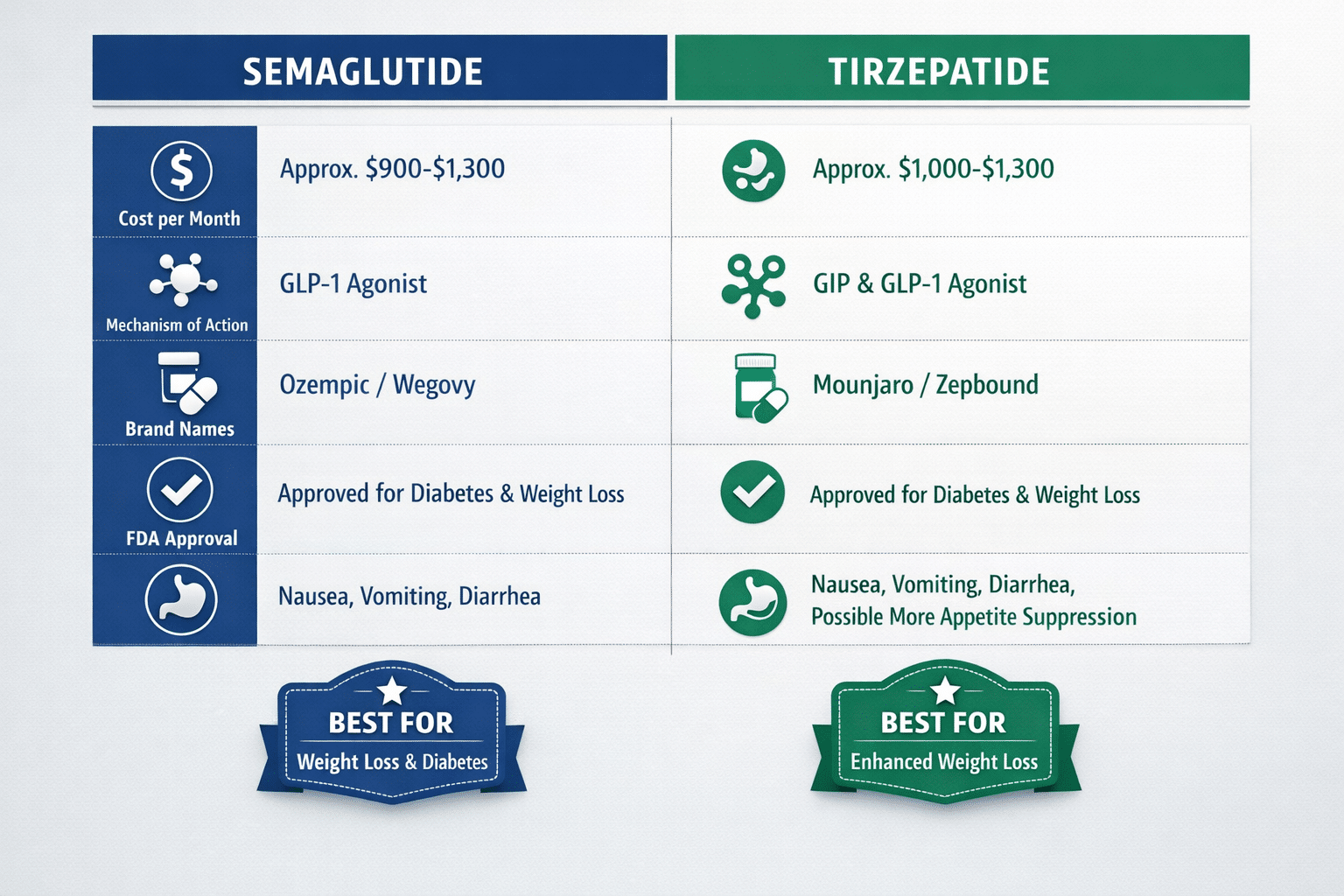
Brand-name versions of both drugs cost roughly $900–$1,400 per month without insurance in 2026, making cost a major practical consideration for most people.
| Drug | Brand Name | Approved Use | Estimated Monthly Cost (No Insurance) |
|---|---|---|---|
| Semaglutide | Ozempic | Type 2 diabetes | ~$900–$1,000 |
| Semaglutide | Wegovy | Weight loss | ~$1,300–$1,400 |
| Tirzepatide | Mounjaro | Type 2 diabetes | ~$1,000–$1,100 |
| Tirzepatide | Zepbound | Weight loss | ~$1,000–$1,300 |
Estimates based on 2026 retail pricing; actual cost varies by pharmacy and location.
Ways to reduce cost:
- Manufacturer savings cards — Eli Lilly (tirzepatide) and Novo Nordisk (semaglutide) both offer copay assistance programs for eligible patients
- Insurance coverage — Coverage varies widely; diabetes indications are more commonly covered than weight loss indications
- Compounded versions — Available through telehealth platforms at significantly lower prices, though quality control varies
- Direct-pay programs — Some programs offer GLP-1 medications at $149–$299/month
For a full breakdown of tirzepatide pricing, see how much tirzepatide costs in 2026. If budget is your primary concern, our guide to cheap weight loss injections and GLP-1 programs covers the most affordable options available right now.
Who Should Choose Tirzepatide Over Semaglutide?
Tirzepatide is the better choice if your primary goal is maximum weight loss and you can tolerate the cost. It’s also preferable if you have type 2 diabetes and want stronger glycemic control alongside weight reduction.
Choose tirzepatide if:
- You need to lose a large amount of weight (BMI ≥35 or significant obesity-related health conditions)
- You’ve tried semaglutide and didn’t get adequate results
- You have type 2 diabetes and want the strongest available GLP-1-class option
- You’re comfortable with a newer drug that has slightly less long-term safety data
- Cost is manageable through insurance or a savings program
Choose semaglutide if:
- You’re new to GLP-1 medications and want to start with the more established option
- Cost is a significant barrier (compounded semaglutide is widely available and often cheaper)
- You have a history of GI sensitivity and want to start conservatively
- Your weight loss goal is moderate (10–15% body weight reduction)
- Your provider has more experience prescribing semaglutide
For a deeper look at how semaglutide performs across different brands and formulations, see our ranking of the best semaglutide weight loss medications.
What Are the Brand Names, and Which Formulations Are Available?
Both drugs come under multiple brand names depending on the approved indication.
Semaglutide brand names:
- Ozempic — Injectable, approved for type 2 diabetes (0.5 mg, 1 mg, 2 mg weekly)
- Wegovy — Injectable, approved for weight loss (up to 2.4 mg weekly)
- Rybelsus — Oral tablet, approved for type 2 diabetes (7 mg or 14 mg daily)
Tirzepatide brand names:
- Mounjaro — Injectable, approved for type 2 diabetes (2.5–15 mg weekly)
- Zepbound — Injectable, approved for weight loss (2.5–15 mg weekly)
Both are currently available as subcutaneous injections (under the skin, typically in the abdomen, thigh, or upper arm). Oral semaglutide exists but has lower bioavailability than the injectable form. If you’re curious about oral options, our guide to oral GLP-1 medications for weight loss covers what to expect.
How Long Does It Take to See Results With Each Drug?
Most people notice appetite suppression within the first 1–2 weeks on either medication. Meaningful weight loss typically becomes visible by weeks 4–8, with the largest differences between the two drugs emerging after 12–24 weeks.
General Timeline
- Weeks 1–4: Dose escalation phase; nausea is most common here. Appetite begins to decrease.
- Weeks 4–12: Initial weight loss of 3–7% is typical for both drugs.
- Weeks 12–36: Tirzepatide’s advantage becomes more pronounced as doses reach therapeutic levels.
- Weeks 36–72: Maximum weight loss is approached; tirzepatide users continue to pull ahead.
Important: Neither drug is a quick fix. The SURMOUNT-5 trial ran for 72 weeks (about 17 months) to capture the full weight loss potential [5]. Stopping early means leaving results on the table.
For a practical look at early results, see our 6-week Ozempic weight loss results guide for semaglutide-specific timelines.
Frequently Asked Questions: Semaglutide vs. Tirzepatide
Q: Is tirzepatide always better than semaglutide for weight loss?
A: Clinical trials generally show that tirzepatide produces greater average weight loss. However, “better” is highly individual. Many patients respond exceptionally well to semaglutide and may not require the stronger potency of tirzepatide. Additionally, some individuals find semaglutide’s side effect profile easier to tolerate.
Q: Can I switch from semaglutide to tirzepatide?
A: Yes. Switching is a common clinical practice when a patient does not achieve adequate results on semaglutide. A healthcare provider will typically manage a “taper and transition” protocol. Never attempt to switch medications without direct medical supervision.
Q: Which drugs are FDA-approved specifically for weight loss?
A: Currently, Wegovy (semaglutide $2.4$ mg) and Zepbound (tirzepatide up to $15$ mg) are the two primary medications FDA-approved specifically for chronic weight management in adults with obesity or overweight conditions.
Q: Are compounded versions of these drugs safe?
A: Compounded semaglutide and tirzepatide are not FDA-approved products, but they are legally available via licensed compounding pharmacies. Because quality can vary, it is vital to use a pharmacy that requires a valid prescription and possesses verifiable accreditation (such as PCAB).
Q: Do both drugs require diet and exercise to work?
A: Yes. Both medications are FDA-approved as adjuncts to a reduced-calorie diet and increased physical activity. They are most effective as tools to support lifestyle changes, rather than standalone “miracle” treatments.
Q: Which drug has more long-term safety data?
A: Semaglutide has the more extensive track record. Ozempic was FDA-approved in 2017 and Wegovy in 2021. Tirzepatide is a newer generation of medication, with Mounjaro approved in 2022 and Zepbound in 2023.
Q: Can people without diabetes use either drug?
A: Yes. Both Wegovy and Zepbound are specifically indicated for weight management in individuals who do not have diabetes, provided they meet specific BMI or weight-related health criteria.
Q: Which drug is more effective for reducing belly fat?
A: In the SURMOUNT-5 head-to-head trial, tirzepatide reduced waist circumference by an average of $7.2$ inches, compared to $5.1$ inches for semaglutide, suggesting a more pronounced effect on abdominal adiposity.
Q: Will I regain weight if I stop taking the medication?
A: Clinical data suggests that weight regain is common once GLP-1 therapy is discontinued. Most patients regain a significant portion of their lost weight within one to two years if maintenance therapy or strict lifestyle interventions are not continued. These medications are generally intended for long-term metabolic support.
Q: Which drug is more likely to be covered by insurance?
A: Coverage is highly dependent on your specific insurance plan and the “indication” for use. Generally, medications prescribed for Type 2 Diabetes (Ozempic, Mounjaro) have higher coverage rates than those prescribed strictly for weight loss (Wegovy, Zepbound).
Conclusion
When comparing semaglutide vs tirzepatide for weight loss, the clinical evidence is clear: tirzepatide produces greater weight loss across every measured threshold, from average percentage lost to the proportion of users who hit major milestones like 20% or 25% body weight reduction [3][4][5]. Its dual GIP/GLP-1 mechanism gives it a genuine pharmacological edge.
That said, semaglutide is not a weak option. It’s highly effective, has a longer safety record, and is often more accessible. For many people, especially those new to GLP-1 therapy or working within a tight budget, semaglutide is still an excellent starting point.
Actionable next steps:
- Talk to your provider about which drug fits your health profile, weight loss goals, and medical history
- Check your insurance before assuming either drug is unaffordable — coverage varies widely
- Explore cost-reduction options if brand-name pricing is a barrier, including manufacturer savings programs and direct-pay telehealth platforms
- Set realistic timelines — meaningful results take months, not weeks
- Commit to lifestyle changes alongside medication for the best long-term outcomes
To compare your full range of GLP-1 options, see our guide to which GLP-1 medication works best for weight loss and our breakdown of the best GLP-1 weight loss programs available in 2026.
References
[1] Semaglutide Vs Tirzepatide Real Weight Loss Results Compared 2026 – https://instantuc.com/semaglutide-vs-tirzepatide-real-weight-loss-results-compared-2026/
[2] Tirzepatide Superior To Semaglutide In Weight Reduction – https://www.emjreviews.com/diabetes/news/tirzepatide-superior-to-semaglutide-in-weight-reduction/
[3] PubMed Meta-Analysis: Tirzepatide vs Semaglutide – https://pubmed.ncbi.nlm.nih.gov/41723034/
[4] Semaglutide Vs Tirzepatide For Weight Loss Compared – https://aprelief.com/semaglutide-vs-tirzepatide-for-weight-loss-compared/
[5] Tirzepatide Outperforms Semaglutide In Weight Loss Trial – https://depts.washington.edu/diabetes/tirzepatide-outperforms-semaglutide-in-weight-loss-trial/

With over 13 years of experience in holistic health blogging, I aim to help you navigate your wellness journey with honest insights, expert-backed advice, and a sprinkle of real-world practicality.
Certified Wellness Writer | Herbal Nutrition Advocate | Wellness Research Enthusiast


