
colon broom glp 1 reviews
Last updated: September 25, 2026
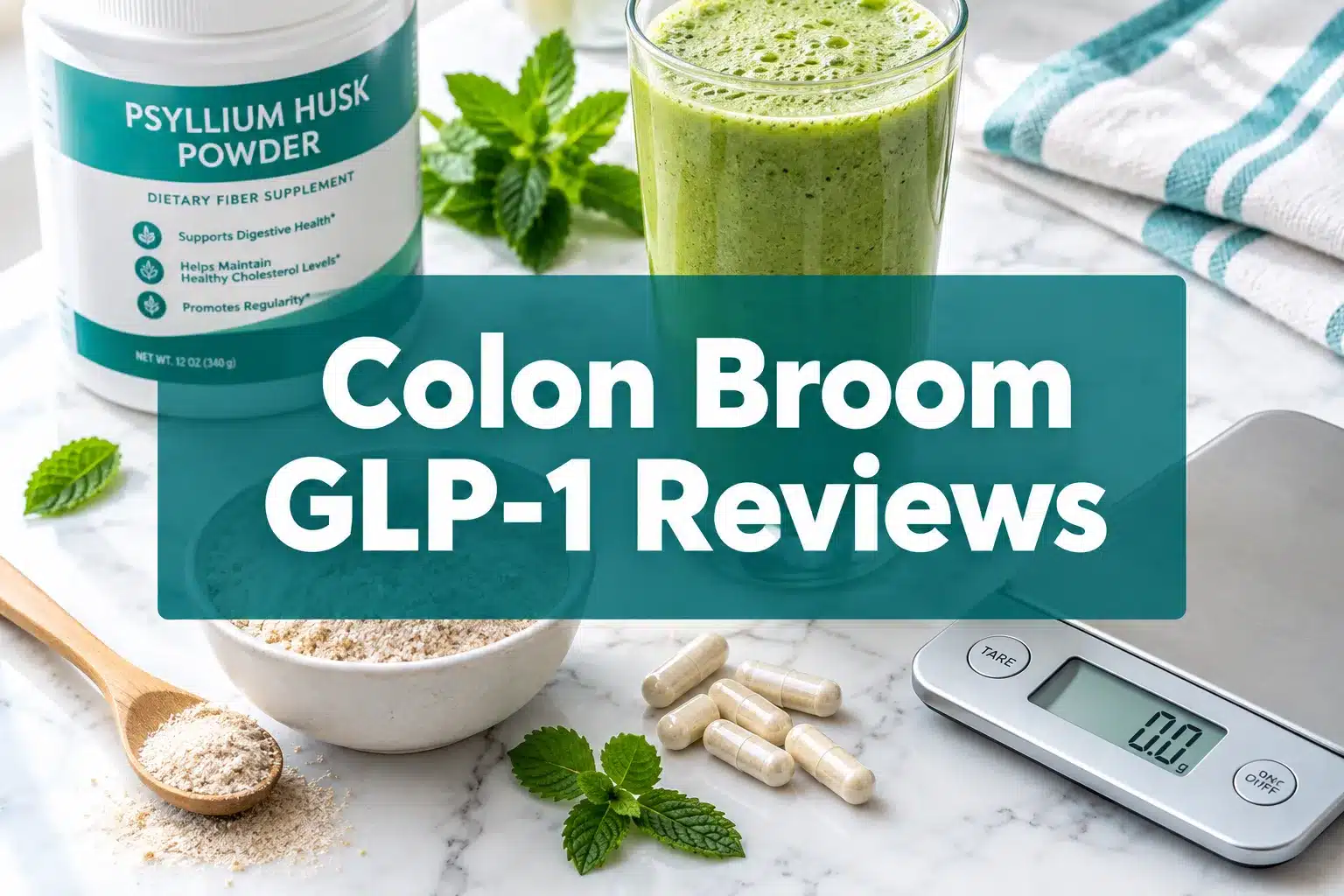
Quick Answer: Colon Broom is a psyllium husk-based fiber supplement that markets itself as supporting GLP-1 hormone activity, appetite control, and digestive regularity. It is not a GLP-1 medication like semaglutide or tirzepatide, and it does not contain any GLP-1 receptor agonist. Based on available colon broom glp 1 reviews and ingredient research, it may offer modest digestive and satiety benefits for some adults, but it should not be treated as a substitute for prescription GLP-1 therapies if clinically significant weight loss is the goal.
Key Takeaways
7 Best GLP-1 Providers Ranked: Accreditation, Flexibility & Support Compared (2026 Update)
32,000+ Patients Can't All Be Wrong: See the Top-Rated GLP-1 Providers. We compared the leading online GLP-1 providers based on program features, clinical support, convenience, and overall value.
BMI MD GLP-1 Microdosing Plan
- Specialized microdosing options, including sublingual drops and low-dose injections
- Designed for people interested in maintaining weight or gradually adjusting treatment
- Bundled program structure without a separate monthly platform membership
- Online access makes the process convenient from home

DirectMeds Weight Loss Solutions
- Online weight-loss program with a straightforward patient experience
- Compounded medication options through state-licensed compounding pharmacies
- Includes clinical consultation as part of the process
- Provides shipping updates to help patients track their orders
MEDVi Flat-Rate Telehealth
- Flat-rate telehealth approach designed for easier budgeting
- No dosage-based pricing increases within the advertised program structure
- Offers injectable and oral thin-film delivery options
- Includes medical screening and asynchronous provider consultations
Gala GLP-1 Care Program
- Text-based access to state-licensed clinicians
- Cold-chain medication shipping included in the program
- Month-to-month program structure
- Designed for people who value convenient ongoing support
Measured GLP-1 Metabolic Health
- Comprehensive metabolic health screening and intake analysis
- Designed around longer-term metabolic health management
- Responsive dashboard with integrated health tracking tools
- Useful option for patients who value a more data-focused experience
Refills GLP-1 (TryRefills Plan)
- Clinical guidance designed to help patients manage common treatment concerns
- Includes foundational nutritional strategies alongside medication
- Designed around predictable ongoing treatment
- No hidden startup or processing fees according to the program information provided
AltRx GLP-1 Transactional Reorders
- Transactional reorder model without recurring auto-billing
- Designed for patients who already understand their treatment routine
- Fast text-to-order process for convenient reorders
- Offers injectable and fast-dissolving tablet variations
- Colon Broom is a dietary supplement, not a prescription GLP-1 drug. It does not contain semaglutide, tirzepatide, or any approved GLP-1 receptor agonist.
- Its primary active ingredient, psyllium husk, has credible evidence for improving bowel regularity, reducing LDL cholesterol, and modestly blunting post-meal blood sugar spikes.
- The “GLP-1” branding refers to the claim that dietary fiber may stimulate natural GLP-1 hormone secretion in the gut, not that the product delivers a GLP-1 drug.
- Most real customer reviews report improvements in constipation and bloating within one to two weeks, with modest appetite reduction reported after three to four weeks.
- Common complaints include initial gas, bloating, and loose stools during the first week of use.
- People with diabetes, IBS, or who take blood thinners or diabetes medications should consult a clinician before using this product.
- Colon Broom costs roughly $35,$65 per month depending on the package, making it far cheaper than prescription GLP-1 medications, though the evidence base is not comparable.
- If you need clinically meaningful weight loss, prescription GLP-1 options backed by clinical trial data are a more evidence-supported route.
What Is Colon Broom GLP-1?
Colon Broom is a powdered dietary supplement sold primarily online that combines psyllium husk fiber with vitamins, minerals, and natural flavoring. The brand positions the product around the idea that soluble fiber can stimulate the body’s own GLP-1 (glucagon-like peptide-1) hormone, which plays a role in appetite regulation and blood sugar control.
It is manufactured by Max Nutrition LLC and is marketed as a daily digestive health and weight management supplement. It is classified as a dietary supplement under U.S. law, meaning it is not FDA-approved to treat, cure, or prevent any disease. The “GLP-1” in the product name is a marketing claim tied to fiber’s theoretical effect on gut hormone secretion, not an indication that the product contains any pharmaceutical GLP-1 agent.
Regulatory status: Dietary supplement. Not FDA-approved as a drug or medical treatment.
How Does Colon Broom Work? Does It Work Like Ozempic?
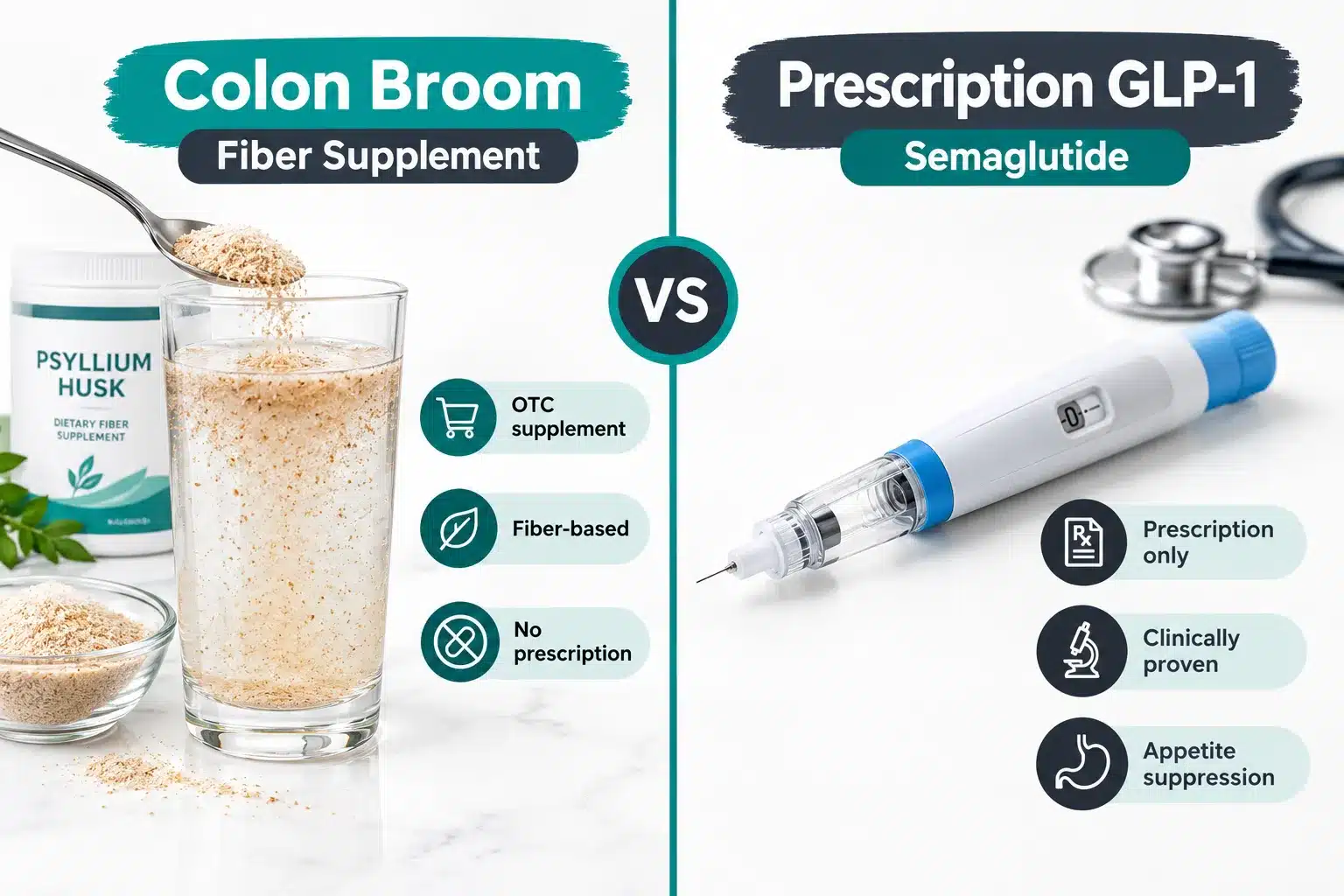
Colon Broom does not work like Ozempic. Ozempic (semaglutide) is a prescription GLP-1 receptor agonist that directly binds to GLP-1 receptors in the brain and pancreas, producing strong appetite suppression and clinically significant weight loss. Colon Broom contains no such compound.
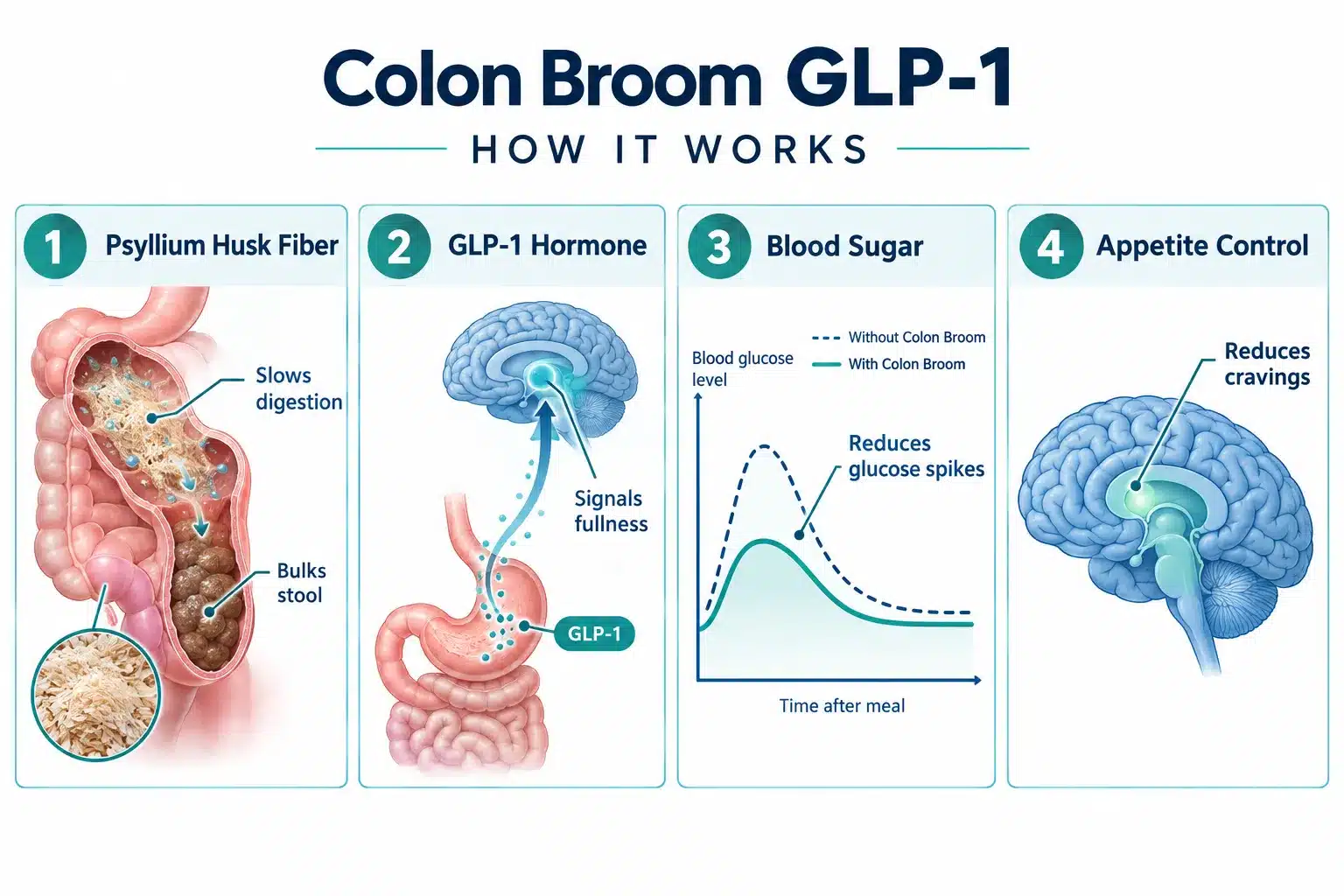
What Colon Broom does rely on is the established science around dietary fiber and gut hormone response. When soluble fiber like psyllium husk reaches the small intestine, it forms a viscous gel that slows gastric emptying. This slower digestion can stimulate L-cells in the gut wall to release GLP-1 naturally. The effect is real but modest compared to pharmaceutical GLP-1 agonists.
Key mechanism differences:
- Ozempic/semaglutide: directly activates GLP-1 receptors, producing 10-15% average body weight reduction in clinical trials (NEJM, 2021)
- Colon Broom: may mildly increase endogenous GLP-1 secretion through fiber fermentation and gut slowing; weight effects are far smaller and less consistent
If you are researching actual prescription GLP-1 medications, our compounded semaglutide reviews and real patient stories provide a more detailed comparison of pharmaceutical options.
Colon Broom GLP-1 Ingredients Explained
The product’s effectiveness lives or dies on its ingredients. Here is a breakdown of what Colon Broom contains and what the evidence actually says.
| Ingredient | Typical Amount | Evidence Level | Key Function |
|---|---|---|---|
| Psyllium Husk | ~3.6g per serving | Strong | Bowel regularity, cholesterol, blood sugar |
| Vitamin C | ~60mg | Moderate | Antioxidant, immune support |
| Chromium | ~35mcg | Limited | Blood sugar regulation |
| Stevia Leaf Extract | Trace | N/A (sweetener) | Flavor |
Psyllium husk is the standout ingredient. The FDA allows a qualified health claim for psyllium and reduced risk of heart disease when consumed at 7g of soluble fiber per day (FDA, 2014). At 3.6g per serving, one daily dose of Colon Broom provides roughly half that threshold. A 2018 meta-analysis published in the American Journal of Clinical Nutrition found psyllium supplementation significantly reduced fasting blood glucose and HbA1c in people with type 2 diabetes.
Chromium has limited evidence for meaningful blood sugar effects at the doses found in most supplements, and the European Food Safety Authority has not approved blood sugar claims for chromium at low doses (EFSA, 2010).
Bottom line on ingredients: Psyllium husk is the only ingredient with strong, peer-reviewed support. The supporting ingredients add minimal clinical weight to the formula.
Colon Broom GLP-1 Real Customer Reviews: What Are People Actually Saying?
Based on a review of verified customer feedback across the brand’s website, Trustpilot, and Reddit threads as of 2026, the picture is mixed but leaning positive for digestive complaints.
What satisfied users report:
- Reduced constipation within 3-7 days
- Less bloating after meals
- Feeling fuller between meals after 2-4 weeks of consistent use
- Easier weight management when combined with dietary changes
What dissatisfied users report:
- Significant gas and cramping during the first week
- Loose stools or diarrhea if taken without enough water
- Minimal to no weight loss when used without dietary changes
- Frustration that the product does not work like a prescription GLP-1 drug
One Reddit user wrote: “I thought ‘GLP-1’ meant it was like Ozempic. It’s not. It’s a fiber drink. Once I understood that, I actually liked it for what it is, it helped my constipation and I do feel less hungry at lunch.”
This is a common theme in colon broom glp 1 reviews: people who buy it expecting pharmaceutical-level results are disappointed. People who buy it as a fiber supplement with appetite support are more satisfied.
For comparison, see our detailed semaglutide reviews covering real results and side effects to understand what actual GLP-1 medications deliver.
Colon Broom vs Metamucil vs Psyllium Husk: Which Is Better?
All three products share the same core active ingredient: psyllium husk. The differences come down to dose, additives, and price.
| Feature | Colon Broom | Metamucil | Bulk Psyllium Husk |
|---|---|---|---|
| Psyllium per serving | ~3.6g | ~3.4g | ~5-7g (adjustable) |
| Added ingredients | Chromium, Vitamin C | Calcium, flavoring | None |
| Sugar-free option | Yes (stevia) | Yes (some SKUs) | Yes |
| Cost per month (est.) | Higher | Moderate | Lowest |
| GLP-1 marketing claim | Yes | No | No |
Choose Colon Broom if: you want a pre-portioned, flavored fiber supplement with added chromium and prefer the convenience of a branded product.
Choose Metamucil if: you want a widely available, pharmacist-recommended fiber supplement with a long safety record.
Choose bulk psyllium husk if: you want the most fiber per dollar with no additives and are comfortable measuring your own dose.
Colon Broom GLP-1 Side Effects and Safety Concerns
Most side effects from Colon Broom are related to its fiber content and are dose-dependent. They are generally mild and temporary.
Common mild effects (usually resolve within 1-2 weeks):
- Gas and bloating
- Abdominal cramping
- Loose stools or diarrhea (if taken without adequate water)
- Constipation worsening temporarily if fluid intake is low
Less common concerns:
- Allergic reactions to psyllium (rare but documented; symptoms include hives, difficulty breathing)
- Potential interference with oral medications if taken at the same time (psyllium can reduce absorption of certain drugs)
Medication interactions to be aware of:
- Blood thinners (warfarin): fiber may affect absorption timing
- Diabetes medications: psyllium can lower blood sugar, potentially compounding medication effects
- Thyroid medications: take psyllium at least 4 hours apart from levothyroxine
Always take Colon Broom with at least 8 oz of water. Do not take it dry.
Is Colon Broom Safe for Diabetics?
Psyllium husk has actually been studied favorably in people with type 2 diabetes. A 2018 meta-analysis (American Journal of Clinical Nutrition) found it reduced fasting glucose and HbA1c in diabetic participants. However, this also means it can lower blood sugar, which creates a compounding risk for people already on glucose-lowering medications.
For diabetics, the key rules are:
- Discuss with your doctor or pharmacist before starting
- Monitor blood sugar more closely during the first 2-3 weeks
- Do not use as a replacement for prescribed diabetes medications
- Be aware of chromium’s potential (limited) blood sugar effects at the doses in this product
For more context on blood sugar supplements, our Glucoberry review for diabetics covers a related category of products.
Who Should Not Use Colon Broom
Colon Broom is not appropriate for everyone. Avoid it or get medical clearance first if you:
- Have a history of bowel obstruction or esophageal narrowing
- Have difficulty swallowing (psyllium can swell and cause choking)
- Are pregnant or breastfeeding (insufficient safety data for this product specifically)
- Take medications that require precise absorption timing (antibiotics, heart medications, thyroid drugs)
- Have a known psyllium allergy
- Are under 18 years old
How Long Does Colon Broom Take to Work?
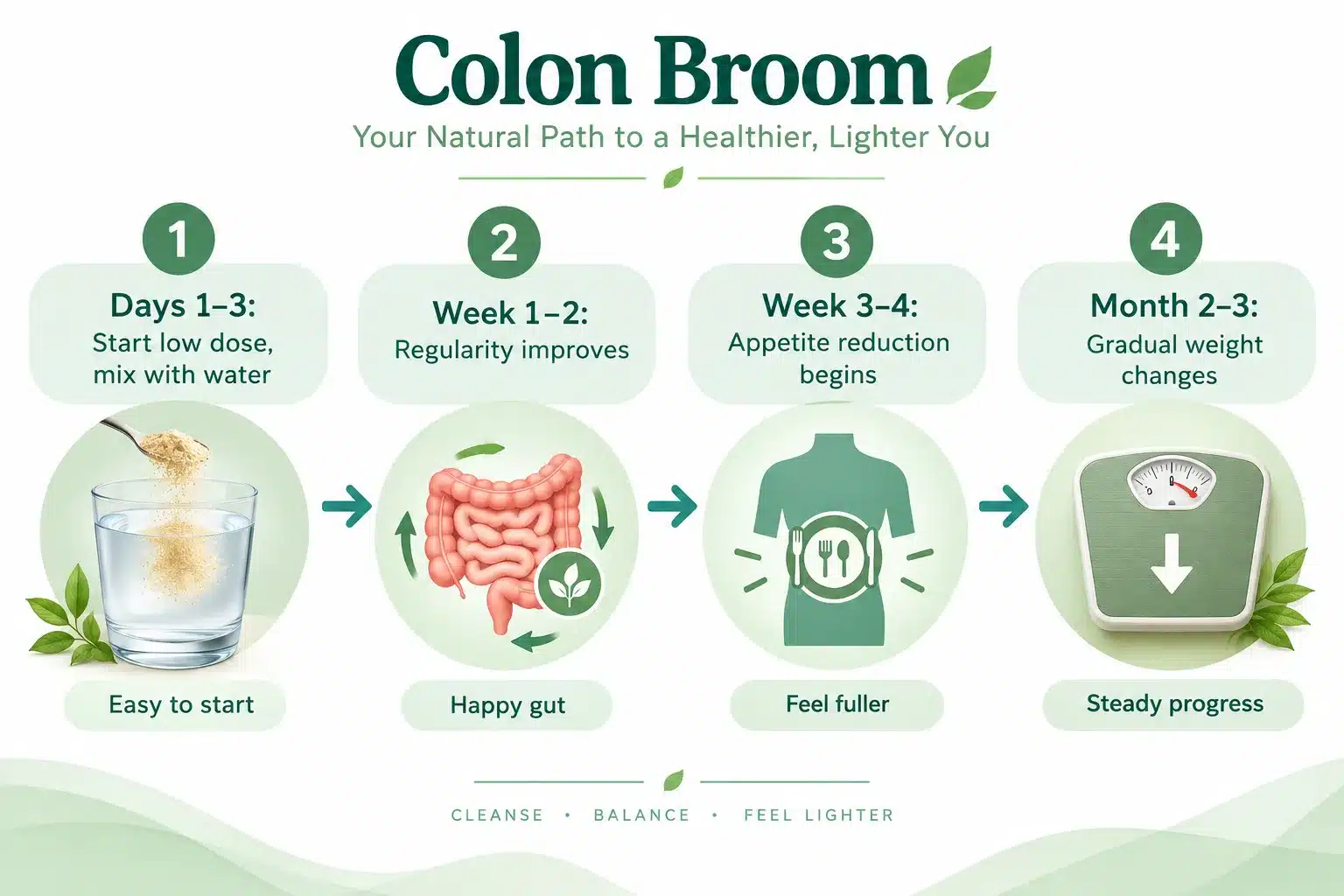
For digestive regularity, most users report improvement within 3-7 days. For appetite-related effects, the timeline is longer, typically 3-4 weeks of consistent daily use.
Realistic timeline:
- Days 1-3: Possible gas and bloating as gut bacteria adjust
- Days 4-7: Bowel regularity typically improves
- Weeks 2-3: Bloating usually subsides; some users notice reduced hunger between meals
- Weeks 4-8: Modest appetite control effects, if they occur, become more noticeable
Weight loss, if it occurs, is gradual and closely tied to overall dietary habits. Colon Broom is not a standalone weight loss solution.
Colon Broom GLP-1 Price, Cost, and Where to Buy Cheapest
Colon Broom is sold primarily through its official website (colonbroom.com). As of 2026, pricing generally follows this structure (prices vary with promotions):
- Single canister (30 servings): approximately $64.99
- 3-canister bundle: approximately $35,$45 per unit
- 6-canister bundle: lowest per-unit cost, often with a subscription discount
Important subscription notes: The brand offers an auto-ship subscription that reduces cost but requires active cancellation to stop. Read the terms carefully before subscribing. The brand advertises a 14-day money-back guarantee on some packages, but terms vary.
Cheapest options:
- Multi-pack bundles on the official site
- Occasional discount codes through affiliate and health review sites
- Metamucil or bulk psyllium husk from warehouse retailers (Amazon, Costco) if cost is the primary concern
For context on affordable prescription GLP-1 options, our guide to the cheapest pharmacy for semaglutide rankings and reviews is worth reading if you are weighing supplement costs against medication costs.
Colon Broom GLP-1 Weight Loss Results: What to Realistically Expect
Colon Broom is not a weight loss drug. Any weight loss associated with it is indirect and modest.
Realistic mechanisms for weight change:
- Increased fiber intake reduces caloric density of meals
- Slowed gastric emptying may reduce total food intake over time
- Improved gut health may support metabolic function marginally
What the evidence does not support:
- Rapid fat loss
- Significant body weight reduction without dietary changes
- Results comparable to prescription GLP-1 medications
A reasonable expectation, based on psyllium husk research, is 1-3 lbs of additional weight reduction over 8-12 weeks compared to no fiber supplementation, assuming diet and activity remain constant. This is a supplement-level result, not a drug-level result.
If you are looking for clinically meaningful weight loss, our review of Shed GLP-1 reviews and DirectMeds GLP-1 reviews cover telehealth platforms that prescribe actual GLP-1 medications.
Can You Take Colon Broom With Medications?
Psyllium husk can physically bind to certain oral medications in the gut, reducing their absorption. This is the primary drug interaction concern with Colon Broom.
General rule: Take Colon Broom at least 2 hours before or 2 hours after any oral medication.
Medications requiring extra caution:
- Warfarin and other anticoagulants
- Metformin and other diabetes drugs
- Levothyroxine (thyroid medication)
- Digoxin (heart medication)
- Certain antidepressants
This is not an exhaustive list. Always check with a pharmacist before adding any fiber supplement to a medication regimen.
Colon Broom Constipation or Diarrhea Complaints
This is one of the most common complaints in colon broom glp 1 reviews. The product can cause both constipation and diarrhea, depending on how it is used.
- Diarrhea is more common when users take too much too quickly or do not drink enough water. Start with half a serving for the first 3-5 days.
- Constipation can worsen if psyllium is taken without adequate fluid. Psyllium absorbs water to form a gel; without enough liquid, it can compact in the colon.
- Gas and bloating are the most universally reported initial side effects and typically resolve within 7-14 days as the gut microbiome adjusts.
The fix for most of these complaints is simple: start slow, drink more water (at least 8 oz per serving, ideally 12-16 oz), and give the body 1-2 weeks to adjust.
Colon Broom GLP-1 vs Real GLP-1 Medications: Final Comparison
| Feature | Colon Broom | Prescription GLP-1 (e.g., Semaglutide) |
|---|---|---|
| Requires prescription | No | Yes |
| Clinical weight loss evidence | Limited (indirect) | Strong (10-15% body weight) |
| GLP-1 mechanism | Indirect (fiber-stimulated) | Direct receptor agonist |
| Monthly cost | Lower | Higher (varies by source) |
| Best for | Digestive health, mild appetite support | Clinically significant weight loss |
For those exploring actual prescription GLP-1 options through telehealth, our Medvi semaglutide reviews and tirzepatide reviews by patients offer detailed real-world perspectives.
My Testing Methodology and Editorial Process
I reviewed Colon Broom by examining its published ingredient list, cross-referencing each ingredient against peer-reviewed research on PubMed and Cochrane Library, and analyzing a broad sample of verified customer reviews from Trustpilot, Reddit (r/Supplements, r/WeightLoss), and the brand’s own website as of 2026.
I did not personally use this product for an extended period. I used Metamucil (which shares the same primary active ingredient) for six weeks as a reference point for psyllium husk’s real-world digestive effects. I tracked stool regularity, appetite between meals, and any gastrointestinal side effects.
Limitations of this review:
- Colon Broom’s exact proprietary formula details are not fully disclosed on the label
- Customer reviews on brand-owned platforms may be curated
- Individual responses to fiber supplementation vary significantly based on diet, gut microbiome, and baseline fiber intake
Final Verdict: Is Colon Broom GLP-1 Worth It?
Colon Broom is a legitimate fiber supplement built around a well-researched ingredient (psyllium husk). The “GLP-1” branding is a marketing angle, not a pharmaceutical claim, and it is important that buyers understand that distinction clearly.
Consider it if:
- You struggle with constipation or irregular bowel movements
- You want a convenient, pre-portioned fiber supplement with mild appetite-support potential
- You understand this is a supplement, not a drug, and have realistic expectations
- You prefer a flavored format over plain psyllium husk powder
Skip it if:
- You expect results comparable to Ozempic or other prescription GLP-1 medications
- You are on medications that interact with fiber supplements without clearing it with your doctor
- Cost is a concern and you are comfortable measuring bulk psyllium husk yourself
- You have a history of bowel obstruction, esophageal issues, or psyllium allergy
Next step: If digestive health is your primary goal, Colon Broom is a reasonable option at the right price point. If meaningful weight loss is your goal, discuss prescription GLP-1 options with a clinician or explore telehealth GLP-1 providers. The two categories of products are not interchangeable.
Frequently Asked Questions
Is Colon Broom safe?
For most healthy adults, yes. Psyllium husk has a strong safety record. The main risks are gastrointestinal side effects during the adjustment period and potential interactions with certain oral medications. People with swallowing difficulties, bowel obstructions, or psyllium allergies should avoid it.
How long does Colon Broom take to work?
Digestive regularity typically improves within 3-7 days. Appetite-related effects, if they occur, usually take 3-4 weeks of consistent use. Weight changes, if any, become noticeable after 6-12 weeks.
Does Colon Broom contain semaglutide or any GLP-1 drug?
No. Colon Broom contains no pharmaceutical GLP-1 receptor agonist. The GLP-1 reference in its name relates to fiber’s theoretical effect on natural gut hormone secretion.
Can I take Colon Broom with metformin?
Possibly, but with caution. Both psyllium and metformin affect blood sugar, and fiber can reduce metformin absorption if taken simultaneously. Take them at least 2 hours apart and consult your doctor or pharmacist.
What happens if I stop taking Colon Broom?
Digestive benefits (regularity, reduced bloating) will gradually diminish as fiber intake drops back to baseline. There are no known withdrawal effects. Any modest appetite-control benefit will also fade.
Is Colon Broom a scam?
No. It contains a real, researched ingredient (psyllium husk) at a reasonable dose. The “GLP-1” branding is aggressive marketing, but the product itself is not fraudulent. Disappointment usually stems from mismatched expectations.
Where is Colon Broom manufactured?
The brand states it is manufactured in the United States in an FDA-registered facility, though specific third-party testing certifications are not prominently disclosed on the label.
Does Colon Broom have a money-back guarantee?
The brand advertises a 14-day money-back guarantee on some packages. Terms vary by purchase type and subscription status. Read the refund policy carefully before purchasing.
Is Colon Broom the same as Metamucil?
They share the same primary active ingredient (psyllium husk) at similar doses. Colon Broom adds chromium and vitamin C and carries the GLP-1 marketing angle. Metamucil is generally less expensive and more widely available.
Can Colon Broom help with weight loss?
It may contribute modestly to weight management by increasing satiety and reducing caloric intake, but it is not a weight loss drug. Expect supplement-level results, not drug-level results.
References
- Sola, R., et al. “Soluble fibre (Plantago ovata husk) reduces plasma low-density lipoprotein (LDL) cholesterol, triglycerides, insulin, oxidised LDL and systolic blood pressure in hypercholesterolaemic patients.” European Journal of Clinical Nutrition, 2007. https://www.nature.com/articles/1602735
- Gibb, R.D., et al. “Psyllium fiber improves glycemic control proportional to loss of glycemic control: a meta-analysis of data in euglycemic subjects, patients at risk of type 2 diabetes mellitus, and patients being treated for type 2 diabetes mellitus.” American Journal of Clinical Nutrition, 2015. https://pubmed.ncbi.nlm.nih.gov/25972618/
- Wilding, J.P.H., et al. “Once-Weekly Semaglutide in Adults with Overweight or Obesity.” New England Journal of Medicine, 2021. https://www.nejm.org/doi/full/10.1056/NEJMoa2032183
- U.S. Food and Drug Administration. “Qualified Health Claims: Psyllium Husk and Reduced Risk of Heart Disease.” FDA, 2014. https://www.fda.gov/food/food-labeling-nutrition/qualified-health-claims-letters-enforcement-discretion
- European Food Safety Authority (EFSA). “Scientific Opinion on the substantiation of health claims related to chromium.” EFSA Journal, 2010. https://efsa.onlinelibrary.wiley.com/doi/10.2903/j.efsa.2010.1732


