
GLPatches

Last updated: August 14, 2026
Quick Answer: GLPatches are over-the-counter adhesive skin patches marketed as GLP-1 “support” supplements for weight loss and appetite control. They do not contain any FDA-approved GLP-1 drug. As of 2026, no GLP-1 patches have received FDA approval, and multiple medical experts state there is no high-quality clinical evidence that these patches produce meaningful weight loss or replicate the effects of prescription GLP-1 medications like Ozempic or Wegovy [1][3][8].
Key Takeaways
- GLPatches are supplement patches, not prescription drugs. They contain herbal ingredients like berberine, green tea extract, and caffeine, not GLP-1 molecules [2][3].
- No FDA-approved GLP-1 transdermal patch exists as of 2026. All legitimate GLP-1 therapies require injections or oral tablets [8].
- Medical experts, including endocrinologists cited by Forbes Health and Everyday Health, have called GLP-1 patches “a scam” in the weight-loss context [1][9].
- Several commercial brands sell GLPatches-style products, including PatchAid, Zoom Wellness Labs, Patch1t, and GLPro GLPatch [4][5][6].
- These patches may cause skin irritation and could delay evidence-based treatment for obesity or diabetes [1][8].
- Microneedle patch technology that could theoretically deliver GLP-1 drugs transdermally remains experimental and is not available to consumers [2].
- If you are seeking GLP-1-based weight management, consult a licensed healthcare provider for prescription options rather than purchasing supplement patches online [1][9].
What Are GLPatches and How Do They Work
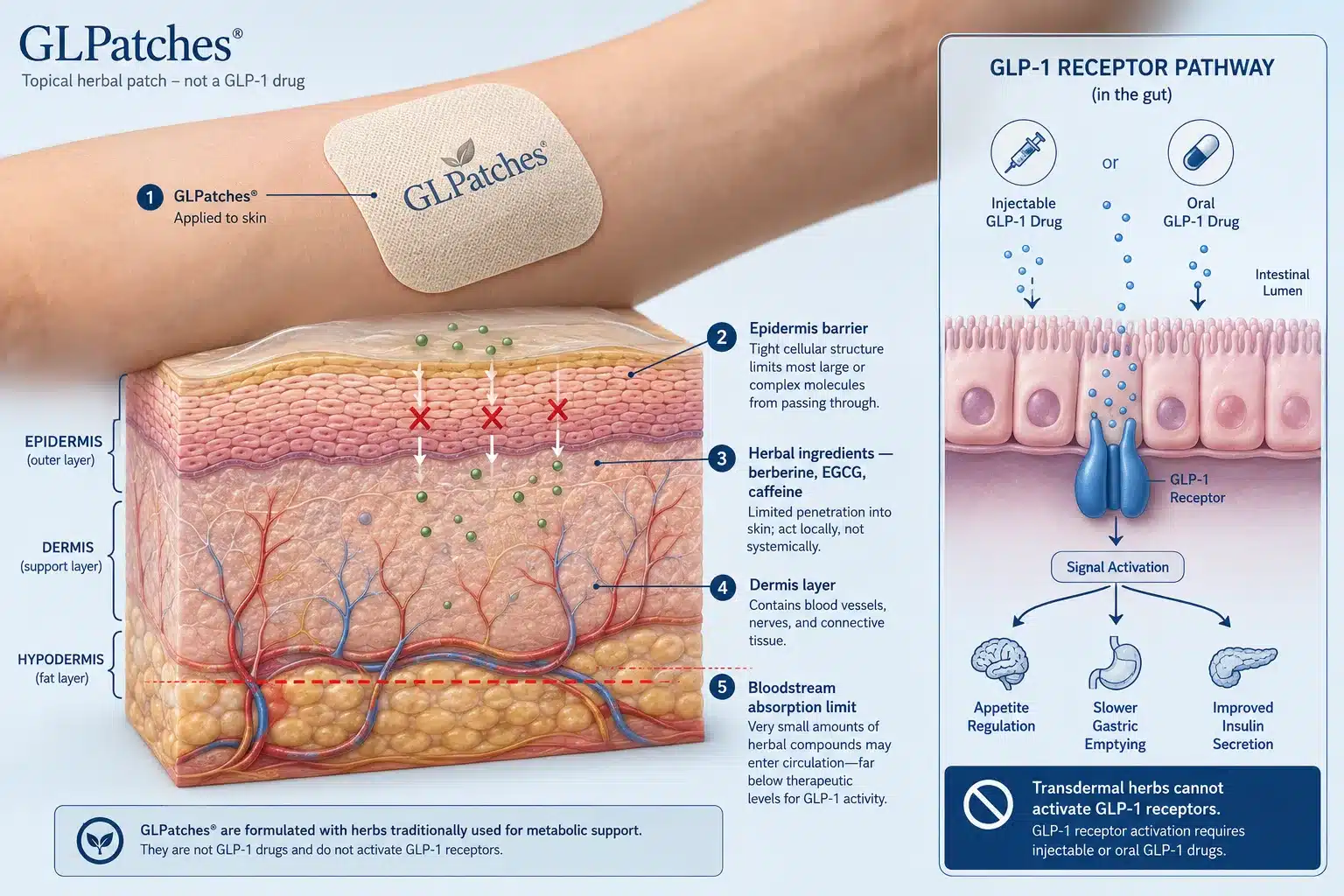
GLPatches are adhesive transdermal patches sold as dietary supplements, designed to be applied to the skin and worn for a set period, typically 24 hours. They are marketed as supporting GLP-1 activity, appetite regulation, and metabolic health, but they do not contain glucagon-like peptide-1 (GLP-1) or any approved GLP-1 receptor agonist drug [3][8].
The patches work by attempting to deliver herbal and nutritional ingredients through the skin into the bloodstream. Common ingredients include:
- Berberine, a plant compound sometimes called “nature’s Ozempic” in marketing, though this label is not supported by clinical equivalence data
- Green tea extract (EGCG), associated with modest metabolic effects in some studies
- Cinnamon extract, marketed for blood sugar support
- Bitter orange / synephrine, a stimulant sometimes used in weight loss supplements
- Garcinia cambogia, a fruit extract promoted for appetite suppression
- L-carnitine, an amino acid compound linked to fat metabolism
- Caffeine and guarana, stimulants that may mildly increase energy expenditure
- B vitamins and apple cider vinegar, included for general metabolic support claims [2][3][10]
The core problem with the “GLP-1 patch” framing is biological: GLP-1 is a peptide hormone, and peptide molecules are far too large to pass through intact skin in meaningful quantities. The patches do not stimulate GLP-1 receptors the way prescription drugs do. They are, functionally, herbal supplement blends in patch form [2][10].
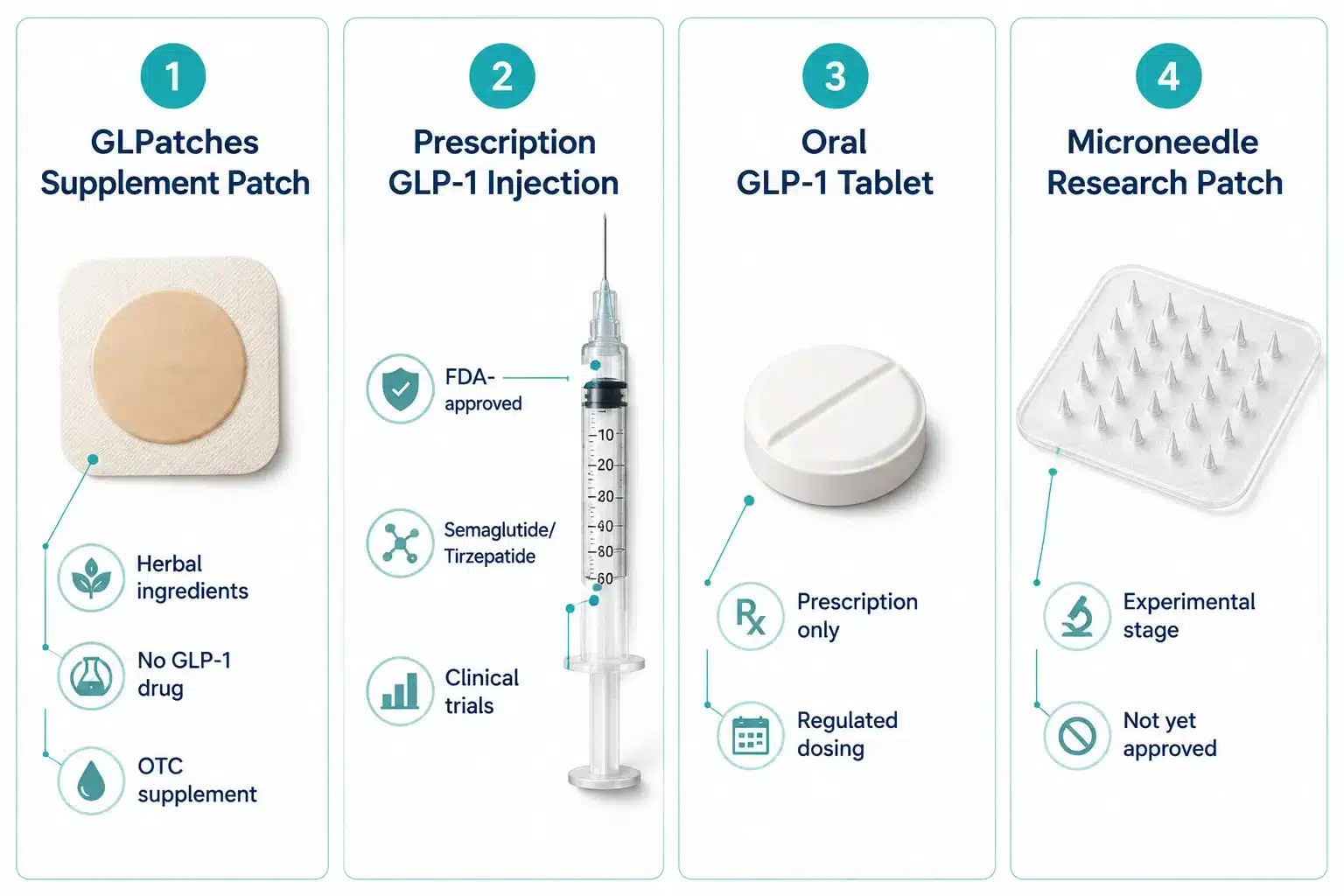
“There are no FDA-approved GLP-1 patches. The only approved GLP-1 receptor agonists come as injections or oral tablets.”, FDA-confirmed position, cited by Today.com [8]
GLPatches vs Traditional Patches: Key Differences
GLPatches differ from traditional medical patches in one critical way: they are unregulated supplements, not approved drug delivery systems. Traditional patches like nicotine patches, hormone patches, and fentanyl patches have undergone rigorous clinical testing, FDA review, and standardized dosing verification. GLPatches have not [1][8].
| Feature | GLPatches (Supplement) | Prescription Patch (e.g., Nicotine, Hormone) |
|---|---|---|
| FDA Approval | None | Required and obtained |
| Active Ingredient | Herbal/vitamin blend | Pharmaceutical drug |
| Clinical Trials | None on the patch itself | Mandatory pre-approval trials |
| Dosing Verification | Variable, unverified | Standardized and tested |
| Regulatory Oversight | Supplement rules (minimal) | Full drug regulation |
| Contains GLP-1 Drug | No | N/A (different drug class) |
The FDA has explicitly confirmed that no approved GLP-1 transdermal patch exists, and berberine, a common GLPatches ingredient, is not an approved drug product [8][15]. For anyone comparing GLPatches to prescription GLP-1 options, see our guide to best GLP-1 weight loss programs for context on what clinically proven options look like.
Do GLPatches Actually Work? What Reviews and Experts Say
The honest answer: there is no high-quality clinical evidence that GLPatches produce meaningful weight loss or replicate GLP-1 drug effects. Multiple endocrinologists and obesity specialists interviewed by Forbes Health, Everyday Health, and HealthCentral have stated that these patches lack peer-reviewed human trial data supporting their core claims [1][2][9].
One expert quoted in the weight-loss context explicitly called GLP-1 patches “a scam” [9]. The specific problems are:
- No randomized controlled trials exist showing GLPatches activate GLP-1 receptors
- No peer-reviewed studies show the patches change appetite in a clinically relevant way
- Ingredient absorption through skin is inconsistent and likely insufficient for metabolic effects
- Marketing language mimics prescription drug outcomes without the supporting evidence [1][2][9]
What some users report: Anecdotally, some patch users describe mild appetite suppression, which may be attributable to the stimulant ingredients (caffeine, bitter orange) rather than any GLP-1 mechanism. This is not the same as the sustained appetite reduction seen with prescription semaglutide or tirzepatide.
Common mistake: Confusing the marketing term “GLP-1 support” with actual GLP-1 receptor agonist activity. “Support” in supplement labeling has no regulatory definition and does not imply drug-equivalent effects.
What Skin Concerns Are GLPatches Marketed For
GLPatches are primarily marketed for metabolic and weight-related concerns, not traditional skin conditions. The main claims include:
- Appetite suppression, reducing hunger between meals
- Blood sugar balance, particularly through berberine, which has some evidence for modest glucose-lowering in type 2 diabetes contexts
- Fat metabolism support, via L-carnitine and green tea extract
- Energy and thermogenesis, through caffeine and bitter orange
- Weight management, broadly, as a needle-free alternative to GLP-1 injections [3][5][6]
These claims are made as supplement statements, not drug claims. None have been evaluated by the FDA for the treatment or prevention of any disease [8].
Are GLPatches Safe for Sensitive Skin
For most adults, the adhesive patch itself poses a low risk, but skin irritation is a documented concern, particularly for sensitive skin types. The safety picture has two layers: the adhesive and the ingredients.
Adhesive-related risks:
- Redness, itching, or contact dermatitis at the application site
- Peeling or tearing of delicate skin on removal
- Prolonged wear (beyond 24 hours) increasing irritation risk
Ingredient-related risks:
- Bitter orange (synephrine) can raise heart rate and blood pressure, which is a concern for people with cardiovascular conditions
- Caffeine-containing patches may cause jitteriness, insomnia, or palpitations
- Berberine can interact with medications, including metformin and blood thinners [2][10]
Who should avoid GLPatches entirely:
- Pregnant or breastfeeding individuals
- People with heart conditions or hypertension
- Anyone on blood sugar medications (risk of additive hypoglycemia)
- Those with known adhesive or latex allergies
- Children and adolescents
The FDA and pharmacy guidance sources emphasize that these are unregulated supplements with variable ingredient quality and labeling, meaning the actual dose you receive may differ from what is stated [8][10].
How Long Do GLPatches Last and How Should You Apply Them
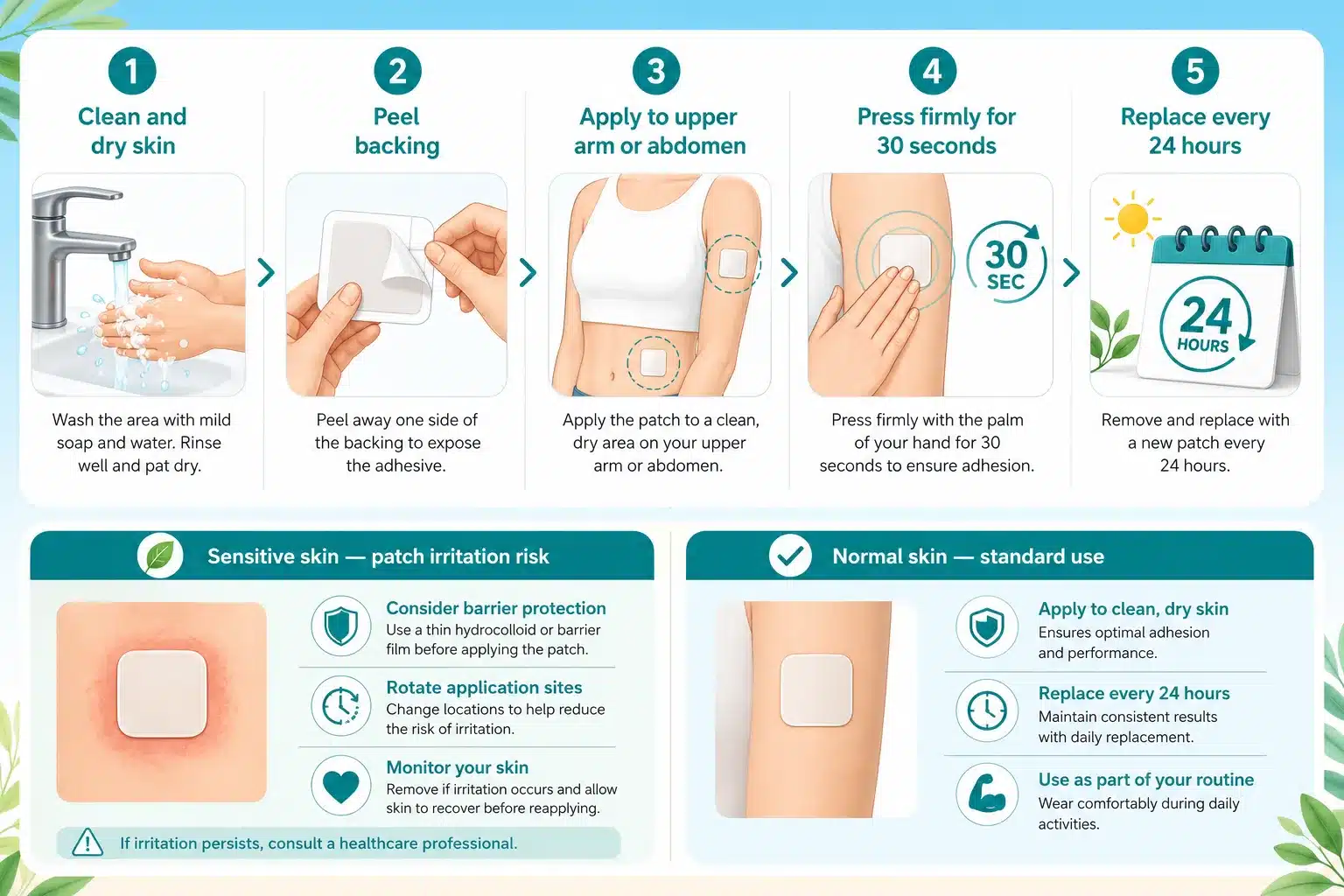
Most GLPatches products are designed for 24-hour wear, with one patch replaced daily. Some brands specify 8-12 hour cycles. There is no standardized protocol across brands because these are supplements, not regulated drug products [5][6].
General application steps:
- Clean and thoroughly dry the application area (upper arm, abdomen, or shoulder are common sites)
- Peel the backing from the patch carefully to avoid folding the adhesive
- Apply firmly to skin, pressing for 30 seconds to ensure full contact
- Avoid areas with cuts, rashes, or irritation
- Remove after the recommended wear time and dispose of the patch
- Rotate application sites to reduce skin irritation
How long before results? No clinical timeline exists for GLPatches because no trials have been conducted. Brands typically suggest 30-90 days of consistent use, but this is marketing guidance, not evidence-based expectation.
Common Mistakes When Applying GLPatches
Several application errors reduce whatever benefit the patches might offer and increase the risk of skin problems.
- Applying to oily or damp skin: Oils and moisture prevent the adhesive from bonding properly, causing the patch to fall off early
- Placing on bony or high-movement areas: Elbows, knees, and wrists cause patches to peel faster
- Wearing longer than recommended: Extended wear increases skin irritation without improving ingredient delivery
- Skipping site rotation: Using the same spot repeatedly leads to cumulative irritation and sensitization
- Expecting prescription-level results: The most common complaint in user reviews is that results do not match the marketing, which promises outcomes similar to GLP-1 injections [1][9]
How Much Do GLPatches Cost and Where Can You Buy Them
GLPatches-style products are primarily sold online through brand websites, Amazon, and social media storefronts. Prices vary widely by brand and quantity.
Estimated price ranges (as of 2026):
- Single-month supply (30 patches): approximately $25-$60 depending on brand
- Bundle packs (2-3 months): often marketed at a per-patch discount
- Subscription models: some brands offer auto-ship at reduced rates
Where to buy:
- Brand websites (GLPro GLPatch, PatchAid, Zoom Wellness Labs, Patch1t)
- Amazon and third-party supplement retailers
- Social media shops (TikTok Shop, Instagram storefronts)
Caution: Purchasing from unauthorized third-party sellers increases the risk of counterfeit or mislabeled products. If you choose to try GLPatches, buying directly from the brand’s official website gives you the best chance of receiving what is advertised and accessing any return policy.
For comparison, prescription GLP-1 medications cost substantially more but have clinical evidence behind them. See our GLP-1 price per month comparison for a full breakdown of Wegovy, Zepbound, and oral options.
Who Should Use GLPatches and Who Should Not
GLPatches are best suited for a narrow group: adults who have already made lifestyle changes, are not candidates for or interested in prescription GLP-1 therapy, and want a low-effort supplement adjunct with realistic expectations about the limited evidence base.
Potentially reasonable users:
- Adults seeking a non-stimulant-free supplement patch for general wellness support
- People who prefer transdermal delivery over oral supplements
- Those who understand these are supplements, not medications
Who should not use GLPatches:
- Anyone expecting Ozempic or Wegovy-level weight loss results
- People with cardiovascular conditions (due to stimulant ingredients)
- Those on diabetes medications without physician clearance
- Pregnant or breastfeeding individuals
- Anyone with sensitive skin or adhesive allergies
If weight loss is a medical priority, the evidence strongly favors prescription GLP-1 options. Our Kind Patches review covers a similar product category with a detailed breakdown of what patch-based supplements can and cannot do. For those exploring compounded options, see our guide on compounded semaglutide safety and legality.
GLPatches Alternatives and Similar Products
If GLPatches do not meet your needs, several categories of alternatives exist depending on your goals.
Prescription GLP-1 medications (most effective for weight loss):
- Semaglutide (Ozempic, Wegovy), injection, weekly
- Tirzepatide (Mounjaro, Zepbound), injection, weekly
- Liraglutide (Saxenda), injection, daily
- Oral semaglutide (Rybelsus), tablet, daily
These require a prescription and medical supervision. For guidance on accessing them, see our best compounding pharmacy for semaglutide 2026 guide.
Other supplement patches (similar category to GLPatches):
- PatchAid GLP-1 Support Patch
- Zoom Wellness Labs GLP-1 Patches
- Patch1t GLP Patches
Oral supplements with overlapping ingredients:
- Berberine capsules (more established dosing than patch delivery)
- Green tea extract supplements
- Fiber-based appetite support products
Lifestyle interventions (always evidence-based):
- Caloric deficit diet with protein emphasis
- Resistance and aerobic exercise
- Sleep optimization and stress management
The honest comparison: no supplement patch currently available replicates the clinical outcomes of prescription GLP-1 therapy. Choosing GLPatches over proven medical options is a meaningful trade-off that should be made with full information.
Best GLPatches for Different Skin Types and Skin Concerns
Because GLPatches are supplements rather than dermatological products, “best for skin type” guidance is limited. However, practical differences between brands matter for tolerability.
- Sensitive skin: Look for patches with hypoallergenic adhesives, minimal fragrance, and no harsh stimulants like bitter orange. PatchAid markets its patches as latex-free, which may suit some sensitive-skin users [5].
- Oily skin: Standard adhesive patches may not adhere well. Ensure skin is thoroughly cleaned and degreased before application.
- Dry or mature skin: Avoid aggressive removal. Warm the patch slightly with your hand before peeling to reduce adhesive trauma.
- Acne-prone skin: Avoid applying over active breakouts. Occlusive patches can trap bacteria and worsen acne if placed on affected areas.
No brand-specific clinical data exists comparing GLPatches performance across skin types. User reviews across platforms suggest adhesion quality and skin tolerance vary significantly between brands.
FAQ
What exactly are GLPatches?
GLPatches are over-the-counter adhesive supplement patches marketed as GLP-1 “support” products. They contain herbal ingredients like berberine and green tea extract, not actual GLP-1 drugs [3].
Do GLPatches contain semaglutide or tirzepatide?
No. GLPatches contain no prescription GLP-1 drugs. Semaglutide and tirzepatide are only available as injections or oral tablets with a prescription [8].
Are GLPatches FDA approved?
No. The FDA has confirmed there are no approved GLP-1 transdermal patches. GLPatches are sold as dietary supplements under different, less stringent regulations [8].
Can GLPatches help me lose weight?
There is no high-quality clinical evidence that GLPatches produce meaningful weight loss. Experts from Forbes Health, Everyday Health, and HealthCentral state the patches lack peer-reviewed trial data supporting their claims [1][2][9].
How long should I wear a GLPatch?
Most brands recommend 24-hour wear with daily replacement. Always follow the specific brand’s instructions and rotate application sites to reduce skin irritation [5][6].
Are GLPatches safe?
For most healthy adults, the risk is low but not zero. Stimulant ingredients like caffeine and bitter orange can cause cardiovascular effects. Berberine may interact with diabetes and blood-thinning medications. People with sensitive skin may experience contact dermatitis [2][10].
Where can I buy GLPatches?
They are sold on brand websites (PatchAid, Patch1t, Zoom Wellness Labs), Amazon, and social media storefronts. Buying directly from official brand sites reduces counterfeit risk [4][5][6].
Can I use GLPatches with other skincare products?
Avoid applying moisturizers, oils, or serums to the application site before patching, as these reduce adhesion. On other areas of the body, standard skincare routines are unaffected.
Will GLPatches work the same as Ozempic?
No. Ozempic is a prescription GLP-1 receptor agonist with extensive clinical trial data. GLPatches are herbal supplement patches with no equivalent evidence base. Expecting similar results is not supported by science [1][9].
Is there a real GLP-1 patch in development?
Researchers are exploring microneedle patch technology for GLP-1 drug delivery, but these remain experimental and have only been tested in non-human models. No consumer-available GLP-1 drug patch is expected in the near term [2].
Can diabetics use GLPatches?
Not without physician clearance. Berberine has glucose-lowering properties that could interact with diabetes medications and cause hypoglycemia. Always consult your doctor before adding any supplement if you manage blood sugar with medication [10].
What is the difference between GLPatches and a berberine supplement?
Functionally, they deliver overlapping ingredients. The patch format claims transdermal delivery, but absorption consistency through skin is less established than oral supplementation for most of these ingredients [2][3].
Conclusion
GLPatches occupy a crowded and often misleading corner of the wellness market. They are not GLP-1 drugs. They do not contain semaglutide, tirzepatide, or any prescription compound. They are herbal supplement patches that borrow GLP-1 branding to appeal to people seeking needle-free weight loss solutions, and as of 2026, no credible clinical evidence supports their core weight-loss claims [1][8][9].
That said, the individual ingredients in GLPatches, particularly berberine and green tea extract, do have some modest evidence for metabolic support when taken in appropriate oral doses. The patch delivery format adds uncertainty rather than benefit for most of these compounds.
Actionable next steps:
- If weight loss is a medical priority, speak with a licensed healthcare provider about prescription GLP-1 options. Use our Mochi Health review or semaglutide injections dosage guide to understand what evidence-based treatment looks like.
- If you want to try berberine for metabolic support, consider an oral capsule form with verified dosing rather than a patch with uncertain absorption.
- If you do use GLPatches, set realistic expectations, rotate application sites, and discontinue if skin irritation develops.
- Never substitute GLPatches for prescribed diabetes or obesity medications without physician guidance.
The bottom line: GLPatches may be a low-risk, low-cost experiment for curious supplement users, but they are not a substitute for proven medical care.
References
[1] GLP-1 Patches – https://www.forbes.com/health/weight-loss/glp-1-patches/
[2] GLP-1 Patches – https://www.healthcentral.com/condition/obesity/glp-1-patches
[3] What Are GLP-1 Patches – https://www.baptisthealth.com/blog/weight-management/what-are-glp-1-patches
[4] GLP-1 Patches – https://zoomwellnesslabs.com/products/weight-loss/glp-1-patches-53429811
[5] GLP-1 Support Patch by PatchAid – https://patchaid.com/products/glp-1-support-patch-by-patchaid
[6] GLP Patches – https://patch1t.com/products/glp-patches
[8] GLP-1 Patches – https://www.today.com/health/diet-fitness/glp-1-patches-rcna232201
[9] Can GLP-1 Patches Really Help You Lose Weight – https://www.everydayhealth.com/weight-management/can-glp-1-patches-really-help-you-lose-weight/
[10] GLP-1 Patches vs GLP-1 Injections – https://www.chemist-4-u.com/guides/weight-loss/glp-1-patches-vs-glp-1-injections/


