How to Verify a Legitimate Compounding Pharmacy
Last updated: June 2, 2026
Quick Answer: To verify a legitimate compounding pharmacy, confirm it holds a valid state pharmacy license, check for PCAB (Pharmacy Compounding Accreditation Board) accreditation, and cross-reference it with the FDA’s database of registered outsourcing facilities. Pharmacies that skip these credentials pose serious safety risks, especially for patients using compounded GLP-1 medications like semaglutide or tirzepatide.
Millions of Americans are now turning to compounded medications, particularly GLP-1 drugs like semaglutide and tirzepatide, to manage weight and blood sugar, often at a fraction of brand-name costs. But knowing how to verify a legitimate compounding pharmacy is the difference between a safe, effective treatment and a dangerous counterfeit. Not every pharmacy offering “compounded semaglutide” online is trustworthy, and the consequences of choosing the wrong one can be serious.
Key Takeaways
- Always confirm a compounding pharmacy’s state license through your state board of pharmacy before ordering.
- PCAB accreditation is the gold standard for quality assurance in compounding pharmacies.
- FDA-registered 503B outsourcing facilities meet stricter federal standards than standard 503A pharmacies.
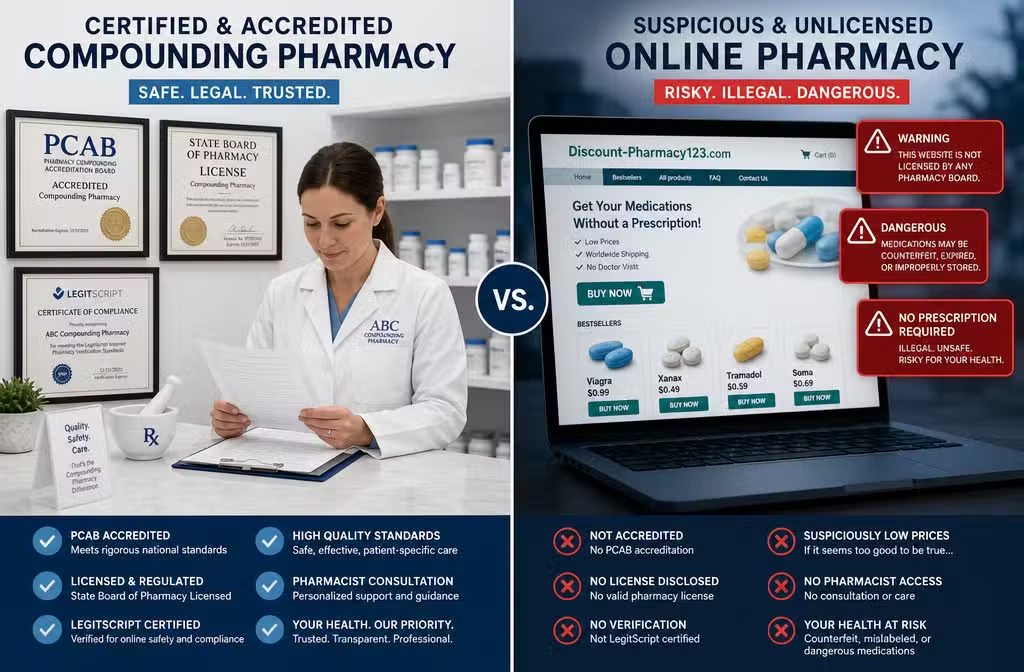
- Red flags include no verifiable address, no prescription requirement, and prices that seem impossibly low.
- Compounded GLP-1 medications like semaglutide are legal when sourced from a licensed, compliant pharmacy.
- Most compounded medications are not covered by insurance, so cost comparison matters.
- Asking the right questions before ordering can protect you from contaminated or mislabeled products.
- Online compounding pharmacies can be legitimate, but they require the same verification steps as local ones.
What Exactly Is a Compounding Pharmacy and How Is It Different From a Regular Pharmacy
A compounding pharmacy custom-makes medications for individual patients when a commercially available drug does not meet their specific needs. Unlike a standard retail pharmacy that dispenses pre-manufactured drugs, a compounding pharmacy mixes, alters, or combines ingredients based on a licensed prescriber’s order.
Key differences include:
- Standard pharmacy: Dispenses FDA-approved, mass-produced medications in fixed doses and forms.
- Compounding pharmacy: Creates personalized formulations, such as different dosages, delivery methods (injections, creams, lozenges), or allergen-free versions.
- 503A pharmacies: Compound for individual patients based on a valid prescription.
- 503B outsourcing facilities: Produce larger batches under FDA oversight, similar to drug manufacturers.
For patients seeking GLP-1 medications for weight loss, compounding pharmacies have become a popular option because they can offer semaglutide and tirzepatide at significantly lower costs than brand-name Ozempic, Wegovy, or Zepbound.
How Can I Check If a Compounding Pharmacy Is Licensed and Accredited
Every legitimate compounding pharmacy must hold a valid license from the state board of pharmacy where it operates. You can verify this in minutes using free public tools.
Step-by-step verification process:
- Find your state board of pharmacy website. The National Association of Boards of Pharmacy (NABP) at nabp.pharmacy lists every state board with a direct link.
- Search the pharmacy’s name or license number. Active licenses show as “current” or “active” with an expiration date.
- Check PCAB accreditation. Visit pcab.pharmacy and search the pharmacy by name. PCAB-accredited pharmacies have passed independent quality audits.
- Look up FDA 503B registration. The FDA maintains a public list of registered outsourcing facilities at fda.gov. If a pharmacy claims 503B status, confirm it there.
- Verify NABP’s “.pharmacy” domain program. Pharmacies with a verified .pharmacy domain have passed NABP’s background checks.
Choose a 503B facility if you need sterile injectables like compounded semaglutide, because 503B facilities face stricter manufacturing controls than standard 503A pharmacies.
What Are the Red Flags That Might Indicate an Untrustworthy Compounding Pharmacy
An untrustworthy compounding pharmacy typically shows several warning signs that are easy to spot once you know what to look for. The most dangerous pharmacies are those that skip prescription requirements or hide their physical location.
Red flags to watch for:
- No valid prescription required before purchase
- No verifiable physical address or phone number
- Prices dramatically lower than any comparable source without explanation
- No mention of state licensing or accreditation on the website
- Vague or missing ingredient information
- No pharmacist available to answer questions
- Unsolicited emails or social media ads offering compounded GLP-1 drugs
- Pressure to buy large quantities upfront
- No clear refund or complaint process
Common mistake: Patients often assume that a professional-looking website means a pharmacy is legitimate. Website design has nothing to do with licensing status. Always verify credentials through official government databases, not the pharmacy’s own marketing materials.
How to Verify the Quality and Sterility of a Compounding Pharmacy’s Preparations
Quality verification goes beyond checking a license. For sterile compounded medications, especially injectables, the pharmacy must follow USP (United States Pharmacopeia) standards, specifically USP 797 for sterile preparations.
What to look for:
- USP 797 compliance: Ask directly if the pharmacy follows current USP 797 guidelines for sterile compounding. Legitimate pharmacies will confirm this without hesitation.
- Certificate of Analysis (COA): A reputable pharmacy should provide a COA from an independent third-party lab for each batch of medication. This document confirms potency, purity, and sterility.
- Beyond-use dating: Properly labeled compounded medications include a beyond-use date, not just an expiration date.
- Cleanroom certification: Sterile compounding requires ISO-classified cleanrooms. Ask if the facility has documented cleanroom certifications.
For patients using compounded GLP-1 medications from a pharmacy, requesting a COA is one of the most important steps you can take before injecting anything.

If you’re comparing costs for semaglutide, our guide to finding the cheapest pharmacy for semaglutide covers verified options ranked by price and safety credentials.
What Kinds of Medications Can Be Compounded and What Cannot
Compounding pharmacies can legally prepare a wide range of medications, but there are important legal limits, especially for GLP-1 drugs.
Medications commonly compounded:
- Hormones (bioidentical hormone replacement therapy)
- Topical pain creams and anti-inflammatory gels
- Pediatric formulations in flavored liquids
- Allergen-free versions of standard drugs
- Veterinary medications
- GLP-1 drugs like semaglutide and tirzepatide (when FDA-listed as in shortage)
What cannot be compounded:
- Exact copies of commercially available drugs (unless a specific patient need is documented)
- Medications that have been withdrawn from the market for safety reasons
- Large-scale production without 503B registration
Important note: The FDA’s rules on compounding GLP-1 drugs like semaglutide shifted in 2025 as the agency updated shortage designations. As of 2026, compounding of semaglutide is subject to updated FDA guidance. Always confirm current legal status with your prescriber before ordering. You can review the full cost breakdown of GLP-1 medications to understand your options.
How Much Do Custom Compounded Medications Typically Cost
Compounded medications are almost always cheaper than brand-name equivalents, but pricing varies widely based on the drug, dose, and pharmacy.
Typical cost ranges (estimates based on publicly available market data as of 2026):
| Medication | Brand-Name Monthly Cost | Compounded Monthly Cost |
|---|---|---|
| Semaglutide (Ozempic/Wegovy) | $900 – $1,400 | $150 – $400 |
| Tirzepatide (Zepbound) | $1,000 – $1,500 | $200 – $500 |
| Bioidentical hormones | $100 – $300 | $50 – $150 |
Prices depend on dosage strength, the pharmacy’s overhead, and whether a telehealth consultation fee is included. For a detailed look at tirzepatide costs, see our tirzepatide cost comparison guide.
If you’re looking for an affordable, verified option, DirectMeds GLP1 Semaglutide is one of the most competitively priced compounded semaglutide programs available in 2026, with transparent pricing, licensed prescribers, and pharmacy verification built into the process.
Ready to start a verified, affordable GLP-1 program? Check DirectMeds GLP1 Semaglutide pricing and availability here.
Are Compounded Medications Covered by Insurance
Most compounded medications are not covered by standard health insurance plans. Insurance companies typically only reimburse FDA-approved, commercially manufactured drugs.
What this means for patients:
- Compounded GLP-1 drugs like semaglutide are almost universally paid out-of-pocket.
- Some FSA (Flexible Spending Account) and HSA (Health Savings Account) funds can be used for compounded medications with a valid prescription.
- A few specialty insurance plans may cover certain compounded hormones or unique formulations, but this is the exception.
For a full breakdown of what GLP-1 medications cost without insurance, see our GLP-1 cost without insurance guide.
Who Should Consider Using a Compounding Pharmacy and Who Probably Shouldn’t
Compounding pharmacies are a good fit for specific patient situations, but they are not the right choice for everyone.
Good candidates for compounding:
- Patients who are allergic to dyes, preservatives, or fillers in commercial drugs
- Those who need a dose not available in commercial products
- Patients whose brand-name GLP-1 medication is unaffordable or unavailable
- Children who need flavored liquid versions of adult medications
- People in telehealth weight-loss programs seeking lower-cost semaglutide
Who should probably avoid compounding pharmacies:
- Patients who can access brand-name medications at affordable prices through insurance
- Anyone unwilling to do the verification work described in this article
- Patients with complex medical conditions who need FDA-monitored manufacturing standards
What Common Mistakes Do Patients Make When Choosing a Compounding Pharmacy
The most common mistake is choosing a pharmacy based on price alone. The second most common is assuming a telehealth platform’s recommended pharmacy has already been vetted.
Other frequent mistakes:
- Not asking for a Certificate of Analysis before the first order
- Skipping the state license verification step
- Ordering from pharmacies that do not require a prescription
- Ignoring the difference between 503A and 503B facilities for sterile injectables
- Failing to check whether the pharmacy’s license covers the state where you live
Edge case: Some pharmacies are licensed in one state but ship to patients in states where they are not licensed to dispense. This is a legal gray area that can leave you without recourse if something goes wrong.
Can Online Compounding Pharmacies Be Trusted or Should I Only Use Local Ones
Online compounding pharmacies can be completely legitimate, and many of the most reputable ones operate exclusively online. Location is not a reliable indicator of quality. What matters is licensure, accreditation, and transparency.
How to verify an online compounding pharmacy:
- Confirm state pharmacy license through the NABP or your state board
- Check for PCAB accreditation at pcab.pharmacy
- Verify that a licensed prescriber reviews your medical history before dispensing
- Confirm the pharmacy ships only to states where it holds an active license
- Look for a real phone number and pharmacist consultation option
DirectMeds GLP1 Semaglutide operates as a verified online program connecting patients with licensed compounding pharmacies. It includes prescriber oversight and transparent sourcing, making it one of the safer online options for compounded semaglutide in 2026.
Want to skip the research and go straight to a verified GLP-1 program? Get started with DirectMeds GLP1 Semaglutide today.

What Questions Should I Ask a Compounding Pharmacist Before Getting a Custom Medication
Asking the right questions before your first order protects your health and your money. A legitimate compounding pharmacist will answer these without hesitation.
Questions to ask:
- What is your state pharmacy license number, and in which states are you licensed to dispense?
- Are you PCAB-accredited?
- Do you follow USP 797 standards for sterile preparations?
- Can you provide a Certificate of Analysis from an independent lab for my specific medication?
- What is the beyond-use date on this preparation?
- Does a licensed prescriber review every order before dispensing?
- What is your process if I have a reaction or a quality concern?
If a pharmacy cannot or will not answer these questions clearly, that is a strong signal to look elsewhere.
What Are the Risks of Using an Unverified or Low-Quality Compounding Pharmacy
The risks are serious and well-documented. The FDA has issued multiple warning letters and recalls related to compounding pharmacy failures, including contamination, incorrect potency, and non-sterile injectable preparations.
Documented risks include:
- Bacterial or fungal contamination in injectable preparations
- Incorrect drug concentration (too high or too low)
- Use of substandard or unapproved active ingredients
- Mislabeled beyond-use dates leading to degraded medication
- No recourse if the pharmacy is unlicensed and something goes wrong
According to the FDA’s MedWatch database, compounding-related adverse events have included serious infections and hospitalizations. These outcomes are preventable when patients take the time to verify a pharmacy’s credentials before ordering.
Don’t risk your health on an unverified source. Access DirectMeds GLP1 Semaglutide through a verified, licensed pharmacy network here.
Conclusion
Knowing how to verify a legitimate compounding pharmacy is not complicated, but it does require a few deliberate steps. Check the state license, look for PCAB accreditation, request a Certificate of Analysis, and confirm the pharmacy requires a valid prescription. These four actions alone will screen out the vast majority of problematic sources.
For patients pursuing compounded GLP-1 medications like semaglutide or tirzepatide, the savings can be substantial, but only if the pharmacy is legitimate. A contaminated or mislabeled injectable is not a bargain at any price.
Your next steps:
- Visit nabp.pharmacy and verify any pharmacy you are considering.
- Check pcab.pharmacy for accreditation status.
- Ask for a Certificate of Analysis before your first order.
- Confirm your prescriber has reviewed your medical history.
- If you want a pre-vetted option, DirectMeds GLP1 Semaglutide connects you with licensed pharmacies and prescriber oversight at some of the most competitive prices available in 2026.
For more context on GLP-1 medication costs and options, see our full GLP-1 price comparison guide and our guide to where to buy semaglutide safely.
Ready to take the next step safely? Start your verified GLP-1 program with DirectMeds today.
Frequently Asked Questions
How do I verify a compounding pharmacy is legitimate?
Check the pharmacy’s license through your state board of pharmacy or the NABP website, confirm PCAB accreditation at pcab.pharmacy, and verify FDA 503B registration if the pharmacy claims outsourcing facility status. All three checks can be done for free online in under 10 minutes.
What is the difference between a 503A and 503B compounding pharmacy?
A 503A pharmacy compounds medications for individual patients based on a specific prescription. A 503B outsourcing facility produces larger batches under FDA oversight and is held to stricter manufacturing standards. For sterile injectables like compounded semaglutide, a 503B facility is generally the safer choice.
Is compounded semaglutide legal in 2026?
Compounded semaglutide’s legal status depends on current FDA shortage designations and updated agency guidance issued in 2025 and 2026. As of mid-2026, patients should confirm the current legal status with their prescriber before ordering, as regulations have evolved rapidly.
Can I get compounded semaglutide without a prescription?
No. Any pharmacy offering compounded semaglutide without a valid prescription from a licensed prescriber is operating illegally. This is one of the clearest red flags of an untrustworthy source.
How much does compounded semaglutide cost per month?
Based on publicly available market data in 2026, compounded semaglutide typically costs between $150 and $400 per month, compared to $900 to $1,400 for brand-name Wegovy or Ozempic. Prices vary by dose, pharmacy, and whether a telehealth consultation fee is included.
Does insurance cover compounded medications?
Most health insurance plans do not cover compounded medications. FSA and HSA funds can generally be used for compounded drugs with a valid prescription. Check with your plan administrator to confirm your specific coverage.
What is a Certificate of Analysis and why does it matter?
A Certificate of Analysis (COA) is a document from an independent laboratory confirming a compounded medication’s potency, purity, and sterility. It is the most direct proof that the specific batch you are receiving meets quality standards. Always request one before your first order.
Are online compounding pharmacies safe?
Online compounding pharmacies can be safe if they hold valid state licenses, are PCAB-accredited, require a prescription, and provide independent lab testing results. Location does not determine safety. Verification steps matter far more than whether a pharmacy has a physical storefront.
What happens if I use an unverified compounding pharmacy?
Risks include receiving contaminated, mislabeled, or incorrectly dosed medication. In serious cases, this has led to infections, hospitalizations, and treatment failures. Unverified pharmacies also offer little to no recourse if something goes wrong.
How long does it take to verify a compounding pharmacy?
Basic verification, including state license check, PCAB accreditation lookup, and FDA 503B status, takes 10 to 15 minutes using free online tools. This small time investment is worth it before trusting any pharmacy with an injectable medication.
References
- FDA Compounding Quality Act and 503B Outsourcing Facilities Overview – U.S. Food and Drug Administration
- USP General Chapter 797 Pharmaceutical Compounding – Sterile Preparations – United States Pharmacopeia, 2023
- NABP Compounding Pharmacy Accreditation and Verification Resources – National Association of Boards of Pharmacy
- Pharmacy Compounding Accreditation Board (PCAB) Standards – PCAB, 2024
- FDA MedWatch Safety Reporting and Compounding Pharmacy Adverse Events – U.S. Food and Drug Administration
Tags: compounding pharmacy verification, legitimate compounding pharmacy, compounded semaglutide, GLP-1 compounding pharmacy, PCAB accreditation, 503B outsourcing facility, compounded tirzepatide, pharmacy license check, semaglutide cost, weight loss medications, telehealth GLP-1, FDA compounding regulations