NAD + Injections: Your Complete Guide 2026

Last updated: November 24, 2026
Most people who search for NAD+ have seen it called a “peptide” on a clinic menu or a telehealth site. That label is misleading, and understanding why matters before you spend a dollar on it.
Quick Answer
NAD+ (nicotinamide adenine dinucleotide) is a coenzyme your cells need for energy production and DNA repair, not a peptide. NAD+ injections deliver it under the skin or into muscle to raise blood levels faster than pills, and clinics market them for energy, recovery, and healthy aging. Human evidence for injections specifically is limited, costs typically run $25 to $150 per shot or $150 to $900 per IV session, and the FDA has not approved any NAD+ product for these uses.
7 Best GLP-1 Providers Ranked: Accreditation, Flexibility & Support Compared (2026 Update)
32,000+ Patients Can't All Be Wrong: See the Top-Rated GLP-1 Providers. We compared the leading online GLP-1 providers based on program features, clinical support, convenience, and overall value.
BMI MD GLP-1 Microdosing Plan
- Specialized microdosing options, including sublingual drops and low-dose injections
- Designed for people interested in maintaining weight or gradually adjusting treatment
- Bundled program structure without a separate monthly platform membership
- Online access makes the process convenient from home

DirectMeds Weight Loss Solutions
- Online weight-loss program with a straightforward patient experience
- Compounded medication options through state-licensed compounding pharmacies
- Includes clinical consultation as part of the process
- Provides shipping updates to help patients track their orders
MEDVi Flat-Rate Telehealth
- Flat-rate telehealth approach designed for easier budgeting
- No dosage-based pricing increases within the advertised program structure
- Offers injectable and oral thin-film delivery options
- Includes medical screening and asynchronous provider consultations
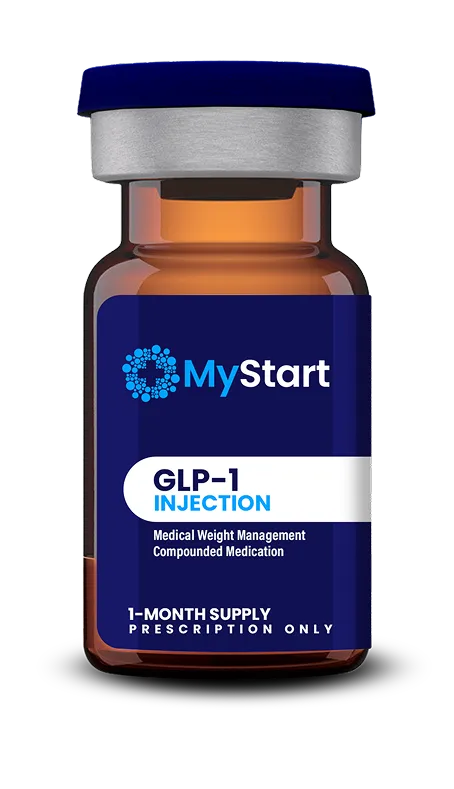
Gala GLP-1 Care Program
- Text-based access to state-licensed clinicians
- Cold-chain medication shipping included in the program
- Month-to-month program structure
- Designed for people who value convenient ongoing support
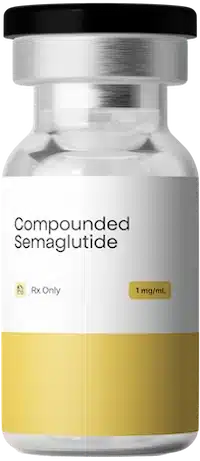
Measured GLP-1 Metabolic Health
- Comprehensive metabolic health screening and intake analysis
- Designed around longer-term metabolic health management
- Responsive dashboard with integrated health tracking tools
- Useful option for patients who value a more data-focused experience
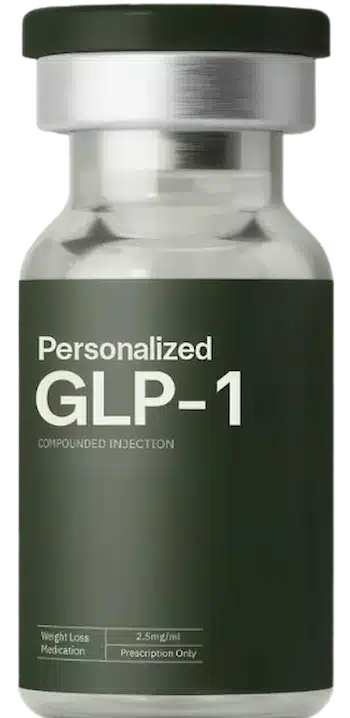
Refills GLP-1 (TryRefills Plan)
- Clinical guidance designed to help patients manage common treatment concerns
- Includes foundational nutritional strategies alongside medication
- Designed around predictable ongoing treatment
- No hidden startup or processing fees according to the program information provided
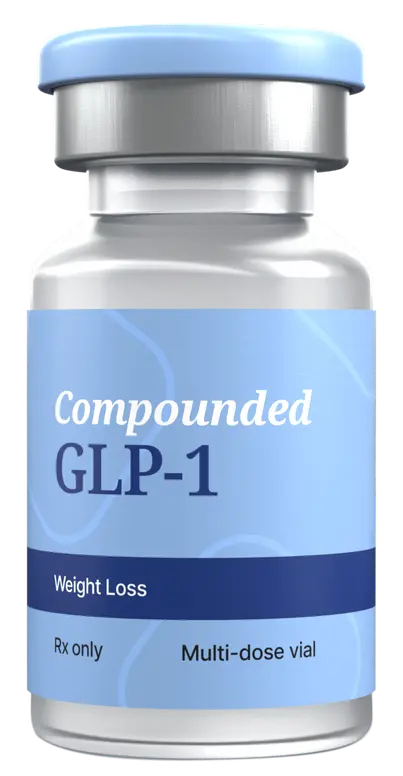
AltRx GLP-1 Transactional Reorders
- Transactional reorder model without recurring auto-billing
- Designed for patients who already understand their treatment routine
- Fast text-to-order process for convenient reorders
- Offers injectable and fast-dissolving tablet variations
Key Takeaways
NAD+ is a coenzyme made from vitamin B3, not a peptide, despite how it’s often marketed.
Injections raise NAD+ levels faster than oral supplements but research on injections in humans is thin compared to oral precursor studies.
A single IV session often costs $150 to $900; injections usually run $25 to $150 each.
Common side effects include flushing, nausea, chest tightness, and injection-site soreness.
No NAD+ product is FDA-approved for anti-aging, energy, fatigue, or addiction recovery.
People on blood thinners, pregnant women, and those with certain cancers should talk to a doctor before starting.
Oral NMN or NR supplements are the lower-cost, lower-risk alternative if you want to try raising NAD+ levels.
What Exactly Is NAD+ and Why Is Everyone Talking About It
NAD+ is a coenzyme, a small helper molecule your cells use to produce energy and repair DNA. It is not a peptide, even though it’s frequently sold under that term in med spa menus and online ads.
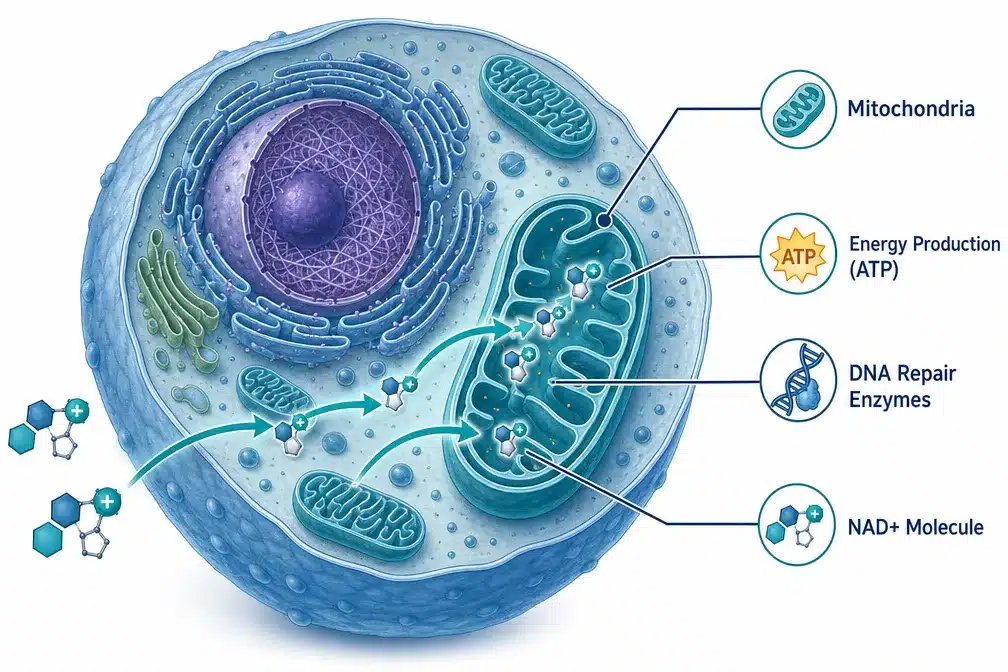
Peptides are short chains of amino acids, like BPC-157 or semaglutide. NAD+ is built from nicotinamide (a form of vitamin B3) attached to a ribose and adenine structure. The confusion probably comes from how both are sold: injectable, often unregulated, marketed for recovery and longevity.
NAD+ levels decline with age, according to research summarized by the National Institute on Aging. That decline is linked to reduced cellular energy output and has made NAD+ a popular target in longevity research, which is likely why it’s showing up at more clinics every year.
How Do NAD+ Injections Actually Work in Your Body
NAD+ injections deliver the coenzyme directly into subcutaneous tissue or muscle, bypassing the digestive breakdown that affects oral forms. Once absorbed, it’s used by cells for mitochondrial energy production and by enzymes called sirtuins and PARPs that repair DNA and regulate cell aging processes.
Here’s what happens after a shot:
The injected NAD+ enters the bloodstream over minutes to hours, faster than a pill.
Cells take up NAD+ or its breakdown products and use them inside mitochondria.
Sirtuins and PARP enzymes use available NAD+ to support DNA repair and metabolic signaling.
Any extra is broken down and excreted, since cells can’t store large reserves indefinitely.
Common mistake: assuming an injection “refills” your cells the way a phone battery recharges. The body regulates NAD+ tightly, and excess doesn’t simply stack up for later use.
NAD+ Injections Versus IV Infusions: What’s the Difference
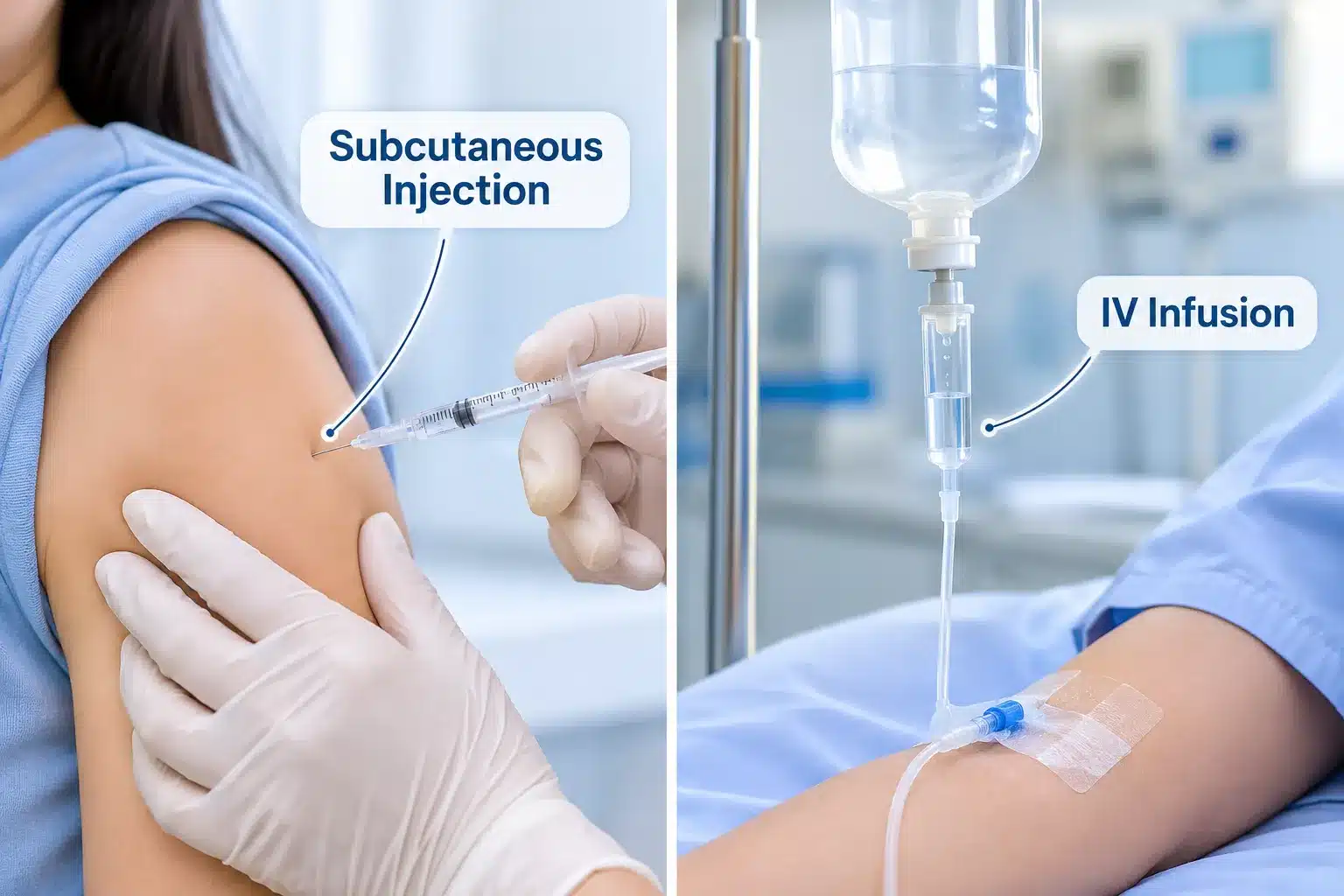
Injections use a small volume under the skin or in muscle; IV infusions drip a larger diluted dose directly into a vein over one to four hours. IV delivery generally gets more NAD+ into circulation per session, but it costs more and takes longer.
FeatureNAD+ InjectionNAD+ IV InfusionTypical dose50-200 mg250-1,000 mgSession time1-5 minutes1-4 hoursTypical cost$25-$150$150-$900Common side effectsSoreness, mild flushingNausea, chest tightness, flushingSettingClinic or self-administered at home (with prescription)Clinic or infusion center, supervisedBest forMaintenance between IV sessions, convenienceHigher-dose loading, first-time users
Choose injections if you want a quicker visit and already know you tolerate NAD+ well. Choose an IV if you’re trying it for the first time, since clinics can slow or stop the drip if you feel unwell, something you can’t easily do with a quick shot.
Should I Do NAD+ Pills or Injections
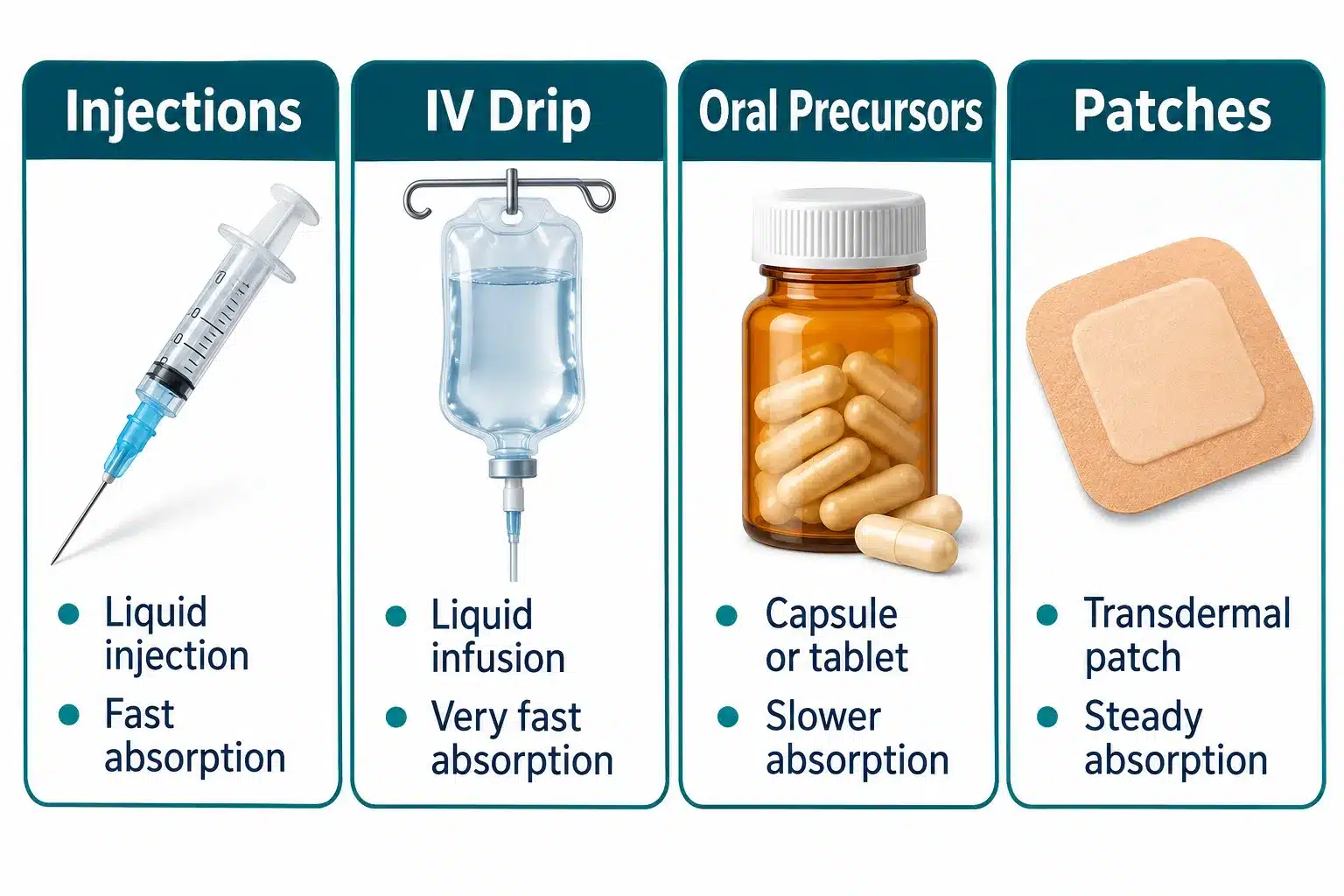
Choose injections or IV therapy if you want faster, higher blood levels and are willing to pay more; choose oral precursors like NMN or NR if you want a lower-cost, lower-risk way to test whether raising NAD+ helps you at all.
Oral NAD+ itself is poorly absorbed, so most “pill” options are precursors, not NAD+ directly. That distinction matters:
NAD+ injections/IV: higher absorbed dose, immediate effect window, higher cost, requires needle administration.
NMN or NR capsules: convenient, $30-$80 per month, slower onset, more human research exists on these precursors raising blood NAD+ levels than on direct NAD+ injection.
If you’re the kind of reader already using NMN or BPC-157-style peptides, you likely know oral precursors have more published human pharmacokinetic data. Injection advocates argue bypassing digestion matters more, but that claim rests mostly on logic, not head-to-head trial data.
How Much Do NAD+ Injections Typically Cost
A single NAD+ injection generally costs $25 to $150, while a full IV infusion session runs $150 to $900 depending on dose and location [VERIFY regional pricing]. Package deals and monthly memberships can lower the per-session price.
Price depends on:
Dose size (50 mg vs 500 mg makes a large cost difference)
Delivery method (injection vs IV vs nasal spray)
Location (med spas in major cities tend to charge more than rural clinics)
Package pricing (buying 4-6 sessions upfront often saves 10-20%)
Since insurance doesn’t cover NAD+ therapy for wellness use, budget it like any other out-of-pocket cosmetic or wellness expense. If you’re also managing weight with injectable medications, see our compounded tirzepatide injections guide for a sense of how compounded injectable pricing is structured, since the same compounding pharmacy model often applies to NAD+.
What Are the Side Effects of Getting NAD+ Injections
The most common side effects are injection-site soreness, mild flushing, and headache; IV infusions more often cause nausea and a tight feeling in the chest or stomach, especially if the drip runs too fast. Most reactions are temporary and resolve within hours.
Reported effects include:
Redness, bruising, or soreness at the injection site
Flushing or a warm sensation in the face and chest
Nausea or stomach cramping, more common with IV
Headache or lightheadedness
Rare allergic reactions
Edge case: people report feeling “wired” or anxious after high-dose IV sessions, likely from how fast NAD+ metabolism interacts with cellular energy pathways. If this happens, tell the clinic running your infusion so they can slow the rate next time.
Who Is the Best Candidate for NAD+ Injections
The best candidates are healthy adults curious about cellular energy support who have no major heart, kidney, or bleeding conditions and who understand the evidence is still developing. People using NAD+ to try to fix a specific diagnosed illness are not well matched to current research.
Talk to your doctor first if you:
Are pregnant or breastfeeding
Take blood thinners or have a clotting disorder
Have a history of certain cancers (NAD+ supports cell growth pathways, which raises theoretical concern)
Have uncontrolled high blood pressure or heart disease
Are currently in medical detox or addiction treatment under a physician’s care
If none of those apply and you’re mainly curious after seeing it at a med spa, you’re a reasonable candidate for a cautious, low-dose trial under medical supervision.
Common Mistakes People Make When Starting NAD+ Therapy
The biggest mistake is expecting dramatic, immediate results and then overdoing the dose or frequency when nothing happens right away. NAD+ isn’t a stimulant, and faster isn’t automatically better.
Other frequent errors:
Skipping a consultation and buying “research use only” vials online instead of going through a licensed provider
Not drinking enough water before an IV session, which worsens nausea and flushing
Assuming NAD+ will reverse a specific diagnosed condition instead of treating it as general wellness support
Combining high-dose NAD+ with other stimulants or supplements without checking interactions
Judging results after one session instead of giving a short course (4-6 sessions) a fair trial
How Often Do You Need to Get NAD+ Injections
Most clinics recommend an initial series, often weekly for 4-6 weeks, followed by maintenance sessions every 2-4 weeks. Frequency depends on your goal, dose, and how your body responds.
A typical pattern looks like:
Week 1-4: one injection or IV session per week (loading phase)
Month 2-3: taper to every two weeks
Ongoing: monthly maintenance, or as needed based on how you feel
There’s no clinical consensus backing one exact schedule, so treat any specific protocol as a starting point your provider can adjust, not a fixed rule.
Can You Mix NAD+ Injections With Other Anti-Aging Treatments
Yes, many clinics combine NAD+ with treatments like vitamin B12 shots, glutathione, or peptide therapies, but you should confirm with your provider that nothing overlaps in a way that increases side effect risk. Combining treatments doesn’t mean the effects stack predictably.
If you’re also on a GLP-1 medication for weight loss, mention that to your NAD+ provider, since both affect energy metabolism and nausea risk can compound. For context on how other injectable regimens are typically dosed and scheduled, see our semaglutide weight loss injections guide.
How Long Does It Take to Feel Results From NAD+ Injections
Some people report feeling more alert within hours of an IV session, while others notice nothing until after several sessions, if at all. Response varies widely and isn’t well predicted by current research.
What people commonly report, with the caveat that these are self-reported, not verified clinical outcomes:
Same-day: mild energy lift or mental clarity (anecdotal)
2-4 weeks: some report better sleep or mood after a loading series
1-3 months: maintenance users report more stable energy, though controlled trial data confirming this in humans is limited
Be skeptical of any clinic promising guaranteed results within one session. The honest answer is that individual response is unpredictable.
Is NAD+ Injection Actually FDA Approved
No. The FDA has not approved any NAD+ injection or IV product for anti-aging, energy, fatigue, or addiction recovery. NAD+ used clinically is typically dispensed through compounding pharmacies under a provider’s prescription, which operates differently than an FDA-approved drug.
This matters because:
Compounded products aren’t reviewed by the FDA for safety and effectiveness the way approved drugs are.
Quality can vary between compounding pharmacies.
“Research use only” NAD+ sold online without a prescription is not intended or legally sold for human use.
If a provider doesn’t require any health screening or prescription before selling you NAD+, that’s a signal to walk away.
What Are Other Options If NAD+ Injections Aren’t for Me
If needles, cost, or the lack of strong injection-specific evidence put you off, oral NAD+ precursors, lifestyle changes, and other recovery-focused treatments are reasonable alternatives. None of these guarantee the same blood level increase as an IV, but they carry less cost and risk.
NMN or NR supplements: oral, cheaper, more published pharmacokinetic data
B-complex and B12 injections: lower cost, well-established safety profile; see our MIC B12 injection guide for how these support energy metabolism
Sleep, exercise, and diet changes: free, and have stronger overall evidence for energy and recovery than NAD+ therapy currently does
Addressing underlying causes of fatigue: thyroid issues, anemia, and sleep apnea are common fatigue causes worth ruling out before spending on NAD+
Where Can I Find a Clinic That Does NAD+ Injections
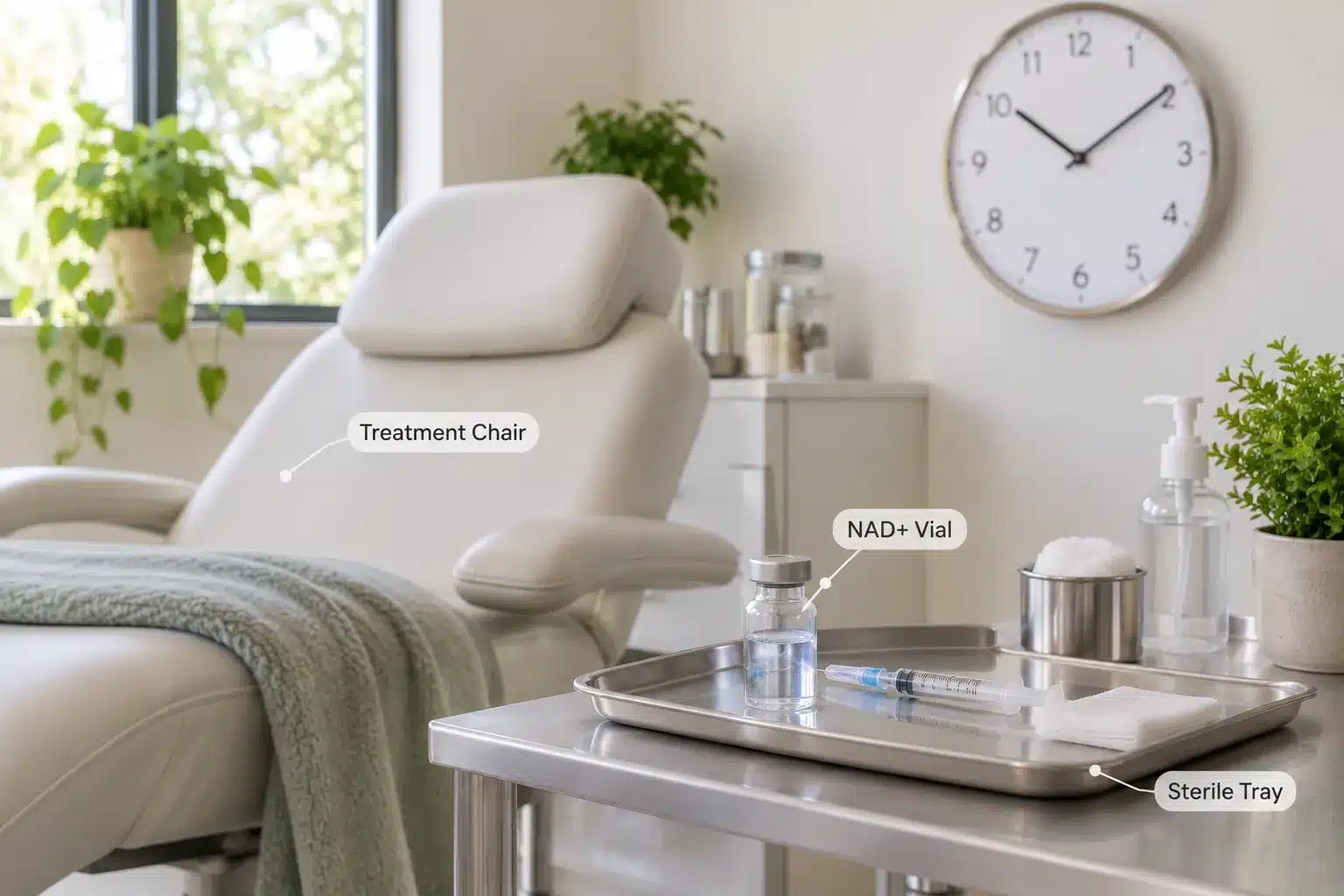
Look for a clinic staffed by a licensed physician, nurse practitioner, or physician assistant who performs an intake screening before your first session, not just a front-desk booking. Med spas, IV lounges, and some telehealth platforms offer NAD+, but quality and oversight vary a lot.
Checklist before you book:
Does a licensed provider review your health history first?
Do they disclose the compounding pharmacy they source from?
Can they explain expected side effects clearly, without overselling benefits?
Do they offer a lower starting dose for first-time patients?
Are prices listed upfront, without pressure to buy a large package immediately?
FAQ
Is NAD+ really a peptide?
No. NAD+ is a coenzyme built from vitamin B3, ribose, and adenine. Peptides are chains of amino acids. The terms get mixed up in marketing, but they describe different types of molecules.
Do NAD+ injections hurt?
Most people describe them as a quick pinch with mild soreness afterward, similar to a vitamin B12 shot. IV infusions can cause more noticeable discomfort like nausea or chest tightness during the drip.
Can NAD+ injections help with addiction recovery?
Some clinics market NAD+ IV therapy for withdrawal symptoms, but robust clinical trial evidence supporting this use in humans is limited. Treat it as a supportive option alongside, not a replacement for, established addiction treatment.
How long does one NAD+ IV session take?
A typical IV infusion runs one to four hours depending on the dose and how fast your body tolerates the drip. Injections take only a few minutes.
Will NAD+ injections help with long-COVID fatigue?
Early research and patient reports suggest some people feel improved energy, but controlled studies specifically on long-COVID fatigue and NAD+ injections are still limited. Discuss other evidence-based fatigue treatments with your doctor alongside trying this.
Do I need a prescription for NAD+ injections?
In the US, legitimate clinics dispense NAD+ through a provider’s prescription via a compounding pharmacy. Products sold online as “research use only” without a prescription aren’t meant for human injection.
How does NAD+ compare to NMN supplements?
NAD+ injections raise blood levels faster and more directly, while NMN is an oral precursor your body converts into NAD+ over time. NMN has more published human studies on raising NAD+ levels, while direct injection research in humans is still catching up.
7 Best GLP-1 Providers Ranked: Accreditation, Flexibility & Support Compared (2026 Update)
32,000+ Patients Can't All Be Wrong: See the Top-Rated GLP-1 Providers: Compared on accreditation, plan flexibility, and patient support — updated for 2026.
BMI MD GLP-1 Microdosing Plan
- Specialized microdosing options (sublingual drops or low-dose injections)
- Ideal for maintaining weight or tapering off higher doses safely
- Fully bundled plan with no hidden monthly platform memberships
DirectMeds Weight Loss Solutions
- Sourced from accredited, state-licensed 503A compounding pharmacies
- No-frills high-volume savings passed directly to the patient
- Includes clinical consultation and cold-chain shipping updates
MEDVi Flat-Rate Telehealth
- Flat monthly rate holds steady even at maximum maintenance doses
- No dosage upcharges or graduation fee penalties
- Offers both injectable and advanced oral thin-film delivery options
Gala GLP-1 Care Program
- All-inclusive plan with no standalone membership costs
- Continuous text-based messaging access with state-licensed clinicians
- Temperature-controlled, cold-chain medication shipping included
Measured GLP-1 Metabolic Health
- Comprehensive metabolic health screening and expert intake analysis
- Predictable long-term budgeting with stable plan pricing
- High-end responsive dashboard with integrated diagnostic support
Refills GLP-1 (TryRefills Plan)
- Flat rate holds steady as titration scales up
- Includes clinical guides for active side-effect management
- Bundles in foundational nutritional strategies alongside medication
AltRx GLP-1 Transactional Reorders
- Zero recurring auto-billing — pay entirely on a transactional basis
- Rapid text-to-order format saves time for experienced patients
- Provides both injectable forms and fast-dissolving tablet variations
Conclusion
NAD+ injections are a real coenzyme-delivery method, not a peptide, and the honest picture is that human evidence specifically on injections remains thinner than the marketing suggests. If you’re curious, start with a licensed provider who screens your health history, start at a lower dose, and judge results over a short series of sessions rather than one shot. If cost or needles are a barrier, oral NMN or NR, along with basic sleep and exercise habits, are reasonable starting points with a longer track record. Whatever you choose, confirm your provider sources from a legitimate compounding pharmacy and skip any seller who doesn’t ask about your health history first.
Medically reviewed by [Name, Credentials, placeholder]
This article is for informational purposes only and does not replace personalized medical advice. Talk to a licensed healthcare provider before starting NAD+ therapy, especially if you have an existing health condition or take prescription medication.
Sources
National Institute on Aging, “NAD+ and Aging Research,” nia.nih.gov (2023)
U.S. Food and Drug Administration, “Compounding and the FDA,” fda.gov (2024)
National Center for Complementary and Integrative Health, “NAD+ Supplements,” nccih.nih.gov (2023)