NAD+ 500 mg Vial: Injection Dosage Chart

Last updated: November 24, 2026
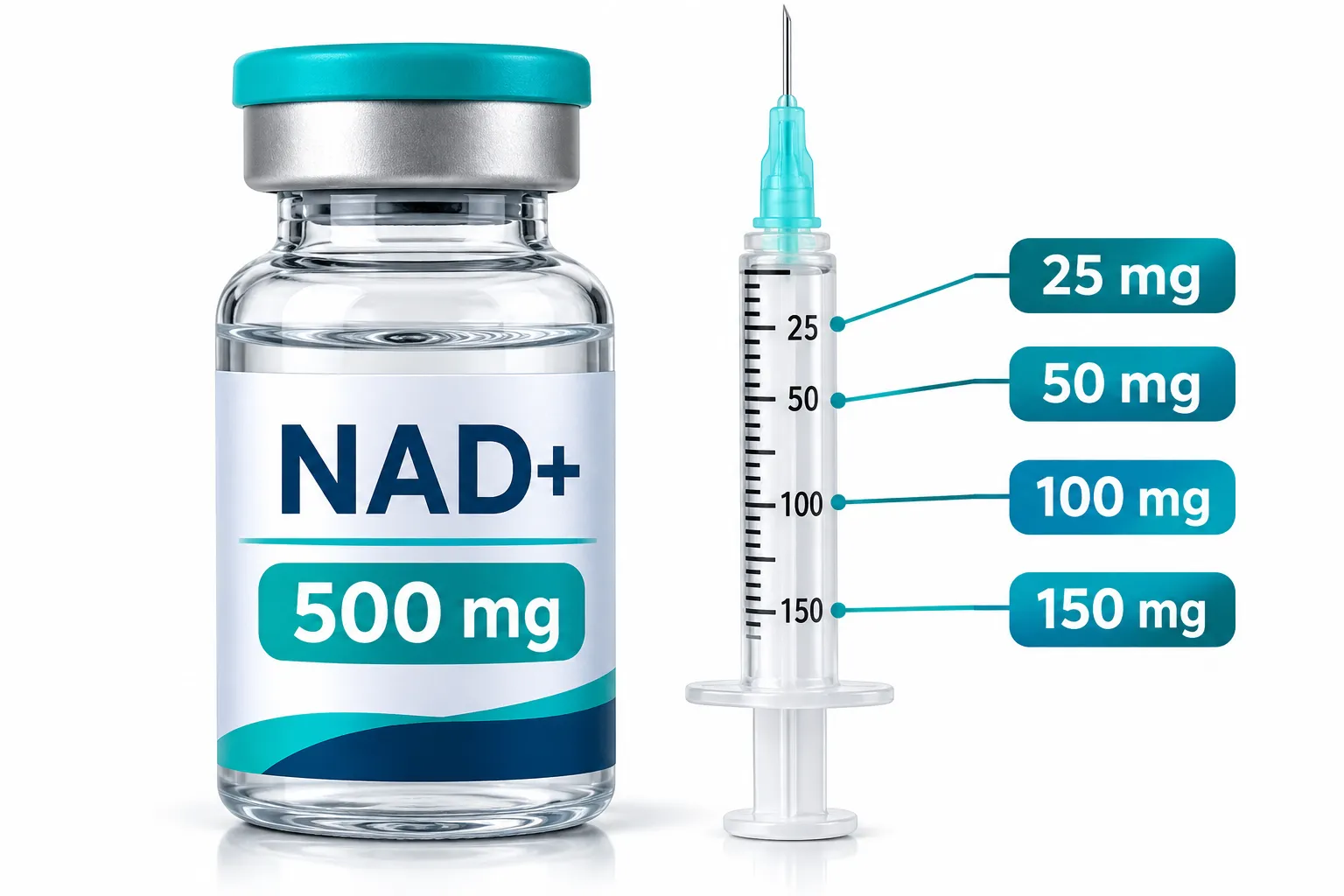
A single 500 mg NAD+ vial typically gets split into dozens of small doses rather than used all at once. Most clinics draw between 25 mg and 100 mg per injection, meaning one vial can last anywhere from five to twenty sessions depending on the protocol a provider sets.
Quick Answer
A NAD+ 500 mg vial is usually reconstituted with bacteriostatic water and injected in doses ranging from 25 mg to 100 mg subcutaneously or intramuscularly, a few times per week. There is no single approved dosage chart because NAD+ injections are not FDA-approved for any condition, so exact amounts and frequency should come from a licensed provider based on your health history and the product’s labeling. This article explains common dosing ranges, injection technique, storage, and safety considerations, but it is not a substitute for medical advice.
7 Best GLP-1 Providers Ranked: Accreditation, Flexibility & Support Compared (2026 Update)
32,000+ Patients Can't All Be Wrong: See the Top-Rated GLP-1 Providers. We compared the leading online GLP-1 providers based on program features, clinical support, convenience, and overall value.
BMI MD GLP-1 Microdosing Plan
- Specialized microdosing options, including sublingual drops and low-dose injections
- Designed for people interested in maintaining weight or gradually adjusting treatment
- Bundled program structure without a separate monthly platform membership
- Online access makes the process convenient from home

DirectMeds Weight Loss Solutions
- Online weight-loss program with a straightforward patient experience
- Compounded medication options through state-licensed compounding pharmacies
- Includes clinical consultation as part of the process
- Provides shipping updates to help patients track their orders
MEDVi Flat-Rate Telehealth
- Flat-rate telehealth approach designed for easier budgeting
- No dosage-based pricing increases within the advertised program structure
- Offers injectable and oral thin-film delivery options
- Includes medical screening and asynchronous provider consultations
Gala GLP-1 Care Program
- Text-based access to state-licensed clinicians
- Cold-chain medication shipping included in the program
- Month-to-month program structure
- Designed for people who value convenient ongoing support
Measured GLP-1 Metabolic Health
- Comprehensive metabolic health screening and intake analysis
- Designed around longer-term metabolic health management
- Responsive dashboard with integrated health tracking tools
- Useful option for patients who value a more data-focused experience
Refills GLP-1 (TryRefills Plan)
- Clinical guidance designed to help patients manage common treatment concerns
- Includes foundational nutritional strategies alongside medication
- Designed around predictable ongoing treatment
- No hidden startup or processing fees according to the program information provided
AltRx GLP-1 Transactional Reorders
- Transactional reorder model without recurring auto-billing
- Designed for patients who already understand their treatment routine
- Fast text-to-order process for convenient reorders
- Offers injectable and fast-dissolving tablet variations
Key Takeaways
- A 500 mg NAD+ vial is a concentrated multi-dose supply, not a single-use dose.
- Common injection amounts run 25-100 mg per session, several times a week in many clinic protocols.
- NAD+ is a coenzyme, not technically a peptide, despite how it’s often marketed.
- Injections aim for higher bioavailability than oral NAD+ precursors like NMN or NR, though direct human comparison data is limited.
- Reported side effects include injection site soreness, flushing, nausea, and fatigue.
- Products labeled “research use only” are not meant for human use and carry legal and safety concerns.
- Opened vials need refrigeration and have a limited use window, often days to a few weeks.
- Pregnant women, people with serious liver or kidney disease, and those on blood thinners should talk to a doctor before considering NAD+ injections.
What is NAD+ and why do people inject it
NAD+, or nicotinamide adenine dinucleotide, is a coenzyme every cell in your body needs to convert food into usable energy. It is not a peptide, even though it’s frequently sold under that label at med spas and online shops.
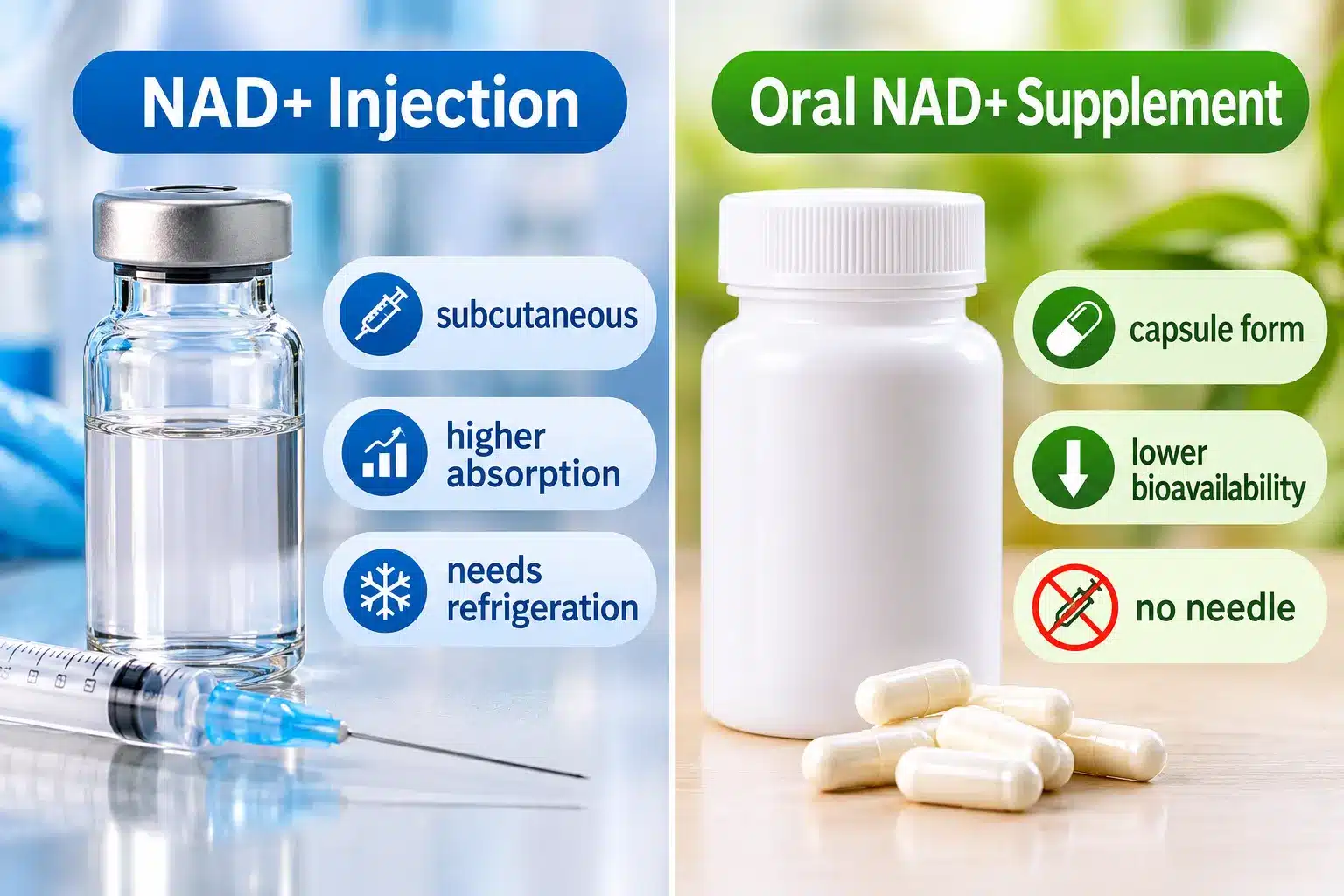
People inject it because oral NAD+ breaks down heavily in the digestive tract before it reaches the bloodstream. Injecting it, either under the skin or into muscle, is marketed as a way to raise blood levels more directly. NAD+ levels naturally decline with age, which is part of why it gets pitched for energy, mental clarity, and recovery from substance use.
The evidence in humans is still thin. Most of the strong data on NAD+ decline and supplementation comes from animal studies, with human trials mostly small and short-term [VERIFY]. Clinics offering NAD+ IV therapy often target fatigue, hangover recovery, and addiction support, but none of these uses are FDA-approved.
How much NAD+ should I inject from a 500 mg vial
Clinics commonly draw 25 mg to 100 mg per injection from a 500 mg vial, meaning one vial supplies roughly 5 to 20 individual doses. The right amount depends on your provider’s protocol, your body weight, and how you tolerate the first few doses.
A typical approach looks like this:
- Starting dose: 25 mg to 50 mg, used to check tolerance before increasing.
- Maintenance dose: 50 mg to 100 mg per injection, two to three times weekly.
- Maximum per session: Rarely exceeds 100 mg in subcutaneous protocols; IV drips can deliver much higher total amounts over an hour or more because they’re diluted and infused slowly.
If you’re new to NAD+, choose the lower end of the range for at least your first two sessions. That gives you a chance to notice side effects like flushing or nausea before increasing the dose.
NAD+ injection dosage chart for beginners
Here’s a general reference some clinics use as a starting framework. This is not a prescription, and your provider may adjust it based on your labs and response.
A 500 mg vial dosed at 50 mg per session, twice weekly, lasts about five weeks. At 100 mg twice weekly, the same vial lasts roughly two and a half weeks.
How to inject a NAD+ 500 mg vial properly
Proper injection starts with correct reconstitution, then drawing the right volume, then choosing a clean injection site. Skipping any step raises the risk of infection or an inaccurate dose.
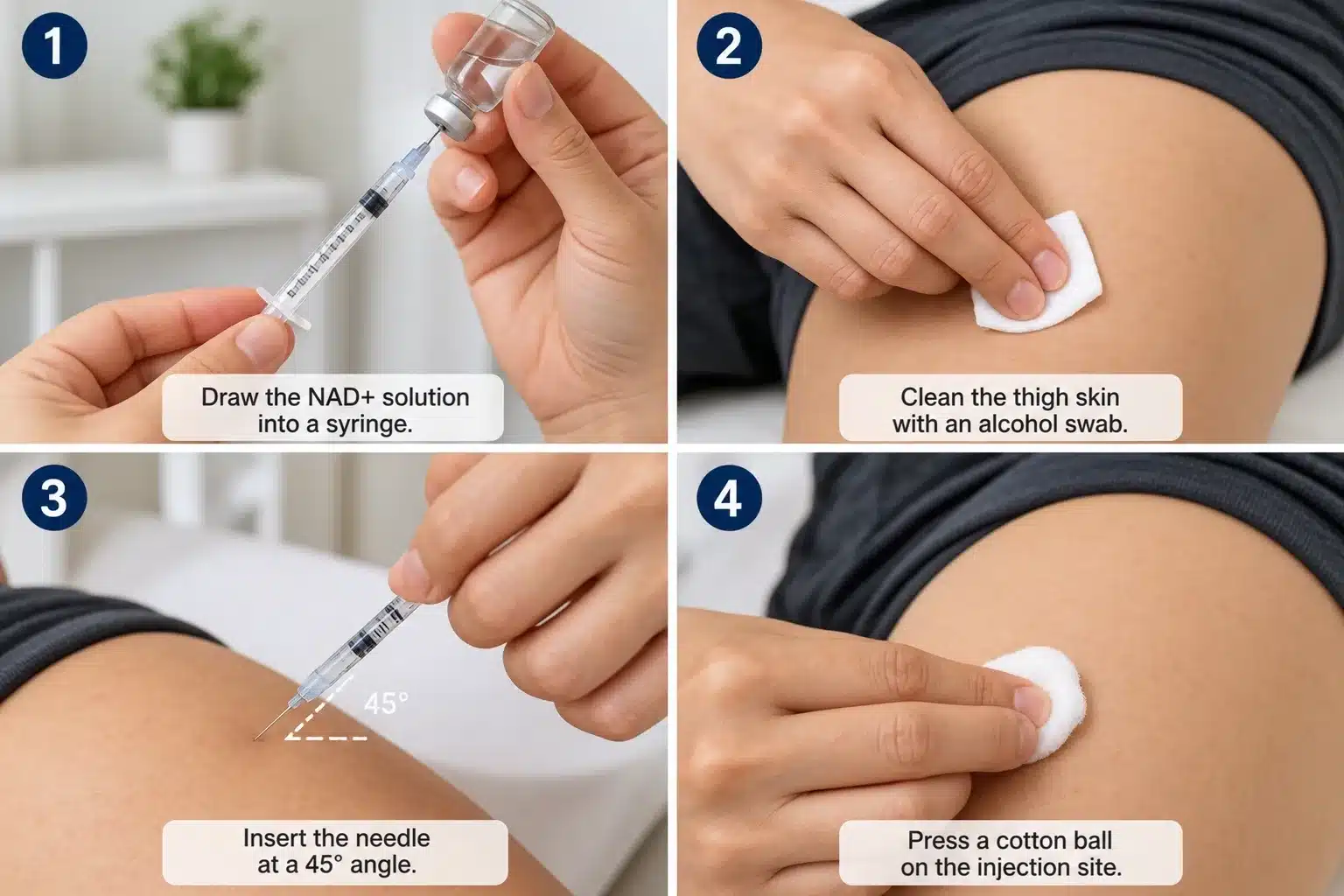
- Reconstitute the vial with bacteriostatic water as directed on the product label, usually by adding it slowly down the side of the vial glass, not directly onto the powder.
- Let it dissolve fully without shaking hard; gently swirl instead.
- Draw up the dose using an insulin syringe marked in units or mg, matching your provider’s instructions exactly.
- Choose a site: common subcutaneous spots are the abdomen or outer thigh; intramuscular injections often go into the thigh or glute.
- Clean the skin with an alcohol swab and let it dry before inserting the needle.
- Inject slowly, then apply light pressure with a cotton ball or gauze afterward.
- Dispose of the needle in a sharps container, never in regular trash.
Common mistake: injecting too fast. NAD+ injections, especially IM, can cause a flushing or warm sensation, and pushing the plunger quickly makes this worse.
NAD+ injection vs. NAD+ supplements: which is better
Injections bypass digestion and are believed to raise blood NAD+ levels faster than oral forms, but head-to-head human trials comparing injected NAD+ against oral precursors like NMN or NR are limited. If cost and convenience matter more than theoretical absorption, oral precursors are the simpler choice.
If you want a needle-free option while research develops, oral precursors are reasonable. If you’re already comfortable with self-injection and have provider oversight, injections may offer a faster route into circulation.
Where to buy NAD+ 500 mg vials
Legitimate NAD+ injectable vials come from compounding pharmacies through a prescription, or are administered directly in a licensed clinic or IV therapy center. Buying from unregulated online sellers labeled “research use only” means the product is not approved or verified for human injection.
- Telehealth or in-person clinic: Provider evaluates you, writes a prescription, pharmacy compounds it.
- Compounding pharmacy direct: Usually still requires a prescription on file.
- “Research chemical” websites: Avoid for personal use; these products skip safety and sterility testing required for injectables.
Anyone selling NAD+ for injection without requiring a prescription or medical screening is a red flag.
Can you mix NAD+ with other compounds
Mixing NAD+ in the same syringe with other peptides or medications is not something to do without explicit pharmacist or provider guidance, since compatibility and sterility can be compromised. Some clinics combine NAD+ with B-complex vitamins or glutathione in IV bags under controlled conditions, but that’s different from mixing at home.
If your provider has prescribed a combination protocol, follow their exact instructions on separate syringes or pre-mixed compounded solutions. Don’t improvise combinations based on online forums.
How often should I inject NAD+
Most protocols call for two to three injections per week during an initial phase, then tapering to once or twice weekly for maintenance. Frequency depends on the dose per session and your provider’s goals for you.
- Loading phase: 2-3x weekly for 4-8 weeks.
- Maintenance phase: 1-2x weekly, often indefinitely for those who continue.
- IV drip comparison: Some people do IV sessions weekly to monthly instead of self-injecting more frequently.
Edge case: if you experience strong flushing or nausea at your current frequency, your provider may space out doses rather than lower the dose itself.
Is NAD+ injection safe for me
NAD+ injections are generally considered low-risk for healthy adults under medical supervision, but “generally low-risk” is not the same as risk-free, and long-term safety data in humans is still limited. Side effects are usually mild but can include injection site reactions and systemic symptoms during administration.
Reported side effects include:
- Flushing or warmth, especially with faster injection or higher doses
- Nausea or stomach discomfort
- Fatigue or a brief energy dip after injection
- Injection site redness, swelling, or soreness
- Headache
Choose a lower starting dose and slower injection speed if you’ve had reactions to other IV or injectable therapies in the past.
What happens if I use too much NAD+
Exceeding your prescribed dose can intensify side effects like flushing, nausea, chest tightness, and anxiety-like symptoms, and in IV settings has been associated with discomfort during infusion when pushed too quickly. There’s no well-established lethal dose data for NAD+ injections in humans, but that absence of data is a reason for caution, not reassurance.
If you suspect you’ve taken too much:
- Stop the injection immediately if symptoms appear mid-dose.
- Contact your prescribing provider or a poison control line.
- Seek emergency care for chest pain, difficulty breathing, or severe allergic reaction symptoms like swelling of the face or throat.
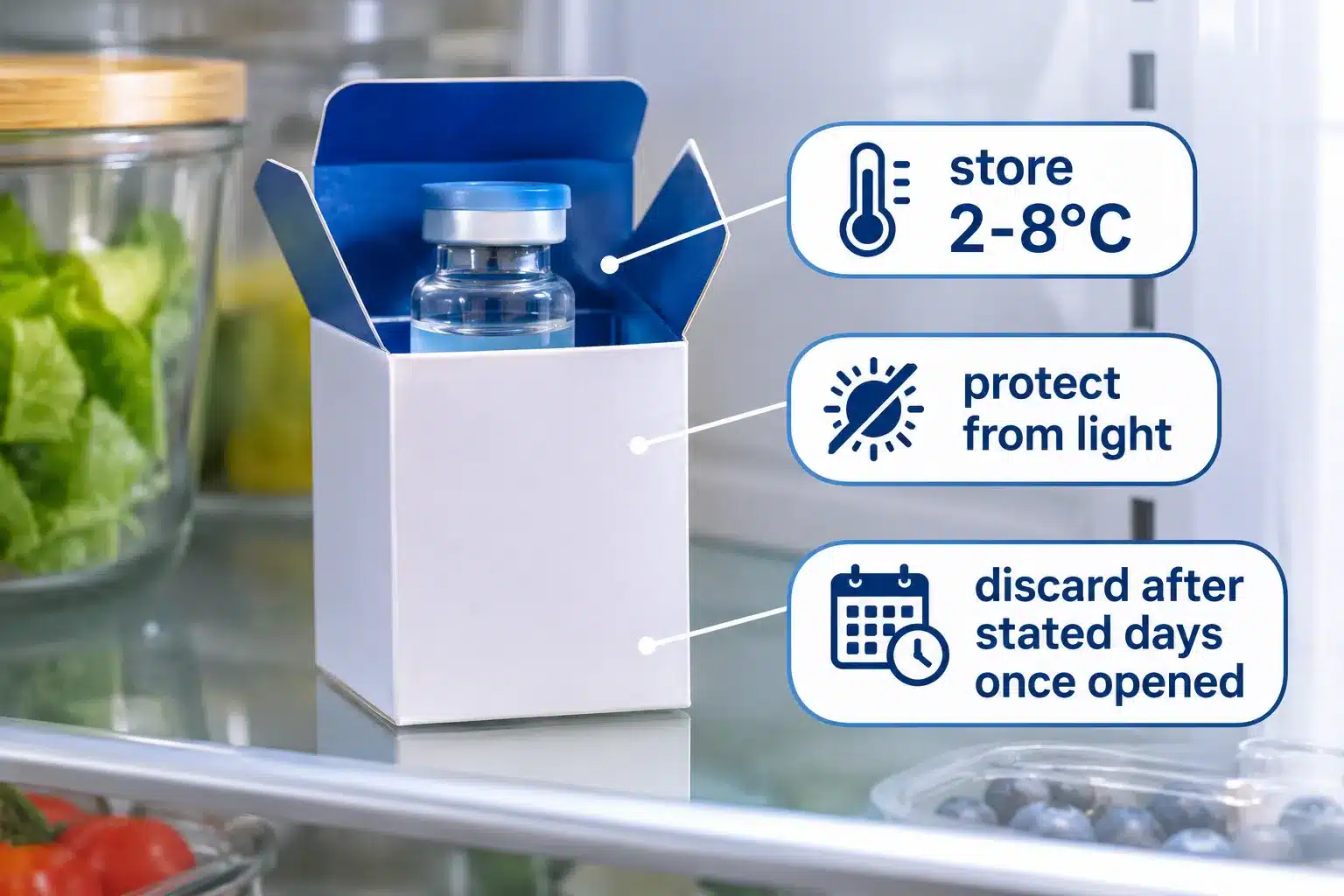
How to store NAD+ vials after opening
Unopened NAD+ vials are typically stored in a refrigerator or freezer per the manufacturer’s label, and once reconstituted, the clock starts on a shorter usability window. Follow the compounding pharmacy’s specific instructions, since stability can vary by formulation.
- Before reconstitution: Store per label, often refrigerated or frozen, away from light.
- After reconstitution: Refrigerate at 2-8°C and use within the pharmacy’s stated window, commonly days to a few weeks.
- Never leave reconstituted NAD+ at room temperature for extended periods or store it near direct sunlight.
- Discard any vial with discoloration, particles, or past its use-by date.
Does NAD+ injection actually work for anti-aging
Early research suggests NAD+ supports cellular energy production and DNA repair processes linked to aging, but there is no strong human clinical evidence that NAD+ injections reverse aging or extend lifespan. People report feeling more energetic or mentally sharp after sessions, but these are self-reports, not controlled outcomes.
What research does show, mostly in cell and animal models, is that NAD+ levels decline with age and that restoring them affects metabolic pathways tied to aging [VERIFY]. What it doesn’t show yet is a confirmed anti-aging effect in humans from injectable NAD+ specifically. Treat anti-aging marketing claims with skepticism until larger human trials exist.
Who shouldn’t take NAD+ injections
Certain groups should talk to a doctor before starting NAD+ injections, because the safety data in these populations is especially limited or the risk profile is higher.
Talk to your doctor first if you are:
- Pregnant or breastfeeding
- Living with significant liver or kidney disease
- Taking blood thinners or have a bleeding disorder
- Have a history of severe allergic reactions to injectable compounds
- Currently in active addiction treatment under a specific medical protocol, since NAD+ should complement, not replace, that care
- A minor, since NAD+ injections are not studied or approved for pediatric use
For related injectable protocols and dosing structures, see this semaglutide dosage chart for weight loss or the Ozempic dosage chart with titration schedule for comparison on how clinics structure dose increases over time. If you’re curious about energy-support injections more broadly, the MIC B12 injection guide for metabolism and energy covers a related category. Readers comparing oral versus injectable options may also find the semaglutide pills versus injections cost comparison useful as a model for weighing convenience against cost. For proper injection site technique in general, see where to inject Ozempic: best sites and step-by-step guide. Those exploring compounded injectable options elsewhere can review compounded semaglutide injections as a reference point for how compounding pharmacies handle custom dosing.
FAQ
Is NAD+ actually a peptide?
No. NAD+ is a coenzyme made from vitamin B3 derivatives, not a chain of amino acids like a true peptide. It’s often marketed alongside peptides, which causes the confusion.
Do I need a prescription for NAD+ injections?
In most legitimate settings, yes. Compounding pharmacies require a prescription, and clinics typically have a provider evaluate you first.
How long does a 500 mg vial last?
At 50 mg per injection twice weekly, a vial lasts about five weeks. At higher doses or more frequent injections, it runs out faster.
Can I inject NAD+ myself at home?
Some patients self-inject after training from their provider, similar to how people self-inject insulin or GLP-1 medications. Always follow your provider’s specific instructions on technique and dose.
Does NAD+ help with hangovers or addiction recovery?
It’s marketed for both, and some people report feeling better, but controlled human evidence for these specific uses is limited [VERIFY]. It should not replace formal addiction treatment.
What’s the difference between NAD+ injections and IV drips?
Injections deliver a smaller volume quickly under the skin or into muscle. IV drips infuse a larger, more diluted amount over 30-90 minutes directly into a vein, often at higher clinic cost.
Are there long-term risks from repeated NAD+ injections?
Long-term human safety data is limited, so ongoing use should happen under medical supervision with periodic check-ins rather than indefinite self-management.
7 Best GLP-1 Providers Ranked: Accreditation, Flexibility & Support Compared (2026 Update)
32,000+ Patients Can't All Be Wrong: See the Top-Rated GLP-1 Providers: Compared on accreditation, plan flexibility, and patient support — updated for 2026.
BMI MD GLP-1 Microdosing Plan
- Specialized microdosing options (sublingual drops or low-dose injections)
- Ideal for maintaining weight or tapering off higher doses safely
- Fully bundled plan with no hidden monthly platform memberships
DirectMeds Weight Loss Solutions
- Sourced from accredited, state-licensed 503A compounding pharmacies
- No-frills high-volume savings passed directly to the patient
- Includes clinical consultation and cold-chain shipping updates
MEDVi Flat-Rate Telehealth
- Flat monthly rate holds steady even at maximum maintenance doses
- No dosage upcharges or graduation fee penalties
- Offers both injectable and advanced oral thin-film delivery options
Gala GLP-1 Care Program
- All-inclusive plan with no standalone membership costs
- Continuous text-based messaging access with state-licensed clinicians
- Temperature-controlled, cold-chain medication shipping included
Measured GLP-1 Metabolic Health
- Comprehensive metabolic health screening and expert intake analysis
- Predictable long-term budgeting with stable plan pricing
- High-end responsive dashboard with integrated diagnostic support
Refills GLP-1 (TryRefills Plan)
- Flat rate holds steady as titration scales up
- Includes clinical guides for active side-effect management
- Bundles in foundational nutritional strategies alongside medication
AltRx GLP-1 Transactional Reorders
- Zero recurring auto-billing — pay entirely on a transactional basis
- Rapid text-to-order format saves time for experienced patients
- Provides both injectable forms and fast-dissolving tablet variations
Conclusion
A 500 mg NAD+ vial is meant to be split into multiple small doses, typically 25-100 mg per injection, rather than used in one sitting. The right dose, frequency, and whether injections make sense for you at all depends on your health history and should be set by a licensed provider, not a dosage chart you found online.
If you’re considering NAD+ injections, start by asking a provider for bloodwork, a clear starting dose, and a plan for monitoring side effects. Keep your vials properly refrigerated, use sterile technique every time, and avoid unregulated “research use only” sellers entirely.
Medically reviewed by [Name, Credentials] (placeholder)
This article is for informational purposes only and does not replace personalized medical advice. Talk to a licensed healthcare provider before starting NAD+ injections or any new treatment.
FAQ Schema
<code class="language-json">{
  "@context": "https://schema.org",
  "@type": "FAQPage",
  "mainEntity": [
    {"@type": "Question","name": "Is NAD+ actually a peptide?","acceptedAnswer": {"@type": "Answer","text": "No. NAD+ is a coenzyme made from vitamin B3 derivatives, not a chain of amino acids like a true peptide. It's often marketed alongside peptides, which causes the confusion."}},
    {"@type": "Question","name": "Do I need a prescription for NAD+ injections?","acceptedAnswer": {"@type": "Answer","text": "In most legitimate settings, yes. Compounding pharmacies require a prescription, and clinics typically have a provider evaluate you first."}},
    {"@type": "Question","name": "How long does a 500 mg vial last?","acceptedAnswer": {"@type": "Answer","text": "At 50 mg per injection twice weekly, a vial lasts about five weeks. At higher doses or more frequent injections, it runs out faster."}},
    {"@type": "Question","name": "Can I inject NAD+ myself at home?","acceptedAnswer": {"@type": "Answer","text": "Some patients self-inject after training from their provider, similar to insulin or GLP-1 self-injection. Always follow your provider's specific instructions."}},
    {"@type": "Question","name": "Does NAD+ help with hangovers or addiction recovery?","acceptedAnswer": {"@type": "Answer","text": "It's marketed for both, and some people report feeling better, but controlled human evidence for these specific uses is limited. It should not replace formal addiction treatment."}},
    {"@type": "Question","name": "What's the difference between NAD+ injections and IV drips?","acceptedAnswer": {"@type": "Answer","text": "Injections deliver a smaller volume quickly under the skin or into muscle. IV drips infuse a larger, more diluted amount over 30-90 minutes directly into a vein."}},
    {"@type": "Question","name": "Are there long-term risks from repeated NAD+ injections?","acceptedAnswer": {"@type": "Answer","text": "Long-term human safety data is limited, so ongoing use should happen under medical supervision with periodic check-ins."}}
  ]
}
</code>
Internal link suggestions used: semaglutide dosage chart, Ozempic dosage chart, MIC B12 injection guide, semaglutide pills vs injections cost, where to inject Ozempic, compounded semaglutide injections.
External link suggestions: [External link: NIH/PubMed → NAD+ decline with aging and cellular metabolism research], [External link: FDA → regulatory status of compounded and research-use-only injectable products].
[VERIFY] items for editor: human trial evidence strength for NAD+ anti-aging claims; cost range per month for NAD+ injections vs oral precursors; evidence level for hangover/addiction recovery claims.