
Compounded Tirzepatide Injections Rx – The Complete Guide 2026
Last updated: August 10, 2026
Quick Answer: Compounded tirzepatide injections Rx refers to pharmacy-prepared versions of the active ingredient in Mounjaro and Zepbound, prescribed for weight loss or blood sugar management. However, following the FDA’s formal resolution of the tirzepatide shortage in October 2024 and subsequent court rulings in 2025, most U.S. compounding pharmacies can no longer legally produce these copies for routine use. Patients seeking tirzepatide today should work with a licensed clinician to access FDA-approved products, unless a narrow individualized medical-need exception applies.
Key Takeaways
- Compounded tirzepatide injections work by activating both GIP and GLP-1 receptors, reducing appetite and improving blood sugar control.
- The FDA declared the tirzepatide shortage resolved on October 2, 2024, removing the legal basis for most compounding pharmacies to produce tirzepatide copies. [6]
- A U.S. District Court upheld the FDA’s decision on May 7, 2025, confirming that compounders cannot use the shortage list to justify making tirzepatide copies. [9]
- Compounded tirzepatide is not FDA-approved and has not been evaluated for safety or effectiveness by the FDA. [5]
- 503A pharmacies (small-scale compounders) were required to stop immediately after the March 5, 2025 court ruling; 503B outsourcing facilities had until March 19, 2025. [8]
- Brand-name Zepbound and Mounjaro are now commercially available and are the FDA-recommended options for patients who qualify.
- Some telehealth platforms still advertise compounded tirzepatide, but these offerings operate against current FDA guidance and carry legal and safety risks. [1][5]
- Patients who cannot tolerate brand-name formulations may qualify for individualized compounding under narrow medical-need exceptions.
- Weight loss results with tirzepatide (branded or compounded, when it was available) typically begin within 4 to 8 weeks, with significant results seen over 6 to 12 months.
- Always verify that any tirzepatide product is FDA-approved, sourced through a licensed pharmacy, and prescribed by a licensed clinician.
What Is Compounded Tirzepatide and How Does It Work
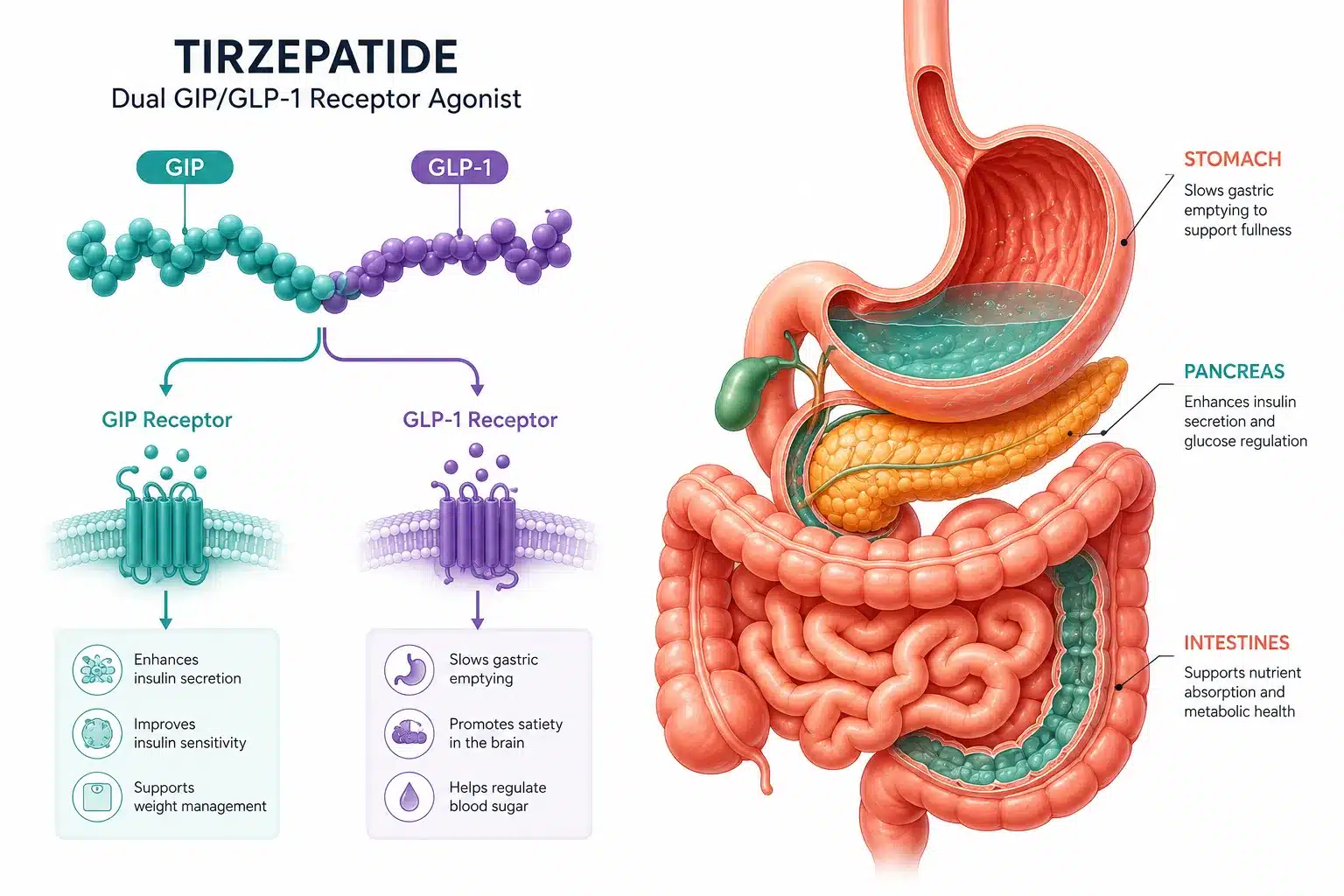
Compounded tirzepatide is a pharmacy-prepared version of tirzepatide, the active ingredient found in the brand-name drugs Mounjaro (for type 2 diabetes) and Zepbound (for weight management). It works by activating two hormone receptors simultaneously: the glucose-dependent insulinotropic polypeptide (GIP) receptor and the glucagon-like peptide-1 (GLP-1) receptor.
This dual-receptor action sets tirzepatide apart from older GLP-1 medications. By targeting both pathways, it:
- Slows gastric emptying, so you feel full longer after eating
- Reduces appetite signals in the brain
- Stimulates insulin release in response to meals
- Decreases glucagon secretion, which lowers blood sugar
During the period when branded tirzepatide was in short supply, licensed compounding pharmacies prepared their own versions of the drug using the same active ingredient. A 2025 PubMed-indexed study described the clinical use of compounded tirzepatide for weight loss during the shortage period, noting that such products were used when branded supply was constrained. [3]
For a broader look at how tirzepatide works and what patients have experienced, see tirzepatide reviews by patients for real-world accounts.
Is Compounded Tirzepatide FDA Approved
No. Compounded tirzepatide is not FDA-approved, and it has not been evaluated by the FDA for safety or effectiveness. [5]
Compounded drugs are not subject to the same pre-market review process as FDA-approved medications. This means:
- There is no guarantee the compounded version matches the potency, purity, or sterility of Mounjaro or Zepbound.
- The FDA has warned about unauthorized and counterfeit tirzepatide products sold without a prescription, which are illegal and potentially dangerous. [5]
- Compounded tirzepatide “isn’t an exact match” to the branded products, according to GoodRx’s regulatory summary. [5]
The FDA formally declared the tirzepatide injection shortage resolved on October 2, 2024, stating that manufacturer supply of Mounjaro and Zepbound could meet current and projected demand. [6] This removed the primary legal basis that allowed compounders to produce tirzepatide copies under the drug shortage exception.
A U.S. District Court for the Northern District of Texas upheld the FDA’s removal of tirzepatide from the shortage list on May 7, 2025, confirming the FDA acted within its statutory authority. [9]
For more context on the regulatory history, see our detailed overview of compounded tirzepatide: what you need to know.
Compounded Tirzepatide vs Brand Name Zepbound: Key Differences
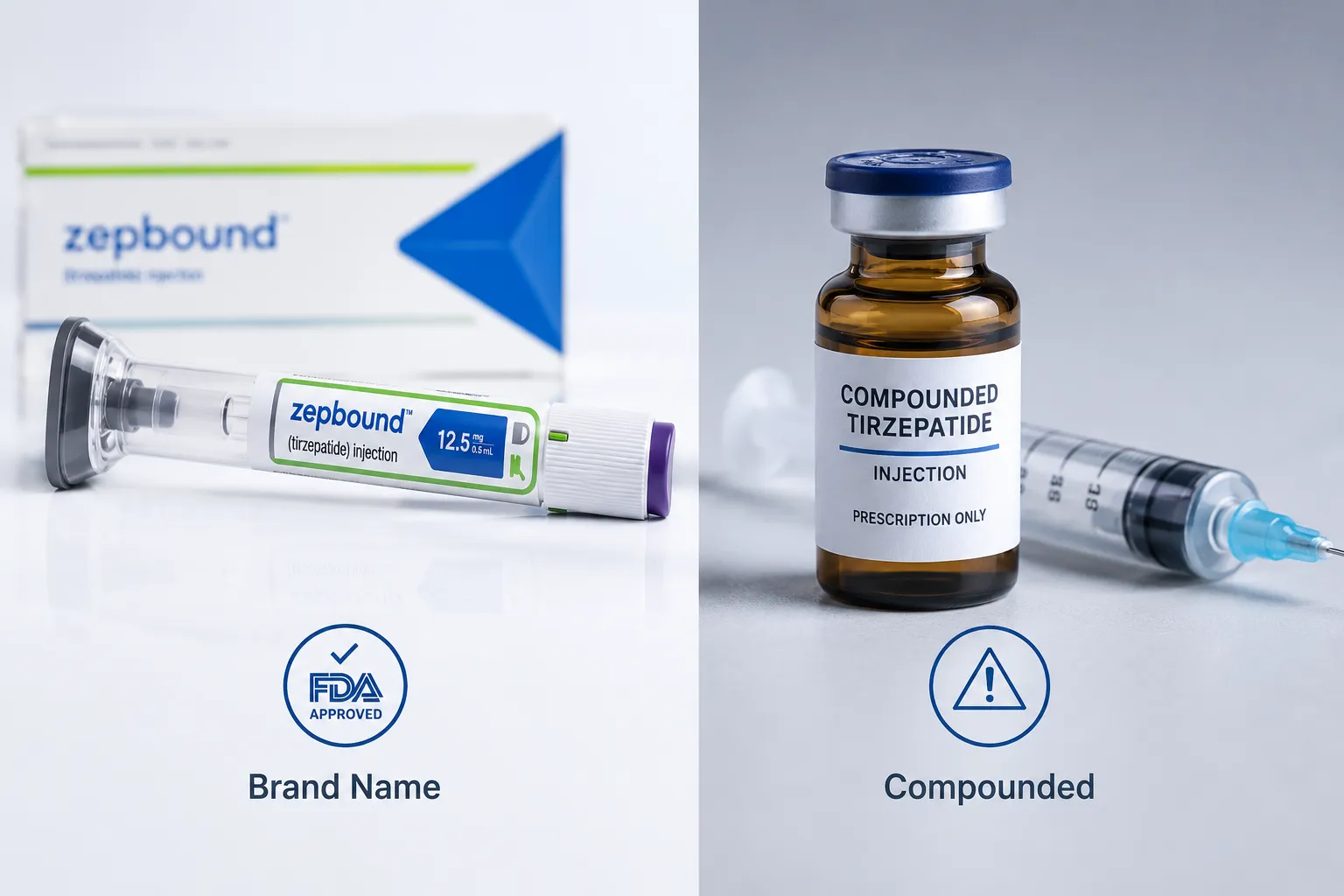
The core difference is regulatory status and quality assurance. Zepbound and Mounjaro are FDA-approved, manufactured under strict Good Manufacturing Practice (GMP) standards, and have undergone rigorous clinical trials. Compounded tirzepatide has none of those guarantees.
| Feature | Brand-Name (Zepbound/Mounjaro) | Compounded Tirzepatide |
|---|---|---|
| FDA Approval | Yes | No |
| Quality Control | GMP-certified manufacturing | Varies by pharmacy |
| Clinical Trial Data | Extensive | None (for the compounded product itself) |
| Legal Status (2026) | Fully legal | Largely prohibited for routine use [7][9] |
| Delivery Device | Auto-injector pen | Typically vial + syringe |
| Insurance Coverage | Possible with prior authorization | Generally not covered |
The FDA’s position is clear: patients should not use compounded products when an FDA-approved medication is available. [7] For a deeper comparison of compounded versus brand-name GLP-1 medications, read is compounded GLP-1 as effective as brand name.
How Much Does Compounded Tirzepatide Cost Without Insurance
During the shortage period, compounded tirzepatide was significantly cheaper than branded alternatives, with some telehealth platforms advertising injections starting around $100 per month. However, pricing varied widely depending on dose, pharmacy, and provider fees. [1]
For context on what branded tirzepatide costs, see tirzepatide monthly cost and our tirzepatide compounding pharmacy cost guide.
Key cost factors that applied when compounded tirzepatide was legally available:
- Dose level: Higher doses (10 mg, 15 mg) cost more than starter doses (2.5 mg, 5 mg)
- Pharmacy type: 503B outsourcing facilities often charged more than 503A compounders
- Telehealth consultation fees: Many providers bundled the prescription fee with the medication cost
- Shipping: Some platforms included free shipping; others charged separately
Because most compounding of tirzepatide is now prohibited, patients looking for affordable access should explore manufacturer savings programs for Zepbound and Mounjaro, HSA/FSA payment options, and patient assistance programs. For a full breakdown of GLP-1 medication costs, see cost of GLP-1 semaglutide compounded tirzepatide.
Where Can I Get Compounded Tirzepatide Prescribed
As of 2026, getting a prescription for compounded tirzepatide injections Rx is legally complicated. Most U.S. compounding pharmacies can no longer lawfully produce tirzepatide copies for routine weight-loss therapy following the 2024 shortage resolution and 2025 court rulings. [8][9]
That said, there are narrow circumstances where compounding may still be permissible:
- Individualized medical need: A licensed prescriber may document that a specific patient cannot use the commercially available product (for example, due to an allergy to an inactive ingredient). In this case, a 503A pharmacy may be able to compound a modified formulation.
- Specific clinical circumstances: These must be documented and are evaluated case by case.
If you’re looking for tirzepatide treatment, the practical path in 2026 is:
- Consult a licensed physician, nurse practitioner, or telehealth provider.
- Discuss whether you qualify for Zepbound (weight management) or Mounjaro (type 2 diabetes).
- Ask about manufacturer savings programs, which can significantly reduce out-of-pocket costs.
- If you have a documented intolerance to the branded formulation, ask your prescriber whether individualized compounding is appropriate for your situation.
Avoid any platform that offers compounded tirzepatide without a valid prescription or without a licensed clinician reviewing your medical history. These products are illegal and potentially dangerous. [5]
Compounded Tirzepatide Side Effects: What to Expect
The side effect profile of compounded tirzepatide mirrors what is documented for branded tirzepatide, since the active ingredient is the same. The most commonly reported side effects are gastrointestinal.
Common side effects:
- Nausea (most frequent, especially during dose escalation)
- Vomiting
- Diarrhea or constipation
- Decreased appetite
- Stomach pain or bloating
- Heartburn or acid reflux
Less common but serious side effects to know:
- Pancreatitis (severe abdominal pain, nausea, vomiting)
- Gallbladder problems, including gallstones
- Low blood sugar (hypoglycemia), especially when combined with other diabetes medications
- Increased heart rate
- Kidney problems (often related to dehydration from vomiting or diarrhea)
- Allergic reactions
A note specific to compounded products: Because compounded tirzepatide lacks FDA quality oversight, there is an additional risk of contamination, incorrect dosing, or improper formulation. [5] These risks are over and above the known side effects of tirzepatide itself.
Most side effects are dose-dependent and improve as your body adjusts. Starting at a low dose and escalating slowly is the standard approach to managing tolerability.
Compounded Tirzepatide Injection: How Often Do You Take It
Tirzepatide injections, whether branded or compounded, are administered once weekly via subcutaneous injection. This dosing schedule applies to both Mounjaro and Zepbound, and was the same for compounded versions during the shortage period.
Standard dosing schedule:
- Inject on the same day each week, at any time of day
- You can take it with or without food
- Rotate injection sites to prevent skin irritation (abdomen, thigh, and upper arm are common sites)
Typical dose escalation for weight management (as used in clinical practice):
| Week | Dose |
|---|---|
| Weeks 1-4 | 2.5 mg weekly |
| Weeks 5-8 | 5 mg weekly |
| Weeks 9-12 | 7.5 mg weekly |
| Weeks 13-16 | 10 mg weekly |
| Weeks 17-20 | 12.5 mg weekly |
| Week 21+ | 15 mg weekly (maximum) |
Dose escalation is individualized. Not every patient needs to reach the maximum dose, and some clinicians hold patients at a lower dose if they are tolerating it well and seeing results.
Who Should Not Take Compounded Tirzepatide
Tirzepatide is not appropriate for everyone. Certain medical conditions and circumstances make it contraindicated or require careful evaluation before use.
Absolute contraindications (do not use if you have):
- Personal or family history of medullary thyroid carcinoma (MTC)
- Multiple Endocrine Neoplasia syndrome type 2 (MEN 2)
- Known hypersensitivity to tirzepatide or any component of the formulation
Use with caution or requires medical evaluation if you have:
- History of pancreatitis
- Gallbladder disease
- Severe gastrointestinal disorders (such as gastroparesis)
- Diabetic retinopathy (rapid improvement in blood sugar can temporarily worsen eye disease)
- Kidney disease
- Pregnancy or plans to become pregnant (tirzepatide should be discontinued at least 2 months before a planned pregnancy)
Additional consideration for compounded products specifically: Because compounded tirzepatide is not FDA-approved and may contain different inactive ingredients or concentrations, patients with allergies or sensitivities face an added layer of uncertainty. [5]
Anyone considering tirzepatide should have a thorough medical evaluation by a licensed clinician before starting.
Compounded Tirzepatide vs Semaglutide: Which Is Better
Tirzepatide and semaglutide are both GLP-1 receptor agonists used for weight loss and blood sugar management, but tirzepatide’s additional GIP receptor action gives it a different efficacy profile. Clinical trial data for the branded versions shows tirzepatide producing greater average weight loss than semaglutide at comparable doses, though individual results vary.
Key differences:
- Mechanism: Tirzepatide activates both GIP and GLP-1 receptors; semaglutide activates GLP-1 only
- Average weight loss: In clinical trials of branded products, tirzepatide users lost more body weight on average than semaglutide users, though head-to-head trial data is still limited
- Side effect profile: Both have similar GI side effects; tirzepatide may cause slightly more nausea at higher doses in some patients
- Availability of compounded versions: Both have faced compounding restrictions; semaglutide’s regulatory situation differs from tirzepatide’s
For a detailed breakdown, see difference between semaglutide and tirzepatide and compounded vs brand semaglutide: pros, cons, costs.
Choose tirzepatide if: You want the dual-mechanism approach and have no contraindications, and your prescriber recommends it based on your metabolic profile.
Choose semaglutide if: Your prescriber determines it’s a better fit, or if cost or insurance coverage makes it more accessible for your situation.
Compounded Tirzepatide Weight Loss Results: What Timeline to Expect
Most patients using tirzepatide (branded or compounded, when it was legally available) begin noticing appetite suppression within the first 1 to 2 weeks. Measurable weight loss typically becomes apparent by weeks 4 to 8.
General timeline based on clinical use:
- Weeks 1-4: Appetite reduction, early weight loss (often 2-5 lbs depending on starting dose and diet)
- Weeks 4-12: Steady weight loss as dose escalates; most patients lose 5-10% of body weight in this window
- Months 3-6: Continued loss; clinical trial data for branded tirzepatide shows average losses of 15-20% of body weight over 72 weeks at the highest doses
- Month 6 onward: Weight loss may plateau; maintenance dosing and lifestyle factors become critical
Results vary significantly based on diet, physical activity, starting weight, metabolic health, and adherence to the dosing schedule. Tirzepatide is not a standalone solution; it works best as part of a comprehensive weight management program that includes dietary changes and increased physical activity.
How to Inject Compounded Tirzepatide at Home Safely
If you are under a valid prescription and your clinician has confirmed that a compounded formulation is appropriate under a documented medical-need exception, proper injection technique is essential for safety and effectiveness.
Step-by-step injection guide:
- Wash your hands thoroughly with soap and water for at least 20 seconds.
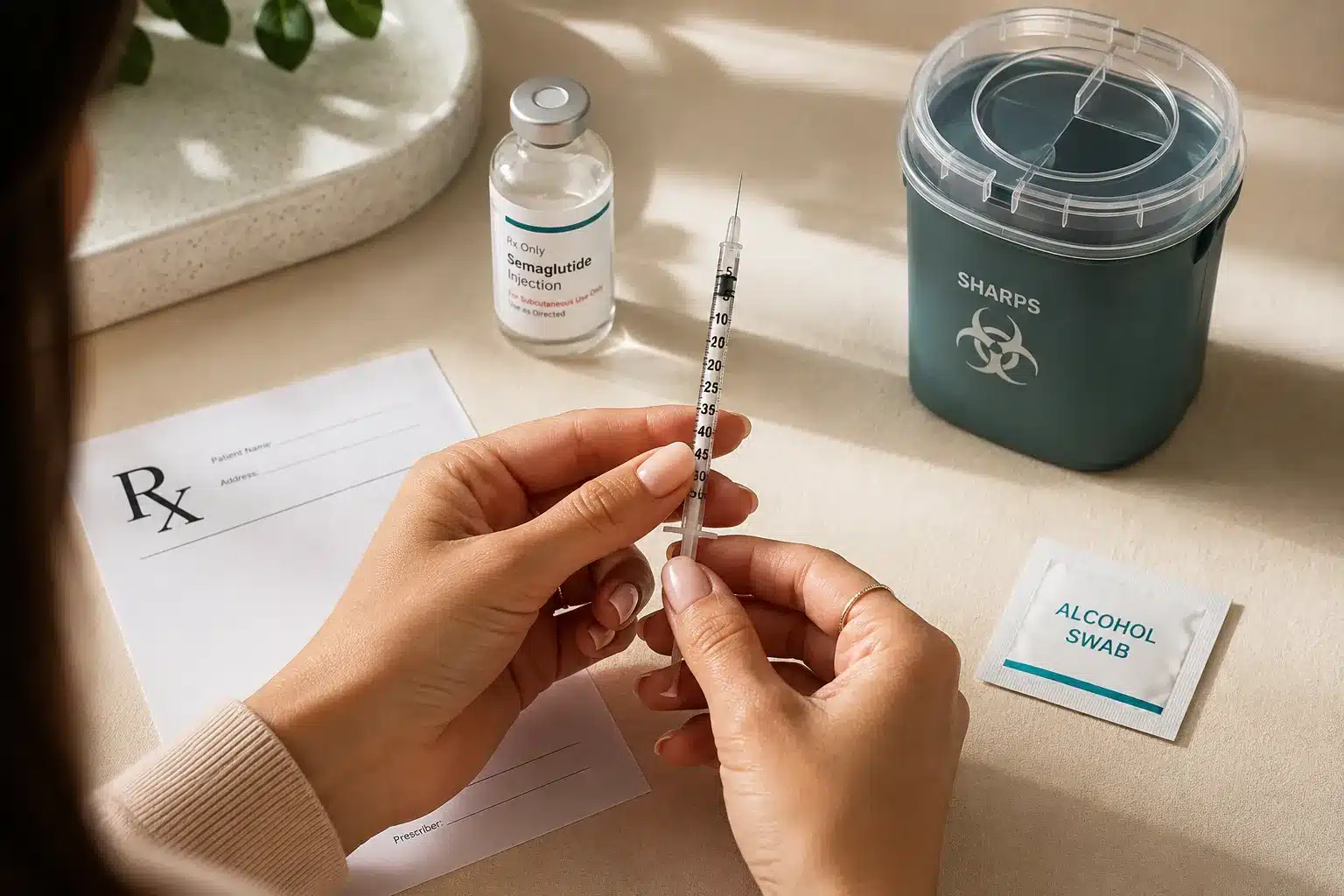
- Gather your supplies: vial of medication, appropriate syringe (typically an insulin syringe), alcohol swabs, and a sharps disposal container.
- Inspect the vial: Check the expiration date and look for particles or discoloration. Do not use if the solution looks cloudy or contains visible particles.
- Draw the correct dose: Using aseptic technique, insert the needle into the vial, invert, and draw the prescribed amount.
- Choose your injection site: Abdomen (at least 2 inches from the navel), outer thigh, or upper arm. Rotate sites each week.
- Clean the site: Wipe with an alcohol swab and allow to dry completely.
- Inject: Pinch the skin, insert the needle at a 45- to 90-degree angle, and inject slowly.
- Dispose safely: Place the used needle directly into a sharps container. Never recap needles.
- Store remaining medication: Follow your pharmacy’s storage instructions (typically refrigerated at 36-46°F / 2-8°C).
Common mistakes to avoid:
- Injecting into the same site repeatedly (causes lipohypertrophy, which reduces absorption)
- Not allowing the alcohol to dry before injecting (stings and may affect the medication)
- Drawing the wrong dose (always double-check with your prescriber or pharmacist)
- Using a vial past its expiration or beyond the beyond-use date set by the compounding pharmacy
Why Compounded Tirzepatide May Not Be Working
If you were using compounded tirzepatide and not seeing expected results, several factors could explain it.
Clinical reasons:
- You may not yet be at the therapeutic dose (dose escalation takes weeks to months)
- Dietary habits may be counteracting the appetite suppression
- Underlying metabolic conditions (thyroid disorders, insulin resistance) may slow results
- The medication may simply be less effective for you individually
Quality-related reasons specific to compounded products:
- Incorrect concentration or dose in the compounded formulation
- Degradation due to improper storage or handling
- Contamination or formulation errors, which are more likely without FDA oversight [5]
Regulatory reality check: As of 2026, if you are still receiving what is marketed as compounded tirzepatide from a pharmacy that has not documented a valid individualized medical-need exception, that product may not be legally or properly produced. This is an additional reason to transition to an FDA-approved product.
If tirzepatide (branded) is not producing results after 12 weeks at an adequate dose with lifestyle changes, discuss alternatives with your prescriber.
Common Mistakes People Make with Compounded Tirzepatide
Buying without a valid prescription. Some online platforms sell compounded tirzepatide without a legitimate clinician-patient relationship. This is illegal and dangerous. [5]
Assuming compounded equals identical. Compounded tirzepatide is not an exact match to Mounjaro or Zepbound. Inactive ingredients, concentration, and sterility standards can differ. [5]
Ignoring the current legal landscape. Many patients don’t realize that most compounding of tirzepatide became prohibited in early 2025. Continuing to seek out compounded versions from pharmacies that cannot legally produce them puts you at risk of receiving an illegal or substandard product. [8][9]
Skipping dose escalation. Jumping to higher doses too quickly dramatically increases GI side effects and is the most common reason patients discontinue treatment.
Not storing medication correctly. Tirzepatide must be refrigerated. Leaving it at room temperature for extended periods degrades the medication.
Mixing up units. Insulin syringes measure in units, not milligrams. Patients drawing their own doses from vials must understand the concentration of their specific preparation to avoid dangerous dosing errors.
FAQ
Is compounded tirzepatide still legal in 2026?
For most patients and most pharmacies, no. The FDA resolved the tirzepatide shortage in October 2024, and courts upheld that decision in May 2025. Routine compounding of tirzepatide copies is no longer permitted. Narrow exceptions exist for documented individualized medical needs. [9][8]
Can I still get a prescription for compounded tirzepatide Rx?
A licensed clinician can write a prescription for compounded tirzepatide only if you have a documented medical need that cannot be met by the FDA-approved product. This is a narrow exception, not a routine pathway. [7]
What is the difference between 503A and 503B compounding pharmacies?
503A pharmacies are small-scale compounders that prepare medications for individual patients with a prescription. 503B outsourcing facilities produce larger quantities for healthcare providers. Both were required to stop compounding tirzepatide copies by March 2025. [8]
Is compounded tirzepatide safe?
Compounded tirzepatide carries additional risks beyond those of the branded product, including potential contamination, incorrect dosing, and lack of FDA quality oversight. The FDA has also warned about counterfeit and unauthorized tirzepatide products. [5]
How does tirzepatide compare to semaglutide for weight loss?
Clinical trial data for branded products suggests tirzepatide produces greater average weight loss than semaglutide. However, individual results vary, and the best medication depends on your specific health profile and prescriber’s recommendation.
What should I do if I was using compounded tirzepatide and want to continue treatment?
Talk to your prescriber about transitioning to FDA-approved Zepbound (for weight management) or Mounjaro (for type 2 diabetes). Ask about manufacturer savings programs or patient assistance programs to manage cost.
Can I inject tirzepatide myself at home?
Yes, with proper training from your healthcare provider. Subcutaneous injections are designed for self-administration. Follow your prescriber’s instructions on dose, site rotation, and storage.
Why do some telehealth platforms still advertise compounded tirzepatide?
Some platforms continue to advertise these products despite current FDA guidance. Regulatory enforcement varies, and some may be operating under claimed medical-need exceptions. Patients should verify the legal and safety status of any product they are offered. [1][5]
Does insurance cover compounded tirzepatide?
No. Compounded medications are generally not covered by insurance. FDA-approved Zepbound and Mounjaro may have coverage depending on your plan and diagnosis.
How long does it take to see weight loss results with tirzepatide?
Most patients notice appetite suppression within 1 to 2 weeks and measurable weight loss by weeks 4 to 8. Significant results (10% or more of body weight) typically occur over 3 to 6 months with consistent use and lifestyle changes.
Conclusion
Compounded tirzepatide injections Rx occupied a significant role in weight management care during the period when branded supply was constrained. That chapter has effectively closed. The FDA’s 2024 shortage resolution and the May 2025 court ruling confirm that routine compounding of tirzepatide copies is no longer legally permissible in the United States for the vast majority of patients and pharmacies. [6][9]
If you are seeking tirzepatide treatment in 2026, the clear path is through FDA-approved Zepbound or Mounjaro, prescribed by a licensed clinician. Manufacturer savings programs, HSA/FSA accounts, and patient assistance programs can help reduce costs. If you have a specific medical need that prevents you from using the branded formulation, discuss individualized compounding options with your prescriber and a licensed 503A pharmacy.
Do not purchase any tirzepatide product without a valid prescription from a licensed clinician who has reviewed your medical history. The risks of unregulated or counterfeit products are real and serious.
Next steps: Consult a licensed clinician to discuss your eligibility for FDA-approved tirzepatide, review our tirzepatide cost guide to understand your financial options, and read GLP-1 injections for weight loss and diabetes for a broader overview of your treatment options.
References
[1] Compounded Tirzepatide – https://www.myalloy.com/solutions/compounded-tirzepatide
[2] Tirzepatide Shortage – https://www.goodrx.com/classes/gip-receptor-glp-1-receptor-agonists/tirzepatide-shortage
[3] PubMed: Compounded Tirzepatide Therapy for Weight Loss – https://pubmed.ncbi.nlm.nih.gov/39921911/
[4] FDA Updates Guidelines Compounding Tirzepatide Injections As GLP-1 Shortage Ends – https://www.pharmexec.com/view/fda-updates-guidelines-compounding-tirzepatide-injections-as-glp-1-shortage-ends
[5] Compounded Tirzepatide – https://www.goodrx.com/classes/gip-receptor-glp-1-receptor-agonists/compounded-tirzepatide
[6] FDA Clarifies Policies Compounders National GLP-1 Supply Begins Stabilize – https://www.fda.gov/drugs/drug-alerts-and-statements/fda-clarifies-policies-compounders-national-glp-1-supply-begins-stabilize
[7] Can You Get Tirzepatide from a Compounding Pharmacy? – https://www.drugs.com/medical-answers/you-tirzepatide-compounding-pharmacy-3575862/
[8] Compounded GLP-1 FAQ – https://www.americanmedspa.org/news/compounded-glp-1-faq/
[9] Court Backs FDA in Tirzepatide Compounding Case – https://www.mcdermottlaw.com/insights/court-backs-fda-in-tirzepatide-compounding-case/

With over 13 years of experience in holistic health blogging, I aim to help you navigate your wellness journey with honest insights, expert-backed advice, and a sprinkle of real-world practicality.
Certified Wellness Writer | Herbal Nutrition Advocate | Wellness Research Enthusiast


