
noom semaglutide

Last updated: October 4, 2026
Quick Answer
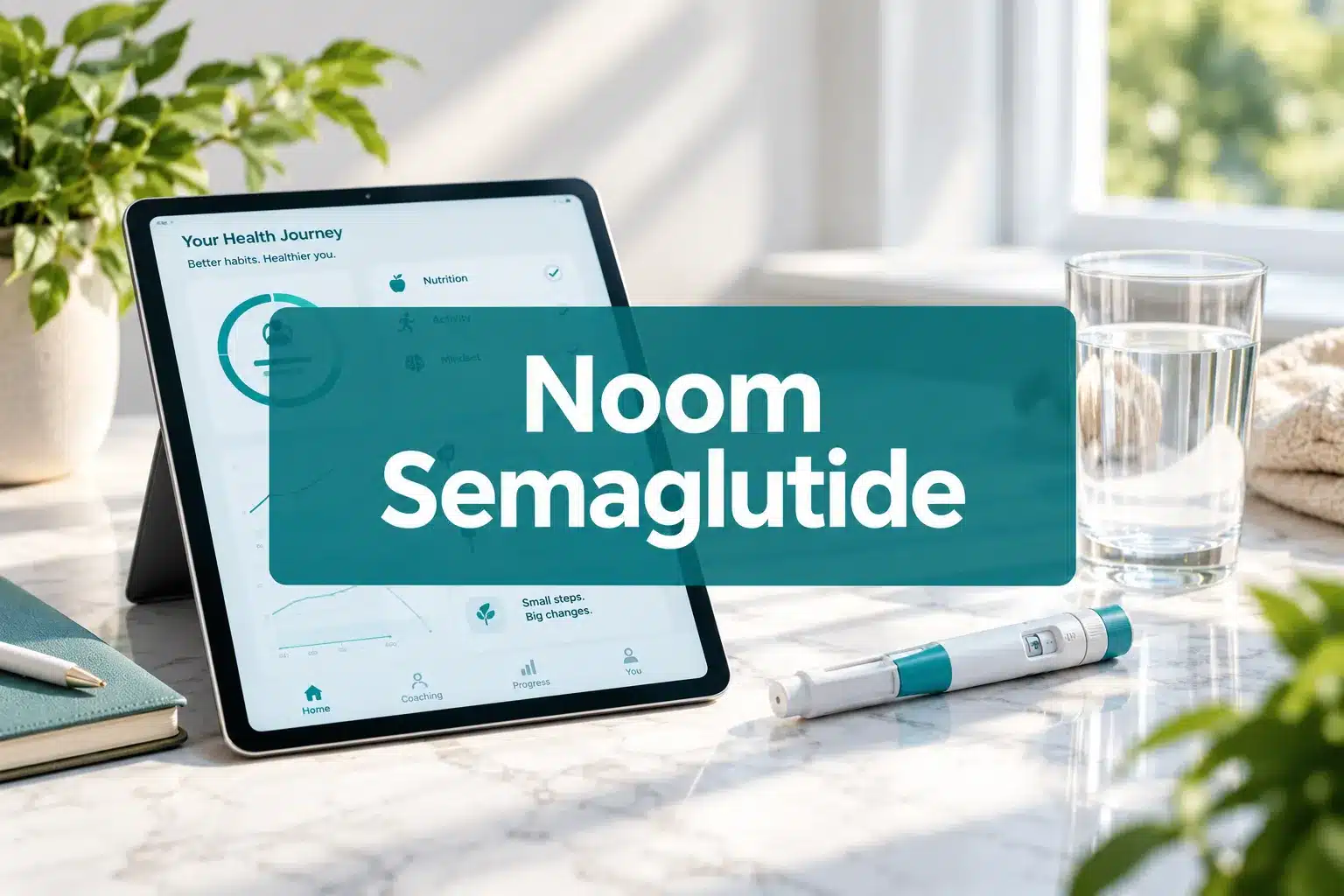
Noom semaglutide refers to the GLP-1 medication access programs offered through Noom’s telehealth platform, including both brand-name semaglutide products (Ozempic, Wegovy) and compounded semaglutide options. Eligible adults can connect with a licensed clinician through Noom Med, receive a prescription if appropriate, and combine medication with Noom’s behavioral coaching app. Pricing for compounded semaglutide through Noom starts at around $149 per month, while access to brand-name GLP-1 medications through Noom Med starts at $39 plus any insurance-related costs. [1][8]
Key Takeaways
- Noom semaglutide is not a separate drug, it is semaglutide (the same active ingredient in Ozempic and Wegovy) accessed through Noom’s telehealth and prescription programs.
- Noom Med connects eligible users with clinicians who can prescribe brand-name GLP-1 medications; Noom’s GLP-1 Rx Program with SmartDose offers compounded semaglutide starting at $149/month as of October 2026. [1][8]
- Semaglutide works by activating GLP-1 receptors in the brain and gut, reducing appetite and slowing gastric emptying, which leads to lower calorie intake over time.
- Noom’s internal clinical data suggests that combining GLP-1 medication with structured behavioral coaching produces more durable weight-loss results than medication alone. [5]
- Common side effects include nausea, vomiting, diarrhea, and constipation, especially during dose escalation.
- Semaglutide is not recommended during pregnancy or breastfeeding, GLP-1 medications while breastfeeding lack sufficient safety data, and most clinicians advise stopping before conception.
- You must meet clinical criteria (typically a BMI of 30 or higher, or 27 with a weight-related condition) to qualify for a semaglutide prescription through Noom.
- Weight often returns after stopping semaglutide unless lifestyle changes are maintained, Noom’s behavioral coaching is specifically designed to address this risk. [5]
- Alternatives include other telehealth platforms like Hims, Ro, and Henry Meds, as well as standalone GLP-1 programs without behavioral coaching.
What Is Noom Semaglutide and How Does It Work
Noom semaglutide is semaglutide, a GLP-1 receptor agonist, prescribed through Noom’s medical weight-loss programs. Semaglutide mimics a natural gut hormone called GLP-1 (glucagon-like peptide-1), which signals the brain to reduce hunger and tells the stomach to slow down how quickly it empties food.
7 Best GLP-1 Providers Ranked: Accreditation, Flexibility & Support Compared (2026 Update)
32,000+ Patients Can't All Be Wrong: See the Top-Rated GLP-1 Providers. We compared the leading online GLP-1 providers based on program features, clinical support, convenience, and overall value.
BMI MD GLP-1 Microdosing Plan
- Specialized microdosing options, including sublingual drops and low-dose injections
- Designed for people interested in maintaining weight or gradually adjusting treatment
- Bundled program structure without a separate monthly platform membership
- Online access makes the process convenient from home

DirectMeds Weight Loss Solutions
- Online weight-loss program with a straightforward patient experience
- Compounded medication options through state-licensed compounding pharmacies
- Includes clinical consultation as part of the process
- Provides shipping updates to help patients track their orders
MEDVi Flat-Rate Telehealth
- Flat-rate telehealth approach designed for easier budgeting
- No dosage-based pricing increases within the advertised program structure
- Offers injectable and oral thin-film delivery options
- Includes medical screening and asynchronous provider consultations
Gala GLP-1 Care Program
- Text-based access to state-licensed clinicians
- Cold-chain medication shipping included in the program
- Month-to-month program structure
- Designed for people who value convenient ongoing support
Measured GLP-1 Metabolic Health
- Comprehensive metabolic health screening and intake analysis
- Designed around longer-term metabolic health management
- Responsive dashboard with integrated health tracking tools
- Useful option for patients who value a more data-focused experience
Refills GLP-1 (TryRefills Plan)
- Clinical guidance designed to help patients manage common treatment concerns
- Includes foundational nutritional strategies alongside medication
- Designed around predictable ongoing treatment
- No hidden startup or processing fees according to the program information provided
AltRx GLP-1 Transactional Reorders
- Transactional reorder model without recurring auto-billing
- Designed for patients who already understand their treatment routine
- Fast text-to-order process for convenient reorders
- Offers injectable and fast-dissolving tablet variations
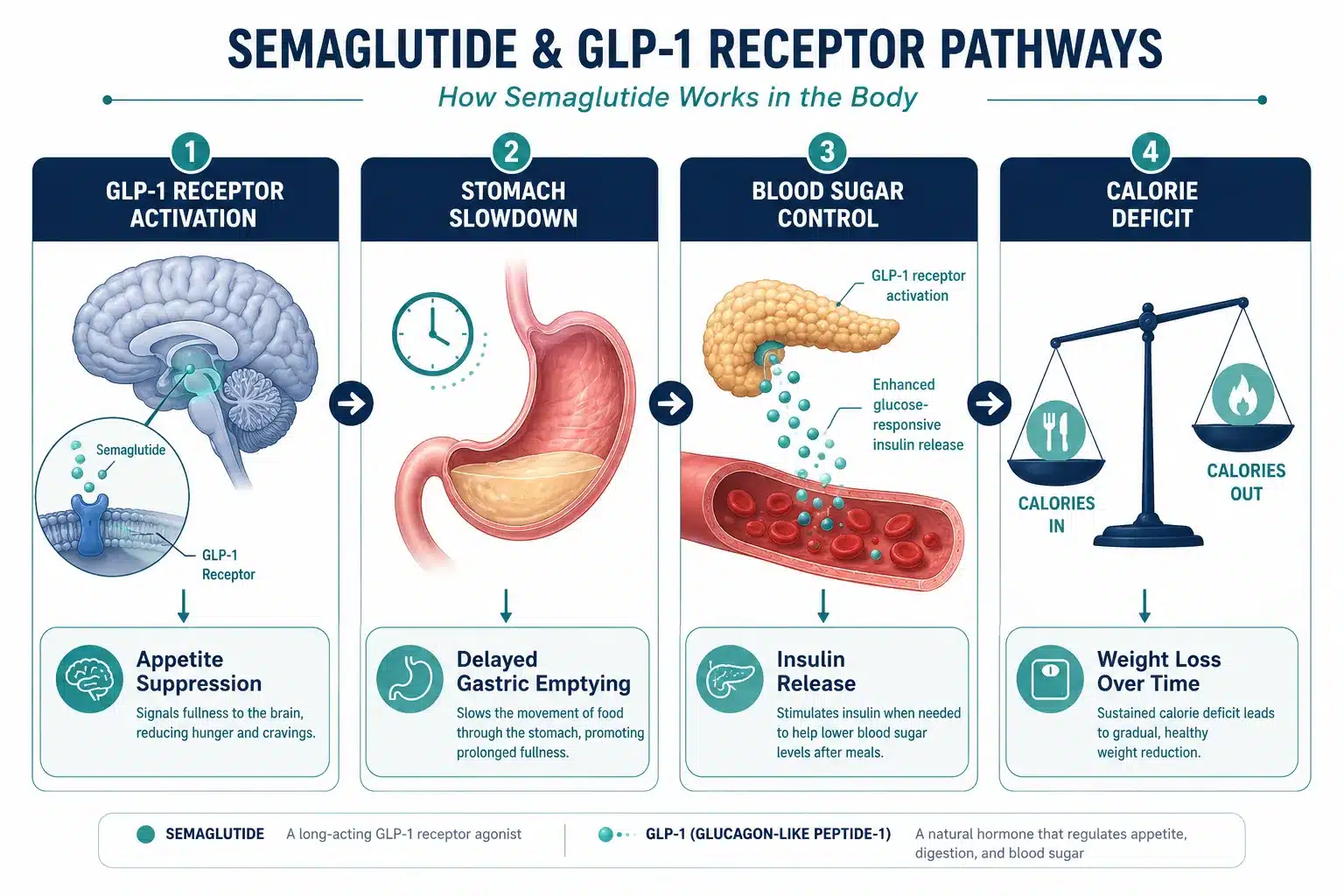
Here is what happens in the body when semaglutide is active:
- Appetite suppression: GLP-1 receptors in the hypothalamus receive signals that reduce hunger and increase feelings of fullness.
- Delayed gastric emptying: Food moves more slowly from the stomach to the small intestine, so you feel full longer after eating.
- Blood sugar regulation: Semaglutide stimulates insulin release in response to meals and suppresses glucagon, which helps stabilize blood glucose levels.
- Reduced calorie intake: Because hunger is lower and fullness lasts longer, most people naturally eat less without feeling deprived.
Noom pairs this pharmacological effect with its app-based behavioral coaching, food logging, and psychology-based habit tools. The company’s position, supported by a large randomized clinical trial highlighted in June 2026, is that medication plus structured behavior change produces longer-lasting results than medication alone. [5]
For the semaglutide dosage specifics, see our semaglutide dosage guide for weight loss.
Is Noom Offering Semaglutide Prescriptions Now
Yes, as of 2026, Noom actively offers semaglutide prescriptions through two main pathways. Noom Med connects users with licensed clinicians who can prescribe brand-name GLP-1 medications including Ozempic and Wegovy. Noom’s GLP-1 Rx Program with SmartDose offers compounded semaglutide for providers and patients who need a lower-cost option. [1][8]
Noom is clear that Novo Nordisk is the only company with FDA-approved semaglutide products in the U.S. (Rybelsus, Ozempic, and Wegovy), and that Ozempic is specifically approved for type 2 diabetes management, not weight loss. [2] Wegovy carries the FDA approval for chronic weight management.
What Noom’s semaglutide programs include:
- A telehealth consultation with a licensed clinician
- Prescription of brand-name or compounded semaglutide if clinically appropriate
- Insurance coordination and pharmacy logistics (through the provider-facing portal) [8]
- Access to Noom’s behavioral coaching app, food tracking, and psychology tools
- Ongoing medication management and dose adjustments
Edge case to know: Noom’s programs are available in most U.S. states, but prescribing laws vary. Not every user will qualify after the clinical assessment, and the clinician, not the app, makes the final prescribing decision.
Noom Semaglutide Cost and Insurance Coverage
Noom semaglutide pricing in 2026 is tiered depending on which program you choose and whether you have insurance. Noom Med advertises access to brand-name GLP-1 medications starting at $39, with out-of-pocket costs depending on your insurance coverage. Compounded semaglutide through Noom’s GLP-1 Rx Program starts at $149 per month as of October 2026. [1][8]
Cost breakdown by pathway:
| Program | Starting Cost | What’s Included |
|---|---|---|
| Noom Med (brand-name GLP-1) | $39 + insurance costs | Telehealth consult, Rx coordination |
| GLP-1 Rx with SmartDose (compounded) | ~$149/month | Compounded semaglutide, pharmacy logistics |
| Noom GLP-1 Plus (with coaching) | Varies (~$69+/month in some descriptions) | Medication access + full Noom coaching app |
New pricing structures for Noom’s semaglutide-related offerings came into effect March 31, 2026, aligning clinical services, behavioral support, and medication access under a single cost framework. [9]
On insurance: Medicare Part D beneficiaries may access Wegovy for weight loss at $50 per month through a temporary Medicare GLP-1 Bridge Program, reflecting broader institutional acceptance of GLP-1 therapy. [4] Private insurance coverage for semaglutide varies widely by plan.
For a broader look at out-of-pocket options, see our guide on semaglutide without insurance: costs and savings strategies.
Noom Semaglutide vs. Ozempic: Which Is Better
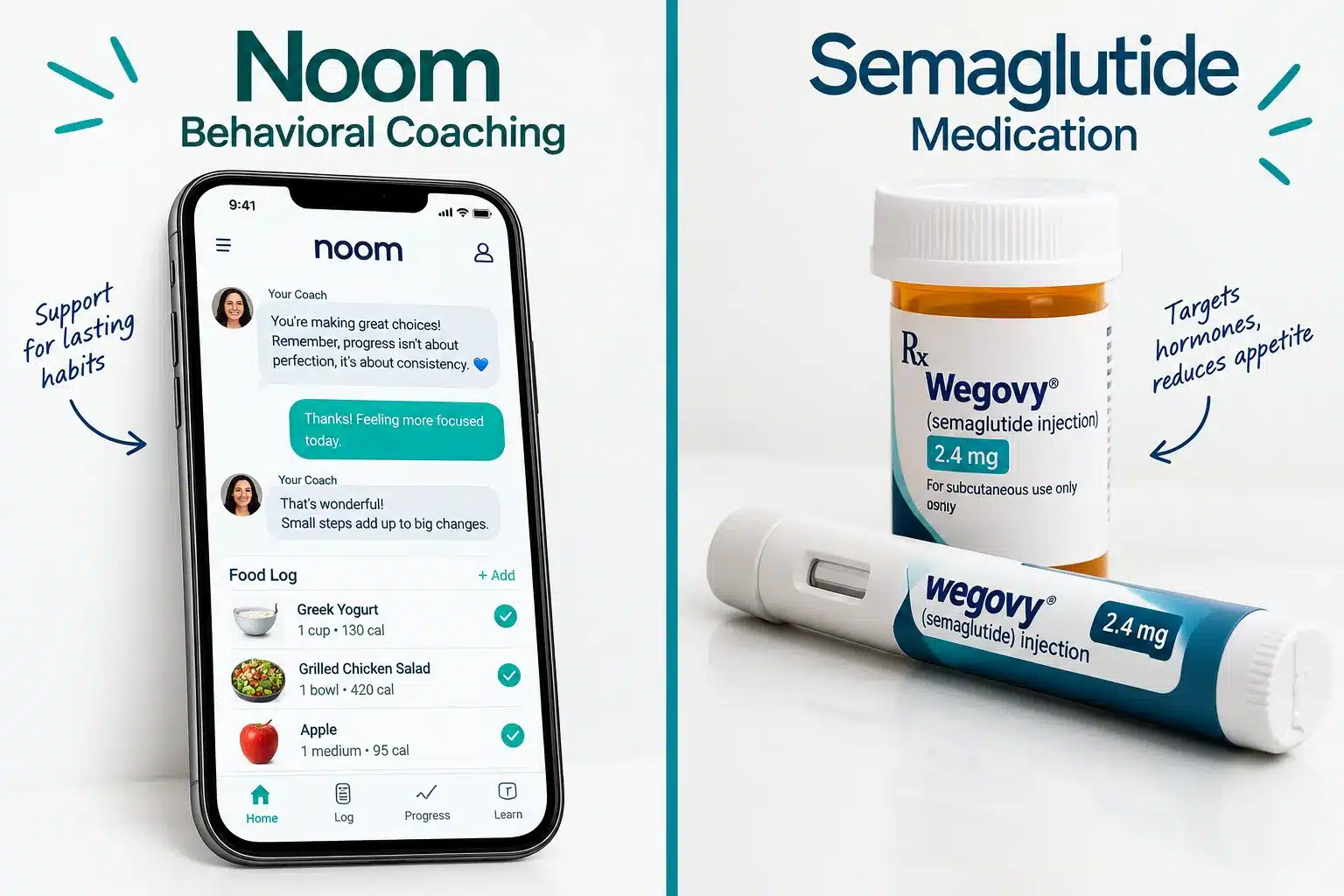
“Noom semaglutide” is not a different drug from Ozempic, both contain semaglutide as the active ingredient. The real comparison is between getting semaglutide through Noom’s integrated platform versus getting Ozempic through a standalone prescription or another telehealth provider.
Key differences:
- Ozempic is FDA-approved for type 2 diabetes. It is often prescribed off-label for weight loss, but Wegovy (also semaglutide, at a higher dose) carries the weight-loss approval. [2][4]
- Noom’s platform adds behavioral coaching, food psychology tools, and app-based tracking on top of the prescription, something a standalone Ozempic prescription does not include.
- Cost: Ozempic without insurance can exceed $900 per month at retail. Noom’s compounded semaglutide option at $149/month is significantly more affordable for uninsured users.
- Clinical support: Noom’s clinician-led model means dose adjustments and check-ins are built into the program, whereas a traditional Ozempic prescription may rely more on your primary care provider.
Choose Noom’s program if you want medication plus structured behavioral support in one place. Choose a standalone Ozempic prescription if you already have a prescribing physician and strong insurance coverage.
For a full comparison of semaglutide brand names, see semaglutide brand names: Ozempic, Wegovy, Rybelsus.
How to Get Semaglutide Through Noom
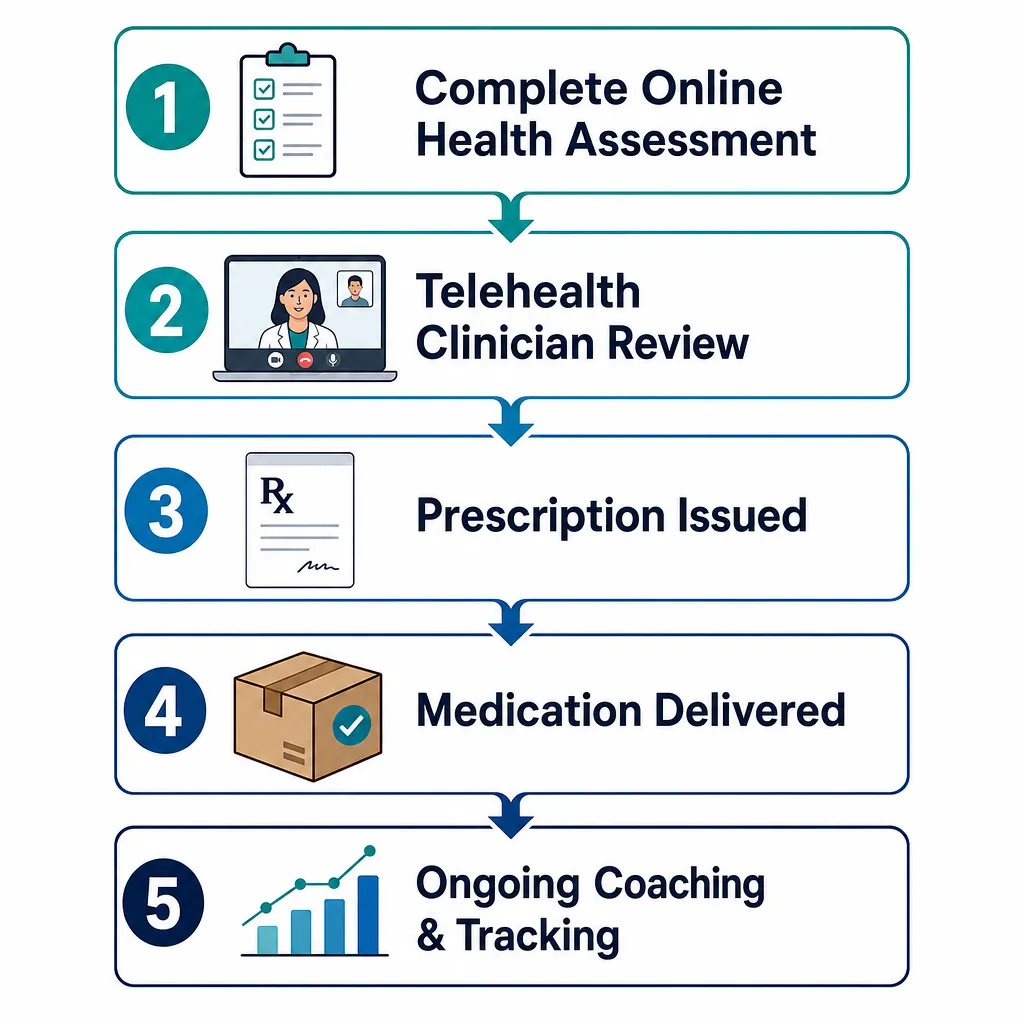
Getting semaglutide through Noom follows a straightforward telehealth process. You complete a health assessment online, a licensed clinician reviews your information, and if you qualify, a prescription is issued and medication is delivered to your door. [1]
Step-by-step process:
- Create a Noom account and select the GLP-1 or Noom Med program.
- Complete the health intake form, this covers your medical history, current medications, BMI, and weight-loss goals.
- Telehealth clinician review, a licensed provider reviews your information and may schedule a video or asynchronous consultation.
- Prescription decision, if you meet clinical criteria, the clinician prescribes semaglutide (brand-name or compounded, depending on your program and insurance).
- Pharmacy fulfillment, Noom coordinates with its pharmacy partners to ship medication directly to you.
- Ongoing support, you continue using the Noom app for coaching, food tracking, and medication management.
Common mistake: Skipping the health intake honestly. Clinicians use that information to assess safety. Underreporting conditions like thyroid issues, pancreatitis history, or current medications can lead to inappropriate prescribing.
Who Qualifies for the Noom Semaglutide Program
Most adults with a BMI of 30 or higher, or a BMI of 27 or higher with at least one weight-related health condition (such as type 2 diabetes, high blood pressure, or high cholesterol), meet the basic clinical criteria for semaglutide. Noom’s clinicians apply these same FDA-aligned thresholds when evaluating applicants. [1]
You likely qualify if:
- BMI is 30 or above
- BMI is 27 or above with a documented comorbidity
- You have no contraindications (see below)
You likely do not qualify if:
- You have a personal or family history of medullary thyroid carcinoma or Multiple Endocrine Neoplasia syndrome type 2 (MEN2)
- You have a history of pancreatitis
- You are currently pregnant
- You are breastfeeding, GLP-1 medications while breastfeeding are not recommended due to insufficient safety data; most clinicians advise stopping semaglutide before trying to conceive and avoiding GLP-1 weight loss while breastfeeding entirely
Note on GLP-1 and breastfeeding: Can you take semaglutide while breastfeeding? The current clinical consensus is no. GLP-1 breastfeeding safety data is limited, and neither semaglutide while breastfeeding nor tirzepatide while breastfeeding has been studied adequately in lactating women. GLP-1 postpartum weight loss goals are valid, but most providers recommend waiting until breastfeeding has ended before starting any GLP-1 medication.
Does Noom Semaglutide Actually Work for Weight Loss
Yes, semaglutide is one of the most effective pharmacological tools available for weight loss, and Noom’s own clinical data suggests that combining it with behavioral coaching improves long-term outcomes. In a large randomized clinical trial highlighted by Noom in June 2026, members who used the combined program continued to lose weight for a full year after the program ended. [5]
What the evidence shows:
- Semaglutide (as Wegovy) has been shown in clinical trials to produce average weight loss of around 15% of body weight over 68 weeks, according to the STEP 1 trial published in the New England Journal of Medicine (Wilding et al., 2021).
- Noom’s behavioral component addresses the psychological drivers of overeating, emotional eating, food relationships, habit loops, which medication alone does not resolve.
- Noom’s “Lose for Keeps” campaign, launched August 26, 2026 and featuring Rebel Wilson, explicitly frames the combination of GLP-1 medication and healthy habits as more effective than either approach alone. [5]
Realistic expectations:
- Most users see meaningful appetite reduction within the first 2 to 4 weeks.
- Significant weight loss (5% or more of body weight) typically appears within 3 months at therapeutic doses.
- Maximum results usually occur between 9 and 16 months of consistent use.
Noom Semaglutide Side Effects and Risks
The side effects of semaglutide through Noom are the same as those of semaglutide prescribed through any other channel, the medication is identical. The most common side effects are gastrointestinal and tend to be most intense during the dose escalation phase.
Common side effects:
- Nausea (most frequently reported, especially in the first 4 to 8 weeks)
- Vomiting
- Diarrhea or constipation
- Reduced appetite (often desired, but can become excessive)
- Fatigue
Less common but serious risks:
- Pancreatitis
- Gallbladder problems (gallstones, cholecystitis)
- Kidney injury (often secondary to dehydration from GI symptoms)
- Thyroid C-cell tumors (seen in rodent studies; contraindicated in those with MEN2 or medullary thyroid carcinoma history)
Practical tip: Starting at the lowest dose and escalating slowly, as Noom’s clinicians are trained to do, significantly reduces the severity of GI side effects for most users.
For a broader look at real-world experiences, see semaglutide reviews: real results, side effects, and experiences.
Noom Semaglutide vs. Other Weight Loss Apps and Platforms
Noom’s core differentiator is the combination of GLP-1 medication access and behavioral coaching in one subscription. Most competing apps either offer medication management or behavioral coaching, rarely both at this level of integration. [3][6][10]
Quick comparison:
- Noom vs. Ro: Ro focuses primarily on medication prescribing with some coaching. Noom’s behavioral psychology tools are more developed. [3]
- Noom vs. Hims/Hers: Hims offers compounded semaglutide at competitive prices but with less structured behavioral support. For a detailed look, see our Hims semaglutide review. [10]
- Noom vs. Weight Watchers: Weight Watchers (now WW) has added GLP-1 support but built its model on points-based food tracking. Noom’s psychology-first approach is structurally different. [6]
- Noom vs. Henry Meds: Henry Meds focuses on affordable compounded semaglutide with minimal behavioral programming. See our Henry Meds semaglutide review for details.
Choose Noom if you want medication plus structured habit change in one place and are willing to pay for that integration. Choose a lower-cost telehealth provider if you primarily need the prescription and already have strong behavioral support elsewhere.
Can I Use Noom Semaglutide If I Have Diabetes
Yes, semaglutide is actually FDA-approved for type 2 diabetes management under the brand name Ozempic, and Noom’s clinicians can prescribe it for eligible patients with diabetes. However, the specific program and medication used may differ from what is prescribed purely for weight loss. [2]
For people with type 2 diabetes, semaglutide offers dual benefits: better blood sugar control and meaningful weight reduction. Noom’s telehealth clinicians are equipped to manage this overlap, adjusting prescriptions based on whether the primary goal is glycemic control or weight loss (or both).
Important considerations for diabetic users:
- Semaglutide can lower blood sugar significantly, especially when combined with other diabetes medications like sulfonylureas or insulin, dose adjustments may be needed.
- Regular glucose monitoring is more important during the initial weeks of treatment.
- Ozempic (approved for diabetes) and Wegovy (approved for weight loss) contain the same active ingredient at different doses.
For more on this topic, see our guide on semaglutide for type 2 diabetes.
What Happens When You Stop Noom Semaglutide
Weight regain after stopping semaglutide is a well-documented and common outcome. Clinical data consistently shows that most of the weight lost on semaglutide returns within one to two years of discontinuation if no other interventions are in place.
This is precisely why Noom frames its behavioral coaching as essential, not optional. The goal is to build habits that persist after medication ends. Noom’s June 2026 clinical trial data showed that members continued losing weight for a full year after the program ended, which the company attributes to the behavioral component of the program. [5]
What to expect when stopping:
- Appetite typically returns to baseline within weeks of the last dose.
- Weight regain often begins within 4 to 8 weeks without compensatory behavioral strategies.
- Blood sugar levels may rise again in people with type 2 diabetes.
Strategies to reduce regain:
- Continue using Noom’s food tracking and coaching tools after stopping medication.
- Maintain the eating patterns and portion habits developed during treatment.
- Work with your clinician on a structured tapering and transition plan rather than stopping abruptly.
Noom Semaglutide Alternatives and Similar Programs
Several telehealth platforms and compounding pharmacies offer semaglutide access at various price points. Noom is one option, but it is not the only one, and the right choice depends on your priorities around cost, support, and convenience.
Alternatives worth considering:
- Compounded semaglutide through telehealth: Often the most affordable option. See our guide on affordable semaglutide telehealth options for a curated list.
- Hims/Hers: Competitive pricing on compounded semaglutide, less behavioral coaching.
- Henry Meds: Low-cost compounded semaglutide with a streamlined telehealth process.
- Ro: Strong medication management, moderate coaching.
- Direct compounding pharmacy: Some patients work directly with a compounding pharmacy and their own physician. See our guide to online compounding pharmacies for semaglutide for top-rated options.
Choose Noom if the behavioral coaching integration is a priority. Choose a lower-cost alternative if you already have a support system and need medication access primarily.
For a full cost comparison across platforms, see how much does semaglutide cost in 2026.
FAQ
Q: Is Noom semaglutide the same as Ozempic or Wegovy?
Noom semaglutide uses the same active ingredient, semaglutide, found in Ozempic and Wegovy. Noom can prescribe brand-name versions of these drugs or compounded semaglutide, depending on your program and insurance. [2]
Q: How long does it take to see results with Noom semaglutide?
Most users notice reduced appetite within 2 to 4 weeks. Visible weight loss of 5% or more typically appears within 3 months at therapeutic doses, with maximum results between 9 and 16 months.
Q: Can I take semaglutide while breastfeeding?
No. GLP-1 medications while breastfeeding are not recommended. Semaglutide while breastfeeding lacks adequate safety data, and most clinicians advise against starting or continuing any GLP-1 medication during lactation. Wait until breastfeeding has ended before pursuing GLP-1 postpartum weight loss through medication.
Q: Does Noom accept insurance for semaglutide?
Noom Med coordinates insurance for brand-name GLP-1 medications. Coverage varies widely by plan. Compounded semaglutide is generally not covered by insurance. [1][8]
Q: What is compounded semaglutide, and is it safe?
Compounded semaglutide is a pharmacy-prepared version of semaglutide that is not FDA-approved as a finished drug product but is legally prepared by licensed compounding pharmacies. For a detailed safety and legal breakdown, see our guide on compounded semaglutide: is it safe and legal?
Q: What BMI do I need to qualify for Noom semaglutide?
You generally need a BMI of 30 or higher, or a BMI of 27 or higher with a weight-related health condition like type 2 diabetes or hypertension. A clinician makes the final determination. [1]
Q: Can people with type 2 diabetes use Noom semaglutide?
Yes. Semaglutide (as Ozempic) is FDA-approved for type 2 diabetes. Noom’s clinicians can prescribe it for eligible patients with diabetes, though medication management may differ from a pure weight-loss prescription. [2]
Q: What happens to my weight if I stop Noom semaglutide?
Weight regain is common after stopping semaglutide. Noom’s behavioral coaching is designed to build habits that reduce this risk, but most people regain a significant portion of lost weight without ongoing lifestyle strategies. [5]
Q: Is tirzepatide available through Noom?
Yes. Noom’s GLP-1 programs also include access to Zepbound and Mounjaro (tirzepatide) for eligible users. Tirzepatide while breastfeeding carries the same safety concerns as semaglutide, it is not recommended during lactation.
Q: How does Noom semaglutide compare to just getting a prescription from my doctor?
A standard prescription from your doctor gives you the medication but not the behavioral coaching, app-based tracking, or integrated support that Noom provides. Noom’s value proposition is the combination of both in one program. [1][5]
7 Best GLP-1 Providers Ranked: Accreditation, Flexibility & Support Compared (2026 Update)
32,000+ Patients Can't All Be Wrong: See the Top-Rated GLP-1 Providers: Compared on accreditation, plan flexibility, and patient support — updated for 2026.
BMI MD GLP-1 Microdosing Plan
- Specialized microdosing options (sublingual drops or low-dose injections)
- Ideal for maintaining weight or tapering off higher doses safely
- Fully bundled plan with no hidden monthly platform memberships
DirectMeds Weight Loss Solutions
- Sourced from accredited, state-licensed 503A compounding pharmacies
- No-frills high-volume savings passed directly to the patient
- Includes clinical consultation and cold-chain shipping updates
MEDVi Flat-Rate Telehealth
- Flat monthly rate holds steady even at maximum maintenance doses
- No dosage upcharges or graduation fee penalties
- Offers both injectable and advanced oral thin-film delivery options
Gala GLP-1 Care Program
- All-inclusive plan with no standalone membership costs
- Continuous text-based messaging access with state-licensed clinicians
- Temperature-controlled, cold-chain medication shipping included
Measured GLP-1 Metabolic Health
- Comprehensive metabolic health screening and expert intake analysis
- Predictable long-term budgeting with stable plan pricing
- High-end responsive dashboard with integrated diagnostic support
Refills GLP-1 (TryRefills Plan)
- Flat rate holds steady as titration scales up
- Includes clinical guides for active side-effect management
- Bundles in foundational nutritional strategies alongside medication
AltRx GLP-1 Transactional Reorders
- Zero recurring auto-billing — pay entirely on a transactional basis
- Rapid text-to-order format saves time for experienced patients
- Provides both injectable forms and fast-dissolving tablet variations
Conclusion
Noom semaglutide is not a new drug, it is a well-established GLP-1 medication delivered through a platform that adds behavioral coaching, telehealth access, and insurance coordination to the equation. For adults who want more than just a prescription, that integration is genuinely useful.
Actionable next steps:
- Check your eligibility: If your BMI is 30 or above (or 27 with a weight-related condition), you likely meet the clinical threshold. Visit Noom Med to complete the intake assessment. [1]
- Compare costs: If cost is a concern, compare Noom’s compounded semaglutide pricing against other telehealth providers. Our guide on affordable semaglutide telehealth is a good starting point.
- Understand what you’re signing up for: Semaglutide works best as a tool, not a cure. The behavioral habits you build during treatment are what protect your results after you stop.
- Talk to a clinician: If you have diabetes, thyroid issues, or are postpartum and considering GLP-1 weight loss while breastfeeding, get a clinician’s input before starting any GLP-1 program.
- Set realistic expectations: Results take time. Most people see meaningful progress within 3 months, but the full benefit of combining medication with behavioral change plays out over 9 to 16 months.
Noom’s bet, that medication plus habits beats medication alone, is backed by its own clinical data and aligns with what most obesity medicine specialists recommend. Whether Noom is the right platform for you depends on your budget, your need for behavioral support, and how much you value having everything in one place.
References
[1] Noom Med – https://www.noom.com/med/
[2] Noom – https://www.noom.com/
[3] Noom Vs Ro For Weight Loss – https://www.noom.com/blog/weight-management/noom-vs-ro-for-weight-loss/
[4] Ozempic Vs Wegovy – https://www.noom.com/blog/weight-management/ozempic-vs-wegovy/
[5] Press And Media – https://www.noom.com/press-and-media/
[6] Noom Vs Weight Watchers – https://www.noom.com/blog/weight-management/noom-vs-weight-watchers/
[8] For Providers – https://www.noom.com/forproviders/
[9] Noom Cost – https://www.noom.com/blog/weight-management/noom-cost-2/
[10] Noom Vs Hims And Hers For Weight Loss – https://www.noom.com/blog/weight-management/noom-vs-hims-and-hers-for-weight-loss/