
What Are NAD Injections? A Plain-English Guide

Last updated: November 24, 2026
Quick Answer
NAD injections deliver nicotinamide adenine dinucleotide, a molecule your cells already make and use for energy production and DNA repair, directly under the skin or into muscle. They are not a peptide, despite being marketed that way at many clinics. This plain-English guide to what NAD injections are covers how they work, what the evidence actually shows, cost, safety, and how they compare to IV drips and oral supplements.
A med spa flyer calls it a “peptide.” A wellness influencer calls it the “molecule of youth.” Neither label is quite right, and that gap between marketing and chemistry is exactly why so many people end up confused before they ever get a shot.
7 Best GLP-1 Providers Ranked: Accreditation, Flexibility & Support Compared (2026 Update)
32,000+ Patients Can't All Be Wrong: See the Top-Rated GLP-1 Providers. We compared the leading online GLP-1 providers based on program features, clinical support, convenience, and overall value.
BMI MD GLP-1 Microdosing Plan
- Specialized microdosing options, including sublingual drops and low-dose injections
- Designed for people interested in maintaining weight or gradually adjusting treatment
- Bundled program structure without a separate monthly platform membership
- Online access makes the process convenient from home

DirectMeds Weight Loss Solutions
- Online weight-loss program with a straightforward patient experience
- Compounded medication options through state-licensed compounding pharmacies
- Includes clinical consultation as part of the process
- Provides shipping updates to help patients track their orders
MEDVi Flat-Rate Telehealth
- Flat-rate telehealth approach designed for easier budgeting
- No dosage-based pricing increases within the advertised program structure
- Offers injectable and oral thin-film delivery options
- Includes medical screening and asynchronous provider consultations
Gala GLP-1 Care Program
- Text-based access to state-licensed clinicians
- Cold-chain medication shipping included in the program
- Month-to-month program structure
- Designed for people who value convenient ongoing support
Measured GLP-1 Metabolic Health
- Comprehensive metabolic health screening and intake analysis
- Designed around longer-term metabolic health management
- Responsive dashboard with integrated health tracking tools
- Useful option for patients who value a more data-focused experience
Refills GLP-1 (TryRefills Plan)
- Clinical guidance designed to help patients manage common treatment concerns
- Includes foundational nutritional strategies alongside medication
- Designed around predictable ongoing treatment
- No hidden startup or processing fees according to the program information provided
AltRx GLP-1 Transactional Reorders
- Transactional reorder model without recurring auto-billing
- Designed for patients who already understand their treatment routine
- Fast text-to-order process for convenient reorders
- Offers injectable and fast-dissolving tablet variations
Key Takeaways
- NAD stands for nicotinamide adenine dinucleotide, a coenzyme every cell needs for energy metabolism, not a peptide.
- NAD injections are not FDA-approved for any condition; clinics offer them as compounded products or through off-label use.
- Typical sessions run $25 to $150 per injection or $150 to $600 per IV infusion, and insurance generally does not cover them.
- Most people need repeated doses, often weekly at first, to notice any effect, and effects vary widely person to person.
- Common side effects include injection-site soreness, nausea, flushing, and in IV form, chest tightness or cramping during infusion.
- Human evidence for energy, mood, or anti-aging benefits is limited and mostly early-stage; animal and small pilot studies dominate the research base.
- NAD is different from NMN and NR, which are oral precursor supplements your body converts into NAD, rather than NAD itself.
- Pregnant women, people with certain cancers, and anyone with uncontrolled chronic illness should talk to a doctor before trying NAD injections.
What does NAD stand for and why is it important?
NAD stands for nicotinamide adenine dinucleotide, a coenzyme found in every living cell. It’s important because it shuttles electrons during metabolism, helping your mitochondria turn food into usable energy, and it also feeds enzymes that repair damaged DNA and regulate circadian rhythm.
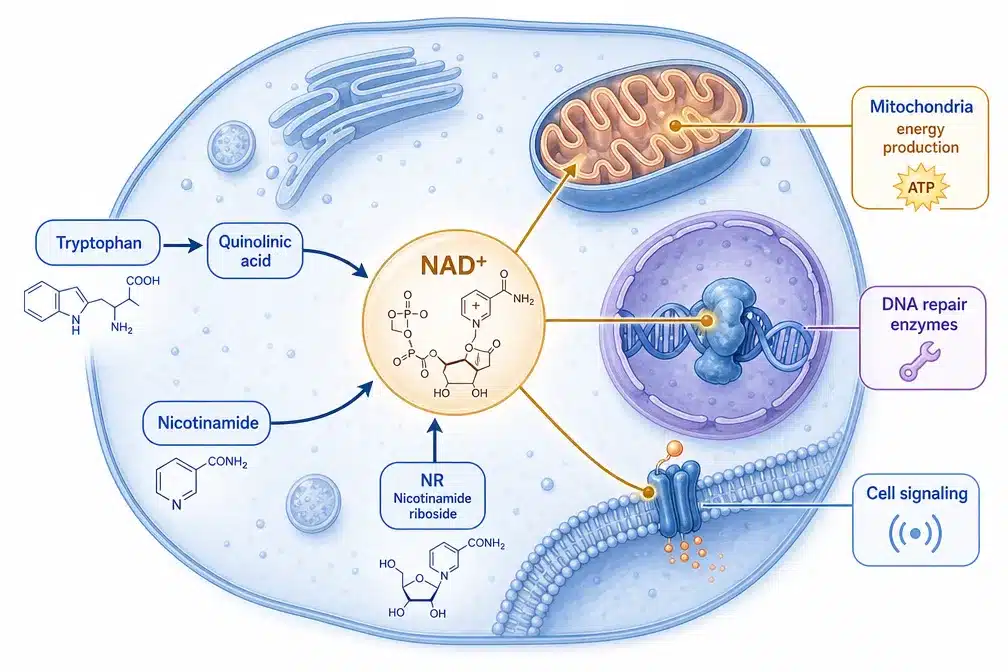
NAD exists in two related forms, NAD+ and NADH, that cycle back and forth during metabolic reactions. Levels of NAD+ naturally decline with age, a pattern documented in lab animals and, to a lesser extent, in human tissue samples. That decline is part of why NAD+ became a target for the healthy-aging and biohacking crowd.
Here’s the clarification that matters most for anyone who searched the word “peptide”: NAD+ is a coenzyme, built from a modified vitamin B3 structure, not a chain of amino acids. Peptides, like BPC-157 or semaglutide, are short strings of amino acids. Semaglutide is a real peptide drug, and comparing its mechanism to NAD+ helps show how different the two categories actually are.
How do NAD injections actually make you feel?
People who use NAD injections most often report feeling more mentally clear and less fatigued within a few hours to a few days, though responses vary a lot and some people notice nothing. Reports are subjective; there’s no blood test that confirms you “felt” an NAD boost.
Common self-reported effects include:
- A subtle lift in energy, often described as steadier rather than a caffeine-style jolt
- Improved focus or reduced brain fog, especially in people using it for recovery support
- Better sleep quality in some users, though this is inconsistent across reports
- Mild euphoria or lightheadedness during IV infusion, usually tied to infusion speed
Mistake to avoid: expecting an immediate, dramatic effect like a stimulant. Most clinics advise patience across several sessions before judging whether it’s doing anything for you.
Is NAD FDA approved, or is it experimental?
NAD is not FDA-approved as a drug for any disease or condition. Clinics that offer NAD injections or IV therapy are using compounded formulations or operating in a regulatory gray zone, not prescribing an approved medication.
The FDA has, at times, flagged concerns about NAD being compounded from bulk substances not on its approved list for compounding. That means legality and oversight can vary by state and by pharmacy. Some products sold online as “research use only” are not meant for human injection at all, which matters a great deal to the cautious buyers checking whether this is even legal to use on themselves.
Choose a provider carrying a pharmacy-sourced, prescription product if you want some regulatory footing. Avoid anything shipped to your home labeled “not for human consumption.”
How much do NAD injections cost, and is it covered by insurance?
NAD injections typically cost $25 to $150 per shot, while IV infusions run $150 to $600 per session depending on dose and location [VERIFY]. Insurance does not cover NAD therapy because it is not an FDA-approved treatment for any diagnosed condition.
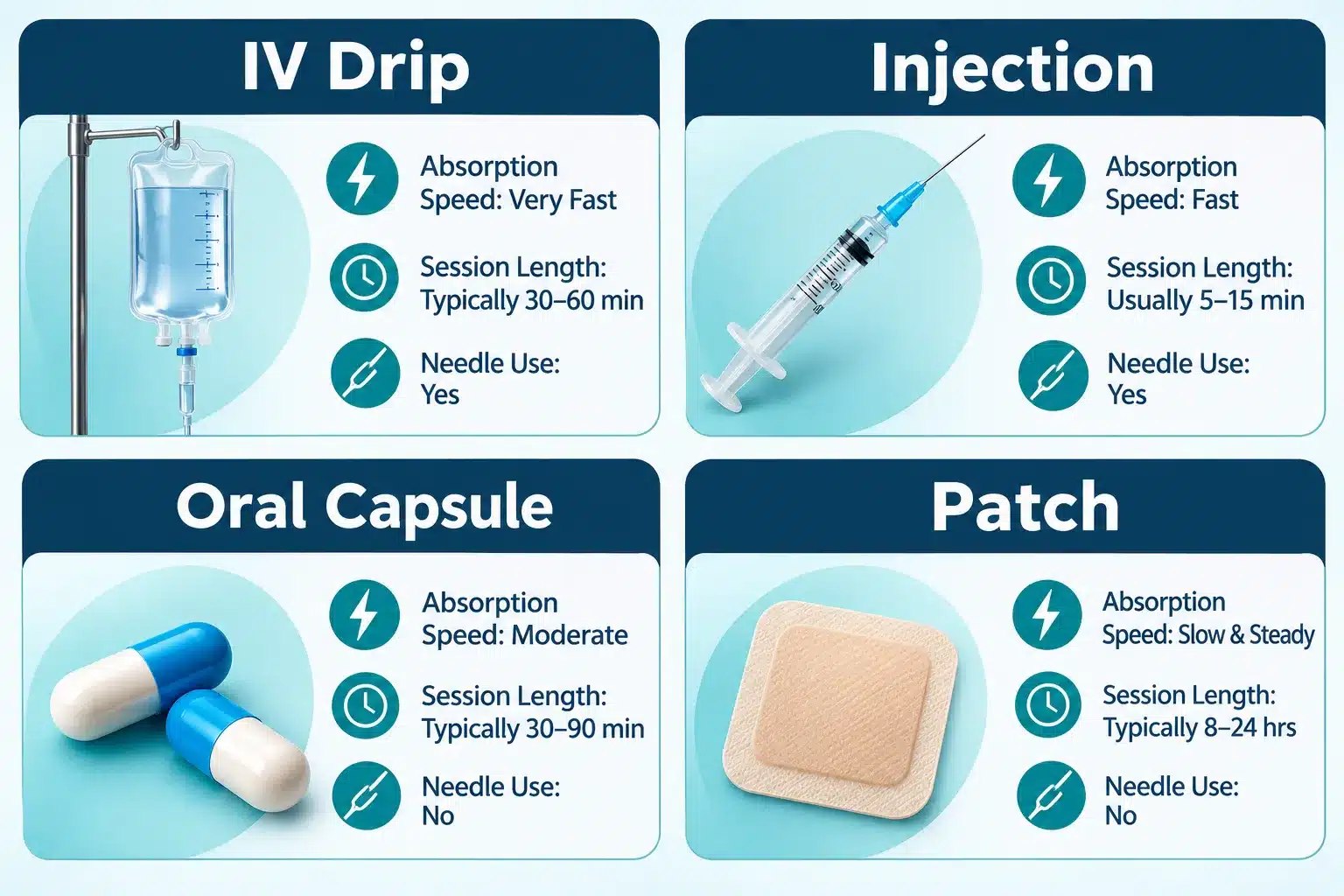
Clinics sometimes sell package deals, which can lower the per-session price but still represent real out-of-pocket spending. If cost matters most to you, ask whether a clinic offers a single trial session before committing to a package.
What are the side effects of NAD injections?
The most common side effects are injection-site redness or soreness, mild nausea, flushing, and headache. IV infusions carry an additional risk of chest tightness, cramping, or a racing heartbeat if the infusion runs too fast.
Side effect patterns by format:
- Injections: soreness at the site, occasional flushing, rarely a vasovagal response (lightheadedness)
- IV infusions: abdominal cramping, chest tightness, nausea, headache, especially at higher infusion rates
- Both: fatigue rebound in some users once the dose wears off
Edge case: people sensitive to niacin flushing sometimes get an intense warm, red-skin sensation with NAD, similar to a niacin flush. Slowing the infusion rate usually reduces it.
How often do you need NAD injections to see results?
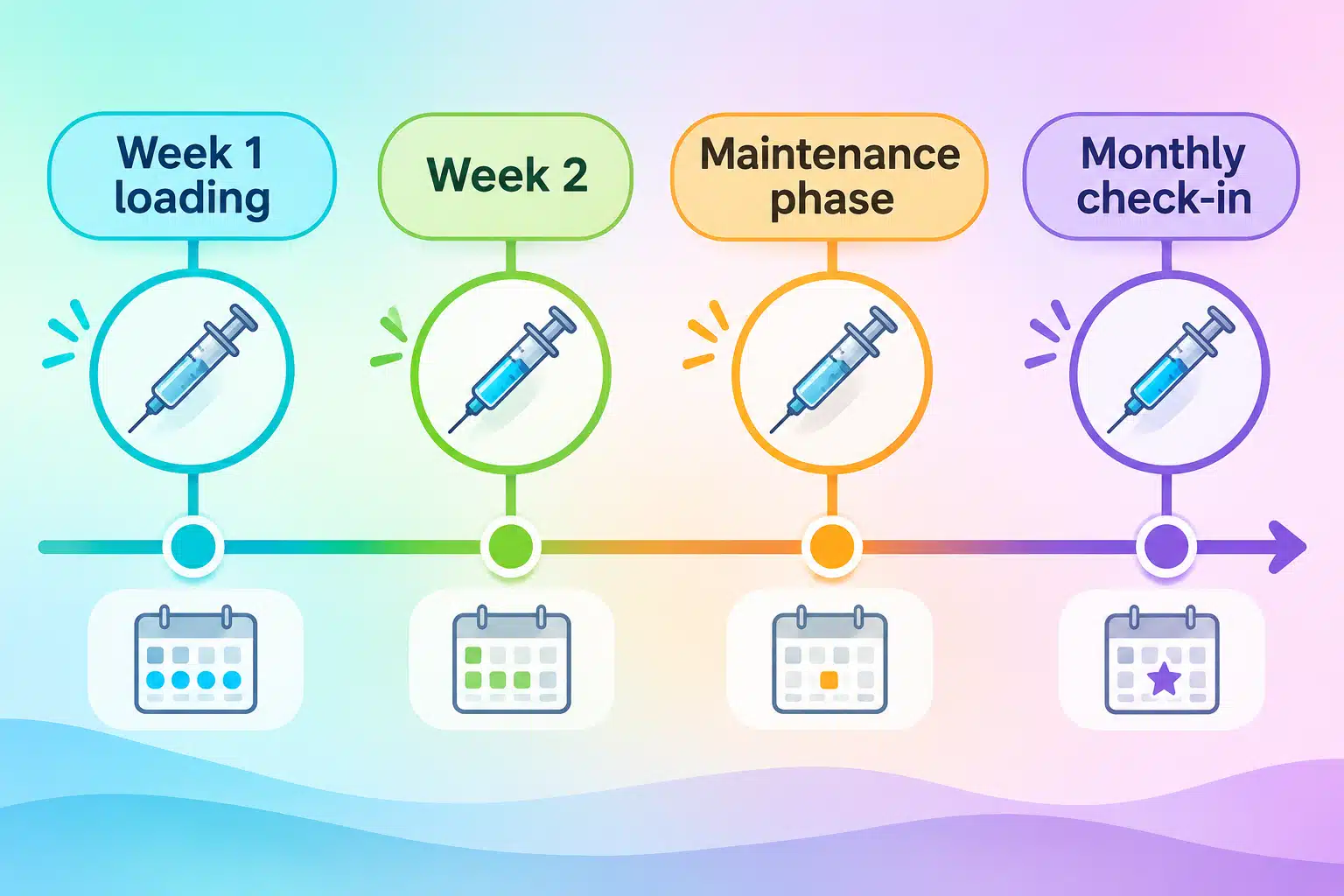
Most protocols start with once or twice weekly sessions for four to six weeks, then taper to a maintenance schedule of every two to four weeks. There’s no standardized dosing schedule backed by large clinical trials, so this pattern reflects common clinic practice rather than proven optimal dosing.
A provider should set the actual dose and frequency for you based on your health history. Anyone presenting fixed numbers as a personal prescription without an exam or bloodwork is skipping a step that matters.
Is NAD the same as NMN, or are they different?
NAD and NMN are related but not the same thing. NAD+ is the active coenzyme your cells use directly, while NMN (nicotinamide mononucleotide) is a precursor molecule your body converts into NAD+ through several enzymatic steps.
Quick comparison:
- NAD+ injection: delivers the finished molecule directly into tissue, bypassing digestion
- NMN/NR oral supplement: a pill your gut absorbs, which your liver and cells then convert step by step into NAD+
- Conversion efficiency: not fully mapped in humans, so it’s unclear how much oral NMN actually becomes usable NAD+ in your cells
If you already take NMN or NR, as many biohacking enthusiasts do, know you’re taking a building block rather than the end product. That distinction is one of the most commonly confused points in this space, and it’s worth getting right before comparing costs or effects.
Can NAD injections really help with energy and fatigue?
Early research and self-reported experience suggest NAD may support energy metabolism, but there isn’t strong clinical-trial evidence proving NAD injections fix fatigue, brain fog, or long-COVID-type exhaustion in humans. Most mechanistic support comes from animal studies on mitochondrial function.
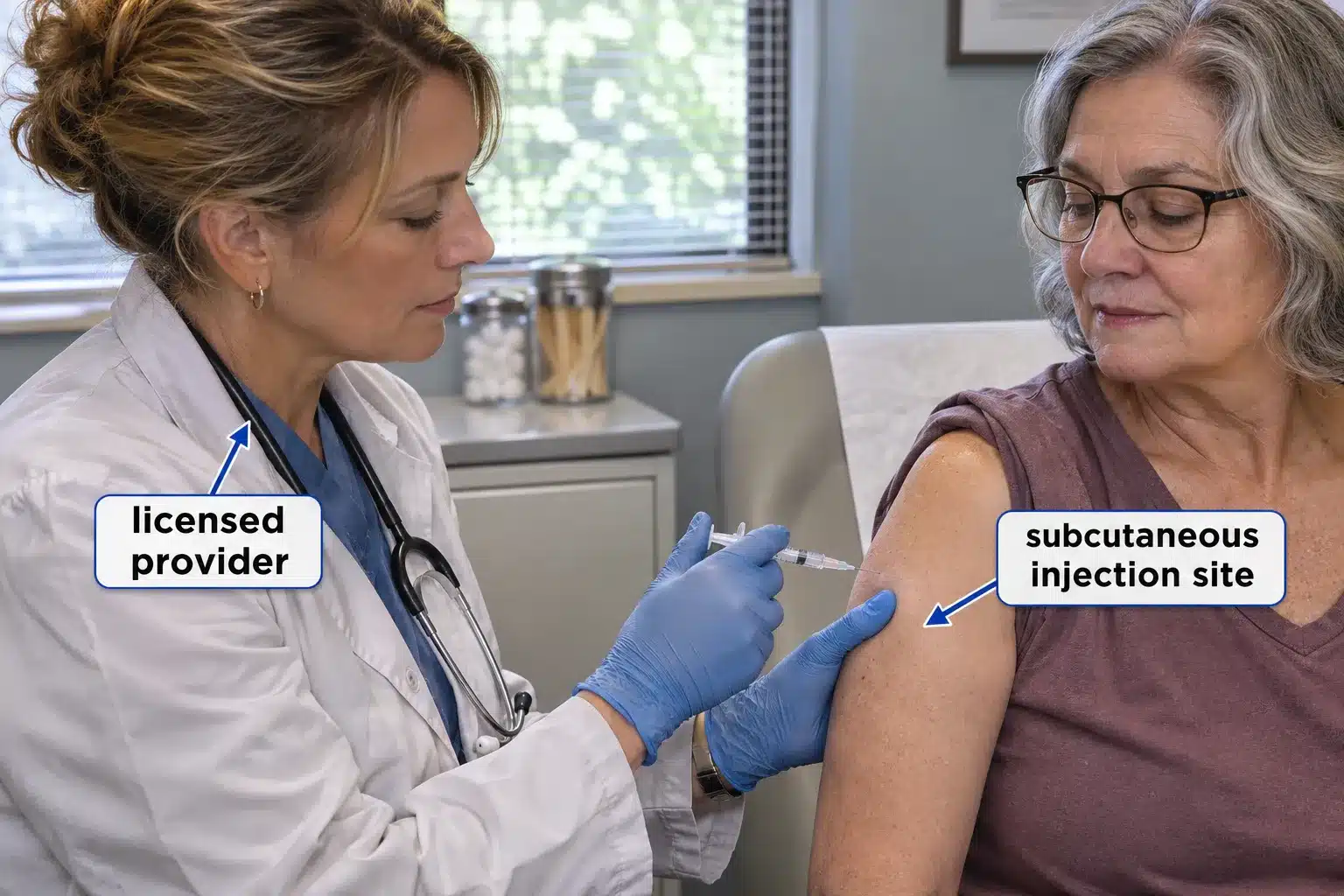
What the evidence does support: NAD+ is genuinely required for your cells to generate ATP, the molecule that powers basically everything your body does. What the evidence doesn’t support, at least not yet in solid human trials: that adding extra NAD+ from outside reverses chronic fatigue or guarantees a noticeable energy boost for most people.
Choose NAD injections cautiously if you’re using them to chase a specific symptom like long-COVID fatigue or addiction-recovery support. Clinics market heavily to these groups, but the human trial data lags well behind the marketing claims. Talk to your treating physician about your specific condition before adding NAD on top of existing care.
Do NAD injections actually slow aging, or is it overhyped?
NAD injections do not have proven anti-aging effects in humans; most of the “NAD declines with age, so replace it” narrative comes from animal studies and small, short human pilot trials. The theory is plausible, but it is not proven at the scale that would justify calling NAD a verified anti-aging treatment.
This is the point where overstating the evidence loses trust fastest with readers who already know the supplement landscape, including people using BPC-157 or oral NMN. A fair summary: NAD+ levels do drop with age, restoring them in animals has shown some benefits, and human trials are still catching up. That’s a reasonable, honest claim. Anything stronger than that is marketing, not science.
What are the alternatives to NAD injections?
Alternatives include oral NAD precursors (NMN, NR), nicotinamide (vitamin B3) supplements, lifestyle approaches like exercise and caloric moderation that naturally support NAD metabolism, and other wellness injections aimed at energy, such as MIC B12 injections.
- Oral NMN or NR: cheaper, no needles, less direct but easier to sustain daily
- B-complex or B12 injections: a more established option for fatigue tied to actual B12 deficiency
- Exercise and sleep hygiene: free, well-evidenced ways to support mitochondrial function
- Prescription options for underlying conditions: if fatigue stems from thyroid issues, anemia, or depression, treating the root cause usually outperforms any NAD protocol
If your main goal is weight or metabolic health rather than cellular energy specifically, it’s worth knowing that GLP-1 medications work through an entirely different, much better-studied mechanism and shouldn’t be confused with NAD therapy.
Is NAD safe for long-term use, and are there risks?
Short-term use of NAD injections appears generally well tolerated in clinical settings, but long-term safety data in humans is limited, since most studies run weeks to months rather than years. The honest answer is that nobody has tracked large groups of people using NAD injections for five or ten years.
Known risks include the side effects described earlier, plus a less obvious one: variability in product quality. Because NAD is often compounded rather than FDA-approved, purity and concentration can differ between pharmacies. Buying from unregulated online sellers labeled “research use only” adds a real risk of contamination or incorrect dosing.
Who should and shouldn’t get NAD injections?
NAD injections are generally considered for healthy adults curious about energy or recovery support, but certain groups should avoid them or get medical clearance first.
Talk to your doctor first if you:
- Are pregnant or breastfeeding
- Have a history of cancer, since cell proliferation effects aren’t fully understood
- Have uncontrolled diabetes, heart disease, or kidney disease
- Take medications that affect blood pressure or heart rhythm
- Have a known niacin sensitivity or flushing reaction
Probably fine to consider, with provider oversight, if you:
- Are a generally healthy adult curious about the trend
- Want to try it short-term and track your own response honestly
- Are comparing it against oral NMN as part of a broader supplement routine
Does NAD work better than oral NAD supplements?
Injected NAD reaches your bloodstream directly, skipping digestion, while oral NAD precursors depend on gut absorption and liver conversion that may lose efficiency along the way. In theory, injections should raise blood NAD-related markers faster, but head-to-head human comparisons proving better real-world outcomes are still sparse.
Choose injections if speed of delivery and clinic supervision matter to you and budget allows it. Choose oral precursors if you want a lower-cost, lower-effort way to experiment first.
Where can you actually get NAD injections?
NAD injections are available at med spas, IV therapy clinics, integrative medicine practices, and some telehealth services that ship compounded NAD for self-administration at home. Requirements for a prescription vary by state and by provider.
- In-person clinics: often require an intake form or brief consult, sometimes bloodwork
- IV therapy lounges: common for one-off sessions, less likely to offer ongoing medical follow-up
- Telehealth plus compounding pharmacy: convenient, but quality control depends entirely on which pharmacy fills the order
- Avoid: direct-to-consumer vials marked “research use only” sold without any clinical oversight
Ask any provider two direct questions before booking: where does the NAD come from, and is it pharmacy-compounded under a prescription. A vague answer is a reason to look elsewhere.
FAQ
Is NAD+ a peptide?
No. NAD+ is a coenzyme built around a modified vitamin B3 structure, not a chain of amino acids like true peptides such as BPC-157 or semaglutide.
Do NAD injections hurt?
Most people describe mild stinging or soreness at the injection site, similar to a vitamin B12 shot, lasting a day or less.
Can I give myself NAD injections at home?
Some telehealth providers ship self-injection kits with instructions, but you should get provider training first and confirm the product is pharmacy-compounded for human use.
How fast do NAD IV infusions work?
Some people report feeling effects within hours of an infusion, though this is self-reported and not confirmed by controlled trials.
Is NAD therapy FDA approved for addiction recovery?
No. NAD IV therapy is marketed for addiction recovery support at many clinics, but it is not an FDA-approved treatment for substance use disorder.
Will my insurance cover NAD injections?
Almost never. NAD therapy is considered elective and experimental, so it’s billed as an out-of-pocket wellness expense.
How does NAD compare to NMN supplements for anti-aging?
Neither has strong human trial evidence proving anti-aging benefits. NAD injections deliver the active molecule directly; NMN requires your body to convert it first, with unclear efficiency.
7 Best GLP-1 Providers Ranked: Accreditation, Flexibility & Support Compared (2026 Update)
32,000+ Patients Can't All Be Wrong: See the Top-Rated GLP-1 Providers: Compared on accreditation, plan flexibility, and patient support — updated for 2026.
BMI MD GLP-1 Microdosing Plan
- Specialized microdosing options (sublingual drops or low-dose injections)
- Ideal for maintaining weight or tapering off higher doses safely
- Fully bundled plan with no hidden monthly platform memberships
DirectMeds Weight Loss Solutions
- Sourced from accredited, state-licensed 503A compounding pharmacies
- No-frills high-volume savings passed directly to the patient
- Includes clinical consultation and cold-chain shipping updates
MEDVi Flat-Rate Telehealth
- Flat monthly rate holds steady even at maximum maintenance doses
- No dosage upcharges or graduation fee penalties
- Offers both injectable and advanced oral thin-film delivery options
Gala GLP-1 Care Program
- All-inclusive plan with no standalone membership costs
- Continuous text-based messaging access with state-licensed clinicians
- Temperature-controlled, cold-chain medication shipping included
Measured GLP-1 Metabolic Health
- Comprehensive metabolic health screening and expert intake analysis
- Predictable long-term budgeting with stable plan pricing
- High-end responsive dashboard with integrated diagnostic support
Refills GLP-1 (TryRefills Plan)
- Flat rate holds steady as titration scales up
- Includes clinical guides for active side-effect management
- Bundles in foundational nutritional strategies alongside medication
AltRx GLP-1 Transactional Reorders
- Zero recurring auto-billing — pay entirely on a transactional basis
- Rapid text-to-order format saves time for experienced patients
- Provides both injectable forms and fast-dissolving tablet variations
Conclusion
NAD injections deliver a coenzyme your cells already rely on, not a peptide, and the honest state of the evidence is early and incomplete rather than proven. If you’re curious, start with a single trial session rather than a prepaid package, ask your provider exactly where the product is sourced, and track your own symptoms for at least three or four sessions before deciding if it’s worth the ongoing cost. Talk to your doctor first if you have a chronic condition, are pregnant, or take medication affecting your heart or blood pressure. If energy and fatigue are your real concern, rule out basic causes first, like thyroid function, sleep, anemia, or B12 deficiency, since those are far better understood and often cheaper to fix than a course of NAD therapy.
This article is for informational purposes only and does not replace medical advice from a licensed healthcare provider. Talk to your doctor before starting NAD injections or any new supplement regimen. Medically reviewed by [Name, Credentials] (placeholder).
Sources
- National Institutes of Health, Office of Dietary Supplements, “Niacin fact sheet” (2023)
- U.S. Food and Drug Administration, compounding guidance on bulk drug substances (2023)
- Nature Reviews Molecular Cell Biology, Covarrubias et al., “NAD+ metabolism and its roles in cellular processes during ageing” (2021)


