
What exactly are GLP-1 Injectable and how do they work?
Last updated: April 15, 2026
Quick Answer: A GLP-1 injectable is a prescription medication that mimics a natural gut hormone called glucagon-like peptide-1. It works by slowing digestion, reducing appetite, and helping the pancreas release insulin more efficiently. These medications — including semaglutide and tirzepatide — are FDA-approved for weight loss and type 2 diabetes management, and as of 2026, 1 in 8 adults in the U.S. is now using one [6].
Key Takeaways
- GLP-1 injectables mimic a natural hormone that controls hunger, digestion, and blood sugar
- The most widely used options include semaglutide (Ozempic, Wegovy) and tirzepatide (Mounjaro, Zepbound)
- In March 2026, the FDA approved a higher-dose Wegovy (7.2 mg) achieving roughly 21% mean weight loss at 72 weeks [4]
- Women tend to lose more weight on GLP-1s than men — about 11% vs. 7% of starting body weight [5]
- Only 25% of patients stay on a GLP-1 medication after one year without switching [1]
- Weight often returns quickly after stopping — sometimes above baseline levels [2]
- Muscle loss is a real concern alongside fat loss [2]
- Compounded versions offer a significantly lower-cost alternative to brand-name options
- Oral GLP-1 options are now available, though injectables remain the most clinically studied form
- Insurance coverage is inconsistent — knowing your options matters
What Exactly Is a GLP-1 Injectable?
A GLP-1 injectable is a medication that replicates the effects of glucagon-like peptide-1, a hormone your gut naturally releases after you eat. It’s given as a subcutaneous injection — meaning a small needle goes just under the skin, usually in the abdomen, thigh, or upper arm.
7 Best GLP-1 Providers Ranked: Accreditation, Flexibility & Support Compared (2026 Update)
32,000+ Patients Can't All Be Wrong: See the Top-Rated GLP-1 Providers. We compared the leading online GLP-1 providers based on program features, clinical support, convenience, and overall value.
BMI MD GLP-1 Microdosing Plan
- Specialized microdosing options, including sublingual drops and low-dose injections
- Designed for people interested in maintaining weight or gradually adjusting treatment
- Bundled program structure without a separate monthly platform membership
- Online access makes the process convenient from home

DirectMeds Weight Loss Solutions
- Online weight-loss program with a straightforward patient experience
- Compounded medication options through state-licensed compounding pharmacies
- Includes clinical consultation as part of the process
- Provides shipping updates to help patients track their orders
MEDVi Flat-Rate Telehealth
- Flat-rate telehealth approach designed for easier budgeting
- No dosage-based pricing increases within the advertised program structure
- Offers injectable and oral thin-film delivery options
- Includes medical screening and asynchronous provider consultations
Gala GLP-1 Care Program
- Text-based access to state-licensed clinicians
- Cold-chain medication shipping included in the program
- Month-to-month program structure
- Designed for people who value convenient ongoing support
Measured GLP-1 Metabolic Health
- Comprehensive metabolic health screening and intake analysis
- Designed around longer-term metabolic health management
- Responsive dashboard with integrated health tracking tools
- Useful option for patients who value a more data-focused experience
Refills GLP-1 (TryRefills Plan)
- Clinical guidance designed to help patients manage common treatment concerns
- Includes foundational nutritional strategies alongside medication
- Designed around predictable ongoing treatment
- No hidden startup or processing fees according to the program information provided
AltRx GLP-1 Transactional Reorders
- Transactional reorder model without recurring auto-billing
- Designed for patients who already understand their treatment routine
- Fast text-to-order process for convenient reorders
- Offers injectable and fast-dissolving tablet variations
Your body already makes GLP-1. The problem is it breaks down within minutes. These medications are engineered to last much longer — some work for a full week from a single injection.
The result: sustained appetite suppression, slower digestion, and better blood sugar regulation — all from one weekly shot.
For a deeper breakdown of how these medications interact with your metabolism, see this complete GLP-1 medication guide.
How Do GLP-1 Injectables Actually Work in the Body?
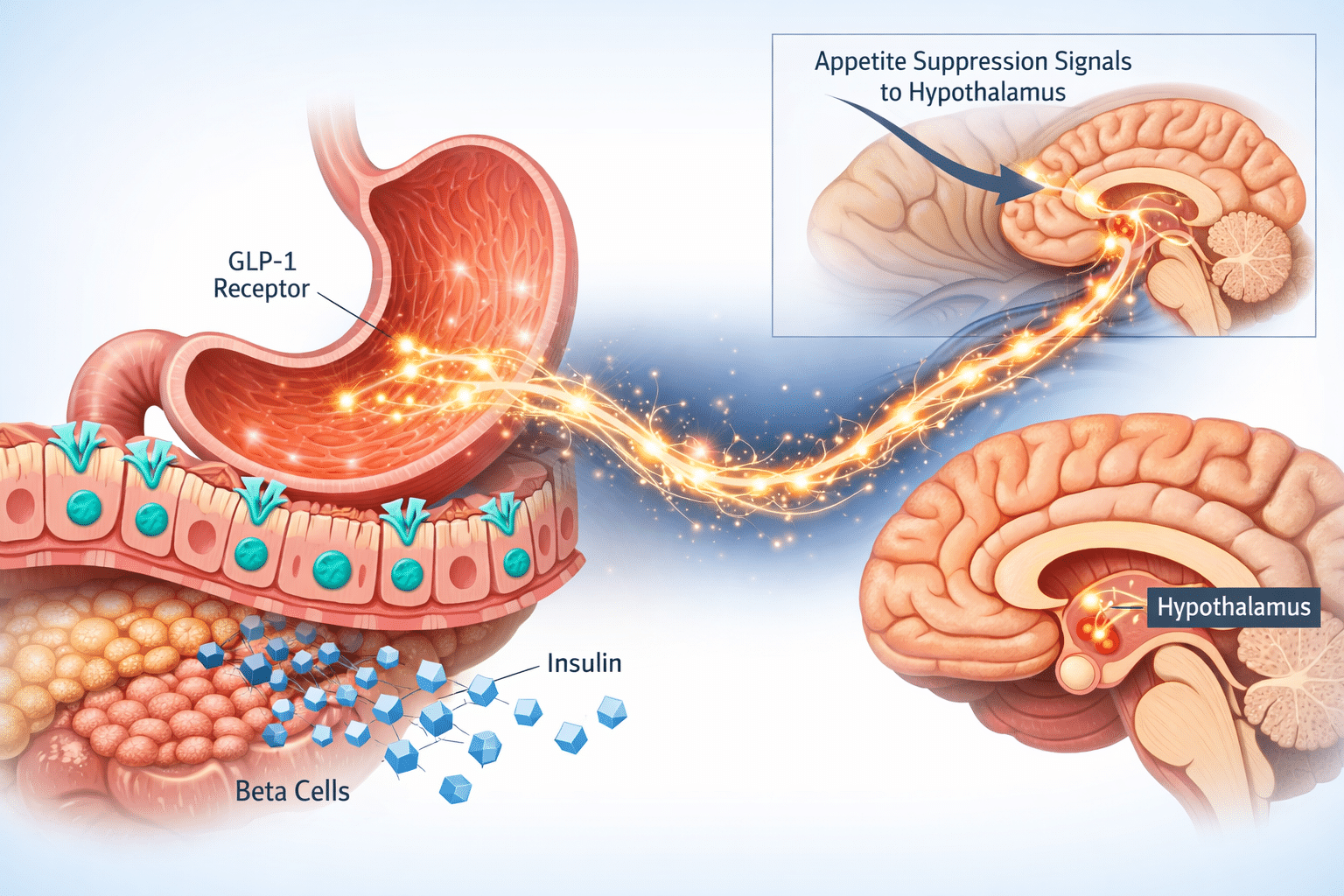
GLP-1 receptor agonists bind to GLP-1 receptors found throughout your body — in the pancreas, stomach, intestines, and brain. Each binding site triggers a different effect.
Here’s what happens when you inject a GLP-1 medication:
In the pancreas:
- Stimulates insulin release when blood sugar is elevated
- Suppresses glucagon (a hormone that raises blood sugar)
- Helps stabilize blood glucose levels
In the stomach:
- Slows gastric emptying — food moves through your system more slowly
- You feel full faster and stay full longer
In the brain:
- Signals the hypothalamus to reduce hunger
- Quiets what many patients describe as “food noise” — the constant mental chatter about eating
- Reduces cravings, especially for high-calorie foods
If you’ve ever wondered why you can’t stop thinking about food even when you’re not hungry, this guide on how to stop food noise explains the science behind it — and why GLP-1s are so effective at addressing it.
One important finding from 2026 research: GLP-1 receptor agonists also activate the hypothalamic-pituitary-adrenal (HPA) axis, increasing stress hormones like corticosterone. Researchers believe this mechanism contributes to the muscle loss some patients experience alongside fat loss [2]. This is an active area of study, and it’s one reason protein intake and resistance training are increasingly recommended alongside GLP-1 therapy.
Which GLP-1 Injectables Are Available Right Now?
Several GLP-1 injectable medications are currently FDA-approved, each with slightly different mechanisms and approved uses.

| Medication | Brand Name | Active Ingredient | Approved For | Dosing |
|---|---|---|---|---|
| Semaglutide (low dose) | Ozempic | Semaglutide | Type 2 diabetes | Weekly injection |
| Semaglutide (standard) | Wegovy | Semaglutide 2.4 mg | Weight loss | Weekly injection |
| Semaglutide (high dose) | Wegovy HD | Semaglutide 7.2 mg | Weight loss | Weekly injection |
| Tirzepatide (low dose) | Mounjaro | Tirzepatide | Type 2 diabetes | Weekly injection |
| Tirzepatide (high dose) | Zepbound | Tirzepatide | Weight loss | Weekly injection |
| Liraglutide | Victoza / Saxenda | Liraglutide | Diabetes / Weight loss | Daily injection |
What’s new in 2026: The FDA approved Wegovy HD (semaglutide 7.2 mg) on March 19, 2026 — the highest-dose formulation to date — achieving approximately 21% mean weight loss at 72 weeks, outperforming the standard 2.4 mg dose [4]. This is the most potent injectable GLP-1 weight loss therapy approved so far.
Tirzepatide works slightly differently — it targets both GLP-1 and GIP receptors (a dual-action approach), which is why some patients see stronger results with it. For a detailed side-by-side breakdown, check out which GLP-1 medication works best for weight loss.
What Kind of Results Can You Realistically Expect?
GLP-1 injectables produce meaningful weight loss for most people — but results vary based on the medication, dose, duration, and individual factors.
What the data shows:
- Women taking GLP-1 receptor agonists lost an average of about 11% of starting body weight; men averaged around 7% [5]
- Results appear consistent across age groups, racial backgrounds, and starting weight [5]
- The new Wegovy HD formulation achieved roughly 21% mean weight loss over 72 weeks [4]
- Eli Lilly’s retatrutide (a GLP-1/glucagon dual agonist in Phase 3 trials) showed up to 16.8% weight loss with additional cardiovascular benefits [4]
The honest reality about stopping:
Weight regain after discontinuing GLP-1 injectables is well-documented. Research shows that when patients stop treatment, they often begin overeating almost immediately and can regain lost weight — sometimes exceeding their baseline [2]. This doesn’t mean the medication failed. It reflects that obesity has a biological component that doesn’t disappear when treatment ends.
This is why many clinicians now frame GLP-1 therapy as long-term management rather than a short course of treatment.
For realistic timelines and what to expect month by month, read through these semaglutide weight loss results.

How Much Do GLP-1 Injectables Cost — And What Are Your Affordable Options?
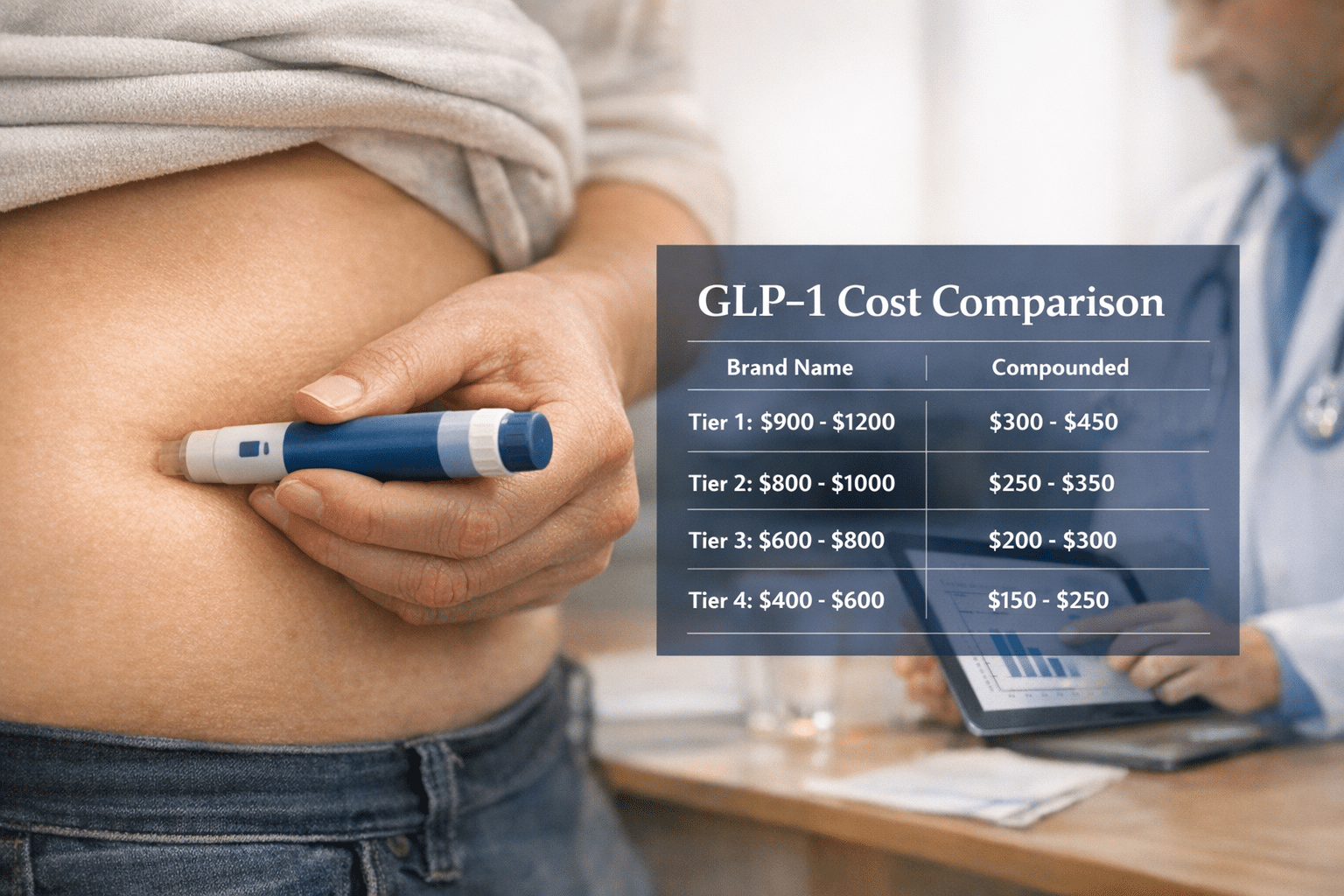
Cost is one of the biggest barriers to access. Brand-name GLP-1 injectables are expensive without insurance.
Estimated monthly costs (brand-name, without insurance):
| Medication | Estimated Monthly Cost |
|---|---|
| Wegovy (semaglutide 2.4 mg) | $1,300–$1,600 |
| Ozempic (semaglutide, diabetes) | $900–$1,100 |
| Zepbound (tirzepatide) | $1,000–$1,300 |
| Mounjaro (tirzepatide, diabetes) | $1,000–$1,200 |
More affordable routes worth knowing:
- Compounded semaglutide or tirzepatide from licensed pharmacies can cost $150–$400/month. These are not FDA-approved finished products, but the active ingredients are. See our compounded tirzepatide guide for what to look for and what to avoid.
- Manufacturer savings programs: Novo Nordisk and Eli Lilly offer savings cards that can reduce costs significantly for eligible insured patients. The Mounjaro $25 coupon is one example — but eligibility rules matter.
- Telehealth GLP-1 programs have made access faster and more affordable. Some platforms offer bundled pricing that includes the medication, provider visits, and support.
- Insurance coverage is inconsistent but growing. Medicare now covers some GLP-1s for obesity, and more private plans are following. Learn how to navigate this in our guide on how to get GLP-1 covered by insurance.
For a full cost breakdown including the cheapest legitimate options, see our cheap weight loss injections guide.
Who Is a Good Candidate for a GLP-1 Injectable?
GLP-1 injectables are typically prescribed for adults who meet specific clinical criteria. They’re not a first-line option for mild weight concerns.
You may be a good candidate if:
- Your BMI is 30 or higher (obesity), or 27+ with a weight-related condition like type 2 diabetes, high blood pressure, or sleep apnea
- You have type 2 diabetes and need better blood sugar control
- You’ve tried diet and exercise changes without achieving adequate results
- Your doctor has evaluated your overall metabolic health
GLP-1 injectables are generally not recommended if you:
- Have a personal or family history of medullary thyroid carcinoma (MTC) or Multiple Endocrine Neoplasia syndrome type 2 (MEN 2)
- Are pregnant or planning to become pregnant
- Have a history of pancreatitis
- Have certain gastrointestinal conditions
A note on adherence: A large real-world analysis of nearly 127,000 U.S. adults found that only 25% remained on any GLP-1 medication one year after starting, and about 20% switched to a different GLP-1 during that time [1]. Switching isn’t failure — it often reflects active management of side effects or insurance changes. Patients who switched actually showed higher long-term adherence than those who stayed on their initial medication [1].
What Are the Side Effects You Should Know About?
Most side effects are gastrointestinal and tend to be worse when starting or increasing the dose.
Common side effects:
- Nausea (most frequently reported, especially early on)
- Vomiting
- Diarrhea or constipation
- Stomach discomfort or bloating
- Reduced appetite (this is also the intended effect)
Less common but more serious concerns:
- Pancreatitis (inflammation of the pancreas)
- Gallbladder issues, including gallstones
- Muscle loss alongside fat loss — an emerging concern backed by 2026 research [2]
- Potential HPA axis activation leading to elevated stress hormones [2]
On mental health: The FDA has been monitoring reports of suicidal thoughts in patients taking GLP-1 medications. As of their most recent update, the FDA has not confirmed a causal link, but the evaluation is ongoing [7]. If you or someone you know experiences mood changes while on these medications, contact a healthcare provider immediately.
The best way to minimize side effects is to start at the lowest dose and titrate up slowly under medical supervision. Don’t rush the dose escalation to speed up results — it rarely works and usually makes side effects worse.
How Do GLP-1 Injectables Compare to Other Weight Loss Options?
GLP-1 injectables sit in a different category than most weight loss approaches — they work on biology, not just behavior.
| Approach | Average Weight Loss | Sustainability | Cost |
|---|---|---|---|
| Diet + exercise alone | 3–5% body weight | Variable | Low |
| Weight loss programs (e.g., Nutrisystem) | 5–8% body weight | Moderate | $300–$500/month |
| GLP-1 injectable (standard dose) | 7–15% body weight | Requires continuation | $150–$1,600/month |
| GLP-1 injectable (high dose, Wegovy HD) | ~21% body weight | Requires continuation | Higher (brand) |
| Bariatric surgery | 25–35% body weight | High long-term | $15,000–$25,000+ |
GLP-1s are not a replacement for healthy habits — they work best when combined with a balanced diet and regular movement. But for people whose biology has been working against them for years, they provide a meaningful physiological assist that diet alone can’t replicate.
For those exploring structured meal-based programs alongside medication, our Nutrisystem review covers how food programs can complement GLP-1 therapy.
Frequently Asked Questions About GLP-1 Injectables
Q: How quickly do GLP-1 injectables start working? Most people notice reduced appetite within the first 1–2 weeks. Meaningful weight loss typically becomes visible after 4–8 weeks, with the most significant changes occurring over 3–6 months of consistent use.
Q: Do I have to inject myself? Yes, most GLP-1 injectables are self-administered using a pre-filled auto-injector pen. The needle is very small (4–6mm) and most patients find it far less uncomfortable than expected. Oral GLP-1 options are now available, though injectables remain the most clinically studied form.
Q: Can I stop taking a GLP-1 injectable once I reach my goal weight? You can, but research shows weight regain is common and can be rapid after stopping [2]. Many clinicians recommend a maintenance strategy or gradual tapering rather than abrupt discontinuation.
Q: Is semaglutide the same as tirzepatide? No. Semaglutide targets only GLP-1 receptors. Tirzepatide targets both GLP-1 and GIP receptors, making it a dual-action medication. Some studies suggest tirzepatide produces greater weight loss on average, but individual responses vary. See our GLP-1 for weight loss comparison for more detail.
Q: Are compounded GLP-1 injectables safe? Compounded versions use the same active ingredients as brand-name medications but are not FDA-approved as finished products. Quality depends entirely on the compounding pharmacy. Always use a licensed, PCAB-accredited compounding pharmacy and get a prescription from a licensed provider.
Q: Will insurance cover a GLP-1 injectable for weight loss? Coverage varies widely. Medicare now covers some GLP-1s for obesity under certain conditions. Many private insurers cover them for type 2 diabetes but not always for weight loss alone. Our insurance coverage guide walks through how to build a case for coverage.
Q: Do GLP-1 injectables cause muscle loss? Yes, muscle loss alongside fat loss has been identified as a concern in recent research [2]. Pairing GLP-1 therapy with adequate protein intake (typically 1.2–1.6g per kg of body weight) and resistance training is strongly recommended to preserve lean mass.
Q: Are GLP-1 injectables only for people with diabetes? No. While they were originally developed for type 2 diabetes, several formulations (Wegovy, Zepbound) are FDA-approved specifically for chronic weight management in adults with obesity or overweight with a related health condition.
Q: What’s the difference between Ozempic and Wegovy? Both contain semaglutide, but at different doses. Ozempic is approved for type 2 diabetes (up to 2 mg). Wegovy is approved for weight loss (2.4 mg standard; 7.2 mg in the new HD formulation approved March 2026) [4].
Q: How do I get started with a GLP-1 injectable? You need a prescription from a licensed healthcare provider. Telehealth platforms have made this significantly more accessible — many offer same-week consultations. A provider will review your medical history, BMI, and any contraindications before prescribing.
7 Best GLP-1 Providers Ranked: Accreditation, Flexibility & Support Compared (2026 Update)
32,000+ Patients Can't All Be Wrong: See the Top-Rated GLP-1 Providers: Compared on accreditation, plan flexibility, and patient support — updated for 2026.
BMI MD GLP-1 Microdosing Plan
- Specialized microdosing options (sublingual drops or low-dose injections)
- Ideal for maintaining weight or tapering off higher doses safely
- Fully bundled plan with no hidden monthly platform memberships
DirectMeds Weight Loss Solutions
- Sourced from accredited, state-licensed 503A compounding pharmacies
- No-frills high-volume savings passed directly to the patient
- Includes clinical consultation and cold-chain shipping updates
MEDVi Flat-Rate Telehealth
- Flat monthly rate holds steady even at maximum maintenance doses
- No dosage upcharges or graduation fee penalties
- Offers both injectable and advanced oral thin-film delivery options
Gala GLP-1 Care Program
- All-inclusive plan with no standalone membership costs
- Continuous text-based messaging access with state-licensed clinicians
- Temperature-controlled, cold-chain medication shipping included
Measured GLP-1 Metabolic Health
- Comprehensive metabolic health screening and expert intake analysis
- Predictable long-term budgeting with stable plan pricing
- High-end responsive dashboard with integrated diagnostic support
Refills GLP-1 (TryRefills Plan)
- Flat rate holds steady as titration scales up
- Includes clinical guides for active side-effect management
- Bundles in foundational nutritional strategies alongside medication
AltRx GLP-1 Transactional Reorders
- Zero recurring auto-billing — pay entirely on a transactional basis
- Rapid text-to-order format saves time for experienced patients
- Provides both injectable forms and fast-dissolving tablet variations
Conclusion: Is a GLP-1 Injectable Worth Considering?
GLP-1 injectables represent a genuine shift in how medicine approaches weight loss and metabolic health. They’re not magic — they require commitment, medical supervision, and realistic expectations. But for millions of adults who have struggled with hunger, cravings, and weight that won’t budge despite real effort, they offer something most other approaches don’t: a biological mechanism that works with your body instead of against it.
The 2026 landscape is more promising than ever. The FDA approved the highest-dose semaglutide formulation to date this year, new dual-action options are in late-stage trials, and access through telehealth and compounding pharmacies has made these medications more affordable than the brand-name sticker price suggests [4][6].
Your next steps:
- Assess your eligibility — BMI 30+, or BMI 27+ with a weight-related condition
- Consult a provider — telehealth makes this faster and more affordable than a traditional clinic visit
- Understand your cost options — brand, compounded, and insurance pathways all exist
- Set realistic expectations — results take weeks to months, and long-term use is often necessary
- Protect your muscle mass — pair GLP-1 therapy with protein and resistance training
If you’re ready to explore your options, start with our GLP-1 injections guide for a practical next step.
References
[1] March Glp 1 Medication Weight Management – https://www.utsouthwestern.edu/newsroom/articles/year-2026/march-glp-1-medication-weight-management.html
[2] 2026 02 Shot Glp Era Weight Loss – https://medicalxpress.com/news/2026-02-shot-glp-era-weight-loss.html
[3] Apha2026 Glp 1 Therapies Are Rewriting The Rules Of Metabolic Disease – https://www.pharmacytimes.com/view/apha2026-glp-1-therapies-are-rewriting-the-rules-of-metabolic-disease
[4] Watch – https://www.youtube.com/watch?v=RweGMa6mdcM
[5] Glp 1 Weight Loss Drugs Comparably Effective For Patients Across Age Race And Starting Weight – https://publichealth.jhu.edu/2026/glp-1-weight-loss-drugs-comparably-effective-for-patients-across-age-race-and-starting-weight
[6] Obesity Drugs – https://www.jpmorgan.com/insights/global-research/current-events/obesity-drugs
[7] Update Fdas Ongoing Evaluation Reports Suicidal Thoughts Or Actions Patients Taking Certain Type – https://www.fda.gov/drugs/drug-safety-communications/update-fdas-ongoing-evaluation-reports-suicidal-thoughts-or-actions-patients-taking-certain-type


