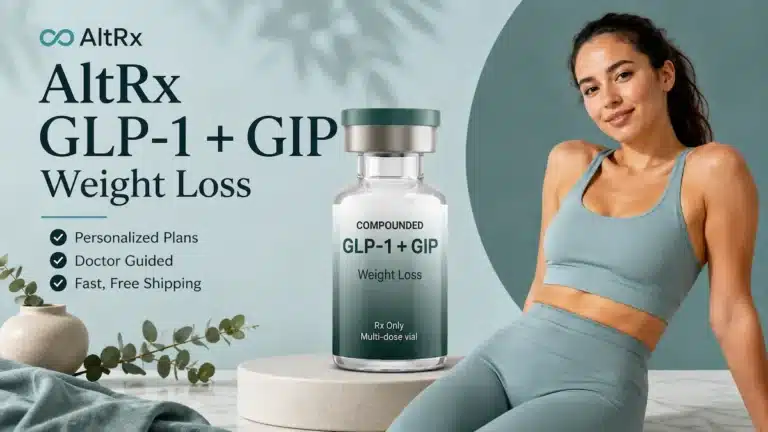
What Is a Compounding Pharmacy? GLP-1 Guide
Last updated: June 2, 2026
Quick Answer: A compounding pharmacy is a licensed facility that creates customized medications tailored to individual patient needs, including compounded versions of GLP-1 drugs like semaglutide and tirzepatide. These medications are mixed by hand in regulated labs, often at a fraction of the cost of brand-name drugs like Ozempic or Wegovy. This What Is a Compounding Pharmacy? GLP-1 Guide covers everything you need to know before considering compounded GLP-1 therapy.
More than 9 million Americans were prescribed GLP-1 receptor agonists in 2023 alone, yet brand-name versions like Ozempic and Wegovy routinely cost over $900 per month without insurance. That price gap is exactly why compounding pharmacies have become a serious option for people seeking affordable weight-loss medication. But before you order anything, you need to understand what you’re actually getting, and what the risks are.
Key Takeaways
- Compounding pharmacies mix custom medications from raw ingredients, often producing GLP-1 drugs like semaglutide at significantly lower prices than brand-name versions.
- Compounded GLP-1 medications are NOT FDA-approved as finished drug products, though the active ingredients may be FDA-regulated.
- Cost savings can be substantial: compounded semaglutide often runs $200-$400 per month versus $900+ for Ozempic or Wegovy.
- Compounded GLP-1 drugs were legally permitted during the FDA-declared shortage period; availability and legality may shift as shortages are resolved.
- Side effects of compounded GLP-1 medications closely mirror those of brand-name drugs: nausea, vomiting, and gastrointestinal discomfort are most common.
- Not everyone qualifies; people with certain thyroid conditions, pancreatitis history, or specific cancers should avoid GLP-1 therapy entirely.
- Always verify a compounding pharmacy holds PCAB accreditation or operates under a 503B outsourcing facility license.
- DirectMeds GLP1 Semaglutide is one of the most affordable and accessible compounded semaglutide options available through telehealth in 2026.

What Exactly Do Compounding Pharmacies Do?
Compounding pharmacies prepare customized medications by combining, mixing, or altering pharmaceutical ingredients to meet a specific patient’s prescription. Unlike standard retail pharmacies that dispense pre-manufactured drugs, compounding pharmacies build medications from scratch based on a licensed provider’s order.
For GLP-1 medications specifically, this means:
- Sourcing pharmaceutical-grade active pharmaceutical ingredients (APIs) such as semaglutide or tirzepatide
- Mixing them into precise dosage forms (typically injectable solutions)
- Packaging them in sterile vials for patient self-injection
- Shipping directly to patients, often through telehealth partnerships
There are two main types of compounding facilities relevant to GLP-1 drugs. 503A pharmacies compound medications for individual patients based on a specific prescription. 503B outsourcing facilities produce larger batches and are subject to FDA Current Good Manufacturing Practice (CGMP) inspections, making them generally held to a higher standard.
Decision rule: If you’re ordering compounded GLP-1 medication online, prioritize providers that source from 503B-registered facilities. This reduces the risk of contamination or dosing errors.
How Are Compounded GLP-1 Medications Different from Regular Prescriptions?
Compounded GLP-1 medications contain the same active ingredient as brand-name drugs but are not the same product. Brand-name drugs like Ozempic (semaglutide) and Mounjaro (tirzepatide) go through the FDA’s full drug approval process, which includes clinical trials, manufacturing inspections, and labeling reviews. Compounded versions skip that process.
Key differences include:
| Feature | Brand-Name (e.g., Ozempic) | Compounded GLP-1 |
|---|---|---|
| FDA approval | Yes (finished product) | No (ingredient may be regulated) |
| Clinical trial data | Extensive | Limited or none |
| Cost per month | $900-$1,200+ | $200-$400 (estimate) |
| Availability | Pharmacy with prescription | Telehealth + compounding pharmacy |
| Dosage customization | Fixed | Flexible |
Some compounded formulations also include additives like B12 or L-carnitine, which are not present in the brand-name versions. Whether those additions provide benefit is not established by clinical evidence.
For a deeper look at how these products compare, see how compounded semaglutide differs from Ozempic.
How Much Cheaper Are Compounded GLP-1 Meds Compared to Brand Names Like Ozempic?
Compounded semaglutide typically costs $200 to $400 per month, compared to $936 or more per month for brand-name Ozempic or Wegovy without insurance, according to GoodRx pricing data. That’s a potential savings of $500 to $700 per month, or more than $6,000 per year.
Compounded tirzepatide (the active ingredient in Zepbound and Mounjaro) follows a similar pattern. For a detailed breakdown, see our full GLP-1 cost without insurance guide.
Cost factors that affect compounded GLP-1 pricing:
- Dose strength: Higher doses cost more
- Telehealth consultation fees: Some platforms charge separately
- Subscription vs. one-time purchase: Monthly subscriptions usually lower the per-dose cost
- Facility type: 503B facilities may charge slightly more but offer better quality assurance
Ready to save on GLP-1 medication? Start with DirectMeds GLP1 Semaglutide and get compounded semaglutide at one of the most competitive prices available in 2026.

Why Are Some Doctors Recommending Compounded Semaglutide?
Many physicians recommend compounded semaglutide primarily because of cost and access barriers. When a patient needs GLP-1 therapy for weight management or blood sugar control but cannot afford brand-name pricing or lacks insurance coverage, compounded versions offer a clinically reasonable alternative during shortage periods.
Doctors may also recommend compounded GLP-1 drugs because:
- Brand-name drugs have faced persistent supply shortages since 2022
- Compounded versions allow dose titration that brand pens don’t always support
- Telehealth platforms make it easier for patients to access and stay consistent with treatment
That said, physicians who recommend compounded GLP-1 medications are making a judgment call. The FDA has warned that compounded drugs carry risks that FDA-approved products don’t, and responsible providers disclose this clearly. For a broader overview of how these medications work, our GLP-1 benefits and medications guide covers the clinical background in detail.
Are Compounded GLP-1 Drugs FDA Approved?
No. Compounded GLP-1 medications are not FDA-approved as finished drug products. This is one of the most important facts in this What Is a Compounding Pharmacy? GLP-1 Guide.
The FDA does not evaluate compounded drugs for safety, effectiveness, or quality before they reach patients. However, 503B outsourcing facilities are subject to FDA inspections and must follow CGMP standards, which provides a meaningful (though not equivalent) layer of oversight.
During the FDA-declared shortage of semaglutide and tirzepatide, compounding was legally permitted under federal law. As the FDA resolves those shortage designations, the legal landscape for compounded GLP-1 drugs continues to shift. Always check current FDA shortage status before starting compounded therapy.
Common mistake: Assuming “FDA-regulated ingredients” means the finished compounded product is FDA-approved. It is not.
Are Compounded Weight Loss Medications Safe?
Compounded GLP-1 medications can be safe when sourced from a licensed, accredited 503B facility and prescribed by a qualified provider. However, quality varies significantly across compounding pharmacies, and some unregulated products have caused serious harm.
The FDA has issued warnings about compounded semaglutide products that contained incorrect dosing instructions or unapproved salt forms of the drug (such as semaglutide sodium or acetate instead of the base form used in Ozempic). These variants have not been proven safe or effective.
Safety checklist for compounded GLP-1 medications:
- Confirm the pharmacy is PCAB-accredited or a registered 503B outsourcing facility
- Verify the prescription comes from a licensed U.S. healthcare provider
- Ensure the product uses semaglutide base (not a salt form) unless your provider specifies otherwise
- Avoid products sold without a prescription or from overseas vendors
For guidance on verifying a pharmacy’s credentials, see how to verify a legitimate compounding pharmacy.
What Side Effects Happen with Compounded GLP-1 Medications?
Side effects of compounded GLP-1 medications closely mirror those of brand-name drugs because the active ingredient is the same. The most common side effects are gastrointestinal.
Most common side effects:
- Nausea (most frequently reported, especially in early weeks)
- Vomiting
- Diarrhea or constipation
- Stomach cramping or bloating
- Reduced appetite (this is often the intended effect)
Less common but serious:
- Pancreatitis (seek immediate care if you have severe abdominal pain)
- Gallbladder problems
- Rapid heart rate
- Injection site reactions
The risk of serious side effects is not necessarily higher with compounded versions if the drug is properly formulated. The added risk comes from quality control: if a compounding pharmacy makes a dosing error, the consequences can be more severe. Starting at a low dose and titrating slowly reduces side effect burden.
For a detailed look at semaglutide’s clinical profile, our semaglutide weight loss injections guide covers dosing, timelines, and what to expect.
Who Should Consider Using a Compounding Pharmacy for GLP-1 Drugs?
Compounded GLP-1 therapy is best suited for adults who have a legitimate medical need for GLP-1 medication but face cost or access barriers with brand-name options. This includes people with a BMI of 30 or higher, or 27 or higher with a weight-related condition like type 2 diabetes or hypertension, who cannot afford Ozempic or Wegovy without insurance.
Good candidates include:
- Adults without insurance coverage for GLP-1 drugs
- Patients who tried brand-name GLP-1 drugs but lost access due to cost
- People who need dose flexibility not available in pre-filled pens
- Those in areas where brand-name drugs are on backorder
If you’re comparing affordable GLP-1 options, our least expensive GLP-1 for weight loss guide is a practical starting point.
Check if you qualify for DirectMeds GLP1 Semaglutide and get started with a telehealth consultation today.
What Medical Conditions Disqualify Me from Using Compounded Weight Loss Meds?
Several medical conditions make GLP-1 therapy unsafe regardless of whether the drug is brand-name or compounded. Your prescribing provider should screen for all of these before writing a prescription.
Absolute contraindications:
- Personal or family history of medullary thyroid carcinoma (MTC)
- Multiple Endocrine Neoplasia syndrome type 2 (MEN 2)
- History of serious hypersensitivity to semaglutide or tirzepatide
Conditions requiring caution or specialist oversight:
- History of pancreatitis
- Severe gastrointestinal disease (e.g., gastroparesis)
- Pregnancy or breastfeeding
- Severe kidney or liver disease
- Active eating disorders
Any telehealth provider prescribing compounded GLP-1 drugs without asking about these conditions is not following safe prescribing standards. Walk away from any platform that skips this screening.
Can I Get Compounded GLP-1 Meds Without Insurance?
Yes. Compounded GLP-1 medications are almost always purchased out-of-pocket, which is one of their primary advantages for uninsured patients. Most telehealth platforms that offer compounded semaglutide or tirzepatide operate on a cash-pay model, with no insurance required.
The process typically works like this:
- Complete an online health intake form with a telehealth provider
- A licensed clinician reviews your history and writes a prescription if appropriate
- The prescription is sent to a partnered compounding pharmacy
- Medication ships directly to your home, usually within 5-10 business days
For more on navigating GLP-1 access without insurance, see our guide on GLP-1s without insurance.
Get compounded semaglutide without insurance through DirectMeds GLP1 and skip the insurance maze entirely.
What Are the Risks of Using a Compounding Pharmacy?
The main risks of using a compounding pharmacy for GLP-1 medications fall into three categories: quality, legality, and medical oversight.
Quality risks:
- Incorrect dosing due to compounding errors
- Contamination from non-sterile preparation
- Use of unapproved drug salt forms
- Inconsistent potency between batches
Legal risks:
- As FDA shortage designations are lifted, some compounded GLP-1 products may no longer be legally permissible
- Purchasing from overseas or unlicensed domestic sources may violate federal law
Medical risks:
- Inadequate screening by low-quality telehealth providers
- No follow-up monitoring for side effects or lab values
- Self-adjusting doses without clinical guidance
Mitigation is straightforward: use a telehealth provider with licensed clinicians, source medication only from 503B-registered facilities, and maintain regular check-ins with your provider.
How Do I Find a Reputable Compounding Pharmacy Near Me?
Finding a reputable compounding pharmacy starts with checking two credentials: PCAB (Pharmacy Compounding Accreditation Board) accreditation and FDA 503B registration. You don’t necessarily need a local pharmacy since most compounded GLP-1 medications ship nationally.

Steps to find a legitimate provider:
- Search the PCAB directory at pcab.pharmacy for accredited compounders
- Check the FDA’s 503B outsourcing facility list at fda.gov
- Verify your telehealth provider is licensed in your state
- Read independent reviews of the platform, not just testimonials on their own site
- Confirm the pharmacy’s contact information is publicly listed and verifiable
For a vetted option, DirectMeds GLP1 Semaglutide connects patients with licensed providers and accredited compounding facilities, making the verification step easier.
Our full resource on how to verify a legitimate compounding pharmacy walks through each step in detail.
FAQ
What is a compounding pharmacy in simple terms?
A compounding pharmacy is a licensed pharmacy that makes custom medications from scratch rather than dispensing pre-made drugs. For GLP-1 weight loss drugs, this means mixing semaglutide or tirzepatide into injectable solutions tailored to a patient’s specific prescription.
Is compounded semaglutide the same as Ozempic?
No. Both contain semaglutide as the active ingredient, but compounded semaglutide is not the same product. Ozempic is FDA-approved with extensive clinical data. Compounded semaglutide is mixed by a pharmacy and has not gone through FDA drug approval as a finished product.
How much does compounded semaglutide cost per month?
Compounded semaglutide typically costs between $200 and $400 per month through telehealth platforms in 2026, compared to $936 or more for brand-name Ozempic without insurance. Prices vary by dose and provider.
Can a regular doctor prescribe compounded GLP-1 medication?
Yes. Any licensed U.S. physician, nurse practitioner, or physician assistant can prescribe compounded GLP-1 medications. Many telehealth providers now offer this service through online consultations.
Are compounded GLP-1 drugs legal?
They were broadly legal during the FDA-declared shortage period. As shortages are resolved, the legal status of compounded GLP-1 products may change. Always confirm current FDA guidance before starting or continuing compounded therapy.
What is the difference between a 503A and 503B compounding pharmacy?
A 503A pharmacy compounds medications for individual patients based on a specific prescription. A 503B outsourcing facility can produce larger batches and is subject to FDA CGMP inspections, making it a higher-oversight option for GLP-1 medications.
Can I use compounded GLP-1 medication long-term?
Long-term use is possible under medical supervision, but it depends on the ongoing legality of compounded GLP-1 drugs and your individual health response. Regular provider check-ins are essential for monitoring safety and effectiveness.
What should I do if I have a bad reaction to compounded semaglutide?
Stop the medication and contact your prescribing provider immediately. For severe symptoms like intense abdominal pain, difficulty breathing, or rapid heart rate, seek emergency care. Report adverse events to the FDA’s MedWatch program.
Does DirectMeds offer compounded semaglutide?
Yes. DirectMeds GLP1 Semaglutide is among the most affordable compounded semaglutide options available through telehealth in 2026, with licensed provider consultations and pharmacy fulfillment included.
How do I know if a compounding pharmacy is legitimate?
Check for PCAB accreditation or FDA 503B registration. Legitimate pharmacies list their credentials publicly, require a valid prescription, and have verifiable U.S. contact information. Avoid any vendor selling GLP-1 drugs without a prescription requirement.
Conclusion
Understanding what a compounding pharmacy is and how it fits into the GLP-1 landscape is essential before making any medication decision. This What Is a Compounding Pharmacy? GLP-1 Guide has covered the key facts: compounded GLP-1 drugs offer real cost savings, but they come with trade-offs in regulatory oversight and quality assurance that you need to take seriously.
Your next steps:
- Confirm you have a legitimate medical need for GLP-1 therapy by consulting a licensed provider.
- Verify any compounding pharmacy you consider holds PCAB accreditation or 503B registration.
- Compare costs using our full GLP-1 cost guide before committing to a plan.
- If you’re ready to start, DirectMeds GLP1 Semaglutide offers an affordable, telehealth-supported path to compounded semaglutide with transparent pricing.
The cost savings are real. The risks are manageable with the right provider. Do your homework, choose a verified pharmacy, and work with a clinician who monitors your progress.
Start your GLP-1 journey with DirectMeds today and take the first step toward affordable, medically supervised weight loss in 2026.
References
- U.S. Food and Drug Administration. Compounding and the FDA: Questions and Answers. FDA.gov.
- U.S. Food and Drug Administration. Medications Containing Semaglutide Marketed for Type 2 Diabetes or Weight Loss. FDA.gov.
- Wilding JPH, et al. Once-Weekly Semaglutide in Adults with Overweight or Obesity. New England Journal of Medicine. 2021.
- Jastreboff AM, et al. Tirzepatide Once Weekly for the Treatment of Obesity. New England Journal of Medicine. 2022.
- U.S. Food and Drug Administration. 503B Outsourcing Facilities. FDA.gov.
Tags: compounding pharmacy, GLP-1 medications, compounded semaglutide, Ozempic alternative, weight loss injections, tirzepatide compounded, semaglutide cost, telehealth GLP-1, FDA compounding rules, affordable weight loss drugs, GLP-1 without insurance, DirectMeds semaglutide