
best time to take glp 1
Last updated: September 25, 2026
Quick Answer
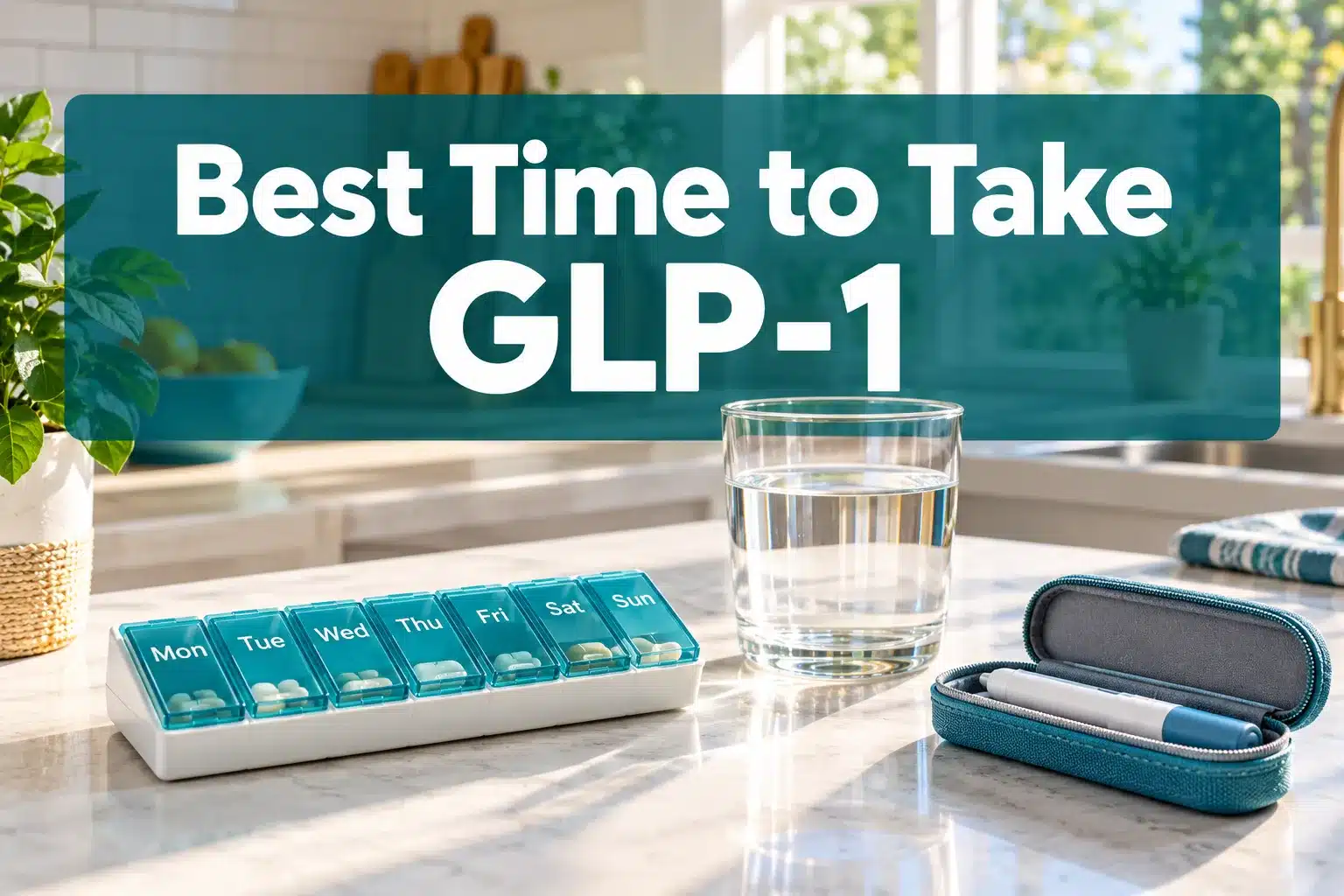
For most modern once-weekly GLP-1 medications like semaglutide (Ozempic, Wegovy) and tirzepatide (Mounjaro, Zepbound), there is no single best time to take GLP-1 from a clinical standpoint. You can inject on any day, at any time of day, with or without food. What matters most is consistency: pick a time that fits your routine and stick to it every week.
Key Takeaways
- Once-weekly GLP-1 injections (semaglutide, tirzepatide) have no required time of day, morning, afternoon, or evening all work equally well
- The best time to take GLP-1 is whichever time you will remember consistently, not a specific physiological window
- Weekly doses must be spaced at least 7 days apart; you can shift the day by a few days if needed
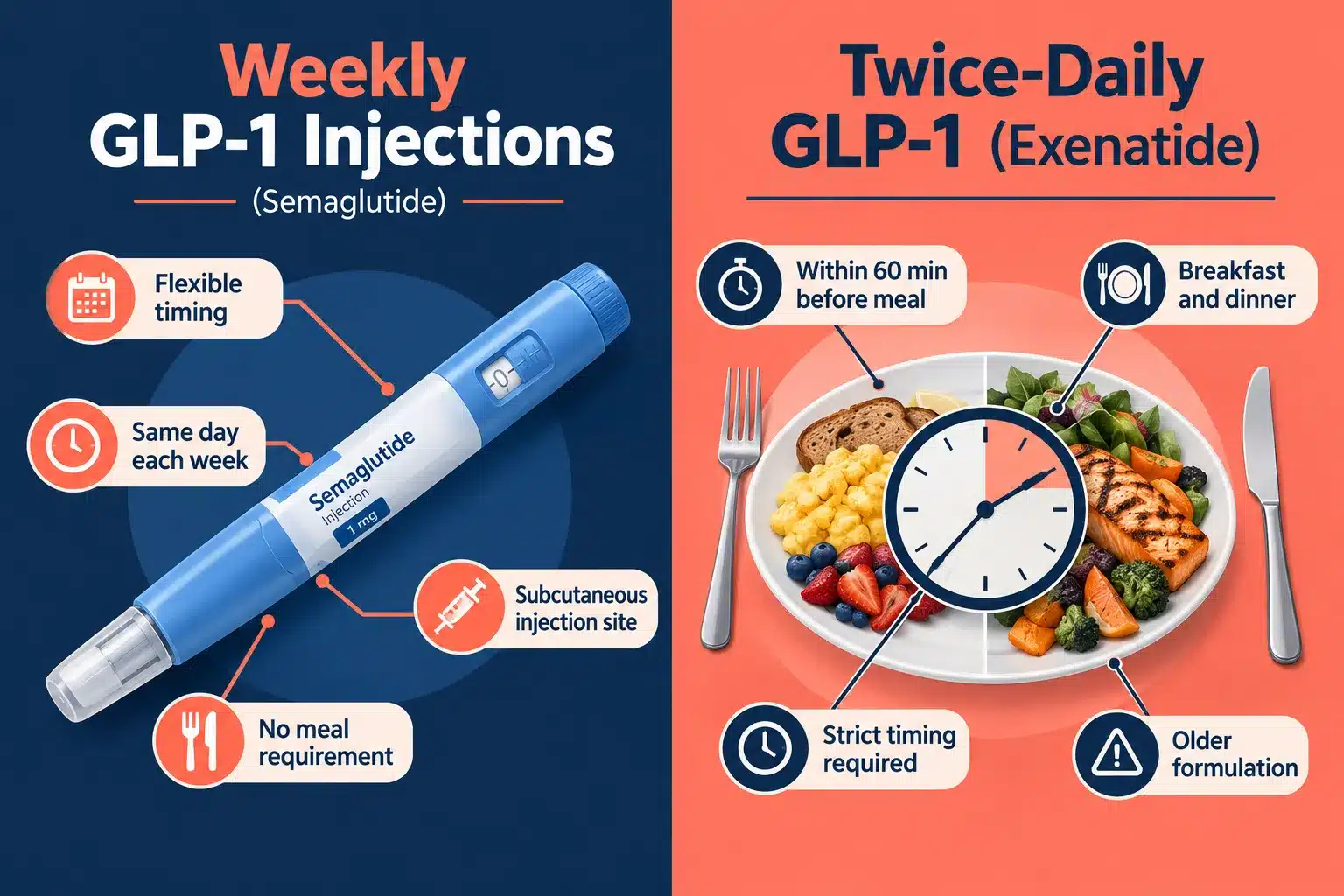
- Older twice-daily GLP-1 medications like exenatide are tied to meal timing and require dosing within 60 minutes before meals
- Missing a weekly semaglutide dose: inject within 5 days (for diabetes indication) or within 2 days (for weight loss/MASH indication), then resume your normal schedule
- Taking GLP-1 on an empty stomach is fine and does not reduce effectiveness
- Morning dosing may help some people manage nausea by staying active; bedtime dosing lets others sleep through mild side effects
- Never take a double dose to make up for a missed injection
- GLP-1 medications can interact with other drugs, always tell your prescriber about your full medication list
- Exercise timing relative to your GLP-1 dose does not meaningfully affect how the medication works
What Time of Day Should I Take GLP-1?
Any time of day works for once-weekly GLP-1 receptor agonists. The FDA-approved prescribing information for both semaglutide and tirzepatide confirms that these medications can be administered at any time of day, regardless of meals. [1][4]
7 Best GLP-1 Providers Ranked: Accreditation, Flexibility & Support Compared (2026 Update)
32,000+ Patients Can't All Be Wrong: See the Top-Rated GLP-1 Providers. We compared the leading online GLP-1 providers based on program features, clinical support, convenience, and overall value.
BMI MD GLP-1 Microdosing Plan
- Specialized microdosing options, including sublingual drops and low-dose injections
- Designed for people interested in maintaining weight or gradually adjusting treatment
- Bundled program structure without a separate monthly platform membership
- Online access makes the process convenient from home

DirectMeds Weight Loss Solutions
- Online weight-loss program with a straightforward patient experience
- Compounded medication options through state-licensed compounding pharmacies
- Includes clinical consultation as part of the process
- Provides shipping updates to help patients track their orders
MEDVi Flat-Rate Telehealth
- Flat-rate telehealth approach designed for easier budgeting
- No dosage-based pricing increases within the advertised program structure
- Offers injectable and oral thin-film delivery options
- Includes medical screening and asynchronous provider consultations
Gala GLP-1 Care Program
- Text-based access to state-licensed clinicians
- Cold-chain medication shipping included in the program
- Month-to-month program structure
- Designed for people who value convenient ongoing support
Measured GLP-1 Metabolic Health
- Comprehensive metabolic health screening and intake analysis
- Designed around longer-term metabolic health management
- Responsive dashboard with integrated health tracking tools
- Useful option for patients who value a more data-focused experience
Refills GLP-1 (TryRefills Plan)
- Clinical guidance designed to help patients manage common treatment concerns
- Includes foundational nutritional strategies alongside medication
- Designed around predictable ongoing treatment
- No hidden startup or processing fees according to the program information provided
AltRx GLP-1 Transactional Reorders
- Transactional reorder model without recurring auto-billing
- Designed for patients who already understand their treatment routine
- Fast text-to-order process for convenient reorders
- Offers injectable and fast-dissolving tablet variations
This flexibility is intentional. Because weekly GLP-1 medications build steady blood levels over days rather than hours, a morning dose and an evening dose produce essentially the same therapeutic effect by the end of the week. [8]
Practical guidance by preference:
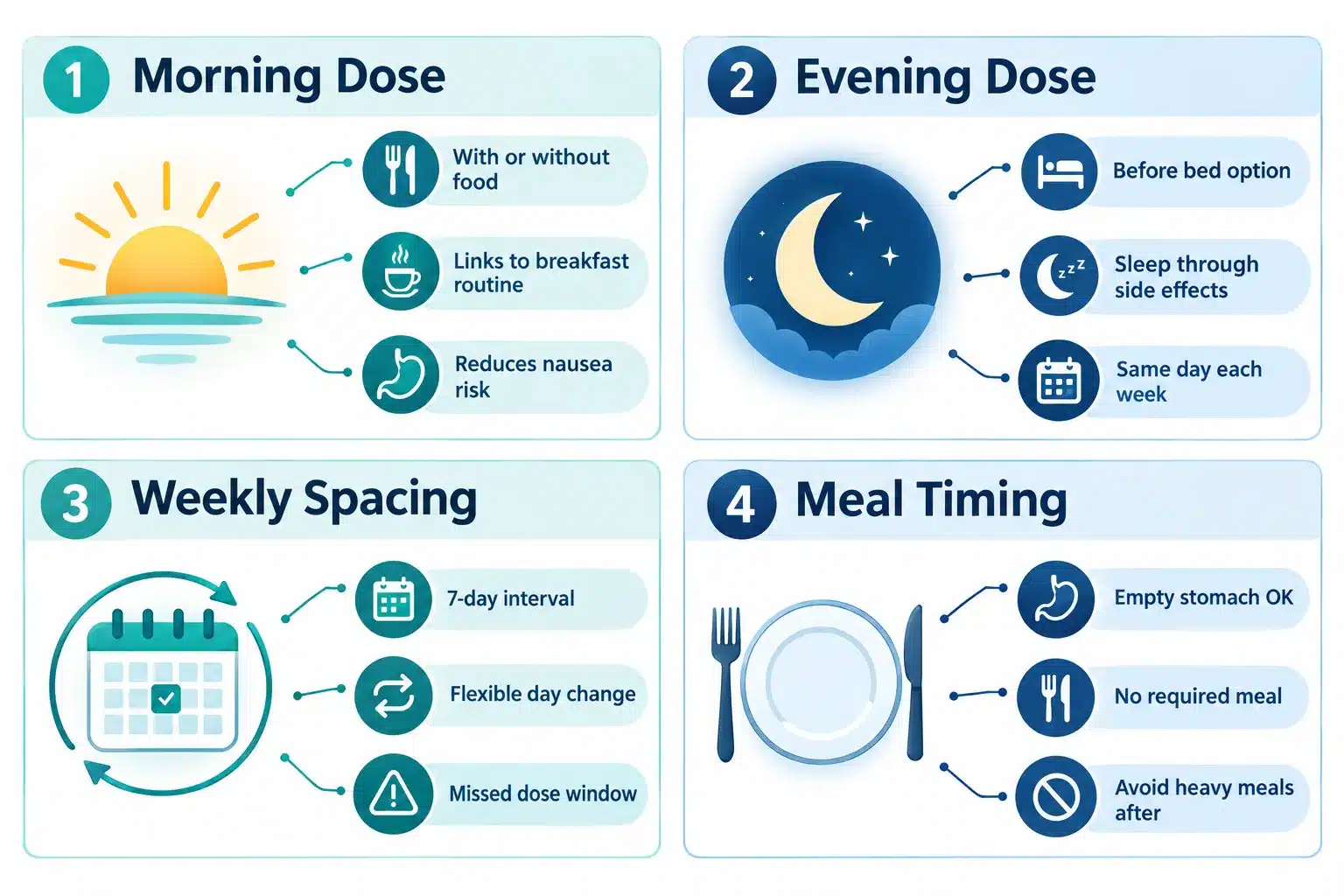
- Morning dosers: Many people link their injection to a morning routine, brushing teeth, making coffee, or taking other medications. This approach works well and may help you notice any early nausea while you’re still active.
- Evening or bedtime dosers: Some people prefer injecting before bed so that any mild nausea or fatigue from a new dose passes during sleep. This is a legitimate strategy, especially during the first few weeks of treatment.
- Midday dosers: If your schedule is most reliable at lunch, that works too. The key is repeatability.
“The best time to take GLP-1 is the time you will actually remember every single week.”
Does It Matter When I Take My GLP-1 Injection?
For weekly formulations, timing within the day does not affect efficacy. Clinical Q&A data from pharmacists confirms that Ozempic’s effectiveness is not tied to morning versus evening administration. [8] The drug’s half-life of approximately one week means peak and trough levels are determined by the 7-day dosing interval, not the hour of the day.
Where timing does matter:
- Day of the week: You must keep the same day each week (or at minimum maintain a 7-day gap). Injecting on Monday one week and Thursday the next compresses your dosing interval and can amplify side effects.
- Older twice-daily GLP-1s (exenatide): These are a different story. Exenatide (Byetta) must be injected within 60 minutes before your morning and evening meals. Skipping that pre-meal window reduces effectiveness and increases GI side effects. [9]
Should I Take GLP-1 Before or After Meals?
For once-weekly GLP-1 injections, meal timing is irrelevant. You do not need to eat before or after your injection. [1][6] The subcutaneous injection absorbs slowly into the bloodstream regardless of whether your stomach is full or empty.
Is it better to take GLP-1 on an empty stomach?
No evidence suggests an empty stomach improves absorption or effectiveness for weekly formulations. Some people find that injecting when they haven’t eaten recently reduces nausea, but this is anecdotal. If you notice that injecting right after a large meal worsens nausea, try shifting to a time when your stomach is lighter, but this is a comfort adjustment, not a clinical requirement.
The exception: If you’re taking the oral form of semaglutide (Rybelsus), timing is critical. It must be taken on an empty stomach with no more than 4 ounces of water, at least 30 minutes before any food, drink, or other medications. [4] This article focuses primarily on injectable GLP-1s, but that distinction is worth knowing.
Can I Take GLP-1 at Night or Should It Be Morning?
You can take GLP-1 at night, and for some people it’s the better choice. Neither morning nor evening has a clinical advantage for weekly injectable GLP-1 medications. [8]
Morning vs. evening: a practical comparison
| Factor | Morning Dosing | Evening/Bedtime Dosing |
|---|---|---|
| Nausea management | Stay active; distraction helps | Sleep through peak side effects |
| Routine anchoring | Easy to pair with breakfast or meds | Easy to pair with bedtime routine |
| Appetite effect | No difference by week’s end | No difference by week’s end |
| Fatigue side effects | May feel tired during the day | Fatigue passes during sleep |
| Clinical efficacy | Identical | Identical |
How Many Hours Apart Should GLP-1 Doses Be?
For once-weekly GLP-1 medications, doses must be at least 7 days (168 hours) apart. [1][5] This is the minimum safe interval. Dosing more frequently does not increase weight loss and significantly raises the risk of nausea, vomiting, and low blood sugar.
There is no maximum interval concern in the same way, missing a week won’t cause harm, but it does interrupt the steady-state blood levels that drive appetite suppression and metabolic effects.
Can I change the day I take my weekly GLP-1?
Yes. If you need to shift your injection day, say, from Monday to Thursday, you can do so as long as the new dose is administered at least 2 days after your last dose. [4][6] After that one-time adjustment, resume your new weekly schedule. Do not try to compress two doses into a short window to “catch up.”
What Happens If I Take GLP-1 at the Wrong Time?
If you take your weekly GLP-1 a few hours earlier or later than usual on your scheduled day, nothing significant happens. The drug’s long half-life absorbs that variation easily. [8]
What if I forgot to take my GLP-1 on schedule?
The answer depends on which medication you’re taking and what it’s prescribed for:
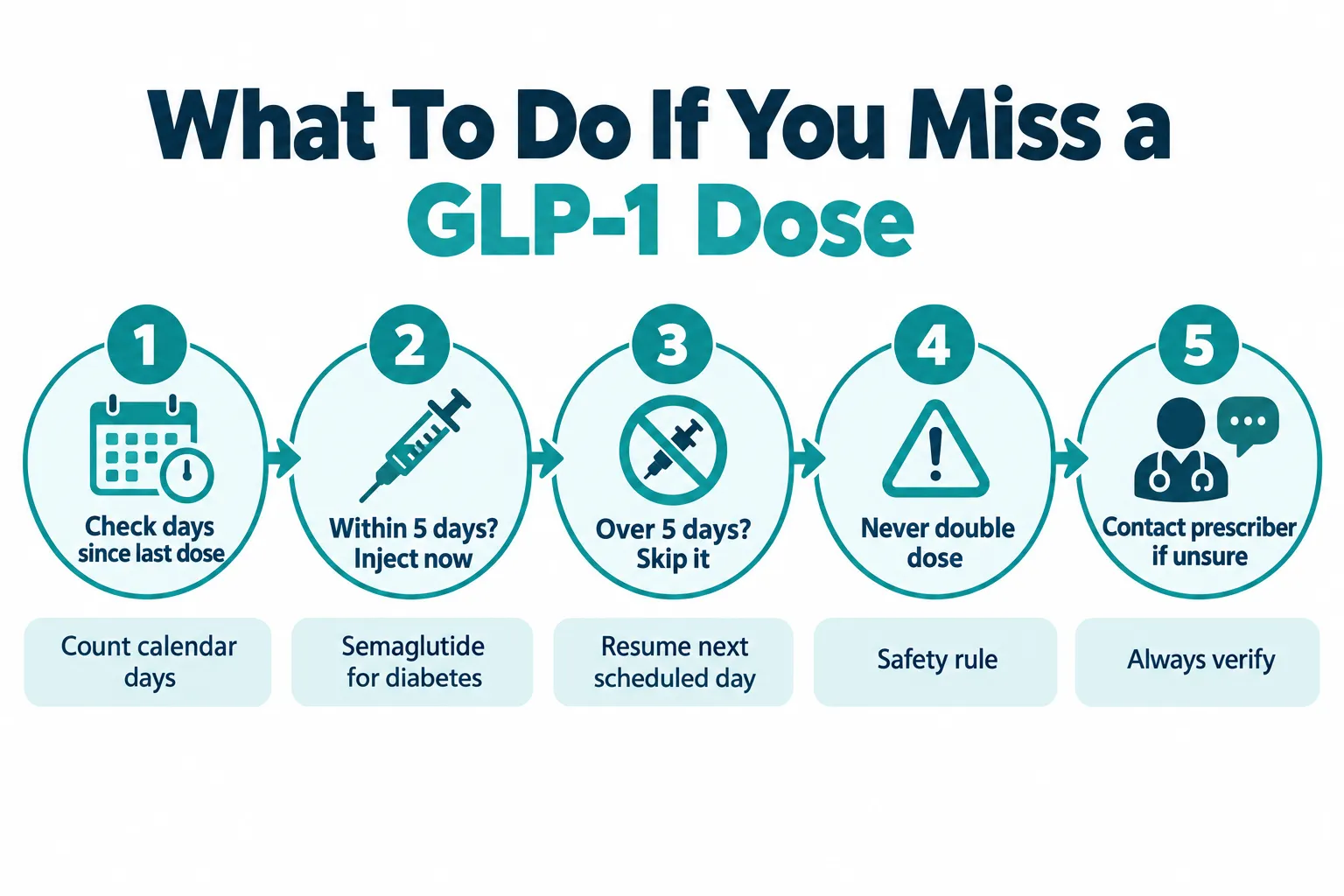
- Semaglutide for type 2 diabetes (Ozempic): If fewer than 5 days have passed since your missed dose, inject as soon as you remember. If 5 or more days have passed, skip that dose and resume your next scheduled injection. [4]
- Semaglutide for weight management or MASH (Wegovy): The missed-dose window is shorter, inject only if 2 or fewer days have passed. If more than 2 days have elapsed, skip and resume your regular schedule. [3]
- Tirzepatide (Mounjaro, Zepbound): Inject as soon as you remember if it’s within 4 days of the missed dose. If more than 4 days have passed, skip it and resume your normal weekly schedule. [1][5]
Never take two doses in one week to make up for a missed injection. Doubling up significantly increases side effects without improving outcomes.
Should I Take GLP-1 Before or After Exercise?
There is no clinical evidence that exercising before or after your GLP-1 injection changes how the medication works. Weekly GLP-1 medications operate on a time scale of days, not hours, so a workout on injection day has no meaningful impact on drug absorption or efficacy.
Practical considerations:
- Some people feel mild fatigue or nausea in the 24 hours after a new dose. If that’s you, scheduling intense exercise for the day after your injection day may feel more comfortable.
- GLP-1 medications reduce appetite, which can lower caloric intake. If you exercise heavily, make sure you’re eating enough protein to support muscle retention, this is a common oversight for people on GLP-1 therapy.
- If you’re managing blood sugar alongside weight loss, monitor glucose levels around exercise, especially if you’re also taking insulin or sulfonylureas.
Can I Take GLP-1 With Other Medications?
GLP-1 medications can interact with other drugs, so always disclose your full medication list to your prescriber. The most clinically relevant interactions involve medications that also affect blood sugar.
Key interactions to know:
- Insulin and sulfonylureas: Combining these with GLP-1 agonists increases hypoglycemia risk. Your prescriber may reduce your insulin dose when starting a GLP-1. [4]
- Oral medications with narrow absorption windows: Because GLP-1s slow gastric emptying, they can delay absorption of oral drugs. This is particularly relevant for oral contraceptives and thyroid medications. Take those at a consistent time relative to meals, and mention them to your doctor.
- Warfarin: GLP-1 therapy may alter warfarin levels. More frequent INR monitoring is recommended when starting or changing GLP-1 doses. [4]
If you’re looking for information on managing blood sugar alongside GLP-1 therapy, see this guide on best supplements for blood sugar control.
Do I Need to Eat After Taking GLP-1?
No. You do not need to eat after injecting a once-weekly GLP-1 medication. [1][6] The injection goes into subcutaneous fat tissue and absorbs independently of your digestive system.
That said, GLP-1 medications significantly reduce appetite. Some people, particularly those new to treatment, find they forget to eat adequate meals because hunger cues are suppressed. This is worth monitoring because:
- Undereating can cause fatigue and muscle loss, especially if protein intake drops too low.
- Skipping meals entirely can worsen nausea for some users, since an empty stomach combined with slowed gastric motility can feel uncomfortable.
- Staying hydrated is important. Nausea-driven reduced fluid intake is a common early side effect.
A light meal or snack after your injection is fine if it helps you feel better. It’s not required, but it’s not harmful either.
If persistent hunger is still a problem despite GLP-1 therapy, it may be worth reading about why you feel hungry all the time and what causes it.
Does GLP-1 Work Better If Taken at Specific Times?
No, for weekly injectable GLP-1 medications. Efficacy is driven by consistent weekly dosing and gradual dose escalation, not by the time of day or proximity to meals. [8]
What actually drives GLP-1 effectiveness:
- Adherence to the weekly schedule (missing doses disrupts steady-state levels)
- Completing the full dose escalation protocol without rushing
- Pairing medication with dietary changes and physical activity
- Staying on therapy long enough, most clinical trials showing significant weight loss ran 68 weeks or longer
For a deeper look at how different GLP-1 medications compare for weight loss outcomes, see which GLP-1 medication works best for weight loss.
If cost is a barrier to staying on therapy consistently, resources like best GLP-1 options under $300 and guides on finding the best compounding pharmacy for semaglutide may help you maintain access without interruption.
FAQ
Q: Can I switch from morning to evening dosing mid-treatment?
Yes. As long as your next dose is at least 7 days after your last one, you can shift to a different time of day. No taper or adjustment is needed.
Q: What if I always feel nauseous after my GLP-1 injection?
Nausea is most common in the first 4-8 weeks and typically improves. Try injecting at bedtime, eating smaller meals, and avoiding high-fat foods on injection day. If nausea is severe or persistent, contact your prescriber, a slower dose escalation may help.
Q: Does the injection site affect timing or absorption?
The approved injection sites (abdomen, thigh, upper arm) have slightly different absorption rates, but this does not require any timing adjustment. Rotate sites weekly to reduce local irritation.
Q: Can I take my GLP-1 injection while traveling across time zones?
Yes. Keep your 7-day interval and inject at a convenient local time. You do not need to adjust for time zones, the weekly interval is what matters, not the clock hour.
Q: Is there a best time to take GLP-1 for appetite suppression specifically?
No. Weekly GLP-1 medications provide continuous appetite suppression throughout the week once steady-state levels are reached, typically after 4-5 weeks of dosing. The injection time does not create a “peak” appetite suppression window.
Q: What if I take my GLP-1 a day early?
Taking it one day early compresses your dosing interval slightly. This is generally not dangerous but may increase side effects. Resume your original weekly schedule after that dose.
Q: Can I take GLP-1 if I’m fasting (intermittent fasting)?
Yes. GLP-1 injections do not require food intake and are compatible with intermittent fasting protocols. In fact, the appetite-suppressing effects may make fasting windows easier to maintain.
Q: Should I refrigerate my GLP-1 pen before use?
Unopened pens should be stored in the refrigerator. Once in use, most pens can be kept at room temperature for a defined period (check your specific medication’s label). Temperature affects storage, not injection timing.
Q: Does taking GLP-1 at a consistent time improve outcomes?
Consistency improves adherence, and better adherence improves outcomes. The time itself doesn’t matter, the habit of injecting on the same day each week does.
Q: Can poor sleep affect how well GLP-1 works?
Sleep quality affects metabolic health broadly, and poor sleep can counteract weight loss efforts even on GLP-1 therapy. If sleep is a concern, see our resource on nighttime teas that support better sleep.
7 Best GLP-1 Providers Ranked: Accreditation, Flexibility & Support Compared (2026 Update)
32,000+ Patients Can't All Be Wrong: See the Top-Rated GLP-1 Providers: Compared on accreditation, plan flexibility, and patient support — updated for 2026.
BMI MD GLP-1 Microdosing Plan
- Specialized microdosing options (sublingual drops or low-dose injections)
- Ideal for maintaining weight or tapering off higher doses safely
- Fully bundled plan with no hidden monthly platform memberships
DirectMeds Weight Loss Solutions
- Sourced from accredited, state-licensed 503A compounding pharmacies
- No-frills high-volume savings passed directly to the patient
- Includes clinical consultation and cold-chain shipping updates
MEDVi Flat-Rate Telehealth
- Flat monthly rate holds steady even at maximum maintenance doses
- No dosage upcharges or graduation fee penalties
- Offers both injectable and advanced oral thin-film delivery options
Gala GLP-1 Care Program
- All-inclusive plan with no standalone membership costs
- Continuous text-based messaging access with state-licensed clinicians
- Temperature-controlled, cold-chain medication shipping included
Measured GLP-1 Metabolic Health
- Comprehensive metabolic health screening and expert intake analysis
- Predictable long-term budgeting with stable plan pricing
- High-end responsive dashboard with integrated diagnostic support
Refills GLP-1 (TryRefills Plan)
- Flat rate holds steady as titration scales up
- Includes clinical guides for active side-effect management
- Bundles in foundational nutritional strategies alongside medication
AltRx GLP-1 Transactional Reorders
- Zero recurring auto-billing — pay entirely on a transactional basis
- Rapid text-to-order format saves time for experienced patients
- Provides both injectable forms and fast-dissolving tablet variations
Conclusion
The best time to take GLP-1 is simple: whenever you will remember to do it consistently, every week, seven days apart. Morning, evening, or midday, the clinical evidence does not favor one over another for once-weekly injectable formulations like semaglutide and tirzepatide. [1][4][8]
Actionable next steps:
- Pick one day of the week and one time of day that fits your routine, link it to an existing habit like a morning alarm or a bedtime routine.
- Set a weekly phone reminder so you never miss your injection window.
- Know your missed-dose rules before you need them: semaglutide for diabetes allows a 5-day window; semaglutide for weight loss allows 2 days; tirzepatide allows 4 days.
- Tell your prescriber about every medication you take, especially insulin, blood thinners, or oral contraceptives.
- If cost is a barrier to consistent access, explore compounding pharmacy options, see our guide on the best compounding pharmacy for tirzepatide for affordable alternatives.
Consistency is the mechanism. Everything else is preference.
References
[1] 215866s041lbl – https://www.accessdata.fda.gov/drugsatfda_docs/label/2026/215866s041lbl.pdf
[2] 215866s000lbl – https://www.accessdata.fda.gov/drugsatfda_docs/label/2022/215866s000lbl.pdf
[3] 217806s003lbl – https://www.accessdata.fda.gov/drugsatfda_docs/label/2024/217806s003lbl.pdf
[4] Drg 20406730 – https://www.mayoclinic.org/drugs-supplements/semaglutide-subcutaneous-route/description/drg-20406730
[5] 217806s042lbl – https://www.accessdata.fda.gov/drugsatfda_docs/label/2026/217806s042lbl.pdf
[6] A622044 – https://medlineplus.gov/druginfo/meds/a622044.html
[8] When Best Time Day Take Ozempic 3577204 – https://www.drugs.com/medical-answers/when-best-time-day-take-ozempic-3577204/
[9] A618008 – https://medlineplus.gov/druginfo/meds/a618008.html


