
glp 1 for 10 pound weight loss
Last updated: September 25, 2026
Quick Answer
GLP-1 receptor agonist medications like semaglutide (Wegovy) and tirzepatide (Zepbound) can absolutely help you lose 10 pounds, and most people who take them reach that milestone within 8 to 16 weeks. Clinical data shows that roughly 80% of Wegovy users lose at least 5% of their body weight [8], so a 10-pound loss is a realistic and achievable goal for most adults. The bigger question is whether the cost, commitment, and potential side effects make sense for a relatively modest target.
Key Takeaways
- GLP-1 medications work by suppressing appetite, slowing stomach emptying, and improving insulin response, making a 10-pound loss achievable for most users within 2 to 4 months.
- Clinical trials show average weight loss of 13 to 20% of body weight over 6 to 24 months [8], meaning 10 pounds is well within reach for the majority of patients.
- Brand-name GLP-1 drugs cost $900 to $1,400 per month without insurance; compounded versions can cost $100 to $300 per month, making them far more accessible.
- GLP-1 medications are FDA-approved for adults with a BMI of 30 or higher, or 27 or higher with a weight-related condition like high blood pressure or type 2 diabetes [2].
- Most people regain a significant portion of lost weight after stopping GLP-1 therapy, so a plan for maintenance matters from day one.
- Common side effects include nausea, constipation, and reduced appetite, most of which are manageable and tend to ease after the first few weeks.
- Tirzepatide (Zepbound) tends to produce slightly greater weight loss than semaglutide (Wegovy) in head-to-head comparisons [5].
- If cost is a barrier, compounded semaglutide from a licensed pharmacy is a legal and often significantly cheaper alternative worth exploring.
What Is GLP-1 and How Does It Work for Weight Loss
GLP-1 (glucagon-like peptide-1) is a hormone your gut naturally releases after you eat. GLP-1 receptor agonist medications mimic this hormone at much higher levels than your body produces on its own, creating a powerful appetite-suppressing and blood sugar-regulating effect.
7 Best GLP-1 Providers Ranked: Accreditation, Flexibility & Support Compared (2026 Update)
32,000+ Patients Can't All Be Wrong: See the Top-Rated GLP-1 Providers. We compared the leading online GLP-1 providers based on program features, clinical support, convenience, and overall value.
BMI MD GLP-1 Microdosing Plan
- Specialized microdosing options, including sublingual drops and low-dose injections
- Designed for people interested in maintaining weight or gradually adjusting treatment
- Bundled program structure without a separate monthly platform membership
- Online access makes the process convenient from home

DirectMeds Weight Loss Solutions
- Online weight-loss program with a straightforward patient experience
- Compounded medication options through state-licensed compounding pharmacies
- Includes clinical consultation as part of the process
- Provides shipping updates to help patients track their orders
MEDVi Flat-Rate Telehealth
- Flat-rate telehealth approach designed for easier budgeting
- No dosage-based pricing increases within the advertised program structure
- Offers injectable and oral thin-film delivery options
- Includes medical screening and asynchronous provider consultations
Gala GLP-1 Care Program
- Text-based access to state-licensed clinicians
- Cold-chain medication shipping included in the program
- Month-to-month program structure
- Designed for people who value convenient ongoing support
Measured GLP-1 Metabolic Health
- Comprehensive metabolic health screening and intake analysis
- Designed around longer-term metabolic health management
- Responsive dashboard with integrated health tracking tools
- Useful option for patients who value a more data-focused experience
Refills GLP-1 (TryRefills Plan)
- Clinical guidance designed to help patients manage common treatment concerns
- Includes foundational nutritional strategies alongside medication
- Designed around predictable ongoing treatment
- No hidden startup or processing fees according to the program information provided
AltRx GLP-1 Transactional Reorders
- Transactional reorder model without recurring auto-billing
- Designed for patients who already understand their treatment routine
- Fast text-to-order process for convenient reorders
- Offers injectable and fast-dissolving tablet variations
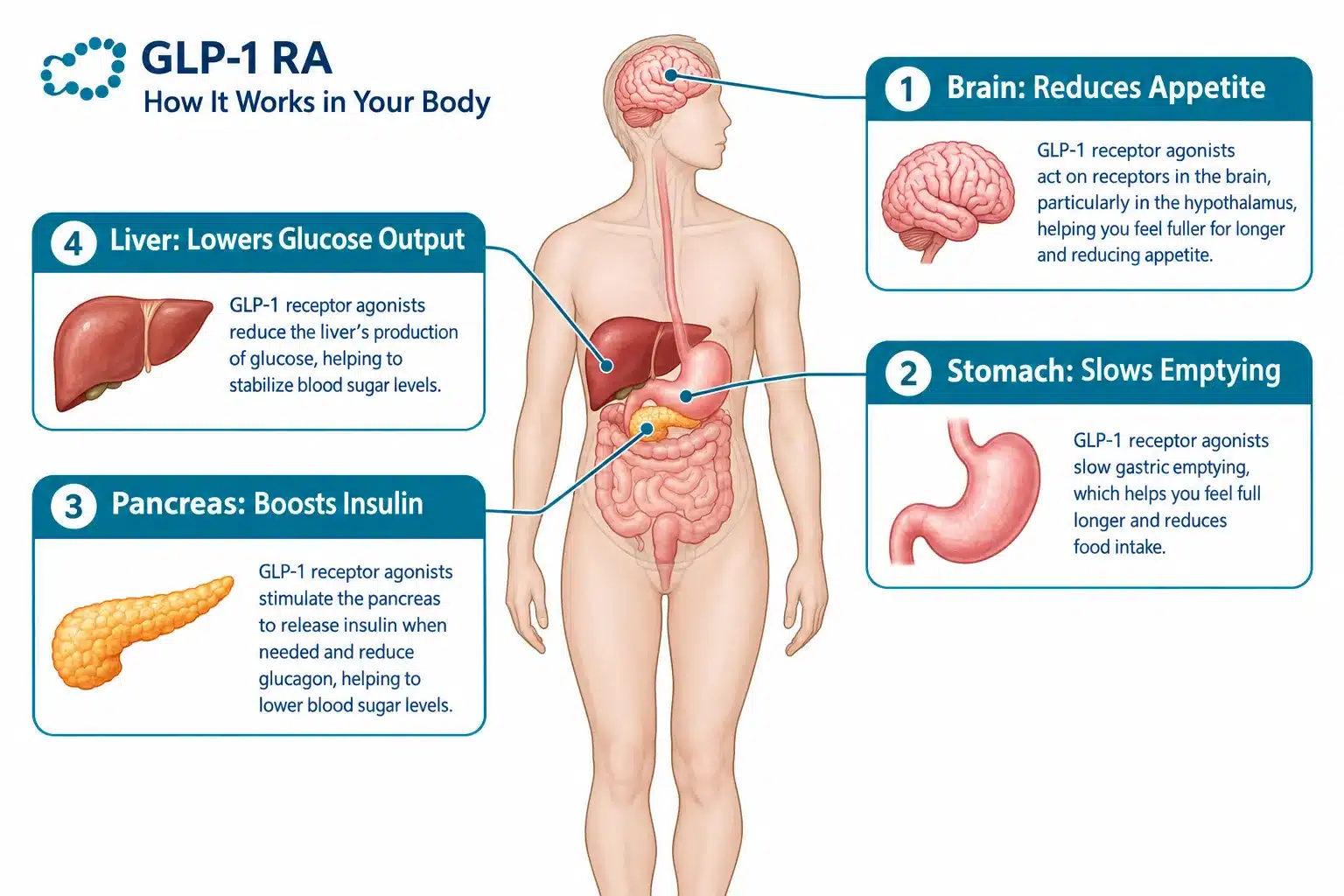
Here is what happens when you take a GLP-1 medication:
- Brain: The drug signals your hypothalamus to reduce hunger, so you feel full on less food.
- Stomach: Gastric emptying slows down, meaning food stays in your stomach longer and you feel satisfied for more hours after a meal.
- Pancreas: Insulin secretion increases in response to meals, which helps regulate blood sugar.
- Liver: Glucagon production is suppressed, reducing excess glucose output.
The result is that most people on GLP-1 medications naturally eat 20 to 30% fewer calories without having to count them obsessively. For a deeper look at the full body changes these drugs trigger, see this guide on GLP-1 transformation and what it really does to your body weight and metabolism.
Can You Lose 10 Pounds with GLP-1, and How Long Does It Take
Yes, losing 10 pounds with a GLP-1 medication is realistic for most adults, and it typically happens within 8 to 16 weeks of starting treatment. The STEP 1 trial published in the New England Journal of Medicine found that participants on weekly semaglutide lost an average of about 15% of their body weight over 68 weeks [8]. For a 180-pound person, that is roughly 27 pounds, meaning 10 pounds is a relatively modest milestone along that trajectory.
Typical timeline for a 10-pound loss on GLP-1:
| Week | What Usually Happens |
|---|---|
| 1 to 4 | Dose titration begins; appetite starts to decrease |
| 4 to 8 | Most people notice 3 to 6 pounds lost |
| 8 to 12 | 10-pound milestone reached for many users |
| 12 to 24 | Continued steady loss; plateau possible |
| 24 to 68 | Average 13 to 20% total body weight loss [8] |
Individual results vary based on starting weight, dose, diet quality, physical activity, and metabolic factors. A 130-pound person trying to lose 10 pounds faces a higher relative challenge than a 220-pound person with the same goal.
For a more detailed week-by-week breakdown, the 6-week Ozempic weight loss results guide offers real-world expectations.
Is GLP-1 Safe for Losing Just 10 Pounds
GLP-1 medications are FDA-approved as treatments for chronic obesity or overweight with a related health condition, not as tools for cosmetic weight loss [2]. That regulatory framing matters: these drugs are designed for people with a clinical need, not for someone who wants to drop a few pounds before a vacation.
Who qualifies per FDA labeling [2]:
- BMI of 30 or higher (obesity)
- BMI of 27 or higher plus at least one weight-related condition (type 2 diabetes, high blood pressure, high cholesterol, or obstructive sleep apnea)
If you fall into either category and your 10-pound goal is part of a broader health improvement plan, GLP-1 therapy is considered medically appropriate and the safety profile is well-studied. If you do not meet these criteria, most prescribers will not prescribe these medications, and doing so off-label carries additional risk without clear benefit.
Common mistake: Some people assume that because they only want to lose 10 pounds, the medication is lower risk at a lower dose. The side effect profile, including nausea, pancreatitis risk, and potential thyroid concerns, exists regardless of your weight loss goal [4].
GLP-1 Side Effects and How to Manage Them
The most common GLP-1 side effects are gastrointestinal, particularly nausea, vomiting, diarrhea, and constipation. These affect a significant portion of users, especially in the first 4 to 8 weeks as the dose is being increased [4].
Managing GLP-1 nausea and appetite loss side effects:
- Eat smaller meals, slowly, and stop before you feel completely full.
- Avoid high-fat, greasy, or spicy foods, especially in the first month.
- Stay well-hydrated; dehydration worsens nausea.
- Take your injection at night so peak nausea occurs while you sleep.
- Ask your doctor about anti-nausea medication if symptoms are severe.
Most people find that nausea improves significantly after the first 4 to 6 weeks. Serious side effects, including pancreatitis and gallbladder disease, are less common but real, and any severe abdominal pain warrants immediate medical attention [4].
GLP-1 vs Other Weight Loss Medications: A Comparison
GLP-1 receptor agonists outperform older weight loss medications in head-to-head data, but they are not the only option. Here is how they compare:
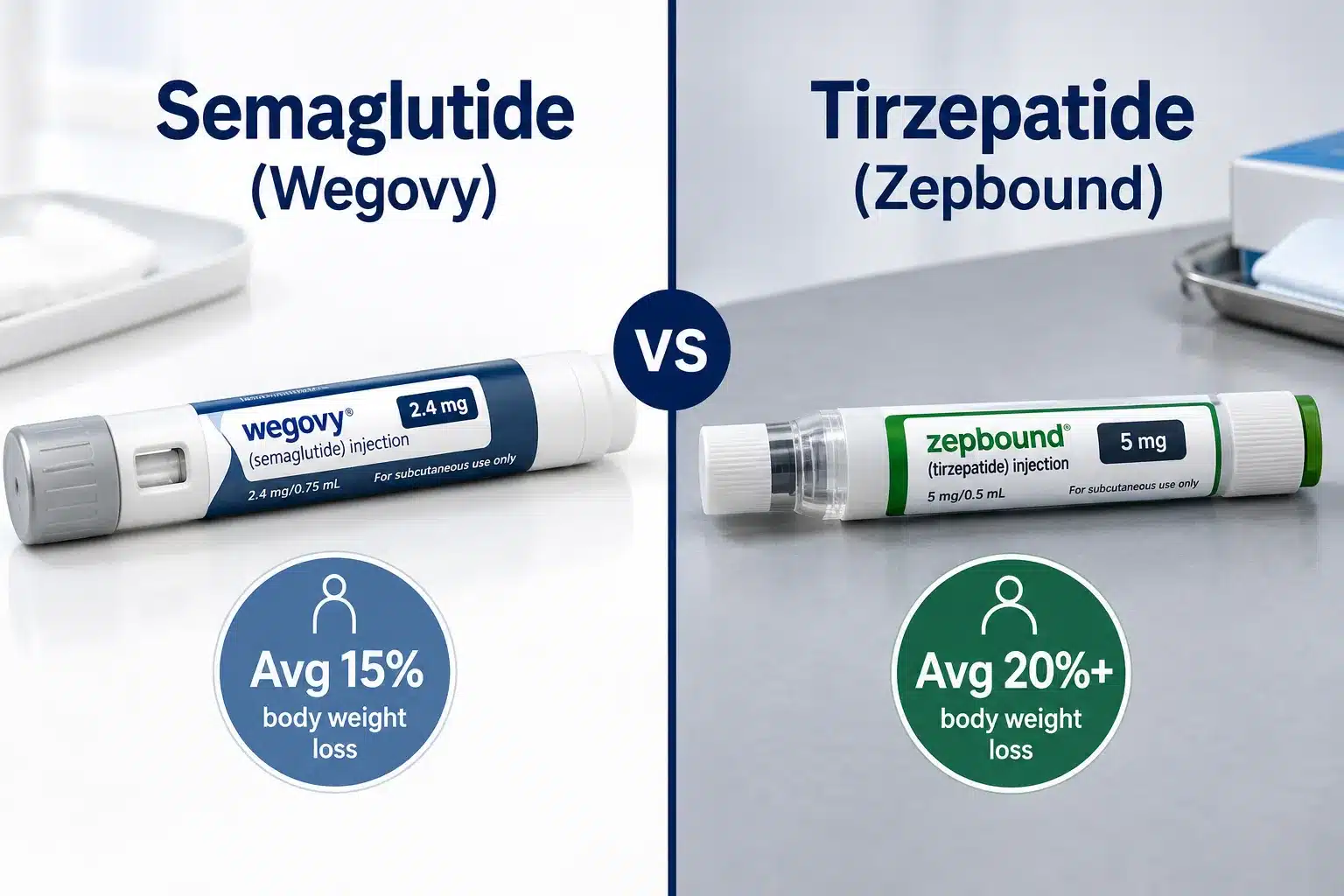
GLP-1 vs other weight loss medications:
| Medication | Mechanism | Avg. Weight Loss | Notes |
|---|---|---|---|
| Semaglutide (Wegovy) | GLP-1 agonist | ~15% body weight [8] | Weekly injection |
| Tirzepatide (Zepbound) | GLP-1 + GIP dual agonist | ~20%+ body weight [5] | Weekly injection; often greater loss |
| Oral semaglutide (Wegovy pill) | GLP-1 agonist | ~13-15% body weight [7] | Launched 2026; daily pill |
| Phentermine-topiramate (Qsymia) | Appetite suppressant | ~8-10% body weight | Older drug; more limited data |
| Naltrexone-bupropion (Contrave) | CNS modulator | ~5-8% body weight | Twice-daily pill |
Tirzepatide (Zepbound) currently shows the strongest weight loss results in clinical comparisons [5]. For a detailed breakdown of which GLP-1 medication works best for weight loss, see which GLP-1 medication works best for weight loss.
If you are specifically considering the Mounjaro/tirzepatide route, the Mounjaro shot for weight loss guide covers dosing and expectations in detail.
Who Should Not Take GLP-1 for Weight Loss
GLP-1 medications are not appropriate for everyone. Your doctor should screen you carefully before prescribing.
Do not take GLP-1 medications if you have:
- A personal or family history of medullary thyroid carcinoma (MTC)
- Multiple Endocrine Neoplasia syndrome type 2 (MEN 2)
- A history of pancreatitis
- Severe gastrointestinal disease (gastroparesis)
- Pregnancy or plans to become pregnant in the near term [2]
Use with caution if you have:
- Kidney disease (dehydration from GI side effects can worsen kidney function)
- A history of gallbladder disease
- Depression or suicidal ideation (some signals in post-market data, though causality is not established)
People who want to lose only 10 pounds and do not meet BMI criteria will generally not qualify for a prescription from a responsible prescriber, regardless of their motivation.
GLP-1 for Weight Loss Without Diabetes
GLP-1 medications work for weight loss regardless of whether you have diabetes. Wegovy (semaglutide 2.4 mg) is specifically FDA-approved for chronic weight management in adults without diabetes [2], and the STEP 1 trial enrolled primarily non-diabetic participants who still achieved an average 15% weight loss [8].
This is an important distinction because Ozempic (semaglutide 1.0 mg) is FDA-approved only for type 2 diabetes, though it is sometimes prescribed off-label for weight loss. Wegovy and Zepbound are the appropriate on-label choices for non-diabetic adults pursuing weight loss.
GLP-1 Cost, Insurance Coverage, and Affordable Alternatives
Brand-name GLP-1 medications are expensive. Without insurance, Wegovy and Zepbound typically run $900 to $1,400 per month in 2026. Insurance coverage is inconsistent and often requires prior authorization, documentation of BMI, and evidence of failed prior weight loss attempts.
Cost-reduction options:
- Manufacturer savings cards: Novo Nordisk and Eli Lilly offer savings programs that can reduce out-of-pocket costs to $25 to $99 per month for eligible commercially insured patients.
- Compounded semaglutide: From a licensed 503A or 503B compounding pharmacy, compounded semaglutide typically costs $100 to $300 per month. This is a legal option when brand-name drugs are unavailable or unaffordable. For a full breakdown, see the compounding pharmacy semaglutide cost breakdown.
- Telehealth platforms: Services like Hims offer GLP-1 prescriptions and compounded versions at lower price points. The Hims weight loss cost guide breaks down what to expect.
For the most budget-conscious options, the least expensive GLP-1 for weight loss guide covers the full landscape of affordable routes.
Do You Regain Weight After Stopping GLP-1
Yes, most people regain a substantial portion of lost weight after discontinuing GLP-1 therapy. A landmark study found that participants who stopped semaglutide after 20 weeks of treatment regained about two-thirds of their lost weight within one year [10]. The drug suppresses appetite while you take it, but it does not permanently reset your metabolism or hunger signals.
“Weight regain after stopping GLP-1 therapy is not a personal failure. It reflects the chronic nature of obesity as a condition, not a lack of willpower.”
What this means for a 10-pound goal:
- If you lose 10 pounds and stop the medication, expect to regain 5 to 8 pounds within 6 to 12 months without significant lifestyle changes.
- Some people use GLP-1 therapy as a short-term bridge to establish new eating habits, then taper off while maintaining those habits.
- Others treat it as a long-term or indefinite therapy, similar to blood pressure medication.
There is no universally right answer. The key is having a clear maintenance plan before you start, not after you stop.
Common Mistakes People Make on GLP-1
Starting a GLP-1 medication without the right expectations leads to frustration and early discontinuation. Here are the most frequent errors:
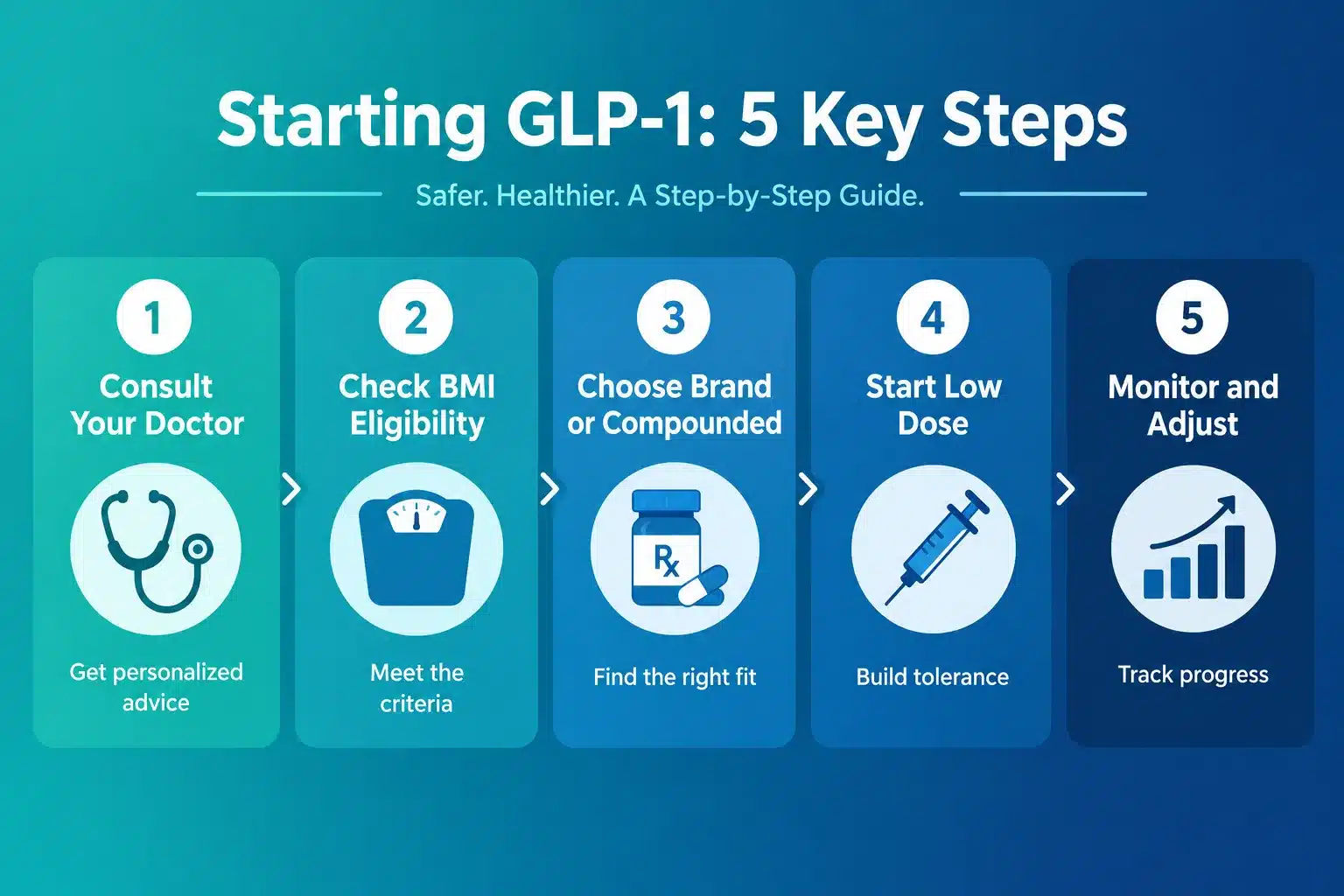
- Expecting rapid results in week one. Dose titration takes 4 to 16 weeks; full appetite suppression is not immediate.
- Not adjusting diet alongside the medication. GLP-1 drugs reduce hunger but do not eliminate poor food choices. Protein intake especially matters to preserve muscle mass.
- Stopping too early due to nausea. Most GI side effects resolve within 4 to 6 weeks. Quitting at week 3 is the most common avoidable mistake.
- Using GLP-1 as a substitute for lifestyle changes. The best outcomes in clinical trials came from drug plus behavioral support [8].
- Not planning for after. Stopping without a maintenance strategy almost guarantees regain [10].
- Buying from unverified sources. Counterfeit and improperly compounded GLP-1 products are a real safety risk. Always verify your pharmacy. See how to verify a legitimate compounding pharmacy.
FAQ
Q: What is the minimum weight I need to lose to qualify for GLP-1?
There is no minimum weight loss target required to start. The qualifying criteria are BMI-based: 30 or higher, or 27 or higher with a related health condition [2]. Your goal of 10 pounds does not disqualify you if your BMI meets the threshold.
Q: How much does GLP-1 cost per month in 2026?
Brand-name Wegovy or Zepbound costs $900 to $1,400 per month without insurance. Compounded semaglutide from a licensed pharmacy typically costs $100 to $300 per month, making it the most accessible option for most people.
Q: Can I take GLP-1 if I only want to lose 10 pounds?
If you meet the BMI criteria, yes. If you do not meet the BMI threshold, most prescribers will decline to prescribe it, as these medications are approved for clinical obesity or overweight with comorbidities, not cosmetic weight loss.
Q: Is compounded semaglutide as effective as brand-name Wegovy?
Compounded semaglutide contains the same active ingredient at equivalent doses, so it should produce comparable results. However, quality varies by pharmacy. Always use an accredited, licensed compounding pharmacy. For more, see is compounded GLP-1 as effective as brand name.
Q: How quickly will I lose 10 pounds on GLP-1?
Most people reach the 10-pound milestone within 8 to 16 weeks, depending on starting weight, dose, and diet. Some reach it faster; others take longer.
Q: Will GLP-1 cause muscle loss along with fat loss?
Some muscle loss can occur with rapid weight loss on GLP-1. Eating adequate protein (0.7 to 1 gram per pound of goal body weight) and doing resistance training significantly reduces this risk.
Q: What happens if I miss a GLP-1 injection?
If you miss a dose and it has been fewer than 5 days since your scheduled injection day, take it as soon as you remember. If more than 5 days have passed, skip it and resume your regular weekly schedule [9].
Q: Is the new Wegovy pill as effective as the injection?
The oral semaglutide tablet (launched in 2026) shows approximately 13 to 15% average weight loss in clinical data [7], which is slightly lower than the injection but still clinically meaningful for most people.
Q: Are there GLP-1 alternatives if I cannot afford it?
Yes. Options include older medications like phentermine-topiramate (Qsymia) or naltrexone-bupropion (Contrave), which are significantly cheaper. Structured programs like Nutrisystem can also produce meaningful results for some people. See the Nutrisystem weight loss program guide for a comparison.
Q: Does GLP-1 work for weight loss in people without diabetes?
Yes. Wegovy is specifically approved for non-diabetic adults with obesity or overweight plus a health condition [2], and the clinical trials supporting its approval enrolled primarily non-diabetic participants [8].
7 Best GLP-1 Providers Ranked: Accreditation, Flexibility & Support Compared (2026 Update)
32,000+ Patients Can't All Be Wrong: See the Top-Rated GLP-1 Providers: Compared on accreditation, plan flexibility, and patient support — updated for 2026.
BMI MD GLP-1 Microdosing Plan
- Specialized microdosing options (sublingual drops or low-dose injections)
- Ideal for maintaining weight or tapering off higher doses safely
- Fully bundled plan with no hidden monthly platform memberships
DirectMeds Weight Loss Solutions
- Sourced from accredited, state-licensed 503A compounding pharmacies
- No-frills high-volume savings passed directly to the patient
- Includes clinical consultation and cold-chain shipping updates
MEDVi Flat-Rate Telehealth
- Flat monthly rate holds steady even at maximum maintenance doses
- No dosage upcharges or graduation fee penalties
- Offers both injectable and advanced oral thin-film delivery options
Gala GLP-1 Care Program
- All-inclusive plan with no standalone membership costs
- Continuous text-based messaging access with state-licensed clinicians
- Temperature-controlled, cold-chain medication shipping included
Measured GLP-1 Metabolic Health
- Comprehensive metabolic health screening and expert intake analysis
- Predictable long-term budgeting with stable plan pricing
- High-end responsive dashboard with integrated diagnostic support
Refills GLP-1 (TryRefills Plan)
- Flat rate holds steady as titration scales up
- Includes clinical guides for active side-effect management
- Bundles in foundational nutritional strategies alongside medication
AltRx GLP-1 Transactional Reorders
- Zero recurring auto-billing — pay entirely on a transactional basis
- Rapid text-to-order format saves time for experienced patients
- Provides both injectable forms and fast-dissolving tablet variations
Conclusion
Using GLP-1 for 10 pound weight loss is a realistic, medically supported goal for adults who meet the BMI criteria. The medications work, the timeline is manageable, and the safety profile is well-established for appropriate candidates. The bigger decisions are about cost, commitment, and what happens after you reach your goal.
Actionable next steps:
- Calculate your BMI to confirm you meet the threshold (30 or higher, or 27 or higher with a qualifying condition).
- Talk to your doctor or a telehealth provider about semaglutide or tirzepatide options.
- Get a cost comparison between brand-name and compounded versions before committing.
- Set a realistic timeline of 8 to 16 weeks for your 10-pound milestone, not 2 to 3 weeks.
- Build a maintenance plan before you start, including dietary habits and an exit strategy.
GLP-1 therapy is not a shortcut, but for the right person with the right expectations, it is one of the most effective tools available for meaningful, sustained weight loss in 2026.
References
[1] PMC7988425 – https://pmc.ncbi.nlm.nih.gov/articles/PMC7988425/
[2] 215256s007lbl – https://www.accessdata.fda.gov/drugsatfda_docs/label/2023/215256s007lbl.pdf
[3] PMC13258287 – https://pmc.ncbi.nlm.nih.gov/articles/PMC13258287/
[4] PMC9556320 – https://pmc.ncbi.nlm.nih.gov/articles/PMC9556320/
[5] PMC12474656 – https://pmc.ncbi.nlm.nih.gov/articles/PMC12474656/
[6] PMC10092086 – https://pmc.ncbi.nlm.nih.gov/articles/PMC10092086/
[7] Wegovy Pill Results – https://www.wegovy.com/obesity/is-wegovy-right-for-me/wegovy-pill-results.html
[8] NEJMoa2032183 – https://www.nejm.org/doi/full/10.1056/NEJMoa2032183
[9] Wegovy FAQ – https://www.wegovy.com/obesity/starting-wegovy/faq.html
[10] Effect of Continued Weekly Subcutaneous Semaglutide vs Placebo – https://researchprofiles.ku.dk/en/publications/effect-of-continued-weekly-subcutaneous-semaglutide-vs-placebo-on/


