
best vitamins to take while on glp 1

Last updated: September 25, 2026
Quick Answer
The best vitamins to take while on GLP-1 medications include vitamin D, vitamin B12, calcium, magnesium, iron, and B-complex vitamins. Because GLP-1 drugs significantly reduce food intake, nutrient gaps develop faster than most people expect. The smartest approach is to get baseline lab work done first, then supplement based on your actual deficiencies rather than guessing.
Key Takeaways
- GLP-1 medications like semaglutide (Ozempic, Wegovy) and tirzepatide (Mounjaro, Zepbound) reduce calorie intake enough to cause real micronutrient deficiencies over time [1][2]
- Vitamin D is the most consistently deficient nutrient found in GLP-1 users [5][9]
- Vitamin B12 deserves special attention because GLP-1 drugs slow gastric emptying, which can reduce B12 absorption from food [3][8]
- Calcium and vitamin D work together; losing both accelerates bone loss, which is already a concern with rapid weight loss [4][10]
- A daily multivitamin/mineral is a reasonable baseline, but it does not replace targeted supplementation for confirmed deficiencies [6][7]
- Electrolyte supplements (magnesium, potassium, sodium) are especially useful for managing nausea and diarrhea side effects [3][4]
- Always screen first, then supplement. Blind supplementation can lead to both under-treatment and toxicity [1][5]
- No universal vitamin protocol exists yet; individualized guidance from a healthcare provider is the current standard [1][10]
Do GLP-1 Drugs Affect Vitamin Absorption?
Yes, GLP-1 medications affect nutrient absorption in several ways. They slow gastric emptying, reduce overall food intake, and can cause GI side effects like nausea and vomiting that further limit what you eat and absorb [2][8].
7 Best GLP-1 Providers Ranked: Accreditation, Flexibility & Support Compared (2026 Update)
32,000+ Patients Can't All Be Wrong: See the Top-Rated GLP-1 Providers. We compared the leading online GLP-1 providers based on program features, clinical support, convenience, and overall value.
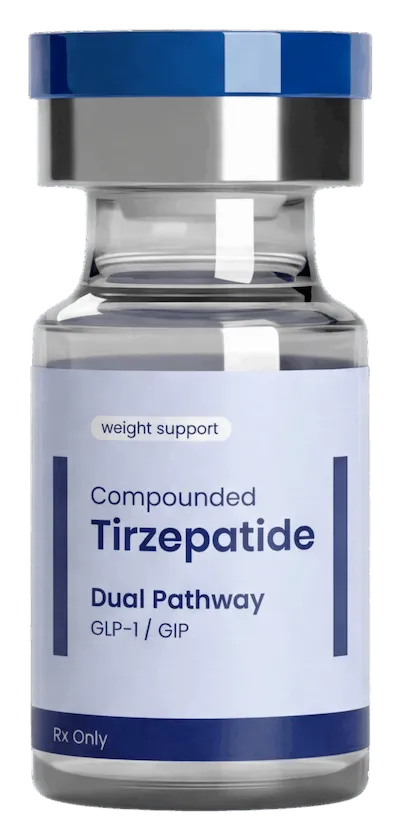
BMI MD GLP-1 Microdosing Plan
- Specialized microdosing options, including sublingual drops and low-dose injections
- Designed for people interested in maintaining weight or gradually adjusting treatment
- Bundled program structure without a separate monthly platform membership
- Online access makes the process convenient from home

DirectMeds Weight Loss Solutions
- Online weight-loss program with a straightforward patient experience
- Compounded medication options through state-licensed compounding pharmacies
- Includes clinical consultation as part of the process
- Provides shipping updates to help patients track their orders
MEDVi Flat-Rate Telehealth
- Flat-rate telehealth approach designed for easier budgeting
- No dosage-based pricing increases within the advertised program structure
- Offers injectable and oral thin-film delivery options
- Includes medical screening and asynchronous provider consultations
Gala GLP-1 Care Program
- Text-based access to state-licensed clinicians
- Cold-chain medication shipping included in the program
- Month-to-month program structure
- Designed for people who value convenient ongoing support
Measured GLP-1 Metabolic Health
- Comprehensive metabolic health screening and intake analysis
- Designed around longer-term metabolic health management
- Responsive dashboard with integrated health tracking tools
- Useful option for patients who value a more data-focused experience
Refills GLP-1 (TryRefills Plan)
- Clinical guidance designed to help patients manage common treatment concerns
- Includes foundational nutritional strategies alongside medication
- Designed around predictable ongoing treatment
- No hidden startup or processing fees according to the program information provided
AltRx GLP-1 Transactional Reorders
- Transactional reorder model without recurring auto-billing
- Designed for patients who already understand their treatment routine
- Fast text-to-order process for convenient reorders
- Offers injectable and fast-dissolving tablet variations
When you eat significantly less food, you take in fewer vitamins and minerals by default. But the problem goes deeper than just eating less. Slowed gastric emptying affects how well your gut breaks down and absorbs certain nutrients, particularly B12, iron, and fat-soluble vitamins like D, A, E, and K [8][9]. People who experience ongoing nausea or vomiting lose even more, because they may avoid entire food groups (dairy, meat, vegetables) that are key nutrient sources.
A 2025 review published in the journal Clinical Obesity found widespread micronutrient inadequacies in GLP-1 users, with vitamin D standing out as the most consistently deficient nutrient [1]. This is not a rare edge case. It is a predictable consequence of the drug’s mechanism.
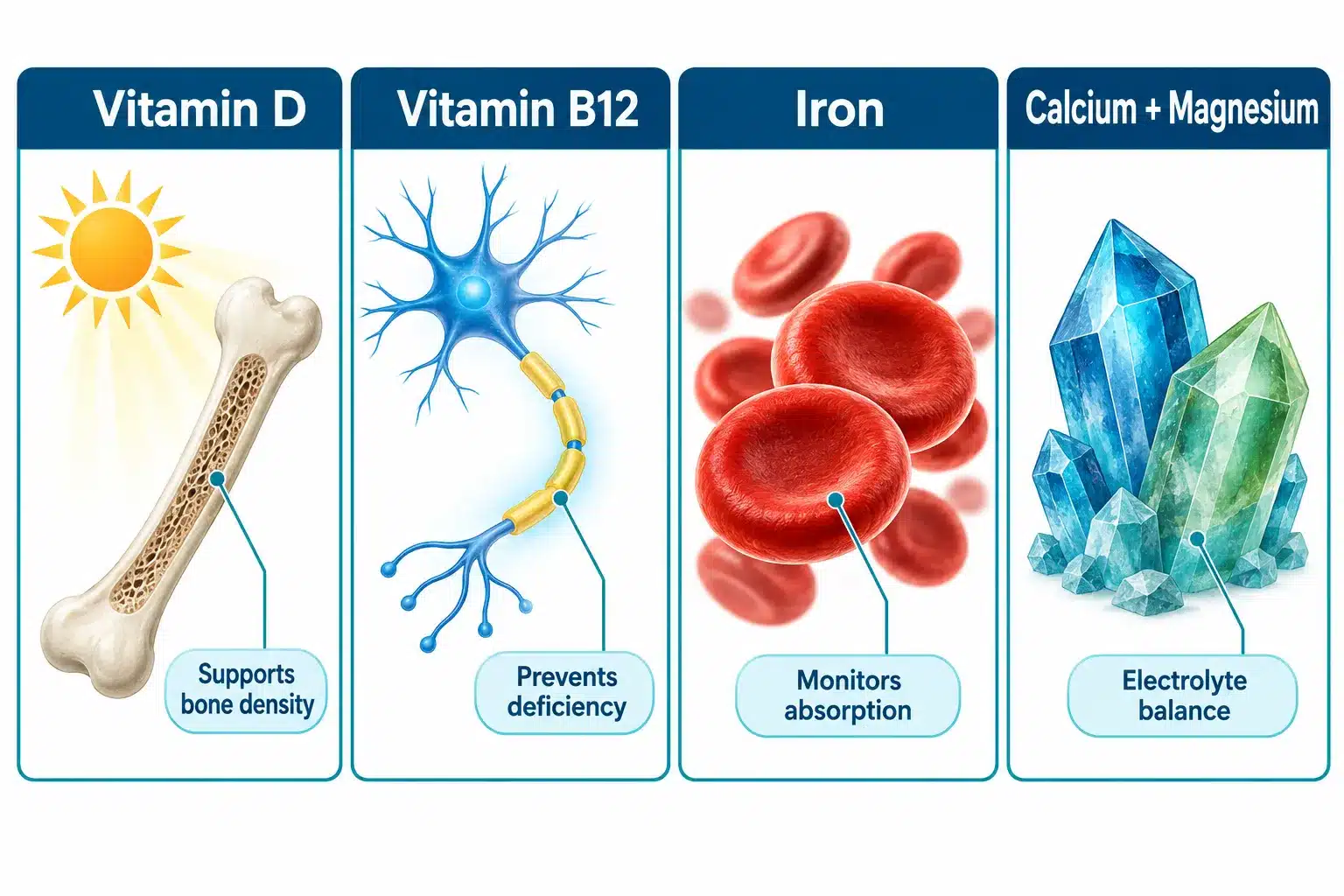
Common mechanisms behind nutrient loss on GLP-1s:
- Reduced total calorie and food volume intake
- Slowed gastric emptying affecting B12 and iron absorption
- GI side effects limiting dietary variety
- Avoidance of high-nutrient foods (red meat, dairy, eggs) due to nausea
- Rapid weight loss increasing metabolic demand for certain nutrients
Can GLP-1 Cause Nutrient Deficiencies? Common Deficiencies to Watch
GLP-1 medications can and do cause nutrient deficiencies, particularly with long-term use at therapeutic doses. The most commonly documented deficiencies include vitamin D, B12, iron, calcium, magnesium, and potassium [1][2][5].
Researchers have noted that many people starting GLP-1 therapy already have suboptimal nutrient levels before they take their first dose. Obesity itself is associated with lower vitamin D, B12, and iron levels. GLP-1 drugs then compound existing gaps by reducing intake further [9][10].
Nutrients most at risk on GLP-1 therapy:
| Nutrient | Why It Becomes Deficient | Who Is Most at Risk |
|---|---|---|
| Vitamin D | Low dietary intake + reduced fat absorption | Most GLP-1 users |
| Vitamin B12 | Slowed gastric emptying, less intrinsic factor activity | Long-term users, older adults |
| Iron | Reduced red meat intake, lower absorption | Women, people with heavy periods |
| Calcium | Dairy avoidance, reduced fat-soluble vitamin D | Postmenopausal women |
| Magnesium | Low vegetable/nut intake, GI losses from diarrhea | Users with frequent GI side effects |
| Potassium | Vomiting, diarrhea, reduced fruit/vegetable intake | Users with persistent nausea |
| Thiamine (B1) | Severe vomiting, very low calorie intake | Users with significant GI side effects |
What Vitamins Should I Take With Ozempic or Wegovy?
For most people on semaglutide (Ozempic or Wegovy), the core supplement list includes vitamin D3, vitamin B12, calcium, magnesium, and a high-quality multivitamin/mineral. These cover the nutrients most likely to fall short given how semaglutide affects eating patterns and digestion [3][6].
GoodRx’s clinical review recommends that people on GLP-1 agonists prioritize vitamin D, B12, and calcium as the three most important individual supplements, with a complete multivitamin as a practical daily baseline [3]. Everyday Health’s expert panel echoes this, adding magnesium and iron for people who eat little red meat or experience frequent GI symptoms [6][7].
Core supplement stack for Ozempic/Wegovy users:
- Vitamin D3: 1,000-2,000 IU daily as a baseline; higher if labs confirm deficiency
- Vitamin B12: 500-1,000 mcg daily (sublingual or methylcobalamin forms absorb better)
- Calcium: 500-600 mg twice daily with food (calcium citrate absorbs better than carbonate, especially with reduced stomach acid)
- Magnesium glycinate: 200-400 mg daily, particularly helpful for constipation and sleep
- Daily multivitamin/mineral: A complete formula fills gaps in B-vitamins, zinc, and trace minerals
If you want to understand which specific GLP-1 medication might suit your situation best, see our guide on which GLP-1 medication works best for weight loss.
Vitamin B12 Deficiency and GLP-1 Drugs: Why It Happens
Vitamin B12 deficiency is a specific and underappreciated risk for GLP-1 users. GLP-1 medications slow gastric emptying, which reduces the stomach’s production of hydrochloric acid and intrinsic factor, both of which are needed to absorb B12 from food [8][9].
Most dietary B12 comes from animal products: meat, fish, eggs, and dairy. When nausea pushes people away from these foods, dietary B12 intake drops sharply. Combined with impaired absorption, B12 levels can fall faster than most people or their doctors anticipate [2][8].
How much vitamin B12 do I need on semaglutide?
Most experts recommend 500-1,000 mcg of supplemental B12 daily for people on GLP-1 therapy, especially if they are eating less animal protein. Sublingual (under-the-tongue) B12 and methylcobalamin forms bypass the need for intrinsic factor and absorb directly into the bloodstream, making them more effective than standard oral tablets for people with absorption issues [3][8].
Signs of B12 deficiency to watch for:
- Fatigue and weakness out of proportion to your diet
- Tingling or numbness in hands or feet
- Brain fog or memory issues
- Mood changes or low mood
- Pale or yellowish skin
Get B12 levels checked before starting GLP-1 therapy and again at 3-6 months, especially if you are over 50 or eat little meat.
GLP-1 and Calcium and Vitamin D Absorption Problems
Calcium and vitamin D are closely linked, and both are at risk on GLP-1 therapy. Vitamin D is a fat-soluble vitamin, meaning it requires dietary fat for absorption. When GLP-1 drugs reduce fat intake or cause fat malabsorption, vitamin D levels fall, which in turn reduces calcium absorption in the gut [4][9][10].
Rapid weight loss itself accelerates bone turnover, meaning the body breaks down bone faster than it builds it. Without adequate calcium and vitamin D, this can lead to measurable bone density loss over 12-24 months of GLP-1 use [10].
Practical guidance for calcium and vitamin D on GLP-1:
- Take vitamin D3 (not D2) with your largest meal of the day, since fat in food improves absorption
- Split calcium doses (no more than 500-600 mg per dose) because the gut cannot absorb large amounts at once
- Calcium citrate is preferred over calcium carbonate for people with reduced stomach acid or who take the supplement without food
- Aim for 1,000-1,200 mg of total calcium daily from food plus supplements combined
- Target 25(OH)D blood levels of 40-60 ng/mL, not just the minimum “normal” threshold
What Vitamins Are Safe to Take With Tirzepatide?
The same core supplements recommended for semaglutide are safe and appropriate for tirzepatide (Mounjaro, Zepbound). Tirzepatide acts on both GLP-1 and GIP receptors, which means it tends to produce greater weight loss and potentially greater nutrient depletion than GLP-1-only drugs [5][10].
Because tirzepatide users often lose more weight and eat even less, the case for proactive supplementation is arguably stronger. ConsumerLab’s review of supplements with GLP-1 agonists confirms that vitamin D, B12, calcium, magnesium, and iron are the priority nutrients for all GLP-1 and dual-incretin users [4].
If you are looking for affordable access to tirzepatide, our review of the best compounding pharmacy for tirzepatide covers your options in detail.
Safe supplements for tirzepatide users:
- Vitamin D3 with K2 (K2 helps direct calcium into bones rather than arteries)
- Methylcobalamin B12 (sublingual preferred)
- Calcium citrate
- Magnesium glycinate or malate
- Iron bisglycinate (gentler on the stomach than ferrous sulfate)
- A complete B-complex
- Daily multivitamin/mineral
Can You Take Multivitamins While on GLP-1 Medications?
Yes, a daily multivitamin/mineral is generally safe and often recommended for people on GLP-1 medications. The emerging expert consensus is that a complete multivitamin is a reasonable baseline for most GLP-1 users because it covers a broad range of micronutrients without requiring multiple separate pills [6][7].
That said, a standard multivitamin is not a complete solution. Most multivitamins contain only 200-400 IU of vitamin D and 6-25 mcg of B12, which is far below the amounts needed to correct confirmed deficiencies. Think of the multivitamin as insurance, not treatment [4][6].
Choose a multivitamin that includes:
- At least 1,000 IU of vitamin D3
- Methylcobalamin or cyanocobalamin B12 (at least 100 mcg)
- Iron (if you are a premenopausal woman or confirmed deficient)
- Zinc, selenium, and iodine
- A full B-complex including thiamine (B1), riboflavin (B2), and folate
Avoid multivitamins with megadoses of fat-soluble vitamins (A, E, K) unless directed by a provider, as these can accumulate to toxic levels.
Do I Need Iron Supplements on GLP-1?
Not everyone on a GLP-1 needs iron supplements, but certain groups are at significant risk of iron deficiency. Premenopausal women, people who eat little red meat, and those with heavy menstrual periods are most vulnerable [2][5].
GLP-1 drugs reduce intake of heme iron (from meat), which is the most bioavailable form. Non-heme iron from plant foods is harder to absorb, and GI side effects can further reduce absorption [8][9]. Iron deficiency left untreated leads to anemia, fatigue, and impaired immune function.
Who should consider iron supplementation on GLP-1:
- Premenopausal women
- People who have eliminated or greatly reduced red meat
- Anyone with confirmed low ferritin or hemoglobin on labs
- People with a history of iron deficiency anemia
If you do supplement, iron bisglycinate is the gentlest form for GI tolerance. Take iron with vitamin C to improve absorption, and separate it from calcium supplements by at least two hours, since calcium blocks iron absorption.
Best Supplements for GLP-1 Side Effects Like Nausea and Diarrhea
Electrolyte supplements are the most practical tool for managing GLP-1 side effects like nausea, vomiting, and diarrhea. When you lose fluids through vomiting or diarrhea, you lose sodium, potassium, and magnesium rapidly, which worsens fatigue and can cause muscle cramps [3][4].
Electrolyte and GI-support supplements for GLP-1 side effects:
- Magnesium glycinate: Reduces nausea and supports bowel regularity (200-400 mg at night)
- Potassium: Replace through food first (bananas, avocado, sweet potato); supplement if labs show low levels
- Sodium: Electrolyte drinks or broths help on high-nausea days when eating is difficult
- Ginger: 500-1,000 mg of ginger extract or ginger tea has clinical support for nausea reduction
- B6 (pyridoxine): 10-25 mg daily is commonly used for pregnancy nausea and has been used off-label for GLP-1 nausea
“Staying hydrated and replacing electrolytes on bad nausea days is not optional. It is the difference between managing your medication and stopping it entirely.” – A practical framing shared by many GLP-1 prescribers.
For more on managing your GLP-1 regimen affordably, see our guide to the best GLP-1 options under $300 and the best compounding pharmacy for semaglutide.
Should I Take Vitamins Before or After My GLP-1 Injection?
The timing of your GLP-1 injection (weekly, for most users) does not meaningfully affect how you absorb oral vitamins. GLP-1 injections are subcutaneous and do not interact with oral supplements at the point of administration [3][4].
What does matter is how you time supplements relative to meals and each other:
- Take fat-soluble vitamins (D, A, E, K) with your largest meal of the day for best absorption
- Take calcium in split doses with meals, not on an empty stomach (unless using calcium citrate)
- Take iron on an empty stomach or with vitamin C, away from calcium and coffee
- Take B12 any time; sublingual forms can be taken independently of meals
- Take magnesium in the evening, as it supports sleep and reduces nighttime muscle cramps
- Take electrolytes on days when nausea or GI symptoms are active
A Step-by-Step Approach to Supplementing on GLP-1
The most evidence-aligned approach follows a screen-then-supplement model rather than starting everything at once [1][5][10].

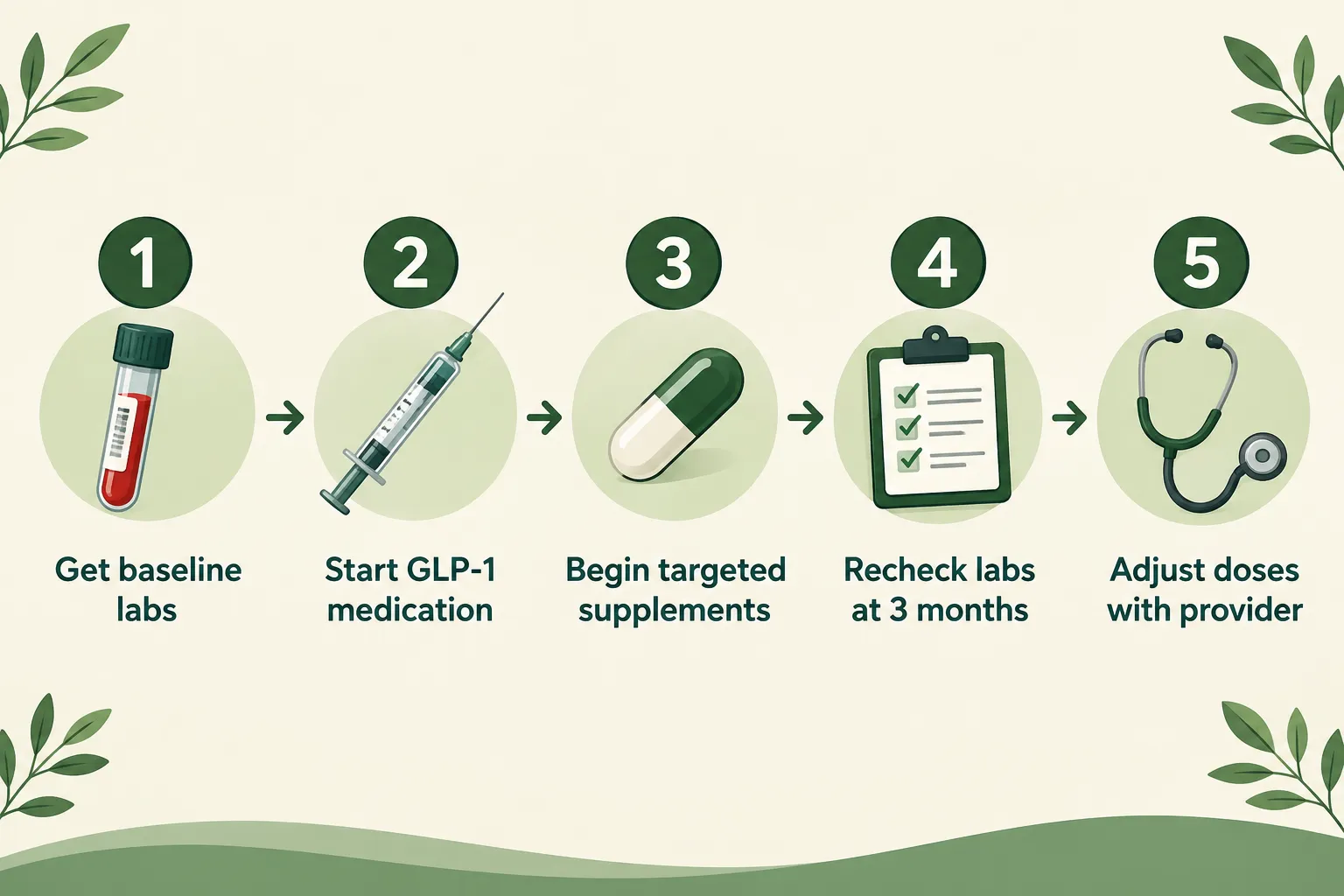
- Before starting GLP-1: Ask your provider for baseline labs including 25(OH)D, B12, ferritin, CBC, comprehensive metabolic panel, and magnesium.
- At the start of therapy: Begin a quality daily multivitamin/mineral, vitamin D3 (1,000-2,000 IU), and sublingual B12 (500-1,000 mcg) as a baseline.
- At 3 months: Recheck labs. Add targeted supplements for confirmed deficiencies (iron, calcium, higher-dose vitamin D, etc.).
- Ongoing: Recheck annually or if symptoms suggest deficiency. Adjust doses with your provider.
For people managing blood sugar alongside weight loss, our guide to best supplements for blood sugar control covers complementary options worth discussing with your provider.
7 Best GLP-1 Providers Ranked: Accreditation, Flexibility & Support Compared (2026 Update)
32,000+ Patients Can't All Be Wrong: See the Top-Rated GLP-1 Providers: Compared on accreditation, plan flexibility, and patient support — updated for 2026.
BMI MD GLP-1 Microdosing Plan
- Specialized microdosing options (sublingual drops or low-dose injections)
- Ideal for maintaining weight or tapering off higher doses safely
- Fully bundled plan with no hidden monthly platform memberships
DirectMeds Weight Loss Solutions
- Sourced from accredited, state-licensed 503A compounding pharmacies
- No-frills high-volume savings passed directly to the patient
- Includes clinical consultation and cold-chain shipping updates
MEDVi Flat-Rate Telehealth
- Flat monthly rate holds steady even at maximum maintenance doses
- No dosage upcharges or graduation fee penalties
- Offers both injectable and advanced oral thin-film delivery options
Gala GLP-1 Care Program
- All-inclusive plan with no standalone membership costs
- Continuous text-based messaging access with state-licensed clinicians
- Temperature-controlled, cold-chain medication shipping included
Measured GLP-1 Metabolic Health
- Comprehensive metabolic health screening and expert intake analysis
- Predictable long-term budgeting with stable plan pricing
- High-end responsive dashboard with integrated diagnostic support
Refills GLP-1 (TryRefills Plan)
- Flat rate holds steady as titration scales up
- Includes clinical guides for active side-effect management
- Bundles in foundational nutritional strategies alongside medication
AltRx GLP-1 Transactional Reorders
- Zero recurring auto-billing — pay entirely on a transactional basis
- Rapid text-to-order format saves time for experienced patients
- Provides both injectable forms and fast-dissolving tablet variations
Conclusion
The best vitamins to take while on GLP-1 therapy are not a mystery, but they do require a personalized approach. Vitamin D, B12, calcium, magnesium, and iron are the highest-priority nutrients for most GLP-1 users, with a complete daily multivitamin as a practical baseline. Electrolytes matter more than most people realize, especially during the early months when nausea and GI side effects are most active.
Your actionable next steps:
- Ask your prescribing provider for baseline micronutrient labs before or shortly after starting GLP-1 therapy.
- Start a quality multivitamin/mineral, vitamin D3 (1,000-2,000 IU), and sublingual B12 (500-1,000 mcg) from day one.
- Add targeted supplements based on your lab results, not guesswork.
- Manage nausea and diarrhea days with electrolyte drinks and ginger to protect both your comfort and your nutrient status.
- Recheck labs at 3-6 months and adjust with your provider.
No supplement replaces food quality, but when GLP-1 medications are doing their job and your appetite is suppressed, targeted supplementation is not optional. It is part of using these medications safely and effectively for the long term.
Frequently Asked Questions
Do I need to take vitamins on GLP-1 medications?
Most GLP-1 users benefit from supplementation because reduced food intake leads to predictable micronutrient gaps. At minimum, a daily multivitamin, vitamin D3, and B12 are reasonable for nearly everyone on these medications [3][6].
What is the most important vitamin to take on semaglutide?
Vitamin D is the most consistently deficient nutrient in GLP-1 users. B12 is a close second, particularly for long-term users and older adults [1][5].
Can I take a regular multivitamin with Ozempic?
Yes, a standard multivitamin is safe with Ozempic. It serves as a useful baseline but typically does not provide enough vitamin D or B12 to correct confirmed deficiencies [4][6].
Does tirzepatide deplete more nutrients than semaglutide?
Tirzepatide tends to produce greater weight loss and calorie reduction, which may increase the risk of nutrient depletion compared to GLP-1-only drugs. The same core supplements apply, but monitoring may need to be more frequent [5][10].
When should I take my vitamins relative to my GLP-1 shot?
The weekly injection timing does not affect oral supplement absorption. Focus instead on taking fat-soluble vitamins with meals, calcium in split doses, and iron away from calcium and coffee [3][4].
Can GLP-1 medications cause B12 deficiency?
Yes. Slowed gastric emptying reduces intrinsic factor activity and stomach acid, both of which are needed to absorb B12 from food. Sublingual B12 bypasses this issue [8][9].
Is magnesium helpful on GLP-1?
Magnesium glycinate is one of the most practical supplements for GLP-1 users. It helps with constipation, muscle cramps, sleep quality, and replaces losses from GI side effects [3][4].
Should I take vitamin K2 with vitamin D on GLP-1?
Vitamin K2 (MK-7 form) helps direct calcium into bones rather than soft tissues. Pairing D3 with K2 is a reasonable choice, especially for people at risk of bone loss during rapid weight loss [4][10].
How soon do nutrient deficiencies develop on GLP-1 drugs?
Deficiencies can begin developing within the first few months, particularly for vitamin D and B12. People who already had low levels before starting are at highest risk for rapid decline [2][9].
Are there any supplements I should avoid on GLP-1?
Avoid high-dose fat-soluble vitamins (A, E) without medical supervision, as these can accumulate. Also avoid supplements that slow gastric emptying further (some fiber supplements taken with medication) or that interact with blood sugar management [4].
References
[1] Clinical Obesity – https://onlinelibrary.wiley.com/doi/10.1111/cob.70070
[2] Weight Loss Drugs May Cause Nutrient Deficiencies – https://www.diabetes.co.uk/news/2025/jun/weight-loss-drugs-may-cause-nutrient-deficiencies.html
[3] Supplements To Take With Ozempic – https://www.goodrx.com/classes/glp-1-agonists/supplements-to-take-with-ozempic
[4] GLP-1 Supplements and Interactions – https://www.consumerlab.com/answers/supplements-to-take-or-avoid-when-using-a-glp-1-agonist/glp-1/
[5] PMC13316283 – https://pmc.ncbi.nlm.nih.gov/articles/PMC13316283/
[6] GLP-1 Vitamins Guide – https://www.everydayhealth.com/weight-management/glp1-vitamins/
[7] GLP-1 Supplement Guide – https://www.everydayhealth.com/weight-management/glp1-supplement/
[8] GLP-1s and Nutrients – https://info.bioticsresearch.com/researchforum/glp-1s-nutrients
[9] PMC12685510 – https://pmc.ncbi.nlm.nih.gov/articles/PMC12685510/
[10] PMC12913018 – https://pmc.ncbi.nlm.nih.gov/articles/PMC12913018/


