
best vitamins to take while on glp 1


Last updated: October 4, 2026
Quick Answer
The best vitamins to take while on GLP-1 medications are vitamin D3, vitamin B12, iron (when deficient), and calcium-magnesium, alongside a broad-spectrum multivitamin if your diet is restricted. A large 461,382-person study found that 22.4% of GLP-1 users develop a diagnosed nutritional deficiency within 12 months, with vitamin D being the most common gap. [1] The smartest approach is to get baseline labs first, then supplement based on what your bloodwork actually shows.
Key Takeaways
- Vitamin D deficiency affects roughly 13% of GLP-1 users within one year of starting therapy, making it the single most important nutrient to monitor and supplement. [1][5]
- Iron and ferritin levels drop significantly in GLP-1 users, with one large study showing a 54% higher risk of low ferritin compared to SGLT2 inhibitor users. [6][8]
- B12 and thiamine (B1) can fall over time, especially if appetite suppression leads to very low food intake or vomiting. [2]
- Calcium and magnesium intakes are below recommended levels in more than 60% of GLP-1 users, raising concerns about bone health. [2][6]
- A daily broad-spectrum multivitamin is a low-risk way to cover multiple gaps during the early weight-loss phase, but it does not replace targeted supplementation when a specific deficiency is confirmed. [3][9]
- Lab-guided supplementation is the current expert standard: test first, then supplement, rather than taking high doses of everything. [2][5]
- People with obesity often enter GLP-1 therapy already deficient in several micronutrients, so the risk compounds quickly once appetite is suppressed. [1][9]
- Protein is treated as a priority nutrient alongside vitamins because low intake accelerates lean muscle loss during GLP-1-associated weight loss. [2]
- “GLP-1 support” supplements marketed online are not evidence-backed replacements for conventional vitamins and should be viewed with caution. [10]
- Breastfeeding women should not use GLP-1 medications without medical supervision; if a provider approves continued use, nutritional monitoring becomes even more critical.
Do GLP-1 Drugs Cause Vitamin Deficiencies?
GLP-1 receptor agonists do not directly block nutrient absorption the way some bariatric surgeries do, but they strongly suppress appetite, which reduces total food intake and creates meaningful nutritional gaps over time. A large cohort study of 461,382 adults found that 12.7% developed a diagnosed nutritional deficiency within 6 months of starting GLP-1 therapy, rising to 22.4% by 12 months. [1][5]
7 Best GLP-1 Providers Ranked: Accreditation, Flexibility & Support Compared (2026 Update)
32,000+ Patients Can't All Be Wrong: See the Top-Rated GLP-1 Providers. We compared the leading online GLP-1 providers based on program features, clinical support, convenience, and overall value.
BMI MD GLP-1 Microdosing Plan
- Specialized microdosing options, including sublingual drops and low-dose injections
- Designed for people interested in maintaining weight or gradually adjusting treatment
- Bundled program structure without a separate monthly platform membership
- Online access makes the process convenient from home

DirectMeds Weight Loss Solutions
- Online weight-loss program with a straightforward patient experience
- Compounded medication options through state-licensed compounding pharmacies
- Includes clinical consultation as part of the process
- Provides shipping updates to help patients track their orders
MEDVi Flat-Rate Telehealth
- Flat-rate telehealth approach designed for easier budgeting
- No dosage-based pricing increases within the advertised program structure
- Offers injectable and oral thin-film delivery options
- Includes medical screening and asynchronous provider consultations
Gala GLP-1 Care Program
- Text-based access to state-licensed clinicians
- Cold-chain medication shipping included in the program
- Month-to-month program structure
- Designed for people who value convenient ongoing support
Measured GLP-1 Metabolic Health
- Comprehensive metabolic health screening and intake analysis
- Designed around longer-term metabolic health management
- Responsive dashboard with integrated health tracking tools
- Useful option for patients who value a more data-focused experience
Refills GLP-1 (TryRefills Plan)
- Clinical guidance designed to help patients manage common treatment concerns
- Includes foundational nutritional strategies alongside medication
- Designed around predictable ongoing treatment
- No hidden startup or processing fees according to the program information provided
AltRx GLP-1 Transactional Reorders
- Transactional reorder model without recurring auto-billing
- Designed for patients who already understand their treatment routine
- Fast text-to-order process for convenient reorders
- Offers injectable and fast-dissolving tablet variations
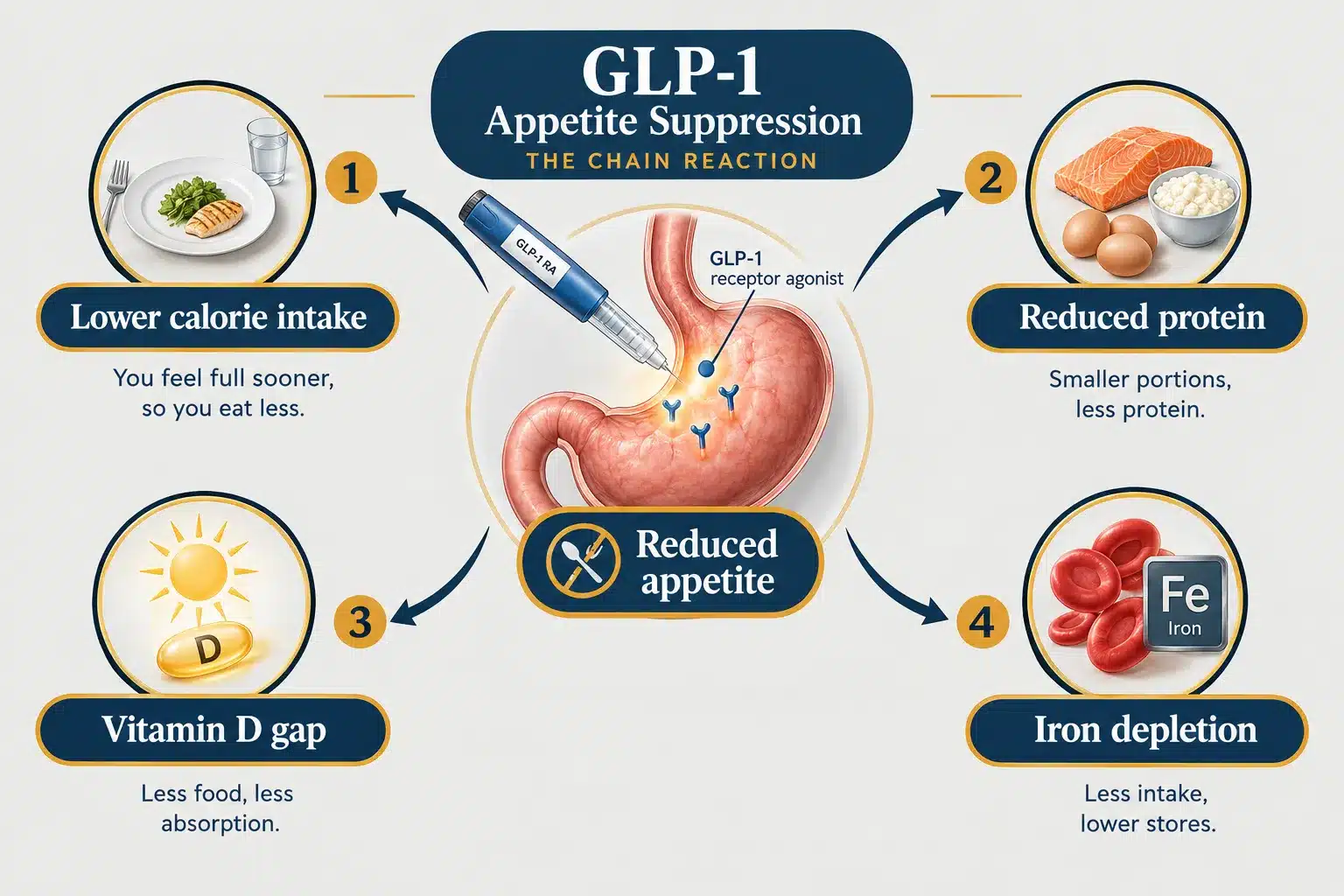
The mechanism is mostly indirect. When you eat significantly less, you take in fewer vitamins and minerals across the board. People with obesity are also frequently deficient in vitamin D, B-vitamins, iron, and calcium even before starting treatment, so GLP-1-associated appetite suppression compounds a pre-existing problem. [1][9]
Common deficiencies documented in GLP-1 users:
- Vitamin D (most frequent, affecting ~13% within 12 months) [5][6]
- Iron and ferritin (26-30% lower ferritin than comparator groups) [6][8]
- Vitamin B12 and thiamine [2]
- Calcium and magnesium [2][6]
- Folate, zinc, and potassium (less studied but flagged in dietary analyses) [2]
Common mistake: Assuming that because GLP-1 drugs are “just appetite suppressants,” nutrition will take care of itself. It won’t, especially if you’re eating fewer than 1,200-1,500 calories per day during the early dose-escalation phase.
Which Vitamins Are Most Important on a GLP-1 Diet
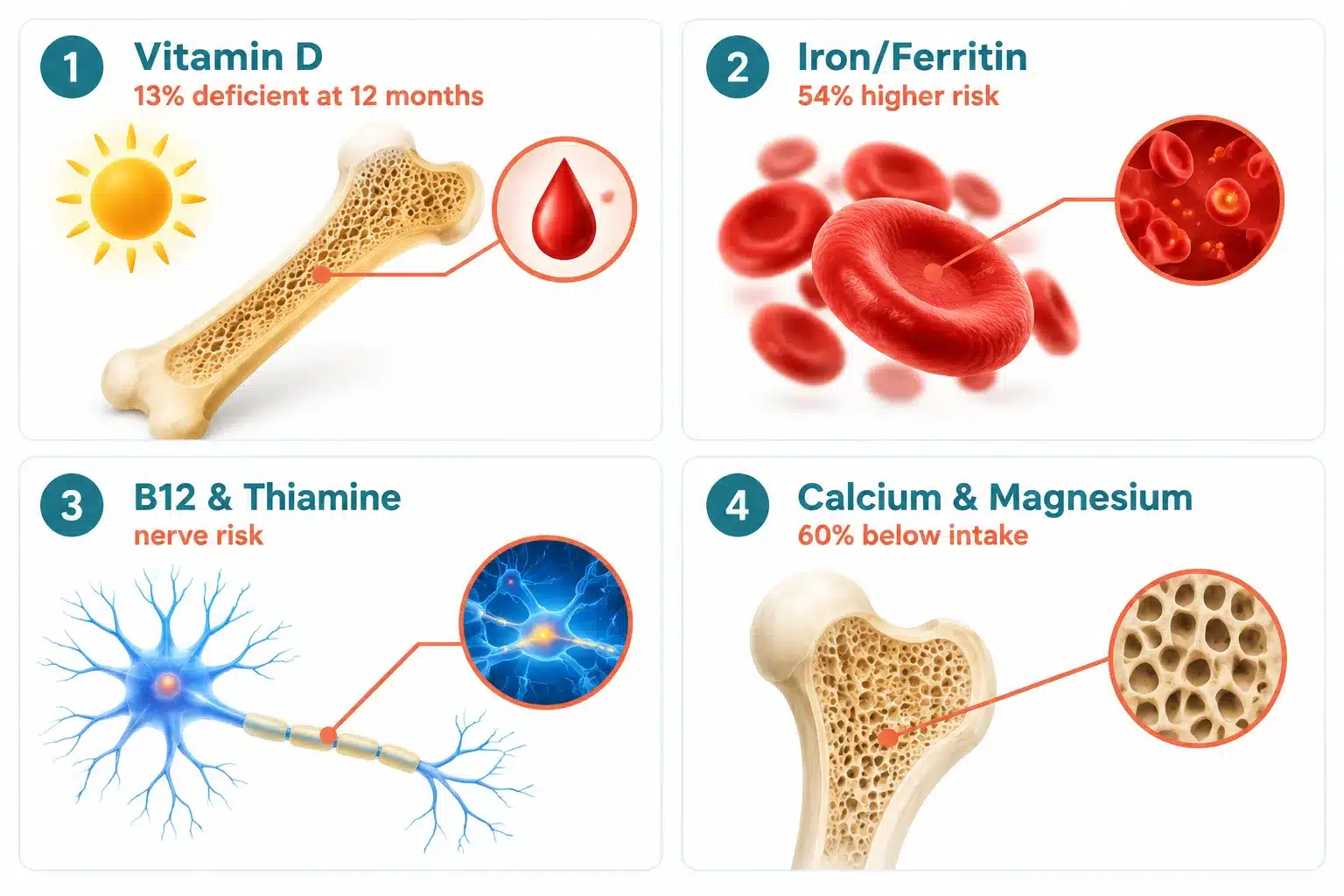
The four highest-priority nutrients for GLP-1 users are vitamin D3, vitamin B12, iron (when labs confirm deficiency), and calcium-magnesium. These are the nutrients most consistently shown to fall in large observational studies and clinical reviews. [2][5][6]
Vitamin D
Vitamin D is the single most consistently deficient nutrient in GLP-1 users. GLP-1 users face a 49% higher risk of vitamin D deficiency compared to SGLT2 inhibitor users and a 32% higher risk than DPP-4 inhibitor users. [5][6] Expert guidance now recommends baseline 25-hydroxyvitamin D testing before starting GLP-1 therapy and follow-up testing at 6 and 12 months. [1][2]
Recommended action: If your 25(OH)D level is below 30 ng/mL, discuss supplementation with your provider. Most adults benefit from 1,000-2,000 IU of vitamin D3 daily as a maintenance dose, though deficiency correction may require higher doses under medical supervision.
Vitamin B12 and B-Complex
B12 levels tend to decline over time in some GLP-1 users, particularly those with very low food intake or frequent nausea and vomiting. Case reports have linked GLP-1 use combined with poor dietary intake to severe thiamine (B1) deficiency, including Wernicke encephalopathy. [2] This is rare but serious enough that many dietitians now routinely check B12 and thiamine in patients with rapid weight loss or neurological symptoms.
A B-complex supplement covering B1, B6, B12, and folate is reasonable for anyone eating a restricted diet on GLP-1 therapy, and it’s especially important for people following vegan or very low-calorie diets.
Iron
Over 60% of GLP-1 users consume below estimated requirements for iron, and large database studies show 26-30% lower ferritin levels in GLP-1 users compared to SGLT2 users. [6][8] However, experts advise against taking high-dose iron supplements without confirmed deficiency, because unnecessary iron supplementation causes gastrointestinal side effects that overlap with GLP-1 side effects (nausea, constipation). [2][8]
Decision rule: Check serum ferritin and iron indices. Supplement only if ferritin is below 30 ng/mL or if your provider confirms iron deficiency anemia.
Calcium and Magnesium
More than 60% of GLP-1 users fail to meet estimated calcium requirements through diet alone. [2][6] Because vitamin D deficiency, low calcium intake, and rapid weight loss all compromise bone health simultaneously, multiple reviews recommend prioritizing calcium-rich foods and adding a calcium-magnesium supplement when diet is insufficient. [2]
Aim for 1,000-1,200 mg of calcium per day from food and supplements combined. Magnesium (200-400 mg/day) also supports muscle function and sleep, both of which matter during active weight loss.
Can You Take a Multivitamin While on GLP-1 Medications
Yes, a daily broad-spectrum multivitamin is generally safe and often recommended for GLP-1 users, particularly during the early phases of treatment when appetite is most suppressed. Multiple expert sources, including Harvard Health, GoodRx, and a 2025 scientific review, converge on recommending a multivitamin as a low-risk way to cover potential gaps in vitamin D, A, E, K, several B-vitamins, iron, zinc, calcium, and magnesium. [1][3][9]
A multivitamin is not mandatory for everyone. If your diet is already nutrient-dense and your labs are normal, you may not need one. But for most people eating 1,000-1,500 calories per day during GLP-1 dose escalation, a multivitamin provides a sensible safety net.
What to look for in a multivitamin for GLP-1 users:
- At least 1,000 IU of vitamin D3
- 100% of the daily value for B12, B1, B6, and folate
- Iron included (18 mg for premenopausal women; lower or iron-free for men and postmenopausal women unless deficient)
- Zinc (8-11 mg), magnesium (100-200 mg), and calcium (200-500 mg)
- Avoid megadose formulas (more than 10x the daily value for fat-soluble vitamins A, D, E, K) without medical supervision
If you’re also exploring affordable GLP-1 programs, see our guide to the best cheap GLP-1 program options available in 2026.
GLP-1 and Iron Deficiency: What to Know
Iron deficiency is one of the more underappreciated risks of GLP-1 therapy. Studies show GLP-1 users have a 54% higher risk of low ferritin compared to SGLT2 inhibitor users, and over 60% of users consume below the estimated average requirement for iron. [6][8] This matters because iron deficiency causes fatigue, impaired cognition, and anemia, symptoms that are easy to misattribute to weight loss or the medication itself.
Who is at highest risk:
- Premenopausal women (higher baseline iron needs)
- People following plant-based or very low-calorie diets
- Anyone with a history of anemia before starting GLP-1 therapy
- People with frequent nausea or vomiting reducing food intake
Testing: Ask your provider for serum ferritin, serum iron, and transferrin saturation at baseline and at 6-12 months. Do not self-supplement with high-dose iron without confirmed deficiency.
Can GLP-1 Cause Calcium Deficiency
GLP-1 medications do not directly impair calcium absorption, but they reduce total food intake enough to make calcium shortfalls very common. More than 60% of GLP-1 users fail to meet estimated calcium requirements through diet. [2][6] When this is combined with vitamin D deficiency (which impairs calcium absorption) and rapid weight loss (which can accelerate bone turnover), the cumulative effect on bone health becomes a real concern. [2]
Practical steps:
- Prioritize calcium-rich foods: dairy, fortified plant milks, canned salmon with bones, leafy greens
- If dietary intake is consistently below 800 mg/day, consider a calcium supplement (calcium citrate is better absorbed than calcium carbonate, especially with reduced stomach acid)
- Correct vitamin D deficiency first, because vitamin D is required for calcium absorption
- Discuss bone density monitoring with your provider if you have additional risk factors (postmenopausal, history of fractures, long-term GLP-1 use)
Best B12 Supplement for GLP-1 Users
Methylcobalamin or cyanocobalamin at 500-1,000 mcg per day is the most practical B12 supplement choice for GLP-1 users. Both forms are effective for most people. Methylcobalamin is often preferred for those with MTHFR gene variants, but the evidence for superiority in the general population is modest.
GLP-1 users with very low food intake, frequent nausea, or a vegan diet are at the highest risk for B12 decline. [2] Sublingual B12 (dissolved under the tongue) or liquid drops bypass any absorption issues in the gut and are a good option if you’re also experiencing gastrointestinal side effects.
Is a full B-complex necessary on GLP-1? For most people, yes. Thiamine (B1) deficiency has been linked to serious neurological complications in GLP-1 users with severely restricted intake, including rare cases of Wernicke encephalopathy. [2] A B-complex that includes B1, B2, B6, B12, and folate covers these bases without requiring multiple separate pills.
Timing Vitamins With GLP-1 Injections
There is no pharmacokinetic interaction between GLP-1 injections (semaglutide, tirzepatide) and standard oral vitamins, so timing is primarily about tolerability and absorption. GLP-1 medications slow gastric emptying, which can affect how quickly oral supplements are absorbed but does not significantly reduce the total amount absorbed for most water-soluble vitamins.
Practical timing tips:
- Take fat-soluble vitamins (D, A, E, K) with your largest meal of the day, which typically contains the most fat and improves absorption
- Take iron supplements on an empty stomach or with a small amount of food if nausea is a problem; avoid taking iron with calcium at the same time, as they compete for absorption
- Take B-complex vitamins in the morning to avoid the mild energizing effect interfering with sleep
- If you inject GLP-1 weekly (as with semaglutide or tirzepatide), there is no need to time vitamins around injection day specifically
For those comparing GLP-1 medication options, our guide on which GLP-1 medication works best for weight loss covers the key differences between semaglutide and tirzepatide.
Vitamin Deficiencies From Reduced Food Intake on GLP-1
The core problem is straightforward: GLP-1 drugs work by suppressing appetite, and when people eat substantially less, they consume fewer micronutrients across the board. Dietary analyses of GLP-1 users show shortfalls not just in vitamin D, B12, iron, and calcium, but also in magnesium, potassium, zinc, folate, and choline. [2][6]
Protein deserves special mention here. Low protein intake during GLP-1-associated weight loss accelerates the loss of lean muscle mass, which is a major concern for long-term metabolic health. [2][5] Nutrition specialists now treat adequate protein (at least 1.2-1.6 g per kg of body weight per day) as a nutritional priority alongside vitamins.
Nutrients most frequently below requirements in GLP-1 users:
| Nutrient | % of Users Below Requirement (est.) | Primary Risk |
|---|---|---|
| Vitamin D | ~60% below optimal | Bone loss, immune function |
| Calcium | >60% | Bone density, muscle cramps |
| Iron | >60% | Anemia, fatigue |
| Magnesium | Substantial shortfall | Muscle function, sleep |
| B12 | Rises over time with low intake | Neuropathy, anemia |
| Protein | Common with appetite suppression | Muscle loss |
Sources: [2][6]
If you are also managing blood sugar alongside GLP-1 therapy, our article on the best supplements for blood sugar control covers complementary nutritional strategies.
GLP-1 and Electrolyte Supplements: Do You Need Them
Many GLP-1 users experience nausea, vomiting, or diarrhea, particularly during dose escalation, and these side effects can deplete electrolytes including sodium, potassium, and magnesium. For most people with mild side effects and adequate fluid intake, a balanced diet provides sufficient electrolytes. However, if you’re experiencing frequent vomiting or diarrhea, targeted electrolyte supplementation becomes worth discussing with your provider.
When electrolyte supplements make sense:
- Frequent vomiting or diarrhea lasting more than a few days
- Muscle cramps, heart palpitations, or unusual fatigue (possible signs of low potassium or magnesium)
- Very low-calorie intake (below 1,000 calories/day)
- Hot weather or high physical activity increasing sweat losses
A basic electrolyte supplement or oral rehydration solution (low in sugar) is a reasonable short-term tool. Avoid high-dose potassium supplements without medical supervision, as excess potassium can cause cardiac issues.
What Vitamins to Avoid While Taking GLP-1
Most standard vitamins and minerals are safe to take alongside GLP-1 medications. The cautions are about dose and timing rather than outright avoidance.
Use caution with:
- High-dose vitamin A (retinol): Fat-soluble and stored in the liver; megadoses above 10,000 IU/day from supplements carry toxicity risk, especially combined with a multivitamin already containing vitamin A
- High-dose iron without confirmed deficiency: Causes gastrointestinal side effects that mimic and worsen GLP-1 side effects (nausea, constipation) [2][8]
- High-dose calcium (above 1,500 mg/day from supplements): Associated with kidney stones and possible cardiovascular risk when taken in excess
- “GLP-1 support” supplements marketed online: These products are regulated as dietary supplements, not drugs, and are not backed by clinical evidence comparable to conventional vitamins. Harvard School of Public Health specifically warns against assuming these products are safe or effective. [10]
What to avoid entirely:
- GLP-1 medications during breastfeeding without explicit medical approval. GLP-1 breastfeeding safety has not been established for semaglutide or tirzepatide. Current guidance advises against using semaglutide while breastfeeding or tirzepatide while breastfeeding because neither drug has adequate safety data for nursing infants. If you are exploring GLP-1 postpartum weight loss, discuss timing with your OB or primary care provider before starting.
For those looking at compounded options, our guide to the best compounding pharmacy for semaglutide in 2026 covers what to look for in a reputable provider.
What Vitamins Should I Take With Ozempic or Wegovy
Ozempic and Wegovy both contain semaglutide, and the supplementation needs are the same as for other GLP-1 receptor agonists. The best vitamins to take while on GLP-1 medications like Ozempic or Wegovy are vitamin D3, B12 (ideally as part of a B-complex), iron (if labs confirm deficiency), and calcium-magnesium. A broad-spectrum multivitamin rounds out the plan for anyone eating a restricted diet. [1][3][9]
The same principles apply to tirzepatide (Mounjaro, Zepbound). If you’re comparing medication options, our overview of the best GLP-1 under $300 covers cost-effective access options.
Recommended baseline labs before starting Ozempic or Wegovy:
- 25-hydroxyvitamin D
- Serum B12
- Complete blood count (CBC) with ferritin and iron indices
- Comprehensive metabolic panel (includes calcium)
- Folate (especially for women of childbearing age)
Recheck at 6 months and 12 months, then annually if stable. This lab-guided approach is now the standard recommendation across multiple clinical reviews. [2][5][6]
7 Best GLP-1 Providers Ranked: Accreditation, Flexibility & Support Compared (2026 Update)
32,000+ Patients Can't All Be Wrong: See the Top-Rated GLP-1 Providers: Compared on accreditation, plan flexibility, and patient support — updated for 2026.
BMI MD GLP-1 Microdosing Plan
- Specialized microdosing options (sublingual drops or low-dose injections)
- Ideal for maintaining weight or tapering off higher doses safely
- Fully bundled plan with no hidden monthly platform memberships
DirectMeds Weight Loss Solutions
- Sourced from accredited, state-licensed 503A compounding pharmacies
- No-frills high-volume savings passed directly to the patient
- Includes clinical consultation and cold-chain shipping updates
MEDVi Flat-Rate Telehealth
- Flat monthly rate holds steady even at maximum maintenance doses
- No dosage upcharges or graduation fee penalties
- Offers both injectable and advanced oral thin-film delivery options
Gala GLP-1 Care Program
- All-inclusive plan with no standalone membership costs
- Continuous text-based messaging access with state-licensed clinicians
- Temperature-controlled, cold-chain medication shipping included
Measured GLP-1 Metabolic Health
- Comprehensive metabolic health screening and expert intake analysis
- Predictable long-term budgeting with stable plan pricing
- High-end responsive dashboard with integrated diagnostic support
Refills GLP-1 (TryRefills Plan)
- Flat rate holds steady as titration scales up
- Includes clinical guides for active side-effect management
- Bundles in foundational nutritional strategies alongside medication
AltRx GLP-1 Transactional Reorders
- Zero recurring auto-billing — pay entirely on a transactional basis
- Rapid text-to-order format saves time for experienced patients
- Provides both injectable forms and fast-dissolving tablet variations
Conclusion
GLP-1 medications are genuinely effective tools for weight loss and metabolic health, but they create real nutritional risks that are easy to overlook when the focus is on the scale. The research is clear: vitamin D deficiency, low iron and ferritin, falling B12 levels, and insufficient calcium and magnesium are all well-documented in GLP-1 users, and the risks compound quickly when pre-existing deficiencies meet appetite suppression. [1][2][5][6]
Actionable next steps:
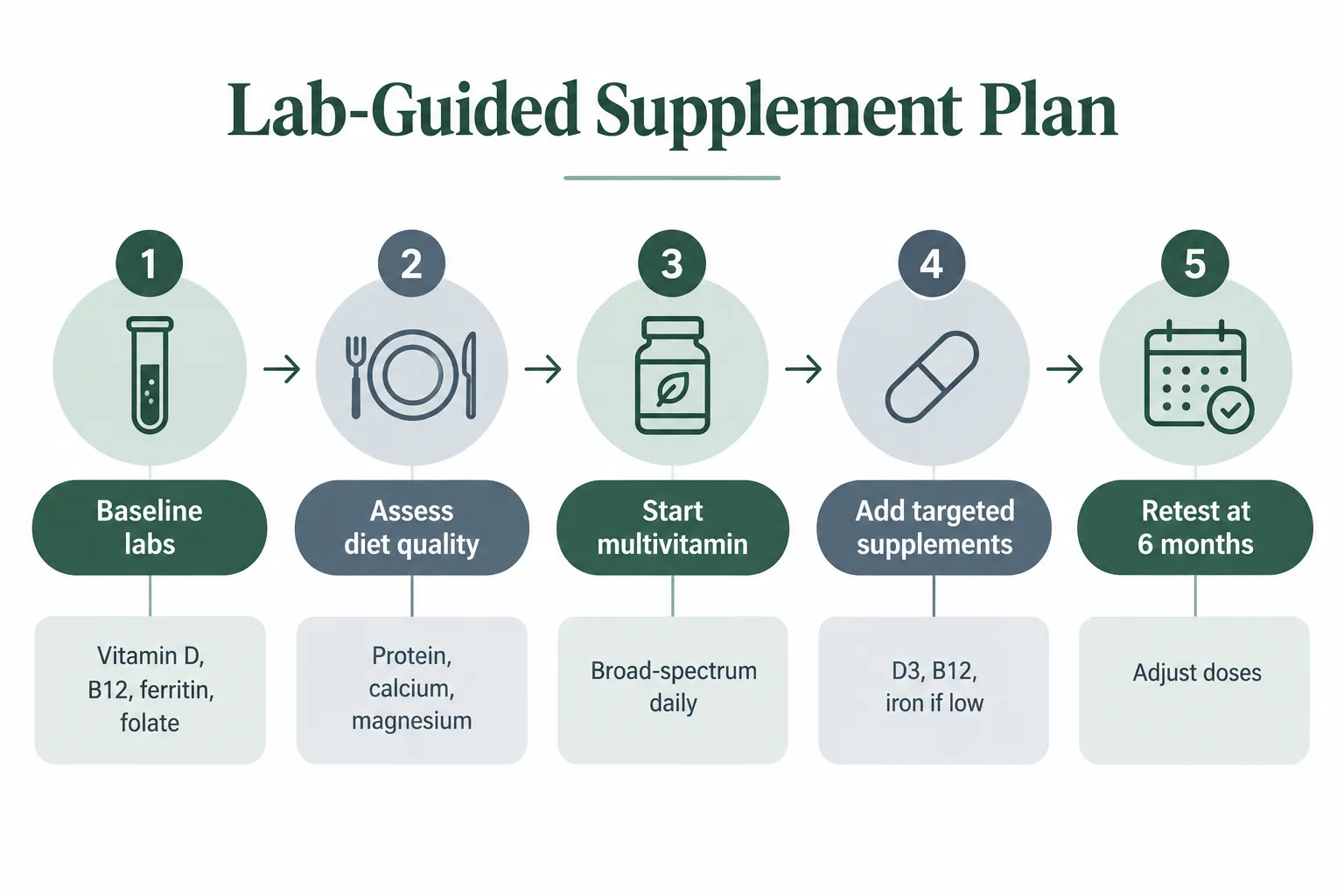
- Ask your provider for baseline labs before or shortly after starting GLP-1 therapy: 25-hydroxyvitamin D, serum B12, CBC with ferritin, and a metabolic panel.
- Start a broad-spectrum multivitamin if your diet is restricted, as a low-risk safety net.
- Add targeted supplements (vitamin D3, B12/B-complex, iron, calcium-magnesium) only when labs or clear dietary gaps justify them.
- Prioritize protein at every meal to protect lean muscle mass during weight loss.
- Recheck labs at 6 and 12 months and adjust your supplement plan based on results.
- Avoid high-dose “GLP-1 support” supplements marketed online without clinical evidence.
- If you are breastfeeding or postpartum, do not start GLP-1 medications without explicit guidance from your provider, and discuss nutritional monitoring as a priority.
The best vitamins to take while on GLP-1 are not a fixed list for everyone. They are the ones your body actually needs, confirmed by testing and guided by a provider who understands both the medication and your individual nutritional baseline.
Frequently Asked Questions
Q: Should everyone on a GLP-1 take a multivitamin?
Not everyone needs one, but most people eating fewer than 1,500 calories per day during GLP-1 dose escalation benefit from a daily broad-spectrum multivitamin as a low-risk way to cover common nutritional gaps. [1][3][9]
Q: How soon after starting GLP-1 therapy should I check my vitamin levels?
Get baseline labs before or within the first 4-6 weeks of starting, then recheck at 6 months and 12 months. Early testing establishes your pre-treatment status, which makes follow-up results more meaningful. [2][5]
Q: Can I take vitamin D and calcium at the same time on GLP-1?
Yes. Vitamin D and calcium work together and are best taken together with a meal containing some fat. Avoid taking calcium at the same time as iron supplements, as they compete for absorption.
Q: Is B12 deficiency from GLP-1 therapy the same as from metformin?
The mechanism differs. Metformin impairs B12 absorption in the gut. GLP-1 medications reduce B12 intake indirectly through appetite suppression rather than blocking absorption directly. Both warrant monitoring, but the risk profile is different. [2]
Q: Are “GLP-1 support” supplements worth buying?
No strong clinical evidence supports the marketed “GLP-1 support” products sold online. Harvard School of Public Health specifically cautions that these products rely on generic weight-loss or blood-sugar claims and are not equivalent to properly dosed conventional vitamins. [10]
Q: Can I take GLP-1 medications while breastfeeding?
Current guidance advises against using semaglutide while breastfeeding or tirzepatide while breastfeeding because neither drug has adequate safety data for nursing infants. Discuss GLP-1 postpartum weight loss timing with your provider after you have finished breastfeeding.
Q: Does tirzepatide cause the same vitamin deficiencies as semaglutide?
The available evidence suggests similar nutritional risks because both drugs suppress appetite through overlapping mechanisms. Tirzepatide also activates GIP receptors, but no data currently shows a meaningfully different deficiency profile compared to semaglutide. [2][6]
Q: What is the most important single supplement for GLP-1 users?
Vitamin D3 is the single most consistently deficient nutrient, affecting roughly 13% of GLP-1 users within 12 months. If you can only add one supplement, start with vitamin D3 after confirming your baseline level. [1][5][6]
Q: Should I take iron supplements preventively on GLP-1?
No. Take iron only when serum ferritin or iron indices confirm deficiency. Unnecessary iron supplementation causes gastrointestinal side effects that overlap with and worsen GLP-1 side effects. [2][8]
Q: Does GLP-1 affect electrolyte levels?
GLP-1 medications themselves do not directly deplete electrolytes, but nausea, vomiting, and diarrhea during dose escalation can cause short-term losses of sodium, potassium, and magnesium. Most people with mild side effects and adequate hydration do not need electrolyte supplements.
Q: How much protein should I eat on GLP-1 therapy?
Most nutrition specialists recommend at least 1.2-1.6 g of protein per kg of body weight per day to limit muscle loss during GLP-1-associated weight loss. Protein supplements (whey, pea, or other sources) can help if appetite suppression makes meeting this target through food alone difficult. [2][5]
Q: Are there vitamins that interact negatively with GLP-1 injections?
No known direct pharmacokinetic interactions exist between standard oral vitamins and GLP-1 injections. The main concerns are about high doses of fat-soluble vitamins (A, D, E, K) accumulating to toxic levels over time, and about taking high-dose iron without confirmed need.
References
[1] Study Taking GLP-1 Drugs May Increase Risk Of Key Nutrient Deficiencies – https://www.health.harvard.edu/diet-and-nutrition/study-taking-glp-1-drugs-may-increase-risk-of-key-nutrient-deficiencies
[2] Wiley Online Library – https://onlinelibrary.wiley.com/doi/10.1111/cob.70070
[3] Supplements To Take With Ozempic – https://www.goodrx.com/classes/glp-1-agonists/supplements-to-take-with-ozempic
[4] GLP-1 Nutrient Deficiencies – https://www.webmd.com/obesity/ss/glp1-nutrient-deficiencies
[5] PMC12205620 – https://pmc.ncbi.nlm.nih.gov/articles/PMC12205620/
[6] What Nutrients Are GLP-1 Users Lacking – https://www.medscape.com/viewarticle/what-nutrients-are-glp-1-users-lacking-2026a100057a
[8] Weight Loss Drugs May Cause Nutrient Deficiencies – https://www.diabetes.co.uk/news/2025/jun/weight-loss-drugs-may-cause-nutrient-deficiencies.html
[9] GLP-1s And Supplements What Experts Want You To Know – https://www.vogue.co.uk/article/glp-1s-and-supplements-what-experts-want-you-to-know
[10] Ozempic Wegovy Inspire Wave Of GLP-1 Supplements But Are They Safe Or Effective – https://hsph.harvard.edu/news/ozempic-wegovy-inspire-wave-of-glp-1-supplements-but-are-they-safe-or-effective/