Can You Get Zepbound Through Mochi? Cost & Process

Last updated: October 29, 2026
Quick Answer
Yes, you can get Zepbound through Mochi. Mochi Health is a telehealth platform that lists Zepbound (tirzepatide) as one of its FDA-approved weight-loss medications, with pricing advertised as starting at $299 per month, separate from the required membership fee [1][2][3][4]. The process involves signing up, completing a health assessment, having a virtual visit, and getting a prescription if a Mochi provider decides it’s appropriate for you [3][5].
Key Takeaways
- Mochi offers Zepbound directly on its medication list, priced “starting at” $299/month, plus a separate membership fee [1][2][3][4].
- Membership costs range from $79 for one month down to roughly $49/month if billed annually, according to Mochi and Forbes reporting [5][6].
- No traditional insurance is required to use Mochi, since Zepbound is billed self-pay, though some membership options tie into insurance-linked discounts [1][5][6].
- Eligibility generally hinges on BMI, weight-related health conditions, and medical history reviewed during a virtual visit [3][5].
- Mochi also sells compounded tirzepatide starting around $90/month, a cheaper alternative to branded Zepbound, but with different safety oversight [5].
- Eli Lilly has sued Mochi and its supplier over compounded tirzepatide marketing, and a KING 5 investigation flagged serious adverse events tied to compounded GLP-1 products [7][8].
- Delivery and refill timelines depend on provider approval speed and pharmacy processing, typically within days to about two weeks after your visit.
What Is Mochi Health and How Do Telehealth Prescriptions Work
Mochi Health is a nationwide telehealth company that connects patients with licensed providers for weight-loss care, including GLP-1 medications like Zepbound, Ozempic, Wegovy, and compounded alternatives [3]. It operates in all 50 states, meaning most adults can access a virtual visit regardless of where they live.
7 Best GLP-1 Providers Ranked: Accreditation, Flexibility & Support Compared (2026 Update)
32,000+ Patients Can't All Be Wrong: See the Top-Rated GLP-1 Providers. We compared the leading online GLP-1 providers based on program features, clinical support, convenience, and overall value.

BMI MD GLP-1 Microdosing Plan
- Specialized microdosing options, including sublingual drops and low-dose injections
- Designed for people interested in maintaining weight or gradually adjusting treatment
- Bundled program structure without a separate monthly platform membership
- Online access makes the process convenient from home

DirectMeds Weight Loss Solutions
- Online weight-loss program with a straightforward patient experience
- Compounded medication options through state-licensed compounding pharmacies
- Includes clinical consultation as part of the process
- Provides shipping updates to help patients track their orders

MEDVi Flat-Rate Telehealth
- Flat-rate telehealth approach designed for easier budgeting
- No dosage-based pricing increases within the advertised program structure
- Offers injectable and oral thin-film delivery options
- Includes medical screening and asynchronous provider consultations

Gala GLP-1 Care Program
- Text-based access to state-licensed clinicians
- Cold-chain medication shipping included in the program
- Month-to-month program structure
- Designed for people who value convenient ongoing support

Measured GLP-1 Metabolic Health
- Comprehensive metabolic health screening and intake analysis
- Designed around longer-term metabolic health management
- Responsive dashboard with integrated health tracking tools
- Useful option for patients who value a more data-focused experience

Refills GLP-1 (TryRefills Plan)
- Clinical guidance designed to help patients manage common treatment concerns
- Includes foundational nutritional strategies alongside medication
- Designed around predictable ongoing treatment
- No hidden startup or processing fees according to the program information provided

AltRx GLP-1 Transactional Reorders
- Transactional reorder model without recurring auto-billing
- Designed for patients who already understand their treatment routine
- Fast text-to-order process for convenient reorders
- Offers injectable and fast-dissolving tablet variations
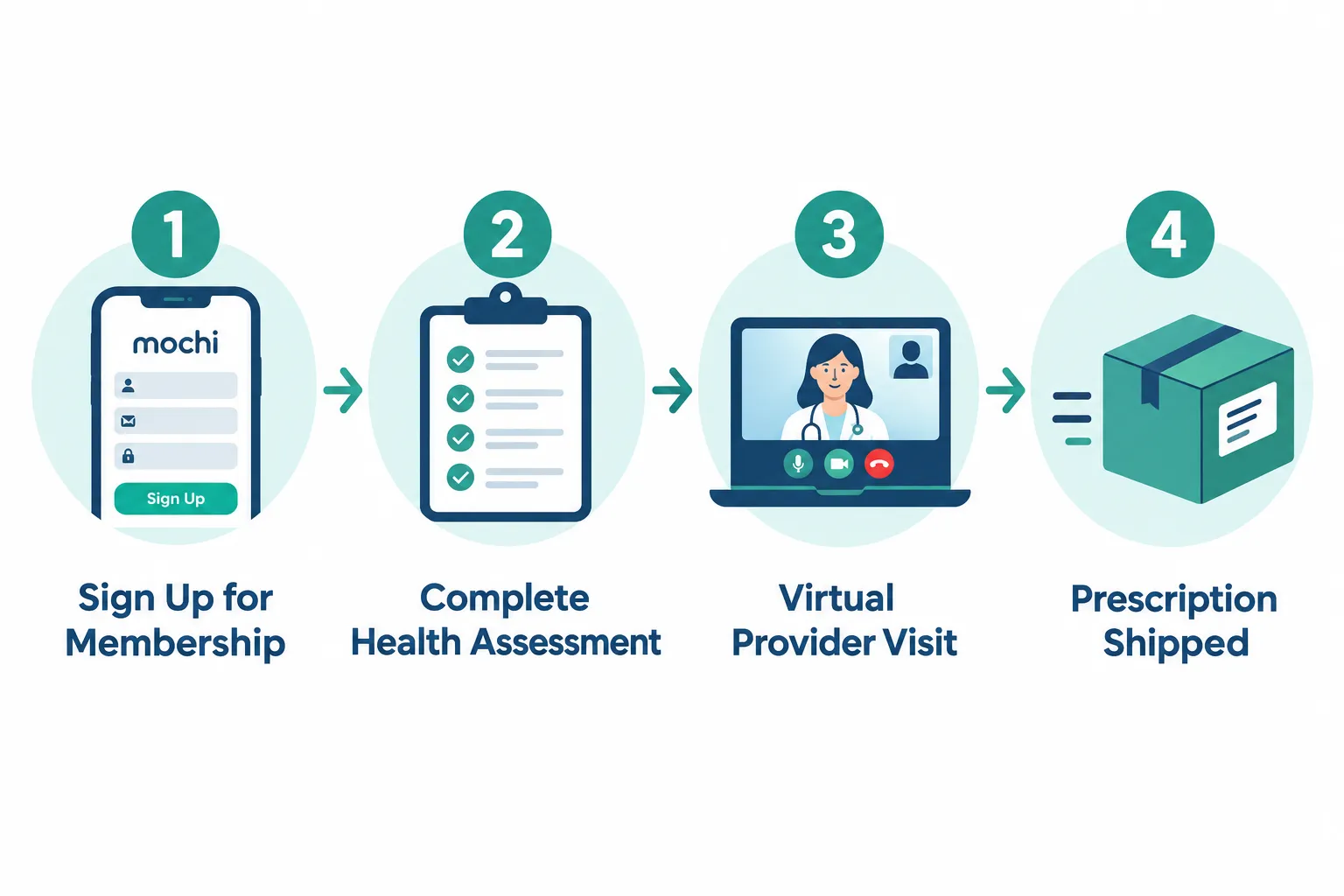
The telehealth prescription model works like this:
- You create an account and pay a membership fee for access to providers and ongoing support [5].
- A provider reviews your health history, weight, and goals through an online intake and a virtual visit.
- If the provider finds you’re a good candidate, they write a prescription, and medication is billed separately from your membership [3][5].
This differs from a typical in-person doctor visit mainly in convenience: no waiting room, and often a faster decision. But the medical judgment process, checking for contraindications and monitoring side effects, is meant to mirror standard clinical care.
Choose Mochi if you want remote access to GLP-1 prescribing without a traditional in-office visit. Skip it if you need in-person labs, physical exams, or already have a specialist managing your weight or diabetes care who can prescribe directly.
How Much Does Zepbound Cost Through Mochi
Mochi advertises Zepbound as “starting at” or “as low as” $299 per month, though the exact price depends on your prescribed dose, which ranges from 2.5 mg to 15 mg [1][2][3][4]. This price is for the medication only and does not include the separate membership fee [1].
On top of the $299-plus medication cost, you’ll also pay for membership, which Mochi lists as:
| Membership Term | Price |
|---|---|
| 1 month | $79 |
| 3 months | $207 |
| 6 months | $354 |
| 12 months | $588 |
Some reporting also notes annual plans averaging around $49/month, and insurance-linked options near $199/year [5][6]. A common mistake is assuming the $299 figure is the full monthly cost, it isn’t. Add membership on top to get your real total.
Example: If you’re on a 1-month membership ($79) plus a $299 Zepbound dose, your first month runs about $378 before any discounts.
Do You Need Insurance to Get Zepbound on Mochi
No, you do not need insurance to get Zepbound through Mochi, since the medication is billed as self-pay at the price shown before you order [1][3]. This makes Mochi an option for people whose insurance denies GLP-1 coverage or who don’t have coverage at all.
That said, insurance can still matter:
- Some patients use insurance separately to fill a Mochi prescription at a local pharmacy, potentially lowering costs if their plan covers Zepbound.
- Mochi’s own self-pay pricing doesn’t require submitting insurance claims, which simplifies the process but means you’re paying cash price for the drug.
- If you already have strong insurance coverage for Zepbound, check your copay first. For some commercial plans, in-network costs may beat Mochi’s cash price.
If you’re unsure which route is cheaper for your specific plan, compare notes using our guide to GLP-1 medication cost factors before committing to a self-pay telehealth path.
What Are the Eligibility Requirements for Zepbound Through Mochi
Eligibility for Zepbound through Mochi generally requires meeting the FDA’s approved criteria: a BMI of 30 or higher, or a BMI of 27 or higher with a weight-related condition such as high blood pressure, type 2 diabetes, or sleep apnea, confirmed during your virtual assessment [3][5]. Mochi’s provider makes the final call based on your intake answers and visit.
Typical screening covers:
- Current weight, height, and BMI calculation
- Medical history, including thyroid conditions and pancreatitis history
- Current medications and any prior GLP-1 use
- Weight-related health conditions like obstructive sleep apnea, since Zepbound is also FDA-approved for that use [1][2]
Common mistake: assuming eligibility is automatic just because you want to lose weight. Mochi providers are still screening for medical appropriateness, not approving every applicant.
How Long Does It Take to Get Zepbound Delivered From Mochi
Delivery timing isn’t guaranteed by Mochi’s public materials, but based on how telehealth GLP-1 programs typically operate, expect your first shipment within roughly one to two weeks after your provider visit, assuming approval and no pharmacy delays [VERIFY current Mochi shipping times before relying on this for planning]. Faster turnaround is common once you’re an established patient.
The general sequence looks like this:
- Complete intake and virtual visit (often same-day or within a few days of signup)
- Provider reviews and approves prescription
- Prescription routes to pharmacy for dispensing
- Medication ships to your address
Edge case: if your prescribed dose requires prior authorization or a manufacturer shortage affects supply, timelines can stretch longer. Always confirm current shipping estimates directly with Mochi before your first order.
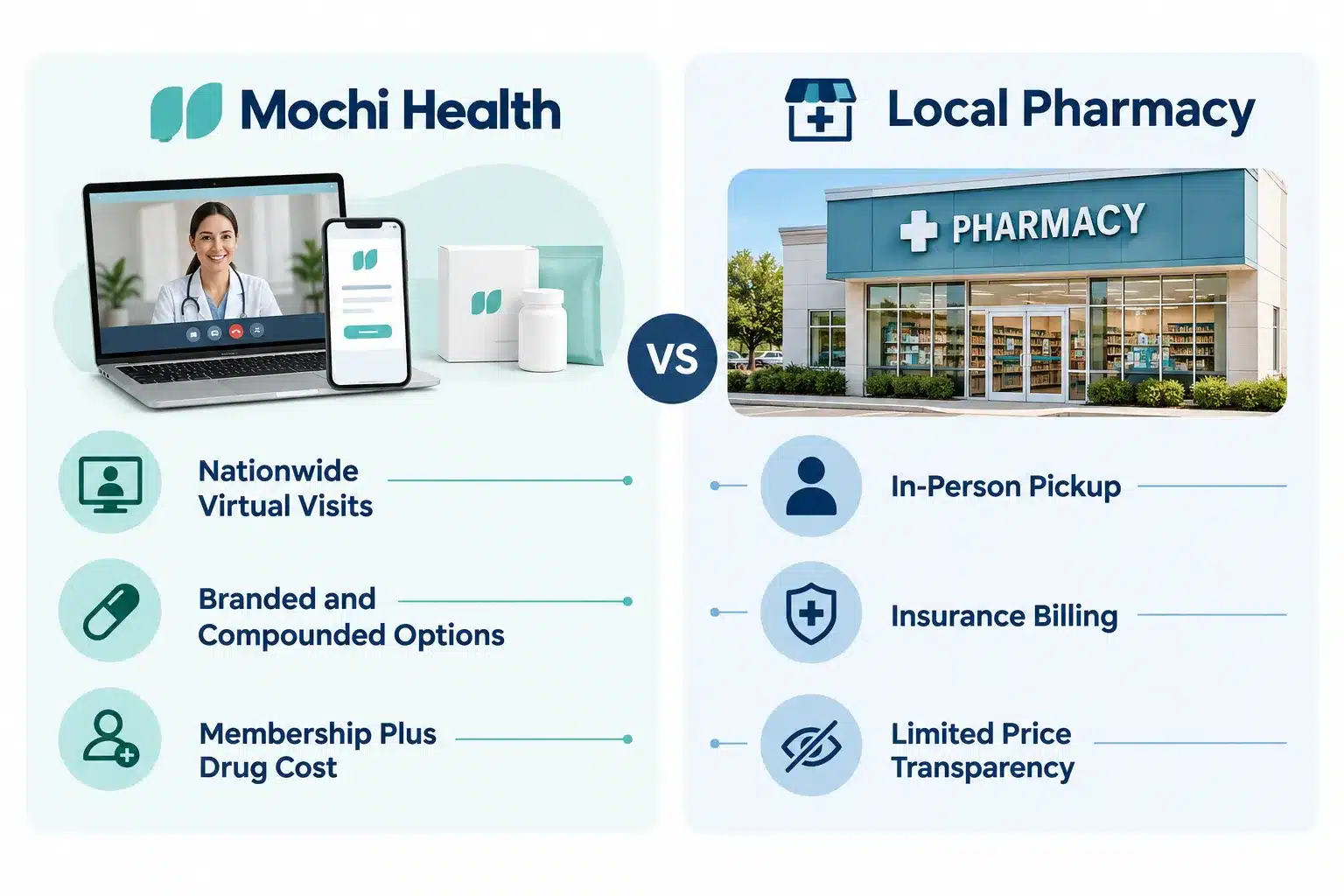
Is Zepbound Cheaper Through Mochi Than at My Local Pharmacy
Mochi’s Zepbound pricing, starting around $299/month plus membership, is often cheaper than Eli Lilly’s list price of roughly $499 to $1,086 per month depending on dose, but may not beat local pharmacy pricing if you have strong insurance or a manufacturer coupon. The comparison depends heavily on your personal coverage.
| Payment Path | Typical Monthly Cost |
|---|---|
| Mochi self-pay Zepbound | $299+ plus membership fee |
| Eli Lilly list price, no insurance | $499,$1,086 (varies by dose) |
| Commercial insurance with savings card | As low as $25 for a short supply, if eligible |
Decision rule: choose Mochi if you lack insurance coverage or your plan denies Zepbound. Choose your local pharmacy with a manufacturer savings card if you have commercial insurance that covers GLP-1s, since that route can undercut Mochi’s cash price significantly. For a broader cost breakdown across providers, see our guide on GLP-1 weight loss cost.
What Happens if Mochi Denies My Zepbound Application
If Mochi denies your Zepbound application, it’s usually because a provider determines you don’t meet the FDA’s BMI or health-condition criteria, or your medical history raises a safety concern. You won’t be charged for medication you weren’t prescribed, though membership fees for platform access still apply.
If denied, you have a few paths forward:
- Ask the provider what specific criteria weren’t met and whether a different GLP-1, like semaglutide, might fit better
- Request a follow-up visit if your health status changes (for example, a new diagnosis that qualifies you)
- Explore compounded tirzepatide options Mochi offers, which sometimes have different eligibility thresholds, while understanding the safety tradeoffs discussed below [5][8]
Common mistake: assuming one denial means permanent ineligibility. Providers reassess based on updated information, so a second visit after addressing a flagged issue (like an unmanaged health condition) can change the outcome.
Can You Get Zepbound Through Mochi if You Have Diabetes or Heart Issues
Having type 2 diabetes doesn’t automatically disqualify you from getting Zepbound through Mochi, since tirzepatide is also used for blood sugar management in related products, but your provider will review your full cardiac and metabolic history before prescribing [3]. Heart conditions require closer scrutiny and may need clearance from your cardiologist first.
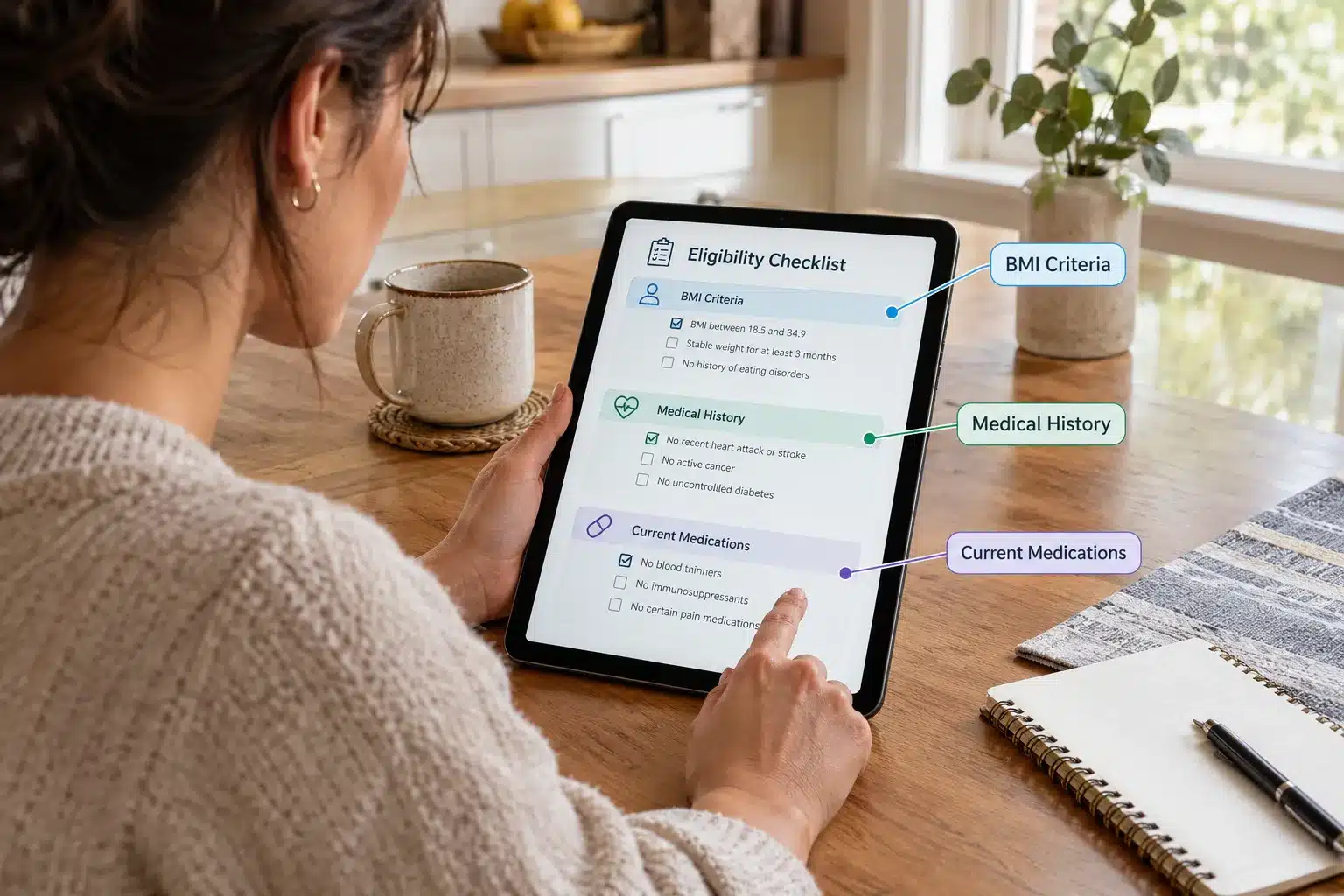
Key considerations a Mochi provider will weigh:
- History of pancreatitis or medullary thyroid carcinoma, which are contraindications for GLP-1 class drugs
- Current heart failure, arrhythmia, or recent cardiac events
- Whether you’re already on other diabetes medications that could interact
If you have significant heart or endocrine conditions, it’s worth asking your current specialist for input before starting any GLP-1 through telehealth, Mochi included. Telehealth visits are efficient, but they can’t replace coordinated care for complex medical histories.
What’s the Difference Between Getting Zepbound From Mochi vs Ozempic
The biggest difference is the drug class target and approved use: Zepbound (tirzepatide) is FDA-approved specifically for chronic weight management and obstructive sleep apnea, while Ozempic (semaglutide) is FDA-approved for type 2 diabetes, with Wegovy as its weight-loss-approved sibling [1][2]. Mochi offers both drug families, so the real choice often comes down to your provider’s recommendation and insurance coverage.
- Zepbound tends to show strong weight-loss results tied to its dual GIP/GLP-1 mechanism, and Mochi prices it from $299/month.
- Ozempic, while prescribed off-label for weight loss by some providers, is officially a diabetes medication; Wegovy is semaglutide’s weight-loss-labeled version.
- Side effect profiles are similar across both (nausea, GI upset), but individual response varies.
For a deeper side-by-side on cost dynamics, check our article on Ozempic cost without insurance and compare it against Mochi’s Zepbound self-pay pricing above.
Are There Other Telehealth Options Besides Mochi for Zepbound
Yes, several telehealth platforms besides Mochi offer access to Zepbound or similar GLP-1 medications, and comparing them is worthwhile before committing to one membership. Forbes’ reviews of online weight-loss medication providers list Mochi among several competitors, each with different pricing structures and state availability [6].
When comparing alternatives, look at:
- Whether they offer branded Zepbound, compounded tirzepatide, or both
- Membership fee structure versus pay-per-visit models
- State licensing (not every platform operates in all 50 states)
Our Mochi Health GLP-1 reviews piece covers patient experiences in more detail if you want a closer look before signing up. You might also review general tirzepatide cost trends across providers to benchmark fairly.
Does Mochi Handle Refills and Ongoing Zepbound Prescriptions
Yes, Mochi’s membership model is built around ongoing care, meaning refills and dose adjustments happen through continued membership rather than one-off visits [5]. You keep paying the membership fee (monthly, quarterly, or annually) plus the medication’s self-pay price for each refill cycle.
- Follow-up visits are typically used to adjust dose as you progress through titration (2.5 mg up to 15 mg)
- Ongoing membership gives you continued provider access for side effect management or plan changes
- Lapsed membership generally means lapsed access to refills through the platform
Edge case: if you let your membership expire between refills, you may need a new intake or visit before resuming, rather than a simple reorder.
What Are Common Reasons People Don’t Qualify for Zepbound on Mochi
The most common disqualifiers are BMI below the FDA threshold without a qualifying weight-related condition, a history of medullary thyroid carcinoma or MEN 2 syndrome, or active pancreatitis. Incomplete or inconsistent health history during intake can also delay or block approval.
Other frequent issues:
- Not disclosing current medications that could interact
- Pregnancy or breastfeeding, which rules out GLP-1 use
- Recent major surgery or unstable health conditions that need to stabilize first
If you’re denied for a correctable reason, like missing documentation, following up with accurate records often resolves it on a second attempt.
Can You Use a Coupon or Discount Code With Mochi for Zepbound
Mochi’s pricing pages don’t prominently advertise third-party coupon stacking on top of their self-pay Zepbound price, though membership tiers themselves function as a built-in discount for longer commitments [5]. Manufacturer savings cards from Eli Lilly are typically designed for insured patients filling at traditional pharmacies, not telehealth self-pay programs.
- Longer membership terms (6 or 12 months) lower your effective monthly membership cost compared to month-to-month
- Eli Lilly’s savings card programs may not apply to Mochi’s self-pay model; check terms directly [VERIFY]
- Compounded tirzepatide, priced from around $90/month, is a separate lower-cost option Mochi offers, distinct from a “coupon” on branded Zepbound [5]
What Side Effects Should You Watch for With Mochi’s Zepbound Prescription
Zepbound’s most common side effects include nausea, diarrhea, vomiting, constipation, and injection-site reactions, consistent with its tirzepatide active ingredient regardless of which provider prescribes it [1]. Serious but rarer risks include pancreatitis, gallbladder problems, and kidney issues, so report severe abdominal pain or persistent vomiting to your provider right away.
Important safety notes specific to the telehealth and compounded landscape:
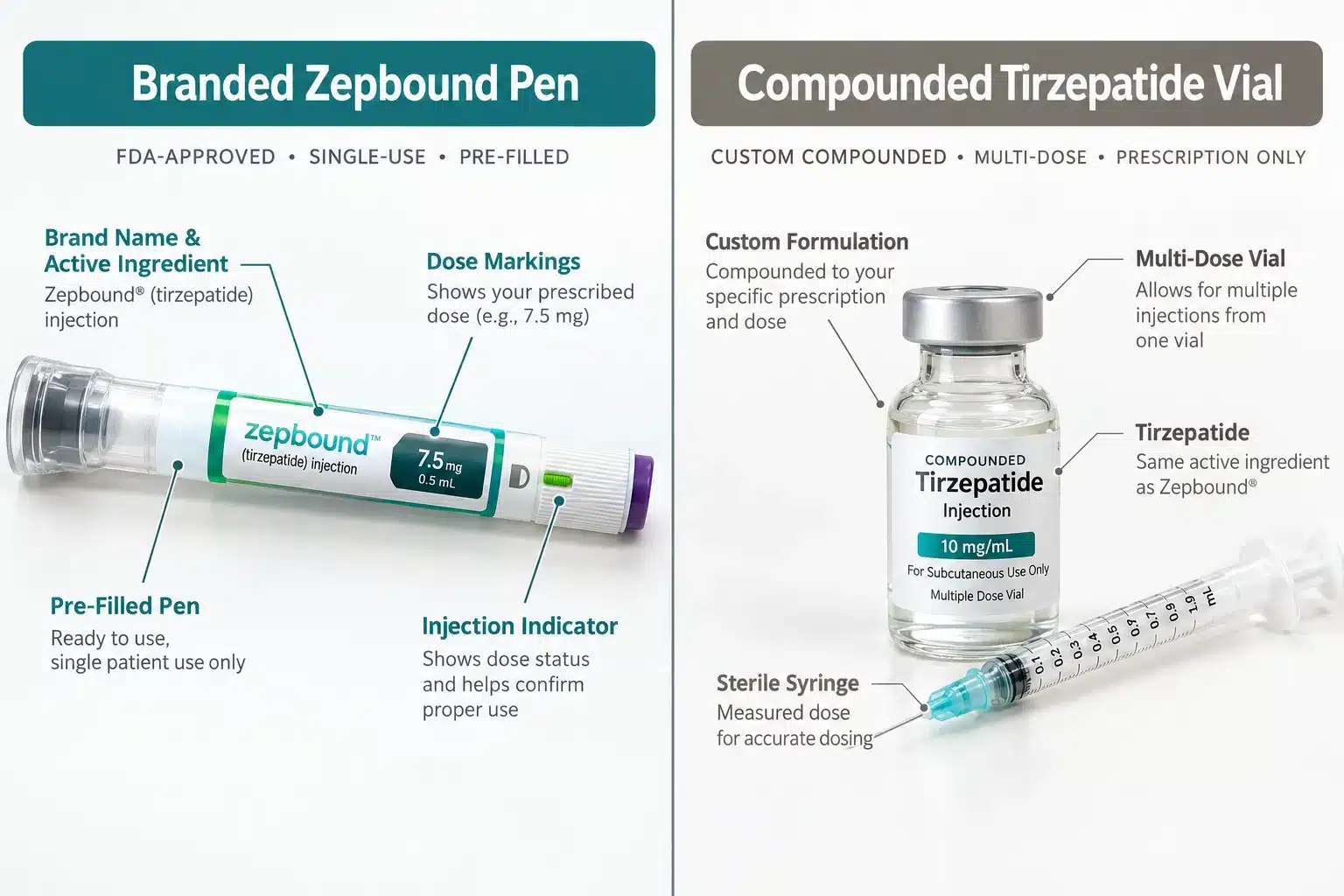
- If you’re prescribed compounded tirzepatide rather than branded Zepbound, be aware that compounded products don’t go through the same FDA review process as the brand-name drug [8].
- A KING 5 investigation reported serious adverse events tied to imitation GLP-1 products, including a case requiring a liver transplant, underscoring the importance of knowing exactly which formulation you’re receiving [8].
- Eli Lilly’s ongoing litigation against Mochi and its supplier centers on allegations about how compounded tirzepatide products were marketed, a case that was partially allowed to proceed by a federal judge in September 2026 [7].
Always ask your provider explicitly whether you’re being prescribed branded Zepbound or a compounded version, since the safety and regulatory profile differs meaningfully between the two.
FAQ
Can you get Zepbound through Mochi without a prior prescription?
Yes, Mochi can issue a new Zepbound prescription if its provider determines you meet FDA eligibility criteria during your virtual visit [3][5].
Is Mochi’s Zepbound the branded version or compounded?
Mochi lists FDA-approved branded Zepbound on its medication page, separate from its compounded tirzepatide product, so confirm which one you’re being prescribed [1][5].
How much is the total first month cost on Mochi for Zepbound?
Expect roughly $299 or more for medication plus a membership fee starting at $79 for one month, so your first month could run close to $378 or higher depending on dose [1][5].
Does Mochi accept insurance for Zepbound?
No, Mochi bills Zepbound as self-pay regardless of insurance, though some patients use their own insurance separately when filling at an outside pharmacy [1][3].
What states does Mochi operate in?
Mochi operates in all 50 U.S. states, offering virtual visits nationwide, though the specific drugs available (branded vs. compounded) can vary by state.
Can I switch from Ozempic to Zepbound through Mochi?
Yes, if your provider determines Zepbound is appropriate, they can prescribe it even if you were previously on Ozempic, after reviewing your history [3].
Is there a lawsuit affecting Mochi’s Zepbound or tirzepatide products?
Yes, Eli Lilly sued Mochi Health and its supplier over compounded tirzepatide marketing, and a federal judge allowed parts of that case to proceed in September 2026 [7].
How do I know if I qualify for Zepbound on Mochi?
You generally qualify with a BMI of 30+ or 27+ with a weight-related condition, confirmed through Mochi’s online health assessment and provider visit [3][5].
7 Best GLP-1 Providers Ranked: Accreditation, Flexibility & Support Compared (2026 Update)
32,000+ Patients Can't All Be Wrong: See the Top-Rated GLP-1 Providers: Compared on accreditation, plan flexibility, and patient support — updated for 2026.
BMI MD GLP-1 Microdosing Plan
- Specialized microdosing options (sublingual drops or low-dose injections)
- Ideal for maintaining weight or tapering off higher doses safely
- Fully bundled plan with no hidden monthly platform memberships
DirectMeds Weight Loss Solutions
- Sourced from accredited, state-licensed 503A compounding pharmacies
- No-frills high-volume savings passed directly to the patient
- Includes clinical consultation and cold-chain shipping updates
MEDVi Flat-Rate Telehealth
- Flat monthly rate holds steady even at maximum maintenance doses
- No dosage upcharges or graduation fee penalties
- Offers both injectable and advanced oral thin-film delivery options
Gala GLP-1 Care Program
- All-inclusive plan with no standalone membership costs
- Continuous text-based messaging access with state-licensed clinicians
- Temperature-controlled, cold-chain medication shipping included
Measured GLP-1 Metabolic Health
- Comprehensive metabolic health screening and expert intake analysis
- Predictable long-term budgeting with stable plan pricing
- High-end responsive dashboard with integrated diagnostic support
Refills GLP-1 (TryRefills Plan)
- Flat rate holds steady as titration scales up
- Includes clinical guides for active side-effect management
- Bundles in foundational nutritional strategies alongside medication
AltRx GLP-1 Transactional Reorders
- Zero recurring auto-billing — pay entirely on a transactional basis
- Rapid text-to-order format saves time for experienced patients
- Provides both injectable forms and fast-dissolving tablet variations
Conclusion
Getting Zepbound through Mochi comes down to three things: meeting FDA eligibility criteria, understanding that membership and medication are billed separately, and knowing whether you’re getting branded Zepbound or a compounded alternative. The $299-plus starting price can beat Eli Lilly’s full list price for uninsured patients, but it may not beat your own insurance copay if you’re covered. Given the active litigation and safety concerns around compounded tirzepatide products, ask your Mochi provider directly which formulation you’d receive before starting treatment. If you’re still comparing options, read our breakdown of Zepbound online access points and Zepbound reviews before making your decision, and always loop in a licensed healthcare provider on your specific medical history.
This article is for informational purposes only and is not medical advice. Talk to a licensed healthcare provider before starting or changing any medication.
References
- Zepbound. joinmochi.com.
- joinmochi.com.
- joinmochi.com.
- Medications. joinmochi.com.
- Faqs. joinmochi.com.
- Best Online Weight Loss Medication. forbes.com.
- Eli Lilly Lawsuit Against Weight Loss Drug Seller Gets Another Shave. courthousenews.com.
- 281 Dc98d90d Da6c 4316 Bea8 C7f0e0966f50. king5.com.