
zepbound reviews
Last updated: September 25, 2026
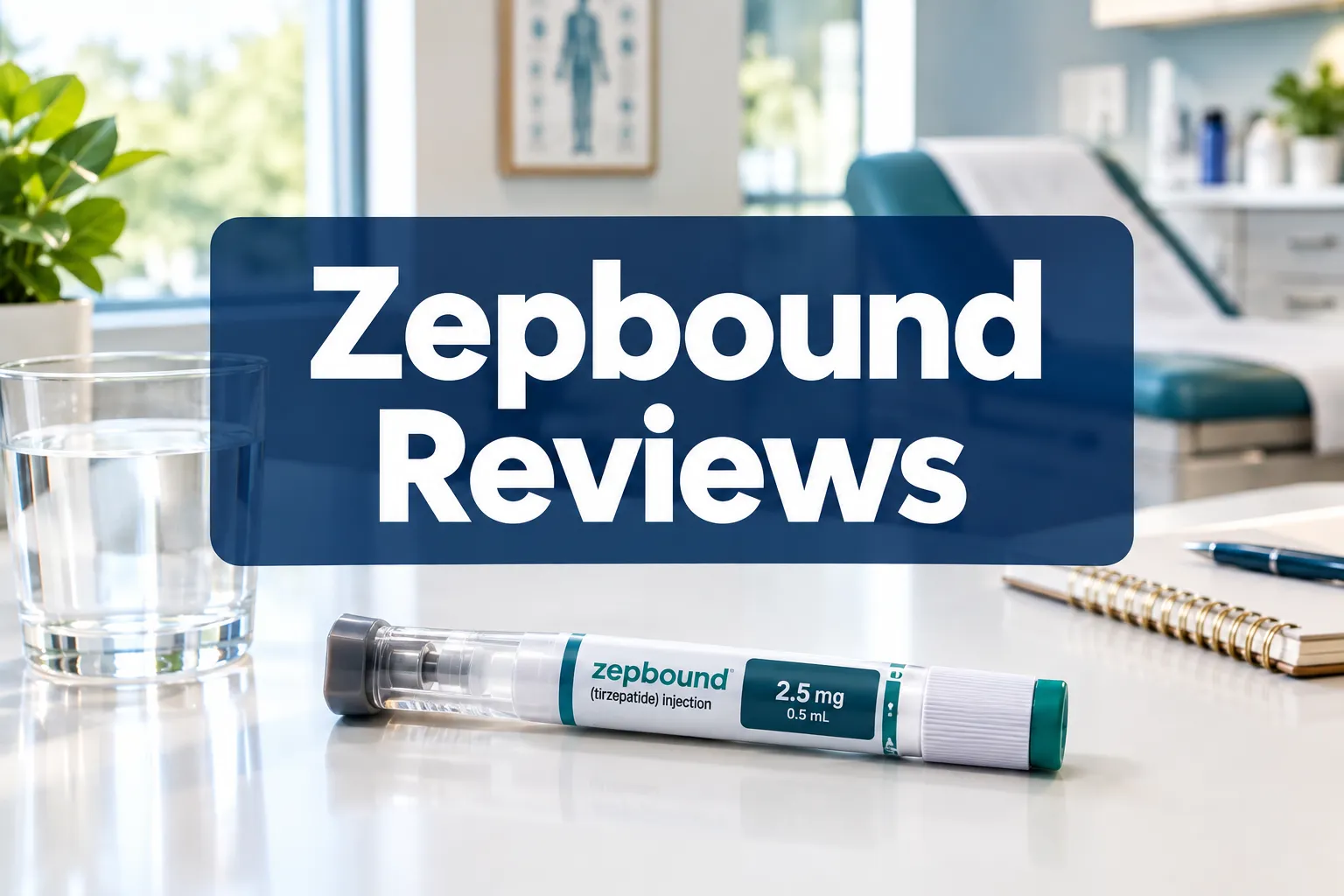
Quick Answer: Zepbound (tirzepatide) is an FDA-approved weekly injectable medication for chronic weight management that works on two appetite-regulating hormones simultaneously. In clinical trials, adults lost an average of 15-21% of their body weight over 72 weeks, making it one of the most effective prescription weight-loss medications currently available. Most Zepbound reviews from real patients are positive, though side effects like nausea and cost remain common concerns.
Key Takeaways
- Zepbound is the brand name for tirzepatide, a dual GIP and GLP-1 receptor agonist approved by the FDA in November 2023 for weight management in adults with obesity or overweight with at least one weight-related condition.
- Clinical trial data (SURMOUNT-1) showed average weight loss of up to 20.9% of body weight at the highest dose over 72 weeks, which is stronger than most competing medications.
- The most common side effects are gastrointestinal: nausea, diarrhea, vomiting, and constipation, especially during dose escalation.
- Without insurance, Zepbound can cost over $1,000 per month, but manufacturer savings cards and compounded tirzepatide options can significantly reduce out-of-pocket costs.
- Zepbound outperforms semaglutide (Wegovy/Ozempic) on average weight loss in head-to-head data, though individual results vary.
- It is not appropriate for people with a personal or family history of medullary thyroid carcinoma or Multiple Endocrine Neoplasia syndrome type 2.
- Most patients begin noticing appetite suppression within the first two weeks, but meaningful weight loss typically becomes visible after 8-12 weeks.
- Zepbound is available by prescription only and can be obtained through a doctor’s office or telehealth platforms.
What Is Zepbound and How Does It Work?
Zepbound is a prescription injectable medication containing tirzepatide, manufactured by Eli Lilly. The FDA approved it in November 2023 specifically for chronic weight management in adults with a BMI of 30 or higher, or a BMI of 27 or higher with at least one weight-related health condition such as type 2 diabetes, high blood pressure, or sleep apnea.
7 Best GLP-1 Providers Ranked: Accreditation, Flexibility & Support Compared (2026 Update)
32,000+ Patients Can't All Be Wrong: See the Top-Rated GLP-1 Providers. We compared the leading online GLP-1 providers based on program features, clinical support, convenience, and overall value.
BMI MD GLP-1 Microdosing Plan
- Specialized microdosing options, including sublingual drops and low-dose injections
- Designed for people interested in maintaining weight or gradually adjusting treatment
- Bundled program structure without a separate monthly platform membership
- Online access makes the process convenient from home

DirectMeds Weight Loss Solutions
- Online weight-loss program with a straightforward patient experience
- Compounded medication options through state-licensed compounding pharmacies
- Includes clinical consultation as part of the process
- Provides shipping updates to help patients track their orders
MEDVi Flat-Rate Telehealth
- Flat-rate telehealth approach designed for easier budgeting
- No dosage-based pricing increases within the advertised program structure
- Offers injectable and oral thin-film delivery options
- Includes medical screening and asynchronous provider consultations
Gala GLP-1 Care Program
- Text-based access to state-licensed clinicians
- Cold-chain medication shipping included in the program
- Month-to-month program structure
- Designed for people who value convenient ongoing support
Measured GLP-1 Metabolic Health
- Comprehensive metabolic health screening and intake analysis
- Designed around longer-term metabolic health management
- Responsive dashboard with integrated health tracking tools
- Useful option for patients who value a more data-focused experience
Refills GLP-1 (TryRefills Plan)
- Clinical guidance designed to help patients manage common treatment concerns
- Includes foundational nutritional strategies alongside medication
- Designed around predictable ongoing treatment
- No hidden startup or processing fees according to the program information provided
AltRx GLP-1 Transactional Reorders
- Transactional reorder model without recurring auto-billing
- Designed for patients who already understand their treatment routine
- Fast text-to-order process for convenient reorders
- Offers injectable and fast-dissolving tablet variations
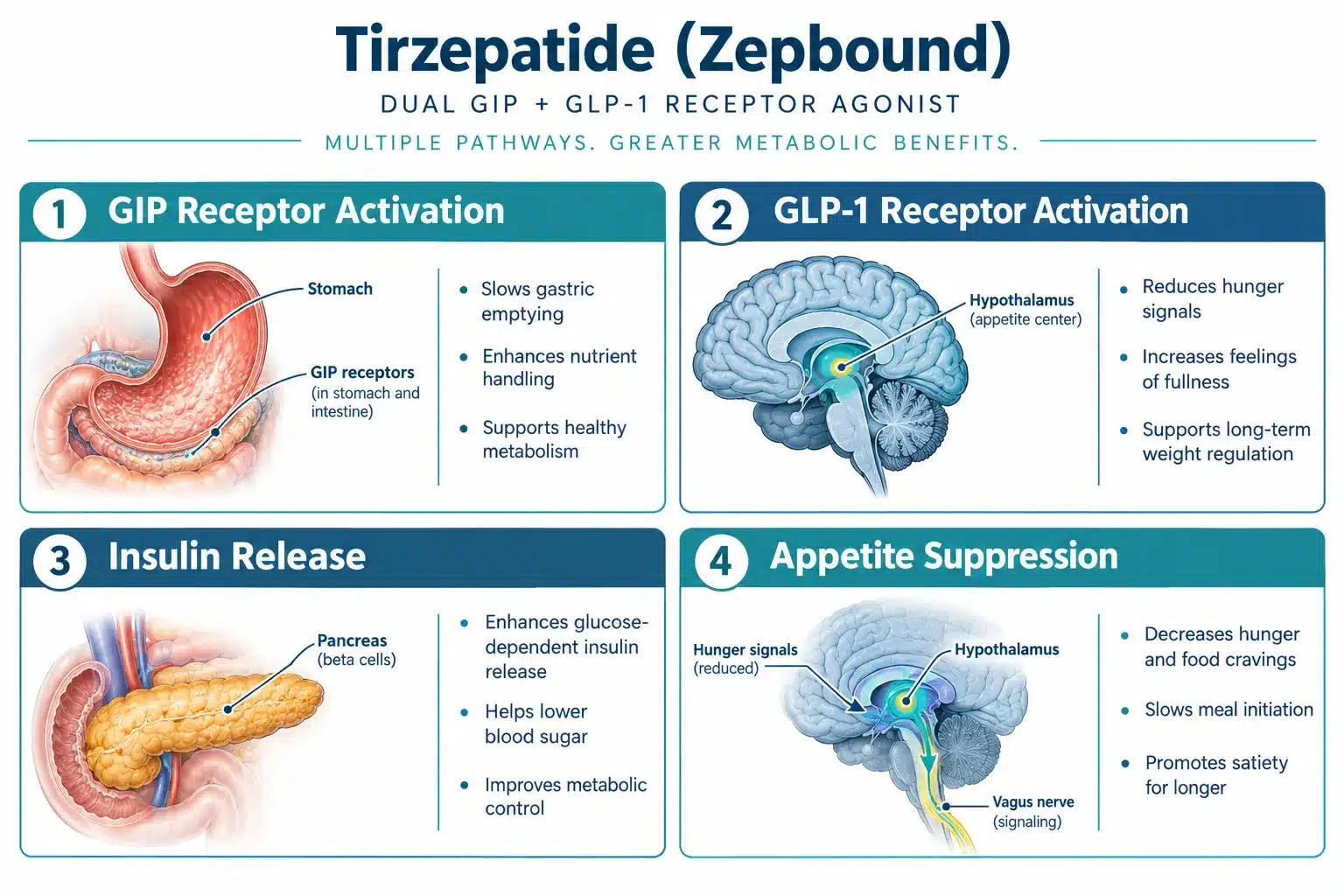
What makes Zepbound different from earlier weight-loss drugs is its dual mechanism. It activates two hormone receptors at once:
- GIP receptors (glucose-dependent insulinotropic polypeptide): These regulate fat storage and energy metabolism.
- GLP-1 receptors (glucagon-like peptide-1): These slow stomach emptying, reduce appetite signals in the brain, and improve insulin sensitivity.
By targeting both pathways simultaneously, tirzepatide produces stronger appetite suppression and metabolic changes than drugs that target only one receptor. You inject it once weekly under the skin of your abdomen, thigh, or upper arm. Doses start low (2.5 mg) and increase gradually over several months to reduce side effects, with a maximum dose of 15 mg per week.
The drug does not burn fat directly. Instead, it changes how hungry you feel, how quickly your stomach empties, and how your body processes blood sugar, which together make it much easier to eat less and lose weight consistently.
Zepbound vs Ozempic and Wegovy: What Is the Real Difference?
Zepbound and Wegovy/Ozempic are often compared because they are both injectable GLP-1 medications, but they are not the same drug. Zepbound (tirzepatide) activates both GIP and GLP-1 receptors, while semaglutide (Ozempic, Wegovy) activates only GLP-1 receptors.
For a deeper look at how semaglutide compares in real-world use, see these semaglutide reviews from real patients.
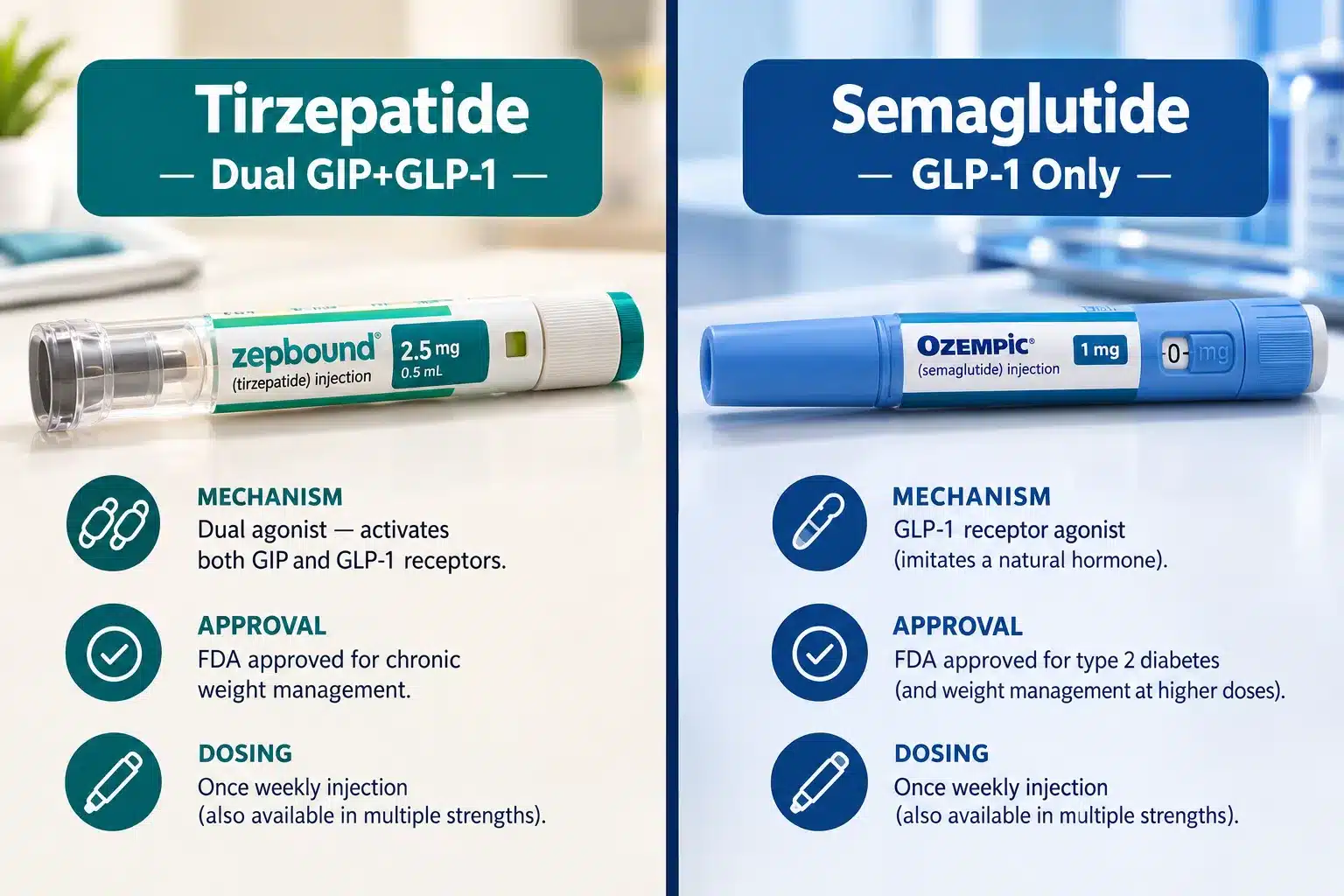
| Feature | Zepbound (Tirzepatide) | Wegovy (Semaglutide) |
|---|---|---|
| Drug class | Dual GIP + GLP-1 agonist | GLP-1 agonist only |
| Avg. weight loss (clinical trial) | 15-21% body weight | ~15% body weight |
| Dosing | Once weekly injection | Once weekly injection |
| FDA approval (weight loss) | November 2023 | June 2021 |
| Also approved for type 2 diabetes | Yes (as Mounjaro) | Yes (as Ozempic) |
| Best for | Higher weight loss goals, metabolic issues | Established track record, broader coverage |
In the SURMOUNT-1 trial published in the New England Journal of Medicine (2022), tirzepatide at 15 mg produced an average weight loss of 20.9% versus placebo. By comparison, the STEP 1 trial for semaglutide 2.4 mg showed an average of about 14.9% weight loss. That gap matters for patients who need significant weight reduction.
Choose Zepbound if you want the highest average weight loss from a currently approved injectable and your insurance covers it. Choose Wegovy/Ozempic if your insurer covers semaglutide but not tirzepatide, or if you have already responded well to semaglutide.
You can also compare the GLP-1 price per month for Wegovy, Zepbound, and newer oral options to see which fits your budget.
Zepbound Cost and Insurance Coverage
Without insurance, Zepbound costs approximately $1,059 to $1,086 per month for the auto-injector pens as of 2026, according to Eli Lilly’s published list price. However, most patients do not pay full list price.
Ways to reduce the cost:
- Eli Lilly’s savings card: Commercially insured patients may pay as little as $25 per month through Lilly’s savings program (income and eligibility restrictions apply).
- Zepbound vials: Eli Lilly introduced single-dose vials at a lower direct price through LillyDirect. For a detailed breakdown of the vial versus pen price difference, see this Zepbound vial vs pen price comparison.
- Compounded tirzepatide: During periods of shortage, compounding pharmacies have offered tirzepatide at significantly lower prices. See Medvi oral tirzepatide reviews for one compounding option.
- Insurance coverage: Medicare Part D covers Zepbound for weight loss as of 2026 under certain plans, and many commercial insurers cover it when prescribed for obesity with comorbidities.
For a full cost breakdown across GLP-1 medications, the tirzepatide cost review provides current pricing context.
Zepbound Side Effects: What to Expect
The most common Zepbound side effects are gastrointestinal and tend to be worst during dose escalation. They usually improve after the body adjusts to each new dose level.
Common side effects (reported in more than 5% of patients in clinical trials):
- Nausea
- Diarrhea
- Vomiting
- Constipation
- Abdominal pain or discomfort
- Injection site reactions (redness, bruising)
Less common but serious risks:
- Pancreatitis: Discontinue use and seek care if you experience severe, persistent abdominal pain.
- Gallbladder problems: Gallstones have been reported with rapid weight loss from GLP-1 drugs.
- Hypoglycemia: More likely if you are also taking insulin or sulfonylureas.
- Heart rate increase: A small increase in resting heart rate has been observed.
- Thyroid tumors: Seen in rodent studies; the human risk is unknown. Zepbound carries an FDA boxed warning for this reason.
Medical disclaimer: If you have a personal or family history of thyroid cancer, pancreatitis, or gallbladder disease, discuss these risks with your prescribing physician before starting Zepbound.
Zepbound Results: How Much Weight Loss Can You Expect?
Most patients lose between 15% and 21% of their starting body weight over 72 weeks at the maximum dose, based on the SURMOUNT-1 trial (New England Journal of Medicine, 2022). At a starting weight of 250 pounds, that translates to roughly 37 to 52 pounds.
Realistic timeline:
- Weeks 1-4: Appetite suppression begins; scale weight may drop 2-5 pounds.
- Months 2-3: More consistent weekly losses of 0.5-1.5 pounds per week.
- Months 6-12: Plateau management becomes important; most significant total loss occurs here.
- Beyond 12 months: Weight loss slows but can continue; maintenance dosing is often needed.
Results vary based on starting weight, diet quality, physical activity, and whether you reach the maximum dose. Patients who pair Zepbound with a calorie-conscious diet and regular movement consistently outperform those who rely on the medication alone.
For patient-reported outcomes on tirzepatide more broadly, the tirzepatide reviews by patients page covers a range of real experiences.
Zepbound Reviews: Real Patient Experiences
Real-world Zepbound reviews are largely positive, with most patients reporting meaningful appetite reduction and steady weight loss. The most consistent theme across forums, telehealth platforms, and patient communities is that the medication reduces “food noise”, the constant preoccupation with eating that many people with obesity describe.

What patients commonly report:
- Feeling full much faster than before
- Reduced cravings for high-calorie foods
- Steady weight loss of 1-2 pounds per week after the first month
- Nausea during the first few weeks of each new dose level
- Fatigue during the early adjustment period
One patient story that reflects a common experience: a 44-year-old woman who had tried multiple diets over 15 years started Zepbound at 5 mg after consulting her endocrinologist. By month three, she had lost 18 pounds and described the change as “the first time food stopped controlling my day.” By month nine at 10 mg, she had lost 41 pounds. She noted that nausea was manageable when she ate smaller portions and avoided greasy foods.
Negative reviews most often cite cost, injection anxiety, and frustration when weight loss stalls during dose escalation. A smaller group reports that the medication stopped working after several months, which is addressed in the next section.
Why Is Zepbound Not Working? Common Reasons
Zepbound stops producing results for some patients, and there are specific, identifiable reasons this happens. Understanding them can help you troubleshoot before assuming the medication has failed.
Most common reasons Zepbound plateaus or underperforms:
- Dose is too low: Many patients plateau at 5 mg or 7.5 mg. If you have not reached 10-15 mg, discuss escalation with your prescriber.
- Caloric compensation: The appetite suppression can mask how much you are eating. Some patients unconsciously eat more calorie-dense foods in smaller volumes.
- Insufficient protein intake: Low protein accelerates muscle loss during weight loss, which slows metabolism.
- Sleep and stress: Poor sleep and high cortisol directly counteract GLP-1 medications.
- Medication storage error: Tirzepatide must be refrigerated (36-46°F). Exposure to heat degrades the drug.
- Injection technique: Injecting into scar tissue or the same site repeatedly reduces absorption.
Common mistake: Skipping doses to save money. This disrupts the steady-state concentration the drug needs to work and often causes side effects to return when you restart.
Who Should Not Take Zepbound?
Zepbound is not appropriate for everyone. Your prescriber will screen for these contraindications before prescribing.
Do not take Zepbound if you have:
- Personal or family history of medullary thyroid carcinoma (MTC)
- Multiple Endocrine Neoplasia syndrome type 2 (MEN 2)
- A known allergy to tirzepatide or any ingredient in the formulation
- A history of severe gastrointestinal disease (e.g., gastroparesis)
Use with caution if you have:
- History of pancreatitis
- Gallbladder disease
- Diabetic retinopathy (rapid glucose improvement can worsen it temporarily)
- Kidney disease (dehydration from vomiting increases risk)
Pregnancy and breastfeeding: Zepbound is not recommended during pregnancy. Women of childbearing age should use contraception, as the drug may reduce the effectiveness of oral contraceptives during dose escalation.
Is Zepbound Safe Long Term?
Based on current evidence, Zepbound appears safe for long-term use in appropriate patients, but the longest available data extends to about 72-88 weeks from clinical trials. Long-term safety beyond two years has not yet been fully established in published studies as of 2026.
The SURMOUNT program trials did not identify new serious safety signals beyond those already listed in the prescribing information. Cardiovascular outcome data for tirzepatide in obesity (without diabetes) is still being gathered through ongoing trials.
What the evidence supports:
- Sustained weight loss with continued use
- Improvements in blood pressure, triglycerides, and blood sugar
- No evidence of organ toxicity in trials to date
What remains uncertain:
- Very long-term (5+ year) effects
- Effects of stopping and restarting multiple times
- Thyroid cancer risk in humans (only shown in rodents so far)
The honest answer: Zepbound is among the best-studied new weight-loss medications available, but it is still a relatively new drug. Monitoring with your doctor every 3-6 months is appropriate.
Where to Buy Zepbound Online
Zepbound requires a prescription and cannot be purchased over the counter. You can obtain it through:
- Your primary care doctor or endocrinologist: The most direct route.
- Telehealth platforms: Services like Mochi Health, Hims/Hers, and similar platforms can prescribe and ship Zepbound or compounded tirzepatide after a medical consultation. See the Mochi Health review for one option.
- LillyDirect: Eli Lilly’s direct pharmacy program ships Zepbound vials at a lower price point than retail pharmacies.
- Compounding pharmacies: During shortage periods, compounded tirzepatide has been widely available. Check the DirectMeds GLP-1 reviews for a telehealth-based compounding option.
Important: The FDA has warned against purchasing tirzepatide from unverified online sources. Counterfeit and improperly compounded versions have been reported. Always use a licensed U.S. pharmacy with a valid prescription.
Zepbound Injection: How to Use It Correctly
Zepbound is injected subcutaneously (under the skin) once per week. The auto-injector pen makes this straightforward, but technique matters for both comfort and effectiveness.
Step-by-step injection process:
- Remove the pen from the refrigerator 30 minutes before injecting to let it reach room temperature.
- Wash your hands thoroughly.
- Choose an injection site: abdomen (at least 2 inches from the navel), outer thigh, or upper arm.
- Clean the site with an alcohol swab and let it dry.
- Remove the pen cap, press firmly against the skin, and hold for at least 10 seconds after clicking.
- Rotate injection sites each week to prevent tissue buildup.
- Dispose of the used pen in a sharps container.
Do not inject into: muscle, veins, skin that is bruised, tender, or scarred.
Store unused pens in the refrigerator. They can be kept at room temperature (up to 86°F) for up to 21 days if needed.
Zepbound Alternatives for Weight Loss
If Zepbound is not accessible due to cost, insurance, or medical contraindications, several alternatives are worth discussing with your doctor.
Prescription alternatives:
- Wegovy (semaglutide 2.4 mg): The closest competitor, with slightly lower average weight loss but longer market history and broader insurance coverage.
- Saxenda (liraglutide): An older GLP-1 drug with daily injections; less effective but sometimes covered when newer drugs are not.
- Contrave (naltrexone/bupropion): An oral option with more modest weight loss results.
- Qsymia (phentermine/topiramate): Oral, effective for some patients, but not suitable for everyone.
Compounded options: Compounded semaglutide and tirzepatide have been widely used as lower-cost alternatives. For real patient stories on this route, see compounded semaglutide reviews.
Lifestyle-based programs: Structured meal programs like Nutrisystem can support weight loss for people who are not candidates for GLP-1 medications or who want to complement their medication with a structured plan.
Choose Zepbound if you want the highest average weight loss from a single FDA-approved injectable and cost is manageable. Choose an alternative if insurance covers a different drug, you cannot tolerate injections, or a contraindication applies.
Frequently Asked Questions About Zepbound
How long does Zepbound take to work?
Most patients notice reduced appetite within the first 1-2 weeks. Visible weight loss typically becomes consistent after 8-12 weeks. Maximum results are usually seen at 12-18 months with continued use.
Is Zepbound the same as Mounjaro?
Both contain tirzepatide, but Mounjaro is FDA-approved for type 2 diabetes management, while Zepbound is approved for chronic weight management. The drug is identical; the indication and packaging differ.
Can I take Zepbound if I have type 2 diabetes?
Yes. Tirzepatide is approved for type 2 diabetes as Mounjaro, and Zepbound is approved for weight management. Your doctor may prescribe either depending on your primary diagnosis and insurance coverage.
What happens if I stop taking Zepbound?
Most patients regain a significant portion of lost weight within 12 months of stopping, based on SURMOUNT extension data. Zepbound treats obesity as a chronic condition, and ongoing use is typically needed to maintain results.
Is Zepbound a scam or a legitimate medication?
Zepbound is an FDA-approved prescription medication manufactured by Eli Lilly, one of the world’s largest pharmaceutical companies. It is not a supplement or an unregulated product. The clinical evidence supporting its effectiveness is among the strongest for any weight-loss medication.
Can I take Zepbound with blood pressure medication?
Generally yes, but your doctor should monitor you, as weight loss itself can lower blood pressure and may require adjusting your antihypertensive dose over time.
Does Zepbound cause hair loss?
Some patients report temporary hair shedding (telogen effluvium) during rapid weight loss. This is typically related to the weight loss itself, not a direct drug effect, and usually resolves within a few months.
Is Zepbound covered by Medicare?
As of 2026, Medicare Part D covers Zepbound for weight management under the Inflation Reduction Act provisions that expanded obesity drug coverage. Coverage varies by plan, so confirm with your specific plan.
How do I know if I qualify for Zepbound?
You qualify if your BMI is 30 or higher, or 27 or higher with at least one weight-related condition (high blood pressure, type 2 diabetes, or sleep apnea). A prescribing physician makes the final determination.
What is the maximum dose of Zepbound?
The maximum approved dose is 15 mg once weekly. Most patients reach this dose after approximately 20 weeks of gradual escalation.
7 Best GLP-1 Providers Ranked: Accreditation, Flexibility & Support Compared (2026 Update)
32,000+ Patients Can't All Be Wrong: See the Top-Rated GLP-1 Providers: Compared on accreditation, plan flexibility, and patient support — updated for 2026.
BMI MD GLP-1 Microdosing Plan
- Specialized microdosing options (sublingual drops or low-dose injections)
- Ideal for maintaining weight or tapering off higher doses safely
- Fully bundled plan with no hidden monthly platform memberships
DirectMeds Weight Loss Solutions
- Sourced from accredited, state-licensed 503A compounding pharmacies
- No-frills high-volume savings passed directly to the patient
- Includes clinical consultation and cold-chain shipping updates
MEDVi Flat-Rate Telehealth
- Flat monthly rate holds steady even at maximum maintenance doses
- No dosage upcharges or graduation fee penalties
- Offers both injectable and advanced oral thin-film delivery options
Gala GLP-1 Care Program
- All-inclusive plan with no standalone membership costs
- Continuous text-based messaging access with state-licensed clinicians
- Temperature-controlled, cold-chain medication shipping included
Measured GLP-1 Metabolic Health
- Comprehensive metabolic health screening and expert intake analysis
- Predictable long-term budgeting with stable plan pricing
- High-end responsive dashboard with integrated diagnostic support
Refills GLP-1 (TryRefills Plan)
- Flat rate holds steady as titration scales up
- Includes clinical guides for active side-effect management
- Bundles in foundational nutritional strategies alongside medication
AltRx GLP-1 Transactional Reorders
- Zero recurring auto-billing — pay entirely on a transactional basis
- Rapid text-to-order format saves time for experienced patients
- Provides both injectable forms and fast-dissolving tablet variations
Conclusion: Is Zepbound Worth It?
Zepbound stands out as the most effective FDA-approved injectable weight-loss medication currently available, with clinical trial data showing average weight loss of 15-21% of body weight over 72 weeks. Real-world Zepbound reviews from patients largely confirm those results, with meaningful appetite suppression and steady weight loss being the most consistently reported benefits.
Consider Zepbound if:
- You have a BMI of 30 or higher, or 27 or higher with a weight-related condition
- You have not achieved sufficient results from diet and exercise alone
- Your insurance covers it or you can access the savings card or vial program
- You are comfortable with weekly self-injection
Skip it or explore alternatives if:
- You have a personal or family history of medullary thyroid carcinoma or MEN 2
- Cost is prohibitive and no savings programs apply
- You prefer an oral medication
Your next steps:
- Schedule an appointment with your primary care doctor or a telehealth provider to discuss whether Zepbound is appropriate for you.
- Check your insurance formulary and ask about Eli Lilly’s savings card.
- Review the vial option through LillyDirect if pen pricing is out of reach.
- Set realistic expectations: Zepbound works best when paired with dietary changes and consistent physical activity.
Zepbound is not a shortcut, but for many adults who have struggled with weight for years, it is the most effective medical tool available in 2026.
References
- Jastreboff, A. M., et al. “Tirzepatide Once Weekly for the Treatment of Obesity.” New England Journal of Medicine, 2022. https://www.nejm.org/doi/full/10.1056/NEJMoa2206038
- U.S. Food and Drug Administration. “FDA Approves New Medication for Chronic Weight Management.” FDA.gov, 2023. https://www.fda.gov/news-events/press-announcements/fda-approves-new-medication-chronic-weight-management
- Eli Lilly and Company. “Zepbound (tirzepatide) Prescribing Information.” LillyMedical.com, 2023.
- Wilding, J. P. H., et al. “Once-Weekly Semaglutide in Adults with Overweight or Obesity.” New England Journal of Medicine, 2021. https://www.nejm.org/doi/full/10.1056/NEJMoa2032183


