
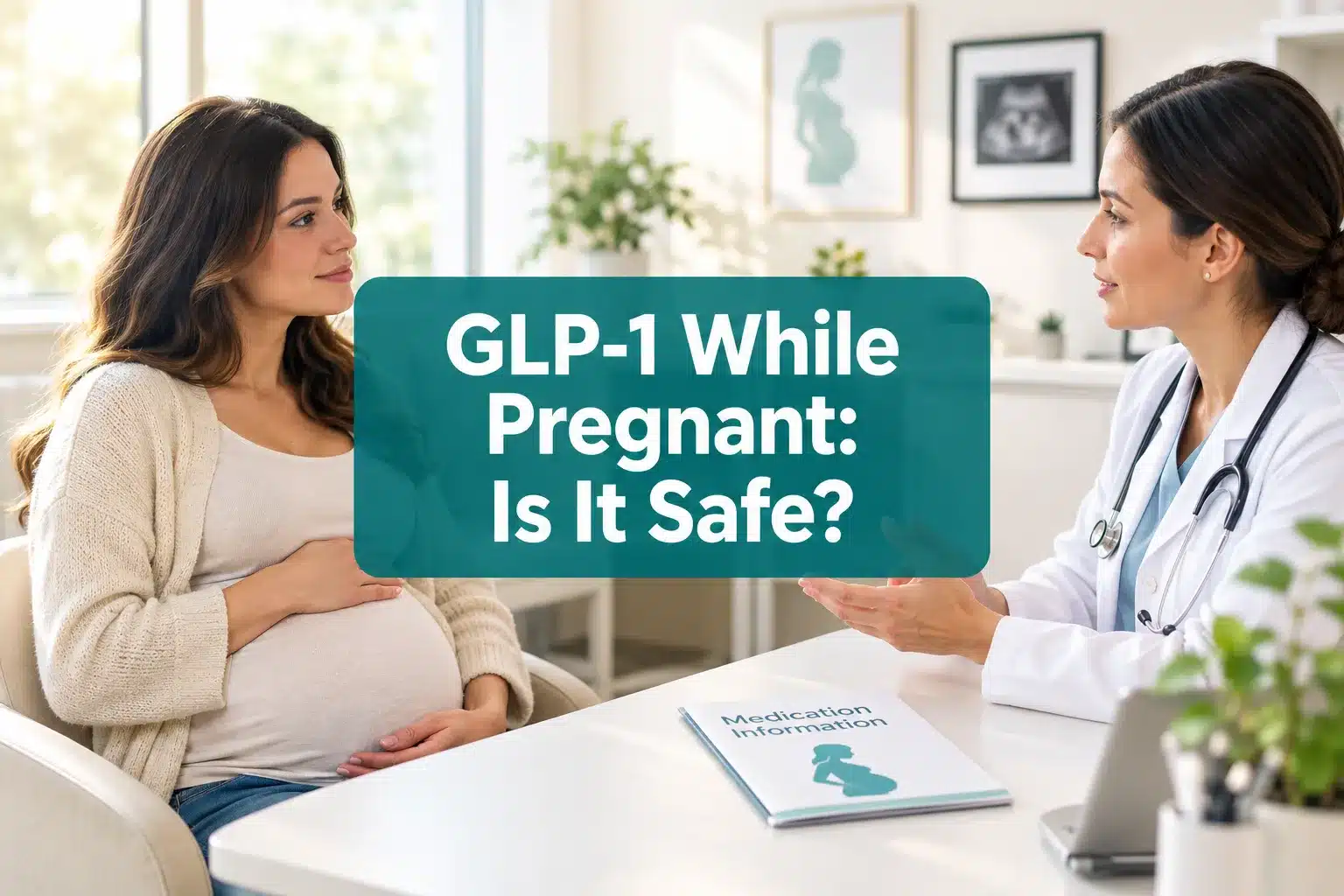
can you take glp 1 while pregnant

Last updated: October 4, 2026
Quick Answer
No, you should not take GLP-1 medications while pregnant. Current regulatory guidance from the FDA, EMA, and TGA states that GLP-1 receptor agonists should be discontinued as soon as pregnancy is recognized, and they should not be deliberately used during pregnancy. Animal studies have shown potential fetal harm, and there are no adequate human clinical trials to establish safety. [8][9]
Key Takeaways
- GLP-1 receptor agonists, including semaglutide (Ozempic, Wegovy) and tirzepatide (Mounjaro, Zepbound), are not approved for use during pregnancy by any major regulatory agency.
- The FDA’s prescribing label for semaglutide warns of potential fetal harm and instructs that the drug be stopped when pregnancy is recognized. [8]
- Animal studies on GLP-1 drugs showed fetal abnormalities at doses comparable to human therapeutic doses, raising serious safety concerns.
- Women planning to conceive should stop semaglutide at least two months before trying, due to its long half-life.
- GLP-1 medications may increase fertility indirectly by improving insulin sensitivity and promoting weight loss, so unintended pregnancy is a real risk while on these drugs.
- If you become pregnant while taking a GLP-1 medication, stop immediately and contact your OB-GYN or prescribing physician.
- GLP-1 while breastfeeding is also not recommended, as it is unknown whether these drugs pass into breast milk in meaningful amounts.
- Safe, medically supervised weight management during pregnancy focuses on diet quality, appropriate weight gain targets, and physical activity rather than pharmacologic intervention.
- If you are postpartum and considering GLP-1 postpartum weight loss, discuss timing carefully with your doctor, especially if breastfeeding.
What Is GLP-1 and How Does It Work?
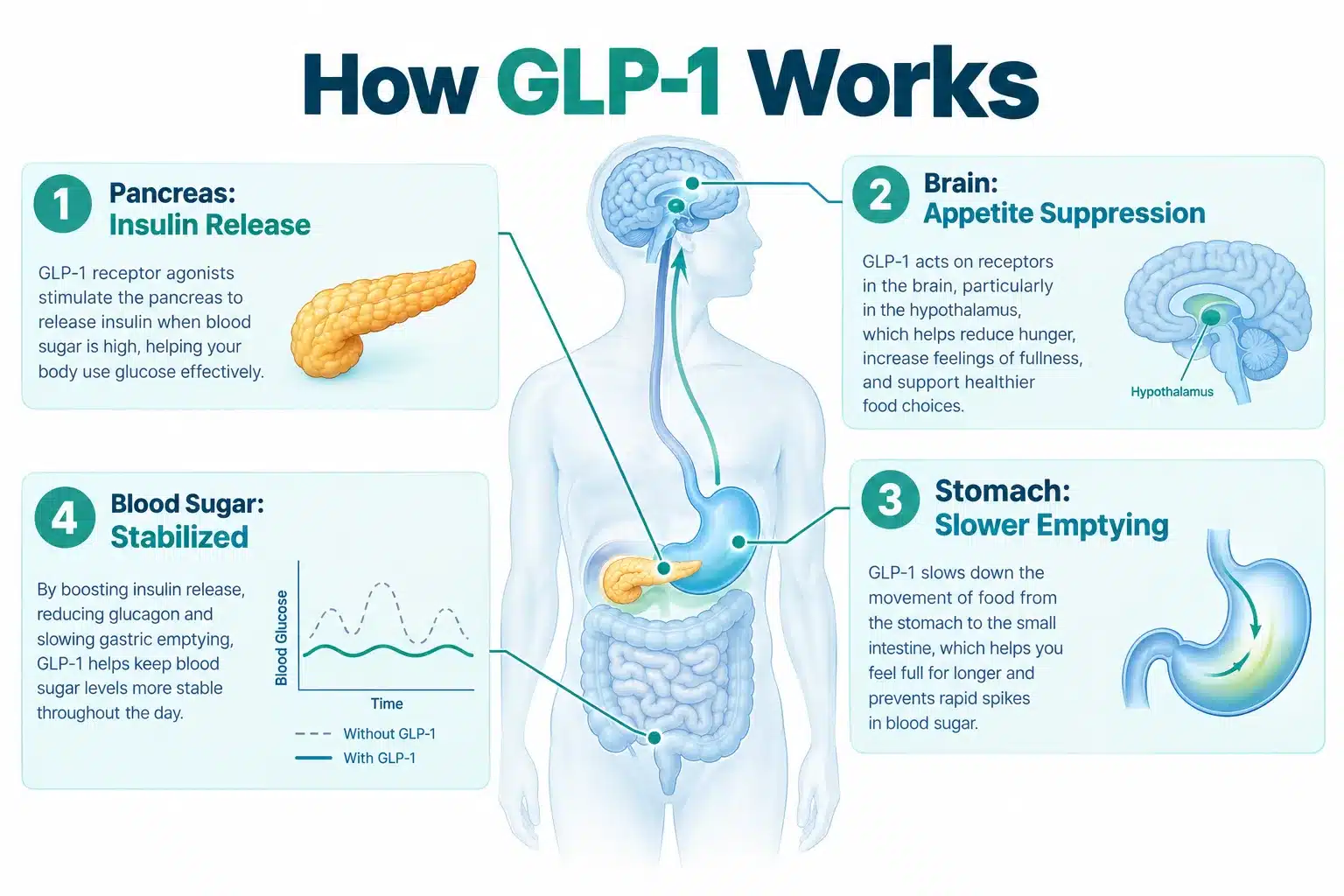
GLP-1 (glucagon-like peptide-1) is a hormone your gut naturally releases after eating. GLP-1 receptor agonist medications mimic this hormone to reduce appetite, slow stomach emptying, stimulate insulin release, and stabilize blood sugar.
7 Best GLP-1 Providers Ranked: Accreditation, Flexibility & Support Compared (2026 Update)
32,000+ Patients Can't All Be Wrong: See the Top-Rated GLP-1 Providers. We compared the leading online GLP-1 providers based on program features, clinical support, convenience, and overall value.
BMI MD GLP-1 Microdosing Plan
- Specialized microdosing options, including sublingual drops and low-dose injections
- Designed for people interested in maintaining weight or gradually adjusting treatment
- Bundled program structure without a separate monthly platform membership
- Online access makes the process convenient from home

DirectMeds Weight Loss Solutions
- Online weight-loss program with a straightforward patient experience
- Compounded medication options through state-licensed compounding pharmacies
- Includes clinical consultation as part of the process
- Provides shipping updates to help patients track their orders
MEDVi Flat-Rate Telehealth
- Flat-rate telehealth approach designed for easier budgeting
- No dosage-based pricing increases within the advertised program structure
- Offers injectable and oral thin-film delivery options
- Includes medical screening and asynchronous provider consultations
Gala GLP-1 Care Program
- Text-based access to state-licensed clinicians
- Cold-chain medication shipping included in the program
- Month-to-month program structure
- Designed for people who value convenient ongoing support
Measured GLP-1 Metabolic Health
- Comprehensive metabolic health screening and intake analysis
- Designed around longer-term metabolic health management
- Responsive dashboard with integrated health tracking tools
- Useful option for patients who value a more data-focused experience
Refills GLP-1 (TryRefills Plan)
- Clinical guidance designed to help patients manage common treatment concerns
- Includes foundational nutritional strategies alongside medication
- Designed around predictable ongoing treatment
- No hidden startup or processing fees according to the program information provided
AltRx GLP-1 Transactional Reorders
- Transactional reorder model without recurring auto-billing
- Designed for patients who already understand their treatment routine
- Fast text-to-order process for convenient reorders
- Offers injectable and fast-dissolving tablet variations
Drugs in this class include:
- Semaglutide (Ozempic for type 2 diabetes, Wegovy for weight loss)
- Tirzepatide (Mounjaro for type 2 diabetes, Zepbound for weight loss), technically a dual GIP/GLP-1 agonist
- Liraglutide (Victoza, Saxenda)
- Dulaglutide (Trulicity)
- Exenatide (Byetta, Bydureon)
These medications work primarily in the brain, pancreas, and gastrointestinal tract. They are highly effective for weight loss and blood sugar management in non-pregnant adults. For a detailed breakdown of how these drugs compare for weight loss outcomes, see our guide on which GLP-1 medication works best for weight loss.
The key issue with pregnancy is that GLP-1 receptors are also present in fetal tissue, including the developing pancreas and brain. This means the drug does not simply stay in the mother’s system, it has the biological potential to reach and affect the fetus. [6]
Can You Take GLP-1 While Pregnant? What the Evidence Says
The direct answer is no. No GLP-1 receptor agonist is approved, licensed, or recommended for use during pregnancy. This applies to semaglutide, tirzepatide, liraglutide, and all other drugs in this class. [5]
The evidence base for this position comes from several directions:
Animal studies showed that GLP-1 receptor agonists caused fetal growth restriction, skeletal abnormalities, and increased fetal mortality when administered at doses similar to human therapeutic levels. These findings were seen in multiple species, which is a significant red flag in pharmacological safety assessment. [8]
Human data is limited to observational studies and case reports, not controlled trials. Conducting randomized controlled trials on pregnant women with experimental medications is ethically restricted, so the evidence gap is unlikely to close quickly. [6]
Regulatory consensus is consistent across the FDA (United States), EMA (Europe), and TGA (Australia): GLP-1 drugs carry potential fetal risk, and pregnancy is an indication to stop the medication. [9][10]
One clinical review of obesity management in pregnancy states plainly that GLP-1 receptor agonists “should not be deliberately used during pregnancy.” [5] Another detailed review of incretin agonists in pregnancy reiterates that these drugs are currently contraindicated pending more robust human safety data. [3]
What Happens If You Take GLP-1 While Pregnant?
If you take a GLP-1 medication during early pregnancy, the risk depends on timing, dose, and duration of exposure. Accidental first-trimester exposure is a common concern because many women do not know they are pregnant for the first four to eight weeks.

Here is what the current evidence suggests:
- First-trimester exposure carries the highest theoretical risk because this is when organ development occurs. However, human data on outcomes from accidental first-trimester GLP-1 exposure are still very limited. [7]
- Nausea and vomiting caused by GLP-1 medications could worsen pregnancy-related morning sickness, potentially affecting nutrition and hydration.
- Caloric restriction from appetite suppression could interfere with the nutritional demands of fetal development.
- Fetal growth effects observed in animal studies have not been definitively confirmed in humans, but the risk cannot be ruled out. [6]
If you discover you are pregnant while taking a GLP-1 medication, stop the drug immediately and contact your prescribing physician and OB-GYN. Do not wait for your next scheduled appointment. Reporting your exposure to a pregnancy registry (such as those maintained by drug manufacturers) can also help build the evidence base for future guidance.
GLP-1 Drugs and Pregnancy Risk: FDA Category and Regulatory Status
The FDA no longer uses the old A/B/C/D/X pregnancy category system, but the prescribing information for GLP-1 drugs communicates risk clearly. The Wegovy (semaglutide) label states that the drug “may cause fetal harm” and that treatment should be discontinued when pregnancy is recognized. [8]
Key regulatory positions as of 2026:
| Drug | Regulatory Guidance on Pregnancy |
|---|---|
| Semaglutide (Ozempic/Wegovy) | Discontinue on pregnancy recognition; may cause fetal harm [8] |
| Tirzepatide (Mounjaro/Zepbound) | Not for use in pregnancy; use effective contraception [9] |
| Liraglutide (Saxenda/Victoza) | Not recommended in pregnancy; limited human data [6] |
| Dulaglutide (Trulicity) | Avoid in pregnancy; animal data shows fetal risk [6] |
The European Medicines Agency guidance, summarized in a large Danish study, states that GLP-1 receptor agonists are not approved for use during pregnancy and that contraception is strongly recommended during treatment and for at least two months after stopping. [10]
The Australian TGA’s safety update on tirzepatide specifically advises that individuals of childbearing potential should use effective contraception while on treatment. [9]
Does GLP-1 Affect Fertility or Conception?
GLP-1 medications do not directly block ovulation or conception, but they can indirectly increase fertility, which is an important point many women on these drugs miss.
Weight loss improves hormonal balance, particularly in women with polycystic ovary syndrome (PCOS), where insulin resistance disrupts the menstrual cycle. As GLP-1 medications reduce body weight and improve insulin sensitivity, ovulation can resume in women who previously had irregular or absent cycles. [4]
This means:
- Women who assumed they were infertile due to obesity or PCOS may become fertile while on GLP-1 treatment.
- Contraceptive needs may increase once GLP-1 therapy begins, even if a woman previously did not need reliable contraception.
- Oral contraceptive absorption may be affected by GLP-1 drugs that slow gastric emptying, potentially reducing the effectiveness of the pill. [4]
The NHS Specialist Pharmacy Service explicitly notes this interaction and advises women on GLP-1 medications to discuss contraceptive options with their doctor, particularly if they use oral contraceptives. [4]
Should You Stop GLP-1 Before Trying to Conceive?
Yes, and you should stop well before you begin trying. The exact washout period depends on which GLP-1 drug you are taking, because half-lives vary significantly across the class.
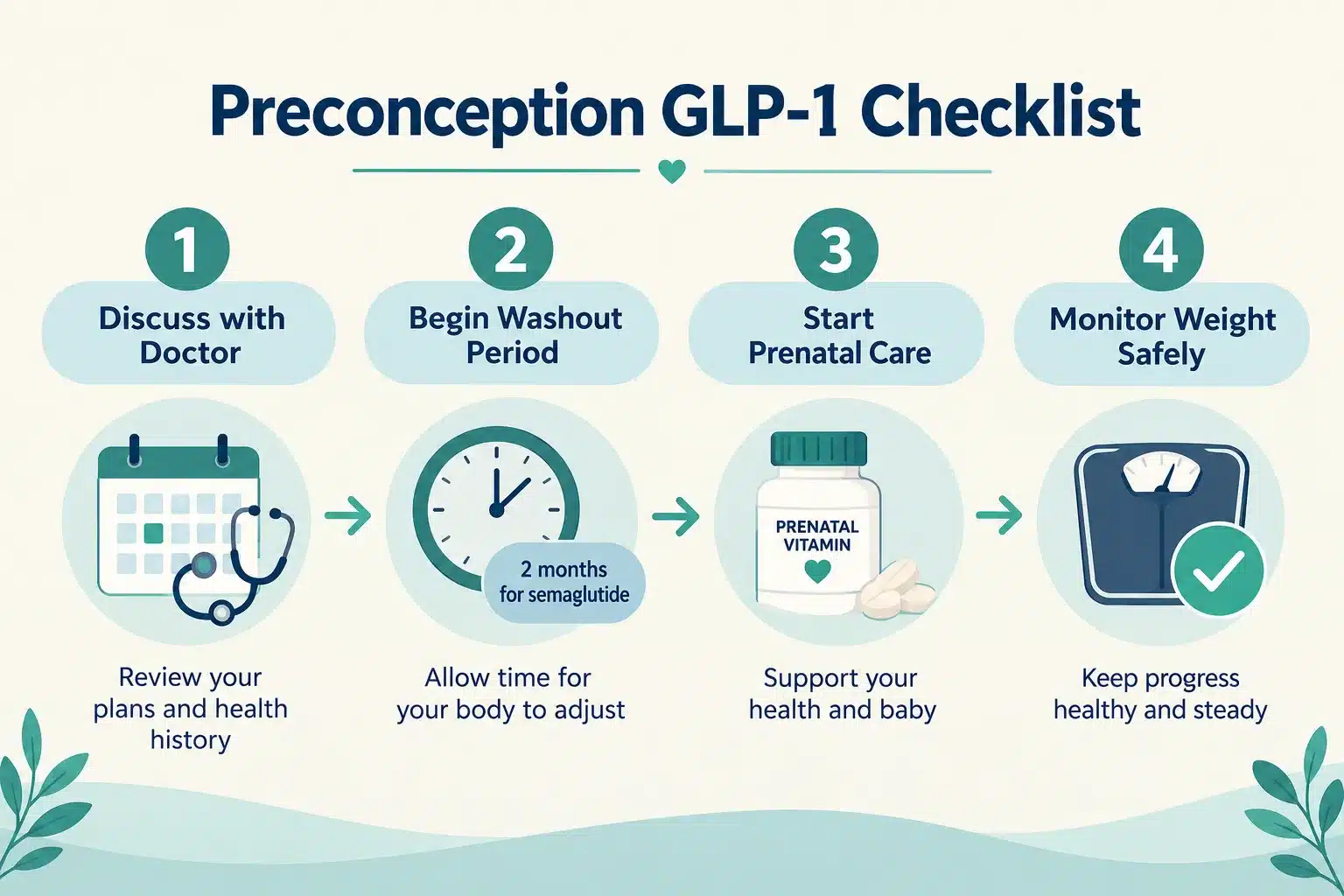
Semaglutide has a half-life of approximately one week, meaning it takes roughly five to seven weeks to clear from the body. NICE guidance in the UK specifies that semaglutide should be stopped at least two months before a planned pregnancy.
Tirzepatide has a similar half-life and carries the same general recommendation for a washout period before conception. [9]
Liraglutide has a shorter half-life (approximately 13 hours), so the washout period is shorter, but clinical guidance still recommends stopping before conception. [6]
A 2025 preconception planning review notes that pharmacologic guidance typically uses at least five half-lives to minimize fetal exposure, and in practice many clinicians adopt a four-to-six-week washout before conception for GLP-1 receptor agonists. [1]
Practical checklist before trying to conceive:
- Tell your prescribing doctor you are planning a pregnancy.
- Discuss the appropriate washout period for your specific medication.
- Switch to a non-pharmacologic weight management plan during the preconception period.
- Begin prenatal vitamins, including folic acid, at least one month before trying.
- Confirm your contraceptive method during the washout period to avoid accidental conception before the drug has cleared.
- Schedule a preconception appointment with your OB-GYN.
For context on how GLP-1 medications are priced and structured if you plan to resume after pregnancy, our GLP-1 price per month comparison covers current options including Wegovy and Zepbound.
How Long Before Pregnancy Should You Stop GLP-1?
The minimum recommendation for semaglutide is two months before a planned pregnancy, based on NICE prescribing guidance. For tirzepatide, the TGA advises stopping treatment and using effective contraception, with the washout period reflecting the drug’s half-life. [9]
In practical terms:
- Semaglutide (weekly injection): Stop at least 8 weeks before trying to conceive.
- Tirzepatide (weekly injection): Stop at least 4-8 weeks before trying to conceive; follow your doctor’s specific advice.
- Liraglutide (daily injection): A shorter washout is needed, but stopping at least 2-4 weeks before is still recommended.
- Oral semaglutide (Rybelsus): Follow the same guidance as injectable semaglutide given the same active compound.
Do not self-manage this transition. Work with both your prescribing physician and your OB-GYN to plan the timing, manage weight during the washout period, and ensure you are nutritionally prepared for pregnancy.
GLP-1 Alternatives for Weight Management During Pregnancy
Safe weight management during pregnancy does not involve pharmacologic weight loss drugs. The goal during pregnancy shifts from weight loss to appropriate, controlled weight gain based on pre-pregnancy BMI.
Evidence-based alternatives for weight management during pregnancy include:
- Medical nutrition therapy with a registered dietitian who specializes in prenatal care
- Supervised physical activity such as walking, swimming, and prenatal yoga, approved by your OB-GYN
- Gestational diabetes management through diet and, when necessary, insulin or metformin (under medical supervision)
- Behavioral counseling for emotional eating and food relationships
- Monitoring weight gain targets set by your care team based on your pre-pregnancy BMI
The Institute of Medicine provides weight gain guidelines during pregnancy by pre-pregnancy BMI category, and staying within those ranges is the primary goal, not weight loss.
If you were using GLP-1 medications for type 2 diabetes management, your doctor will likely transition you to insulin during pregnancy, as insulin is the most studied and safest pharmacologic option for blood sugar control in pregnant women. [5]
Can You Use GLP-1 While Breastfeeding?
GLP-1 while breastfeeding is also not recommended. The core issue is that it is currently unknown whether semaglutide, tirzepatide, or other GLP-1 drugs pass into breast milk in clinically significant amounts, and whether they would affect a nursing infant.
Key points on GLP-1 medications while breastfeeding:
- No adequate human studies have evaluated GLP-1 breastfeeding safety in nursing mothers or infants. [6]
- Animal studies have shown that some GLP-1 drugs are present in the milk of lactating animals, which raises concern for human breastfeeding as well.
- Caloric restriction from GLP-1-induced appetite suppression could reduce milk supply, which is a nutritional concern for the infant.
- Can you take semaglutide while breastfeeding? Current guidance says no. The prescribing information advises against use during breastfeeding due to the unknown risk to the infant.
- Can you take tirzepatide while breastfeeding? Same answer: not recommended due to insufficient safety data. [9]
For women focused on GLP-1 postpartum weight loss, the general recommendation is to wait until breastfeeding has ended before restarting GLP-1 therapy, and to discuss timing with your doctor. Most clinicians suggest waiting until the infant is fully weaned and your body has stabilized before resuming these medications.
Which GLP-1 Drugs Are Safest in Pregnancy?
None of them are considered safe or approved for use in pregnancy. There is no GLP-1 drug that has been studied in pregnant women to a degree that would support a safety claim.
If you are comparing drugs in this class for other reasons and plan to return to GLP-1 therapy after pregnancy and breastfeeding, our tirzepatide patient reviews and compounded GLP-1 and the FDA shortage list can help you plan for that future step. You may also want to review cheapest online GLP-1 providers compared when you are ready to restart treatment affordably.
FAQ
Q: I just found out I’m pregnant and I’ve been taking Ozempic. What should I do?
Stop taking Ozempic immediately and call your OB-GYN and prescribing doctor the same day. Accidental first-trimester exposure does happen, and your doctor can assess your specific risk and monitor your pregnancy accordingly.
Q: Can GLP-1 medications cause a miscarriage?
Animal studies have shown increased fetal loss at therapeutic doses, but there is no confirmed causal link in humans. The risk cannot be ruled out, which is why these drugs are not recommended in pregnancy. [6]
Q: Will stopping GLP-1 cause me to regain weight before pregnancy?
Some weight regain is common after stopping GLP-1 medications. Work with a dietitian and your care team to maintain your weight through diet and exercise during the preconception and pregnancy period.
Q: Can GLP-1 drugs affect a pregnancy test result?
No. GLP-1 medications do not interfere with the hormone (hCG) that pregnancy tests detect.
Q: Is metformin safer than GLP-1 drugs during pregnancy?
Metformin has a much longer safety record in pregnancy, particularly for gestational diabetes and PCOS management, though it is not without its own considerations. Your doctor can advise on the best option for your specific situation.
Q: How soon after delivery can I restart GLP-1 therapy?
If you are not breastfeeding, discuss restarting with your doctor after your postpartum checkup, typically around six weeks after delivery. If you are breastfeeding, most clinicians recommend waiting until you have fully weaned your infant.
Q: Does GLP-1 treatment affect the chances of getting pregnant?
GLP-1 therapy can indirectly improve fertility, particularly in women with PCOS or obesity-related hormonal disruption, by promoting weight loss and improving insulin sensitivity. This means unintended pregnancy is a real possibility while on these drugs. [4]
Q: Are compounded GLP-1 medications any different in terms of pregnancy risk?
No. Compounded versions of semaglutide or tirzepatide carry the same active ingredients and the same pregnancy-related risks. The contraindication applies regardless of whether the drug is brand-name or compounded. For more on compounded options, see is compounded GLP-1 as effective as brand name.
Q: My doctor prescribed GLP-1 for gestational diabetes. Is that appropriate?
No currently approved GLP-1 drug is indicated for gestational diabetes management. Insulin remains the standard pharmacologic treatment for gestational diabetes. If you have been prescribed a GLP-1 drug for this purpose, seek a second opinion.
Q: Can I take GLP-1 while breastfeeding if my doctor says it’s okay?
Current evidence does not support GLP-1 breastfeeding safety, and major regulatory agencies advise against it. If your doctor suggests otherwise, ask them to walk you through the specific evidence they are relying on, and consider consulting a lactation medicine specialist.
7 Best GLP-1 Providers Ranked: Accreditation, Flexibility & Support Compared (2026 Update)
32,000+ Patients Can't All Be Wrong: See the Top-Rated GLP-1 Providers: Compared on accreditation, plan flexibility, and patient support — updated for 2026.
BMI MD GLP-1 Microdosing Plan
- Specialized microdosing options (sublingual drops or low-dose injections)
- Ideal for maintaining weight or tapering off higher doses safely
- Fully bundled plan with no hidden monthly platform memberships
DirectMeds Weight Loss Solutions
- Sourced from accredited, state-licensed 503A compounding pharmacies
- No-frills high-volume savings passed directly to the patient
- Includes clinical consultation and cold-chain shipping updates
MEDVi Flat-Rate Telehealth
- Flat monthly rate holds steady even at maximum maintenance doses
- No dosage upcharges or graduation fee penalties
- Offers both injectable and advanced oral thin-film delivery options
Gala GLP-1 Care Program
- All-inclusive plan with no standalone membership costs
- Continuous text-based messaging access with state-licensed clinicians
- Temperature-controlled, cold-chain medication shipping included
Measured GLP-1 Metabolic Health
- Comprehensive metabolic health screening and expert intake analysis
- Predictable long-term budgeting with stable plan pricing
- High-end responsive dashboard with integrated diagnostic support
Refills GLP-1 (TryRefills Plan)
- Flat rate holds steady as titration scales up
- Includes clinical guides for active side-effect management
- Bundles in foundational nutritional strategies alongside medication
AltRx GLP-1 Transactional Reorders
- Zero recurring auto-billing — pay entirely on a transactional basis
- Rapid text-to-order format saves time for experienced patients
- Provides both injectable forms and fast-dissolving tablet variations
Conclusion
The answer to whether you can take GLP-1 while pregnant is clear and consistent across every major health authority: no. GLP-1 receptor agonists, including semaglutide and tirzepatide, carry potential fetal risks based on animal data, have no adequate human safety trials in pregnancy, and are explicitly flagged in FDA, EMA, and TGA prescribing guidance as drugs to stop when pregnancy is recognized.
Here are the most important steps to take right now:
- If you are pregnant and currently taking a GLP-1 medication, stop immediately and call your doctor today.
- If you are planning a pregnancy, speak with your prescribing physician about the correct washout period for your specific drug. For semaglutide, that is at least two months before trying to conceive.
- If you are breastfeeding, GLP-1 medications are not recommended until you have fully weaned your infant.
- If you are considering GLP-1 therapy for postpartum weight loss, discuss timing carefully with your OB-GYN once breastfeeding has ended.
- Use reliable contraception while on GLP-1 therapy, especially if you have PCOS or were previously told you had low fertility, as these medications can restore ovulation.
Weight management during and after pregnancy is a legitimate medical concern, and there are safe, supervised approaches available. GLP-1 therapy is a powerful tool for the right time, but pregnancy and breastfeeding are not that time. Work closely with your care team to plan a path that protects both your health and your baby’s.
References
[1] Pmc12688977 – https://pmc.ncbi.nlm.nih.gov/articles/PMC12688977/
[2] Incidence Glp 1 Receptor Agonist Use Women Reproductive Age Attending General – https://www.mja.com.au/journal/2025/223/7/incidence-glp-1-receptor-agonist-use-women-reproductive-age-attending-general
[3] onlinelibrary.wiley – https://onlinelibrary.wiley.com/doi/full/10.1111/dom.70699
[4] Considerations And Interactions With Glp 1 Receptor Agonists – https://sps.nhs.uk/articles/considerations-and-interactions-with-glp-1-receptor-agonists/
[5] Nbk572113 – https://www.ncbi.nlm.nih.gov/books/NBK572113/
[6] Glp 1 Receptor Agonists – https://www.medicinesinpregnancy.org/leaflets-a-z/glp-1-receptor-agonists/
[7] bmj – https://www.bmj.com/content/388/bmj.q2440
[8] 209637s025lbl – https://www.accessdata.fda.gov/drugsatfda_docs/label/2025/209637s025lbl.pdf
[9] Updated Contraception Advice Mounjaro Tirzepatide – https://www.tga.gov.au/news/safety-updates/updated-contraception-advice-mounjaro-tirzepatide
[10] Pmc12995393 – https://pmc.ncbi.nlm.nih.gov/articles/PMC12995393/