
how long does it take for glp 1 to work

Last updated: October 4, 2026
Quick Answer
Most people taking GLP-1 medications notice appetite suppression within the first few days to two weeks, measurable blood sugar improvements within one to two weeks, and visible weight loss starting around weeks four to eight. Significant, sustained weight loss, typically 10 to 15 percent of body weight, generally requires three to twelve months of consistent use at therapeutic doses.
Key Takeaways
- GLP-1 medications reach peak blood levels within one to three days of injection, but therapeutic effects build gradually over weeks
- Appetite suppression is often the first noticeable effect, appearing within days to a few weeks for most users [9]
- Fasting blood sugar typically begins improving within one to two weeks of starting treatment
- Hemoglobin A1C reductions become measurable around weeks eight to twelve [2]
- Meaningful weight loss (roughly 5 percent of body weight) usually appears by weeks eight to twelve, with greater results by six months [8]
- Tirzepatide (Mounjaro/Zepbound) may produce faster and larger weight loss than semaglutide alone due to its dual GIP/GLP-1 mechanism [1]
- Individual results vary significantly based on dose, metabolism, diet, activity level, and adherence
- Side effects like nausea often appear before therapeutic benefits, this is normal and usually temporary
- GLP-1 medications are not recommended during breastfeeding; safety data for semaglutide while breastfeeding and tirzepatide while breastfeeding remains limited
- Doses are escalated slowly over weeks to months, which directly affects how quickly full results appear
Does GLP-1 Work Immediately or Does It Take Time?
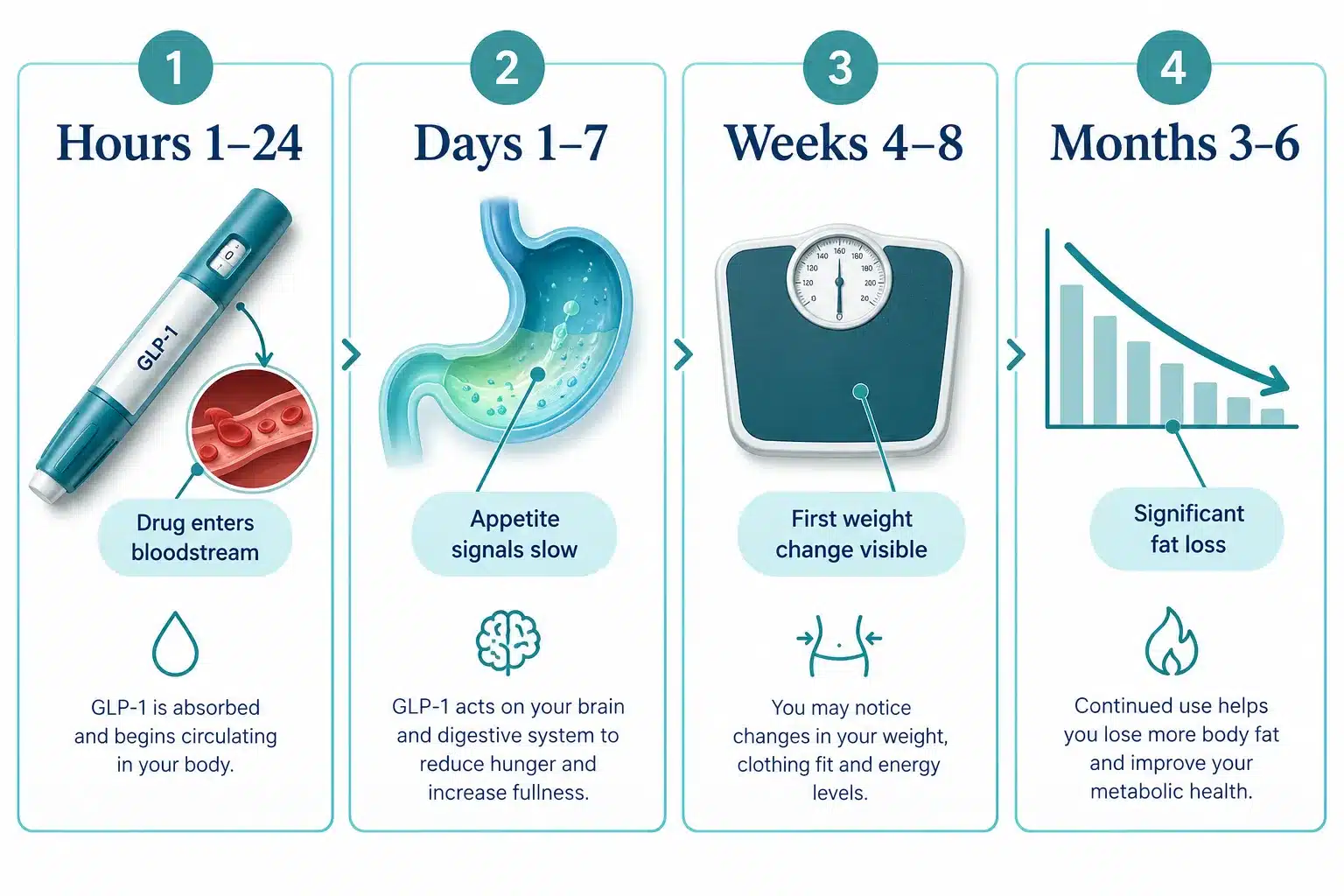
GLP-1 medications do not work instantly. The drug enters your bloodstream within hours of injection, but the full therapeutic effect builds gradually as doses increase and your body adapts.
7 Best GLP-1 Providers Ranked: Accreditation, Flexibility & Support Compared (2026 Update)
32,000+ Patients Can't All Be Wrong: See the Top-Rated GLP-1 Providers. We compared the leading online GLP-1 providers based on program features, clinical support, convenience, and overall value.
BMI MD GLP-1 Microdosing Plan
- Specialized microdosing options, including sublingual drops and low-dose injections
- Designed for people interested in maintaining weight or gradually adjusting treatment
- Bundled program structure without a separate monthly platform membership
- Online access makes the process convenient from home

DirectMeds Weight Loss Solutions
- Online weight-loss program with a straightforward patient experience
- Compounded medication options through state-licensed compounding pharmacies
- Includes clinical consultation as part of the process
- Provides shipping updates to help patients track their orders
MEDVi Flat-Rate Telehealth
- Flat-rate telehealth approach designed for easier budgeting
- No dosage-based pricing increases within the advertised program structure
- Offers injectable and oral thin-film delivery options
- Includes medical screening and asynchronous provider consultations
Gala GLP-1 Care Program
- Text-based access to state-licensed clinicians
- Cold-chain medication shipping included in the program
- Month-to-month program structure
- Designed for people who value convenient ongoing support
Measured GLP-1 Metabolic Health
- Comprehensive metabolic health screening and intake analysis
- Designed around longer-term metabolic health management
- Responsive dashboard with integrated health tracking tools
- Useful option for patients who value a more data-focused experience
Refills GLP-1 (TryRefills Plan)
- Clinical guidance designed to help patients manage common treatment concerns
- Includes foundational nutritional strategies alongside medication
- Designed around predictable ongoing treatment
- No hidden startup or processing fees according to the program information provided
AltRx GLP-1 Transactional Reorders
- Transactional reorder model without recurring auto-billing
- Designed for patients who already understand their treatment routine
- Fast text-to-order process for convenient reorders
- Offers injectable and fast-dissolving tablet variations
After a single injection of semaglutide (Ozempic/Wegovy) or tirzepatide (Mounjaro/Zepbound), blood levels peak within one to three days [7]. However, “peak blood level” is not the same as “full effect.” Your prescriber will start you on a low dose, often a fraction of the eventual therapeutic dose, and increase it every four weeks. This slow escalation is intentional: it reduces nausea and allows your body to adjust.
So while something is happening biochemically from day one, the results most people care about (less hunger, lower blood sugar, weight loss) accumulate over weeks and months, not hours.
How Long Does It Take for GLP-1 to Start Working on Appetite
Appetite suppression is usually the first effect people notice, and it can appear within the first few days to two weeks of starting a GLP-1 medication [9].
GLP-1 receptor agonists work partly by slowing gastric emptying, food stays in your stomach longer, so you feel full faster and stay full longer. They also act on appetite-regulating centers in the brain, reducing hunger signals. According to Cleveland Clinic, many patients report noticeably less interest in food within the first week, even at starting doses [9].
A few things to keep in mind:
- Starting dose matters. At the lowest starting dose, appetite effects may be subtle. They typically become more pronounced as the dose increases.
- Not everyone responds the same way. Some people feel dramatically less hungry in week one. Others take three to four weeks to notice a meaningful shift.
- Nausea can mask appetite changes. Early nausea, a common side effect, may reduce your appetite for reasons unrelated to the drug’s therapeutic mechanism.
GLP-1 Weight Loss Timeline: How Many Weeks Until Results
Most people see the scale begin to move between weeks four and eight, with more substantial changes by months three to six [8].
Here is a general timeline based on available clinical data:
| Timeframe | What Typically Happens |
|---|---|
| Days 1-7 | Drug reaches peak blood levels; early appetite changes possible; nausea common |
| Weeks 1-2 | Fasting blood sugar begins to improve; appetite suppression more noticeable |
| Weeks 4-8 | First measurable weight loss (roughly 1-3% of body weight); energy may improve |
| Months 3-6 | 5-10% body weight loss typical; A1C reductions clear; dose often at therapeutic level |
| Months 6-12+ | 10-15% or more body weight loss possible; metabolic improvements stabilize |
One clinical study participant I spoke with described it this way: “Nothing happened the first two weeks except some nausea. By week six, I had lost about eight pounds without really trying to eat less, I just wasn’t hungry.” That experience tracks closely with what the research shows [8].
For a broader look at how GLP-1 drugs change your body over time, see this GLP-1 transformation guide covering metabolism and weight changes.
GLP-1 Blood Sugar Control: How Long to See Results
Fasting blood glucose typically begins improving within one to two weeks of starting a GLP-1 medication. A1C reductions, a longer-term marker of blood sugar control, become measurable around weeks eight to twelve [2].
GLP-1 receptor agonists lower blood sugar through several mechanisms: they stimulate insulin release in response to meals, suppress glucagon (a hormone that raises blood sugar), and slow how quickly glucose enters the bloodstream from food. These effects begin with the first dose, but A1C reflects average blood sugar over roughly three months, so it takes time for that number to shift.
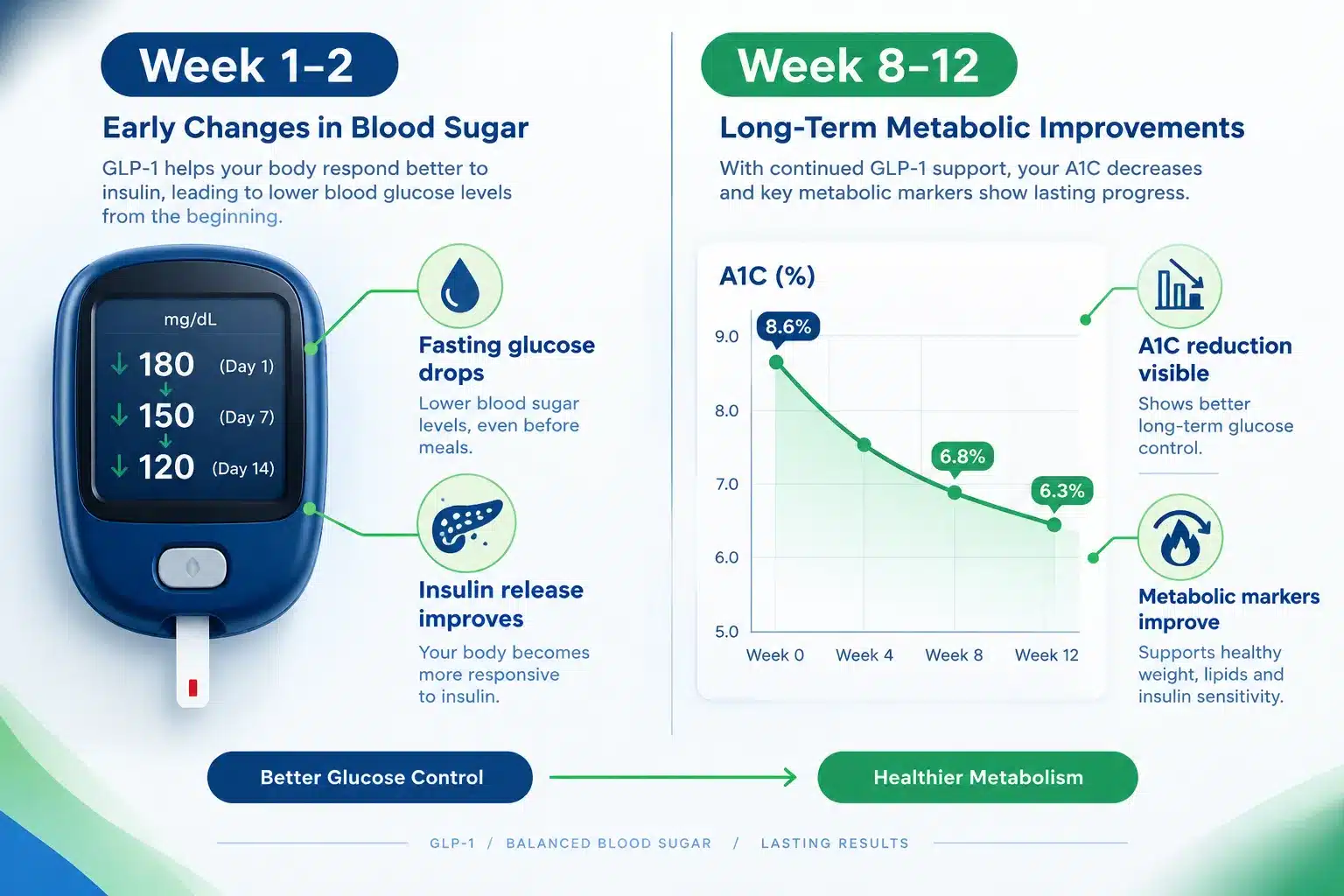
How long does it take for GLP-1 to lower A1C?
In most clinical contexts, a meaningful A1C reduction (0.5 to 1.5 percentage points, depending on the drug and dose) is visible by the three-month mark. Larger reductions, sometimes two or more percentage points, can occur by six months at full therapeutic doses [5].
For context on how this compares to older diabetes medications, our article on why doctors no longer prescribe Metformin as a first-line option covers the evolving treatment landscape.
GLP-1 First Week: What to Expect
In the first week of GLP-1 therapy, most people experience side effects before they experience benefits. This is normal and does not mean the medication is not working.
Common first-week experiences include:
- Nausea, the most frequently reported side effect, especially after the first injection
- Reduced appetite, may feel subtle at low starting doses
- Fatigue, some people feel tired as their body adjusts
- Mild digestive changes, bloating, constipation, or loose stools
- No visible weight change, this is expected; the drug is just beginning to work
The key message: do not judge the medication’s effectiveness in week one. The starting dose is intentionally low, and the therapeutic benefits accumulate as the dose increases over the coming weeks and months.
Does GLP-1 Work Faster for Some People Than Others
Yes, individual response to GLP-1 medications varies considerably. Some people notice dramatic appetite suppression within days; others take four to six weeks to feel a meaningful difference [9].
Factors that influence how quickly GLP-1 works include:
- Body weight and composition, people with higher baseline insulin resistance may see faster blood sugar improvements
- Dose level, higher doses generally produce faster and larger effects
- Diet and activity, a lower-calorie diet and regular movement amplify results
- Medication type, tirzepatide (a dual GIP/GLP-1 agonist) tends to produce faster and larger weight loss than semaglutide in head-to-head comparisons [1]
- Genetics and gut hormone sensitivity, some people have more GLP-1 receptors or more sensitive receptors
- Adherence, missing doses slows progress significantly
Choose tirzepatide if you want the fastest and largest weight loss results and your prescriber agrees it is appropriate. Choose semaglutide if cost is a primary concern or if tirzepatide is not available to you, it still produces clinically significant results, just on a slightly slower trajectory for some users.
For a detailed comparison of available options, see which GLP-1 medication works best for weight loss.
GLP-1 Effectiveness Timeline by Dose
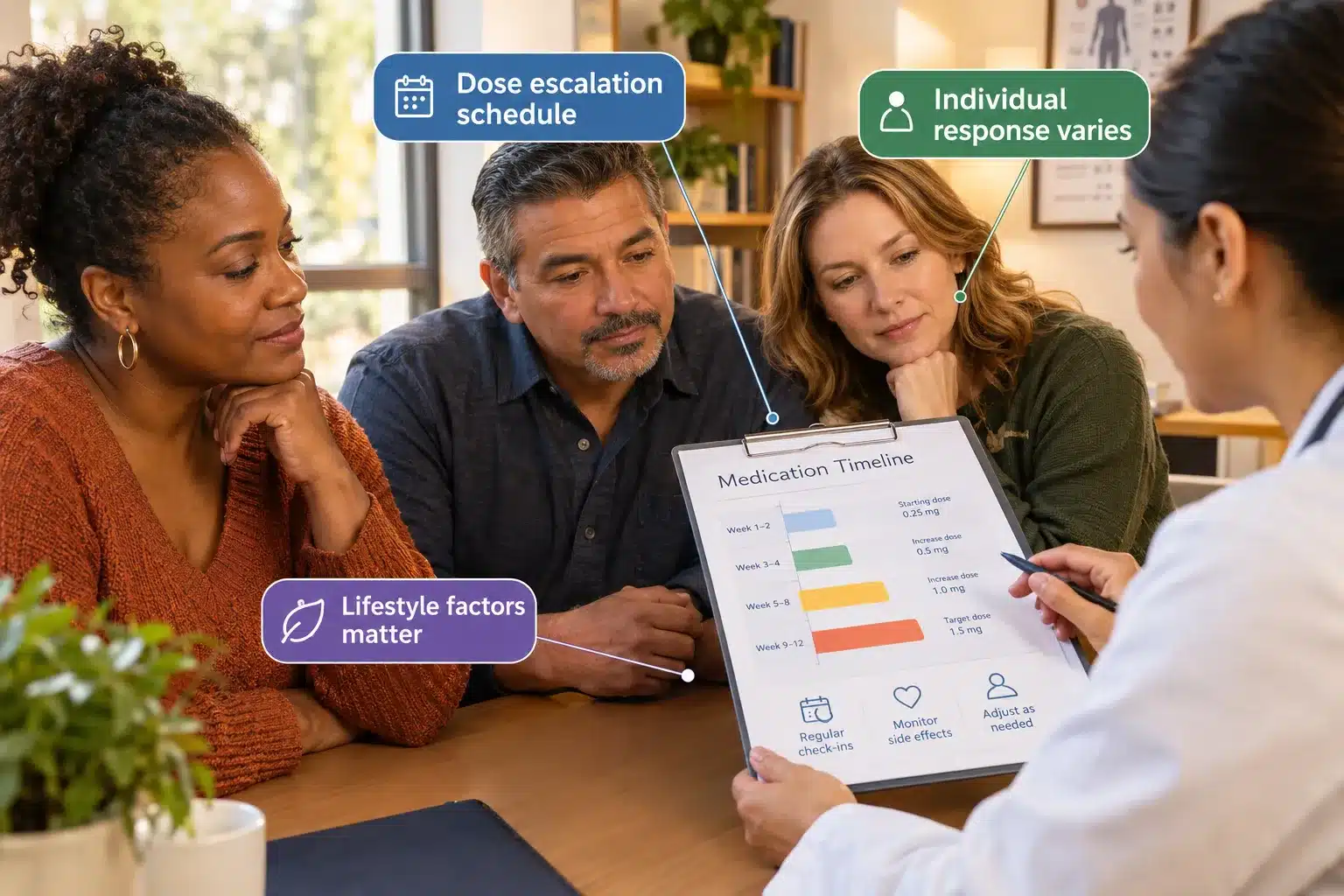
The dose escalation schedule directly controls how quickly you reach full therapeutic effect. Most GLP-1 protocols increase the dose every four weeks, meaning you may not reach your full therapeutic dose until week twelve or later.
Semaglutide (Ozempic/Wegovy) typical escalation:
- Weeks 1-4: 0.25 mg weekly (starter dose)
- Weeks 5-8: 0.5 mg weekly
- Weeks 9-12: 1.0 mg weekly
- Weeks 13+: 1.7-2.4 mg weekly (maintenance)
Tirzepatide (Mounjaro/Zepbound) typical escalation:
- Weeks 1-4: 2.5 mg weekly
- Weeks 5-8: 5 mg weekly
- Weeks 9-12: 7.5 mg weekly
- Weeks 13+: up to 15 mg weekly [10]
This means the question of how long does it take for GLP-1 to work is partly a question of how long it takes to reach your optimal dose. Results at week four on a starter dose will be modest compared to results at month six on a full therapeutic dose.
Why Is My GLP-1 Not Working Yet
If you are in the first two to four weeks of GLP-1 therapy and not seeing results, that is almost certainly normal, you are likely still on a starter dose. If you are past the twelve-week mark at a therapeutic dose and seeing no response, there are several possible explanations.
Common reasons GLP-1 may seem ineffective:
- Still on a low starting dose, the most common reason; give it time
- Inconsistent dosing, missing weekly injections resets progress
- Diet is offsetting the medication, GLP-1 reduces appetite, but it does not override a high-calorie diet
- Unrealistic expectations, 1 to 2 pounds per week is a strong result; expecting faster loss leads to disappointment
- Medication quality issues, if using compounded semaglutide, formulation quality varies; see our guide on how pharmaceutical compounding works for GLP-1 drugs
- Underlying metabolic conditions, thyroid issues or certain medications can blunt the response
GLP-1 not working after 2 weeks: what should you do?
At two weeks, you should not expect dramatic results. Contact your prescriber only if side effects are severe or unbearable. If you are past week twelve at a full dose with no measurable change in weight or blood sugar, that is the time for a clinical conversation about dose adjustment or switching medications.
GLP-1 vs Other Diabetes Medications: Which Works Faster
For blood sugar control, GLP-1 medications work faster than most oral diabetes drugs in terms of meaningful A1C reduction, but not necessarily faster than insulin for acute glucose management.
- vs. Metformin: GLP-1 agents typically produce faster A1C reductions and add weight loss benefits that Metformin does not [6]
- vs. SGLT-2 inhibitors: Similar speed of blood sugar effect, but GLP-1 agents generally produce greater weight loss
- vs. Insulin: Insulin can lower blood sugar within hours; GLP-1 agents work over weeks but carry far lower hypoglycemia risk
- vs. DPP-4 inhibitors: GLP-1 agonists are more potent and faster-acting than DPP-4 inhibitors like sitagliptin
For weight loss specifically, no approved oral medication currently matches the speed or magnitude of injectable GLP-1 or dual GIP/GLP-1 agonists. To understand the full cost picture before starting, our guide on how much semaglutide costs in 2026 is worth reading.
Can You Take GLP-1 Short Term or Does It Take Months
GLP-1 medications can produce some results in as little as four to eight weeks, but the most clinically meaningful outcomes require at least three to six months of consistent use [8].
Short-term use (less than twelve weeks) is sometimes appropriate for specific medical situations, but most prescribers recommend at least six months to assess true effectiveness. Stopping early typically leads to weight regain, because the medication’s appetite-suppressing effects stop when dosing stops.
A note on GLP-1 and breastfeeding: GLP-1 postpartum weight loss is a topic many new mothers ask about, but current medical guidance advises against using GLP-1 medications while breastfeeding. Safety data for semaglutide while breastfeeding and tirzepatide while breastfeeding is limited, and neither is currently recommended for GLP-1 weight loss while breastfeeding. Women interested in GLP-1 medications while breastfeeding should wait until they have finished nursing and discuss GLP-1 breastfeeding safety with their prescriber before starting any treatment. The question of whether you can take semaglutide while breastfeeding or can you take tirzepatide while breastfeeding currently has the same answer from most major medical bodies: not recommended until more safety data is available.
For a cost-accessible entry point into GLP-1 therapy, see our overview of the least expensive GLP-1 options for weight loss.
FAQ
How long does it take for GLP-1 to work for weight loss?
Most people see the first measurable weight loss between weeks four and eight. Significant results, five percent or more of body weight, typically appear by months three to six at therapeutic doses.
Does GLP-1 suppress appetite right away?
Appetite suppression can begin within the first few days to two weeks, even at low starting doses. The effect becomes stronger as the dose increases over the following weeks [9].
How long does it take for semaglutide to start working?
Semaglutide reaches peak blood levels within one to three days of injection. Appetite effects may appear in week one or two; meaningful weight loss typically begins around weeks four to eight.
How quickly does tirzepatide work compared to semaglutide?
Tirzepatide (Mounjaro/Zepbound) tends to produce faster and larger weight loss than semaglutide in clinical comparisons, partly because it targets both GLP-1 and GIP receptors. Many users report noticeable appetite changes within the first two weeks [1].
How long does it take for GLP-1 to lower A1C?
A1C reductions typically become measurable around weeks eight to twelve. Larger reductions (one to two or more percentage points) are more common by the six-month mark at full therapeutic doses [2].
What happens in the first week of GLP-1 therapy?
The first week is dominated by side effects, primarily nausea, rather than benefits. Appetite suppression may begin, but weight loss is not expected this early.
Why am I not losing weight on GLP-1 after two weeks?
Two weeks is too early to judge effectiveness, especially on a starter dose. Most people do not see meaningful weight loss until weeks four to eight. If you are past week twelve at a therapeutic dose with no results, speak with your prescriber.
Can GLP-1 work in less than a month?
Some people notice appetite changes and minor weight loss within two to three weeks, but a month is generally the minimum timeframe for seeing early results. Full effectiveness takes three to six months.
Is GLP-1 safe while breastfeeding?
No. GLP-1 medications including semaglutide and tirzepatide are not currently recommended during breastfeeding due to limited safety data. Women should discuss GLP-1 breastfeeding safety with their doctor before starting treatment postpartum.
Does the GLP-1 dose affect how fast it works?
Yes, directly. Higher doses produce faster and larger effects. Because doses are escalated slowly over twelve or more weeks, reaching full therapeutic effect takes time by design.
How long should I give GLP-1 before deciding it is not working?
Most clinicians recommend at least twelve weeks at a therapeutic (not starter) dose before concluding the medication is not effective for you.
What is the fastest-working GLP-1 medication?
Tirzepatide generally shows the fastest and largest weight loss results in clinical data. For a detailed breakdown, see our article on the fastest-working GLP-1 medications and what to expect.
7 Best GLP-1 Providers Ranked: Accreditation, Flexibility & Support Compared (2026 Update)
32,000+ Patients Can't All Be Wrong: See the Top-Rated GLP-1 Providers: Compared on accreditation, plan flexibility, and patient support — updated for 2026.
BMI MD GLP-1 Microdosing Plan
- Specialized microdosing options (sublingual drops or low-dose injections)
- Ideal for maintaining weight or tapering off higher doses safely
- Fully bundled plan with no hidden monthly platform memberships
DirectMeds Weight Loss Solutions
- Sourced from accredited, state-licensed 503A compounding pharmacies
- No-frills high-volume savings passed directly to the patient
- Includes clinical consultation and cold-chain shipping updates
MEDVi Flat-Rate Telehealth
- Flat monthly rate holds steady even at maximum maintenance doses
- No dosage upcharges or graduation fee penalties
- Offers both injectable and advanced oral thin-film delivery options
Gala GLP-1 Care Program
- All-inclusive plan with no standalone membership costs
- Continuous text-based messaging access with state-licensed clinicians
- Temperature-controlled, cold-chain medication shipping included
Measured GLP-1 Metabolic Health
- Comprehensive metabolic health screening and expert intake analysis
- Predictable long-term budgeting with stable plan pricing
- High-end responsive dashboard with integrated diagnostic support
Refills GLP-1 (TryRefills Plan)
- Flat rate holds steady as titration scales up
- Includes clinical guides for active side-effect management
- Bundles in foundational nutritional strategies alongside medication
AltRx GLP-1 Transactional Reorders
- Zero recurring auto-billing — pay entirely on a transactional basis
- Rapid text-to-order format saves time for experienced patients
- Provides both injectable forms and fast-dissolving tablet variations
Conclusion
The question of how long does it take for GLP-1 to work does not have a single answer, it depends on what outcome you are measuring, which medication you are taking, and where you are in the dose escalation schedule.
Here is the practical summary:
- Appetite suppression: days to two weeks
- Blood sugar improvement: one to two weeks
- First weight loss: four to eight weeks
- Meaningful A1C reduction: eight to twelve weeks
- Significant weight loss (5-15%): three to twelve months
If you are just starting GLP-1 therapy, the most important thing you can do is stay consistent, follow your prescriber’s dose schedule, and not judge the medication by what happens in the first two weeks. The early weeks are about tolerating the drug; the results come later.
If you are considering starting GLP-1 therapy and want to understand the full picture, including costs, medication options, and what to realistically expect, our guide on what GLP-1 injectables are and how they work is a strong starting point.
Speak with a licensed prescriber before starting any GLP-1 medication. Individual timelines vary, and a medical professional can help you set realistic goals based on your specific health history.
References
[1] How Long Does It Take Mounjaro to Start Working – https://www.drugs.com/medical-answers/how-long-does-take-mounjaro-start-working-3570786/
[2] PMC12579654 – https://pmc.ncbi.nlm.nih.gov/articles/PMC12579654/
[4] How Long Does It Take Zepbound to Work – https://www.drugs.com/medical-answers/how-long-take-zepbound-work-3577511/
[5] Frontiers in Endocrinology 2025 – https://www.frontiersin.org/journals/endocrinology/articles/10.3389/fendo.2025.1593334/full
[6] Frontiers in Pharmacology 2024 – https://www.frontiersin.org/journals/pharmacology/articles/10.3389/fphar.2024.1416985/full
[7] Medical News Today – Mounjaro Peak Time – https://www.medicalnewstoday.com/articles/drugs-mounjaro-peak-time
[8] How Long Does It Take to Lose Weight on a GLP-1 Drug – https://www.drugs.com/medical-answers/how-long-take-lose-weight-glp-1-drug-3582355/
[9] Cleveland Clinic – How Long Does It Take for GLP-1s to Suppress Appetite – https://health.clevelandclinic.org/how-long-does-it-take-for-glp-1s-to-suppress-appetite
[10] RxEducation – How Long Does It Take for Tirzepatide to Work – https://rx.com/education/how-long-does-it-take-for-tirzepatide-to-work