Compounded Tirzepatide: What You Need to Know

{“cover”:”Professional landscape format (1536×1024) hero image with bold text overlay: ‘Compounded Tirzepatide: What You Need to Know’ in extra large 72pt white bold sans-serif font with dark drop shadow, centered in upper third of frame. Background shows a clean modern medical clinic setting with a pharmacist in white coat handling a vial and syringe, soft blue and white color palette, subtle gradient overlay for text contrast, magazine cover aesthetic, editorial quality, high contrast professional photography style.”,”content”:[“Detailed landscape format (1536×1024) showing a split-panel infographic comparing compounded tirzepatide vial on the left versus branded Mounjaro auto-injector pen on the right, clean white background, labeled arrows pointing to key differences in formulation, cost tags showing price contrast, bold sans-serif labels, medical blue and gray color scheme, clinical illustration style, editorial quality”,”Detailed landscape format (1536×1024) showing a close-up overhead shot of a person’s hand holding a small insulin syringe near an injection site on the abdomen, a compounded tirzepatide vial and alcohol swab arranged neatly on a clean white medical tray nearby, soft natural lighting from the left, shallow depth of field, clinical yet approachable aesthetic, muted teal and white tones, editorial photography quality”,”Detailed landscape format (1536×1024) showing a wide-angle view of a telehealth consultation on a laptop screen with a doctor visible in a video call, beside it a notepad with ‘GLP-1 Weight Loss Plan’ written, a smartphone showing a medication cost comparison chart, compounded medication bottle in background, warm professional office lighting, navy blue and gold accent color scheme, editorial quality lifestyle photography”]
Last updated: June 2, 2026
Quick Answer: Compounded tirzepatide is a pharmacy-made version of the active ingredient in Mounjaro and Zepbound, prescribed for weight loss and blood sugar management. It costs significantly less than brand-name options, but availability, safety, and legal status depend on FDA shortage rules and the pharmacy you use. This guide covers everything you need to know before starting.
7 Best GLP-1 Providers Ranked: Accreditation, Flexibility & Support Compared (2026 Update)
32,000+ Patients Can't All Be Wrong: See the Top-Rated GLP-1 Providers. We compared the leading online GLP-1 providers based on program features, clinical support, convenience, and overall value.
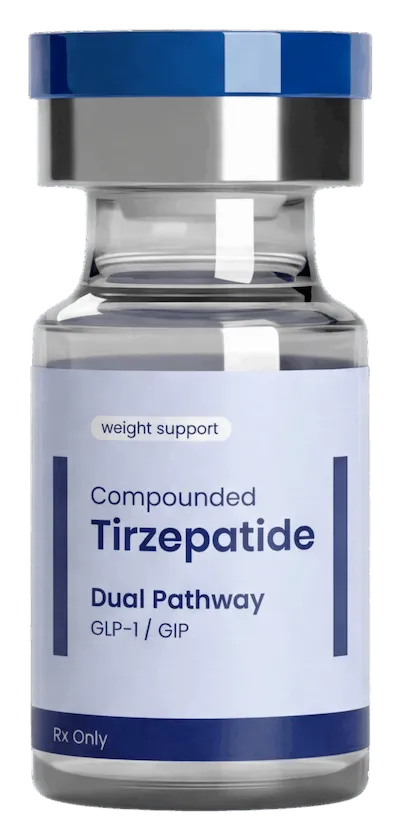
BMI MD GLP-1 Microdosing Plan
- Specialized microdosing options, including sublingual drops and low-dose injections
- Designed for people interested in maintaining weight or gradually adjusting treatment
- Bundled program structure without a separate monthly platform membership
- Online access makes the process convenient from home

DirectMeds Weight Loss Solutions
- Online weight-loss program with a straightforward patient experience
- Compounded medication options through state-licensed compounding pharmacies
- Includes clinical consultation as part of the process
- Provides shipping updates to help patients track their orders
MEDVi Flat-Rate Telehealth
- Flat-rate telehealth approach designed for easier budgeting
- No dosage-based pricing increases within the advertised program structure
- Offers injectable and oral thin-film delivery options
- Includes medical screening and asynchronous provider consultations
Gala GLP-1 Care Program
- Text-based access to state-licensed clinicians
- Cold-chain medication shipping included in the program
- Month-to-month program structure
- Designed for people who value convenient ongoing support
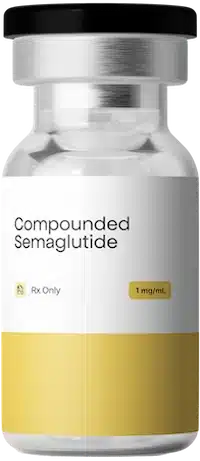
Measured GLP-1 Metabolic Health
- Comprehensive metabolic health screening and intake analysis
- Designed around longer-term metabolic health management
- Responsive dashboard with integrated health tracking tools
- Useful option for patients who value a more data-focused experience
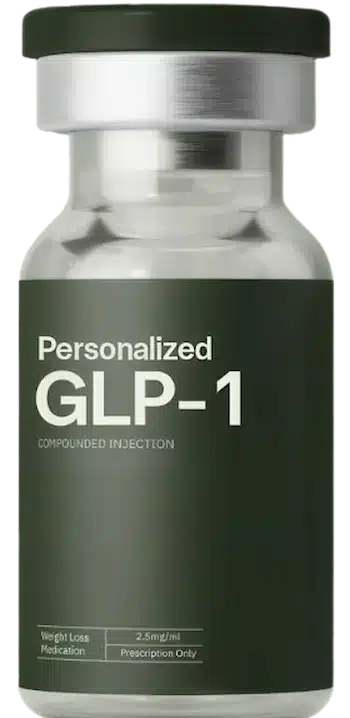
Refills GLP-1 (TryRefills Plan)
- Clinical guidance designed to help patients manage common treatment concerns
- Includes foundational nutritional strategies alongside medication
- Designed around predictable ongoing treatment
- No hidden startup or processing fees according to the program information provided
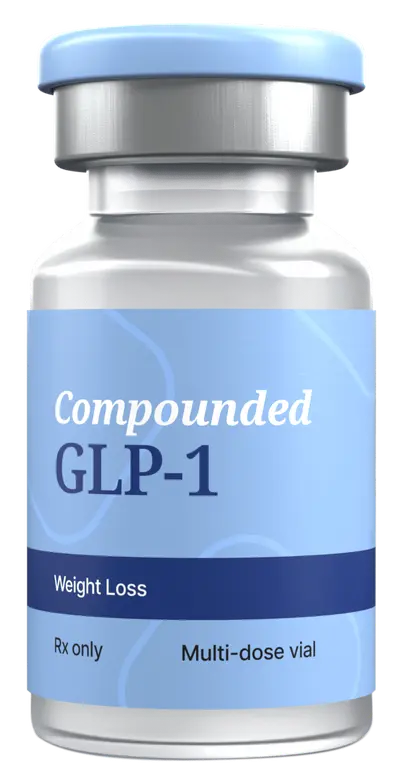
AltRx GLP-1 Transactional Reorders
- Transactional reorder model without recurring auto-billing
- Designed for patients who already understand their treatment routine
- Fast text-to-order process for convenient reorders
- Offers injectable and fast-dissolving tablet variations
Key Takeaways
- Compounded tirzepatide is made by licensed compounding pharmacies and contains the same active ingredient as Mounjaro and Zepbound
- It typically costs $200 to $500 per month, compared to $1,000 or more for brand-name versions without insurance
- The FDA allowed compounding during a documented shortage period; legal access may shift as shortage status changes
- Common side effects include nausea, vomiting, diarrhea, and constipation, especially during dose escalation
- It is not appropriate for people with a personal or family history of medullary thyroid carcinoma or MEN2
- You must get it through a licensed telehealth provider or compounding pharmacy with a valid prescription
- Injection technique, storage, and dose titration all affect how well it works and how tolerable the side effects are
- DirectMeds GLP1 Semaglutide is currently one of the most affordable GLP-1 options available through telehealth in 2026

What Exactly Is Compounded Tirzepatide?
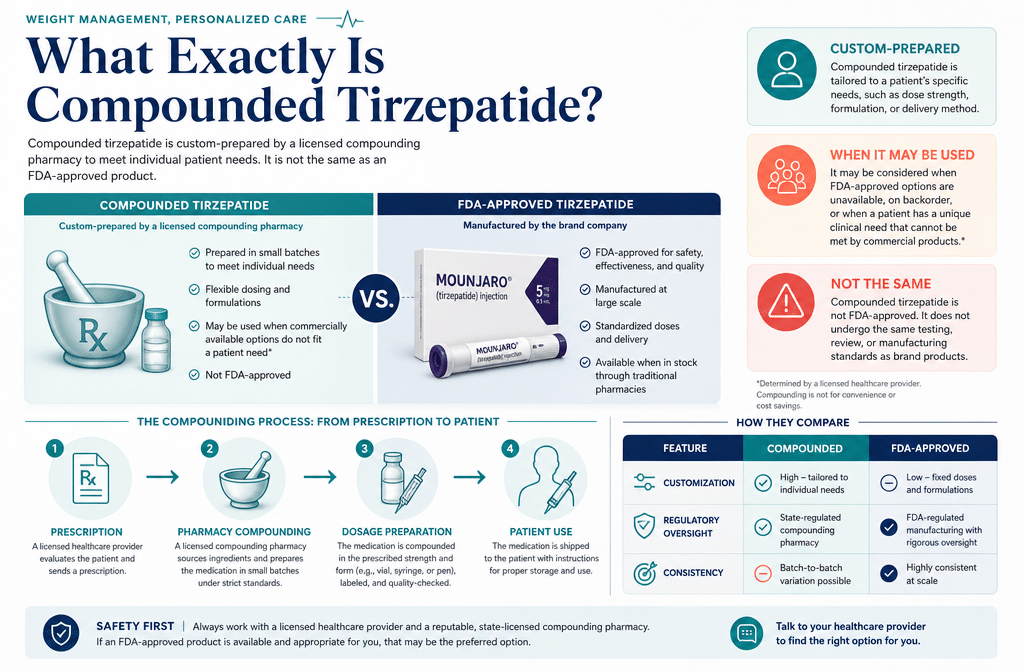
Compounded tirzepatide is a custom-prepared injectable medication made by a licensed compounding pharmacy using tirzepatide as the active ingredient. It works the same way as Mounjaro and Zepbound by activating both GIP and GLP-1 receptors in the body, which reduces appetite, slows gastric emptying, and helps regulate blood sugar.
Unlike brand-name drugs that come in fixed-dose auto-injector pens, compounded versions are typically supplied in multi-dose vials that you draw into a syringe yourself. This allows for more flexible dosing, which some providers use to customize titration schedules for individual patients.
Compounding is legal under U.S. federal law when a licensed prescriber orders it and a licensed pharmacy prepares it. During periods when tirzepatide was on the FDA’s drug shortage list, compounding pharmacies were permitted to produce it at scale. For a broader overview, see our full guide on compounded tirzepatide.
How Does Compounded Tirzepatide Differ from Mounjaro?
The core difference is manufacturing, not pharmacology. Mounjaro is an FDA-approved, commercially manufactured drug with standardized quality controls, stability testing, and a fixed delivery device. Compounded tirzepatide uses the same active molecule but is mixed by a pharmacy, which means quality can vary by provider.
Key differences at a glance:
| Feature | Compounded Tirzepatide | Mounjaro / Zepbound |
|---|---|---|
| FDA approval | No (active ingredient is approved) | Yes |
| Cost per month | $200 to $500 (estimated) | $1,000 to $1,300 without insurance |
| Delivery method | Multi-dose vial and syringe | Pre-filled auto-injector pen |
| Dose flexibility | High (custom titration) | Fixed manufacturer doses |
| Insurance coverage | Rarely covered | Sometimes covered |
| Pharmacy source | Compounding pharmacy | Retail or specialty pharmacy |
For a deeper look at how compounded and brand-name GLP-1s compare in cost, see our GLP-1 cost without insurance guide.
Is Compounded Tirzepatide Safe to Use?
Compounded tirzepatide carries the same pharmacological risks as the brand-name version, but adds an extra layer of concern around pharmacy quality. When sourced from a reputable, state-licensed 503A or 503B compounding pharmacy, the risk profile is generally comparable to Mounjaro.
The FDA has flagged concerns about compounders that use tirzepatide salts (such as tirzepatide acetate or tirzepatide hydrochloride) rather than the base form of the molecule. These salt forms have not been proven bioequivalent and may behave differently in the body. Always confirm with your provider that the pharmacy uses the correct form.
Safety checklist before you start:
- Confirm the pharmacy is licensed in your state and compliant with USP standards
- Ask whether the product uses tirzepatide base (not a salt form)
- Verify the pharmacy conducts sterility and potency testing
- Get a prescription from a licensed medical provider, not a wellness spa or unregulated online seller
- Review your full medical history with your prescriber before starting
How Much Does Compounded Tirzepatide Cost?
Compounded tirzepatide typically costs between $200 and $500 per month, depending on the dose, the pharmacy, and whether you use a telehealth platform. This is a significant saving compared to brand-name Mounjaro, which can exceed $1,200 per month without insurance.
Most telehealth platforms bundle the consultation fee, prescription, and medication into a monthly subscription. Some charge separately for each. For a full breakdown of tirzepatide pricing options, see our tirzepatide cost comparison guide.
If you are looking for an affordable GLP-1 option right now, DirectMeds GLP1 Semaglutide is one of the most competitively priced programs available in 2026, with transparent pricing and licensed medical oversight included.
Get started with DirectMeds GLP1 today and see your pricing options
Who Should Not Take Compounded Tirzepatide?
Tirzepatide is not appropriate for everyone. Your prescriber should screen you carefully before writing a prescription.
Do not use compounded tirzepatide if you have:
- A personal or family history of medullary thyroid carcinoma (MTC)
- Multiple Endocrine Neoplasia syndrome type 2 (MEN2)
- A known hypersensitivity to tirzepatide or any component of the formulation
- A history of pancreatitis (use with caution and medical supervision)
- Severe gastroparesis or other serious gastrointestinal motility disorders
- Type 1 diabetes (tirzepatide is not approved or studied for this population)
Use with caution if you are pregnant, planning to become pregnant, or breastfeeding. Tirzepatide has not been established as safe during pregnancy, and most providers recommend stopping it at least two months before attempting conception.
What Are the Side Effects of Compounded Tirzepatide?
The most common side effects of compounded tirzepatide mirror those of Mounjaro and Zepbound, because the active molecule is the same. Nausea is the most frequently reported issue, particularly during the first few weeks and after each dose increase.
Common side effects:
- Nausea (most common, often temporary)
- Vomiting
- Diarrhea or constipation
- Reduced appetite
- Injection site reactions (redness, bruising, itching)
- Fatigue, especially early in treatment
Less common but serious risks include pancreatitis, gallbladder disease, hypoglycemia (particularly when combined with insulin or sulfonylureas), and a theoretical risk of thyroid C-cell tumors based on animal studies. Report any severe abdominal pain, persistent vomiting, or vision changes to your provider immediately.
Slowing the dose titration schedule is the most effective way to reduce side effects. Many telehealth providers now offer extended titration plans specifically for this reason.
Where Can I Get Compounded Tirzepatide Legally?
You can legally obtain compounded tirzepatide through a licensed telehealth provider or a physician who works with a state-licensed compounding pharmacy. You cannot legally purchase it without a prescription, and buying from unverified online sources is both illegal and dangerous.
Legitimate sources include:
- Telehealth platforms that partner with 503A or 503B pharmacies
- Your primary care physician or endocrinologist, if they work with a compounding pharmacy
- Licensed weight-loss clinics that offer in-house prescribing
For a comparison of where to buy tirzepatide online at verified prices, see our guide on where to get tirzepatide online at the best price.
Check if you qualify for compounded GLP-1 through DirectMeds today
How Do I Know If Compounded Tirzepatide Is Right for Me?
Compounded tirzepatide is a strong candidate if you meet the clinical criteria for GLP-1 therapy but cannot afford or access brand-name Mounjaro or Zepbound. It is particularly well-suited for adults with a BMI of 30 or higher, or a BMI of 27 or higher with at least one weight-related condition such as type 2 diabetes, hypertension, or high cholesterol.
Choose compounded tirzepatide if:
- You have been denied insurance coverage for Mounjaro or Zepbound
- You want a lower monthly cost without sacrificing the active ingredient
- You are comfortable self-injecting from a vial
- You have a licensed provider who can supervise your titration
Consider brand-name instead if you prefer the convenience of a pre-filled pen, if your insurance covers Mounjaro, or if you have concerns about pharmacy quality control.
To understand how tirzepatide compares to semaglutide-based options, read our semaglutide vs. tirzepatide comparison.
What Medical Conditions Work Best With Compounded Tirzepatide, Including Diabetes?
Compounded tirzepatide works best for adults with obesity or overweight plus metabolic conditions. The dual GIP and GLP-1 mechanism makes it particularly effective for people with type 2 diabetes, as it improves insulin sensitivity and lowers fasting blood sugar alongside promoting weight loss.
Clinical trials on brand-name tirzepatide (SURMOUNT and SURPASS programs) showed meaningful reductions in HbA1c and body weight in people with type 2 diabetes. While compounded versions have not been independently studied in the same way, the active molecule is the same.
Conditions where tirzepatide shows strong clinical benefit:
- Type 2 diabetes with or without obesity
- Obesity (BMI 30 or higher) without diabetes
- Overweight with hypertension, dyslipidemia, or sleep apnea
- Non-alcoholic fatty liver disease (emerging evidence)
Tirzepatide is not approved for type 1 diabetes and should not be used as a replacement for insulin in people who require it.
How Do I Inject Compounded Tirzepatide Correctly?
Compounded tirzepatide is injected subcutaneously, meaning just under the skin, once per week. The most common injection sites are the abdomen (at least two inches from the navel), the outer thigh, or the upper arm.
Step-by-step injection process:
- Wash your hands thoroughly with soap and water
- Remove the vial from the refrigerator and let it reach room temperature for 10 to 15 minutes
- Wipe the vial top with an alcohol swab and let it dry
- Draw the prescribed dose into a clean insulin syringe
- Clean the injection site with a fresh alcohol swab and let it dry
- Pinch the skin gently, insert the needle at a 45 to 90-degree angle, and inject slowly
- Remove the needle, apply light pressure, and dispose of the syringe in a sharps container
- Rotate injection sites each week to prevent skin irritation
Store unused vials in the refrigerator between 36 and 46 degrees Fahrenheit. For tips on proper storage, see our guide on how to store compounded semaglutide at home, which covers the same principles applicable to tirzepatide vials.
What Are Common Mistakes People Make With Compounded Tirzepatide?
The most common mistake is rushing the dose titration. Many people increase their dose too quickly trying to accelerate results, which amplifies nausea and vomiting and often leads to stopping the medication altogether.
Other frequent mistakes:
- Buying from unverified online sources without a prescription
- Not rotating injection sites, leading to lipodystrophy (lumpy skin)
- Skipping meals and becoming severely hypoglycemic, especially when also taking other diabetes medications
- Storing the vial incorrectly (leaving it at room temperature too long)
- Not disclosing all medications to the prescriber, which can cause drug interactions
- Expecting rapid results without dietary changes or physical activity
The medication works best as part of a broader lifestyle plan. Weight loss is faster and more sustained when combined with a calorie-appropriate diet and regular movement.
Are There Affordable Alternatives to Compounded Tirzepatide for Weight Loss?
Yes. If compounded tirzepatide is not accessible or suitable for you, there are other GLP-1 and weight-loss options worth considering.
Alternatives include:
- Compounded semaglutide: Similar mechanism, slightly lower cost in some markets, and more widely available. See how compounded semaglutide differs from Ozempic for a detailed comparison.
- Brand-name semaglutide (Wegovy or Ozempic): FDA-approved, but significantly more expensive without insurance
- Oral semaglutide (Rybelsus): A pill form, less effective for weight loss than injectable versions
- Structured meal programs: Options like Nutrisystem offer structured eating plans for people not ready for medication
For the most affordable GLP-1 program available right now, DirectMeds GLP1 Semaglutide offers licensed medical oversight, flexible dosing, and pricing that makes GLP-1 therapy accessible without insurance.
Compare your GLP-1 options and start your DirectMeds consultation here

FAQ
What is the difference between compounded tirzepatide and Zepbound?
Zepbound is an FDA-approved, commercially manufactured tirzepatide product made by Eli Lilly. Compounded tirzepatide contains the same active ingredient but is prepared by a licensed compounding pharmacy. Zepbound uses a pre-filled auto-injector pen; compounded versions use vials and syringes. Zepbound has undergone rigorous FDA approval testing; compounded versions have not gone through that same process.
Is compounded tirzepatide FDA-approved?
No. Compounded medications are not FDA-approved as finished drug products. However, tirzepatide itself is an FDA-approved active ingredient. Compounding pharmacies are permitted to use it under specific legal conditions, particularly when the brand-name product is on the FDA shortage list.
Can I use compounded tirzepatide for weight loss if I don’t have diabetes?
Yes. Tirzepatide is approved for chronic weight management in adults with obesity or overweight with at least one weight-related condition, regardless of diabetes status. Your prescriber will assess your BMI and health history to determine eligibility.
How long does it take to see results with compounded tirzepatide?
Most people notice reduced appetite within the first one to two weeks. Measurable weight loss typically begins within four to eight weeks. Significant results, often cited as 15 to 20 percent of body weight, are generally seen over 12 to 18 months of consistent use, based on clinical trial data for brand-name tirzepatide.
Can compounded tirzepatide be used alongside metformin?
Yes, in most cases. Many people with type 2 diabetes use tirzepatide alongside metformin. The combination is generally well-tolerated. Your prescriber should review all your current medications before starting. For context on metformin’s evolving role, see our article on why doctors no longer prescribe metformin in certain situations.
What happens if I miss a weekly dose?
If you miss a dose and your next scheduled dose is more than four days away, inject the missed dose as soon as you remember. If your next dose is within four days, skip the missed dose and resume your regular schedule. Do not double up doses.
Is compounded tirzepatide covered by insurance?
Rarely. Because compounded medications are not FDA-approved finished products, most insurance plans do not cover them. Some flexible spending accounts (FSAs) or health savings accounts (HSAs) may cover the cost. Check with your plan administrator.
How do I find a legitimate compounding pharmacy for tirzepatide?
Look for pharmacies that are accredited by the Pharmacy Compounding Accreditation Board (PCAB) or are registered 503B outsourcing facilities with the FDA. Your telehealth provider should be able to direct you to a vetted pharmacy. Avoid any source that does not require a prescription.
What is the starting dose of compounded tirzepatide?
Most providers start at 2.5 mg per week for the first four weeks, then increase to 5 mg. Subsequent increases depend on tolerability and clinical response. Some providers use slower titration schedules to minimize side effects.
Can I switch from compounded tirzepatide to Mounjaro later?
Yes. If your insurance situation changes or you prefer the branded auto-injector, you can transition to Mounjaro with your provider’s guidance. The dose conversion is straightforward since the active ingredient is identical.
7 Best GLP-1 Providers Ranked: Accreditation, Flexibility & Support Compared (2026 Update)
32,000+ Patients Can't All Be Wrong: See the Top-Rated GLP-1 Providers: Compared on accreditation, plan flexibility, and patient support — updated for 2026.
BMI MD GLP-1 Microdosing Plan
- Specialized microdosing options (sublingual drops or low-dose injections)
- Ideal for maintaining weight or tapering off higher doses safely
- Fully bundled plan with no hidden monthly platform memberships
DirectMeds Weight Loss Solutions
- Sourced from accredited, state-licensed 503A compounding pharmacies
- No-frills high-volume savings passed directly to the patient
- Includes clinical consultation and cold-chain shipping updates
MEDVi Flat-Rate Telehealth
- Flat monthly rate holds steady even at maximum maintenance doses
- No dosage upcharges or graduation fee penalties
- Offers both injectable and advanced oral thin-film delivery options
Gala GLP-1 Care Program
- All-inclusive plan with no standalone membership costs
- Continuous text-based messaging access with state-licensed clinicians
- Temperature-controlled, cold-chain medication shipping included
Measured GLP-1 Metabolic Health
- Comprehensive metabolic health screening and expert intake analysis
- Predictable long-term budgeting with stable plan pricing
- High-end responsive dashboard with integrated diagnostic support
Refills GLP-1 (TryRefills Plan)
- Flat rate holds steady as titration scales up
- Includes clinical guides for active side-effect management
- Bundles in foundational nutritional strategies alongside medication
AltRx GLP-1 Transactional Reorders
- Zero recurring auto-billing — pay entirely on a transactional basis
- Rapid text-to-order format saves time for experienced patients
- Provides both injectable forms and fast-dissolving tablet variations
Conclusion
Understanding compounded tirzepatide means looking at both the opportunity and the responsibility it carries. The medication offers a real, clinically meaningful path to weight loss and blood sugar control at a fraction of the cost of brand-name alternatives, but only when sourced correctly and used under proper medical supervision.
Here are your actionable next steps:
- Confirm you meet the clinical criteria (BMI 30 or higher, or 27 or higher with a weight-related condition)
- Consult a licensed telehealth provider or physician to get a valid prescription
- Verify your pharmacy is PCAB-accredited or a registered 503B facility
- Ask specifically whether the product uses tirzepatide base, not a salt form
- Follow your titration schedule carefully and report side effects to your provider
- Pair the medication with dietary adjustments for best long-term results
If you are ready to start and want the most affordable GLP-1 option backed by licensed medical oversight, DirectMeds GLP1 Semaglutide is worth a close look. It combines affordability, convenience, and clinical credibility in one straightforward program.
Start your DirectMeds GLP1 consultation today and take the first step toward your weight-loss goal
References
- Jastreboff, A.M. et al. (2022). Tirzepatide Once Weekly for the Treatment of Obesity. New England Journal of Medicine
- U.S. Food and Drug Administration. (2023). FDA Approves Novel, Dual-Targeted Treatment for Type 2 Diabetes. FDA.gov
- Frías, J.P. et al. (2021). Tirzepatide versus Semaglutide Once Weekly in Patients with Type 2 Diabetes. New England Journal of Medicine
- U.S. Food and Drug Administration. (2024). FDA Updates on Compounded Tirzepatide and Drug Shortage Status. FDA.gov
- Rosenstock, J. et al. (2021). Efficacy and Safety of a Novel Dual GIP and GLP-1 Receptor Agonist Tirzepatide in Patients with Type 2 Diabetes. The Lancet
Tags: compounded tirzepatide, tirzepatide, GLP-1 medications, weight loss injections, compounded semaglutide, Mounjaro alternative, tirzepatide cost, telehealth weight loss, GLP-1 side effects, tirzepatide vs semaglutide, affordable GLP-1, compounding pharmacy