
Does Ozempic Need to Be Refrigerated? Storage & Travel Rules

Last updated: October 23, 2026
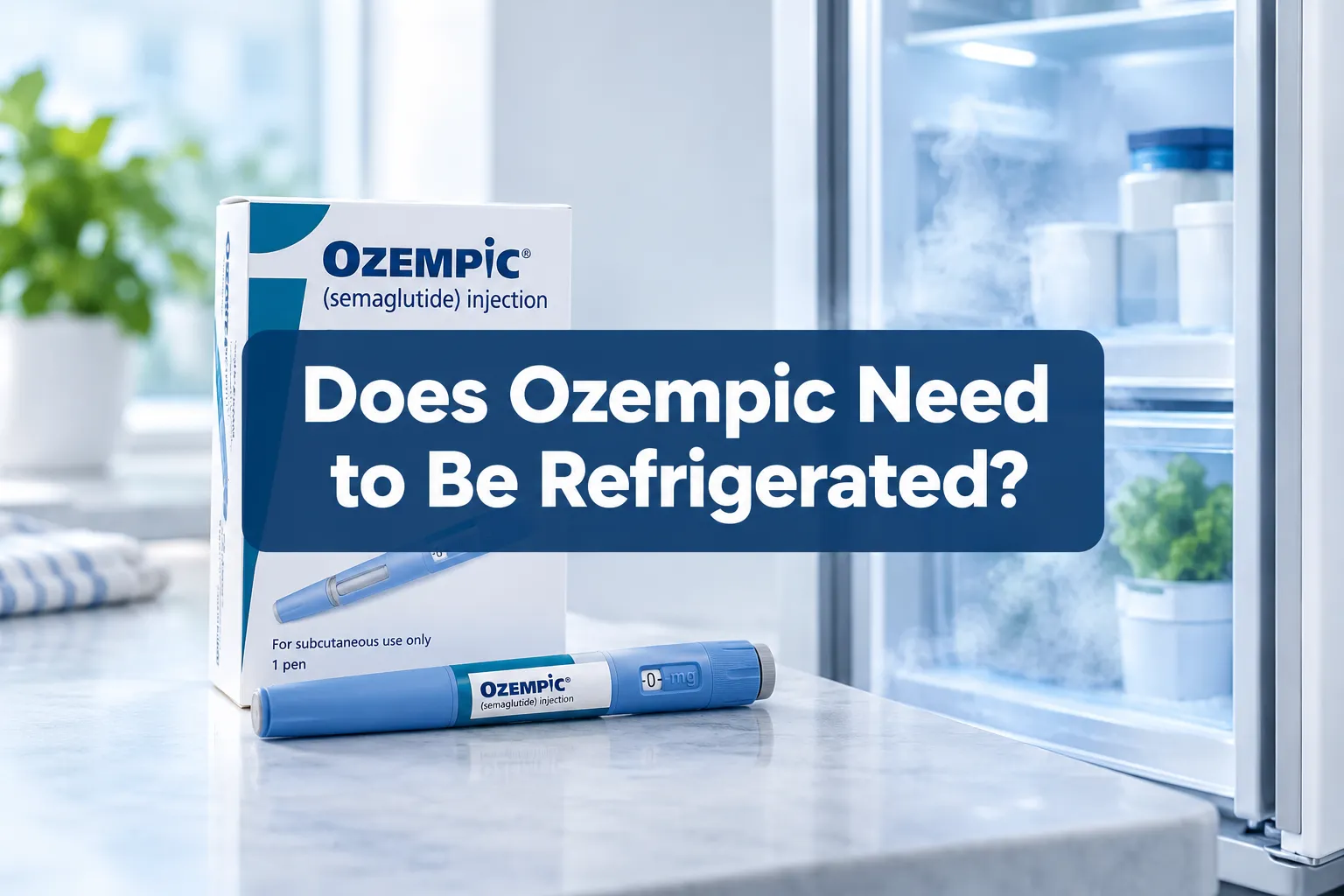
A single afternoon in a hot car can ruin a $1,000 pen. That is the blunt reality behind the question does Ozempic need to be refrigerated, and storage and travel rules matter far more for this GLP-1 medication than most people realize before their first prescription arrives.
Quick Answer
Yes, unopened Ozempic pens must stay refrigerated between 36°F and 46°F (2°C to 8°C) until first use [Source: Novo Nordisk, novomedlink.com][1]. Once you start using a pen, you can keep it refrigerated or store it at room temperature (up to 86°F/30°C) for up to 56 days, then you must discard it [Source: Ozempic FAQ, ozempic.com][2]. Never freeze Ozempic, and never expose it to extreme heat.
7 Best GLP-1 Providers Ranked: Accreditation, Flexibility & Support Compared (2026 Update)
32,000+ Patients Can't All Be Wrong: See the Top-Rated GLP-1 Providers. We compared the leading online GLP-1 providers based on program features, clinical support, convenience, and overall value.

BMI MD GLP-1 Microdosing Plan
- Specialized microdosing options, including sublingual drops and low-dose injections
- Designed for people interested in maintaining weight or gradually adjusting treatment
- Bundled program structure without a separate monthly platform membership
- Online access makes the process convenient from home

DirectMeds Weight Loss Solutions
- Online weight-loss program with a straightforward patient experience
- Compounded medication options through state-licensed compounding pharmacies
- Includes clinical consultation as part of the process
- Provides shipping updates to help patients track their orders

MEDVi Flat-Rate Telehealth
- Flat-rate telehealth approach designed for easier budgeting
- No dosage-based pricing increases within the advertised program structure
- Offers injectable and oral thin-film delivery options
- Includes medical screening and asynchronous provider consultations

Gala GLP-1 Care Program
- Text-based access to state-licensed clinicians
- Cold-chain medication shipping included in the program
- Month-to-month program structure
- Designed for people who value convenient ongoing support

Measured GLP-1 Metabolic Health
- Comprehensive metabolic health screening and intake analysis
- Designed around longer-term metabolic health management
- Responsive dashboard with integrated health tracking tools
- Useful option for patients who value a more data-focused experience

Refills GLP-1 (TryRefills Plan)
- Clinical guidance designed to help patients manage common treatment concerns
- Includes foundational nutritional strategies alongside medication
- Designed around predictable ongoing treatment
- No hidden startup or processing fees according to the program information provided

AltRx GLP-1 Transactional Reorders
- Transactional reorder model without recurring auto-billing
- Designed for patients who already understand their treatment routine
- Fast text-to-order process for convenient reorders
- Offers injectable and fast-dissolving tablet variations
Key Takeaways
- Unused Ozempic pens need refrigeration at 36°F to 46°F before the first injection [1][2].
- Once opened, pens are good for 56 days at room temperature (up to 86°F/30°C) or in the fridge [2].
- Frozen Ozempic must be thrown away, even if it looks normal [2][3].
- Single-dose prefilled syringes have a shorter 28-day non-refrigerated window, not 56 days [4].
- Airport screening is fine for Ozempic; TSA allows medically necessary injectables in carry-on bags [5].
- A basic insulated travel case with a gel pack (not direct ice) protects the pen on trips [3][5].
- Cloudy liquid, particles, or discoloration mean the pen is likely spoiled and should not be used [3].
What Temperature Should Ozempic Be Stored At
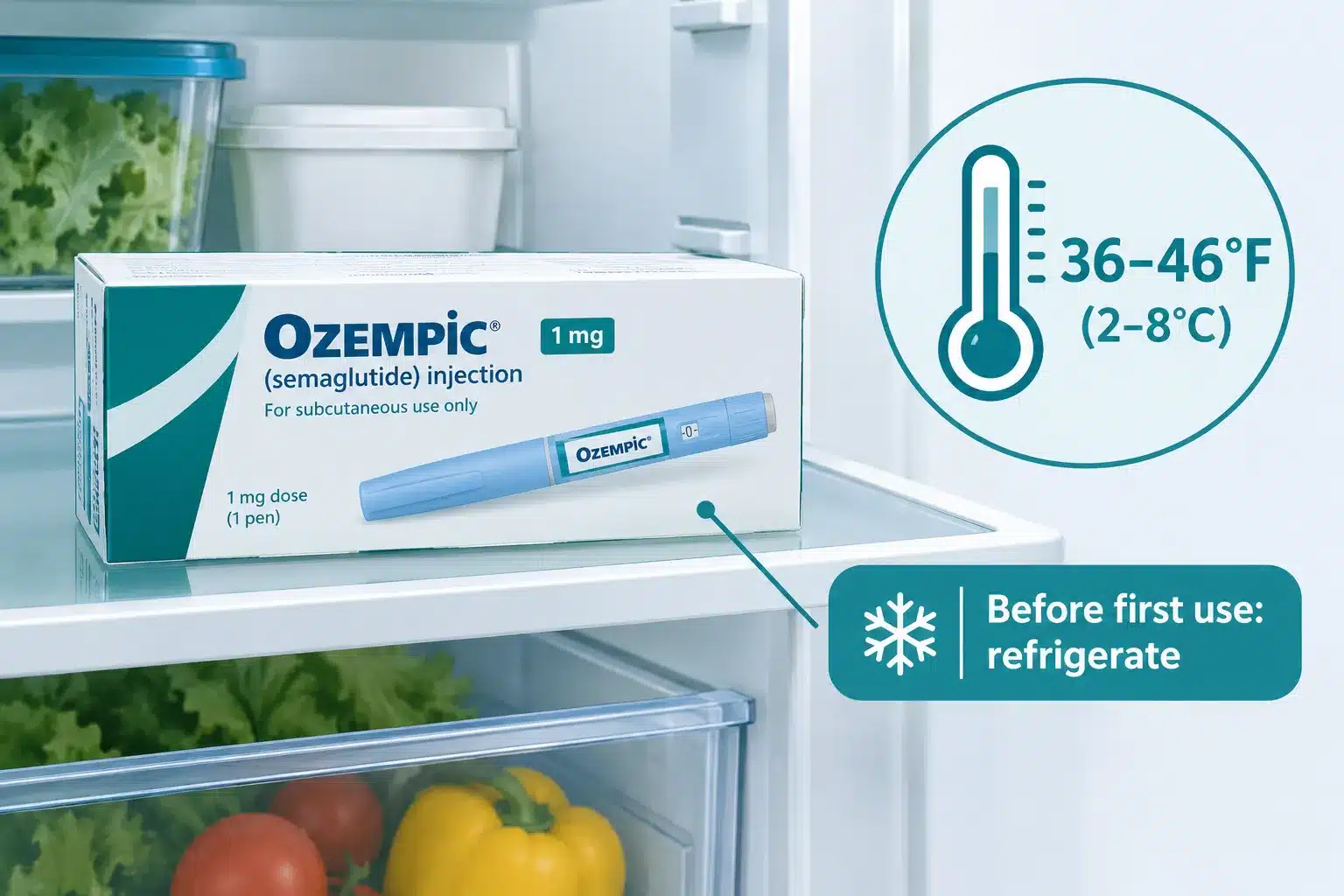
Ozempic pens that have not been used yet belong in the refrigerator, at a temperature range of 36°F to 46°F (2°C to 8°C) [Source: novomedlink.com][1]. This is the manufacturer’s standard for preserving the semaglutide formulation before it’s ever injected.
Once you open a pen for use, the temperature rules loosen:
- Before first use: Refrigerate only, 36°F, 46°F.
- After first use: Refrigerator OR room temperature, up to 86°F (30°C) [2].
- Never: Freezing temperatures or anything above 86°F.
Choose refrigeration for opened pens if you have consistent fridge access and want the longest possible stability margin. Choose room-temperature storage if you travel often or don’t want to fumble with a cold pen before injecting, both are approved by the manufacturer [2].
How Long Can Ozempic Stay Out of the Fridge
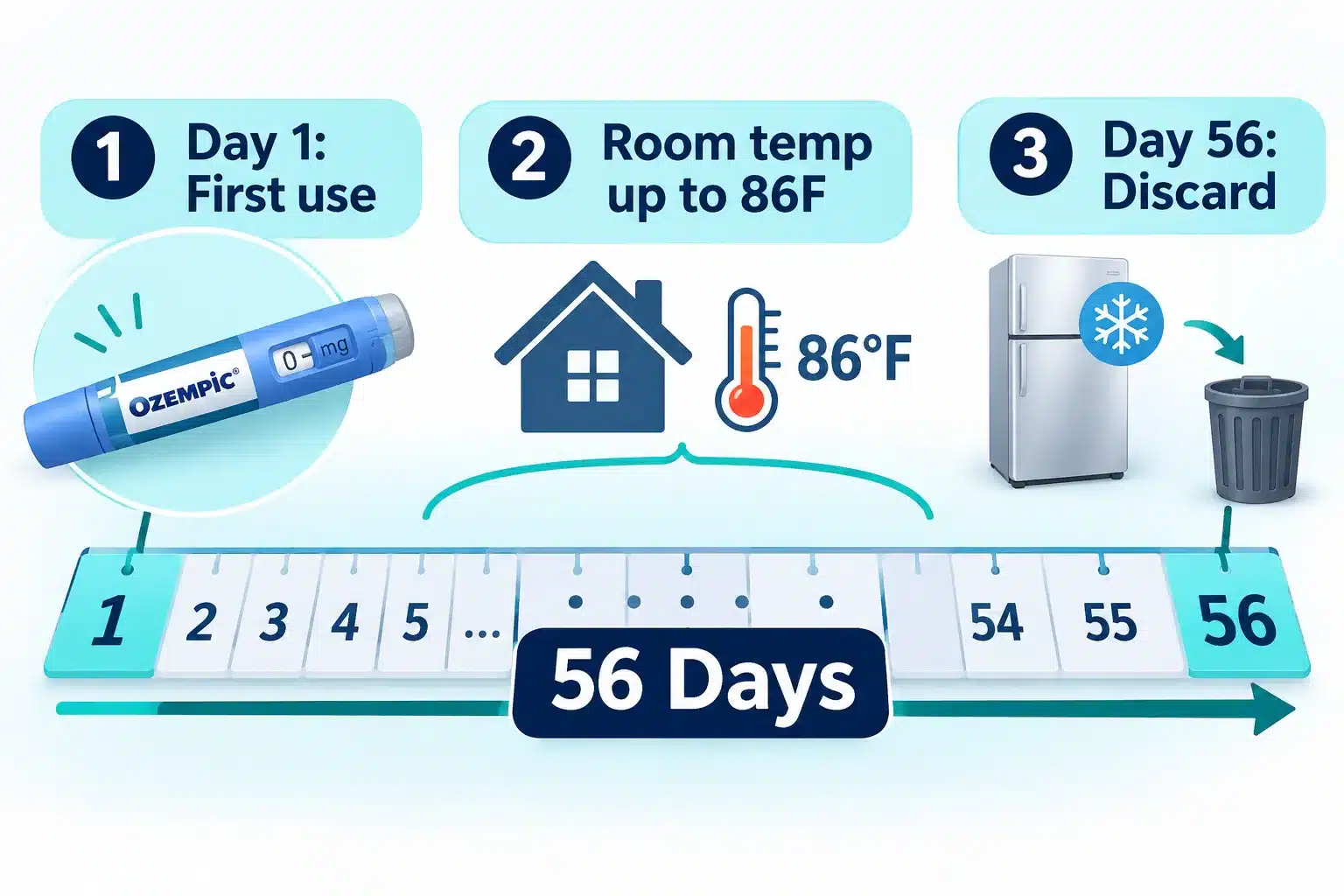
An in-use Ozempic pen can stay out of the fridge for up to 56 days, as long as it stays below 86°F (30°C) [Source: Ozempic FAQ][2]. After 56 days at room temperature, the pen should be discarded regardless of how much medication remains.
This 56-day window is the single most important practical rule for people on Ozempic. It means you genuinely do not need a dorm-sized fridge dedicated to your pen. A kitchen counter, bedside table, or travel bag works fine, provided the room doesn’t get dangerously hot.
Common mistake: Assuming the 56-day clock resets every time you put the pen back in the fridge. It does not. The countdown starts the day you first use the pen and runs continuously, whether the pen sits in the fridge or on the counter [2].
Does Ozempic Go Bad If It Gets Frozen
Yes. Freezing destroys the molecular stability of semaglutide, and a frozen Ozempic pen must be discarded even if it thaws and looks visually normal [Source: Ozempic FAQ][2][3]. There is no way to safely “unfreeze and use” a pen that has frozen solid.
This matters because refrigerator placement is a common culprit. Pens stored against the back wall of a fridge, near the cooling vent, can freeze without anyone noticing. If you suspect freezing:
- Do not inject the medication.
- Dispose of the pen in an approved sharps container.
- Contact your pharmacy for a replacement.
Edge case: A pen that froze briefly during shipping (common in winter with mail-order pharmacies) should still be treated as compromised. When in doubt, don’t use it, the cost of a wasted dose is far lower than the risk of an ineffective or degraded injection.
Can You Use Ozempic After Leaving It Out Overnight
In most cases, yes, a single overnight lapse at normal indoor room temperature (below 86°F) does not automatically spoil an in-use pen, since the 56-day room-temperature allowance already covers this [2]. The bigger concern is unopened pens that were meant to stay refrigerated.
- In-use pen, left out overnight indoors: Generally fine, counts toward the 56-day limit.
- Unopened pen, left out overnight: Still likely usable if indoor temperatures stayed moderate, but check for visible changes and consider contacting your pharmacist if you’re unsure [3].
- Pen left in a hot car overnight: Discard it. Heat exposure above 86°F is a clear “do not use” situation [2].
If you’re newly started on treatment and still learning the ropes, our guide on how long it takes for GLP-1 medications to work explains what to expect in the early weeks, so a storage mishap doesn’t derail your routine.
How to Travel With Ozempic and Keep It Cold
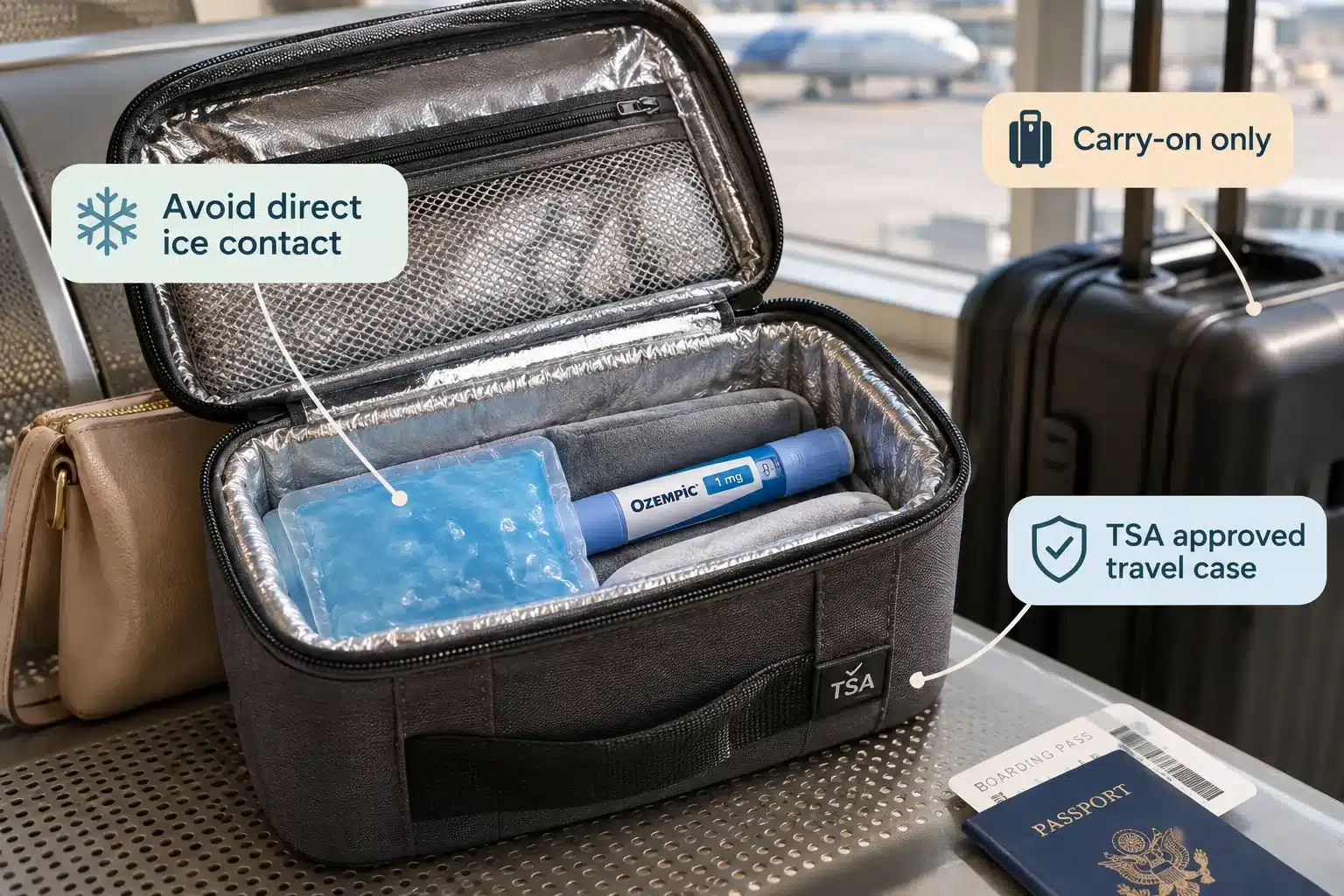
The safest way to travel with Ozempic is to use a small insulated medical travel case with a reusable gel pack, keeping the pen cool but never in direct contact with ice [Source: Healthline][5]. Direct ice contact can functionally freeze the pen, which defeats the purpose of trying to protect it.
Checklist for travel:
- Pack the pen in its original box with the pharmacy label visible.
- Use an insulated pouch rated for diabetic or injectable medications.
- Add a gel ice pack, wrapped in a thin cloth barrier, never bare ice.
- Keep the case in your carry-on, not checked luggage.
- Carry a printed prescription or pharmacy note for security screening.
Decision rule: If your trip is under a day and indoor temperatures stay moderate, a basic insulated lunch bag with a small gel pack is enough. For multi-day travel through hot climates, upgrade to a dedicated medical cooler with a temperature-stable gel insert.
Do You Need to Refrigerate Ozempic After Opening It
No, refrigeration is optional after opening. Once a pen is in use, you can keep it in the fridge or at room temperature up to 86°F, whichever is more convenient for your routine [1][2].
Some patients prefer refrigeration after opening because:
- It feels more consistent with how they store other injectables.
- It may reduce injection-site stinging for sensitive skin (keeping it slightly cooler, though many people instead let a refrigerated pen sit out a few minutes before injecting for comfort).
Others prefer room temperature because:
- It’s one less thing to remember.
- It avoids the discomfort of injecting cold medication.
Both approaches are backed by the manufacturer’s labeling, so this is genuinely a personal preference decision, not a safety trade-off [2].
How to Store Ozempic Pens Before First Use
Unopened Ozempic pens must go straight into the refrigerator at 36°F, 46°F and stay there until the day you start using them [1]. This is non-negotiable, unlike opened pens, unused ones don’t have a room-temperature option.
Best practices for unopened pens:
- Store in the original carton to protect from light.
- Place in the fridge door or a middle shelf, away from the back wall (to avoid accidental freezing).
- Avoid storing near the fridge’s cooling element.
- Check the expiration date printed on the box before use.
If you’re newly prescribed and comparing options, our overview of semaglutide brand names including Ozempic, Wegovy, and Rybelsus can help you understand how storage differs slightly across formulations.
Can You Tell If Ozempic Went Bad or Expired
Yes, there are visible warning signs. Ozempic should be a clear, colorless liquid, and any cloudiness, discoloration, or visible particles mean the pen should not be used [Source: Healthline][3].
Signs a pen may be compromised:
| Sign | What it means |
|---|---|
| Cloudy or discolored liquid | Likely degraded; discard |
| Visible particles or clumps | Contamination or degradation; discard |
| Pen was frozen | Discard, even if it looks normal |
| Past the 56-day in-use limit | Discard regardless of appearance |
| Past the printed expiration date | Discard |
Example: If you’ve been using a pen for 50 days and it’s been sitting at room temperature the whole time, check the liquid before every injection. Clear and colorless at day 50 is still fine to use through day 56, but day 57 means it goes in the sharps bin no matter how it looks.
Is It Okay to Store Ozempic in a Regular Cooler
Yes, a regular cooler works for short-term transport as long as the pen doesn’t sit directly against ice or ice packs that could drop it below freezing [3][5]. The goal is cool, not frozen.
Tips for using a standard cooler:
- Wrap the pen in a cloth or small pouch before placing it near ice packs.
- Check the cooler’s internal temperature periodically if traveling for several hours.
- Avoid loading the cooler with dry ice, which can freeze contents even through packaging.
Choose a regular cooler if you’re on a day trip or short drive. Choose a dedicated medical travel case if you’re flying, traveling for multiple days, or heading somewhere with extreme heat.
What Happens If Ozempic Gets Too Warm in Summer
Ozempic that is exposed to temperatures above 86°F (30°C) for extended periods may lose potency and should not be used, even if it looks visually normal [2]. Summer heat is one of the most common real-world risks for people managing GLP-1 medications.
High-risk summer situations:
- Leaving a pen in a hot car, even briefly, on a warm day.
- Carrying a pen in a bag left in direct sun at the beach or a backyard event.
- Storing a pen near a sunny window at home during a heat wave.
Common mistake: Assuming a few minutes of heat exposure is harmless. Car interiors can exceed 100°F within 10 minutes on a warm day, well past the safe threshold. If you’re unsure whether your pen got too hot, treat it as compromised and request a replacement rather than risk an underdosed injection.
Can You Bring Ozempic on a Plane in Your Carry-On
Yes. The TSA permits medically necessary injectable medications, including Ozempic pens, needles, and accompanying supplies, in carry-on luggage [Source: Healthline][5]. You do not need a doctor’s note to fly with it, though carrying one can simplify screening.
Practical flying tips:
- Keep pens in their original packaging with the pharmacy label.
- Declare the medication to the TSA agent before screening if it’s in an insulated case.
- Pack supplies (needles, alcohol wipes, sharps container) together in one labeled pouch.
- Avoid checked baggage, since cargo holds can reach freezing temperatures at altitude.
If you’re also weighing telehealth options for prescriptions while traveling frequently, see our breakdown of MedVi’s pricing and membership structure for how ongoing access typically works.
How Does Ozempic Storage Compare to Other Diabetes Shots
Ozempic’s storage rules are broadly similar to other GLP-1 and insulin injectables: refrigerate before use, allow room-temperature flexibility after opening, and never freeze [Source: Novo Nordisk Medical][6]. The main differences show up in the exact day limits.
| Medication type | Before first use | After opening (room temp) |
|---|---|---|
| Ozempic pen | Refrigerate, 36-46°F | Up to 56 days, below 86°F [2] |
| Single-dose prefilled syringe | Refrigerate | Up to 28 days [4] |
| Many other GLP-1 RAs | Refrigerate | Varies, often 28-56 days [6] |
If you’re comparing GLP-1 options beyond Ozempic, our comparison of how compounded semaglutide differs from Ozempic covers formulation and storage differences in more depth.
Best Portable Cooling Options for Ozempic While Traveling
The most reliable portable cooling setup combines an insulated medical pouch, a slim gel ice pack, and a thermometer strip to confirm the internal temperature stays in range [5]. This setup works for road trips, flights, and multi-day travel alike.
Good options, ranked by convenience:
- Dedicated diabetic travel case, purpose-built, often with gel inserts included.
- Small insulated lunch bag plus a reusable gel pack, budget-friendly, works for day trips.
- Pharmacy-provided cold pack and foam sleeve, minimal but functional for short errands.
Avoid relying on standard ice cubes alone; melting ice creates inconsistent temperatures and a real risk of accidental freezing if the pen touches it directly [3].
What Should You Do If Your Ozempic Accidentally Froze
If your Ozempic pen froze, do not use it, even after it thaws and appears normal. Dispose of it properly and contact your pharmacy or prescriber for a replacement [2][3].
Steps to take:
- Confirm the pen was actually frozen (check for ice crystals, a fridge set too cold, or storage near the freezer compartment).
- Place the pen in a sharps-safe container, do not attempt to inject it.
- Call your pharmacy to explain the situation; many will replace a pen damaged in storage or shipping, though policies vary [VERIFY: check with your specific pharmacy or insurer].
- Going forward, store pens in the fridge door or a middle shelf rather than against the back wall.
For readers tracking progress during early treatment, our article on 6-week Ozempic weight loss results shows how a single storage mishap is a minor hiccup compared to the bigger picture of sticking with treatment consistently.
FAQ
Does Ozempic need to be refrigerated the entire time I’m using it?
No. Only unopened pens require refrigeration. Once in use, you can keep the pen refrigerated or at room temperature (up to 86°F) for up to 56 days [2].
What temperature ruins Ozempic?
Freezing temperatures and anything above 86°F (30°C) can compromise Ozempic. Both extremes require you to discard the pen [2][3].
Can I take Ozempic through airport security?
Yes, TSA allows injectable medications like Ozempic in carry-on luggage. Carrying the original box with the pharmacy label helps speed up screening [5].
How long can an opened Ozempic pen sit out?
Up to 56 days, as long as the temperature stays below 86°F. After 56 days, discard the pen even if medication remains [2].
Is it safe to use Ozempic that was left in a hot car?
No. Heat exposure above 86°F can degrade the medication. Discard the pen and get a replacement [2].
Do single-dose Ozempic syringes have the same storage rules as pens?
No. Single-dose prefilled syringes have a shorter non-refrigerated window of 28 days, compared to 56 days for the multi-dose pen [4].
Can I put Ozempic directly on ice while traveling?
No. Direct ice contact can freeze the medication. Use a gel pack with a cloth barrier instead [3][5].
How do I know if my Ozempic pen is still good?
Check that the liquid is clear and colorless, confirm you’re within the 56-day or expiration window, and verify it was never frozen or overheated [2][3].
7 Best GLP-1 Providers Ranked: Accreditation, Flexibility & Support Compared (2026 Update)
32,000+ Patients Can't All Be Wrong: See the Top-Rated GLP-1 Providers: Compared on accreditation, plan flexibility, and patient support — updated for 2026.
BMI MD GLP-1 Microdosing Plan
- Specialized microdosing options (sublingual drops or low-dose injections)
- Ideal for maintaining weight or tapering off higher doses safely
- Fully bundled plan with no hidden monthly platform memberships
DirectMeds Weight Loss Solutions
- Sourced from accredited, state-licensed 503A compounding pharmacies
- No-frills high-volume savings passed directly to the patient
- Includes clinical consultation and cold-chain shipping updates
MEDVi Flat-Rate Telehealth
- Flat monthly rate holds steady even at maximum maintenance doses
- No dosage upcharges or graduation fee penalties
- Offers both injectable and advanced oral thin-film delivery options
Gala GLP-1 Care Program
- All-inclusive plan with no standalone membership costs
- Continuous text-based messaging access with state-licensed clinicians
- Temperature-controlled, cold-chain medication shipping included
Measured GLP-1 Metabolic Health
- Comprehensive metabolic health screening and expert intake analysis
- Predictable long-term budgeting with stable plan pricing
- High-end responsive dashboard with integrated diagnostic support
Refills GLP-1 (TryRefills Plan)
- Flat rate holds steady as titration scales up
- Includes clinical guides for active side-effect management
- Bundles in foundational nutritional strategies alongside medication
AltRx GLP-1 Transactional Reorders
- Zero recurring auto-billing — pay entirely on a transactional basis
- Rapid text-to-order format saves time for experienced patients
- Provides both injectable forms and fast-dissolving tablet variations
Conclusion
Storage rules for Ozempic come down to three numbers worth memorizing: 36-46°F before first use, 86°F as the upper heat limit after opening, and 56 days as the maximum room-temperature window once you start a pen. Freezing is always a dealbreaker, and extreme heat, especially hot cars in summer, is the most common real-world risk. If you travel often, a simple insulated case with a gel pack solves most problems, and TSA rules make flying with Ozempic straightforward. Your next step: check where your current pen has been stored, confirm it falls within these limits, and if anything seems off, call your pharmacist before your next injection rather than guessing.
This article is for informational purposes only and is not medical advice. Talk to a licensed healthcare provider before starting or changing any medication.
References
- Pen. novomedlink.com.
- Ozempic Pen. ozempic.com.
- Does Ozempic Need to Be Refrigerated. healthline.com.
- Ozempic Injected 3544784. drugs.com.
- How to Travel with Ozempic. healthline.com.
- Glp 1 Ras. novonordiskmedical.com.


