
How Much Is Saxenda Without Insurance? (And With Coverage)

Last updated: October 29, 2026
Quick Answer
How much is Saxenda without insurance, and with coverage? Without insurance, Saxenda typically costs $1,300 to $1,900 per month at the pharmacy, with a manufacturer list price near $1,349.02 for a 30-day supply of five pens [1][2]. With insurance, your cost depends entirely on your plan’s formulary, but many commercially insured patients pay a copay as low as $25 through the manufacturer’s savings program, while others pay full price if their plan excludes weight-loss drugs [3].
Key Takeaways
- Saxenda’s manufacturer list price is about $1,349.02 per month for a standard 30-day supply of five pens [1][2].
- Cash prices at U.S. pharmacies typically range from $1,292 to $1,898 per month depending on location and pharmacy [4][5][6].
- Discount cards like GoodRx can drop the price to roughly $372 to $600 per carton for some patients [5].
- Insurance coverage varies by plan; many require prior authorization documenting BMI and comorbidities [7].
- Novo Nordisk’s savings card can lower copays to as little as $25 for eligible commercially insured patients [3].
- Generic liraglutide, Saxenda’s active ingredient, can cost far less, sometimes $160 to $402 per month without insurance [6][7].
- Medicare does not typically cover Saxenda for weight loss alone, though coverage rules are evolving [8].
What Is Saxenda and What Does It Do
Saxenda is a brand-name injectable medication containing liraglutide, a GLP-1 receptor agonist approved by the FDA for chronic weight management in adults and some adolescents with obesity or excess weight plus related health conditions. It works by slowing digestion and signaling fullness to the brain, which helps reduce appetite and food intake.
7 Best GLP-1 Providers Ranked: Accreditation, Flexibility & Support Compared (2026 Update)
32,000+ Patients Can't All Be Wrong: See the Top-Rated GLP-1 Providers. We compared the leading online GLP-1 providers based on program features, clinical support, convenience, and overall value.
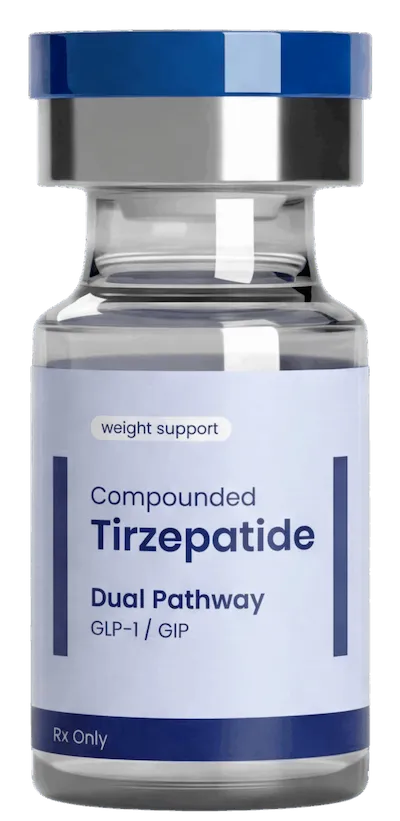
BMI MD GLP-1 Microdosing Plan
- Specialized microdosing options, including sublingual drops and low-dose injections
- Designed for people interested in maintaining weight or gradually adjusting treatment
- Bundled program structure without a separate monthly platform membership
- Online access makes the process convenient from home

DirectMeds Weight Loss Solutions
- Online weight-loss program with a straightforward patient experience
- Compounded medication options through state-licensed compounding pharmacies
- Includes clinical consultation as part of the process
- Provides shipping updates to help patients track their orders
MEDVi Flat-Rate Telehealth
- Flat-rate telehealth approach designed for easier budgeting
- No dosage-based pricing increases within the advertised program structure
- Offers injectable and oral thin-film delivery options
- Includes medical screening and asynchronous provider consultations
Gala GLP-1 Care Program
- Text-based access to state-licensed clinicians
- Cold-chain medication shipping included in the program
- Month-to-month program structure
- Designed for people who value convenient ongoing support
Measured GLP-1 Metabolic Health
- Comprehensive metabolic health screening and intake analysis
- Designed around longer-term metabolic health management
- Responsive dashboard with integrated health tracking tools
- Useful option for patients who value a more data-focused experience
Refills GLP-1 (TryRefills Plan)
- Clinical guidance designed to help patients manage common treatment concerns
- Includes foundational nutritional strategies alongside medication
- Designed around predictable ongoing treatment
- No hidden startup or processing fees according to the program information provided
AltRx GLP-1 Transactional Reorders
- Transactional reorder model without recurring auto-billing
- Designed for patients who already understand their treatment routine
- Fast text-to-order process for convenient reorders
- Offers injectable and fast-dissolving tablet variations
Unlike once-weekly GLP-1 drugs such as semaglutide (Ozempic, Wegovy), Saxenda requires a daily injection. Patients typically start at a low dose and gradually increase over several weeks to the maintenance dose of 3.0 mg, which helps reduce nausea and other digestive side effects.
If you’re exploring the broader category of weight-loss injectables, our guide to GLP-1s without insurance covers how Saxenda compares to other options on the market.
How Much Does Saxenda Cost Per Month Without Insurance
Without insurance, Saxenda generally costs between $1,292 and $1,898 per month for a standard carton of five pens (18 mg/3 mL), depending on the pharmacy and region [4][5][6]. The manufacturer’s list price sits at $1,349.02, which many pharmacies use as a benchmark before applying their own markups [1][2].
Some pricing databases report even higher figures, with one cost breakdown citing a typical cash price near $1,803 per month, which adds up to more than $21,000 per year for patients paying full price without any discount [9]. That number assumes the standard maintenance dose and no coupon or assistance program.
Choose a discount card first if you’re paying cash. Services like GoodRx can bring the price down to the $372,$600 range for a one-month carton, which is a meaningful reduction from list price [5].
Does Insurance Cover Saxenda for Weight Loss
Insurance coverage for Saxenda is inconsistent: some plans cover it fully or with a copay, others exclude weight-loss drugs entirely, and many require prior authorization before approving payment [10]. There’s no single “insured price” because every formulary treats Saxenda differently.
Key factors that determine your coverage:
- Whether your plan classifies Saxenda as medically necessary for obesity management versus a lifestyle drug
- Your plan’s specific drug tier and copay structure
- Documentation your doctor provides showing BMI and related health conditions
- Whether your employer’s plan opted into weight-loss drug coverage at all
Common mistake: assuming all commercial insurance automatically covers GLP-1 weight-loss drugs. Many plans still exclude them, so it’s worth calling your insurer directly before filling the prescription.
Which Insurance Companies Cover Saxenda
Coverage decisions are made plan-by-plan rather than insurer-wide, so two people with the same insurance company can have different outcomes depending on their employer’s benefit design [10]. Large national insurers including Aetna, Cigna, UnitedHealthcare, and Blue Cross Blue Shield affiliates may cover Saxenda under certain plans, but prior authorization is common across most of them [7].
If you have a Kaiser Permanente plan, our article on does Kaiser cover GLP-1 for weight loss walks through how that specific insurer handles GLP-1 obesity drugs, which gives a useful model for how other insurers approach coverage decisions.
Decision rule: call the number on your insurance card and ask specifically whether Saxenda is covered under your pharmacy benefit for “chronic weight management,” not just “diabetes,” since some reps confuse it with Victoza.
How Much Is Saxenda With Medicare or Medicaid
Medicare Part D has historically excluded weight-loss drugs from coverage, which means most Medicare beneficiaries pay full cash price for Saxenda unless prescribed for an approved secondary condition [8]. Medicaid coverage varies significantly by state, with some states covering GLP-1 weight-loss drugs and others excluding them entirely.
If you’re on Medicare and considering Saxenda, check directly with your Part D plan, since coverage rules for obesity medications are shifting and some plans have started covering GLP-1 drugs for related conditions like cardiovascular risk [8]. Medicaid recipients should contact their state program, because coverage differences are substantial from state to state.
Edge case: if you have both diabetes and obesity, your doctor may be able to document the prescription under a covered indication, which sometimes changes the outcome even when weight-loss use alone is excluded.
Why Is Saxenda So Expensive
Saxenda’s high price reflects its status as a branded, patent-protected GLP-1 medication with a daily-injection delivery system and years of manufacturer-funded development and marketing costs [1][9]. Manufacturers set list prices that pharmacies and insurers then negotiate against, but for cash-paying patients, that negotiation never happens, so they absorb the full list price.
There’s also limited competition in the exact liraglutide-for-weight-loss category, since Saxenda was one of the earlier GLP-1 drugs approved specifically for obesity, before Wegovy and Zepbound entered the market. Without multiple competing brands at the same dose and indication, pricing pressure stays low.
Saxenda vs Ozempic: Which One Is Cheaper
Ozempic is generally cheaper than Saxenda for people paying cash, though it’s FDA-approved for type 2 diabetes rather than weight loss specifically, which affects insurance coverage differently. Saxenda’s list price of $1,349.02 is comparable to Ozempic’s cash price range, but Ozempic’s once-weekly dosing and broader insurance acceptance for diabetes often make it more accessible for eligible patients.
| Factor | Saxenda | Ozempic |
|---|---|---|
| Dosing frequency | Daily injection | Weekly injection |
| FDA approval | Chronic weight management | Type 2 diabetes |
| Typical cash price/month | $1,300,$1,900 [4][6] | Varies by dose [varies] |
| Insurance pathway | Weight-loss formulary | Diabetes formulary (often easier) |
For a full cost breakdown of Ozempic specifically, see our guide to Ozempic cost without insurance and the cheapest ways to pay, and for insurance specifics, our article on does insurance cover Ozempic across Medicare, Medicaid, and private plans breaks down coverage rules in more detail.
Are There Cheaper Alternatives to Saxenda
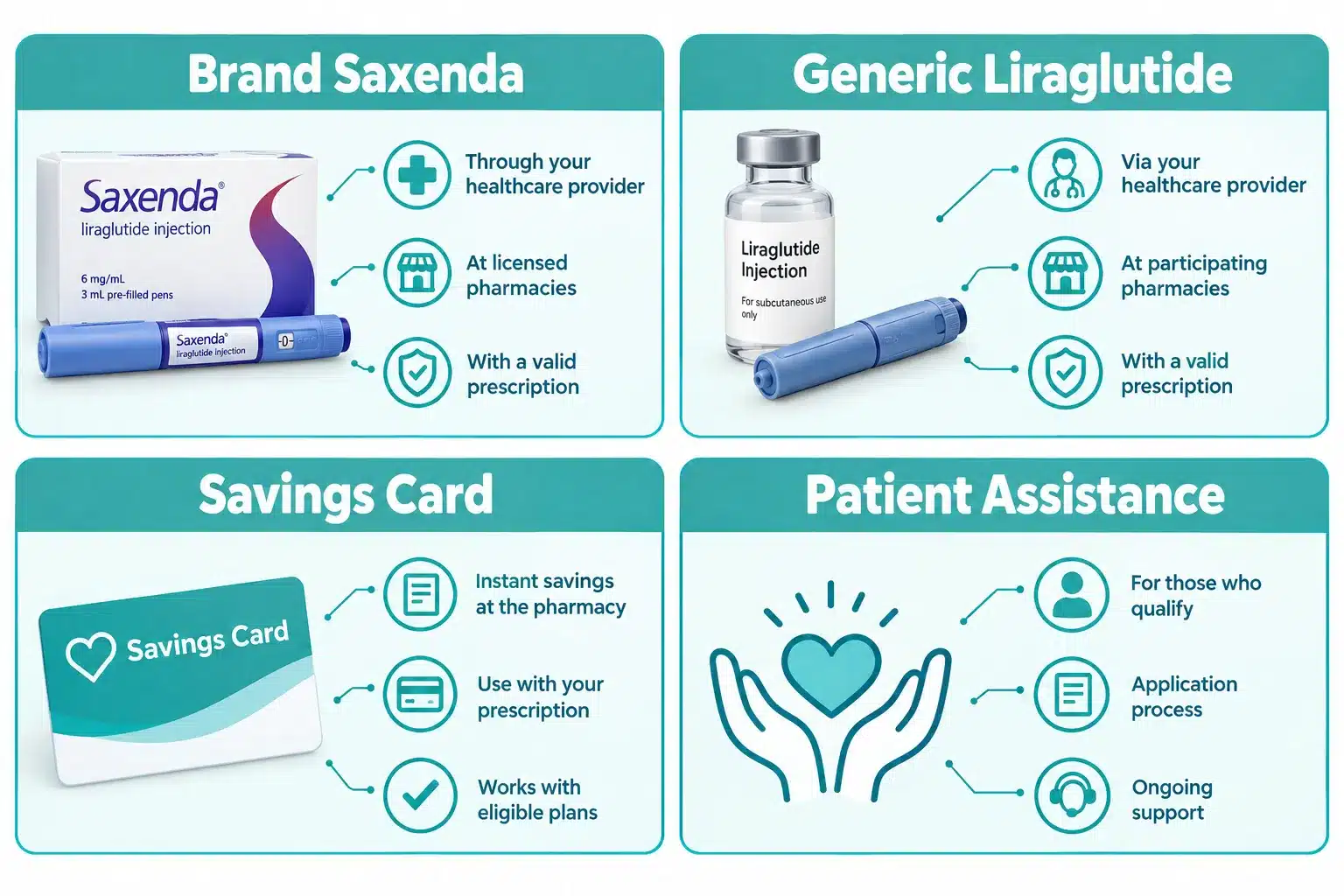
Yes, generic liraglutide is the most direct cheaper alternative to Saxenda, since it contains the identical active ingredient at a fraction of the brand-name price. Cash prices for generic liraglutide have been reported as low as $160.20 to $256.06 per month at typical pharmacies, and as low as $20 per month with insurance for certain Teva-manufactured generics.
Other alternatives worth discussing with your doctor include:
- Victoza, the diabetes-labeled version of liraglutide, sometimes prescribed off-label
- Wegovy or Ozempic (semaglutide), which may have different insurance pathways
- Compounded liraglutide or semaglutide through licensed pharmacies, where legally available
If you want a broader comparison of low-cost options across the GLP-1 category, our roundup of the most affordable GLP-1 without insurance covers several alternatives side by side, and our general guide to GLP-1 without insurance explains the broader cash-pay landscape.
Can You Get Saxenda Coupons or Patient Assistance Programs
Yes, Novo Nordisk offers a Saxenda savings card for eligible commercially insured patients that can reduce out-of-pocket costs to as little as $25, or save up to $200 per prescription [3]. This program does not apply to patients on Medicare, Medicaid, or other government insurance.
Beyond the manufacturer card, options include:
- GoodRx or SingleCare discount cards, which can bring cash prices down to the $372,$600 range [5]
- Novocare’s coverage-check tool, which helps both insured and uninsured patients find savings resources [8]
- Patient assistance programs for low-income or uninsured individuals, which depend on income eligibility
Choose the manufacturer savings card if you have commercial insurance and want the lowest possible copay. Choose a discount card instead if you’re uninsured or on a government plan, since manufacturer cards typically exclude those groups.
How Do I Know If I Qualify for Saxenda
You likely qualify for Saxenda if you have a BMI of 30 or higher, or a BMI of 27 or higher with at least one weight-related condition such as high blood pressure, type 2 diabetes, or high cholesterol, based on the FDA-approved indication for chronic weight management. A licensed prescriber makes the final determination after reviewing your health history.

Insurance plans often use these same BMI thresholds to decide whether to approve coverage, which is why documentation from your doctor matters so much during prior authorization. If your cholesterol is a contributing factor, reviewing foods to avoid with high cholesterol on a cholesterol-conscious diet alongside medication can support a stronger overall treatment plan.
Saxenda Cost Per Injection or Pen
Each Saxenda pen contains multiple daily doses, and a standard monthly carton includes five pens designed to last about 30 days at the maintenance dose. Dividing the list price of $1,349.02 across a 30-day supply works out to roughly $45 per day at full price, though actual per-pen cost varies by dose stage since patients start lower and titrate upward [1][2].
During the first few weeks of titration, pens may last longer since the daily dose is smaller, which slightly reduces the effective daily cost compared to the full maintenance dose.
Does Saxenda Actually Work for Weight Loss
Saxenda has been shown in clinical research to help patients lose a meaningful percentage of body weight when combined with diet and exercise, though individual results vary and the medication works best as part of a broader lifestyle change. It is not a guaranteed or automatic weight-loss solution, and results depend on adherence, dose, and individual response.
Patients should discuss realistic expectations with their prescriber, since weight-loss outcomes differ from person to person and are influenced by diet, activity level, and how consistently the medication is taken.
What Are the Side Effects of Saxenda
The most common side effects of Saxenda include nausea, diarrhea, constipation, vomiting, and low appetite, which tend to be more pronounced during dose escalation. Saxenda carries a boxed warning about thyroid C-cell tumors observed in rodent studies, and it is not recommended for people with a personal or family history of medullary thyroid carcinoma or Multiple Endocrine Neoplasia syndrome type 2.
Anyone considering Saxenda should discuss their full medical history with a healthcare provider, including any history of pancreatitis, gallbladder disease, or kidney problems, before starting treatment.
How Long Do You Need to Take Saxenda
Most patients take Saxenda for an extended period, often many months to years, since weight regain is common if the medication is stopped without a maintained lifestyle plan. There is no fixed universal timeline, and your prescriber will reassess your dose and continued need periodically based on your progress and tolerance.
Stopping a GLP-1 medication typically should happen under medical guidance rather than abruptly, since appetite and weight trends often shift once the medication is discontinued.
FAQ
How much is Saxenda without insurance per month? Without insurance, Saxenda typically costs between $1,292 and $1,898 per month for a standard five-pen carton, with the manufacturer list price at $1,349.02 [1][4][6].
How much is Saxenda with insurance? With insurance, cost depends on your plan’s formulary and prior authorization requirements; some patients pay copays as low as $25 through the manufacturer savings card, while others pay full price if coverage is denied [3].
Is there a generic version of Saxenda? Generic liraglutide is available and can cost significantly less, sometimes between $160 and $402 per month without insurance [6][7].
Does Medicare cover Saxenda? Medicare Part D has traditionally excluded weight-loss drugs like Saxenda, though coverage rules are evolving and vary by plan [8].
What is the Saxenda savings card? It’s a Novo Nordisk program for eligible commercially insured patients that can reduce out-of-pocket costs to as little as $25 per prescription [3].
Is Saxenda cheaper than Ozempic? Ozempic is often cheaper for cash-paying patients, though pricing varies by dose and pharmacy, and insurance pathways differ since the drugs have different FDA approvals.
How long does one Saxenda pen last? A standard carton of five pens is designed to last about 30 days at the maintenance dose, though it may last longer during the lower-dose titration period.
Can I use a discount card and insurance together for Saxenda? Generally no, discount cards and insurance coverage cannot be combined; you use whichever option gives you the lower price.
7 Best GLP-1 Providers Ranked: Accreditation, Flexibility & Support Compared (2026 Update)
32,000+ Patients Can't All Be Wrong: See the Top-Rated GLP-1 Providers: Compared on accreditation, plan flexibility, and patient support — updated for 2026.
BMI MD GLP-1 Microdosing Plan
- Specialized microdosing options (sublingual drops or low-dose injections)
- Ideal for maintaining weight or tapering off higher doses safely
- Fully bundled plan with no hidden monthly platform memberships
DirectMeds Weight Loss Solutions
- Sourced from accredited, state-licensed 503A compounding pharmacies
- No-frills high-volume savings passed directly to the patient
- Includes clinical consultation and cold-chain shipping updates
MEDVi Flat-Rate Telehealth
- Flat monthly rate holds steady even at maximum maintenance doses
- No dosage upcharges or graduation fee penalties
- Offers both injectable and advanced oral thin-film delivery options
Gala GLP-1 Care Program
- All-inclusive plan with no standalone membership costs
- Continuous text-based messaging access with state-licensed clinicians
- Temperature-controlled, cold-chain medication shipping included
Measured GLP-1 Metabolic Health
- Comprehensive metabolic health screening and expert intake analysis
- Predictable long-term budgeting with stable plan pricing
- High-end responsive dashboard with integrated diagnostic support
Refills GLP-1 (TryRefills Plan)
- Flat rate holds steady as titration scales up
- Includes clinical guides for active side-effect management
- Bundles in foundational nutritional strategies alongside medication
AltRx GLP-1 Transactional Reorders
- Zero recurring auto-billing — pay entirely on a transactional basis
- Rapid text-to-order format saves time for experienced patients
- Provides both injectable forms and fast-dissolving tablet variations
Conclusion
Saxenda’s price tag without insurance, often $1,300 to $1,900 a month, makes it one of the more expensive GLP-1 options on the market, while coverage with insurance can bring costs down dramatically if your plan approves it. Your actual cost depends heavily on your insurance formulary, whether you qualify for the manufacturer savings card, and whether generic liraglutide is a reasonable substitute for your situation. Before starting or switching, talk with your prescriber about documentation needed for prior authorization and ask your insurer directly whether weight-management drugs are covered under your plan. If Saxenda turns out to be unaffordable even with these options, explore the GLP-1 without insurance guide for a broader look at lower-cost paths to GLP-1 treatment.
This article is for informational purposes only and is not medical advice. Talk to a licensed healthcare provider before starting or changing any medication.
References
- Saxenda Costs. forbes.com.
- Saxenda Cost. weightwatchers.com.
- Saxenda Patient 3 Step Office Tool Digital Us20sx00121. saxenda.com.
- Saxenda. singlecare.com.
- Saxenda. goodrx.com.
- How Much Is Saxenda Without Insurance. goodrx.com.
- Saxenda Wegovy Weight Loss Drug Right You 3578889. drugs.com.
- Check Coverage. novocare.com.
- Saxenda Without Insurance. singlecare.com.
- Saxenda Cost. healthline.com.