
glp 1 without insurance
Last updated: October 1, 2026
Quick Answer
Getting a GLP-1 medication without insurance is possible and increasingly accessible in 2026. Brand-name options like Wegovy and Ozempic carry list prices of $935 to $1,349 per month, but self-pay programs, manufacturer assistance, and telehealth platforms can bring that cost down to $149 to $499 per month for many patients. Your actual out-of-pocket cost depends on which drug you need, your income level, and which savings channels you use.
Key Takeaways
- Brand-name GLP-1 medications cost $935 to $1,349 per month at list price without insurance coverage [1][2]
- Novo Nordisk’s NovoCare self-pay program offers semaglutide starting at $149 to $299 per month for eligible patients [1][7]
- The Novo Nordisk Patient Assistance Program can provide free medication for uninsured patients at or below 400% of the federal poverty level (roughly $63,840 for a single person in 2026) [4][7]
- Wegovy is frequently excluded from the main patient assistance program and instead relies on separate savings offers [3][10]
- Telehealth platforms have made it faster and cheaper to get a GLP-1 prescription without insurance
- GoodRx and similar discount tools can reduce pharmacy costs meaningfully at participating pharmacies [8]
- Compounded semaglutide was a popular low-cost alternative, but FDA regulatory changes in 2025 to 2026 have limited its availability
- Side effects are real and manageable for most people, but GLP-1 medications are not appropriate for everyone
- A telehealth consultation is often the fastest path to a prescription if you have no insurance
What Is GLP-1 and How Does It Work
GLP-1 (glucagon-like peptide-1) is a hormone your gut naturally releases after eating. GLP-1 receptor agonist medications mimic this hormone to reduce appetite, slow digestion, and help regulate blood sugar, making them effective for both type 2 diabetes management and weight loss.
7 Best GLP-1 Providers Ranked: Accreditation, Flexibility & Support Compared (2026 Update)
32,000+ Patients Can't All Be Wrong: See the Top-Rated GLP-1 Providers. We compared the leading online GLP-1 providers based on program features, clinical support, convenience, and overall value.
BMI MD GLP-1 Microdosing Plan
- Specialized microdosing options, including sublingual drops and low-dose injections
- Designed for people interested in maintaining weight or gradually adjusting treatment
- Bundled program structure without a separate monthly platform membership
- Online access makes the process convenient from home

DirectMeds Weight Loss Solutions
- Online weight-loss program with a straightforward patient experience
- Compounded medication options through state-licensed compounding pharmacies
- Includes clinical consultation as part of the process
- Provides shipping updates to help patients track their orders
MEDVi Flat-Rate Telehealth
- Flat-rate telehealth approach designed for easier budgeting
- No dosage-based pricing increases within the advertised program structure
- Offers injectable and oral thin-film delivery options
- Includes medical screening and asynchronous provider consultations
Gala GLP-1 Care Program
- Text-based access to state-licensed clinicians
- Cold-chain medication shipping included in the program
- Month-to-month program structure
- Designed for people who value convenient ongoing support
Measured GLP-1 Metabolic Health
- Comprehensive metabolic health screening and intake analysis
- Designed around longer-term metabolic health management
- Responsive dashboard with integrated health tracking tools
- Useful option for patients who value a more data-focused experience
Refills GLP-1 (TryRefills Plan)
- Clinical guidance designed to help patients manage common treatment concerns
- Includes foundational nutritional strategies alongside medication
- Designed around predictable ongoing treatment
- No hidden startup or processing fees according to the program information provided
AltRx GLP-1 Transactional Reorders
- Transactional reorder model without recurring auto-billing
- Designed for patients who already understand their treatment routine
- Fast text-to-order process for convenient reorders
- Offers injectable and fast-dissolving tablet variations
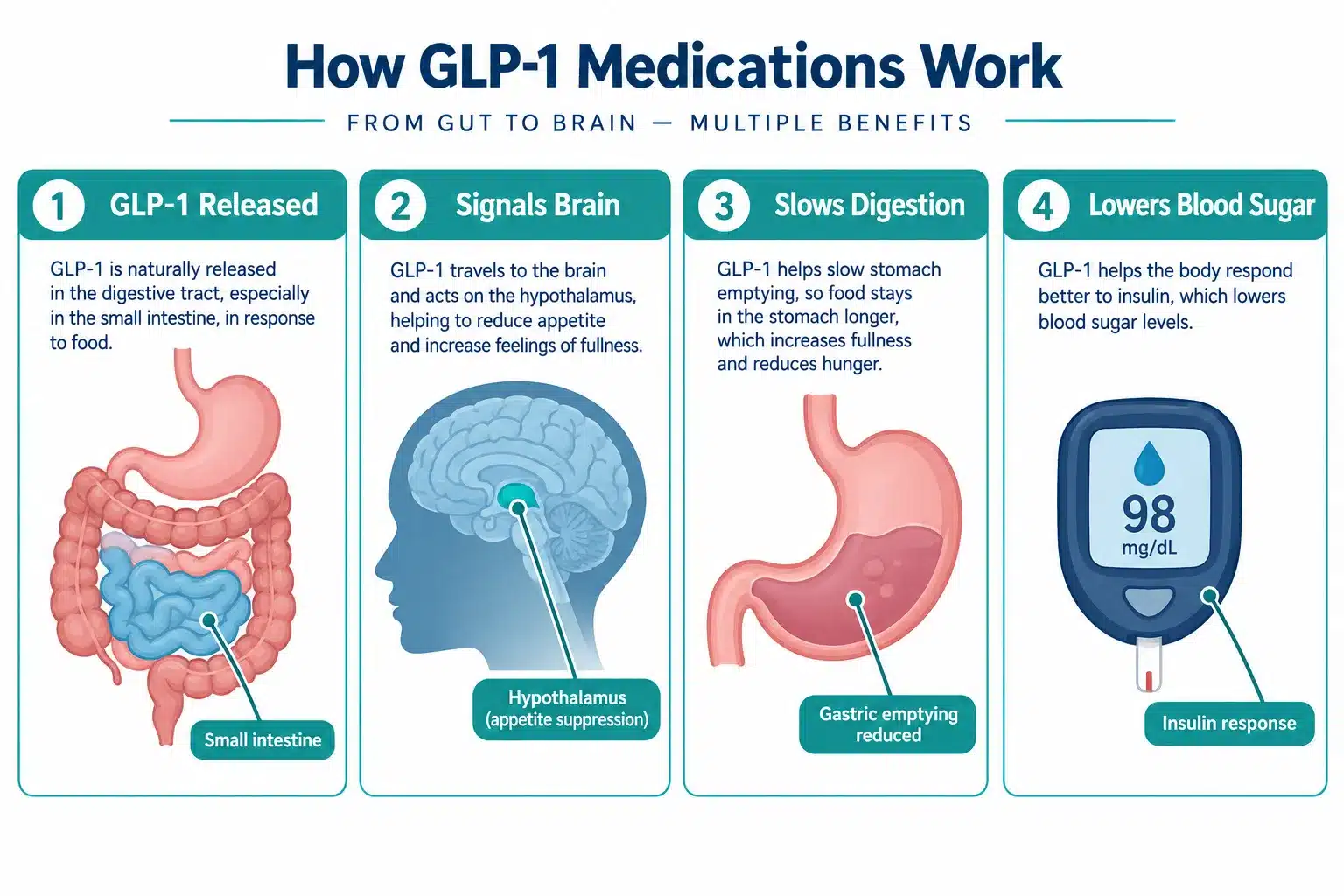
When you take a GLP-1 medication like semaglutide (Wegovy, Ozempic) or tirzepatide (Zepbound, Mounjaro), the drug binds to GLP-1 receptors in the brain and gut. This signals the hypothalamus to reduce hunger, slows the rate at which your stomach empties food, and prompts the pancreas to release insulin in response to meals. The combined effect is that you feel full faster, stay full longer, and eat less overall.
Key drugs in this class:
- Semaglutide (weekly injection): Ozempic (diabetes), Wegovy (weight loss)
- Tirzepatide (weekly injection): Mounjaro (diabetes), Zepbound (weight loss)
- Oral semaglutide: Rybelsus (diabetes), and newer oral Wegovy formulations
Clinical trials have shown that semaglutide can produce average weight loss of around 15% of body weight over 68 weeks, and tirzepatide has shown even higher averages in some trials. These are prescription-only medications, meaning you need a licensed provider to prescribe them regardless of insurance status.
How Much Does GLP-1 Cost Without Insurance
Without insurance, brand-name GLP-1 medications are expensive at list price, but self-pay discounts can cut costs significantly. List prices for Wegovy, Ozempic, Zepbound, and Mounjaro generally run $935 to $1,349 for a four-week supply in 2026 [1][12][13]. Multiple analyses put the average monthly cost without insurance at roughly $900 to $1,400 depending on the drug and dose [2].
However, list price is rarely what self-pay patients actually pay. Here is a more realistic breakdown:
| Medication | List Price/Month | Self-Pay / Discount Price | Notes |
|---|---|---|---|
| Wegovy (semaglutide injection) | ~$1,349 | $299,$499/mo (NovoCare) [7] | Often excluded from main PAP [3][10] |
| Ozempic (semaglutide injection) | ~$935 | $349,$499/mo (NovoCare) [5][7] | PAP available at ≤200% FPL [3][9] |
| Mounjaro / Zepbound (tirzepatide) | ~$1,059,$1,349 | Varies; Lilly savings cards available | Separate Lilly programs apply |
| Oral semaglutide (NovoCare direct) | Varies | $149,$299/mo (NovoCare) [1][3][4] | Lowest self-pay entry point |
The $149 to $299 per month range from NovoCare’s self-pay channel is currently the most accessible price point for uninsured patients seeking semaglutide [1][3][4].
Cheapest Way to Get GLP-1 Without Insurance
The cheapest legitimate path to a GLP-1 medication without insurance in 2026 combines a telehealth prescription with either a manufacturer self-pay program or a patient assistance program based on your income. No single strategy works for everyone, so matching the right channel to your situation matters.
Ranked from lowest to higher cost:
Patient Assistance Program (free): If your household income is at or below 400% of the federal poverty level (about $63,840 for a single person in 2026), you may qualify for free Wegovy or other Novo Nordisk medications through the Novo Nordisk PAP [4][7]. For Ozempic specifically, the income threshold is stricter at 200% FPL (about $31,920 for a household of one) [3][4][9].
NovoCare self-pay program ($149,$499/month): Novo Nordisk’s NovoCare Pharmacy offers self-pay semaglutide, including oral formulations, at $149 to $299 per month, and injectable semaglutide at $349 to $499 per month depending on dose [1][5][7].
GoodRx and pharmacy discount cards: Using a GoodRx coupon or similar discount tool at participating pharmacies can reduce costs compared to cash price, though savings vary by location and drug [8]. See our guide on GoodRx Mounjaro coupons and semaglutide prescriptions for weight loss with no insurance for current coupon strategies.
Telehealth platforms with bundled pricing: Some telehealth services bundle the consultation fee and medication into a monthly subscription, which can be cost-effective if you factor in the avoided office visit cost.
Common mistake: Many people pay full list price at a retail pharmacy without checking whether they qualify for manufacturer programs first. Always check the NovoCare and manufacturer savings pages before filling a prescription at cash price.
GLP-1 Prescription Discount Programs and Coupons
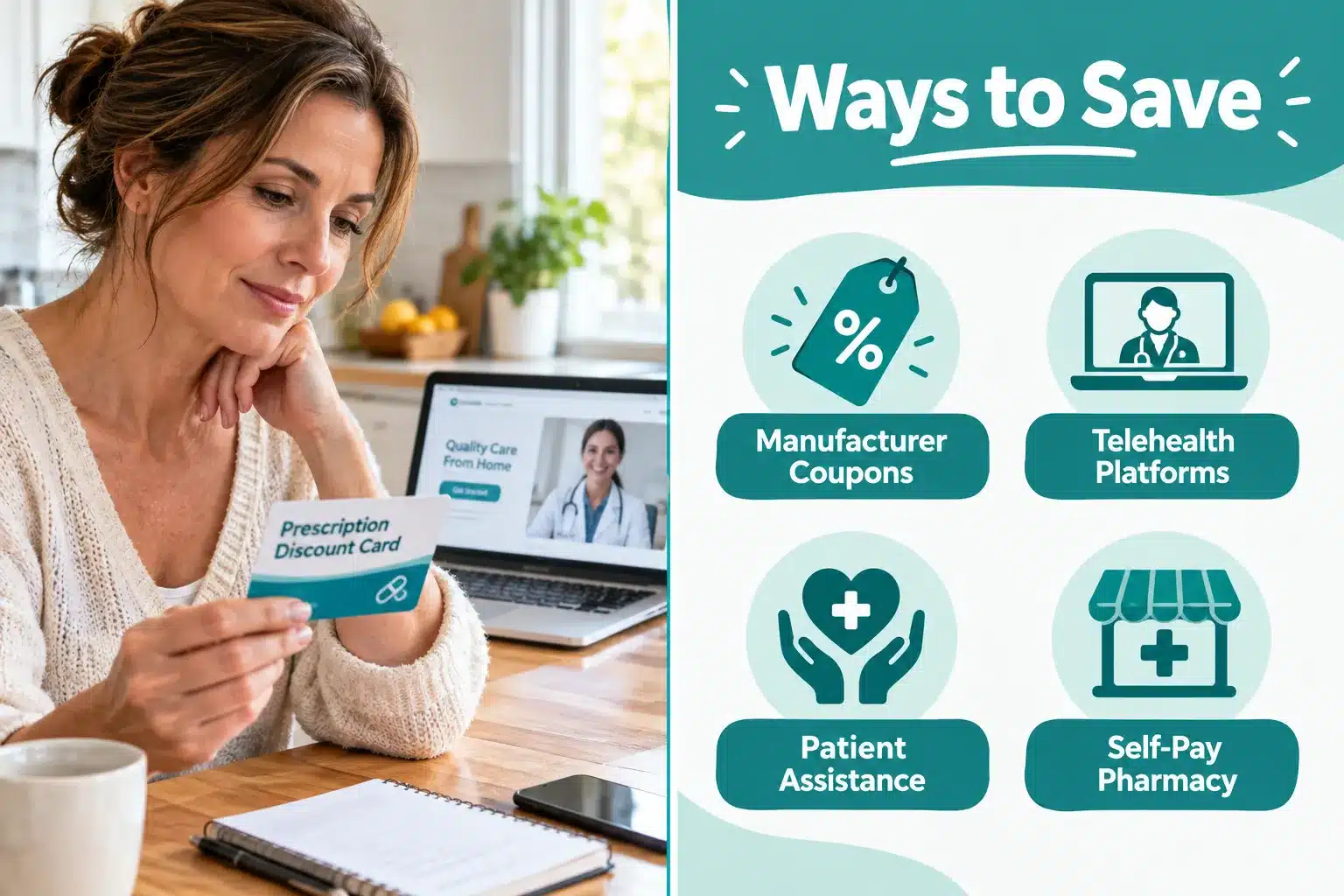
Several legitimate discount channels exist for GLP-1 medications without insurance. Manufacturer programs are the most powerful, but third-party coupons add another layer of savings.
Manufacturer programs:
- Novo Nordisk PAP: Free medication for uninsured or certain Medicare patients meeting income criteria. Apply at novocare.com [6].
- Wegovy Savings Offer: A separate savings program for Wegovy specifically, since Wegovy is often excluded from the main PAP [10]. Check novocare.com/patient/medicines/wegovy/savings-offer for current terms.
- NovoCare Direct Self-Pay: The self-pay pharmacy channel offering $149 to $499 per month depending on the product and dose [7].
- Eli Lilly savings programs: For tirzepatide products (Mounjaro, Zepbound), Lilly offers its own savings cards and patient assistance through LillyInsulin.com and related portals.
Third-party discount tools:
- GoodRx, RxSaver, and NeedyMeds can provide coupons at retail pharmacies [8]
- Mark Cuban’s Cost Plus Drugs does not currently carry branded GLP-1s but is worth monitoring as the market evolves
For a deeper look at cost-reduction strategies, the semaglutide without insurance costs and savings strategies guide covers these options in detail.
Can I Buy GLP-1 Online Without Insurance
Yes, you can access GLP-1 medications online without insurance, but you still need a valid prescription from a licensed provider. Telehealth platforms have made this process much faster and more affordable than a traditional in-person visit.
How online access works:
- Complete a telehealth consultation (typically $50 to $200 for the visit, or included in a subscription)
- The provider reviews your health history and, if appropriate, sends a prescription to a pharmacy of your choice
- You fill the prescription using a self-pay program, discount card, or manufacturer savings offer
- Medication is shipped to your home or picked up at a local pharmacy
Telehealth platforms for GLP-1 without insurance include services like Hims & Hers, Ro, Found, and Calibrate, among others. Costs and medication availability vary by platform and state. Some platforms bundle consultation and medication costs into a flat monthly fee, which simplifies budgeting.
Edge case: Compounded semaglutide was widely available through telehealth at much lower prices ($100 to $300 per month) during the FDA shortage period. As of 2026, FDA regulatory changes have significantly restricted compounded semaglutide availability. Verify current legal status with any platform before purchasing.
For more on the most affordable GLP-1 options covered by insurance, that resource covers insurance-side strategies if your situation changes.
How to Get GLP-1 Prescribed Without Insurance Coverage
Getting a GLP-1 prescription without insurance follows the same clinical process as with insurance. The difference is that you pay out of pocket and need to plan your savings strategy before filling the prescription.
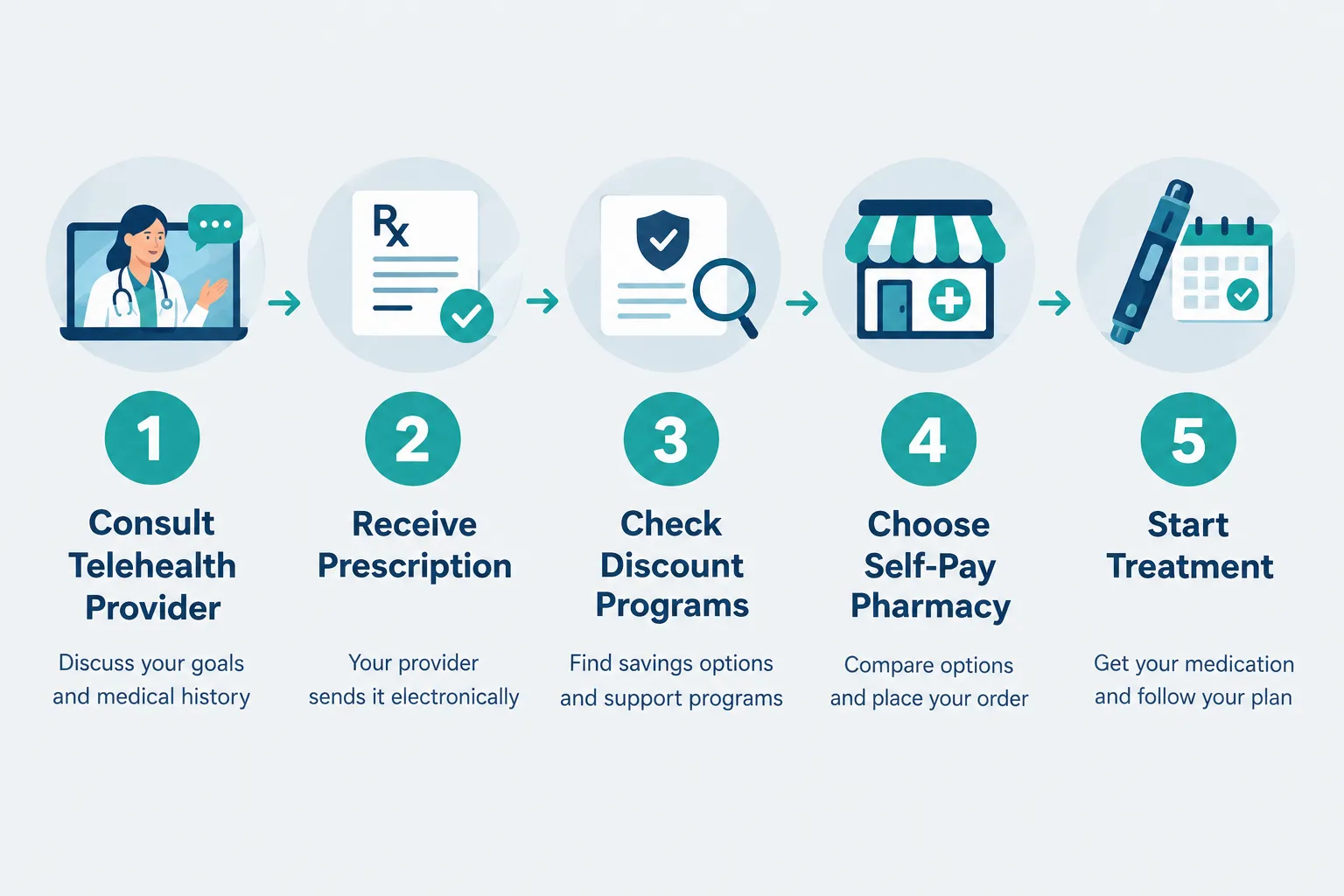
Step-by-step process:
- Confirm you meet clinical criteria. GLP-1s for weight loss are typically prescribed for adults with a BMI of 30 or higher, or 27 or higher with a weight-related condition like type 2 diabetes or hypertension.
- Choose a provider. A telehealth consultation is the fastest and often cheapest option. Your primary care physician can also prescribe these medications.
- Discuss your goals and medical history. Be transparent about any prior thyroid conditions, pancreatitis history, or current medications.
- Ask about self-pay options before the prescription is sent. Some providers can route your prescription directly to NovoCare or a preferred discount pharmacy.
- Apply for assistance programs before your first fill. PAP applications can take two to four weeks to process, so apply early.
- Start at the lowest dose. This is standard practice and also keeps early-phase costs lower.
For a comprehensive overview of the full landscape, our GLP-1 without insurance guide covers the current options across all major medications.
GLP-1 Generic Options vs. Brand-Name Pricing
There are no FDA-approved generic versions of semaglutide or tirzepatide available in the United States as of 2026. Patent protections on these drugs extend several more years, meaning true generics are not yet an option for cost savings.
What does exist:
- Oral semaglutide via NovoCare self-pay at $149 to $299 per month is the closest to an affordable branded option [1][3][4]
- Compounded semaglutide was a lower-cost alternative produced by compounding pharmacies during the FDA shortage period, but availability has been significantly restricted in 2025 to 2026
- Rybelsus (oral semaglutide for diabetes) may have different pricing dynamics than Wegovy and is worth comparing if you have a diabetes diagnosis
Choose brand-name self-pay if: You want FDA-approved formulations with verified dosing and manufacturing standards.
Choose to explore compounding if: You have confirmed that a licensed compounding pharmacy is operating within current FDA guidelines and your provider has reviewed the option.
The Wegovy pill cost without insurance guide breaks down oral semaglutide pricing specifically, which is one of the most cost-accessible entry points in 2026.
GLP-1 Alternatives That Are Cheaper or More Affordable
If brand-name GLP-1 medications are out of reach even with discount programs, several alternatives address appetite control and metabolic health at lower cost.
Medication alternatives:
- Metformin: An inexpensive generic diabetes medication (often under $10 per month) that has some evidence for modest weight management support, though it is not a GLP-1 agonist
- Topiramate/phentermine (Qsymia): A combination weight loss medication with lower cost than GLP-1s, though with a different side effect profile
- Bupropion/naltrexone (Contrave): Another combination option available as generic, often $50 to $150 per month with discount cards
Lifestyle-based approaches:
- Structured low-carbohydrate or Mediterranean dietary patterns have strong evidence for weight loss and metabolic improvement
- Time-restricted eating (intermittent fasting) has shown meaningful results in some studies
- Resistance training combined with a caloric deficit remains one of the most cost-effective metabolic interventions
Important note: These alternatives are not equivalent to GLP-1 medications in terms of average weight loss outcomes. They are options for people for whom GLP-1s are not currently accessible or appropriate.
GLP-1 Side Effects and Safety Concerns
GLP-1 medications are generally well-tolerated, but side effects are common, especially during dose escalation. Most side effects are gastrointestinal and tend to improve after the first few weeks.
Most common side effects:
- Nausea (most frequent, especially when starting)
- Vomiting
- Diarrhea or constipation
- Stomach discomfort or bloating
- Reduced appetite (expected and intended)
Less common but serious concerns:
- Pancreatitis: Rare but possible; seek immediate care for severe abdominal pain
- Gallbladder issues: Rapid weight loss increases gallstone risk
- Heart rate increase: Some patients experience a modest rise in resting heart rate
- Thyroid C-cell tumors: Observed in rodent studies; the clinical relevance in humans is under ongoing review, but GLP-1s carry a black box warning for patients with a personal or family history of medullary thyroid carcinoma or MEN2
Managing side effects: Starting at the lowest dose and increasing slowly, eating smaller meals, avoiding high-fat foods, and staying hydrated all reduce nausea severity for most patients.
Who Should Not Take GLP-1
GLP-1 medications are not appropriate for everyone. Certain medical histories and conditions make these drugs unsafe or contraindicated.
Do not use GLP-1 medications if you have:
- Personal or family history of medullary thyroid carcinoma (MTC)
- Multiple endocrine neoplasia syndrome type 2 (MEN2)
- Prior serious hypersensitivity reaction to semaglutide or tirzepatide
- Active pancreatitis or a significant history of pancreatitis
Use with caution or consult your provider if you have:
- Diabetic retinopathy (rapid glucose improvement can temporarily worsen this condition)
- Kidney disease (dehydration from nausea/vomiting can stress the kidneys)
- History of gallbladder disease
- Current use of insulin or other blood sugar-lowering medications (risk of hypoglycemia)
Pregnancy and nursing: GLP-1 medications are not recommended during pregnancy or breastfeeding. Women of childbearing age should use effective contraception and discuss timing with their provider before starting.
Is GLP-1 Worth the Cost for Weight Loss
For many people, yes, GLP-1 medications are worth the cost, but the answer depends on your health situation, how long you plan to take the medication, and what savings programs you can access. The clinical evidence for meaningful, sustained weight loss is stronger for this drug class than for most prior weight loss interventions.
When GLP-1 is likely worth it:
- You have obesity-related health conditions (diabetes, hypertension, sleep apnea) where weight loss produces measurable health improvements
- You have tried diet and exercise consistently without achieving adequate results
- You can access the medication at $149 to $499 per month through self-pay or assistance programs, making the cost manageable
- You are committed to the lifestyle changes that support long-term success on the medication
When to reconsider:
- You would be paying full list price ($1,000 or more per month) without any assistance
- You have contraindications that make the medication unsafe
- You are not prepared for the reality that weight often returns if the medication is stopped without sustained lifestyle changes
A personal story worth sharing: one patient I spoke with had been paying $1,200 per month for Wegovy before discovering the NovoCare self-pay option. After switching, her monthly cost dropped to $349. She said the medication had changed her relationship with food in a way nothing else had, and at that price point, it was sustainable. The difference between $1,200 and $349 per month is the difference between accessible and impossible for most households.
GLP-1 Common Mistakes People Make When Starting
Starting a GLP-1 medication without proper preparation leads to avoidable side effects, wasted money, and early discontinuation. These are the mistakes I see most often.
Mistake 1: Paying list price without checking assistance programs first.
Always check NovoCare, manufacturer savings offers, and GoodRx before filling a prescription at cash price [8][10].
Mistake 2: Skipping dose escalation.
Jumping to a higher dose too quickly dramatically increases nausea and vomiting. Follow the prescribed titration schedule.
Mistake 3: Not changing eating habits.
GLP-1 medications reduce appetite but do not replace the need for nutritional quality. Patients who eat smaller portions of high-quality food see better results than those who simply eat less of the same diet.
Mistake 4: Stopping abruptly when side effects appear.
Most nausea resolves within two to four weeks. Stopping the medication at week two means missing the window where side effects typically improve.
Mistake 5: Not applying for PAP early enough.
Patient assistance program applications take time to process. Apply before you run out of medication, not after.
Mistake 6: Choosing a telehealth platform without verifying medication sourcing.
With compounding restrictions in place, confirm that any online platform is providing FDA-approved medications from licensed pharmacies.
Frequently Asked Questions
How long before I see weight loss results on a GLP-1?
Most patients notice reduced appetite within the first one to two weeks. Meaningful weight loss (5% or more of body weight) typically becomes visible between weeks eight and twelve, with continued progress over the first year.
Can I get a GLP-1 prescription at a telehealth visit the same day?
Many telehealth platforms complete the consultation and send a prescription within 24 to 48 hours, sometimes the same day. Processing time at the pharmacy or through a self-pay program adds additional time.
Does GoodRx work for GLP-1 medications?
Yes, GoodRx coupons can reduce the cash price at participating pharmacies, though savings vary by location and drug. It is worth comparing GoodRx pricing against NovoCare self-pay before deciding where to fill [8].
What income qualifies me for free GLP-1 through the Novo Nordisk PAP?
For most Novo Nordisk medications including Wegovy, income must be at or below 400% of the federal poverty level, which is approximately $63,840 for a single person in 2026. For Ozempic specifically, the threshold is stricter at 200% FPL, or about $31,920 [3][4][7].
Is Wegovy covered by the Novo Nordisk Patient Assistance Program?
Wegovy is frequently excluded from the main PAP. Uninsured patients seeking Wegovy are typically directed to the separate Wegovy Savings Offer program instead [3][10].
Are there any truly generic GLP-1 options available in 2026?
No FDA-approved generics for semaglutide or tirzepatide exist in the United States as of 2026. Patent protections remain in effect for several more years.
Can I take a GLP-1 if I have type 2 diabetes but no weight loss diagnosis?
Yes. Ozempic and Mounjaro are FDA-approved for type 2 diabetes management, and providers can prescribe them for that indication. Insurance coverage and assistance program eligibility may differ from the weight loss indication.
What happens if I stop taking a GLP-1 medication?
Most patients regain a significant portion of lost weight after stopping GLP-1 therapy. Current evidence suggests these medications work best as long-term treatments rather than short-course interventions.
Is oral semaglutide as effective as the injection?
Oral semaglutide (Rybelsus, oral Wegovy) is effective but generally shows somewhat lower bioavailability than injectable forms. Clinical outcomes data for the oral Wegovy formulation is still accumulating as of 2026.
Can I use a GLP-1 medication if I am not obese but want to lose 20 pounds?
FDA approval for weight loss requires a BMI of 30 or higher, or 27 or higher with a weight-related condition. Prescribing outside these criteria is at the provider’s discretion and is considered off-label use.
7 Best GLP-1 Providers Ranked: Accreditation, Flexibility & Support Compared (2026 Update)
32,000+ Patients Can't All Be Wrong: See the Top-Rated GLP-1 Providers: Compared on accreditation, plan flexibility, and patient support — updated for 2026.
BMI MD GLP-1 Microdosing Plan
- Specialized microdosing options (sublingual drops or low-dose injections)
- Ideal for maintaining weight or tapering off higher doses safely
- Fully bundled plan with no hidden monthly platform memberships
DirectMeds Weight Loss Solutions
- Sourced from accredited, state-licensed 503A compounding pharmacies
- No-frills high-volume savings passed directly to the patient
- Includes clinical consultation and cold-chain shipping updates
MEDVi Flat-Rate Telehealth
- Flat monthly rate holds steady even at maximum maintenance doses
- No dosage upcharges or graduation fee penalties
- Offers both injectable and advanced oral thin-film delivery options
Gala GLP-1 Care Program
- All-inclusive plan with no standalone membership costs
- Continuous text-based messaging access with state-licensed clinicians
- Temperature-controlled, cold-chain medication shipping included
Measured GLP-1 Metabolic Health
- Comprehensive metabolic health screening and expert intake analysis
- Predictable long-term budgeting with stable plan pricing
- High-end responsive dashboard with integrated diagnostic support
Refills GLP-1 (TryRefills Plan)
- Flat rate holds steady as titration scales up
- Includes clinical guides for active side-effect management
- Bundles in foundational nutritional strategies alongside medication
AltRx GLP-1 Transactional Reorders
- Zero recurring auto-billing — pay entirely on a transactional basis
- Rapid text-to-order format saves time for experienced patients
- Provides both injectable forms and fast-dissolving tablet variations
Conclusion
Accessing a GLP-1 medication without insurance is genuinely possible in 2026, and the cost gap between list price and what self-pay patients actually pay is larger than most people realize. The key is knowing which programs to use before you fill your first prescription.
Your actionable next steps:
- Check your income against PAP thresholds. If you are at or below 400% of the federal poverty level, apply to the Novo Nordisk PAP before paying anything out of pocket [6][7].
- Explore NovoCare self-pay pricing. If you do not qualify for free medication, the $149 to $499 per month self-pay range is far more manageable than list price [1][5][7].
- Book a telehealth consultation. It is the fastest and most affordable way to get a prescription if you have no insurance.
- Use GoodRx as a backup. Compare GoodRx pricing at local pharmacies against NovoCare before deciding where to fill [8].
- Read the Wegovy savings offer page. Since Wegovy is often excluded from the main PAP, check the dedicated savings channel directly [10].
The medications work. The clinical evidence is clear. The main barrier for most uninsured patients is cost, and that barrier is more navigable than it appears once you know where to look.
References
[1] Medication Costs – https://nclnet.org/weight-truth/medication-costs/
[2] GLP-1 Costs – https://www.forbes.com/health/weight-loss/glp-1-costs/
[3] Semaglutide Cost Without Insurance – https://www.noom.com/blog/weight-management/semaglutide-cost-without-insurance/
[4] GLP-1 ACA Marketplace Coverage – https://coveredusa.org/en/drug/glp1-aca-marketplace-coverage
[5] Without Insurance – https://www.giftfromwithin.org/semaglutide/best/without-insurance/
[6] NovoCare PAP – https://www.novocare.com/hcp/diabetes/help-with-costs/pap.html
[7] NovoCare Direct Self Pay – https://coveredusa.org/en/drug/novocare-direct-self-pay
[8] Self Pay GLP-1 Options – https://www.goodrx.com/insurance/health-insurance/self-pay-glp-1-options
[9] Save On Ozempic – https://www.ozempic.com/savings-and-resources/save-on-ozempic.html
[10] Wegovy Savings Offer – https://www.novocare.com/patient/medicines/wegovy/savings-offer.html


