
How to Get GLP-1 If You’re Uninsured

Last updated: April 1, 2026
Quick Answer: Uninsured patients can get GLP-1 medications in 2026 starting at $129/month through telehealth platforms that prescribe compounded semaglutide, oral GLP-1 options, or branded injectables via direct-pay programs. You do not need insurance to access these medications. At least five major telehealth companies serve all 50 states and accept cash-pay patients today.
Key Takeaways
7 Best GLP-1 Providers Ranked: Accreditation, Flexibility & Support Compared (2026 Update)
32,000+ Patients Can't All Be Wrong: See the Top-Rated GLP-1 Providers. We compared the leading online GLP-1 providers based on program features, clinical support, convenience, and overall value.
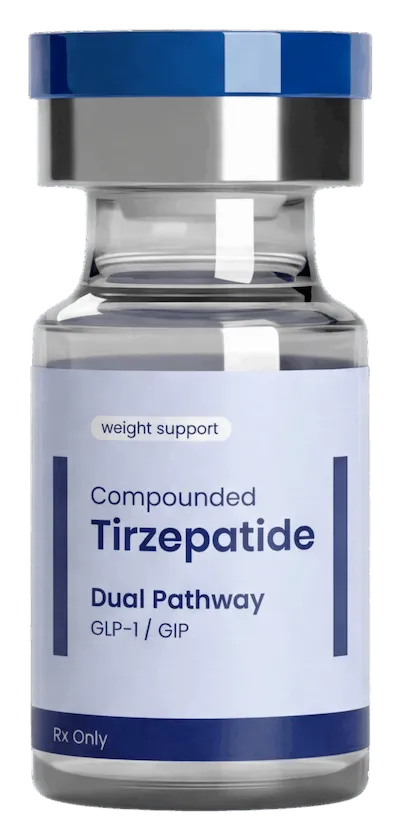
BMI MD GLP-1 Microdosing Plan
- Specialized microdosing options, including sublingual drops and low-dose injections
- Designed for people interested in maintaining weight or gradually adjusting treatment
- Bundled program structure without a separate monthly platform membership
- Online access makes the process convenient from home

DirectMeds Weight Loss Solutions
- Online weight-loss program with a straightforward patient experience
- Compounded medication options through state-licensed compounding pharmacies
- Includes clinical consultation as part of the process
- Provides shipping updates to help patients track their orders
MEDVi Flat-Rate Telehealth
- Flat-rate telehealth approach designed for easier budgeting
- No dosage-based pricing increases within the advertised program structure
- Offers injectable and oral thin-film delivery options
- Includes medical screening and asynchronous provider consultations
Gala GLP-1 Care Program
- Text-based access to state-licensed clinicians
- Cold-chain medication shipping included in the program
- Month-to-month program structure
- Designed for people who value convenient ongoing support
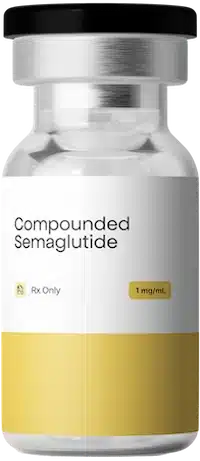
Measured GLP-1 Metabolic Health
- Comprehensive metabolic health screening and intake analysis
- Designed around longer-term metabolic health management
- Responsive dashboard with integrated health tracking tools
- Useful option for patients who value a more data-focused experience
Refills GLP-1 (TryRefills Plan)
- Clinical guidance designed to help patients manage common treatment concerns
- Includes foundational nutritional strategies alongside medication
- Designed around predictable ongoing treatment
- No hidden startup or processing fees according to the program information provided
AltRx GLP-1 Transactional Reorders
- Transactional reorder model without recurring auto-billing
- Designed for patients who already understand their treatment routine
- Fast text-to-order process for convenient reorders
- Offers injectable and fast-dissolving tablet variations
- Compounded semaglutide is the cheapest GLP-1 option for uninsured patients at approximately $129/month as of 2026 [1]
- Oral GLP-1 options (including oral Wegovy at $199/month) now exist for patients who prefer pills over injections [1]
- Telehealth platforms like Ro and Hims serve all 50 states and accept uninsured, cash-pay patients [1]
- Walgreens is running a Novo Nordisk promotional offer of $199/month for the first two months on Wegovy or Ozempic injectables for uninsured patients through June 30, 2026 [8]
- TrumpRx, launched November 2025, offers direct-to-consumer GLP-1 injections at approximately $350/month, bypassing pharmacy benefit managers [2]
- Medicaid GLP-1 coverage under the BALANCE Model begins rolling out as early as May 2026, which may qualify some currently uninsured patients [3]
- Manufacturer savings programs, GoodRx coupons, and direct-pay programs can further reduce out-of-pocket costs
- You generally need a BMI of 30+ (or 27+ with a weight-related condition) to qualify for a GLP-1 prescription
The Real Cost Breakdown: Why Knowing How to Get GLP-1 If You’re Uninsured Matters More in 2026
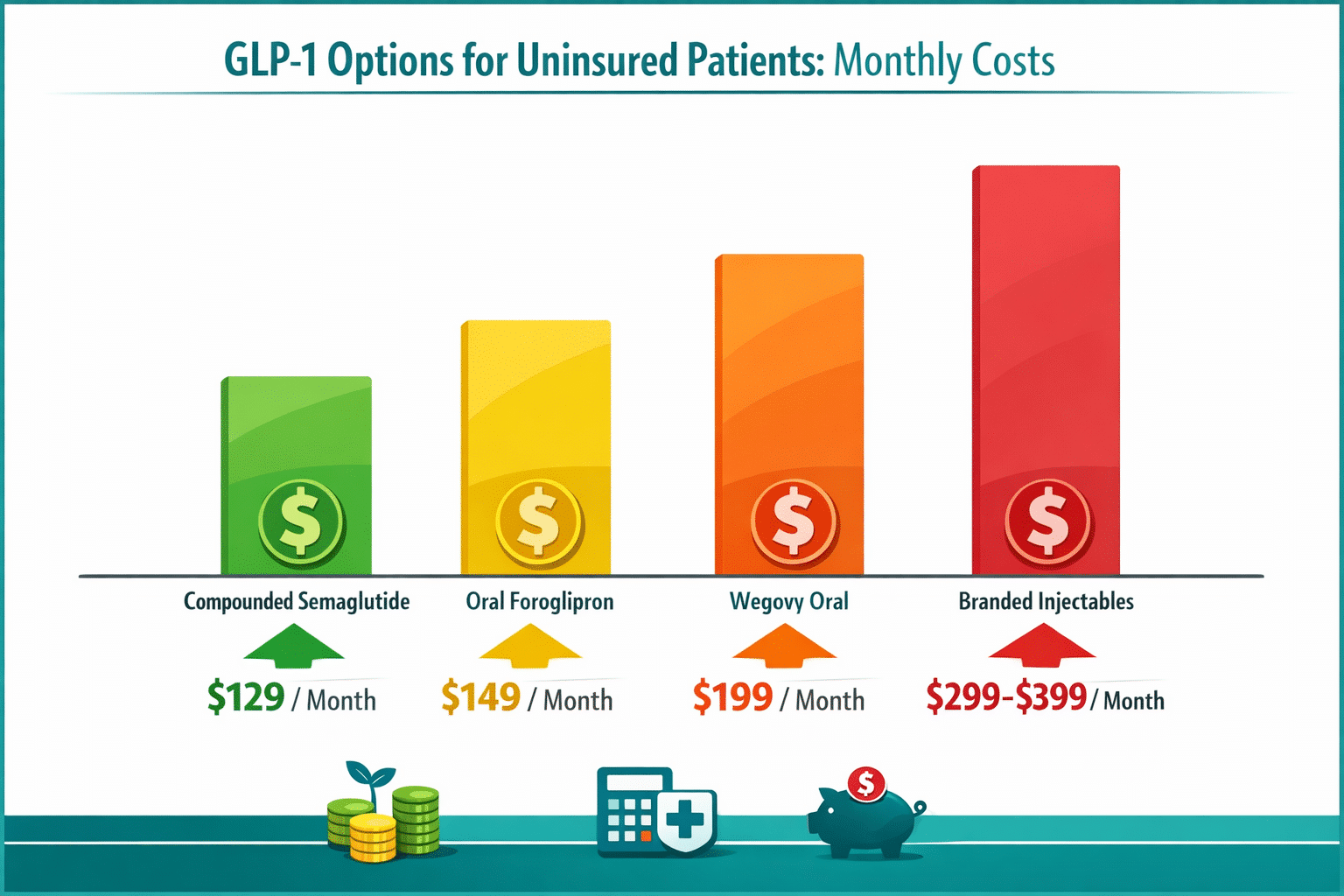
GLP-1 medications used to cost uninsured patients well over $1,000 per month for branded options. That’s changed significantly. Price competition, compounding pharmacies, and telehealth expansion have pushed entry-level costs down to $129/month for eligible cash-pay patients in 2026 [1].
Here’s where prices actually stand right now:
| GLP-1 Option | Monthly Cost (Uninsured) | Delivery Method | Availability |
|---|---|---|---|
| Compounded semaglutide | ~$129/month | Injectable | All 50 states via telehealth [1] |
| Oral foroglipron | ~$149/month | Daily pill | Pending FDA approval (PDUFA: April 10, 2026) [1] |
| Oral Wegovy | ~$199/month | Daily pill | Available now via telehealth [1] |
| Walgreens promo (Wegovy/Ozempic) | $199/month (first 2 months) | Injectable | Through June 30, 2026 [8] |
| Branded injectables (Ro, Hims) | $299–$399/month | Injectable | All 50 states [1] |
| TrumpRx direct program | ~$350/month | Injectable | National [2] |
Common mistake: Many uninsured patients assume they need to walk into a doctor’s office and pay a $200+ consultation fee before even discussing GLP-1 options. Telehealth platforms bundle the consultation and prescription into one monthly fee, which is often cheaper than a single in-person visit.
💡 Pull quote: “The gap between insured and uninsured GLP-1 access has narrowed dramatically in 2026. The real question isn’t whether you can afford it — it’s which option fits your budget and lifestyle.”
For a full breakdown of the most affordable paths, see our guide on the 3 most affordable GLP-1 options without insurance.
Who Qualifies for a GLP-1 Prescription Without Insurance?
Most telehealth platforms follow FDA-approved prescribing guidelines, which means qualification is based on clinical criteria, not insurance status.
You typically qualify if you have:
- A BMI of 30 or higher (obesity), OR
- A BMI of 27 or higher plus at least one weight-related condition such as type 2 diabetes, high blood pressure, or high cholesterol
You may not qualify if you:
- Have a personal or family history of medullary thyroid carcinoma or MEN2 syndrome
- Are pregnant or planning to become pregnant
- Have severe gastrointestinal conditions that contraindicate GLP-1 use
Most platforms conduct a short online intake questionnaire and a brief video or asynchronous consultation with a licensed provider. Approval can happen within 24–48 hours for straightforward cases.
Choose telehealth if: You want the fastest, most affordable path and meet the BMI criteria above. Choose an in-person visit if: You have complex medical history, take multiple medications, or want a more thorough evaluation before starting.
How to Get GLP-1 If You’re Uninsured: Step-by-Step Access Guide

Getting a GLP-1 prescription without insurance is a straightforward process when you know the right steps. Here’s exactly how to do it.
Step 1: Confirm you meet the clinical criteria Check your BMI before starting any application. Most platforms have a free BMI calculator built into their intake form.
Step 2: Choose your preferred GLP-1 format
- Injectable (weekly shot): More established clinical data, lower monthly cost through compounding
- Oral (daily pill): Easier for needle-averse patients, slightly higher cost for some options
Step 3: Pick a telehealth platform At least five major platforms accept uninsured patients across all 50 states as of March 2026 [1]. Key options include:
- Ro Body – Offers compounded and branded semaglutide
- Hims & Hers – Offers compounded semaglutide and tirzepatide
- MEDVi – Specializes in compounded semaglutide for weight loss (see our MEDVi semaglutide review)
- Walgreens Virtual Care – Running a $199/month promo through June 2026 [8]
Step 4: Complete the intake and consultation Fill out the health questionnaire honestly. A licensed provider reviews your information and either approves your prescription or requests more details.
Step 5: Choose your pharmacy or delivery option Some platforms ship directly to your door. Others send prescriptions to a local compounding pharmacy or retail chain.
Step 6: Apply any available savings
- GoodRx coupons (especially useful for branded medications at retail pharmacies)
- Manufacturer patient assistance programs
- Direct-pay program discounts
For more on saving on Wegovy specifically, check out GoodRx Wegovy coupons for uninsured patients.
Compounded vs. Branded GLP-1: Which Should Uninsured Patients Choose?
Compounded semaglutide is the most affordable option, but it comes with trade-offs. Branded medications like Wegovy and Ozempic have more clinical data behind them and are FDA-approved for specific uses.
Compounded semaglutide pros:
- Lowest cost ($129/month) [1]
- Widely available through telehealth
- Same active ingredient as Ozempic/Wegovy
Compounded semaglutide cons:
- Not FDA-approved as a finished product
- Quality depends on the compounding pharmacy’s standards
- FDA has issued warnings about some compounding practices
Branded injectable pros:
- FDA-approved, standardized dosing
- More clinical trial data
- Covered under some future Medicaid programs [3]
Branded injectable cons:
- Higher cost ($299–$399/month without promotions) [1]
- May have supply constraints
Decision rule: Choose compounded semaglutide if cost is your primary concern and you’re working with a reputable telehealth platform that uses an FDA-registered compounding pharmacy. Choose branded if you want the most clinically validated product and can afford the higher monthly cost, or if you’re planning to transition to Medicaid coverage.
To understand the clinical differences between medication types, read our complete GLP-1 medication guide.
Government and Assistance Programs That Help Uninsured Patients
Several programs launched or expanded in 2025–2026 that directly affect uninsured patients’ ability to access GLP-1 medications.
TrumpRx (launched November 6, 2025) This direct-to-consumer program bypasses pharmacy benefit managers and connects patients with manufacturer programs at approximately $350/month for GLP-1 injections [2]. It’s not the cheapest option, but it offers a government-backed pathway for uninsured patients. See the TrumpRx weight loss price guide for current pricing details.
BALANCE Model Medicaid Expansion (starting May 2026) States opting into the BALANCE Model will begin offering GLP-1 coverage to Medicaid-eligible patients with obesity and qualifying comorbidities as early as May 2026 [3]. If you’re currently uninsured but may qualify for Medicaid based on income, this is worth checking immediately. Medicaid eligibility is income-based and varies by state.
Medicare GLP-1 Bridge (launching July 2026) For Medicare Part D beneficiaries with obesity and qualifying conditions, this program will offer Wegovy and Zepbound at a $50/month copayment starting July 2026, bridging to the permanent BALANCE Model in January 2027 [3]. This applies to Medicare enrollees, not working-age uninsured individuals, but it signals broader market pricing pressure that may lower cash-pay costs over time [4].
Manufacturer Patient Assistance Programs Both Novo Nordisk (maker of Wegovy/Ozempic) and Eli Lilly (maker of Zepbound/Mounjaro) offer patient assistance programs for qualifying low-income uninsured patients. Income thresholds and eligibility criteria change periodically, so check directly with each manufacturer’s website.
For Mounjaro-specific savings, see our breakdown of the Mounjaro $25 coupon for uninsured patients.
What Are the Cheapest GLP-1 Direct-Pay Programs in 2026?
Direct-pay programs cut out insurance entirely and offer flat monthly rates. These are the most predictable cost option for uninsured patients.
Top direct-pay options ranked by cost:
- Compounded semaglutide via telehealth – $129/month [1]
- Oral foroglipron – $149/month (pending FDA approval April 2026) [1]
- Oral Wegovy – $199/month [1]
- Walgreens promo (Wegovy/Ozempic) – $199/month for first two months [8]
- Branded injectables via Ro or Hims – $299–$399/month [1]
- TrumpRx – ~$350/month [2]
For a deeper look at direct-pay program structures, our guide on GLP-1 direct pay programs covers six of the best options with enrollment details.
Edge case: If you live near a state border, some telehealth platforms have state-specific licensing that affects which medications they can prescribe in your state. Always confirm your state is fully served before completing an intake form.
How to Get GLP-1 If You’re Uninsured: Common Mistakes to Avoid
Even with affordable options available, uninsured patients often make avoidable errors that cost them time and money.
Mistake 1: Paying retail pharmacy prices without a coupon Branded GLP-1 medications at retail pharmacies without any discount can exceed $1,300/month. Always use GoodRx or a manufacturer coupon before paying cash at a pharmacy counter.
Mistake 2: Choosing a telehealth platform without checking compounding pharmacy credentials Not all compounding pharmacies meet the same quality standards. Ask the platform whether their pharmacy is 503B-accredited (FDA-registered outsourcing facility), which indicates higher quality controls.
Mistake 3: Skipping the Medicaid check Many uninsured adults qualify for Medicaid but haven’t enrolled. With the BALANCE Model rolling out in 2026, Medicaid now covers GLP-1s in participating states [3]. A quick eligibility check at healthcare.gov takes less than 10 minutes.
Mistake 4: Assuming you need a referral Telehealth platforms can prescribe GLP-1 medications directly. You do not need a referral from a primary care physician to start the process online.
Mistake 5: Not comparing semaglutide vs. tirzepatide These are different medications with different mechanisms and price points. Understanding the difference between semaglutide and tirzepatide can help you choose the right medication for your goals and budget.
FAQ: How to Get GLP-1 If You’re Uninsured
Q: Can I get a GLP-1 prescription without insurance in all 50 states? Yes. At least five major telehealth platforms serve all 50 states and accept uninsured, cash-pay patients as of March 2026 [1].
Q: What is the cheapest GLP-1 medication available without insurance? Compounded semaglutide at approximately $129/month is the lowest-cost option currently available for uninsured patients [1].
Q: Do I need a doctor’s visit to get a GLP-1 prescription? You need a licensed provider to prescribe it, but that consultation can happen entirely online through telehealth. Most platforms complete this within 24–48 hours.
Q: Is compounded semaglutide safe? Compounded semaglutide uses the same active ingredient as Ozempic and Wegovy but is not FDA-approved as a finished product. Safety depends heavily on the quality of the compounding pharmacy. Choose platforms that use 503B-accredited facilities.
Q: What BMI do I need to qualify for a GLP-1? Most providers follow FDA guidelines: BMI 30+ for obesity, or BMI 27+ with at least one weight-related condition such as type 2 diabetes or high blood pressure.
Q: Will TrumpRx lower GLP-1 costs for uninsured patients? TrumpRx offers GLP-1 injections at approximately $350/month, which is lower than standard retail branded pricing but higher than compounded options [2]. It’s a viable option, especially for patients who prefer a government-affiliated program.
Q: When will oral GLP-1 pills become available without insurance? Oral Wegovy is already available through telehealth at $199/month. Oral foroglipron has a PDUFA target date of April 10, 2026, and is announced at $149/month pending FDA approval [1].
Q: Can I switch from compounded to branded GLP-1 later? Yes. Many patients start with compounded semaglutide to control costs and transition to branded medications if their insurance situation changes or if they want the FDA-approved version.
Q: Does Medicaid cover GLP-1 medications? Coverage is expanding. The BALANCE Model begins rolling out in participating states as early as May 2026 [3]. Check your state’s Medicaid program for current eligibility.
Q: Are there income-based assistance programs for GLP-1 medications? Yes. Both Novo Nordisk and Eli Lilly offer patient assistance programs for qualifying low-income uninsured patients. Eligibility and income thresholds vary and change periodically.
7 Best GLP-1 Providers Ranked: Accreditation, Flexibility & Support Compared (2026 Update)
32,000+ Patients Can't All Be Wrong: See the Top-Rated GLP-1 Providers: Compared on accreditation, plan flexibility, and patient support — updated for 2026.
BMI MD GLP-1 Microdosing Plan
- Specialized microdosing options (sublingual drops or low-dose injections)
- Ideal for maintaining weight or tapering off higher doses safely
- Fully bundled plan with no hidden monthly platform memberships
DirectMeds Weight Loss Solutions
- Sourced from accredited, state-licensed 503A compounding pharmacies
- No-frills high-volume savings passed directly to the patient
- Includes clinical consultation and cold-chain shipping updates
MEDVi Flat-Rate Telehealth
- Flat monthly rate holds steady even at maximum maintenance doses
- No dosage upcharges or graduation fee penalties
- Offers both injectable and advanced oral thin-film delivery options
Gala GLP-1 Care Program
- All-inclusive plan with no standalone membership costs
- Continuous text-based messaging access with state-licensed clinicians
- Temperature-controlled, cold-chain medication shipping included
Measured GLP-1 Metabolic Health
- Comprehensive metabolic health screening and expert intake analysis
- Predictable long-term budgeting with stable plan pricing
- High-end responsive dashboard with integrated diagnostic support
Refills GLP-1 (TryRefills Plan)
- Flat rate holds steady as titration scales up
- Includes clinical guides for active side-effect management
- Bundles in foundational nutritional strategies alongside medication
AltRx GLP-1 Transactional Reorders
- Zero recurring auto-billing — pay entirely on a transactional basis
- Rapid text-to-order format saves time for experienced patients
- Provides both injectable forms and fast-dissolving tablet variations
Conclusion: Your Next Steps Toward Affordable GLP-1 Access
Knowing how to get GLP-1 if you’re uninsured in 2026 comes down to three decisions: which medication format works for you, which platform to use, and whether you qualify for any assistance programs that reduce your cost further.
Here’s what to do right now:
- Check your BMI to confirm you meet the basic prescribing criteria (30+ or 27+ with a comorbidity)
- Compare your top two options from the cost table above based on your monthly budget
- Run a Medicaid eligibility check at healthcare.gov — the BALANCE Model expansion may make you eligible starting May 2026 [3]
- Start a telehealth intake with one of the platforms serving your state — most take under 15 minutes
- Apply GoodRx or manufacturer coupons before paying any pharmacy bill
The landscape for uninsured GLP-1 access has changed faster in the past 12 months than in the previous five years combined. Prices are lower, options are broader, and telehealth has removed the geographic and logistical barriers that once made this medication class inaccessible for cash-pay patients.
For a comprehensive look at all your options, start with our GLP-1s without insurance 2026 cost and options guide and our best GLP-1 weight loss programs from $179/month.
References
[1] GLP-1 Telehealth Access By State 2026 – https://telehealthally.com/guides/glp1-telehealth-access-by-state-2026
[2] Medicare’s New GLP-1 Pricing Initiative Signals A Shift In Coverage – https://www.chesshealthsolutions.com/2026/01/13/medicares-new-glp-1-pricing-initiative-signals-a-shift-in-coverage/
[3] Medicare GLP-1 Bridge – https://www.cms.gov/medicare/coverage/prescription-drug-coverage/medicare-glp-1-bridge
[4] What To Know About The BALANCE Model For GLP-1s In Medicare And Medicaid – https://www.kff.org/medicare/what-to-know-about-the-balance-model-for-glp-1s-in-medicare-and-medicaid/
[8] Weight Loss – https://www.walgreens.com/topic/virtual-healthcare/weight-loss.jsp

With over 13 years of experience in holistic health blogging, I aim to help you navigate your wellness journey with honest insights, expert-backed advice, and a sprinkle of real-world practicality.
Certified Wellness Writer | Herbal Nutrition Advocate | Wellness Research Enthusiast


