
MyBMI review: Is This GLP-1 Weight Loss Service Worth It?
Last updated: July 20, 2026
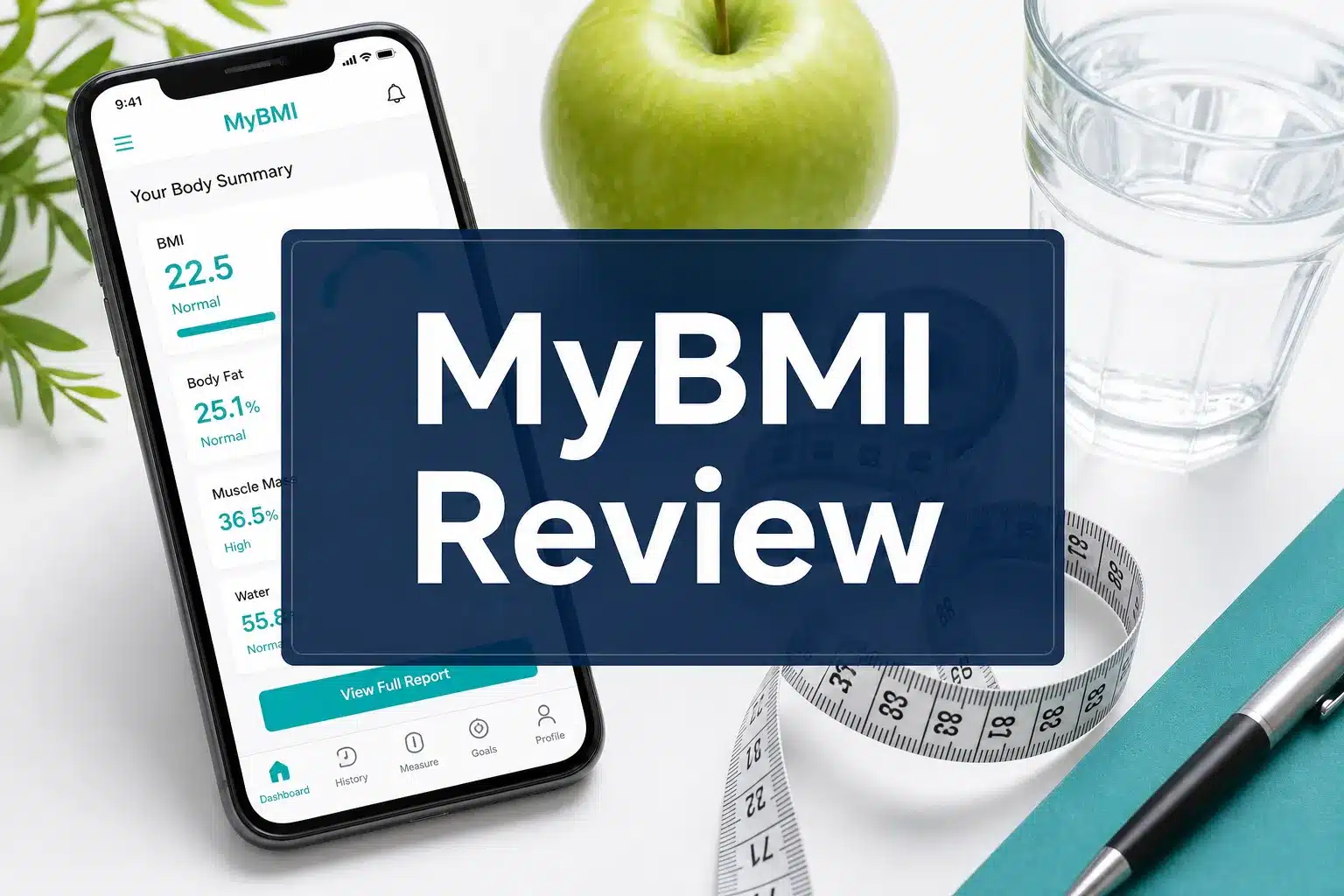
Quick Answer: MyBMI is a free-to-use body mass index calculator app available on iOS and Android that goes beyond a basic BMI number by tracking trends over time, syncing with health platforms, and offering weight management guidance. It is best suited for general adults who want a simple, visual way to monitor their weight relative to standard health benchmarks. It is not a clinical diagnostic tool and has meaningful limitations for athletes and muscular individuals.
SnapshotPrice:
Free (premium tier available)
7 Best GLP-1 Providers Ranked: Accreditation, Flexibility & Support Compared (2026 Update)
32,000+ Patients Can't All Be Wrong: See the Top-Rated GLP-1 Providers. We compared the leading online GLP-1 providers based on program features, clinical support, convenience, and overall value.
BMI MD GLP-1 Microdosing Plan
- Specialized microdosing options, including sublingual drops and low-dose injections
- Designed for people interested in maintaining weight or gradually adjusting treatment
- Bundled program structure without a separate monthly platform membership
- Online access makes the process convenient from home

DirectMeds Weight Loss Solutions
- Online weight-loss program with a straightforward patient experience
- Compounded medication options through state-licensed compounding pharmacies
- Includes clinical consultation as part of the process
- Provides shipping updates to help patients track their orders
MEDVi Flat-Rate Telehealth
- Flat-rate telehealth approach designed for easier budgeting
- No dosage-based pricing increases within the advertised program structure
- Offers injectable and oral thin-film delivery options
- Includes medical screening and asynchronous provider consultations
Gala GLP-1 Care Program
- Text-based access to state-licensed clinicians
- Cold-chain medication shipping included in the program
- Month-to-month program structure
- Designed for people who value convenient ongoing support

Measured GLP-1 Metabolic Health
- Comprehensive metabolic health screening and intake analysis
- Designed around longer-term metabolic health management
- Responsive dashboard with integrated health tracking tools
- Useful option for patients who value a more data-focused experience

Refills GLP-1 (TryRefills Plan)
- Clinical guidance designed to help patients manage common treatment concerns
- Includes foundational nutritional strategies alongside medication
- Designed around predictable ongoing treatment
- No hidden startup or processing fees according to the program information provided

AltRx GLP-1 Transactional Reorders
- Transactional reorder model without recurring auto-billing
- Designed for patients who already understand their treatment routine
- Fast text-to-order process for convenient reorders
- Offers injectable and fast-dissolving tablet variations
Best for:
General adults tracking BMI and weight trends
Platform:
iOS and Android
Key pro:
Clean interface, trend tracking, health app sync
Key con:
BMI formula has well-documented limitations for athletes and certain body types
Overall rating:
3.8 / 5
Key Takeaways
- MyBMI is a free BMI calculator app with optional premium features for deeper health tracking.
- The app uses the standard WHO BMI formula (weight in kg divided by height in meters squared), which is accurate for most average-build adults but less reliable for athletes, older adults, and people with high muscle mass.
- Syncing issues with Apple Health and Google Fit are a known complaint among users, though usually fixable through app permissions settings.
- The free version covers core BMI calculation and basic trend charts; premium unlocks detailed analytics, goal setting, and export tools.
- MyBMI is not a substitute for a clinical body composition assessment or a doctor’s evaluation.
- Athletes and highly muscular individuals should pair MyBMI data with a body fat percentage measurement for a more complete picture.
- Privacy-conscious users should review MyBMI’s data-sharing policy before entering personal health metrics.
- Alternatives like Apple Health, Google Fit, and dedicated fitness apps offer overlapping functionality, often at no cost.
What Is MyBMI and How Does It Work?
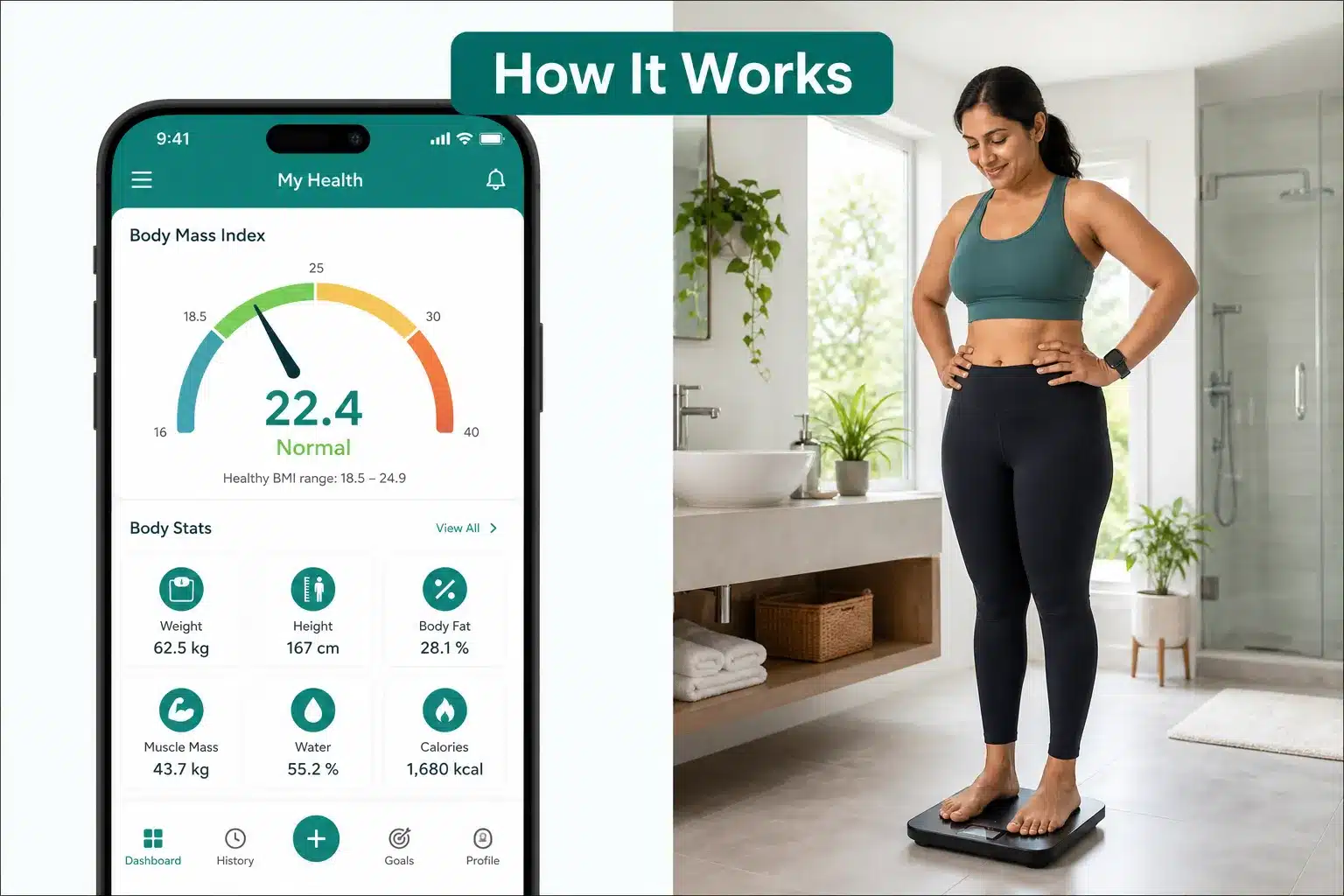
MyBMI is a mobile application designed to calculate, display, and track your body mass index using your height and weight inputs. It presents your BMI score alongside a color-coded scale (underweight, normal, overweight, obese) derived from World Health Organization classifications, and it stores historical entries so you can visualize changes over time.
Here is how the core process works:
- Enter your height and weight (metric or imperial units supported).
- The app calculates your BMI using the standard formula: weight (kg) / height (m)^2.
- Your score is displayed on a visual gauge with category labels.
- Historical data is logged so you can track trends across weeks or months.
- Optional integrations allow the app to pull weight data from Apple Health or Google Fit automatically.
The app also provides a brief interpretation of your result and, in the premium version, links to general guidance on healthy weight ranges and calorie targets. It does not replace a physician’s assessment, and it makes no claims to diagnose any medical condition.
Is MyBMI Accurate for Calculating Body Mass Index?
For the average adult, MyBMI is as accurate as any standard BMI calculator because it uses the same validated WHO formula. The accuracy question is really about the formula itself, not the app.
What the research says about BMI accuracy:
- BMI is a population-level screening tool, not a precise individual measurement of body fat.
- According to the WHO, BMI categories (underweight below 18.5, normal 18.5-24.9, overweight 25-29.9, obese 30 and above) are reliable indicators of weight-related health risk at a group level.
- A study published in the International Journal of Obesity (Tomiyama et al., 2016) found that roughly 30% of people classified as overweight by BMI had metabolically healthy profiles, highlighting the formula’s limitations at the individual level.
Where MyBMI’s accuracy holds up:
- Average-build adults aged 18-65
- People tracking directional weight changes over time
- Initial screening before a clinical consultation
Where it falls short:
- Athletes and people with high muscle mass (muscle weighs more than fat, inflating BMI)
- Older adults who may have lost muscle but gained fat without a significant weight change
- Pregnant women
- Children and teenagers (different BMI-for-age charts apply)
The app itself is accurate in its math. The limitation is the underlying metric, not the tool.
MyBMI App Cost and Pricing Plans: Free vs. Premium Features
MyBMI offers a free tier that covers the core use case, with a paid premium plan for users who want more analytical depth. Based on information available from the app’s listing as of mid-2026 [VERIFY: confirm current pricing on the App Store/Google Play listing before publishing], the structure is roughly as follows:
| Feature | Free | Premium |
|---|---|---|
| BMI calculation | Yes | Yes |
| Trend charts (basic) | Yes | Yes |
| Historical data export | No | Yes |
| Detailed analytics dashboard | No | Yes |
| Goal setting and milestones | Limited | Full |
| Apple Health / Google Fit sync | Yes | Yes |
| Ad-free experience | No | Yes |
| Calorie and macro guidance | No | Yes |
Premium pricing is typically offered as a monthly or annual subscription. Annual plans generally represent a significant saving over monthly billing. Check the current App Store or Google Play listing for the exact price, as subscription costs for apps in this category change frequently.
Who should pay for premium: If you are actively managing your weight and want exportable data for a healthcare provider or coach, the premium tier adds real value. If you just want to check your BMI occasionally, the free version is sufficient.
For those also exploring medically supervised weight management, our GLP-1 telehealth reviews for 2026 cover programs that go well beyond BMI tracking.
MyBMI vs. Other BMI Calculator Apps: How Does It Compare?
MyBMI holds its own as a dedicated BMI tracker, but it faces real competition from broader health platforms. Here is a direct comparison of the most commonly cited alternatives:
| App | Primary Focus | BMI Tracking | Health App Sync | Cost |
|---|---|---|---|---|
| MyBMI | BMI + weight trends | Core feature | Yes | Free / Premium |
| Apple Health | Comprehensive health | Built-in | Native | Free |
| Google Fit | Activity + wellness | Available | Native | Free |
| MyFitnessPal | Nutrition + fitness | Available | Yes | Free / Premium |
| Cronometer | Nutrition tracking | Available | Yes | Free / Premium |
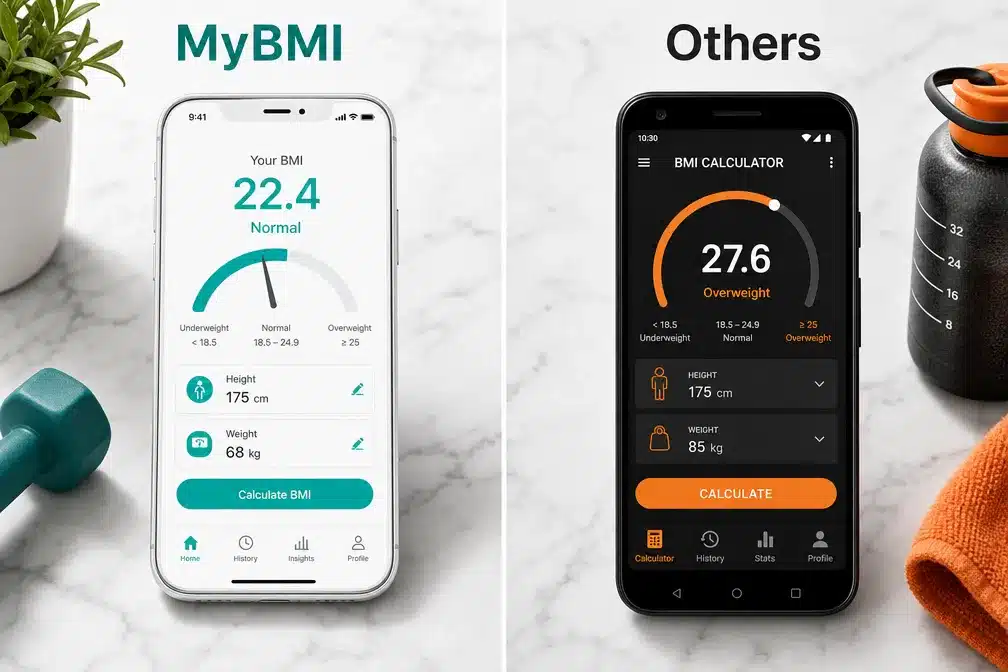
Choose MyBMI if you want a dedicated, visual BMI tracker with a clean interface and do not need full nutrition or workout logging.
Choose Apple Health or Google Fit if you already use an iPhone or Android device and want BMI tracking as part of a broader health dashboard without a separate app.
Choose MyFitnessPal if you want to combine BMI monitoring with detailed calorie and macro tracking.
The main advantage MyBMI has over built-in platform tools is its focused UX. The BMI gauge and trend visualization are cleaner than what you get buried inside Apple Health’s data tabs.
Does MyBMI Work for Athletes and Muscular People?
MyBMI will calculate a BMI score for athletes, but that score is likely to be misleading. This is a limitation of the BMI formula, not a flaw in the app’s design.
The core problem: BMI does not distinguish between lean muscle mass and body fat. A 185-pound male athlete who is 5’10” will get a BMI of approximately 26.5, placing him in the “overweight” category, even if his body fat percentage is well within a healthy athletic range.
What athletes should do instead:
- Use MyBMI as a rough directional reference only.
- Pair it with a body fat percentage measurement (DEXA scan, hydrostatic weighing, or skinfold calipers are the most reliable methods).
- Consider apps or tools that incorporate body fat percentage into their health assessments.
For general fitness tracking that goes beyond BMI, you might also explore medically supervised options. Our review of compounded tirzepatide covers a different end of the weight management spectrum for those dealing with clinically significant obesity.
Who Should Use MyBMI and Is It Right for Me?
MyBMI is best suited for average-build adults who want a simple, consistent way to monitor their weight status over time. It is not the right primary tool for clinical weight management or for populations where BMI is known to be unreliable.
MyBMI is a good fit if you:
- Are an average-build adult aged 18-65
- Want a quick visual reference for your BMI category
- Are tracking gradual weight changes over weeks or months
- Prefer a dedicated, minimal app over a complex fitness platform
MyBMI is not the right primary tool if you:
- Are an athlete or have high muscle mass
- Are pregnant
- Are under 18 (use pediatric BMI-for-age charts instead)
- Need clinical-grade body composition data
- Are managing a weight-related medical condition under physician supervision
For those managing weight as part of a broader health plan, understanding how tools like GLP-1 medications work can provide helpful context alongside any BMI tracking app.
MyBMI App Not Syncing With Health Apps: Troubleshooting
Syncing failures between MyBMI and Apple Health or Google Fit are among the most common complaints in user reviews. The fix is almost always a permissions issue, not a bug in the app itself.
Step-by-step fix for Apple Health sync:
- Open your iPhone’s Settings app.
- Scroll to Privacy & Security, then tap Health.
- Find MyBMI in the app list and confirm that both Read and Write permissions are enabled.
- Return to MyBMI, go to Settings within the app, and toggle the Health sync off and back on.
- If the issue persists, delete and reinstall the app (your data should restore from iCloud if backup is enabled).
Step-by-step fix for Google Fit sync (Android):
- Open your phone’s Settings, go to Apps, and find MyBMI.
- Check that all permissions (body sensors, activity) are granted.
- In Google Fit, go to Settings > Connected apps and confirm MyBMI is listed and active.
- Force-stop both apps and reopen MyBMI.
Edge case: If you recently updated your phone’s OS, health app permissions sometimes reset automatically. Re-granting them resolves the issue in most cases.
If syncing remains broken after these steps, the app’s support channel is the next stop. Check the App Store or Google Play listing for current contact options.
Common Mistakes People Make With BMI Calculators
Most errors with BMI apps come from misreading what the number means, not from entering data incorrectly.
Mistake 1: Treating BMI as a body fat measurement. BMI measures weight relative to height. It does not measure fat directly. Two people with identical BMIs can have very different body compositions.
Mistake 2: Using BMI as the sole health indicator. Waist circumference, blood pressure, blood glucose, and cholesterol levels all provide critical context that BMI cannot.
Mistake 3: Ignoring trend data and fixating on a single reading. A single BMI number is less useful than a trend line over three to six months. MyBMI’s trend chart feature is actually its most valuable function.
Mistake 4: Not accounting for age-related muscle loss. Older adults often see BMI remain stable while body fat increases because muscle mass declines. This is sometimes called “normal-weight obesity.”
Mistake 5: Weighing at inconsistent times. Body weight fluctuates by 1-3 pounds throughout the day based on hydration and food intake. Weigh yourself at the same time each day (morning, before eating) for consistent data.
MyBMI Privacy and Data Security Concerns
Any app that stores personal health metrics raises legitimate privacy questions. MyBMI collects height, weight, and historical body measurement data, which qualifies as sensitive health information in most jurisdictions.
Key questions to ask before using any health app:
- Does the app sell or share your data with third parties?
- Is your data stored locally on your device or on remote servers?
- Does the app comply with GDPR (EU users) or HIPAA (US clinical context)?
- Can you delete your data permanently if you stop using the app?
What to do: Before entering personal data, read MyBMI’s current privacy policy directly on their website or in the app store listing. Look specifically for language about third-party data sharing and advertising partnerships. If the policy is vague on data selling, treat that as a red flag.
For a broader perspective on health data privacy in digital wellness tools, our editorial review standards explain how we evaluate transparency in health platforms.
How to Use MyBMI for Weight Loss Tracking
MyBMI can be a useful supporting tool in a weight loss plan, but it works best when combined with other metrics and a clear goal structure.
Practical steps for using MyBMI effectively:
- Set a baseline. Log your starting height and weight on day one.
- Weigh in consistently. Use the same scale, same time of day, same conditions (morning, post-bathroom, pre-breakfast).
- Log at least weekly. Daily fluctuations are noisy. Weekly entries give a cleaner trend line.
- Use the trend chart, not the daily number. A downward slope over 8-12 weeks is the signal that matters.
- Set a target BMI range, not a single number. Aiming for the 22-24 range rather than a specific number reduces frustration from normal fluctuations.
- Pair with a nutrition tracker if calorie management is part of your plan.
For those pursuing more structured weight loss programs, our weight loss injection reviews for 2026 cover medically supervised options that go significantly further than app-based tracking.
MyBMI User Reviews and Ratings: What Real Users Say
Based on aggregated feedback from App Store and Google Play listings as of mid-2026 [VERIFY: pull current aggregate ratings before publishing], MyBMI holds a rating in the 4.0-4.3 range across both platforms, with several thousand reviews.
Common praise in user reviews:
- Clean, intuitive interface
- Trend chart is easy to read and motivating
- Quick to use (under 30 seconds per entry)
- Free version is genuinely functional, not artificially limited
Common complaints:
- Sync issues with Apple Health and Google Fit (addressed in the troubleshooting section above)
- Some users report ads in the free version being intrusive
- Premium pricing feels high relative to the feature set for occasional users
- No integration with smart scales for automatic weight logging (on some device models)
Overall sentiment: Most users find MyBMI useful as a lightweight tracking companion rather than a comprehensive health platform. Users who expected clinical-grade insights were disappointed; users who wanted a clean BMI log were satisfied.
Can MyBMI Predict Health Risks?
MyBMI can flag when your BMI falls into a category associated with elevated health risk, but it cannot predict individual health outcomes. This distinction matters.
The app will show you if your BMI falls in the overweight or obese range, which the WHO associates with increased risk of conditions including type 2 diabetes, cardiovascular disease, and certain cancers at a population level. However, individual risk depends on dozens of factors the app cannot measure: genetics, activity level, diet quality, metabolic health, and more.
What MyBMI can reasonably do:
- Alert you when your weight trend is moving in a concerning direction
- Provide a starting point for a conversation with your doctor
- Help you track whether lifestyle changes are producing measurable results
What it cannot do:
- Diagnose any health condition
- Predict your personal risk of disease
- Replace a clinical assessment
If your BMI is consistently above 30 and you are exploring medical weight management options, resources like our GLP-1 basics guide offer evidence-based context on what clinical interventions are available.
MyBMI Alternatives and Similar Apps
Several strong alternatives exist depending on what you need beyond basic BMI tracking.
Best alternatives to MyBMI:
- Apple Health (iOS): Built-in, free, integrates with virtually every health device. BMI tracking is available but less visually prominent than MyBMI.
- Google Fit (Android): Similar to Apple Health. Strong activity tracking, basic weight/BMI logging.
- MyFitnessPal: Best if you want to combine BMI tracking with detailed nutrition logging. Free tier is functional; premium adds deeper analytics.
- Cronometer: Stronger on micronutrient tracking than MyBMI or MyFitnessPal. Good for users focused on dietary quality alongside weight.
- Withings Health Mate: Pairs exceptionally well with Withings smart scales for automatic weight logging. Better ecosystem integration than MyBMI for device users.
Choose MyBMI over alternatives if you specifically want a clean, dedicated BMI tracker without the complexity of a full fitness platform. It does one thing well.

FAQ: MyBMI Review
Q: Is MyBMI free to use?
Yes. MyBMI has a functional free tier that covers BMI calculation and basic trend tracking. A premium subscription unlocks advanced analytics, data export, and an ad-free experience. Check the current App Store or Google Play listing for up-to-date pricing.
Q: Is MyBMI available on both iPhone and Android?
Yes. MyBMI is available on both iOS (App Store) and Android (Google Play). The feature set is broadly consistent across both platforms, though minor UI differences may exist.
Q: How accurate is the BMI formula used by MyBMI?
The app uses the standard WHO BMI formula, which is mathematically accurate. The limitation is the formula itself, not the app. BMI is a reliable population-level screening tool but a poor measure of individual body fat percentage, particularly for athletes and older adults.
Q: Can I use MyBMI to track my child’s BMI?
Standard BMI categories do not apply to children and teenagers. Pediatric BMI is assessed using age- and sex-specific growth charts. MyBMI is designed for adults aged 18 and over.
Q: Why won’t MyBMI sync with Apple Health?
This is almost always a permissions issue. Go to Settings > Privacy & Security > Health on your iPhone, find MyBMI, and confirm Read and Write permissions are both enabled. Toggling sync off and on within the app usually resolves it.
Q: Does MyBMI sell my health data?
Review MyBMI’s current privacy policy in the app store listing for a definitive answer. As a general rule, free health apps sometimes share anonymized data with advertising partners. If data privacy is a priority, read the policy carefully before entering personal information.
Q: Is a BMI of 25 actually unhealthy?
A BMI of 25 sits at the lower boundary of the WHO “overweight” category, but it does not mean you are unhealthy. BMI is one data point. Waist circumference, blood pressure, blood glucose, and fitness level all provide important additional context.
Q: What is the difference between MyBMI free and premium?
The free version covers BMI calculation, basic trend charts, and health app sync. Premium adds detailed analytics, goal tracking, data export, calorie guidance, and an ad-free experience. For occasional users, free is sufficient.
Q: Can MyBMI replace a doctor’s assessment?
No. MyBMI is a self-monitoring tool, not a clinical diagnostic instrument. If you have concerns about your weight or related health conditions, consult a licensed healthcare provider.
Q: Does MyBMI work offline?
Core BMI calculation and local data logging work without an internet connection. Cloud backup and sync features require connectivity.
7 Best GLP-1 Providers Ranked: Accreditation, Flexibility & Support Compared (2026 Update)
32,000+ Patients Can't All Be Wrong: See the Top-Rated GLP-1 Providers: Compared on accreditation, plan flexibility, and patient support — updated for 2026.
BMI MD GLP-1 Microdosing Plan
- Specialized microdosing options (sublingual drops or low-dose injections)
- Ideal for maintaining weight or tapering off higher doses safely
- Fully bundled plan with no hidden monthly platform memberships
DirectMeds Weight Loss Solutions
- Sourced from accredited, state-licensed 503A compounding pharmacies
- No-frills high-volume savings passed directly to the patient
- Includes clinical consultation and cold-chain shipping updates
MEDVi Flat-Rate Telehealth
- Flat monthly rate holds steady even at maximum maintenance doses
- No dosage upcharges or graduation fee penalties
- Offers both injectable and advanced oral thin-film delivery options
Gala GLP-1 Care Program
- All-inclusive plan with no standalone membership costs
- Continuous text-based messaging access with state-licensed clinicians
- Temperature-controlled, cold-chain medication shipping included
Measured GLP-1 Metabolic Health
- Comprehensive metabolic health screening and expert intake analysis
- Predictable long-term budgeting with stable plan pricing
- High-end responsive dashboard with integrated diagnostic support
Refills GLP-1 (TryRefills Plan)
- Flat rate holds steady as titration scales up
- Includes clinical guides for active side-effect management
- Bundles in foundational nutritional strategies alongside medication
AltRx GLP-1 Transactional Reorders
- Zero recurring auto-billing — pay entirely on a transactional basis
- Rapid text-to-order format saves time for experienced patients
- Provides both injectable forms and fast-dissolving tablet variations
Conclusion
MyBMI is a solid, no-frills BMI tracking app that does exactly what it promises: it calculates your BMI, visualizes it clearly, and tracks your trend over time. For average-build adults who want a simple, consistent way to monitor their weight status, it earns its place on a phone. The free version is genuinely useful, the interface is clean, and the trend chart is the feature that delivers the most real-world value.
The limitations are real but well-known: the BMI formula is a population tool, not a precision body composition measurement, and athletes or muscular individuals will find the numbers misleading without additional context. Sync issues are fixable with a permissions check.
Next steps: Download the free version, log your baseline, and commit to weekly weigh-ins for 8-12 weeks. If you are managing weight as part of a broader health goal, pair MyBMI data with a conversation with your doctor and explore whether additional tools or medically supervised programs are appropriate for your situation.
References
- World Health Organization. (2000). Obesity: Preventing and Managing the Global Epidemic. WHO Technical Report Series 894. https://www.who.int/publications/i/item/obesity-preventing-and-managing-the-global-epidemic
- Tomiyama, A. J., Hunger, J. M., Nguyen-Cuu, J., & Wells, C. (2016). Misclassification of cardiometabolic health when using body mass index categories in NHANES 2005-2012. International Journal of Obesity, 40(5), 883-886. https://doi.org/10.1038/ijo.2016.17
- Centers for Disease Control and Prevention. (2022). About Adult BMI. https://www.cdc.gov/healthyweight/assessing/bmi/adult_bmi/index.html
Tags: MyBMI review, BMI calculator app, body mass index tracker, MyBMI free vs premium, MyBMI alternatives, BMI accuracy, health tracking apps, weight loss tracking, BMI for athletes, MyBMI privacy, Apple Health sync, body weight monitoring

With over 13 years of experience in holistic health blogging, I aim to help you navigate your wellness journey with honest insights, expert-backed advice, and a sprinkle of real-world practicality.
Certified Wellness Writer | Herbal Nutrition Advocate | Wellness Research Enthusiast


