
Ozempic Dosage Chart: Every Dose, Clicks & Titration Schedule

Last updated: October 23, 2026
Quick Answer
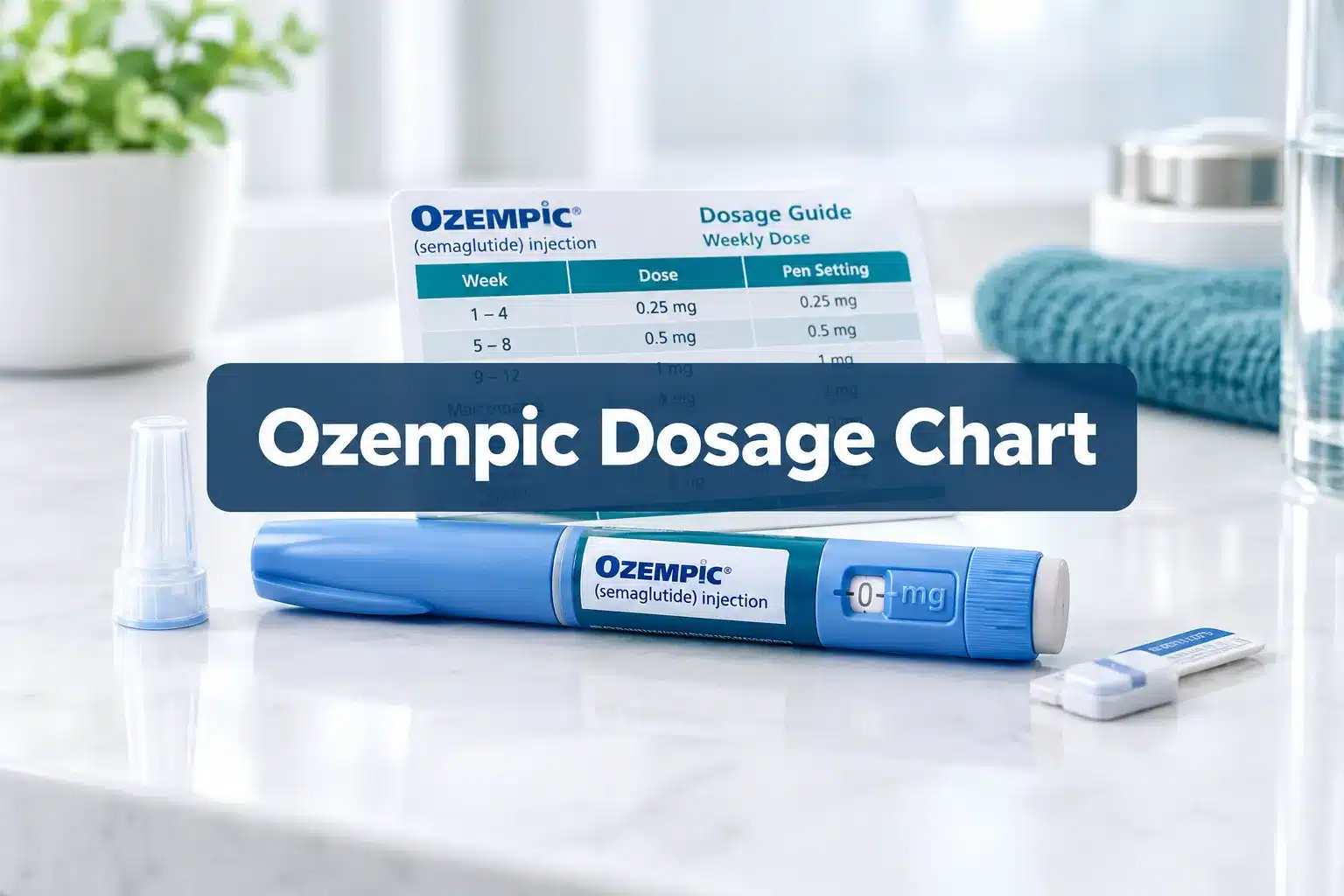
The Ozempic dosage chart runs from a 0.25 mg starting dose to a 2 mg maximum injection dose, moving up every four weeks, plus a newer oral tablet option dosed daily from 3 mg to 25 mg [Source: FDA label, 2026][1][Source: Ozempic tablet dosing, 2026][2]. There is no official “click” measurement for Ozempic pens, the pen dial sets a full labeled dose, not a custom number of clicks [Source: Ozempic pen dosing, 2026][3]. This guide breaks down every dose, the titration timeline, and what to do if your dose feels off.
Key Takeaways
- Ozempic injection doses go 0.25 mg, 0.5 mg, 1 mg, 1.7 mg, and 2 mg, each a fixed pen setting, not a number of clicks [1].
- The 0.25 mg dose is for starting treatment only and does not treat blood sugar or support meaningful weight loss on its own [1].
- Standard titration moves to the next dose every 4 weeks, though your doctor may slow this down based on side effects [1].
- A new Ozempic tablet, launched in 2026, offers daily oral dosing from 3 mg up to 25 mg as an alternative to weekly injections [2].
- Manufacturer and FDA guidance explicitly warns against using pen clicks to create “custom” doses outside the labeled settings [3][4].
- Missing a dose, doubling up accidentally, or self-adjusting the schedule all carry specific guidance covered below.
- Not everyone needs or reaches the 2 mg maintenance dose, many people do well, and stay, on 1 mg [1].
What Does Each Ozempic Dose Actually Do
Each Ozempic dose has a distinct clinical purpose: 0.25 mg starts the body’s adjustment to the drug, while 0.5 mg, 1 mg, and 2 mg are the doses that actually produce blood sugar control and weight-related effects [1]. The dose you land on isn’t about how fast you want results, it’s about what your body tolerates and what your doctor determines you need.
7 Best GLP-1 Providers Ranked: Accreditation, Flexibility & Support Compared (2026 Update)
32,000+ Patients Can't All Be Wrong: See the Top-Rated GLP-1 Providers. We compared the leading online GLP-1 providers based on program features, clinical support, convenience, and overall value.
BMI MD GLP-1 Microdosing Plan
- Specialized microdosing options, including sublingual drops and low-dose injections
- Designed for people interested in maintaining weight or gradually adjusting treatment
- Bundled program structure without a separate monthly platform membership
- Online access makes the process convenient from home

DirectMeds Weight Loss Solutions
- Online weight-loss program with a straightforward patient experience
- Compounded medication options through state-licensed compounding pharmacies
- Includes clinical consultation as part of the process
- Provides shipping updates to help patients track their orders
MEDVi Flat-Rate Telehealth
- Flat-rate telehealth approach designed for easier budgeting
- No dosage-based pricing increases within the advertised program structure
- Offers injectable and oral thin-film delivery options
- Includes medical screening and asynchronous provider consultations
Gala GLP-1 Care Program
- Text-based access to state-licensed clinicians
- Cold-chain medication shipping included in the program
- Month-to-month program structure
- Designed for people who value convenient ongoing support
Measured GLP-1 Metabolic Health
- Comprehensive metabolic health screening and intake analysis
- Designed around longer-term metabolic health management
- Responsive dashboard with integrated health tracking tools
- Useful option for patients who value a more data-focused experience
Refills GLP-1 (TryRefills Plan)
- Clinical guidance designed to help patients manage common treatment concerns
- Includes foundational nutritional strategies alongside medication
- Designed around predictable ongoing treatment
- No hidden startup or processing fees according to the program information provided
AltRx GLP-1 Transactional Reorders
- Transactional reorder model without recurring auto-billing
- Designed for patients who already understand their treatment routine
- Fast text-to-order process for convenient reorders
- Offers injectable and fast-dissolving tablet variations
Here’s what the research and prescribing information say about each step:
| Dose | Purpose | Typical Duration |
|---|---|---|
| 0.25 mg | Starting dose only; helps the body adjust to semaglutide | 4 weeks |
| 0.5 mg | First treatment dose; may improve blood sugar and appetite control | 4+ weeks |
| 1 mg | Common maintenance dose for many patients | Ongoing |
| 1.7 mg | Intermediate step toward the maximum dose | 4+ weeks |
| 2 mg | Maximum labeled dose for added effect | Ongoing |
[Source: FDA prescribing information, 2026][1]
A common mistake people make is assuming 0.25 mg is a “real” treatment dose. It isn’t, it exists purely to reduce nausea and other GI side effects as your system acclimates [1]. If you’re curious how this compares to very low-dose regimens some providers use off-label, see our breakdown of GLP-1 microdosing charts, doses, and safety.
How Long Between Ozempic Dose Increases
The standard interval between Ozempic dose increases is 4 weeks, allowing your body time to adjust before moving to the next level [1]. This isn’t a suggestion, it’s built into the labeled titration schedule because faster increases raise the risk of nausea, vomiting, and other GI side effects.
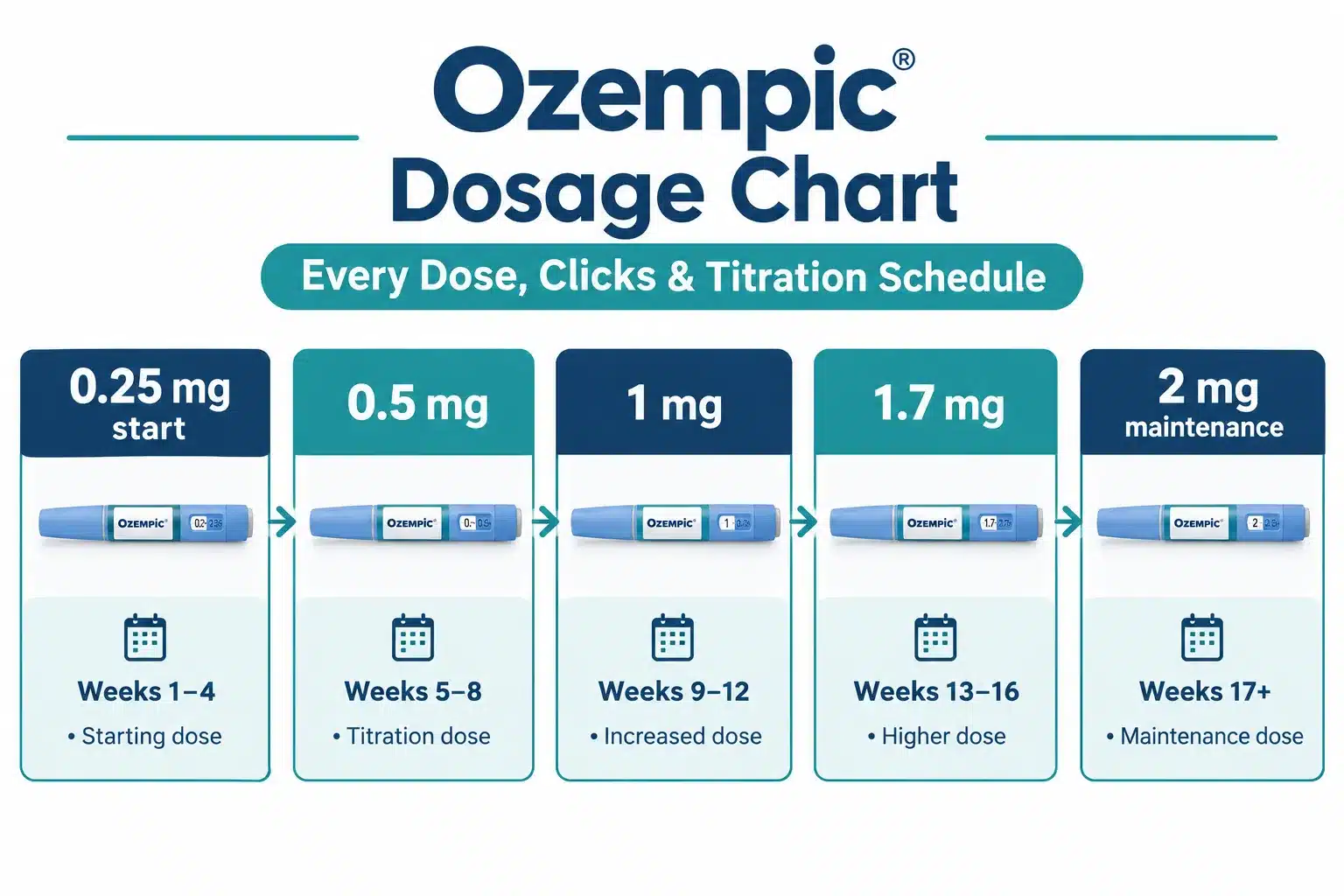
The typical path looks like this:
- Weeks 1-4: 0.25 mg
- Weeks 5-8: 0.5 mg
- Weeks 9-12: 1 mg (if needed)
- Weeks 13-16: 1.7 mg (if needed)
- Week 17 onward: 2 mg (if needed)
Choose to stay longer at any step if you’re still having noticeable side effects, your prescriber can extend any stage beyond four weeks. For a closer look at how this plays out week by week in real patients, our 6-week Ozempic weight loss results guide walks through early-stage expectations.
Can Ozempic Dosage Be Adjusted Faster Than the Schedule
No. The FDA-approved titration schedule does not allow skipping steps or shortening the four-week intervals, and doing so increases the risk of severe gastrointestinal side effects [1]. Some telehealth or compounding providers market faster or “custom” titration plans, but these fall outside the FDA-labeled use of brand-name Ozempic.
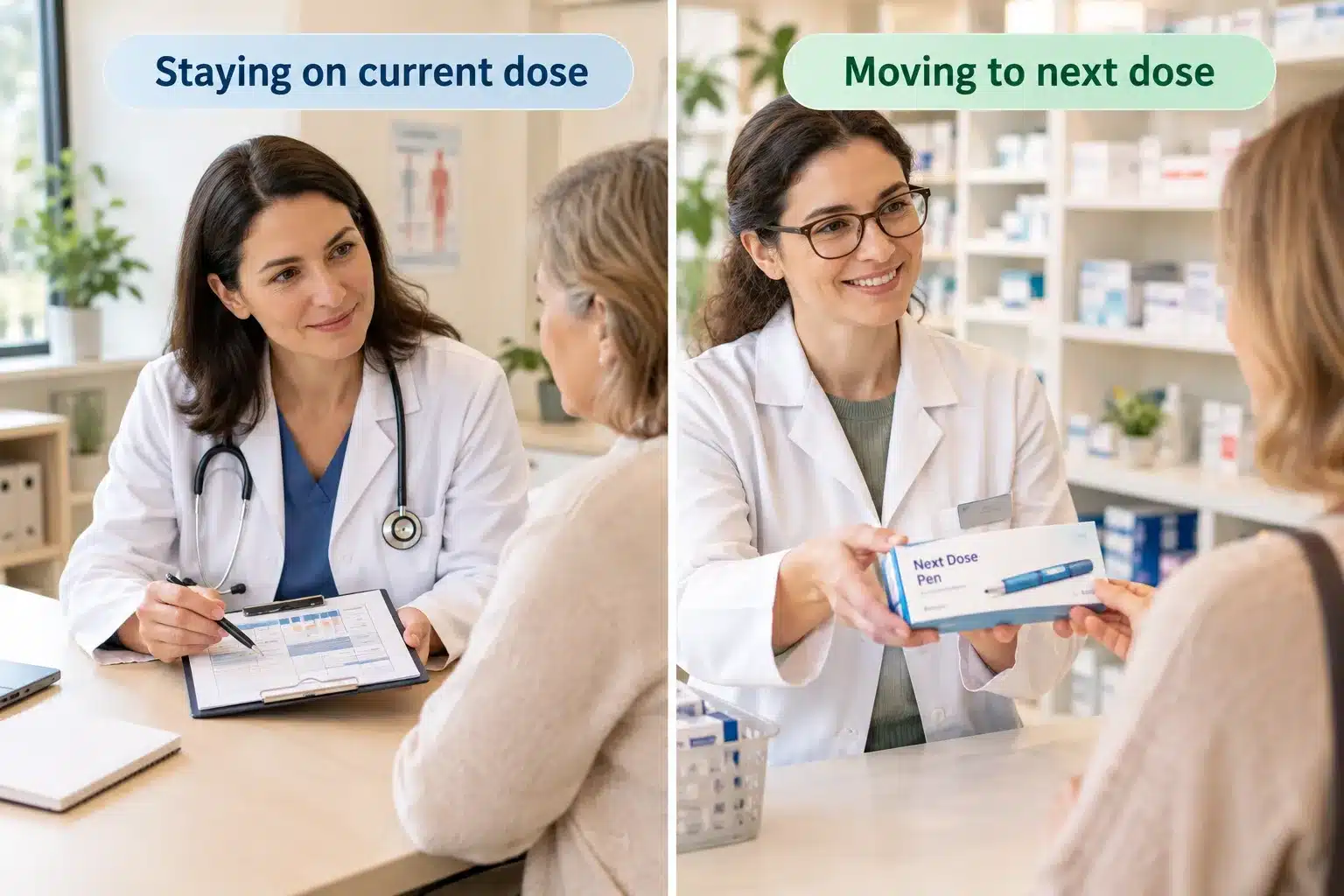
Edge case: if you switch from another GLP-1 medication, your doctor may start you at a different point in the schedule based on your prior tolerance, but this is still a prescriber decision, not a self-adjustment. If you’re exploring compounded alternatives that use different titration logic, read how compounded semaglutide differs from Ozempic before assuming the same rules apply.
Why Would a Doctor Keep You on the Same Ozempic Dose
A doctor keeps you at a current dose when you’re already meeting your treatment goals, when side effects appear at a higher dose, or when kidney function and other health factors warrant caution [1]. Staying at 1 mg instead of pushing to 2 mg is common and not a sign of “falling behind.”
Reasons a dose might stay flat:
- Blood sugar or weight goals are already being met
- Nausea, vomiting, or diarrhea appear at a higher dose
- Chronic kidney disease (CKD) considerations require closer monitoring before increasing [1]
- Cost or insurance coverage limits access to higher-dose pens
I’ve talked with people who assumed stalling at 1 mg meant the medication had “stopped working.” In most cases, it meant their doctor saw good results and chose not to add unnecessary side-effect risk. That’s a reasonable, evidence-based call, not a failure.
Is Ozempic More Expensive at Higher Doses
Yes, in most cases higher Ozempic doses use different pen configurations and may carry higher list prices, though your actual out-of-pocket cost depends heavily on insurance coverage, which pen size is prescribed, and manufacturer savings programs [VERIFY: current list prices and savings card terms]. Insurance formularies and copay assistance change often enough that readers should confirm current pricing with their pharmacy or the Ozempic savings program directly.
A few things that affect your real cost:
- Pen size prescribed (different pens serve different dose ranges)
- Insurance tier placement for diabetes versus off-label weight use
- Whether you qualify for manufacturer savings cards
- Pharmacy-to-pharmacy price variation
For a deeper cost comparison across semaglutide formats, see our guide on semaglutide dosing for weight loss comparing injections versus oral tablets.
How Do You Know if Your Ozempic Dose Is Too High
Signs your Ozempic dose may be too high include persistent vomiting, severe abdominal pain, dehydration, or an inability to keep food or fluids down, these warrant contacting your prescriber promptly [1]. Mild nausea during the first weeks of a new dose is common and often temporary, but it shouldn’t be severe or constant.
Call your doctor if you notice:
- Vomiting that doesn’t subside after a few days at a new dose
- Signs of dehydration (dizziness, dark urine, extreme thirst)
- Severe, persistent stomach pain (possible sign of pancreatitis, which requires urgent evaluation) [1]
- Vision changes or signs of low blood sugar if you’re on other diabetes medications
Decision rule: if side effects are tolerable and improving, stay the course. If they’re worsening or interfering with daily life, that’s your signal to call your provider, not to simply skip doses on your own.
What Happens if You Accidentally Inject Ozempic Twice
Accidentally injecting Ozempic twice in one week can increase the risk of nausea, vomiting, and low blood sugar, especially if you’re also taking insulin or a sulfonylurea, contact your healthcare provider or pharmacist right away for guidance [1][5]. Do not try to “correct” it by skipping your next scheduled dose without medical advice.
What to do:
- Note the time and dose amount you took
- Contact your prescriber or pharmacist immediately
- Watch for symptoms of low blood sugar if you take other diabetes medications
- Do not self-adjust your next dose without guidance
This is one area where the official FAQ page is explicit: Ozempic’s manufacturer directs patients to seek medical advice rather than guess at a fix [5].
Ozempic for Weight Loss vs Diabetes Dosage Differences
Ozempic is FDA-approved for type 2 diabetes, and its labeled titration schedule (0.25 mg to 2 mg) is the same regardless of whether a provider also discusses weight-related benefits, Ozempic itself is not FDA-approved as a weight-loss drug; semaglutide sold as Wegovy holds that approval with its own dosing schedule [1][6][7]. This distinction matters because off-label weight-loss prescribing of Ozempic still follows the diabetes label, while Wegovy has a separate, higher maximum dose designed specifically for weight management.
Key differences:
- Ozempic: approved for type 2 diabetes; max labeled dose 2 mg
- Wegovy: approved for chronic weight management; different titration and higher maximum dose
- Off-label Ozempic use for weight loss still follows the diabetes titration schedule
For a side-by-side look at how these semaglutide brands differ, read our comparison of semaglutide brand names Ozempic, Wegovy, and Rybelsus.
Can You Go Back Down on Ozempic Dose After Increasing It
Yes, your doctor can lower your Ozempic dose if side effects become difficult to manage or if your treatment goals change, and this is a normal part of individualized dosing, not a failure of the medication [1]. Going back down is a legitimate clinical decision, especially when GI side effects outweigh the benefit of a higher dose.
Common reasons to step back down:
- Persistent nausea or vomiting at the current dose
- A planned surgery or medical procedure requiring dose adjustment
- Switching treatment goals (for example, moving to a maintenance-focused plan)
Edge case: if you pause Ozempic for an extended period, your doctor may restart you at a lower dose and re-titrate rather than resuming at your previous level, since tolerance can shift over time.
What If You Miss Your Weekly Ozempic Injection
If you miss a dose and it’s within 5 days of your scheduled day, take it as soon as you remember; if more than 5 days have passed, skip that dose and resume your regular schedule on the next scheduled day [1]. Never take two doses close together to “make up” for a missed one.
Quick reference:
- Within 5 days late: take it now, then continue your normal schedule
- More than 5 days late: skip it, wait for your next scheduled day
- Unsure which applies: call your pharmacist before guessing
This guidance comes directly from the manufacturer’s dosing instructions for the injection pen [3].
Are There Ozempic Doses Lower Than 0.25 mg Available
No, the FDA-approved Ozempic injection pen does not offer a labeled dose lower than 0.25 mg, since that is the designated starting dose built into the lowest-dose pen [1]. Some compounding pharmacies and telehealth providers offer semaglutide microdosing below 0.25 mg, but this falls outside Ozempic’s FDA-approved labeling and uses compounded, not brand-name, product.
If you’re researching below-label dosing approaches, our articles on microdosing semaglutide charts and dosing guides and microdosing Ozempic and what the science actually says cover this in more depth, including the lack of FDA approval for doses under 0.25 mg.
Does Everyone Reach the 2 mg Ozempic Maintenance Dose
No, reaching the 2 mg maximum dose is not required or expected for everyone, many patients achieve their treatment goals at 0.5 mg or 1 mg and stay there long-term [1]. The titration schedule is a ceiling of possibility, not a destination every patient must reach.
Your prescriber decides whether to increase your dose based on:
- Blood sugar control (for diabetes indication)
- Side effect tolerance
- Overall treatment response
Common misconception: that a higher dose always means better results. In practice, the right dose is the lowest one that meets your treatment goals with manageable side effects, which is exactly the clinical rationale behind gradual titration in the first place [1].
How to Properly Count Clicks on Ozempic Pen for Accuracy
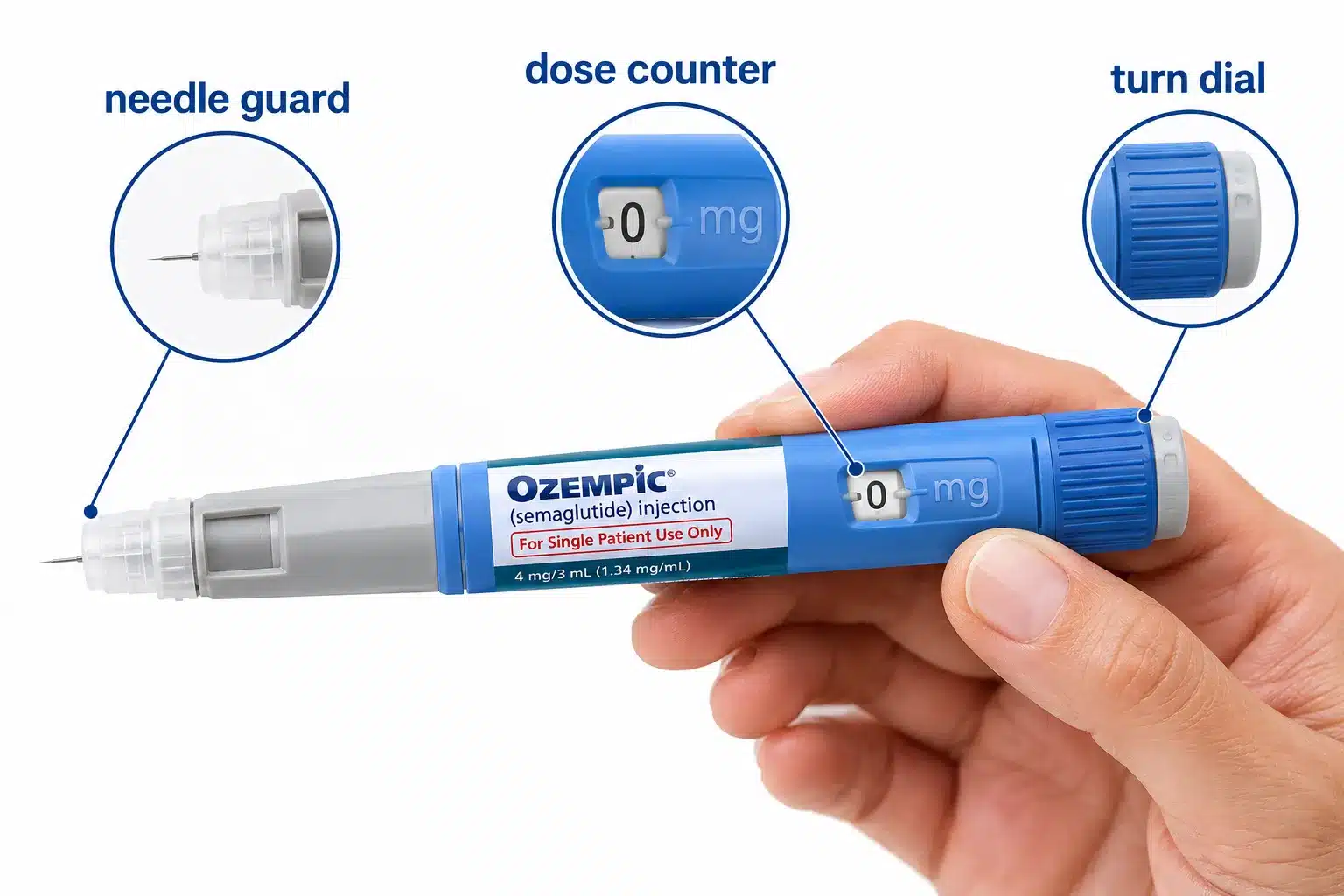
The Ozempic pen does not use a “click counting” dosing method, the pen has a dose counter window that displays the exact labeled dose (0.25 mg, 0.5 mg, 1 mg, 1.7 mg, or 2 mg), and you turn the dial until that number appears, not until you hear a specific number of clicks [3][8]. This is one of the most misunderstood points about Ozempic dosing, and it matters for safety.
Official pen use steps:
- Check the dose counter window before and after dialing
- Turn the dial clockwise until it stops at your prescribed dose number
- Confirm the number in the window matches your prescribed dose
- Inject according to your provider’s instructions
- Dispose of the needle safely after each use
The FDA and manufacturer explicitly warn against using audible clicks to create unofficial “custom” doses between labeled settings [3][4]. Some third-party sources, including compounding-related guides, describe click-based dosing for different pen types, but this does not apply to the FDA-approved Ozempic pen’s labeled use [4]. As a prediction worth flagging clearly as speculative: some industry observers expect future GLP-1 pen designs to formally support finer micro-titration, but as of the 2026 label, Ozempic’s official instructions use fixed dose-counter settings only, not click-based customization [1][3].
What Are Ozempic Alternatives With Simpler Dosing
Several GLP-1 medications offer simpler or different dosing structures than Ozempic’s five-step injection titration, including Rybelsus (oral tablets), the new Ozempic tablet, and compounded semaglutide programs with alternate schedules [2][9]. “Simpler” doesn’t always mean better, it means a different trade-off between convenience, cost, and flexibility.
Options to discuss with your provider:
- Rybelsus: daily oral semaglutide tablet with its own titration schedule
- New Ozempic tablet (2026): daily oral dosing from 3 mg to 25 mg, an alternative to weekly injections [2]
- Compounded semaglutide: varies by provider, often with different titration logic [VERIFY: legal status varies by state and changes frequently]
- Noom-affiliated microdose programs: lower-dose approaches marketed for appetite control
For readers weighing oral versus injectable options, our guide to semaglutide injection dosage and our broader GLP-1 brand comparison guide cover the practical differences in day-to-day use.
Quick Checklist: Before You Change Your Ozempic Dose- Confirm your current dose with the pen’s dose counter window, not clicks
- Track side effects for at least 2 weeks at each new dose
- Never double up after a missed dose without calling your pharmacist
- Ask your doctor whether staying at your current dose makes sense before pushing higher
- Review kidney function history if CKD has ever been discussed with your provider
Frequently Asked Questions
What is the starting dose of Ozempic?
The starting dose is 0.25 mg once weekly, used only to help your body adjust and not intended to treat blood sugar on its own [1].
What is the maximum Ozempic dose?
The maximum labeled injection dose is 2 mg once weekly [1]. The new oral tablet form goes up to 25 mg daily [2].
How often do you increase Ozempic dose?
Dose increases typically happen every 4 weeks, following the FDA-labeled titration schedule [1].
Can I use pen clicks to set a custom Ozempic dose?
No. The pen uses a dose counter window showing labeled doses only; using clicks to create unofficial custom doses is not supported by the manufacturer or FDA [3][4].
What should I do if I miss a weekly Ozempic dose?
Take it within 5 days of the missed day; if more than 5 days have passed, skip it and resume your normal schedule [1].
Is a higher Ozempic dose always better for weight loss?
No. The right dose is the one that meets your treatment goals with manageable side effects, which may be well below the 2 mg maximum [1].
Does Ozempic dosing differ for diabetes versus weight loss?
Ozempic’s labeled titration schedule is the same for its diabetes indication; semaglutide marketed for weight management (Wegovy) follows a separate approval and dosing schedule [1][6][7].
What if I accidentally take two Ozempic doses in one week?
Contact your prescriber or pharmacist immediately rather than adjusting your next dose on your own [1][5].
7 Best GLP-1 Providers Ranked: Accreditation, Flexibility & Support Compared (2026 Update)
32,000+ Patients Can't All Be Wrong: See the Top-Rated GLP-1 Providers: Compared on accreditation, plan flexibility, and patient support — updated for 2026.
BMI MD GLP-1 Microdosing Plan
- Specialized microdosing options (sublingual drops or low-dose injections)
- Ideal for maintaining weight or tapering off higher doses safely
- Fully bundled plan with no hidden monthly platform memberships
DirectMeds Weight Loss Solutions
- Sourced from accredited, state-licensed 503A compounding pharmacies
- No-frills high-volume savings passed directly to the patient
- Includes clinical consultation and cold-chain shipping updates
MEDVi Flat-Rate Telehealth
- Flat monthly rate holds steady even at maximum maintenance doses
- No dosage upcharges or graduation fee penalties
- Offers both injectable and advanced oral thin-film delivery options
Gala GLP-1 Care Program
- All-inclusive plan with no standalone membership costs
- Continuous text-based messaging access with state-licensed clinicians
- Temperature-controlled, cold-chain medication shipping included
Measured GLP-1 Metabolic Health
- Comprehensive metabolic health screening and expert intake analysis
- Predictable long-term budgeting with stable plan pricing
- High-end responsive dashboard with integrated diagnostic support
Refills GLP-1 (TryRefills Plan)
- Flat rate holds steady as titration scales up
- Includes clinical guides for active side-effect management
- Bundles in foundational nutritional strategies alongside medication
AltRx GLP-1 Transactional Reorders
- Zero recurring auto-billing — pay entirely on a transactional basis
- Rapid text-to-order format saves time for experienced patients
- Provides both injectable forms and fast-dissolving tablet variations
Conclusion
The Ozempic dosage chart is built around a simple idea: start low, increase slowly, and let your body and your doctor decide how far you go. Most people move through 0.25 mg, 0.5 mg, and 1 mg before deciding, together with their provider, whether 1.7 mg or 2 mg makes sense. Clicks aren’t part of the official dosing method; the dose counter window is what matters. If you’re unsure where you stand in the schedule, or whether your current dose still fits your goals, the next step is a direct conversation with your prescriber, not a self-adjustment. For more on how semaglutide dosing compares across injectable and oral forms, check our guide to semaglutide injection dosage.
This article is for informational purposes only and is not medical advice. Talk to a licensed healthcare provider before starting or changing any medication.
References
- 209637s038lbl. accessdata.fda.gov.
- Dosing. ozempic.com.
- Dosing. ozempic.com.
- Custom Ozempic 5mg Pen Dosing Guide. rx.com.
- Faqs. ozempic.com.
- 213051orig1s030lbl. accessdata.fda.gov.
- 213051s030lbl. accessdata.fda.gov.
- What Is Ozempic Pen. ozempic.com.
- Prescribing Information. ozempic.com.