Saxenda vs Zepbound: Weight Loss Results & Cost Compared

Last updated: October 29, 2026
Quick Answer
Saxenda vs Zepbound: Weight Loss Results & Cost Compared comes down to this: Zepbound (tirzepatide) produces greater average weight loss and works through a dual-hormone mechanism, while Saxenda (liraglutide) is an older, once-daily option now mostly reserved for adolescents or people who cannot tolerate newer drugs [1]. Zepbound also carries a lower list price at several dose tiers, but insurance coverage for either drug is inconsistent in 2026 [2][3][4].
Key Takeaways
- Zepbound is a dual GIP/GLP-1 receptor agonist; Saxenda is a GLP-1-only agonist, and that mechanism gap explains most of the results difference [1].
- Clinical data show tirzepatide (Zepbound) outperforms liraglutide (Saxenda) for average weight loss in adults [1][5].
- Zepbound costs less out-of-pocket than Saxenda at list price for comparable use, based on current pricing data [1][2][3].
- Saxenda requires a daily injection; Zepbound is weekly, which many users find easier to stick with [1].
- Side effects overlap heavily: nausea, diarrhea, and injection-site reactions are common with both [1][6].
- Stopping either drug typically leads to some weight regain without continued lifestyle support [7].
- Newer agents in Eli Lilly’s pipeline, including retatrutide, are already showing stronger results in trials, which may reshape this comparison soon [8][9].
What’s the Main Difference Between Saxenda and Zepbound
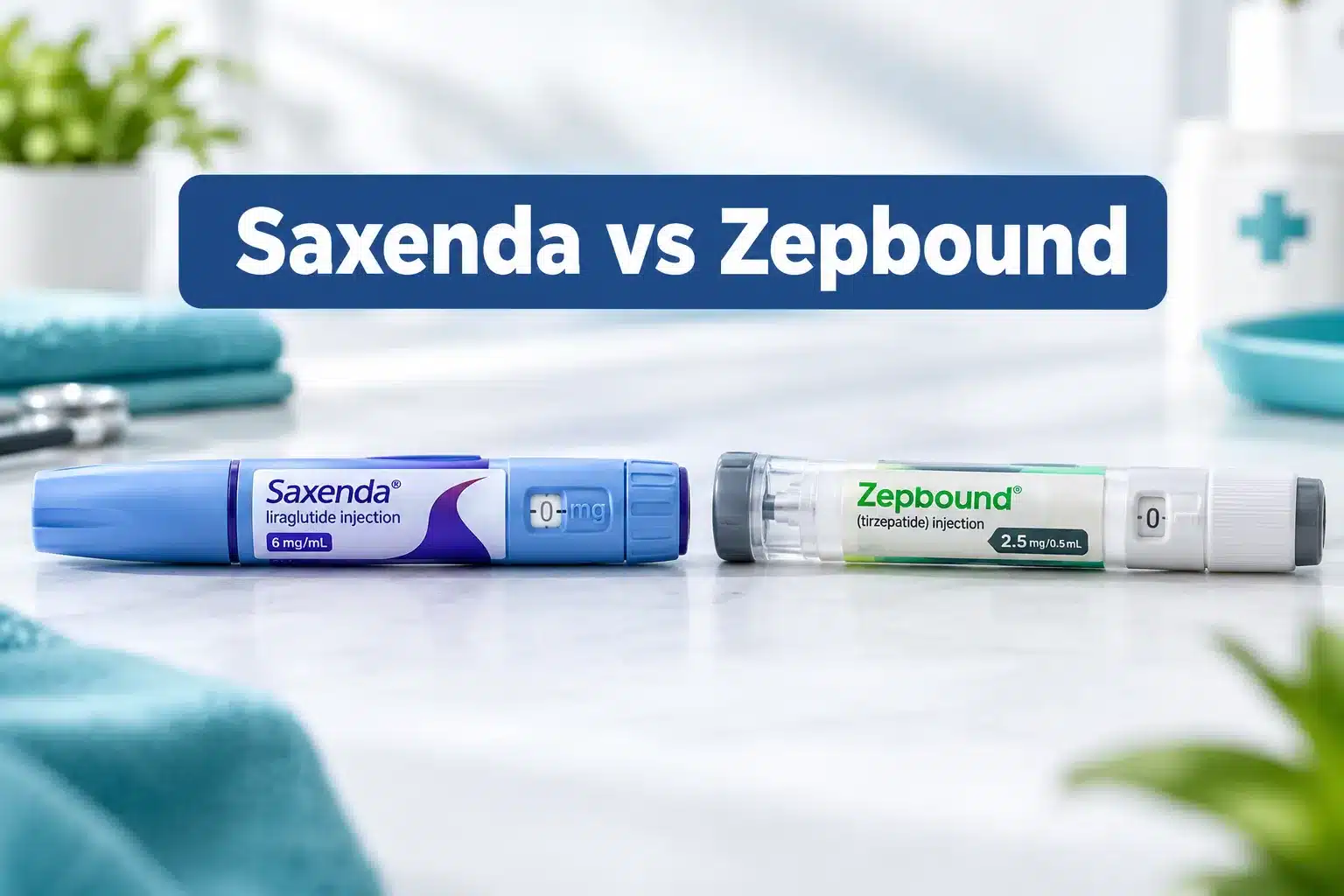
The core difference is the drug mechanism and dosing schedule. Saxenda (liraglutide) activates only the GLP-1 receptor and is injected daily, while Zepbound (tirzepatide) activates both GLP-1 and GIP receptors and is injected once a week [1].
7 Best GLP-1 Providers Ranked: Accreditation, Flexibility & Support Compared (2026 Update)
32,000+ Patients Can't All Be Wrong: See the Top-Rated GLP-1 Providers. We compared the leading online GLP-1 providers based on program features, clinical support, convenience, and overall value.

BMI MD GLP-1 Microdosing Plan
- Specialized microdosing options, including sublingual drops and low-dose injections
- Designed for people interested in maintaining weight or gradually adjusting treatment
- Bundled program structure without a separate monthly platform membership
- Online access makes the process convenient from home

DirectMeds Weight Loss Solutions
- Online weight-loss program with a straightforward patient experience
- Compounded medication options through state-licensed compounding pharmacies
- Includes clinical consultation as part of the process
- Provides shipping updates to help patients track their orders

MEDVi Flat-Rate Telehealth
- Flat-rate telehealth approach designed for easier budgeting
- No dosage-based pricing increases within the advertised program structure
- Offers injectable and oral thin-film delivery options
- Includes medical screening and asynchronous provider consultations

Gala GLP-1 Care Program
- Text-based access to state-licensed clinicians
- Cold-chain medication shipping included in the program
- Month-to-month program structure
- Designed for people who value convenient ongoing support

Measured GLP-1 Metabolic Health
- Comprehensive metabolic health screening and intake analysis
- Designed around longer-term metabolic health management
- Responsive dashboard with integrated health tracking tools
- Useful option for patients who value a more data-focused experience

Refills GLP-1 (TryRefills Plan)
- Clinical guidance designed to help patients manage common treatment concerns
- Includes foundational nutritional strategies alongside medication
- Designed around predictable ongoing treatment
- No hidden startup or processing fees according to the program information provided

AltRx GLP-1 Transactional Reorders
- Transactional reorder model without recurring auto-billing
- Designed for patients who already understand their treatment routine
- Fast text-to-order process for convenient reorders
- Offers injectable and fast-dissolving tablet variations
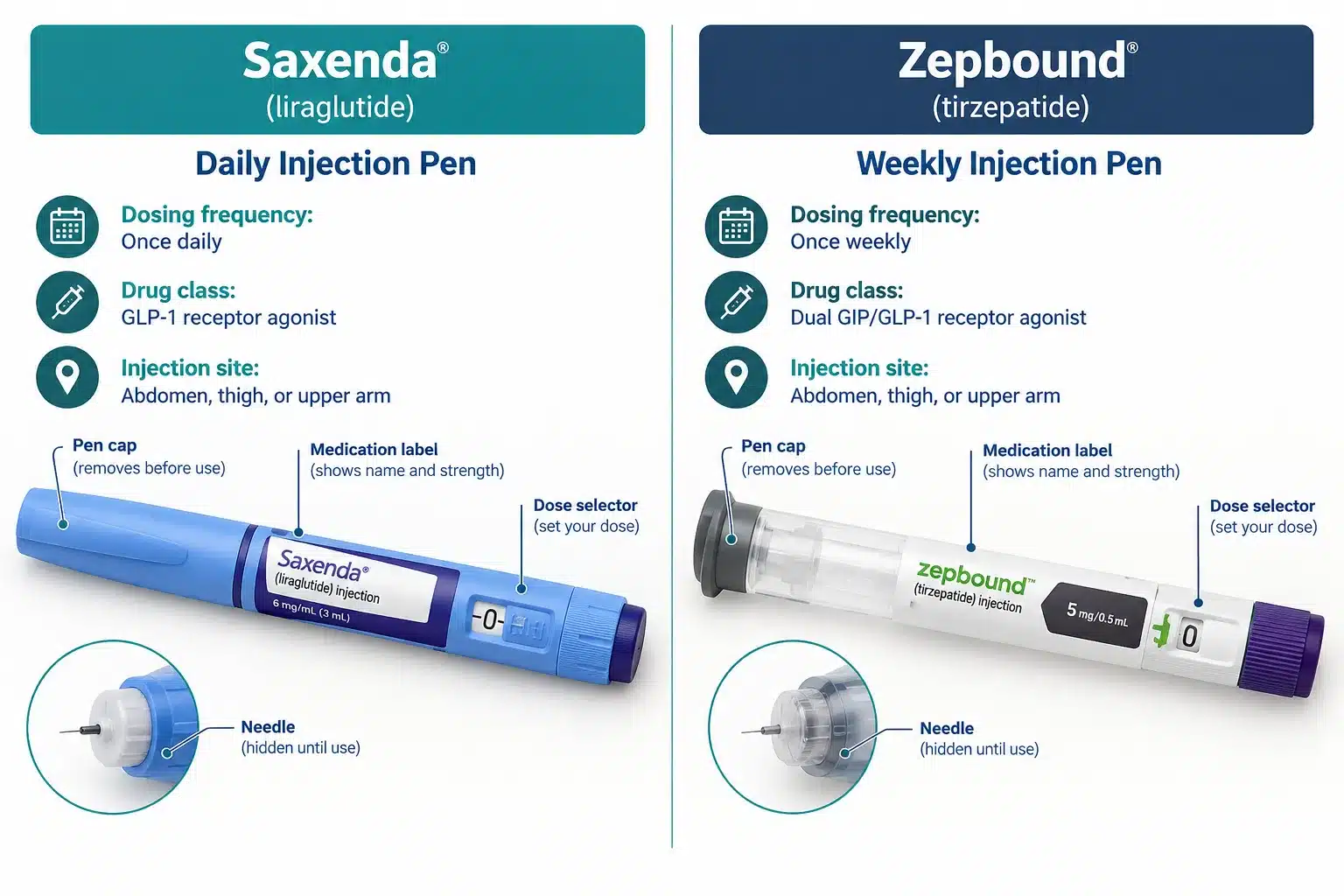
This dual-receptor action is why Zepbound tends to produce stronger appetite suppression and metabolic effects for most adults. Saxenda was approved years earlier and has a longer safety track record, which is part of why it’s still prescribed, particularly for adolescents aged 12 and up, where tirzepatide options are less established [1][6].
Choose Zepbound if you’re an adult looking for the strongest GLP-1-class result currently available. Choose Saxenda if you’re a teenager under medical supervision, or if your insurance plan only covers liraglutide-class drugs.
How Much Weight Do People Lose on Saxenda vs Zepbound
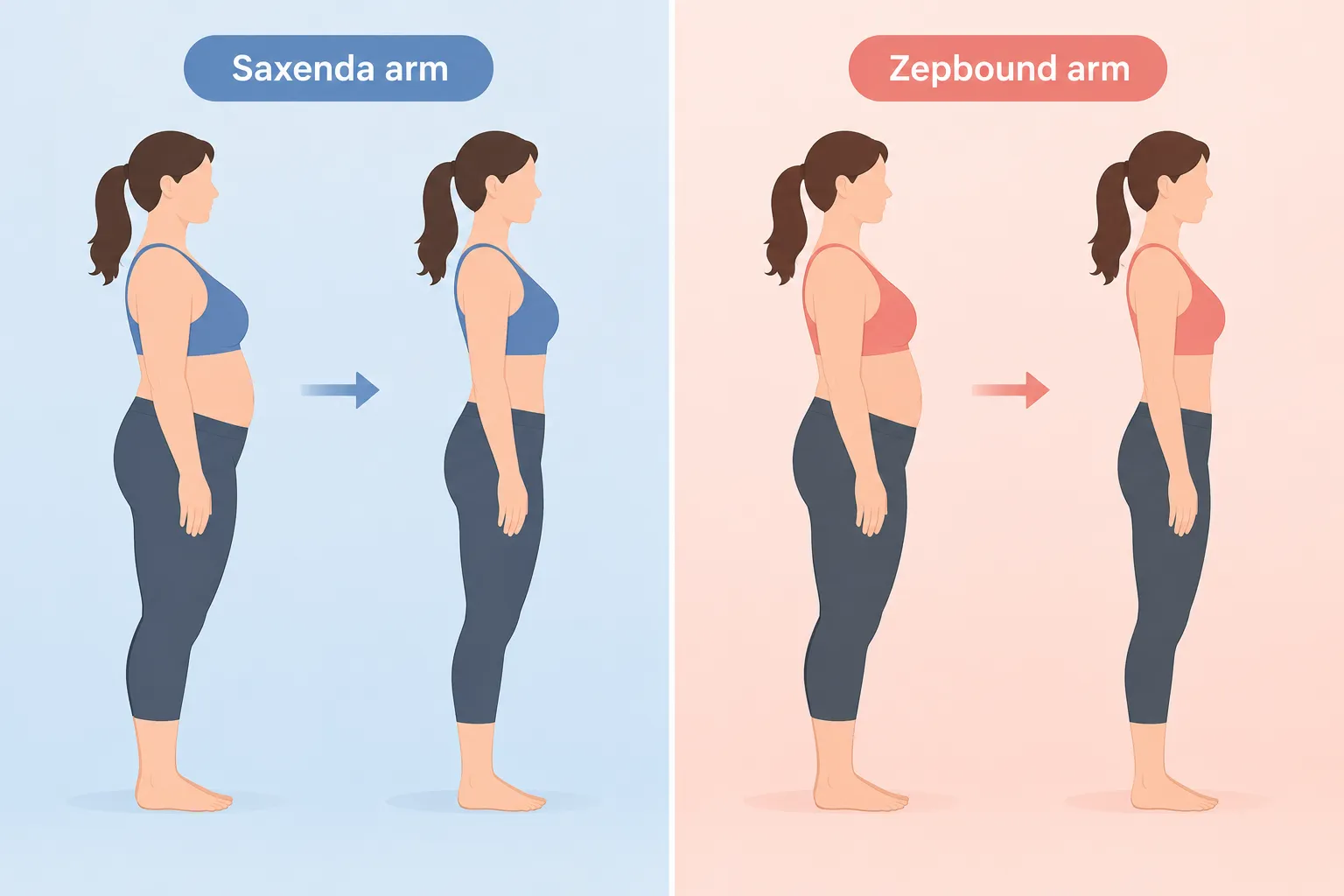
Zepbound users lose meaningfully more weight on average than Saxenda users in comparable clinical settings [1][5]. Saxenda’s labeled results run lower because liraglutide is a less potent GLP-1 agonist than tirzepatide.
- Zepbound: higher average percentage body weight reduction across its approved dose range, supported by Eli Lilly trial data [5].
- Saxenda: more modest average weight loss, consistent with its single-receptor mechanism [1].
A real-world example: two people starting at the same weight, same diet counseling, and similar adherence will typically see the Zepbound user lose a larger share of body weight by six months than the Saxenda user, based on the mechanism differences documented in company trial data [1][5]. Individual results vary with dose, diet, and consistency.
Saxenda Cost vs Zepbound Cost and Insurance Coverage
Saxenda generally carries a higher list price than Zepbound at comparable dose levels, and insurance coverage for both drugs has gotten more unpredictable in 2026 as employers trim GLP-1 benefits [2][3][4].
- Zepbound cash price and coupon programs: Eli Lilly and pharmacy discount programs have published updated October 2026 pricing, with savings cards reducing cost for eligible, commercially insured patients [2][3].
- Saxenda list price: remains significantly higher than Zepbound’s cash price in most comparisons, per published pricing guides [1][2].
- Insurance coverage: many plans now require prior authorization, documented BMI thresholds, or have dropped weight-loss drug coverage entirely, which affects access to Zepbound more than analysts expected a year ago [4].
If your employer doesn’t cover either drug, compare current cash prices directly rather than assuming the newer drug costs more. For a full cost breakdown across GLP-1 options, see this GLP-1 weight loss cost guide and the measured cost review of GLP-1 weight loss drugs.
Does Zepbound Work Faster Than Saxenda
Zepbound tends to produce noticeable appetite reduction within the first few weeks, similar to Saxenda, but its dual mechanism generally leads to faster cumulative weight loss over the first three months [1][5].
Both drugs use dose-escalation schedules, so neither works at full strength immediately. Expect:
- Weeks 1-4: appetite changes begin, dose is low on both drugs.
- Weeks 5-12: dose increases; this is when most people start noticing scale movement.
- Months 3-6: the gap between Zepbound and Saxenda results tends to widen, consistent with tirzepatide’s stronger mechanism [1][5].
Common mistake: judging either drug’s speed within the first two weeks. That window is dose-titration, not peak effect.
What Are the Side Effects of Saxenda and Zepbound
Both drugs share a similar GLP-1-class side effect profile, with gastrointestinal symptoms being the most reported issue [1][6]. Neither drug is risk-free, and both carry labeled warnings.
Common shared side effects:
- Nausea, vomiting, diarrhea, or constipation
- Injection-site reactions
- Decreased appetite
- Fatigue, especially during dose increases
Both carry boxed warnings related to thyroid C-cell tumor risk seen in animal studies, and neither is recommended for people with a personal or family history of medullary thyroid carcinoma or MEN 2 [1][6]. Always review the current FDA label and talk with a prescriber before starting either medication [6].
Who Qualifies for Saxenda or Zepbound Treatment
Adults generally qualify with a BMI of 30 or higher, or 27 or higher with a weight-related condition like high blood pressure or type 2 diabetes, for either drug [1]. Saxenda also has pediatric approval for adolescents 12 and older meeting specific weight criteria, which Zepbound currently does not offer [1][6].
- Zepbound: adults only, BMI-based eligibility, no adolescent indication yet [6].
- Saxenda: adults and adolescents 12+, making it the practical choice for teen patients [1].
Edge case: if you’re a parent of a teenager who needs medical weight management, Saxenda is likely the only one of the two your doctor can prescribe on-label.
Can You Switch From Saxenda to Zepbound
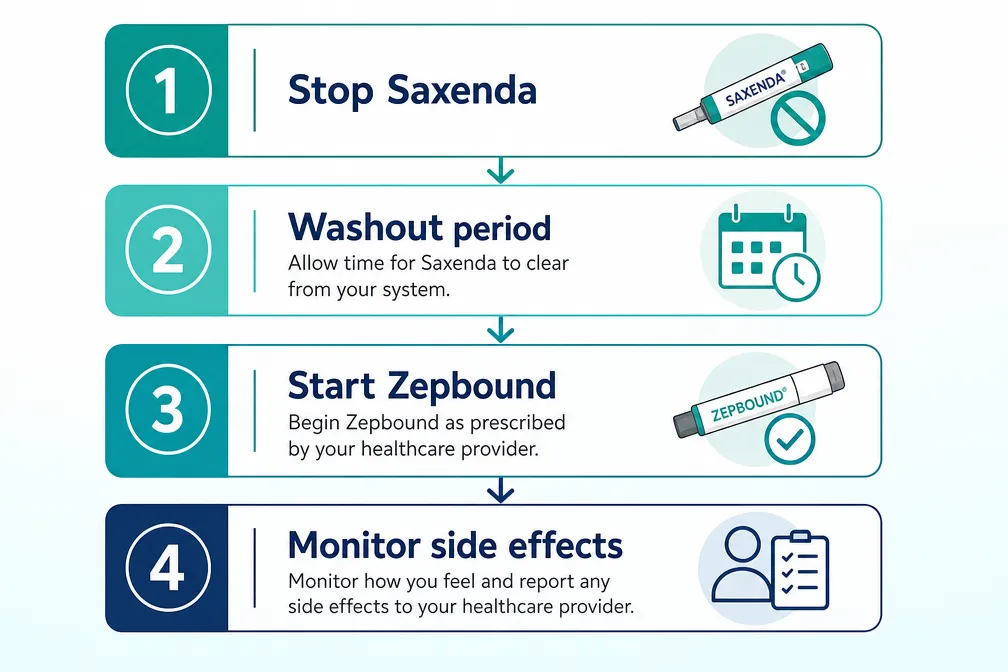
Yes, switching is common and generally done under medical supervision with a short washout or direct transition plan, depending on your prescriber’s protocol [1]. There’s no single universal switching schedule published by the FDA, so this decision should go through your provider.
Typical switch considerations:
- Current Saxenda dose and how long you’ve been on it
- Tolerance to GLP-1 side effects so far
- Insurance approval for the new drug
- Starting Zepbound at its lowest dose regardless of your prior Saxenda dose, since the drugs aren’t dose-equivalent
If you’re considering a switch, talk to your prescriber about why you want to change, cost, side effects, or plateaued results all lead to different switching strategies.
How Long Until You See Weight Loss Results With Each
Most people notice initial changes within 4 to 8 weeks on either drug, with more substantial results appearing between months 3 and 6 as doses reach maintenance levels [1][5]. Full results from longer-term trials, including 112-week follow-up data on Zepbound-related maintenance programs, show continued benefit with ongoing digital support and lifestyle coaching [7].
- Early signal (weeks 1-4): reduced appetite, smaller portions feel satisfying.
- Mid-point (months 3-6): visible weight loss, clothing fit changes.
- Longer-term (6+ months): plateau risk on both drugs without continued dose optimization or lifestyle support [7].
Saxenda vs Zepbound Which One Is Better for Me
Zepbound is generally the better choice for most adults seeking the largest average weight loss, based on current comparative data [1][5]. Saxenda remains the better or only choice for adolescents, for people who’ve had problems with newer GLP-1/GIP combination drugs, or for those whose insurance specifically covers liraglutide.
Decision rule:
- Choose Zepbound if: you’re an adult, want weekly dosing, and your plan or cash budget supports it.
- Choose Saxenda if: you’re under 18 and eligible, or you need a once-daily option your specific insurance covers.
- Consider alternatives if: cost is the main barrier, see this comparison of which GLP-1 is best for weight loss among 7 options.
What Happens When You Stop Taking Saxenda or Zepbound
Weight regain is common after stopping either drug unless you maintain the diet and activity changes built during treatment [7]. Neither drug “cures” obesity; both manage appetite biologically while you’re taking them.
Lilly’s maintenance research specifically looked at pairing reduced-dose Zepbound with digital coaching support to help people hold their results longer after dose reduction [7]. This suggests tapering with structured support works better than stopping abruptly. Talk to your prescriber before discontinuing either medication.
Are There Cheaper Alternatives to Saxenda and Zepbound
Yes, compounded GLP-1 medications, oral semaglutide, and other branded options sometimes cost less out-of-pocket, though they come with their own trade-offs in regulation and consistency. For a full breakdown of options and current pricing across the GLP-1 category, see which GLP-1 is best for weight loss and this guide to GLP-1 medication cost.
Also worth checking: whether you qualify for GLP-1 treatment if you’re not diabetic, since eligibility rules affect which discount programs and manufacturer coupons apply to you.
Saxenda vs Zepbound Comparison Reddit Real Experiences
Online patient communities commonly report that Zepbound users describe stronger appetite suppression and fewer plateaus compared to Saxenda, which lines up with the clinical satisfaction data showing higher real-world ratings for Zepbound [1]. That said, forum reports aren’t clinical evidence, they reflect selection bias toward people who post about strong results or side effects.
What’s consistent across both clinical data and patient reports: GI side effects during dose increases are the most frequently mentioned complaint for both drugs [1][6].
Do You Need a Prescription for Both Saxenda and Zepbound
Yes, both Saxenda and Zepbound are prescription-only medications in the United States, and neither is available over the counter [1][6]. You’ll need an in-person or telehealth evaluation confirming BMI and health history before a prescriber can issue either prescription. If you’re exploring telehealth routes, review this guide on getting GLP-1 weight loss injections online and this roundup of best places to get GLP-1s online.
Comparison Table: Saxenda vs Zepbound
| Factor | Saxenda | Zepbound |
|---|---|---|
| Mechanism | GLP-1 agonist only | Dual GLP-1/GIP agonist |
| Dosing frequency | Daily injection | Weekly injection |
| Adolescent approval | Yes, 12+ | No |
| Average weight loss | Lower than Zepbound | Higher, per trial data [1][5] |
| List price | Higher [1][2] | Lower at comparable doses [2][3] |
FAQ
Is Zepbound more effective than Saxenda for weight loss? Yes, in adults, tirzepatide (Zepbound) generally produces greater average weight loss than liraglutide (Saxenda), based on comparative data [1][5].
Which is cheaper, Saxenda or Zepbound? Zepbound typically has a lower list price than Saxenda at comparable doses, though actual cost depends on insurance and discount programs [1][2][3].
Can teenagers take Zepbound instead of Saxenda? No, Zepbound is not currently approved for adolescents; Saxenda is approved for ages 12 and up under medical supervision [1][6].
What are the most common side effects of both drugs? Nausea, diarrhea, vomiting, and injection-site reactions are the most commonly reported side effects for both Saxenda and Zepbound [1][6].
Do I regain weight after stopping Zepbound or Saxenda? Some weight regain is common after stopping either drug without continued diet, activity, and lifestyle support [7].
Can I switch from Saxenda to Zepbound directly? Switching is possible under medical supervision, usually starting Zepbound at its lowest dose regardless of prior Saxenda dosing [1].
Do both drugs require a prescription? Yes, both are prescription-only medications and are not available over the counter [1][6].
7 Best GLP-1 Providers Ranked: Accreditation, Flexibility & Support Compared (2026 Update)
32,000+ Patients Can't All Be Wrong: See the Top-Rated GLP-1 Providers: Compared on accreditation, plan flexibility, and patient support — updated for 2026.
BMI MD GLP-1 Microdosing Plan
- Specialized microdosing options (sublingual drops or low-dose injections)
- Ideal for maintaining weight or tapering off higher doses safely
- Fully bundled plan with no hidden monthly platform memberships
DirectMeds Weight Loss Solutions
- Sourced from accredited, state-licensed 503A compounding pharmacies
- No-frills high-volume savings passed directly to the patient
- Includes clinical consultation and cold-chain shipping updates
MEDVi Flat-Rate Telehealth
- Flat monthly rate holds steady even at maximum maintenance doses
- No dosage upcharges or graduation fee penalties
- Offers both injectable and advanced oral thin-film delivery options
Gala GLP-1 Care Program
- All-inclusive plan with no standalone membership costs
- Continuous text-based messaging access with state-licensed clinicians
- Temperature-controlled, cold-chain medication shipping included
Measured GLP-1 Metabolic Health
- Comprehensive metabolic health screening and expert intake analysis
- Predictable long-term budgeting with stable plan pricing
- High-end responsive dashboard with integrated diagnostic support
Refills GLP-1 (TryRefills Plan)
- Flat rate holds steady as titration scales up
- Includes clinical guides for active side-effect management
- Bundles in foundational nutritional strategies alongside medication
AltRx GLP-1 Transactional Reorders
- Zero recurring auto-billing — pay entirely on a transactional basis
- Rapid text-to-order format saves time for experienced patients
- Provides both injectable forms and fast-dissolving tablet variations
Conclusion
Saxenda vs Zepbound: Weight Loss Results & Cost Compared ultimately favors Zepbound for most adults seeking stronger results and lower list pricing, while Saxenda still fills a necessary role for adolescents and specific insurance situations. Both drugs carry similar GI side effects and require ongoing lifestyle support to maintain results after stopping. Before choosing either option, review current pricing, confirm your BMI eligibility, and talk with a licensed prescriber about which mechanism fits your health history. If cost is your main concern, compare current tirzepatide cost options and Zepbound online access before committing to either plan.
This article is for informational purposes only and is not medical advice. Talk to a licensed healthcare provider before starting or changing any medication.
References
- Saxenda vs. Zepbound. drugs.com.
- Zepbound. drugs.com.
- Zepbound. singlecare.com.
- Zepbound Covered Insurance 3577162. drugs.com.
- Lillys Zepbound Tirzepatide 10 Mg and 15 Mg Was Associated More. investor.lilly.com.
- 217806s041lbl. accessdata.fda.gov.
- Lillys Foundayo and Lower Dose Zepbound Helped People Maintain. investor.lilly.com.
- Lillys Triple Agonist Retatrutide Successful Two Additional. investor.lilly.com.
- Lillys Triple Agonist Retatrutide Delivered Powerful Weight Loss. investor.lilly.com.