
What Is Wegovy? Uses, How It Works & Who Qualifies


Last updated: October 24, 2026
More than 40% of US adults live with obesity, yet most weight-loss drugs on the market barely move the needle past a few percentage points of body weight. Wegovy broke that pattern. So what is Wegovy, exactly, and why has it become the most talked-about prescription weight-loss treatment in years? This guide covers Wegovy uses, how it works, and who qualifies, based on FDA labeling and the company’s own clinical data.
Wegovy (semaglutide) is a once-weekly injectable medicine approved for chronic weight management and, more recently, for reducing cardiovascular risk in adults with heart disease and obesity [1][2]. It belongs to a class of drugs called GLP-1 receptor agonists, which work by mimicking a gut hormone that controls appetite and blood sugar. In this article, you’ll learn exactly how it works in the body, who medically qualifies, what it costs, how it compares to Ozempic, and what happens after you stop taking it.
7 Best GLP-1 Providers Ranked: Accreditation, Flexibility & Support Compared (2026 Update)
32,000+ Patients Can't All Be Wrong: See the Top-Rated GLP-1 Providers. We compared the leading online GLP-1 providers based on program features, clinical support, convenience, and overall value.
BMI MD GLP-1 Microdosing Plan
- Specialized microdosing options, including sublingual drops and low-dose injections
- Designed for people interested in maintaining weight or gradually adjusting treatment
- Bundled program structure without a separate monthly platform membership
- Online access makes the process convenient from home

DirectMeds Weight Loss Solutions
- Online weight-loss program with a straightforward patient experience
- Compounded medication options through state-licensed compounding pharmacies
- Includes clinical consultation as part of the process
- Provides shipping updates to help patients track their orders
MEDVi Flat-Rate Telehealth
- Flat-rate telehealth approach designed for easier budgeting
- No dosage-based pricing increases within the advertised program structure
- Offers injectable and oral thin-film delivery options
- Includes medical screening and asynchronous provider consultations
Gala GLP-1 Care Program
- Text-based access to state-licensed clinicians
- Cold-chain medication shipping included in the program
- Month-to-month program structure
- Designed for people who value convenient ongoing support
Measured GLP-1 Metabolic Health
- Comprehensive metabolic health screening and intake analysis
- Designed around longer-term metabolic health management
- Responsive dashboard with integrated health tracking tools
- Useful option for patients who value a more data-focused experience
Refills GLP-1 (TryRefills Plan)
- Clinical guidance designed to help patients manage common treatment concerns
- Includes foundational nutritional strategies alongside medication
- Designed around predictable ongoing treatment
- No hidden startup or processing fees according to the program information provided
AltRx GLP-1 Transactional Reorders
- Transactional reorder model without recurring auto-billing
- Designed for patients who already understand their treatment routine
- Fast text-to-order process for convenient reorders
- Offers injectable and fast-dissolving tablet variations
Key Takeaways
- Wegovy is semaglutide, a GLP-1 receptor agonist approved for chronic weight management and, as of a recent label expansion, for lowering cardiovascular risk in people with obesity and known heart disease [2].
- Most people qualify with a BMI of 30+ (obesity) or 27+ with at least one weight-related condition like high blood pressure or type 2 diabetes [1].
- Clinical trial participants lost meaningful body weight over roughly 68 weeks, with early responders in newer trials showing weight loss and mobility gains in the first weeks of treatment [3].
- Wegovy is dosed weekly by injection, starting at 0.25 mg and increasing over months to a maintenance dose [1].
- Common side effects are gastrointestinal: nausea, diarrhea, constipation, and vomiting, usually strongest during dose increases [1].
- Weight regain is common after stopping the medication, which is why most prescribers treat obesity as a chronic condition needing ongoing management.
- Wegovy differs from Ozempic mainly in its approved use and dosing ceiling, even though both contain semaglutide.
What Exactly Is Wegovy and How Does It Work in Your Body
Wegovy is a brand name for semaglutide, a lab-made version of a natural gut hormone called GLP-1 (glucagon-like peptide-1). It works by binding to GLP-1 receptors in the brain and gut, which slows digestion and reduces hunger signals [1].

When you eat, your gut releases GLP-1 to tell your brain you’re full. Semaglutide amplifies that signal. The practical effect: you feel satisfied on smaller portions, food cravings quiet down, and stomach emptying slows so meals sit with you longer.
Here’s what changes inside the body once semaglutide levels build up:
- Appetite centers in the brain receive stronger “stop eating” signals.
- Stomach emptying slows, extending the feeling of fullness after meals.
- Insulin release becomes more responsive to blood sugar, which is why the same drug class also treats type 2 diabetes under the Ozempic brand.
Choose Wegovy if you need a medically supervised option for significant, sustained weight loss and you meet the qualifying health criteria described below. If you’re simply looking to shed five pounds before an event, this isn’t the right tool, it’s designed for chronic disease management, not short-term dieting.
How Long Does It Take to See Weight Loss Results With Wegovy
Most people start noticing appetite changes within the first few weeks, but meaningful weight loss builds over months, not days. Clinical trials measured results over roughly 68 weeks of continuous treatment [1].
A newer analysis highlighted by the manufacturer found that early responders, people who lost a noticeable amount of weight in the first weeks, went on to lose more weight overall and saw mobility improvements double compared to slower responders [3]. That’s a useful signal: if you’re seeing early progress, stick with the dose-escalation plan.
Common mistake: expecting dramatic change in month one. The drug is titrated slowly on purpose, to limit nausea, so the biggest results typically show up after you reach a stable maintenance dose, usually around month four or five.
What’s the Cost of Wegovy and Does Insurance Cover It
Wegovy’s list price is high, and coverage varies widely depending on your insurer, employer plan, and whether you have Medicare. [VERIFY: current list price and copay program terms change often, check Wegovy’s official pricing page before budgeting.]
Medicare historically excluded weight-loss drugs from coverage, but policy and payer dynamics are shifting as cardiovascular benefit data accumulates, since Medicare covers drugs for heart-disease risk reduction more readily than for weight loss alone. This distinction matters: if your prescription is tied to the cardiovascular indication, coverage odds may improve.
If cost is a barrier, it’s worth comparing manufacturer savings programs against alternative access routes. Our breakdown of the Wegovy pill cost without insurance walks through real pricing scenarios, and the GoodRx Wegovy coupons for uninsured patients guide covers discount card options. For a higher-dose version, see our dedicated Wegovy HD cost guide.
What Are the Most Common Side Effects of Wegovy
The most common side effects are gastrointestinal, and they tend to peak right after each dose increase. Nausea, diarrhea, vomiting, and constipation are the top four reported in the FDA label [1].
Less common but more serious risks include:
- Gallbladder problems
- Pancreatitis (inflammation of the pancreas)
- Kidney problems, often triggered by dehydration from vomiting or diarrhea
- Risk of thyroid C-cell tumors seen in animal studies, which is why the drug carries a boxed warning for people with a personal or family history of medullary thyroid carcinoma or MEN 2 [1]
Edge case: if nausea is severe enough that you can’t keep fluids down for more than a day, that’s a reason to call your provider, not push through it. Dehydration compounds kidney risk.
How Is Wegovy Different From Ozempic
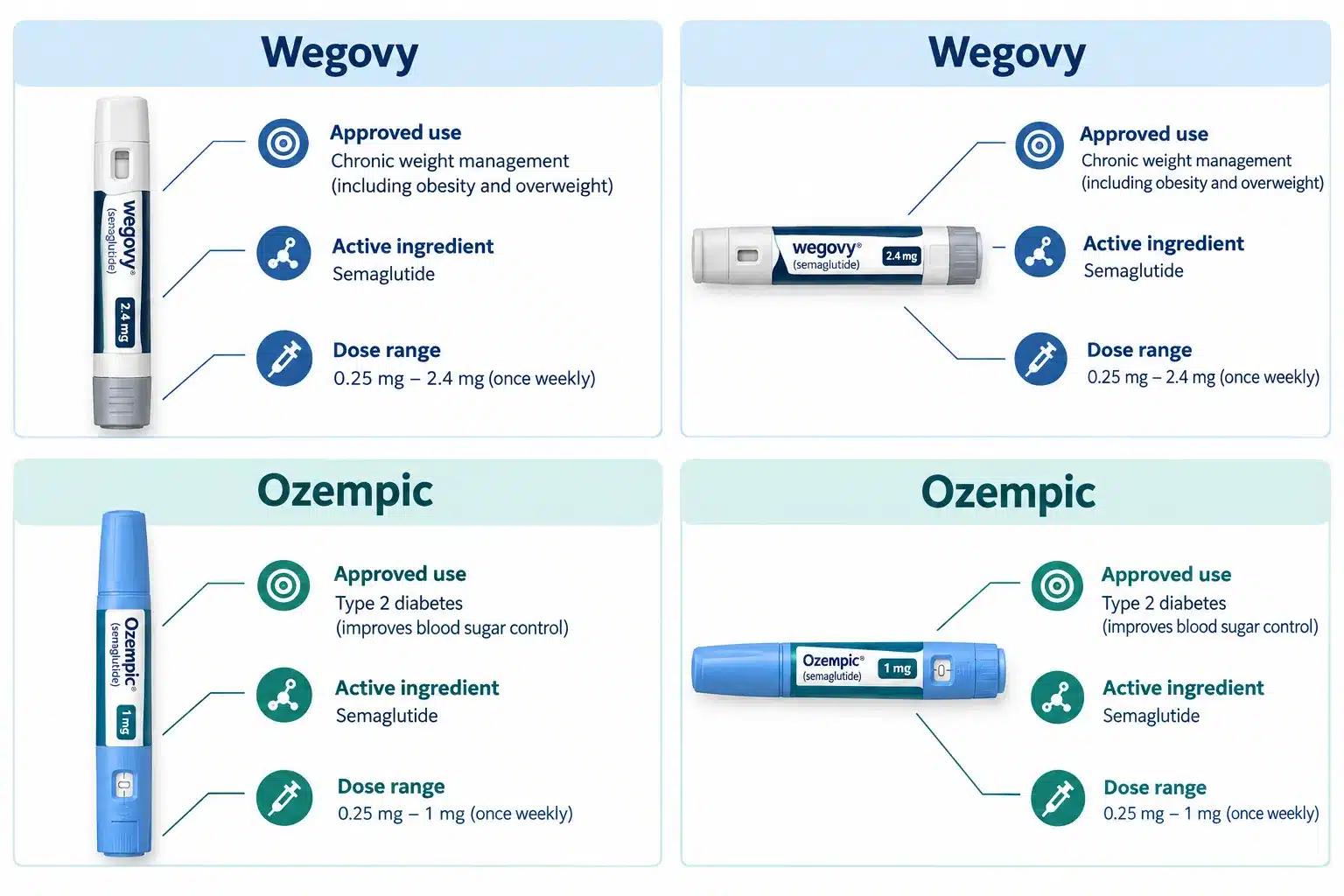
Wegovy and Ozempic both contain semaglutide, but they’re approved for different purposes and dosed differently. Ozempic is approved for type 2 diabetes management; Wegovy is approved for chronic weight management and, now, cardiovascular risk reduction in people with obesity [1][2].
| Feature | Wegovy | Ozempic |
|---|---|---|
| Active ingredient | Semaglutide | Semaglutide |
| Primary approved use | Chronic weight management, cardiovascular risk reduction | Type 2 diabetes management |
| Maximum maintenance dose | Up to 2.4 mg weekly | Up to 2 mg weekly |
| Typical starting dose | 0.25 mg weekly | 0.25 mg weekly |
| Insurance pathway | Often requires weight-loss or cardiac indication | Often covered under diabetes benefit |
For a deeper look at how all the semaglutide brands stack up, see our guide to semaglutide brand names: Ozempic, Wegovy, and Rybelsus.
What Are the Best Alternatives to Wegovy for Weight Loss
If Wegovy isn’t accessible or doesn’t fit your health profile, several other GLP-1 and dual-agonist medications are worth discussing with a provider. Zepbound (tirzepatide) is a common alternative that works on two gut hormone pathways instead of one.
Other paths people explore:
- Saxenda (liraglutide), an older daily GLP-1 injection
- Compounded semaglutide or tirzepatide through telehealth providers, though these carry different quality and legal considerations
- Microdosing protocols, where lower-than-standard GLP-1 doses are used, our GLP-1 microdosing guide explains how this approach differs from standard dosing
- Telehealth GLP-1 programs like those reviewed in our Ro GLP-1 cost breakdown and Hims GLP-1 reviews
Choose a different GLP-1 medication if you have a strong preference for dual-hormone action, or if cost and access steer you toward a specific telehealth provider’s formulary.
What BMI and Health Requirements Do You Need to Qualify for Wegovy
In the US, Wegovy is approved for adults with a BMI of 30 or higher (obesity), or a BMI of 27 or higher with at least one weight-related condition such as high blood pressure, type 2 diabetes, or high cholesterol [1]. It’s also approved for children ages 12 and up with obesity, under specific BMI percentile criteria [1].
European regulators (EMA) apply similar BMI thresholds, though specific reimbursement rules vary by country [4].
Quick example: a 5’6″ adult weighing 190 pounds has a BMI around 30.7, which qualifies on BMI alone. A person at 175 pounds (BMI around 28.2) would need a qualifying condition like hypertension to meet criteria.
Can You Use Wegovy If You Have Type 2 Diabetes or Other Conditions
Yes, Wegovy can be prescribed to people with type 2 diabetes, and it’s often chosen specifically because it helps with both blood sugar and weight [1]. The recent FDA label expansion also covers people with established cardiovascular disease and obesity, based on the SELECT trial findings showing reduced risk of major cardiac events and improved survival outcomes in that population [2][5].
This cardiovascular approval is significant: it’s the first time a weight-loss-focused GLP-1 drug has been labeled specifically for heart-protection benefits, not just weight loss [2]. If you have a history of heart attack, stroke, or peripheral artery disease along with obesity, this indication may directly affect your coverage approval.
Decision rule: talk to your cardiologist or endocrinologist, not just a weight-loss clinic, if you have diabetes or heart disease, since dosing and monitoring may differ from a straightforward weight-management case.
What Happens to Your Weight When You Stop Taking Wegovy
Most people regain a significant portion of lost weight after stopping Wegovy, because the drug treats an ongoing biological drive to eat, not a one-time fix. Once semaglutide clears your system, appetite signals tend to return toward their pre-treatment baseline.
This is why most obesity medicine specialists frame GLP-1 treatment as a chronic therapy, similar to blood pressure medication, rather than a short course. If you’re planning to stop, it’s worth discussing a tapering strategy and a maintenance plan, diet, strength training, and possibly a lower maintenance dose, with your prescriber before you quit cold turkey.
Common mistake: stopping as soon as you hit a goal weight without a transition plan. That’s the single biggest reason people see rebound weight gain.
How Often Do You Inject Wegovy and What’s the Dosing Schedule
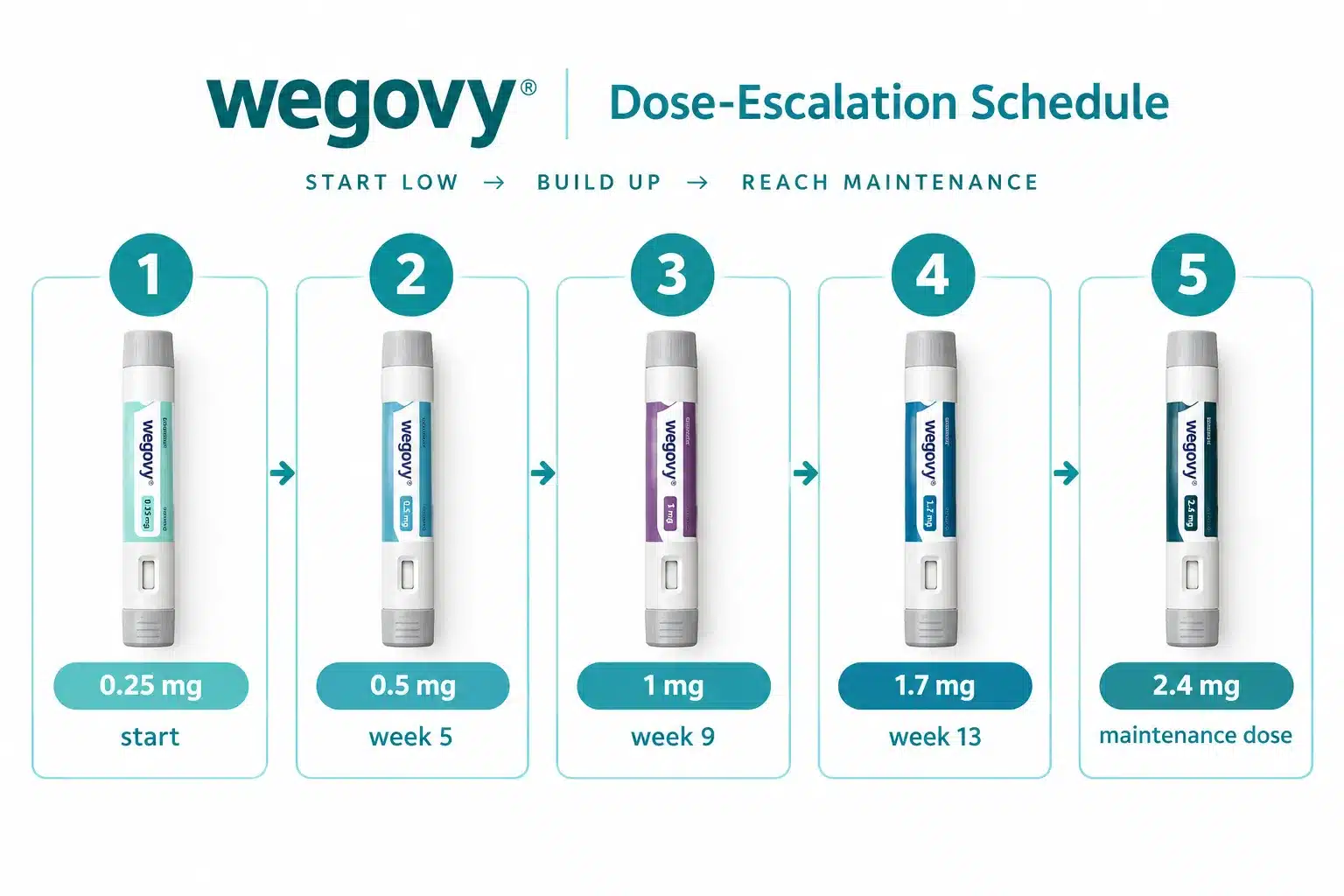
Wegovy is injected once a week, on the same day each week, using a prefilled pen. The dose escalates slowly over about 16 to 20 weeks to reduce nausea before reaching the maintenance level [1].
A typical dose-escalation path looks like this:
- Weeks 1-4: 0.25 mg weekly
- Weeks 5-8: 0.5 mg weekly
- Weeks 9-12: 1 mg weekly
- Weeks 13-16: 1.7 mg weekly
- Week 17 onward: 2.4 mg weekly (maintenance dose)
Some patients stay on an intermediate dose if side effects are too strong at the next step up, that’s a normal, provider-guided adjustment, not a failure of treatment. For people exploring the newer higher-strength option, see our Wegovy HD reviews and Wegovy HD cost guides.
Why Isn’t Wegovy Working for Me or Causing Weight Loss
If you’re not seeing results, the most common causes are an incomplete dose titration, inconsistent injection timing, or unaddressed diet and activity patterns that counteract the drug’s appetite effects. Semaglutide reduces hunger, but it doesn’t erase the impact of a calorie-dense diet entirely.
Checklist to troubleshoot stalled progress:
- Confirm you’ve reached and held a steady maintenance dose for at least 8-12 weeks
- Review whether injections are happening on a consistent weekly schedule
- Rule out high intake of liquid calories (alcohol, sugary drinks), which don’t trigger the same fullness signal as solid food
- Ask your provider whether a higher-dose formulation or a different GLP-1 drug might suit your biology better
Edge case: some people are genuinely lower responders to semaglutide due to individual metabolic or genetic factors, this is recognized in obesity medicine, and switching medications (for example to tirzepatide) is a legitimate next step, not a personal failure.
Is Wegovy Safe to Use During Pregnancy or While Breastfeeding
No. Wegovy is not recommended during pregnancy or breastfeeding. Animal studies suggest potential risk to a developing fetus, and the drug should be stopped at least two months before a planned pregnancy due to its long half-life [1].
If you become pregnant while on Wegovy, stop the medication and contact your provider immediately. There isn’t enough human safety data to confirm whether semaglutide passes into breast milk or affects a nursing infant, so most clinicians recommend avoiding it while breastfeeding [1].
What Are Common Mistakes People Make When Using Wegovy
The biggest mistakes are self-adjusting the dose, skipping doses irregularly, and treating the drug as a substitute for any dietary change at all. Each of these undermines both results and safety.
- Rushing the dose escalation to “see results faster,” which usually backfires with severe nausea and vomiting
- Injecting at random times instead of the same day weekly, which can cause uneven blood levels
- Ignoring protein and fiber intake, leading to muscle loss alongside fat loss
- Stopping abruptly without a maintenance or taper plan, as covered above
- Skipping follow-up appointments, missing early warning signs of gallbladder or pancreas issues
If you’re hungry constantly despite being on treatment, our article on why you’re hungry all the time covers non-drug factors worth ruling out.
Who Shouldn’t Take Wegovy and What Are the Contraindications
Wegovy should not be used by anyone with a personal or family history of medullary thyroid carcinoma, or those with Multiple Endocrine Neoplasia syndrome type 2 (MEN 2), this is a boxed warning on the label [1]. It’s also contraindicated for anyone with a known serious allergic reaction to semaglutide or any component of the injection.
Additional caution is warranted for people with:
- A history of pancreatitis
- Severe gastrointestinal disease, including gastroparesis
- Diabetic retinopathy, which some studies suggest may worsen temporarily during rapid blood sugar improvement
- Kidney disease, due to dehydration risk from GI side effects
Decision rule: if any of these apply to you, this is a conversation for a specialist visit, not a quick telehealth intake form. Full details are in the official Wegovy prescribing information [6].
Emerging Research: Beyond Weight and Heart Health
Researchers are studying semaglutide’s effects outside of weight and cardiovascular disease, including possible links to migraine frequency reduction and menopause-related symptom changes. This research is early-stage and not part of Wegovy’s approved label, so it shouldn’t guide treatment decisions yet [VERIFY: watch for updated FDA labeling or peer-reviewed publication before treating these as established benefits].
If you’re weighing Wegovy against other GLP-1 options for broader metabolic goals, our comparison of which GLP-1 medication works best for weight loss is a useful next read.
7 Best GLP-1 Providers Ranked: Accreditation, Flexibility & Support Compared (2026 Update)
32,000+ Patients Can't All Be Wrong: See the Top-Rated GLP-1 Providers: Compared on accreditation, plan flexibility, and patient support — updated for 2026.
BMI MD GLP-1 Microdosing Plan
- Specialized microdosing options (sublingual drops or low-dose injections)
- Ideal for maintaining weight or tapering off higher doses safely
- Fully bundled plan with no hidden monthly platform memberships
DirectMeds Weight Loss Solutions
- Sourced from accredited, state-licensed 503A compounding pharmacies
- No-frills high-volume savings passed directly to the patient
- Includes clinical consultation and cold-chain shipping updates
MEDVi Flat-Rate Telehealth
- Flat monthly rate holds steady even at maximum maintenance doses
- No dosage upcharges or graduation fee penalties
- Offers both injectable and advanced oral thin-film delivery options
Gala GLP-1 Care Program
- All-inclusive plan with no standalone membership costs
- Continuous text-based messaging access with state-licensed clinicians
- Temperature-controlled, cold-chain medication shipping included
Measured GLP-1 Metabolic Health
- Comprehensive metabolic health screening and expert intake analysis
- Predictable long-term budgeting with stable plan pricing
- High-end responsive dashboard with integrated diagnostic support
Refills GLP-1 (TryRefills Plan)
- Flat rate holds steady as titration scales up
- Includes clinical guides for active side-effect management
- Bundles in foundational nutritional strategies alongside medication
AltRx GLP-1 Transactional Reorders
- Zero recurring auto-billing — pay entirely on a transactional basis
- Rapid text-to-order format saves time for experienced patients
- Provides both injectable forms and fast-dissolving tablet variations
Conclusion
Wegovy is a once-weekly semaglutide injection approved for chronic weight management and, more recently, for lowering cardiovascular risk in adults with obesity and heart disease. It works by amplifying natural fullness signals, and most people qualify with a BMI of 30+, or 27+ with a weight-related condition like diabetes or high blood pressure. Results build gradually over months, side effects are mostly gastrointestinal, and stopping the drug without a plan usually leads to weight regain.
Your clear next step: talk with a licensed healthcare provider about your BMI, health history, and insurance situation before starting, and bring a specific question about dosing or coverage to that appointment rather than a general “should I try this” ask.
This article is for informational purposes only and is not medical advice. Talk to a licensed healthcare provider before starting or changing any medication.
FAQ
What is Wegovy used for?
Wegovy is approved for chronic weight management in adults and adolescents with obesity, and for reducing cardiovascular risk in adults with obesity and established heart disease [1][2].
How much weight can you expect to lose on Wegovy?
Clinical trials tracked weight loss over about 68 weeks, with early responders showing faster and greater loss along with improved mobility [3]. Individual results vary based on dose, adherence, and lifestyle factors.
Is Wegovy the same as Ozempic?
Both contain semaglutide, but Wegovy is approved for weight management and cardiovascular risk reduction, while Ozempic is approved for type 2 diabetes, and their maximum doses differ [1].
Does insurance cover Wegovy?
Coverage varies by insurer and plan, and Medicare’s rules are evolving, particularly around the cardiovascular risk indication. [VERIFY: check your specific plan’s current formulary.]
What are the serious side effects of Wegovy?
Serious risks include pancreatitis, gallbladder disease, kidney problems, and a boxed warning for thyroid C-cell tumor risk in people with certain thyroid cancer histories [1].
Can I take Wegovy if I have type 2 diabetes?
Yes, Wegovy can be prescribed alongside or instead of diabetes-specific GLP-1 drugs, and it may help with both blood sugar and weight [1].
Will I regain weight after stopping Wegovy?
Most people regain some weight after stopping, since the drug treats an ongoing appetite-regulation issue rather than curing it permanently.
How is Wegovy injected?
It’s a subcutaneous injection given once weekly using a prefilled pen, with doses increasing gradually over about four months [1].
References
- 215256s000lbl. accessdata.fda.gov.
- 215256s030lbl. accessdata.fda.gov.
- Wegovy Pill Delivered Weight Loss Early Responders. drugs.com.
- Wegovy. ema.europa.eu.
- 215256s033lbl. accessdata.fda.gov.
- Prescribing Information. wegovy.com.