
What is Microdosing glp 1: Benefits, Dosing Schedules, and Safety Considerations

Last updated: October 3, 2026
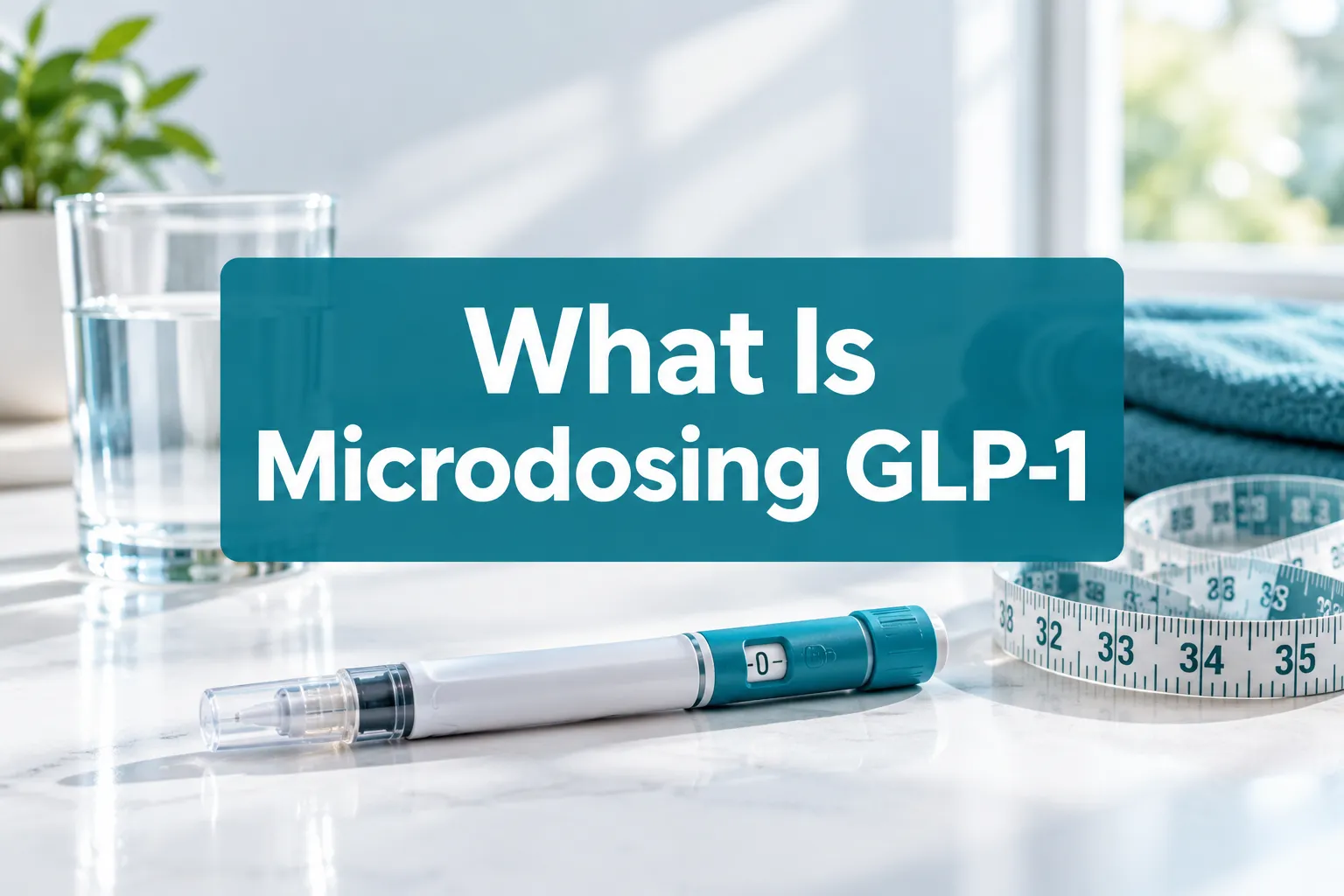
Quick Answer: Microdosing GLP-1 means taking a GLP-1 receptor agonist medication (such as semaglutide or tirzepatide) at a dose significantly lower than the standard therapeutic range. People do this to reduce side effects, lower costs, or ease into treatment gradually. It is not an officially approved protocol, and evidence for its effectiveness at very low doses remains limited compared to standard dosing.
Key Takeaways
- Microdosing GLP-1 refers to using sub-therapeutic doses of medications like semaglutide (Ozempic, Wegovy) or tirzepatide (Mounjaro, Zepbound) below the standard prescribing range
- It is an off-label, clinician-supervised practice, not an FDA-approved treatment protocol
- Common motivations include reducing nausea, managing cost, and testing personal tolerance
- Most clinical evidence for meaningful weight loss comes from standard doses, not microdoses
- Side effects at low doses are generally milder but do not disappear entirely
- Results, if any, take longer to appear with microdosing than with standard dosing
- Compounded GLP-1 products are often used for microdosing, which carries its own regulatory considerations
- Medical supervision is strongly recommended, self-adjusting doses without guidance is risky
- Microdosing is not appropriate for people who need GLP-1 therapy for active type 2 diabetes management
- Cost savings are possible with microdosing, but only if done through a legitimate, supervised program
What Does Microdosing GLP-1 Mean
Microdosing GLP-1 means taking a GLP-1 receptor agonist at a dose that is lower than the standard therapeutic range recommended by the prescribing guidelines. In practice, this often means starting at a fraction of the lowest approved starting dose and staying there intentionally, rather than titrating up as standard protocols require [4].
7 Best GLP-1 Providers Ranked: Accreditation, Flexibility & Support Compared (2026 Update)
32,000+ Patients Can't All Be Wrong: See the Top-Rated GLP-1 Providers. We compared the leading online GLP-1 providers based on program features, clinical support, convenience, and overall value.
BMI MD GLP-1 Microdosing Plan
- Specialized microdosing options, including sublingual drops and low-dose injections
- Designed for people interested in maintaining weight or gradually adjusting treatment
- Bundled program structure without a separate monthly platform membership
- Online access makes the process convenient from home

DirectMeds Weight Loss Solutions
- Online weight-loss program with a straightforward patient experience
- Compounded medication options through state-licensed compounding pharmacies
- Includes clinical consultation as part of the process
- Provides shipping updates to help patients track their orders
MEDVi Flat-Rate Telehealth
- Flat-rate telehealth approach designed for easier budgeting
- No dosage-based pricing increases within the advertised program structure
- Offers injectable and oral thin-film delivery options
- Includes medical screening and asynchronous provider consultations
Gala GLP-1 Care Program
- Text-based access to state-licensed clinicians
- Cold-chain medication shipping included in the program
- Month-to-month program structure
- Designed for people who value convenient ongoing support
Measured GLP-1 Metabolic Health
- Comprehensive metabolic health screening and intake analysis
- Designed around longer-term metabolic health management
- Responsive dashboard with integrated health tracking tools
- Useful option for patients who value a more data-focused experience
Refills GLP-1 (TryRefills Plan)
- Clinical guidance designed to help patients manage common treatment concerns
- Includes foundational nutritional strategies alongside medication
- Designed around predictable ongoing treatment
- No hidden startup or processing fees according to the program information provided
AltRx GLP-1 Transactional Reorders
- Transactional reorder model without recurring auto-billing
- Designed for patients who already understand their treatment routine
- Fast text-to-order process for convenient reorders
- Offers injectable and fast-dissolving tablet variations
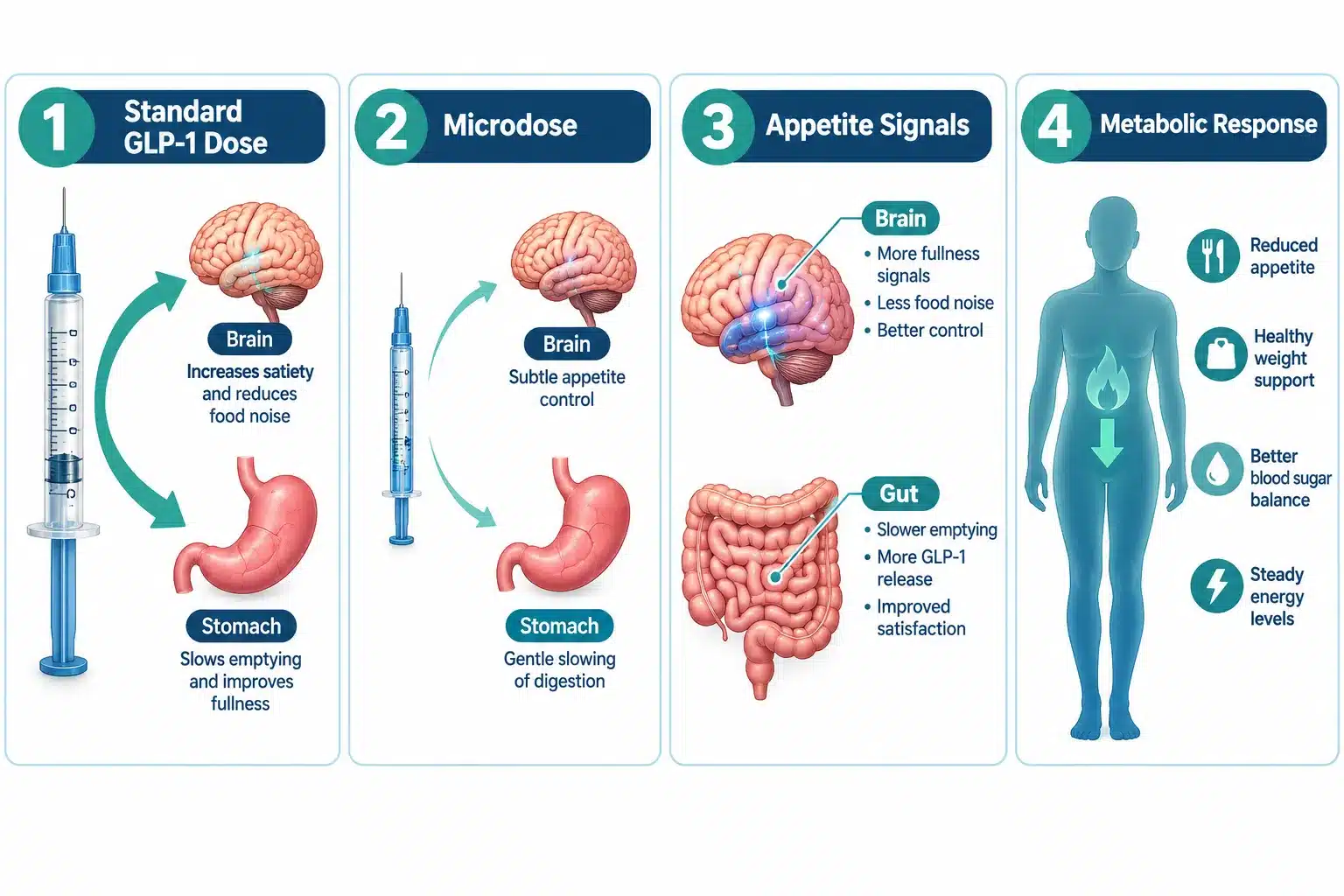
GLP-1 (glucagon-like peptide-1) receptor agonists are a class of medications that mimic a natural gut hormone. They slow gastric emptying, reduce appetite, and help regulate blood sugar. Standard medications in this class include semaglutide (sold as Ozempic for diabetes and Wegovy for weight loss) and tirzepatide (Mounjaro for diabetes, Zepbound for weight loss). To understand more about how these drugs work at a biological level, see this overview of what GLP-1 injectables are and how they work.
The term “microdosing” is borrowed loosely from psychedelic research, where it describes taking sub-perceptual doses of a substance. Applied to GLP-1 drugs, it simply means using less than the standard amount, sometimes as little as 0.1 mg to 0.25 mg of semaglutide per week, compared to the standard starting dose of 0.25 mg (and eventual maintenance doses of 1 mg to 2.4 mg weekly) [6].
Key distinction: Microdosing is not the same as the standard titration process, where patients start low and increase their dose over several weeks. With microdosing, the intention is to stay at a low dose indefinitely or for an extended period.
How Much Is a Microdose of GLP-1
There is no universally agreed-upon definition of a GLP-1 microdose. Most clinicians and programs that use this approach describe it as any dose below the standard starting dose, typically below 0.25 mg per week for semaglutide [7].
Common microdose ranges discussed in clinical settings include:
- Semaglutide: 0.05 mg to 0.2 mg per week (compared to the standard starting dose of 0.25 mg)
- Tirzepatide: 1 mg to 2.5 mg per week (compared to the standard starting dose of 2.5 mg)
Because these doses fall below what branded, pre-filled pens can deliver, microdosing almost always requires a compounded version of the medication. Compounded semaglutide or tirzepatide can be prepared by a licensed compounding pharmacy in custom concentrations. For a deeper look at how compounding pharmacies fit into this picture, see our guide on what a compounding pharmacy GLP-1 is and how it works.
“There is no standard definition of microdosing in the medical literature for GLP-1 drugs. The doses being used vary widely between patients and providers.”, Cleveland Clinic Health [4]
Microdosing GLP-1 for Weight Loss vs. Diabetes
For weight loss, microdosing GLP-1 is used by people who want appetite suppression and modest metabolic benefits without committing to full therapeutic doses. For diabetes management, microdosing is generally not appropriate and could be dangerous.
For weight loss: Some people report reduced appetite and gradual weight changes at low doses. However, the major clinical trials that established GLP-1 medications as effective weight-loss tools, including the STEP trials for semaglutide, used standard therapeutic doses, not microdoses. There is currently no peer-reviewed trial evidence showing that microdoses produce equivalent weight loss outcomes [5].
For type 2 diabetes: GLP-1 medications are prescribed at specific doses to achieve meaningful blood sugar control. Using a microdose in place of a therapeutic dose could leave blood glucose inadequately managed, increasing the risk of complications. Endocrinologists at Cedars-Sinai have noted that microdosing is not appropriate for patients who need the drug to control active diabetes [5].
Choose microdosing for weight loss only if:
- You do not have active, uncontrolled type 2 diabetes
- You are working with a clinician who monitors your progress
- Your goal is gradual appetite modulation rather than rapid weight loss
- You have experienced significant side effects at standard doses
For a broader look at how GLP-1 medications affect the body across different conditions, the GLP-1 transformation guide covers the full metabolic picture.
Does Microdosing GLP-1 Actually Work
The honest answer is: possibly, but the evidence is weak compared to standard dosing. Some people report appetite reduction and modest weight loss at low doses, but no large randomized controlled trials have specifically tested GLP-1 microdosing for weight loss as of 2026 [7].
Yale Medicine notes that while anecdotal reports are positive, the medical community lacks the clinical trial data needed to confirm that microdosing produces reliable, meaningful outcomes [7]. A narrative review published in mid-2026 flagged emerging academic interest in the topic, but stopped short of drawing firm conclusions.
What the evidence does support:
- GLP-1 drugs work at standard doses, with clinical trials showing 10-15% body weight reduction for semaglutide and up to 20% for tirzepatide at full doses
- Some biological activity does occur at lower doses, since the drugs bind GLP-1 receptors across a range of concentrations
- Individual response varies significantly, some people are more sensitive to low doses than others [9]
What the evidence does not yet support:
- That microdoses produce equivalent weight loss to standard doses
- That microdosing is a safe long-term substitute for standard therapy
- That any specific microdose is reliably effective across a general population
Is Microdosing GLP-1 Safe
For most healthy adults without active diabetes, microdosing GLP-1 under medical supervision is considered lower-risk than standard dosing, but it is not without concerns. The primary safety risks are inadequate disease control (for those who need therapeutic doses) and the use of unregulated compounded products [4].
Safety considerations to know:
- Medical supervision is non-negotiable. Self-adjusting doses without a clinician’s oversight is the most common and most serious risk associated with microdosing [6]
- Compounded products vary in quality. Not all compounding pharmacies meet the same standards. Understanding the difference between 503A and 503B compounding pharmacies matters when sourcing a compounded GLP-1
- Metabolic instability is possible if someone with undiagnosed prediabetes or insulin resistance uses a microdose that provides insufficient glucose regulation
- Drug interactions still apply at low doses, particularly with medications that affect blood sugar or gastric motility
The University of Rochester Medical Center emphasizes that while microdosing may reduce side effect burden, it does not eliminate the need for baseline labs, ongoing monitoring, or a formal prescriber relationship [8].
Microdosing GLP-1 Side Effects
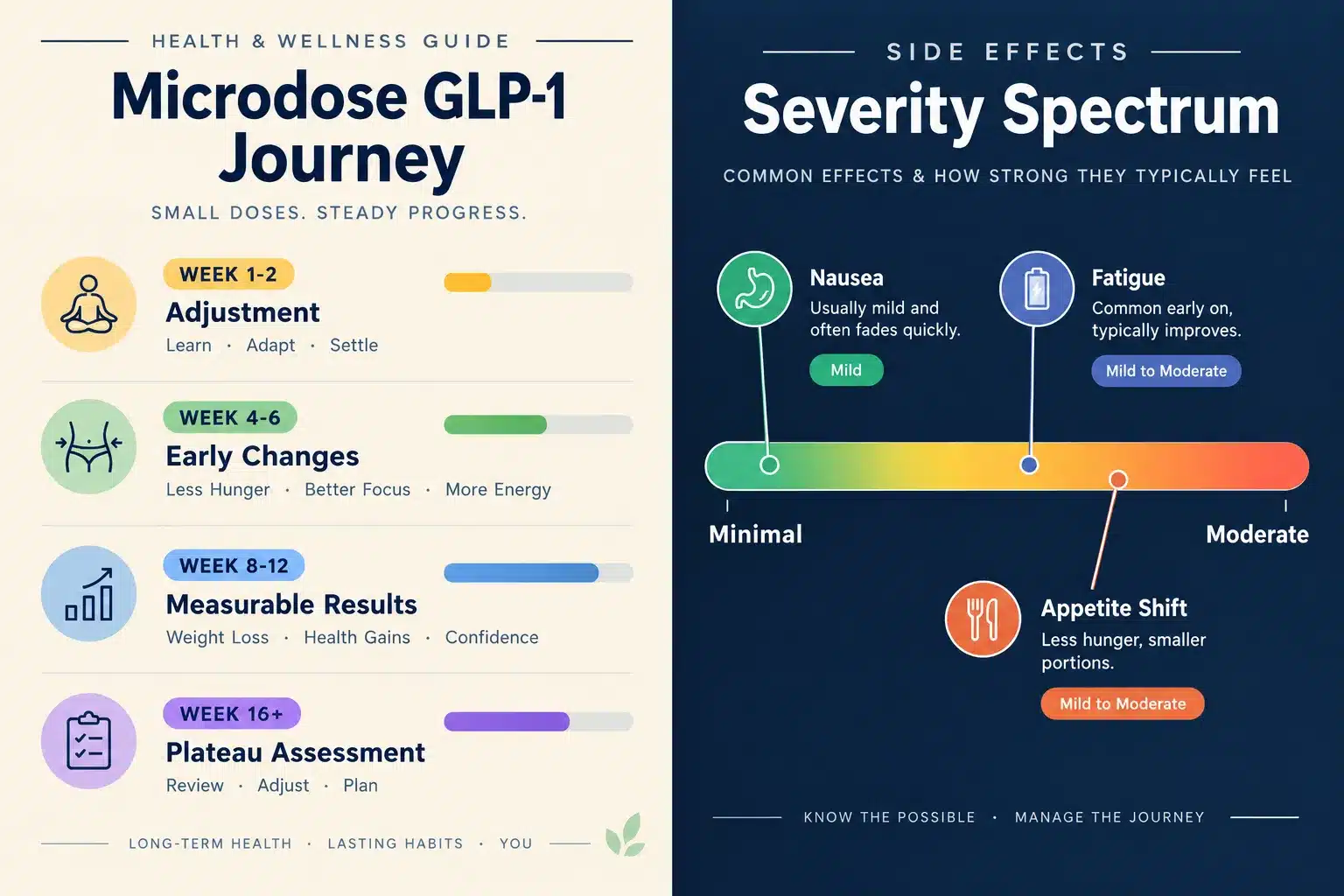
Side effects at microdoses are generally milder than at standard doses, but they do not disappear entirely. The most commonly reported side effects at low doses mirror those seen at standard doses, just with reduced intensity [1].
Common side effects at microdoses:
- Mild nausea, especially in the first 1-2 weeks
- Reduced appetite (this is often the intended effect)
- Mild fatigue or low energy
- Occasional constipation or loose stools
- Slight headache during the first week
Less common but reported:
- Acid reflux or heartburn
- Dizziness when standing up quickly
- Injection site reactions (redness, minor swelling)
The side effect profile is one of the main reasons people choose microdosing in the first place. HealthyWomen notes that patients who could not tolerate standard doses have reported staying on low-dose GLP-1 therapy more consistently, which may offer some long-term benefit even if the per-dose effect is smaller [1].
How Long Does It Take to See Results From Microdosing GLP-1
Results from microdosing take longer to appear than with standard dosing. Most people on standard GLP-1 doses begin noticing appetite changes within 1-2 weeks and measurable weight loss within 4-8 weeks. With microdosing, that timeline extends considerably [9].
Realistic timeline for microdosing:
| Timeframe | What to Expect |
|---|---|
| Weeks 1-2 | Possible mild appetite reduction; body adjusting |
| Weeks 4-6 | Some users notice reduced cravings or smaller portions |
| Weeks 8-12 | Early weight changes may become measurable (1-3 lbs) |
| Weeks 16+ | More consistent appetite modulation if dose is maintained |
AARP’s reporting on microdosing GLP-1 for weight loss notes that patience is essential, people who abandon microdosing after 4-6 weeks because they “don’t feel anything” may simply need more time, or may need a dose adjustment [9].
Common mistake: Expecting microdose results on a standard-dose timeline. If you are not seeing any change after 12 weeks, a clinician should reassess whether the dose is adequate for your individual physiology.
Microdosing GLP-1 vs. Regular Dose: Key Differences
Microdosing and standard GLP-1 dosing serve different goals and come with different trade-offs. Neither approach is universally better, the right choice depends on your health status, tolerance, and objectives.
| Factor | Microdose | Standard Dose |
|---|---|---|
| Weekly semaglutide amount | 0.05-0.2 mg | 0.25-2.4 mg |
| Side effect severity | Generally milder | More pronounced, especially early |
| Clinical trial support | Limited / none specific | Strong (STEP, SURMOUNT trials) |
| Weight loss potential | Modest, slower | Significant (10-20% body weight) |
| FDA approval status | Off-label | Approved (branded products) |
| Suitable for diabetes control | Generally not | Yes, at appropriate doses |
For people who want to understand how quickly different GLP-1 medications begin working at standard doses, this guide on the fastest-working GLP-1 medications is a useful companion read.
Who Should Microdose GLP-1, and Who Should Not
Microdosing GLP-1 is best suited for a specific subset of adults. It is not a universal approach, and for some people it is the wrong choice entirely.
Microdosing may be appropriate if you:
- Have struggled with intolerable nausea or GI side effects at standard doses
- Are using GLP-1 for weight management (not diabetes treatment)
- Want a gradual, lower-intensity introduction to the medication
- Are working closely with a prescribing clinician who monitors labs and progress
- Have a BMI in the overweight range (27-30) and are looking for modest appetite support rather than aggressive weight loss
Microdosing is likely not appropriate if you:
- Have active, uncontrolled type 2 diabetes requiring therapeutic glucose management
- Have a history of medullary thyroid carcinoma or MEN2 syndrome (a contraindication for all GLP-1 drugs)
- Are pregnant or breastfeeding
- Are self-prescribing or sourcing medication without a legitimate prescription
- Need significant weight loss (more than 15-20% of body weight) within a defined timeframe
New York-Presbyterian Hospital notes that the decision to microdose should always be made in the context of a patient’s full medical history, not based on social media trends or cost concerns alone [6].
Can You Microdose Ozempic or Wegovy
Yes, people do microdose Ozempic (semaglutide for diabetes) and Wegovy (semaglutide for weight loss), but there is a practical problem: the branded pre-filled pens do not allow doses below their preset amounts. Ozempic pens start at 0.25 mg per injection; Wegovy pens start at 0.25 mg as well. Delivering a smaller dose from these devices is not straightforward and risks dosing errors [2].
For this reason, microdosing almost always involves compounded semaglutide, which is prepared in a vial with a separate syringe, allowing precise custom dosing. The same applies to tirzepatide (Mounjaro/Zepbound). Our detailed breakdown of compounded tirzepatide covers what to look for in a legitimate compounding source.
Important note on compounded GLP-1 supply: The FDA’s regulatory landscape for compounded semaglutide changed in 2025, with branded semaglutide removed from the shortage list. This affects the legal availability of compounded versions. Always verify the current regulatory status with your prescriber or pharmacist before sourcing compounded GLP-1 products.
Microdosing GLP-1 Without Diabetes
Microdosing GLP-1 without diabetes is the most common use case in 2026. Most people exploring this approach are adults with excess weight, metabolic concerns, or appetite management challenges who do not have a formal diabetes diagnosis.
GLP-1 receptors exist throughout the body, in the gut, brain, pancreas, and heart. Even at low doses, activating these receptors can produce appetite suppression and slower gastric emptying. This is why some non-diabetic users report feeling less hungry and making better food choices at microdoses, even without dramatic weight loss [3].
Missouri University Health Care notes that for people without diabetes, the risk of hypoglycemia (dangerously low blood sugar) from GLP-1 drugs is very low, since GLP-1 receptor agonists only stimulate insulin release when blood sugar is elevated [2]. This makes them relatively safe for metabolic use even at sub-therapeutic doses, provided the person is otherwise healthy and under medical supervision.
Hims & Hers Health reported in 2026 that microdosing programs for metabolic health (targeting people without diabetes) represent a growing segment of telehealth GLP-1 prescribing, though they emphasized that outcomes data for this specific population remain preliminary [3].
Microdosing GLP-1 Cost
Microdosing GLP-1 is generally less expensive than standard dosing, primarily because you are using less medication per week. However, cost depends heavily on the source, the specific drug, and whether you are using a compounded or branded product.
Cost factors to consider:
- Compounded semaglutide microdoses can range from roughly $100 to $250 per month (estimates vary by pharmacy and dose; verify current pricing with your provider)
- Branded Wegovy or Ozempic at standard doses can exceed $900,$1,000 per month without insurance
- Telehealth programs that include prescriber consultations add a monthly or quarterly fee
- Lab work (typically required for monitoring) is an additional periodic cost
WeightWatchers’ clinical team notes that while cost savings are a real benefit of microdosing programs, patients should be cautious about sourcing from unverified online pharmacies, where product quality and sterility cannot be guaranteed [10].
For a full breakdown of prescription weight-loss medication costs and what to expect from GLP-1 programs, see our RX medications for weight loss complete guide.
What Happens If You Microdose GLP-1 Wrong
Microdosing GLP-1 incorrectly can range from mildly ineffective to genuinely harmful, depending on the error. The most common mistakes and their consequences include:
Mistake 1: Self-adjusting dose without medical oversight
This is the most dangerous error. Without baseline labs and monitoring, you cannot know whether a low dose is adequate for your metabolic needs or whether you are missing a condition that requires a higher dose.
Mistake 2: Using unverified compounded products
Not all compounding pharmacies are equal. Products from non-accredited pharmacies may be under- or over-dosed, contaminated, or improperly stored. This is a real safety risk, not a theoretical one [4].
Mistake 3: Expecting rapid results and stopping too soon
Many people quit after 4-6 weeks because they do not see the same results they read about from standard dosing. Microdosing requires a longer observation window.
Mistake 4: Using microdosing to avoid treating diabetes
If you have type 2 diabetes and switch yourself from a therapeutic dose to a microdose to save money or reduce side effects, you risk losing blood sugar control. This must be done only with physician guidance [5].
Mistake 5: Not tracking symptoms or weight
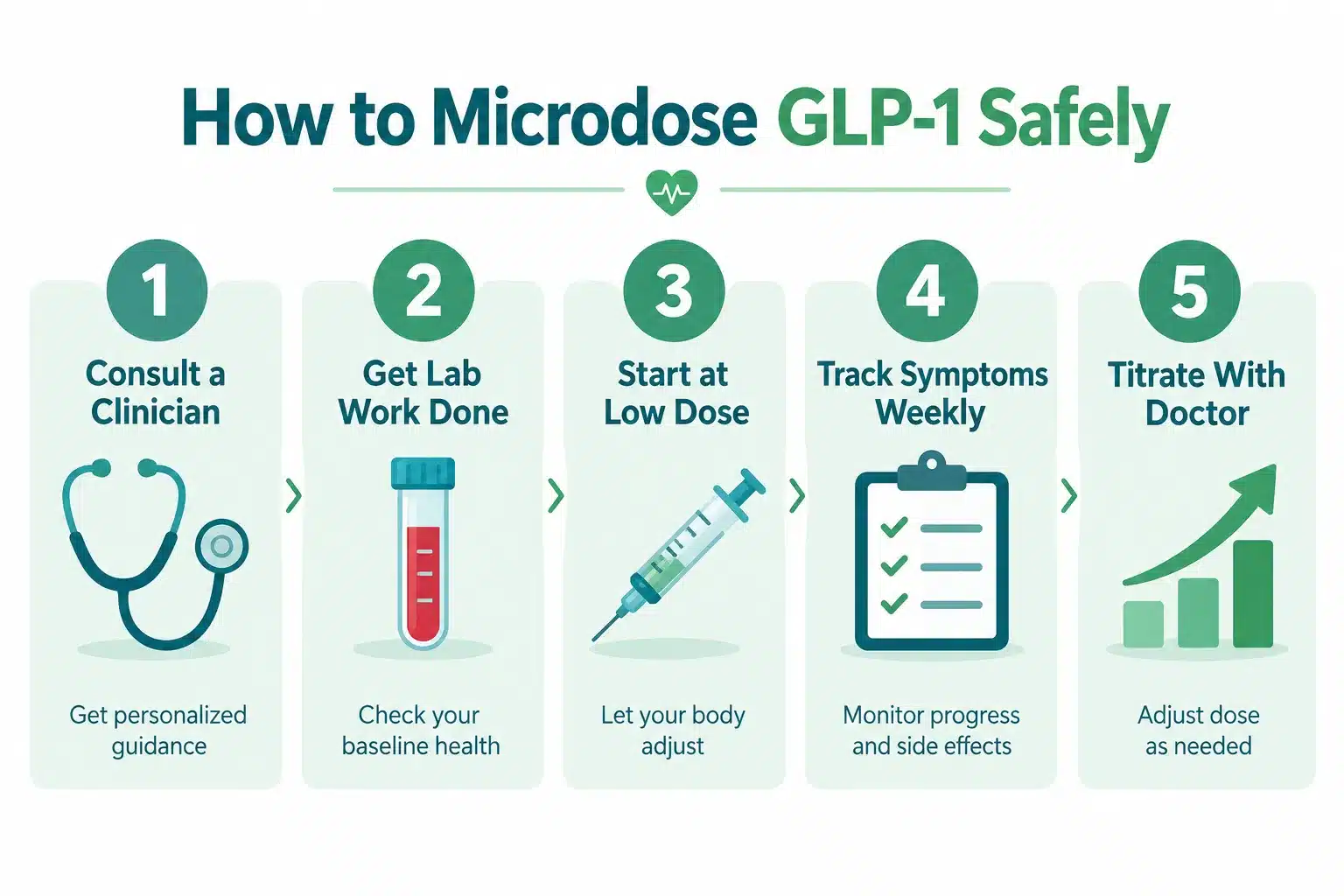
Without systematic tracking, it is impossible to know whether the microdose is doing anything. A simple weekly log of weight, hunger levels, and side effects is the minimum needed to evaluate progress.
FAQ: What Is Microdosing GLP-1
Q: Is microdosing GLP-1 FDA-approved?
No. There is no FDA-approved protocol for GLP-1 microdosing. It is an off-label use of medications that are approved at specific, higher doses.
Q: Can I microdose GLP-1 at home without a doctor?
Technically possible, but strongly inadvisable. Without medical supervision, you risk dosing errors, undetected contraindications, and no way to evaluate whether the treatment is working or safe.
Q: Will microdosing GLP-1 cause muscle loss?
At very low doses, the risk of muscle mass loss is lower than at high doses, but it is not zero. Adequate protein intake and resistance exercise are recommended regardless of dose.
Q: How do I know if my microdose is working?
Track appetite changes, portion sizes, and weight weekly. If there is no change after 8-12 weeks, discuss a dose adjustment with your prescriber.
Q: Can I microdose GLP-1 if I am on other medications?
Possibly, but drug interactions must be assessed by a clinician. GLP-1 drugs can slow the absorption of oral medications, which matters for things like thyroid medication or birth control pills.
Q: Is compounded semaglutide the same as Ozempic or Wegovy?
Compounded semaglutide contains the same active molecule but is not manufactured under the same conditions as branded products. Quality depends entirely on the compounding pharmacy’s standards.
Q: What is the lowest effective microdose of semaglutide?
There is no established minimum effective dose. Some clinicians report patient responses at 0.1 mg per week, but this is anecdotal. Individual sensitivity varies widely [8].
Q: How often do you inject a GLP-1 microdose?
Most GLP-1 microdosing protocols use weekly injections, mirroring the standard dosing schedule for semaglutide and tirzepatide.
Q: Can microdosing GLP-1 help with food noise?
Some users specifically report that even low doses reduce “food noise”, the constant mental preoccupation with eating, more than they reduce weight itself. This is one of the more commonly cited benefits in patient reports [3].
Q: Does microdosing GLP-1 affect cardiovascular health?
At standard doses, GLP-1 drugs have demonstrated cardiovascular benefits in clinical trials. Whether those benefits extend to microdoses is unknown, as no trials have tested this specifically.
Q: Is microdosing GLP-1 a long-term strategy?
It can be, but it should be periodically reassessed. Some people use it as a bridge to standard dosing; others maintain it long-term for appetite management. The right approach depends on individual goals and clinical response.
Q: Where can I find a legitimate microdosing GLP-1 program?
Look for telehealth providers or clinics that require a medical intake, lab work, and ongoing prescriber follow-up. Avoid any service that ships GLP-1 medications without a proper consultation. A Measured GLP-1 program review can give you a sense of what a legitimate program looks like.
7 Best GLP-1 Providers Ranked: Accreditation, Flexibility & Support Compared (2026 Update)
32,000+ Patients Can't All Be Wrong: See the Top-Rated GLP-1 Providers: Compared on accreditation, plan flexibility, and patient support — updated for 2026.
BMI MD GLP-1 Microdosing Plan
- Specialized microdosing options (sublingual drops or low-dose injections)
- Ideal for maintaining weight or tapering off higher doses safely
- Fully bundled plan with no hidden monthly platform memberships
DirectMeds Weight Loss Solutions
- Sourced from accredited, state-licensed 503A compounding pharmacies
- No-frills high-volume savings passed directly to the patient
- Includes clinical consultation and cold-chain shipping updates
MEDVi Flat-Rate Telehealth
- Flat monthly rate holds steady even at maximum maintenance doses
- No dosage upcharges or graduation fee penalties
- Offers both injectable and advanced oral thin-film delivery options
Gala GLP-1 Care Program
- All-inclusive plan with no standalone membership costs
- Continuous text-based messaging access with state-licensed clinicians
- Temperature-controlled, cold-chain medication shipping included
Measured GLP-1 Metabolic Health
- Comprehensive metabolic health screening and expert intake analysis
- Predictable long-term budgeting with stable plan pricing
- High-end responsive dashboard with integrated diagnostic support
Refills GLP-1 (TryRefills Plan)
- Flat rate holds steady as titration scales up
- Includes clinical guides for active side-effect management
- Bundles in foundational nutritional strategies alongside medication
AltRx GLP-1 Transactional Reorders
- Zero recurring auto-billing — pay entirely on a transactional basis
- Rapid text-to-order format saves time for experienced patients
- Provides both injectable forms and fast-dissolving tablet variations
Conclusion
Understanding what is microdosing GLP-1 comes down to this: it is a clinician-supervised, off-label approach to using GLP-1 receptor agonist medications at doses below the standard therapeutic range. It is not a shortcut, and it is not a proven substitute for standard treatment. But for the right person, someone who has struggled with side effects, wants a gentler entry point, or needs a more affordable option for appetite management, it represents a reasonable, medically supervised strategy worth discussing with a provider.
Actionable next steps:
- Talk to a clinician first. Do not self-prescribe or self-adjust. Find a telehealth provider or physician who has experience with GLP-1 prescribing and can assess whether microdosing is appropriate for your specific situation.
- Get baseline labs. Fasting glucose, HbA1c, kidney function, and a lipid panel give your provider the data needed to monitor your response safely.
- Source medication responsibly. If compounded GLP-1 is recommended, verify the pharmacy’s accreditation and ask about their quality testing protocols.
- Track everything. Keep a weekly log of weight, hunger levels, energy, and any side effects. This data is what allows your prescriber to make informed adjustments.
- Set realistic expectations. Microdosing is a slow lane, not a fast one. If you need significant weight loss quickly, discuss standard dosing with your provider instead.
The conversation around GLP-1 microdosing is evolving rapidly. As more data emerges through 2026 and beyond, the clinical guidance will sharpen. For now, the most important thing is to engage with it as what it is: a medical treatment that deserves medical oversight.
References
[1] Microdosing GLP-1 Drugs – https://www.healthywomen.org/condition/microdosing-glp-1-drugs
[2] Thinking About Microdosing GLP-1? 5 Myths Debunked – https://livehealthy.muhealth.org/stories/thinking-about-microdosing-glp-1-5-myths-debunked
[3] Microdosing Treatment Plans For Metabolic Health – https://news.hims.com/newsroom/microdosing-treatment-plans-for-metabolic-health
[4] Microdosing GLP-1 – https://health.clevelandclinic.org/microdosing-glp-1
[5] Can Microdosing GLP-1s Promote Health and Weight Loss – https://www.cedars-sinai.org/stories-and-insights/expert-advice/can-microdosing-glp-1s-promote-health-and-weight-loss
[6] What Is GLP-1 Microdosing – https://www.nyp.org/healthmatters/what-is-glp-1-microdosing
[7] Microdosing GLP-1 and Accutane: What Does It Mean, and Does It Work – https://www.yalemedicine.org/news/microdosing-glp-1-and-accutane-what-does-it-meanand-does-it-work
[8] What Is GLP-1 Microdosing – https://www.urmc.rochester.edu/news./publications/health-matters/what-is-glp-1-microdosing
[9] Microdosing GLP-1 Drugs for Weight Loss – https://www.aarp.org/health/drugs-supplements/microdosing-glp1-drugs-for-weight-loss/
[10] Microdosing GLP-1s – https://www.weightwatchers.com/us/blog/microdosing_glp1s

With over 13 years of experience in holistic health blogging, I aim to help you navigate your wellness journey with honest insights, expert-backed advice, and a sprinkle of real-world practicality.
Certified Wellness Writer | Herbal Nutrition Advocate | Wellness Research Enthusiast


