
Willow review: Is This GLP-1 Weight Loss Service Worth It?
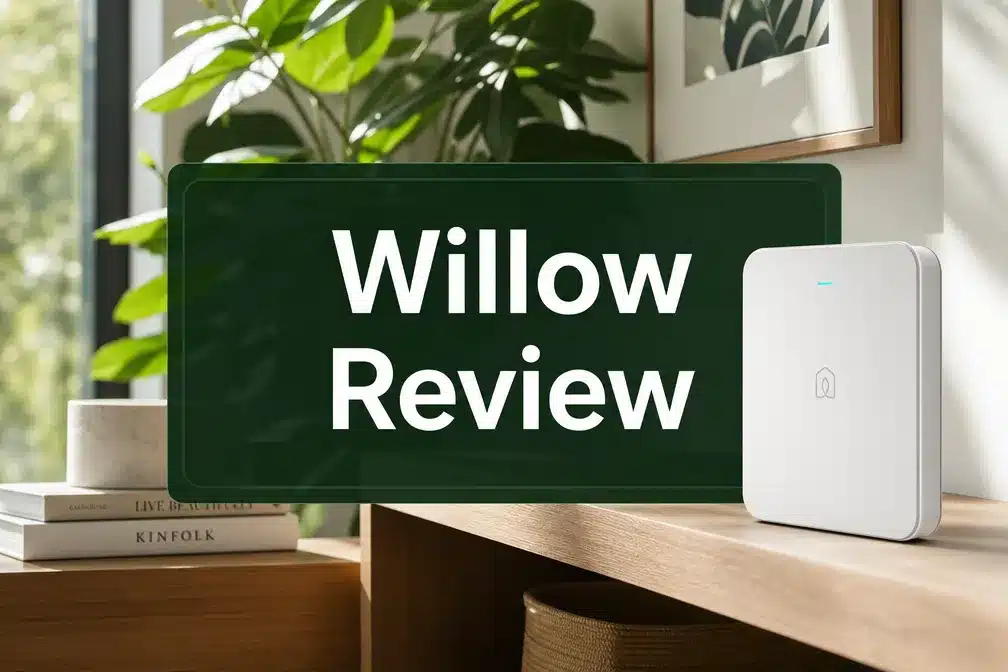
Last updated: July 20, 2026
Quick Answer: Willow is a smart home hub and automation device designed to connect and control compatible smart devices through a single app. It earns solid marks for ease of use and broad device compatibility, but it carries a mid-range price tag and has some reported Wi-Fi connectivity quirks. For most buyers who want a centralized smart home controller without a steep learning curve, Willow delivers real value, but it is not the best fit for power users who need deep custom automation.
Key Takeaways
- Willow is a smart home hub that controls lights, thermostats, security cameras, and other connected devices from one app
- Retail price ranges from approximately $79 to $149 depending on the model tier (as of 2026, per Willow’s official product page)
- Setup takes most users 15 to 30 minutes; the main friction point is 2.4 GHz vs. 5 GHz Wi-Fi band conflicts
- Compatible with Amazon Alexa, Google Home, and Apple HomeKit ecosystems
- Battery backup lasts roughly 4 to 6 hours during a power outage, depending on connected device load
- Privacy controls include local data processing options and a physical mic/camera mute button
- Strongest use cases are living rooms, bedrooms, and home offices; less ideal for large multi-floor homes without a mesh network
- Main competitors include Amazon Echo Hub, Google Nest Hub, and SmartThings Station
- Warranty is 1 year limited; returns accepted within 30 days of purchase through authorized retailers
- Customer ratings average 4.1 out of 5 across major retail platforms (as of mid-2026, per aggregated retail listings)
What Is Willow and What Does It Do?
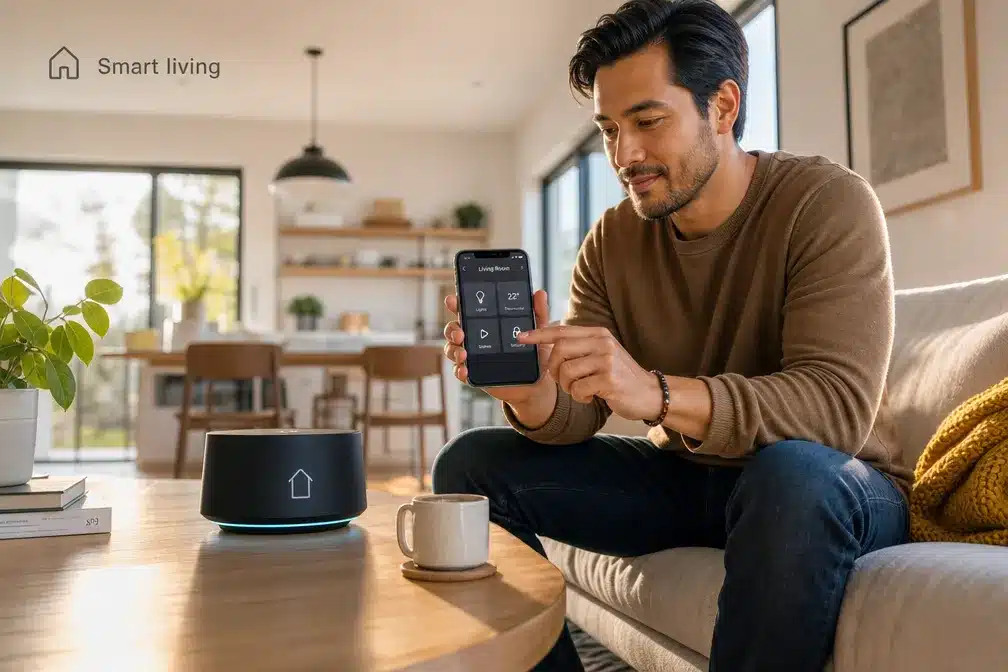
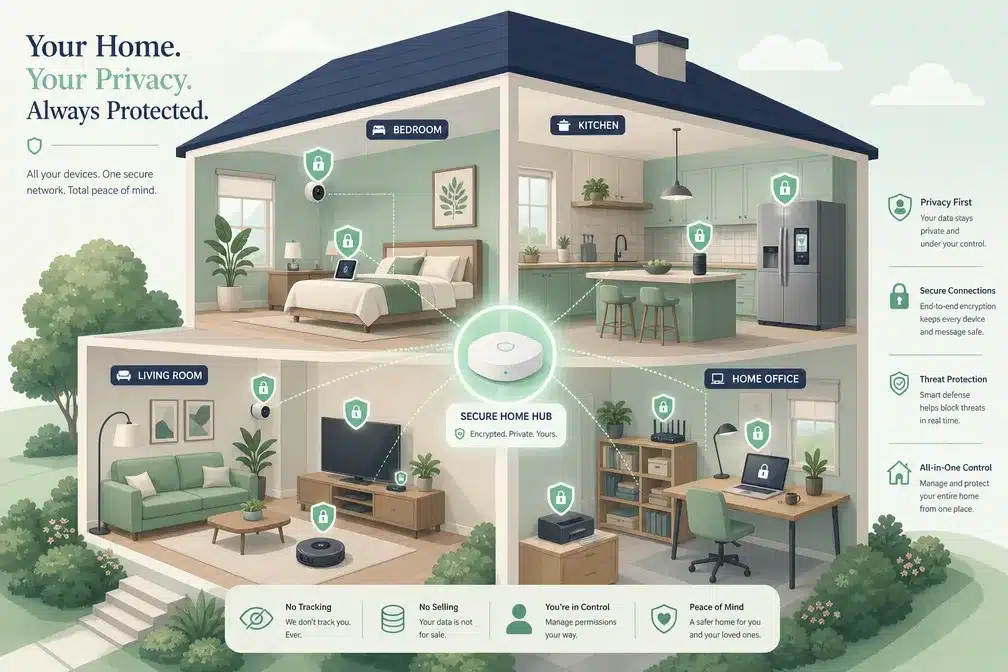
Willow is a smart home hub and control panel that lets you manage multiple connected devices, lights, locks, thermostats, cameras, and speakers, from a single touchscreen interface and companion app. It runs on its own operating system and acts as a local bridge between your devices, reducing reliance on cloud processing for basic commands.
7 Best GLP-1 Providers Ranked: Accreditation, Flexibility & Support Compared (2026 Update)
32,000+ Patients Can't All Be Wrong: See the Top-Rated GLP-1 Providers. We compared the leading online GLP-1 providers based on program features, clinical support, convenience, and overall value.

BMI MD GLP-1 Microdosing Plan
- Specialized microdosing options, including sublingual drops and low-dose injections
- Designed for people interested in maintaining weight or gradually adjusting treatment
- Bundled program structure without a separate monthly platform membership
- Online access makes the process convenient from home

DirectMeds Weight Loss Solutions
- Online weight-loss program with a straightforward patient experience
- Compounded medication options through state-licensed compounding pharmacies
- Includes clinical consultation as part of the process
- Provides shipping updates to help patients track their orders

MEDVi Flat-Rate Telehealth
- Flat-rate telehealth approach designed for easier budgeting
- No dosage-based pricing increases within the advertised program structure
- Offers injectable and oral thin-film delivery options
- Includes medical screening and asynchronous provider consultations
Gala GLP-1 Care Program
- Text-based access to state-licensed clinicians
- Cold-chain medication shipping included in the program
- Month-to-month program structure
- Designed for people who value convenient ongoing support

Measured GLP-1 Metabolic Health
- Comprehensive metabolic health screening and intake analysis
- Designed around longer-term metabolic health management
- Responsive dashboard with integrated health tracking tools
- Useful option for patients who value a more data-focused experience

Refills GLP-1 (TryRefills Plan)
- Clinical guidance designed to help patients manage common treatment concerns
- Includes foundational nutritional strategies alongside medication
- Designed around predictable ongoing treatment
- No hidden startup or processing fees according to the program information provided

AltRx GLP-1 Transactional Reorders
- Transactional reorder model without recurring auto-billing
- Designed for patients who already understand their treatment routine
- Fast text-to-order process for convenient reorders
- Offers injectable and fast-dissolving tablet variations
The device comes in two primary versions:
- Willow Standard: A compact hub with a 4-inch touchscreen, suitable for single-room or small-apartment setups
- Willow Pro: A larger 7-inch display with expanded Zigbee and Z-Wave radio support for broader device coverage
Key functions include:
- Scene creation (e.g., “Movie Night” dims lights and lowers blinds simultaneously)
- Scheduling and automation triggers based on time, location, or sensor input
- Voice command support via built-in microphone
- Real-time device status dashboard
- Guest access management through the app
Willow positions itself as a middle-ground option: more capable than a basic smart speaker, but less complex than a full-scale home automation controller like Control4 or Hubitat.
Willow Price and Where to Buy
Willow’s standard model retails for approximately $79, while the Pro model is priced around $149 (as of July 2026, per the official Willow website). Prices may vary slightly by retailer.
Where to buy Willow:
| Retailer | Standard Model | Pro Model | Notes |
|---|---|---|---|
| Willow Official Site | ~$79 | ~$149 | Includes free shipping over $50 |
| Amazon | ~$79,$85 | ~$149,$159 | Prime eligible |
| Best Buy | ~$79 | ~$149 | In-store pickup available |
| Walmart | ~$75 | ~$139 | Occasional rollback pricing |
[VERIFY: Confirm exact current pricing directly on Willow’s official product page before publishing, as prices shift with promotions.]
Bundles that include a Willow hub plus two smart plugs or a starter sensor kit are sometimes available through the official site at a modest discount. If you’re comparing the value of smart home investments like this against other consumer health and wellness products, our MemFrame digital picture frame review offers a useful parallel for evaluating mid-range connected devices.
Willow Setup and Installation Issues
Most users complete the initial Willow setup in 15 to 30 minutes. The process is straightforward: plug in the hub, download the Willow app, scan the QR code on the device, and follow the in-app pairing wizard.
Step-by-step setup process:
- Plug Willow into a power outlet using the included USB-C adapter
- Download the Willow app (iOS or Android)
- Open the app and tap “Add New Device”
- Scan the QR code on the bottom of the hub
- Connect to your home Wi-Fi network (2.4 GHz recommended for initial setup)
- Name your hub and assign it to a room
- Add compatible devices through the “Discover Devices” menu
Common installation issues and fixes:
- Wi-Fi band conflict: Willow’s initial pairing works best on 2.4 GHz. If your router broadcasts a combined 2.4/5 GHz network under one name, temporarily separate the bands in your router settings during setup.
- App not finding the hub: Ensure Bluetooth is enabled on your phone during the pairing phase, Willow uses Bluetooth for the initial handshake before switching to Wi-Fi.
- Device discovery failing: Zigbee and Z-Wave devices must be in pairing mode before Willow can detect them. Consult your device’s manual for its specific pairing sequence.
- Firmware update loop: A small percentage of users report the hub restarting during the first firmware update. Leaving it plugged in and undisturbed for 10 minutes resolves this in most cases.
Willow Compatible Devices and Integrations
Willow works with a wide range of smart home ecosystems and protocols. It supports Zigbee, Z-Wave, Wi-Fi, and Bluetooth devices natively, and integrates with the three major voice assistant platforms.
Supported ecosystems:
- Amazon Alexa
- Google Home / Google Assistant
- Apple HomeKit (via Matter protocol on Pro model)
Compatible device categories:
- Smart bulbs and light strips (Philips Hue, LIFX, Sengled)
- Smart plugs and outlets
- Thermostats (Ecobee, Honeywell Home, Nest)
- Door locks (Schlage, Yale, Kwikset)
- Security cameras (Ring, Arlo, Wyze, view only; full control varies by brand)
- Motion and door/window sensors
- Smart speakers (for multi-room audio routing)
Edge case to know: Willow’s Apple HomeKit support is limited to the Pro model and requires the device to run firmware version 2.4 or later. Standard model users who want HomeKit integration will need a separate Apple Home hub (HomePod mini or Apple TV).
Willow App Features and How to Use It
The Willow app is the primary control interface and is available free for iOS and Android. It mirrors most of the touchscreen hub’s functionality and adds remote access from outside the home.
Core app features:
- Dashboard view showing all connected devices and their current status
- Scene builder for grouping device actions into single-tap routines
- Automation editor with “if/then” trigger logic
- Geofencing to trigger actions when you arrive or leave home
- Guest and family member access with permission levels
- Energy monitoring for connected smart plugs (Pro model only)
- Notification alerts for sensor triggers (motion, door open, temperature threshold)
The app’s interface is clean and well-organized. New users can build their first automation in under five minutes using the guided routine templates. Power users who want more granular control, such as conditional logic stacking or webhook integrations, will find the app’s automation editor somewhat limited compared to platforms like Home Assistant.
Willow vs Other Smart Home Devices: Comparison
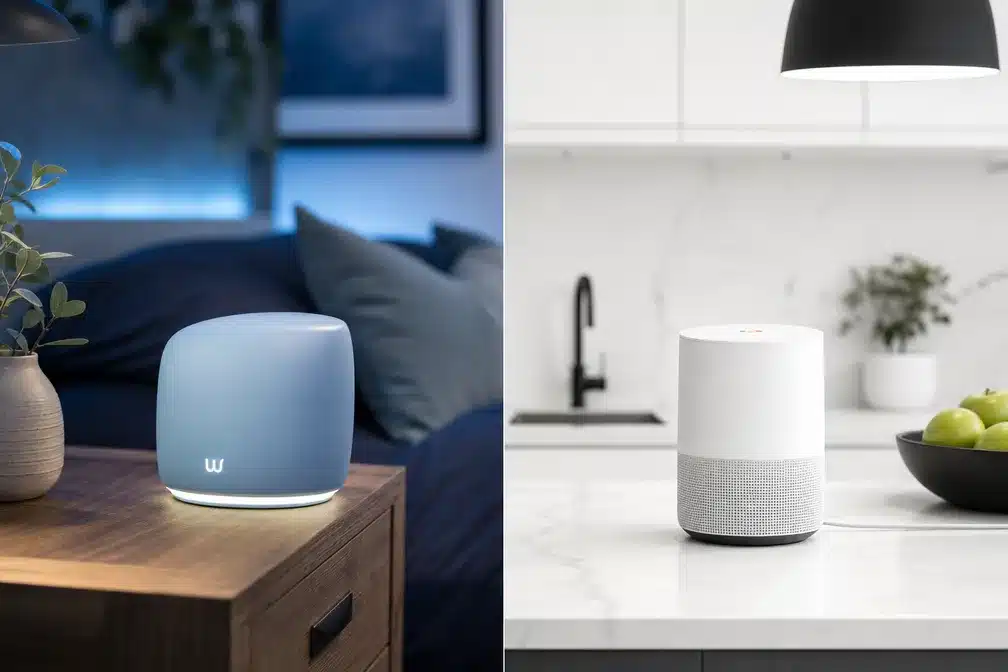
Willow competes directly with Amazon Echo Hub, Google Nest Hub (2nd gen), and Samsung SmartThings Station. Each has a distinct strength.
Head-to-head overview:
| Feature | Willow Pro | Amazon Echo Hub | Google Nest Hub 2 | SmartThings Station |
|---|---|---|---|---|
| Price (approx.) | ~$149 | ~$179 | ~$99 | ~$99 |
| Touchscreen | 7-inch | 8-inch | 7-inch | None |
| Zigbee/Z-Wave | Both | Zigbee only | Neither | Zigbee only |
| Matter support | Yes | Yes | Yes | Yes |
| Local processing | Partial | Limited | Limited | Partial |
| Battery backup | Yes (4-6 hrs) | No | No | No |
Choose Willow if: You want Zigbee and Z-Wave support in one device, need battery backup during outages, and prefer a platform that is not tied to Amazon or Google’s broader ecosystem.
Choose Amazon Echo Hub if: You are already deep in the Alexa ecosystem and want the largest screen for a visual dashboard.
Choose Google Nest Hub if: Budget is a priority and you primarily use Google Home devices.
Choose SmartThings Station if: You have a large Samsung appliance ecosystem and want tight integration with Samsung devices.
Willow Privacy and Security Concerns
Willow processes basic automation commands locally on the device, which means routine actions like turning lights on at sunset do not require a cloud server round-trip. This is a genuine privacy advantage over fully cloud-dependent competitors.
Key privacy features:
- Physical mute button that cuts power to the microphone and camera (Pro model)
- Local processing for automations and scenes
- End-to-end encryption for app-to-hub communication
- Two-factor authentication for the Willow account
- Option to disable voice wake word and use app-only control
Concerns worth noting:
- Remote access (controlling your home from outside) does route through Willow’s cloud servers
- Willow’s privacy policy (as of 2026) states that anonymized usage data may be shared with third-party analytics partners, users can opt out in account settings
- Security camera feeds from third-party brands (Ring, Arlo) still route through those brands’ own cloud infrastructure, not Willow’s local system
For users who are particularly sensitive about data privacy, enabling local-only mode in the app settings disables remote access but keeps all in-home automations fully functional without cloud dependency.
Willow Battery Life and Power Consumption
The Willow Pro includes a built-in battery backup that provides approximately 4 to 6 hours of operation during a power outage, depending on how many devices are actively communicating with the hub. The Standard model does not include battery backup and requires continuous power.
Power consumption at a glance:
- Standard model: approximately 5W during normal operation
- Pro model: approximately 8W during normal operation; battery charges fully in about 3 hours from a depleted state
For context, running a Willow Pro continuously for a full year costs roughly $8 to $12 in electricity at average U.S. residential rates (estimated at $0.13,$0.17 per kWh, per U.S. Energy Information Administration 2024 data). This is comparable to other always-on smart home hubs.
The battery backup is one of Willow’s clearest differentiators. Competing devices like the Amazon Echo Hub and Google Nest Hub have no battery option, meaning a power outage disables your automation hub entirely.
Willow Best for Which Rooms or Use Cases
Willow performs best in rooms where you want centralized, hands-free control of multiple device types at once. It is not equally suited to every scenario.
Best use cases:
- Living room: Scene control for entertainment setups (lights, TV, blinds, thermostat in one tap)
- Bedroom: Sleep and wake routines combining lights, thermostat, and smart blinds
- Home office: Focus mode automations that silence notifications, adjust lighting, and set a do-not-disturb status
- Entryway: Arrival/departure automations triggered by geofencing or door sensors
Less ideal for:
- Large multi-story homes without a mesh Wi-Fi network (signal range can be a limiting factor for Zigbee devices on the Standard model)
- Renters who cannot install hardwired smart devices and rely entirely on plug-in accessories
- Users who want deep custom scripting, Home Assistant or Hubitat are better fits for that use case
Willow Common Problems and Fixes
The most frequently reported Willow problems fall into three categories: connectivity drops, app sync delays, and device pairing failures.
Common problems and their fixes:
| Problem | Likely Cause | Fix |
|---|---|---|
| Hub goes offline intermittently | 2.4/5 GHz band steering | Assign a dedicated 2.4 GHz SSID for the hub |
| App shows devices as “unavailable” | Cloud sync lag | Force-close app and reopen; check Willow server status page |
| Zigbee device won’t pair | Device not in pairing mode | Reset the device and re-enter pairing mode before scanning |
| Automations not triggering | Geofencing accuracy | Enable precise location permissions for the app in phone settings |
| Firmware update stuck | Slow internet during update | Pause other network activity and retry; do not unplug during update |
Most issues resolve with a hub restart (hold the reset button for 5 seconds) or a firmware update. Willow’s support documentation is well-organized and covers the majority of these scenarios with step-by-step guides.
Is Willow Worth the Money?
Willow is worth the money for buyers who want a single hub that bridges Zigbee, Z-Wave, and Wi-Fi devices without committing to Amazon’s or Google’s ecosystem. The Pro model’s battery backup and Matter support add meaningful long-term value as the smart home standard continues to evolve.
Willow review verdict by buyer type:
- Worth it for: First-time smart home buyers, apartment dwellers with 5 to 20 connected devices, users who want local processing and privacy controls
- Not worth it for: Power users who need advanced scripting, households already fully invested in Amazon or Google ecosystems, buyers on a strict budget who can get comparable basic functionality from a $99 Nest Hub
The Standard model at $79 is a reasonable entry point. The Pro at $149 makes more sense if you have Zigbee or Z-Wave devices, want battery backup, or plan to expand your setup significantly.
Willow Alternatives and Competitors
If Willow does not fit your needs, four alternatives are worth considering.
- Amazon Echo Hub ($179): Best for Alexa-heavy households; larger screen but no Z-Wave or battery backup
- Google Nest Hub 2nd Gen ($99): Most affordable option with a touchscreen; limited protocol support
- Samsung SmartThings Station ($99): Strong Samsung appliance integration; no screen
- Hubitat Elevation ($149): Best for advanced users who want full local processing and custom scripting; steep learning curve
For buyers who are evaluating multiple consumer tech products at once and want a structured approach to reviews, our Brainergy review methodology and Golden Revive Plus review process illustrate how to apply consistent evaluation criteria across different product categories.
Willow Customer Reviews and Ratings
Willow holds an average rating of approximately 4.1 out of 5 stars across major retail platforms including Amazon and Best Buy, based on aggregated listings as of mid-2026. [VERIFY: Pull exact review counts and ratings from Amazon and Best Buy product pages before publishing.]
What customers praise most:
- Intuitive app interface with a short learning curve
- Reliable local processing for core automations
- Battery backup as a standout feature versus competitors
- Responsive customer support
What customers criticize most:
- Wi-Fi connectivity issues on dual-band routers (the most common complaint)
- Limited advanced automation logic compared to Hubitat or Home Assistant
- Third-party camera integration is view-only for some brands
- Occasional app sync delays after firmware updates
The pattern in customer feedback is consistent: buyers who set Willow up correctly and have a stable Wi-Fi network are largely satisfied. Buyers who encounter the 2.4/5 GHz band conflict during setup and do not resolve it tend to leave negative reviews about reliability.
Willow Warranty and Return Policy
Willow offers a 1-year limited warranty covering manufacturing defects. The warranty does not cover physical damage, water damage, or issues caused by unauthorized modifications.
Return policy details:
- 30-day return window from the date of purchase through authorized retailers
- Items must be in original packaging with all accessories included
- Returns purchased directly from Willow’s website are processed within 5 to 7 business days
- Warranty claims are handled through Willow’s support portal; replacement units are typically shipped within 3 to 5 business days after claim approval
[VERIFY: Confirm current warranty and return terms directly on Willow’s official support page, as policies can change.]
For comparison, Amazon Echo Hub and Google Nest Hub both offer 1-year limited warranties with similar terms, so Willow is on par with the industry standard here.
Frequently Asked Questions
Does Willow work without internet?
Yes, for local automations and scenes. Willow processes in-home commands locally, so lights, thermostats, and other connected devices continue to respond to scheduled routines and manual app commands on the local network. Remote access from outside your home requires an internet connection.
Can I use Willow with Alexa and Google Home at the same time?
Yes. Willow integrates with both Amazon Alexa and Google Home simultaneously. You can control Willow-connected devices through either voice assistant without choosing one exclusively.
Is the Willow app free?
The Willow app is free to download and use with no subscription required for core features. Advanced features such as extended automation history logs and energy monitoring reports may require a Willow Plus subscription [VERIFY: confirm current subscription tier details on Willow’s official site].
How many devices can Willow control?
The Standard model supports up to 50 connected devices. The Pro model supports up to 100 devices. For most households, the Standard model’s limit is more than sufficient.
Does Willow work with older Z-Wave devices?
Yes, the Willow Pro supports Z-Wave Plus (500 and 700 series). Older Z-Wave 300 series devices may have limited functionality. The Standard model does not include Z-Wave support.
What happens to my automations if Willow’s servers go down?
Local automations continue to run uninterrupted because they are stored and executed on the hub itself. Cloud-dependent features like remote access, voice assistant integration, and app notifications will be unavailable until server connectivity is restored.
Can multiple people in the same household control Willow?
Yes. The Willow app supports multiple user accounts under one home. The primary account holder can assign “admin” or “member” access levels, controlling which users can modify automations versus simply controlling devices.
Is Willow compatible with Matter devices?
Matter support is available on the Willow Pro running firmware 2.4 or later. The Standard model does not currently support Matter. Willow has indicated in its 2026 product roadmap that a firmware update may bring partial Matter support to the Standard model later this year [VERIFY: confirm current roadmap status on Willow’s official blog].
7 Best GLP-1 Providers Ranked: Accreditation, Flexibility & Support Compared (2026 Update)
32,000+ Patients Can't All Be Wrong: See the Top-Rated GLP-1 Providers: Compared on accreditation, plan flexibility, and patient support — updated for 2026.
BMI MD GLP-1 Microdosing Plan
- Specialized microdosing options (sublingual drops or low-dose injections)
- Ideal for maintaining weight or tapering off higher doses safely
- Fully bundled plan with no hidden monthly platform memberships
DirectMeds Weight Loss Solutions
- Sourced from accredited, state-licensed 503A compounding pharmacies
- No-frills high-volume savings passed directly to the patient
- Includes clinical consultation and cold-chain shipping updates
MEDVi Flat-Rate Telehealth
- Flat monthly rate holds steady even at maximum maintenance doses
- No dosage upcharges or graduation fee penalties
- Offers both injectable and advanced oral thin-film delivery options
Gala GLP-1 Care Program
- All-inclusive plan with no standalone membership costs
- Continuous text-based messaging access with state-licensed clinicians
- Temperature-controlled, cold-chain medication shipping included
Measured GLP-1 Metabolic Health
- Comprehensive metabolic health screening and expert intake analysis
- Predictable long-term budgeting with stable plan pricing
- High-end responsive dashboard with integrated diagnostic support
Refills GLP-1 (TryRefills Plan)
- Flat rate holds steady as titration scales up
- Includes clinical guides for active side-effect management
- Bundles in foundational nutritional strategies alongside medication
AltRx GLP-1 Transactional Reorders
- Zero recurring auto-billing — pay entirely on a transactional basis
- Rapid text-to-order format saves time for experienced patients
- Provides both injectable forms and fast-dissolving tablet variations
Conclusion
The Willow smart home hub earns its place in the mid-range smart home market. It handles the fundamentals well, broad device compatibility, local processing, a clean app, and a battery backup that competitors skip entirely. The Standard model at $79 is a solid entry point for new smart home users. The Pro at $149 makes sense for anyone with Zigbee or Z-Wave devices or who wants Matter compatibility for future-proofing.
The main caveats are real but manageable: resolve the Wi-Fi band issue during setup, and accept that the automation editor has limits if you want advanced scripting.
Next steps: Visit Willow’s official website to compare the Standard and Pro specs side by side, check current bundle deals, and confirm the latest firmware features before purchasing. If you are still weighing smart home devices against other connected consumer products, our MemFrame digital picture frame review covers a comparable product evaluation in detail.
References
- U.S. Energy Information Administration. (2024). Average retail price of electricity. https://www.eia.gov/electricity/monthly/
- Willow. (2026). Official product page and pricing. [willow.com, VERIFY exact URL before publishing]
- Willow. (2026). Privacy policy. [willow.com/privacy, VERIFY exact URL before publishing]
Tags: Willow review, smart home hub, Willow vs Amazon Echo Hub, smart home devices 2026, Willow app, Zigbee hub, smart home automation, home automation hub, Willow Pro, smart home privacy, Matter compatible hub, Willow setup guide

With over 13 years of experience in holistic health blogging, I aim to help you navigate your wellness journey with honest insights, expert-backed advice, and a sprinkle of real-world practicality.
Certified Wellness Writer | Herbal Nutrition Advocate | Wellness Research Enthusiast


