
Zepbound Review: Weight-Loss Benefits, Costs and Dosage
Last updated: May 12, 2026
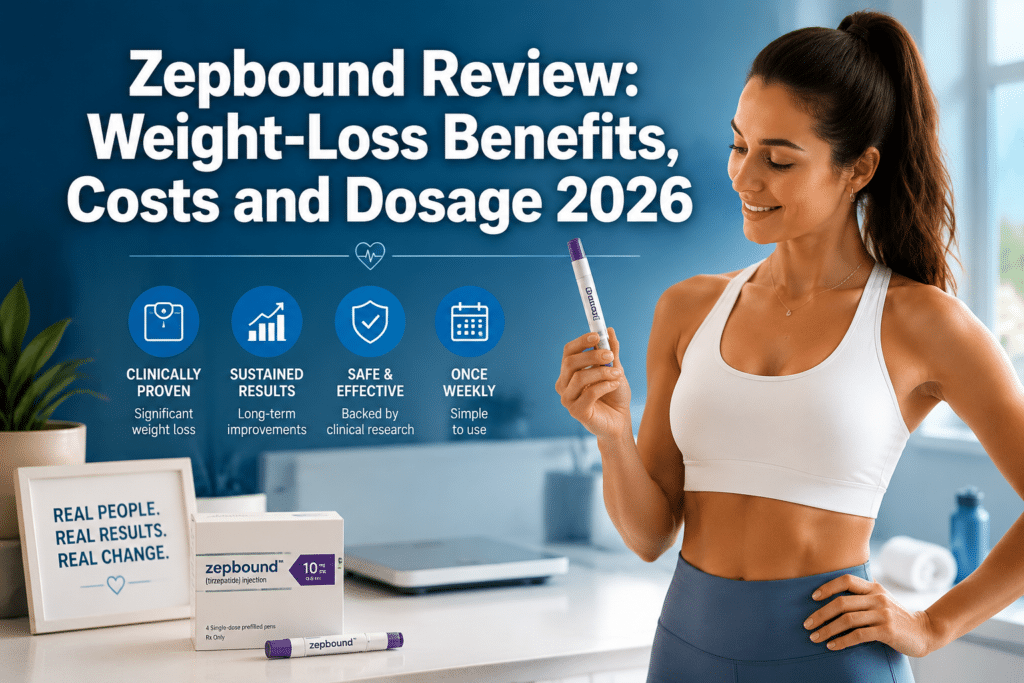
Quick Answer: Zepbound® (tirzepatide injection) is one of the most prescribed weight management medication in 2026, excellent for obesity treatment in adults. It works by targeting two hunger-regulating hormones simultaneously, helping people lose an average of 15–21% of their body weight over 72 weeks. A structured medical program starts at just $50 for the first month, with medication available from $349/month.
Key Takeaways
- ✅ Zepbound® (tirzepatide injection) is the newestappoved GLP-1 medication, targeting both GLP-1 and GIP to help you achieve your weight loss and health goals.
- ✅ For chronic weight management and obstructive sleep apnea in adults with obesity
- ✅ Dual-action mechanism targets both GLP-1 and GIP receptors, unlike single-receptor competitors
- ✅ Clinical trial results show up to 48 lbs average weight loss at the 15 mg dose over 72 weeks
- ✅ Program cost starts at $50 for the first month, then $99/month billed quarterly (medication separate)
- ✅ Medication cost starts at $349/month for the 2.5 mg starting dose
- ✅ No insurance required — virtual consultation, coaching, and lab access included in the program
- ✅ Delivered within 72 hours after prescription approval
- ⚠️ Not for everyone — contraindicated in people with personal or family history of medullary thyroid carcinoma or MEN 2
- ⚠️ Common side effects include nausea, diarrhea, vomiting, and constipation, especially early in treatment
- 📋 Dosing range: 2.5 mg starting dose, escalating to a maximum of 15 mg weekly

What Is Zepbound and How Does This Zepbound Review Rate It?
Zepbound® (tirzepatide injection) is an approved weekly injectable medication for chronic weight management in adults with obesity (BMI ≥ 30) or overweight (BMI ≥ 27) with at least one weight-related health condition. [1] It became the most prescribed weight management medication in 2025, according to Eli Lilly, and received a new label expansion in February 2026 for delivery via a multi-dose KwikPen® device. [2]
7 Best GLP-1 Providers Ranked: Accreditation, Flexibility & Support Compared (2026 Update)
32,000+ Patients Can't All Be Wrong: See the Top-Rated GLP-1 Providers. We compared the leading online GLP-1 providers based on program features, clinical support, convenience, and overall value.
BMI MD GLP-1 Microdosing Plan
- Specialized microdosing options, including sublingual drops and low-dose injections
- Designed for people interested in maintaining weight or gradually adjusting treatment
- Bundled program structure without a separate monthly platform membership
- Online access makes the process convenient from home

DirectMeds Weight Loss Solutions
- Online weight-loss program with a straightforward patient experience
- Compounded medication options through state-licensed compounding pharmacies
- Includes clinical consultation as part of the process
- Provides shipping updates to help patients track their orders
MEDVi Flat-Rate Telehealth
- Flat-rate telehealth approach designed for easier budgeting
- No dosage-based pricing increases within the advertised program structure
- Offers injectable and oral thin-film delivery options
- Includes medical screening and asynchronous provider consultations
Gala GLP-1 Care Program
- Text-based access to state-licensed clinicians
- Cold-chain medication shipping included in the program
- Month-to-month program structure
- Designed for people who value convenient ongoing support
Measured GLP-1 Metabolic Health
- Comprehensive metabolic health screening and intake analysis
- Designed around longer-term metabolic health management
- Responsive dashboard with integrated health tracking tools
- Useful option for patients who value a more data-focused experience
Refills GLP-1 (TryRefills Plan)
- Clinical guidance designed to help patients manage common treatment concerns
- Includes foundational nutritional strategies alongside medication
- Designed around predictable ongoing treatment
- No hidden startup or processing fees according to the program information provided
AltRx GLP-1 Transactional Reorders
- Transactional reorder model without recurring auto-billing
- Designed for patients who already understand their treatment routine
- Fast text-to-order process for convenient reorders
- Offers injectable and fast-dissolving tablet variations
This Zepbound Review covers everything you need to know before starting — from how it works biologically to what you’ll actually pay each month.
What makes Zepbound different from other weight loss drugs?
Most GLP-1 medications on the market target only one hormone receptor. Zepbound targets two: the glucagon-like peptide-1 (GLP-1) receptor and the glucose-dependent insulinotropic polypeptide (GIP) receptor. This dual-action approach is why its clinical results consistently outperform single-receptor medications like semaglutide (Wegovy).
Approved uses include:
- Reducing excess body weight and maintaining long-term weight loss in adults with obesity or overweight with comorbidities [3]
- Treating moderate to severe obstructive sleep apnea (OSA) in adults with obesity [3]
“For the first time, I’m not constantly thinking about eating. When will I eat? What will I eat? How much will I eat?” — Laura S., Zepbound program participant
How Does Zepbound Work? The Science Behind Tirzepatide
Zepbound works by mimicking two naturally occurring gut hormones that regulate appetite, blood sugar, and fat metabolism. This is not a stimulant or a willpower supplement — it’s a hormone-level intervention.

The dual-hormone mechanism explained:
GLP-1 (Glucagon-Like Peptide-1) activation:
- Slows gastric emptying, so food stays in your stomach longer
- Signals the brain that you’re full, reducing overall calorie intake
- Stimulates insulin release when blood sugar rises
- Suppresses glucagon, which prevents excess glucose production
GIP (Glucose-Dependent Insulinotropic Polypeptide) activation:
- Enhances the GLP-1 effects on appetite suppression
- Improves insulin sensitivity in fat tissue
- May directly reduce fat storage in adipose tissue
- Supports energy balance regulation at the metabolic level
Together, these two pathways create a stronger appetite suppression and metabolic effect than either hormone could produce alone. This is why tirzepatide outperformed semaglutide in the head-to-head SURMOUNT-5 trial. [2]
For a deeper look at how GLP-1 medications work in the body, our complete GLP-1 medication guide for 2026 breaks down the science across all major drug classes.
Insulin sensitivity and metabolic health:
Beyond weight loss, Zepbound improves several metabolic markers. Patients often see improvements in fasting blood glucose, triglycerides, blood pressure, and waist circumference — all key indicators of metabolic syndrome risk. Tirzepatide was originally approved under the brand name Mounjaro for type 2 diabetes management, which established its safety and metabolic profile before the weight management indication was approved. [1]
Zepbound Clinical Trial Results: What the Data Actually Shows
The weight loss results from Zepbound’s clinical trials are among the strongest ever recorded for a pharmaceutical weight management treatment.
The SURMOUNT-1 trial (72 weeks, adults without diabetes): [1]
| Dose | Average Weight Loss (%) | Average Weight Loss (lbs) |
|---|---|---|
| 5 mg | 15.0% | 34 lbs |
| 10 mg | 19.5% | 44 lbs |
| 15 mg | 20.9% | 48 lbs |
| Placebo | 3.1% | 7 lbs |
Average starting weights ranged from 226.8 to 233.3 lbs. Individual results may vary.
The SURMOUNT-2 trial (72 weeks, adults with type 2 diabetes): [1]
| Dose | Average Weight Loss (%) |
|---|---|
| 10 mg | 12.8% |
| 15 mg | 14.7% |
| Placebo | 3.2% |
Key trial details:
- Both trials were randomized, double-blind, and placebo-controlled [1]
- 2,519 patients received Zepbound across the dose groups; 958 received placebo [1]
- Results were sustained throughout the 17-month follow-up period [2]
Head-to-head vs. Wegovy (SURMOUNT-5 trial):
The SURMOUNT-5 trial directly compared Zepbound to injectable semaglutide (Wegovy) in adults with obesity or overweight and comorbidities including hypertension, dyslipidemia, obstructive sleep apnea, or cardiovascular disease — without diabetes. Zepbound produced meaningfully greater weight loss than Wegovy in this 72-week, Phase 3b trial. [2]
If you want to compare these two medications side by side, read our detailed semaglutide vs tirzepatide comparison for a full breakdown.
Zepbound Dosage: Starting Dose, Escalation Schedule, and Maximum Dose
Zepbound is a once-weekly subcutaneous injection. The dosing schedule is designed to minimize side effects by starting low and increasing gradually. [3]

Standard dosing schedule for weight reduction:
| Phase | Dose | Duration |
|---|---|---|
| Starting dose | 2.5 mg/week | 4 weeks |
| First increase | 5 mg/week | 4 weeks |
| Second increase | 10 mg/week | 4 weeks |
| Maintenance (max) | 15 mg/week | Ongoing |
For obstructive sleep apnea treatment: The recommended maintenance doses are 10 mg or 15 mg weekly. [3]
Practical dosing notes:
- Inject subcutaneously into the abdomen, thigh, or upper arm
- Rotate injection sites each week
- Can be taken with or without food
- If a dose is missed by more than 4 days, skip it and resume the next scheduled dose
- As of February 2026, Zepbound is also available in a multi-dose KwikPen® device, which delivers a full month of treatment in a single injection device for added convenience [2]
Choose 5 mg maintenance if: You experience persistent gastrointestinal side effects at higher doses and your provider recommends staying at a lower therapeutic dose.
Choose 15 mg if: You’ve tolerated the escalation well and want to maximize weight loss outcomes, as the 15 mg dose produced the greatest average results in clinical trials.
Zepbound vs. Other Weight Loss Medications: How Does It Compare?
Zepbound stands out clearly when compared to other GLP-1 and non-GLP-1 weight loss medications currently available.

| Feature | Zepbound (tirzepatide) | Wegovy (semaglutide) | Mounjaro (tirzepatide) |
|---|---|---|---|
| Approved use | Weight loss, sleep apnea | Weight loss | Type 2 diabetes |
| Mechanism | Dual GLP-1 + GIP | GLP-1 only | Dual GLP-1 + GIP |
| Max dose | 15 mg/week | 2.4 mg/week | 15 mg/week |
| Avg. weight loss | Up to 20.9% | Up to ~15% | Not weight-loss indicated |
| Active ingredient | Tirzepatide | Semaglutide | Tirzepatide |
| Injection frequency | Weekly | Weekly | Weekly |
Key differentiators:
- Vs. Wegovy: Zepbound’s dual-receptor action produced greater weight loss in direct comparison. Both are weekly injections, but Zepbound targets an additional metabolic pathway. See our full Wegovy cost and savings guide for a cost comparison.
- Vs. Mounjaro: Same active ingredient (tirzepatide), but different approved indications. Mounjaro is approved for diabetes; Zepbound is approved for weight management. See our Mounjaro cost guide for pricing differences.
- Vs. oral GLP-1s: Injectable tirzepatide consistently outperforms oral options in weight loss magnitude. If you prefer pills, our guide to oral GLP-1 options for weight loss covers the best alternatives.
Zepbound Weight Loss Program: Cost, Structure, and What’s Included
The program costs $50 for the first month for new customers, then $99/month billed quarterly. Medication is not included in the program fee.
This is where many Zepbound reviews fall short — they list the medication price but skip the program details. Here’s the full breakdown:
Program fee includes:
- ✅ Virtual visits with a licensed medical provider
- ✅ Personalized health coaching
- ✅ Access to lab testing
- ✅ Ongoing clinical support throughout your treatment
Medication cost (separate from program fee):
- Starting dose (2.5 mg vial): from $349/month
- Higher doses are priced accordingly — confirm current pricing at checkout
Total estimated first-month cost:
- Program: $50 (discounted for new customers)
- Medication: from $349
- Estimated first-month total: ~$399
No insurance required. The program is designed to be accessible without navigating insurance approvals or prior authorization hurdles. HSA and FSA funds can typically be used for prescription medications.
How the program works — 3 steps:
- Get Started — Sign up for the Zepbound® Weight Loss Program online
- Medical Consultation — Complete a virtual consultation with a licensed provider who reviews your health history and determines eligibility
- Receive Your Medication — Once approved and payment is processed through the pharmacy, medication arrives within 72 hours
Start your Zepbound weight loss journey for $50 →
For those comparing costs across GLP-1 programs, our guide to least expensive GLP-1 options for weight loss is worth reading before you decide.
Who Qualifies for Zepbound? Patient Eligibility Criteria
Zepbound is a prescription medication. Not everyone qualifies, and the medical consultation process exists to protect patient safety.
You likely qualify if you:
- Have a BMI of 30 or higher (obesity), OR
- Have a BMI of 27 or higher (overweight) with at least one weight-related condition such as:
- High blood pressure (hypertension)
- Type 2 diabetes
- High cholesterol (dyslipidemia)
- Obstructive sleep apnea
- Cardiovascular disease
You do NOT qualify if you have:
- A personal or family history of medullary thyroid carcinoma (MTC) [3]
- Multiple Endocrine Neoplasia syndrome type 2 (MEN 2) [3]
- A known hypersensitivity to tirzepatide or any component of the formulation
- Active pancreatitis
Your provider will also assess:
- Current medications (especially insulin or sulfonylureas that affect blood sugar)
- History of gallbladder disease
- Kidney function
- Diabetic retinopathy status (for patients with type 2 diabetes)
The virtual medical consultation is thorough — your provider reviews your full health history before any prescription is issued. This is not a rubber-stamp process.
Check your eligibility now — schedule your virtual consultation →
Zepbound Side Effects: What to Expect and How to Manage Them
Most side effects with Zepbound are gastrointestinal and occur most often during the dose escalation phase. They typically improve as your body adjusts.
Most common side effects (reported in clinical trials): [4] [5]
| Side Effect | How Common | When It Typically Occurs |
|---|---|---|
| Nausea | Very common | Early weeks, especially after dose increases |
| Diarrhea | Common | First 4–8 weeks |
| Vomiting | Common | Early treatment |
| Constipation | Common | Ongoing |
| Abdominal pain | Common | Variable |
| Injection site reactions | Occasional | Any time |
Serious warnings to know: [3] [4]
- Thyroid C-cell tumors (Black Box Warning): Animal studies showed increased thyroid cancer risk in rats. Human relevance is unknown, but Zepbound is contraindicated in anyone with a personal or family history of MTC or MEN 2. [3]
- Acute pancreatitis: Stop taking Zepbound and seek medical care immediately if you experience severe, persistent abdominal pain.
- Gallbladder problems: Rapid weight loss can increase gallstone risk. Report any upper-right abdominal pain.
- Hypoglycemia: Low blood sugar risk increases if you’re also taking insulin or sulfonylureas.
- Acute kidney injury: Dehydration from vomiting or diarrhea can strain the kidneys. Stay well hydrated.
- Diabetic retinopathy progression: Patients with type 2 diabetes should have eye exams monitored during treatment. [4]
Tips to reduce side effects:
- Eat smaller, lower-fat meals
- Avoid high-sugar or heavily processed foods
- Stay well hydrated throughout the day
- Don’t rush the dose escalation — your provider can slow it down if needed
Real Patient Results: What People Are Saying About Zepbound
Clinical data tells one story. Real patient experiences add important context.
From verified program participants:
“I feel incredible, have a ton more confidence, love seeing myself in tightly fitted clothes again, and no longer have the urge to snack at night or finish my dinner plate before feeling full.” — Kate F.
“I dropped that pesky 5kg I’d held for 3 years in 8 weeks by maintaining a healthy diet and workout regime while using GLP-1s.” — Tracy M.
“Using this product has freed me from constant food obsessions without side effects. This is really BIG for me.” — Robyn P.
“I am much more confident and comfortable in my skin again. For the first time in a long time, I could also lose the weight in my face.” — Mindy W.
“I’m down 9 lbs since starting it. I highly recommend this company for all peptide/hormone needs.” — Danielle H.
A consistent theme across patient reports: the reduction in food obsession and constant hunger is often described as more life-changing than the weight loss itself.
Get started with Zepbound for just $50 your first month →
Long-Term Success: Lifestyle Integration With Zepbound
Zepbound is a powerful medical tool, but it works best when paired with sustainable lifestyle changes. This is a point most Zepbound reviews skip entirely.
Will you gain the weight back when you stop?
Some weight regain is common when GLP-1 medications are discontinued, because the hormonal appetite suppression effect stops. However, patients who use the treatment period to build lasting habits — eating patterns, activity routines, sleep hygiene — tend to maintain significantly more of their results.
Lifestyle strategies that improve long-term outcomes:
- Protein-forward eating: Higher protein intake preserves lean muscle mass during weight loss, which supports metabolic rate long-term
- Resistance training: Muscle mass protects against the metabolic slowdown that often accompanies significant weight loss
- Sleep optimization: Poor sleep increases ghrelin (hunger hormone) and undermines the medication’s appetite-suppressing effects
- Stress management: Chronic stress elevates cortisol, which promotes fat storage, particularly around the abdomen
The health coaching included in the Zepbound® Weight Loss Program is specifically designed to help you build these habits during treatment — so your results last beyond the medication.
Frequently Asked Questions
How much does the Zepbound® Weight Loss Program cost?
The program fee is $50 for the first month for new customers, then $99/month billed quarterly. This covers virtual provider visits, health coaching, lab access, and ongoing support. Medication is not included in the program fee.
How much does Zepbound® medication cost?
Medication pricing starts at $349/month for the 2.5 mg starting dose vial. Higher dose vials are priced separately. No insurance is required to access the program.
What is the difference between Zepbound® and tirzepatide?
They are the same molecule. Tirzepatide is the active ingredient. Zepbound® is the brand name approved for weight management. Mounjaro® is the same active ingredient approved for type 2 diabetes management. [1]
How much weight can I expect to lose with Zepbound®?
In clinical trials, people lost an average of 15% of body weight at the 5 mg dose, 19.5% at 10 mg, and 20.9% at 15 mg over 72 weeks — compared to 3.1% with placebo. Individual results vary based on starting weight, dose, diet, and activity level. [1]
Do I need to change my diet or exercise while taking Zepbound®?
You don’t have to make drastic changes, but lifestyle adjustments significantly improve your results and help maintain weight loss long-term. The program includes health coaching to guide you through practical, sustainable changes.
Are labs required before starting?
Lab testing access is included in the program. Your provider may request baseline labs as part of the medical consultation to ensure Zepbound is safe and appropriate for you.
Can I use HSA or FSA funds for Zepbound®?
Yes, HSA and FSA funds can generally be applied to prescription medications. Confirm with your plan administrator for your specific account rules.
Does Zepbound® require insurance?
No. The program is designed to work without insurance. You pay directly for the program fee and medication through the pharmacy.
How is Zepbound® delivered?
Once your prescription is approved and pharmacy payment is processed, medication is delivered to your door within 72 hours.
What is the maximum dose of Zepbound®?
The maximum recommended dose is 15 mg once weekly. [3] Most patients start at 2.5 mg and increase gradually over several months.
Is Zepbound® safe for people with type 2 diabetes?
Zepbound can be used in people with type 2 diabetes, but your provider will carefully assess your current medications (especially insulin) to manage hypoglycemia risk. Diabetic retinopathy should also be monitored. [4]
How does Zepbound® compare to compounded tirzepatide?
Brand-name Zepbound is manufactured to strict quality standards. Compounded tirzepatide is a lower-cost alternative but is not as a finished drug product. Our compounded tirzepatide review covers what patients are experiencing with both options.
7 Best GLP-1 Providers Ranked: Accreditation, Flexibility & Support Compared (2026 Update)
32,000+ Patients Can't All Be Wrong: See the Top-Rated GLP-1 Providers: Compared on accreditation, plan flexibility, and patient support — updated for 2026.
BMI MD GLP-1 Microdosing Plan
- Specialized microdosing options (sublingual drops or low-dose injections)
- Ideal for maintaining weight or tapering off higher doses safely
- Fully bundled plan with no hidden monthly platform memberships
DirectMeds Weight Loss Solutions
- Sourced from accredited, state-licensed 503A compounding pharmacies
- No-frills high-volume savings passed directly to the patient
- Includes clinical consultation and cold-chain shipping updates
MEDVi Flat-Rate Telehealth
- Flat monthly rate holds steady even at maximum maintenance doses
- No dosage upcharges or graduation fee penalties
- Offers both injectable and advanced oral thin-film delivery options
Gala GLP-1 Care Program
- All-inclusive plan with no standalone membership costs
- Continuous text-based messaging access with state-licensed clinicians
- Temperature-controlled, cold-chain medication shipping included
Measured GLP-1 Metabolic Health
- Comprehensive metabolic health screening and expert intake analysis
- Predictable long-term budgeting with stable plan pricing
- High-end responsive dashboard with integrated diagnostic support
Refills GLP-1 (TryRefills Plan)
- Flat rate holds steady as titration scales up
- Includes clinical guides for active side-effect management
- Bundles in foundational nutritional strategies alongside medication
AltRx GLP-1 Transactional Reorders
- Zero recurring auto-billing — pay entirely on a transactional basis
- Rapid text-to-order format saves time for experienced patients
- Provides both injectable forms and fast-dissolving tablet variations
Conclusion: Is Zepbound® Worth It?
Based on clinical evidence, patient outcomes, and program structure, this Zepbound Review concludes that Zepbound® (tirzepatide injection) is the most effective approved weight loss medication currently available. Its dual GLP-1 and GIP mechanism produces greater average weight loss than any single-receptor competitor, including Wegovy. The structured program — with virtual consultations, health coaching, and lab access — makes it accessible without the complexity of insurance navigation.
Is it right for you? If you have a BMI of 30 or higher, or 27 or higher with a weight-related health condition, and you don’t have contraindications like a history of medullary thyroid carcinoma or MEN 2, Zepbound is worth a serious conversation with a licensed provider.
Actionable next steps:
- Check your eligibility — Complete the virtual medical consultation to confirm you qualify
- Review your budget — Plan for the $50 first-month program fee plus medication starting at $349/month
- Prepare for the process — Have your health history ready for your provider consultation
- Commit to lifestyle support — Use the health coaching to build habits that make your results last
Start your Zepbound® Weight Loss Program today — $50 for your first month →
References
[1] Approves New Medication for Chronic Weight Management
[3] Zepbound (Tirzepatide) Prescribing Information — Label 2026
[4] Zepbound (Tirzepatide) FD3A Prescribing Information — Label 2024
[5] Zepbound (Tirzepatide): Uses, Dosage, Side Effects — Medical News Today

With over 13 years of experience in holistic health blogging, I aim to help you navigate your wellness journey with honest insights, expert-backed advice, and a sprinkle of real-world practicality.
Certified Wellness Writer | Herbal Nutrition Advocate | Wellness Research Enthusiast


