
colonbroom glp 1 booster reviews
Last updated: September 25, 2026
Quick Answer: ColonBroom GLP-1 Booster is a fiber-based dietary supplement marketed to support natural GLP-1 hormone activity, appetite control, and digestive regularity. It is not a prescription GLP-1 medication and cannot replicate the clinical weight-loss results of drugs like semaglutide. Based on available evidence and user feedback in 2026, it may offer modest digestive and satiety benefits for some adults, but the evidence for meaningful weight loss from the supplement alone is limited.
Key Takeaways
- ColonBroom GLP-1 Booster is a fiber-and-prebiotic supplement, not a pharmaceutical GLP-1 receptor agonist like Ozempic or Wegovy.
- Its primary active ingredient, psyllium husk, has solid evidence for improving digestive regularity and modest satiety support.
- Colonbroom glp 1 booster reviews from real users are mixed: many report better digestion and reduced bloating, while weight-loss results vary widely.
- It costs significantly less than prescription GLP-1 medications but also delivers significantly less clinical potency.
- Side effects are generally mild (bloating, gas, loose stools), especially during the first two weeks.
- It is not a replacement for prescription GLP-1 therapy in people with obesity or type 2 diabetes.
- Most users who see digestive benefits report noticing changes within two to four weeks; weight-related changes, if any, take longer.
- People with IBS, bowel obstruction history, or certain medication regimens should consult a clinician before use.
- Alternatives worth comparing include actual compounded semaglutide programs, other fiber supplements, and structured meal-replacement plans.
- Always verify current pricing and subscription terms directly on the brand’s official site before purchasing.
What Is ColonBroom GLP-1 Booster and How Does It Work?
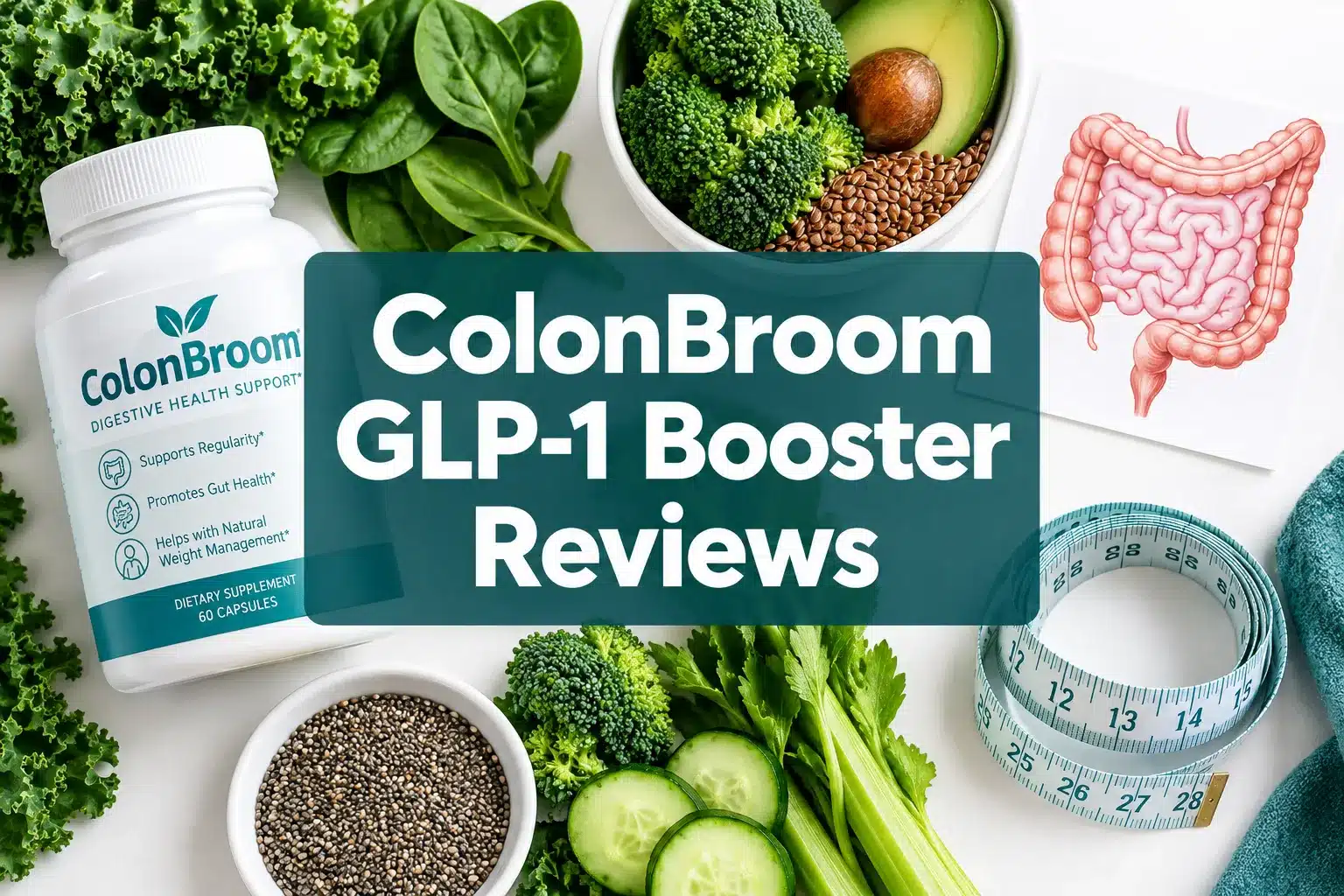
ColonBroom GLP-1 Booster is a powdered dietary supplement sold by the brand ColonBroom, designed to support the body’s natural production of glucagon-like peptide-1 (GLP-1), a gut hormone involved in appetite regulation and blood sugar management. It is not a drug, not FDA-approved to treat any disease, and does not contain semaglutide, tirzepatide, or any pharmaceutical GLP-1 receptor agonist.
7 Best GLP-1 Providers Ranked: Accreditation, Flexibility & Support Compared (2026 Update)
32,000+ Patients Can't All Be Wrong: See the Top-Rated GLP-1 Providers. We compared the leading online GLP-1 providers based on program features, clinical support, convenience, and overall value.
BMI MD GLP-1 Microdosing Plan
- Specialized microdosing options, including sublingual drops and low-dose injections
- Designed for people interested in maintaining weight or gradually adjusting treatment
- Bundled program structure without a separate monthly platform membership
- Online access makes the process convenient from home

DirectMeds Weight Loss Solutions
- Online weight-loss program with a straightforward patient experience
- Compounded medication options through state-licensed compounding pharmacies
- Includes clinical consultation as part of the process
- Provides shipping updates to help patients track their orders
MEDVi Flat-Rate Telehealth
- Flat-rate telehealth approach designed for easier budgeting
- No dosage-based pricing increases within the advertised program structure
- Offers injectable and oral thin-film delivery options
- Includes medical screening and asynchronous provider consultations
Gala GLP-1 Care Program
- Text-based access to state-licensed clinicians
- Cold-chain medication shipping included in the program
- Month-to-month program structure
- Designed for people who value convenient ongoing support
Measured GLP-1 Metabolic Health
- Comprehensive metabolic health screening and intake analysis
- Designed around longer-term metabolic health management
- Responsive dashboard with integrated health tracking tools
- Useful option for patients who value a more data-focused experience
Refills GLP-1 (TryRefills Plan)
- Clinical guidance designed to help patients manage common treatment concerns
- Includes foundational nutritional strategies alongside medication
- Designed around predictable ongoing treatment
- No hidden startup or processing fees according to the program information provided
AltRx GLP-1 Transactional Reorders
- Transactional reorder model without recurring auto-billing
- Designed for patients who already understand their treatment routine
- Fast text-to-order process for convenient reorders
- Offers injectable and fast-dissolving tablet variations
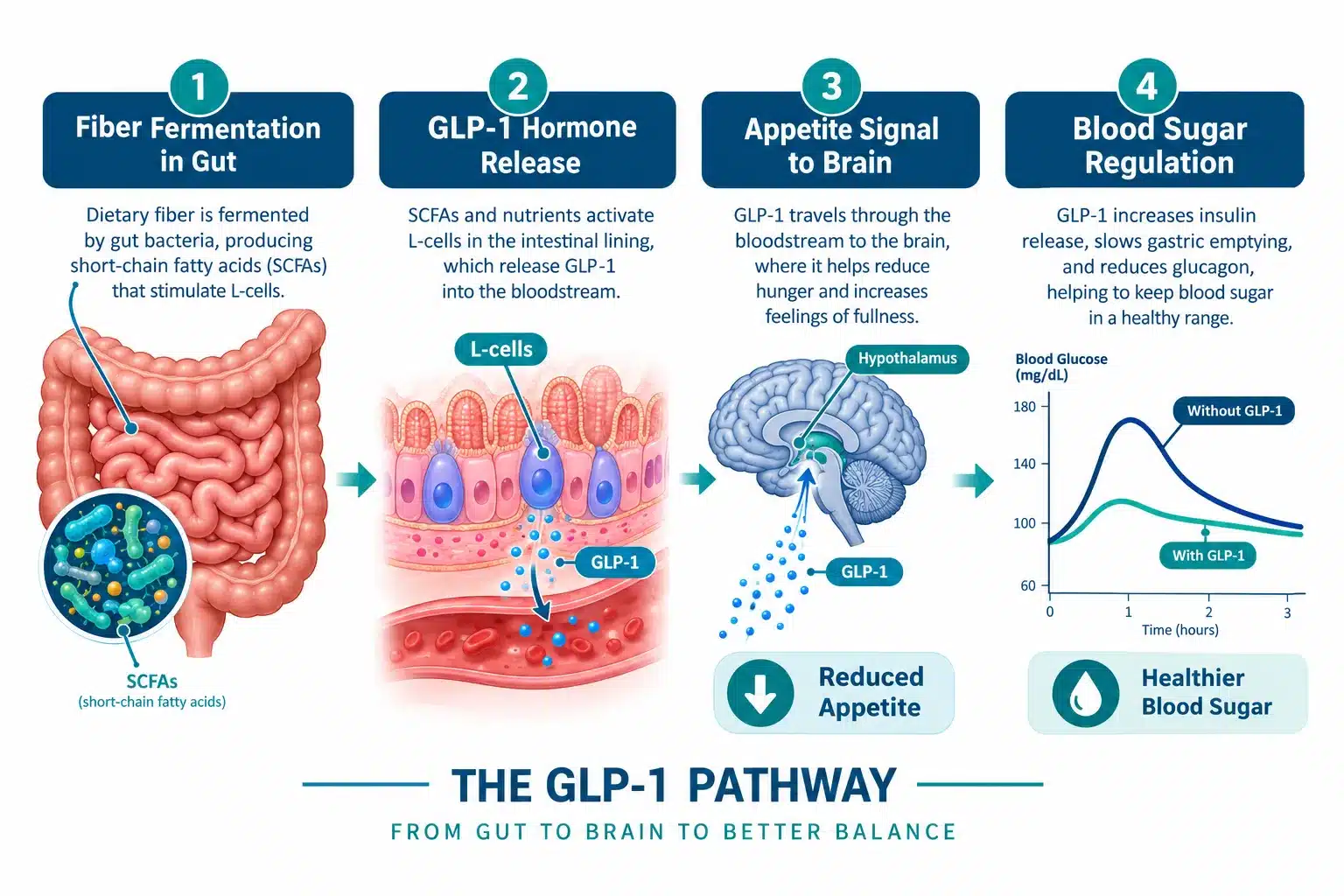
The mechanism the brand describes works like this: soluble dietary fiber, particularly psyllium husk, ferments in the colon and stimulates L-cells in the gut lining to release GLP-1 naturally. GLP-1 then signals the brain to reduce appetite and slows gastric emptying, which can extend the feeling of fullness after meals. Prebiotics like inulin further support the gut microbiome, which some research suggests plays a role in metabolic hormone signaling.
What the evidence actually supports:
- Soluble fiber does stimulate GLP-1 release in the gut (this is well-documented in human studies, including a 2019 review in Nutrients).
- The magnitude of that GLP-1 increase from fiber is far smaller than what pharmaceutical GLP-1 drugs produce.
- Prebiotic fiber’s effect on body weight is real but modest, typically in the range of 1 to 2 kg over 12 weeks in controlled trials.
The brand positions this as a natural, accessible entry point for people who want to support their metabolic health without a prescription. That framing is reasonable as long as expectations are calibrated correctly.
ColonBroom GLP-1 Booster Ingredients List
The formula centers on a small set of fiber and prebiotic ingredients. Based on publicly available product information as of 2026, the key components include:
| Ingredient | Role | Evidence Level |
|---|---|---|
| Psyllium Husk | Soluble fiber; bulks stool, slows digestion, stimulates GLP-1 | Strong (digestive); Moderate (satiety) |
| Inulin | Prebiotic fiber; feeds beneficial gut bacteria | Moderate |
| Chromium | Trace mineral; may support blood glucose metabolism | Limited to Moderate |
| Stevia Leaf Extract | Natural sweetener; no caloric load | N/A (flavoring) |
| Citric Acid | Flavoring and preservative | N/A |
Important note: ColonBroom does not always disclose exact per-serving dosages for each ingredient on all retail listings. If precise dosing matters to you, check the current product label directly before purchasing.
The psyllium husk dose is the most consequential. Research supporting digestive and satiety benefits from psyllium typically uses 5 to 10 grams per day. Confirm the serving size aligns with that range.
Does ColonBroom GLP-1 Booster Actually Work?
For digestive regularity, the answer is likely yes for most users. For meaningful weight loss on its own, the evidence is limited. The supplement’s core ingredient, psyllium husk, has consistent clinical support for improving stool frequency, reducing bloating, and supporting a modest feeling of fullness. Whether that translates into measurable fat loss depends heavily on the rest of a person’s diet and lifestyle.
What users commonly report:
- Improved bowel regularity within 5 to 10 days
- Reduced post-meal bloating
- Mild appetite reduction, particularly when taken 30 minutes before meals with a full glass of water
- Little to no dramatic weight change from the supplement alone
The GLP-1 “booster” framing is marketing language. The supplement does not contain GLP-1 or any compound that directly activates GLP-1 receptors the way a pharmaceutical does. It supports conditions in the gut that may encourage natural GLP-1 release, which is a real but much weaker effect.
Decision rule: Consider this product if you want digestive support and a mild satiety aid. Do not choose it if your primary goal is significant weight loss without additional dietary changes.
ColonBroom GLP-1 Booster Reviews Reddit and Real User Feedback
Colonbroom glp 1 booster reviews on Reddit and other community forums in 2026 are mixed, which is typical for fiber-based supplements. The most common themes across r/WeightLoss, r/Supplements, and r/GutHealth threads include:
Positive patterns:
- Users with chronic constipation or irregular digestion report consistent improvement
- Several users note reduced snacking and feeling full longer when taken consistently before meals
- A subset of users combine it with calorie tracking and report 3 to 6 lbs of loss over 8 weeks, though they attribute most of that to the dietary changes
Negative patterns:
- Users expecting Ozempic-level appetite suppression are consistently disappointed
- Bloating and gas in the first week is the most common complaint
- Some users find the taste or texture unappealing
- A few report no noticeable effect at all
Common mistake: Many users take the supplement without increasing water intake. Psyllium husk requires adequate hydration to work properly and can worsen constipation if taken with insufficient fluid.
For a broader look at how real GLP-1 medications compare in user experience, see these semaglutide reviews from real patients.
ColonBroom GLP-1 Booster vs Ozempic Comparison
ColonBroom GLP-1 Booster and Ozempic (semaglutide) are not comparable products in terms of clinical potency. They operate through fundamentally different mechanisms and are appropriate for very different situations.
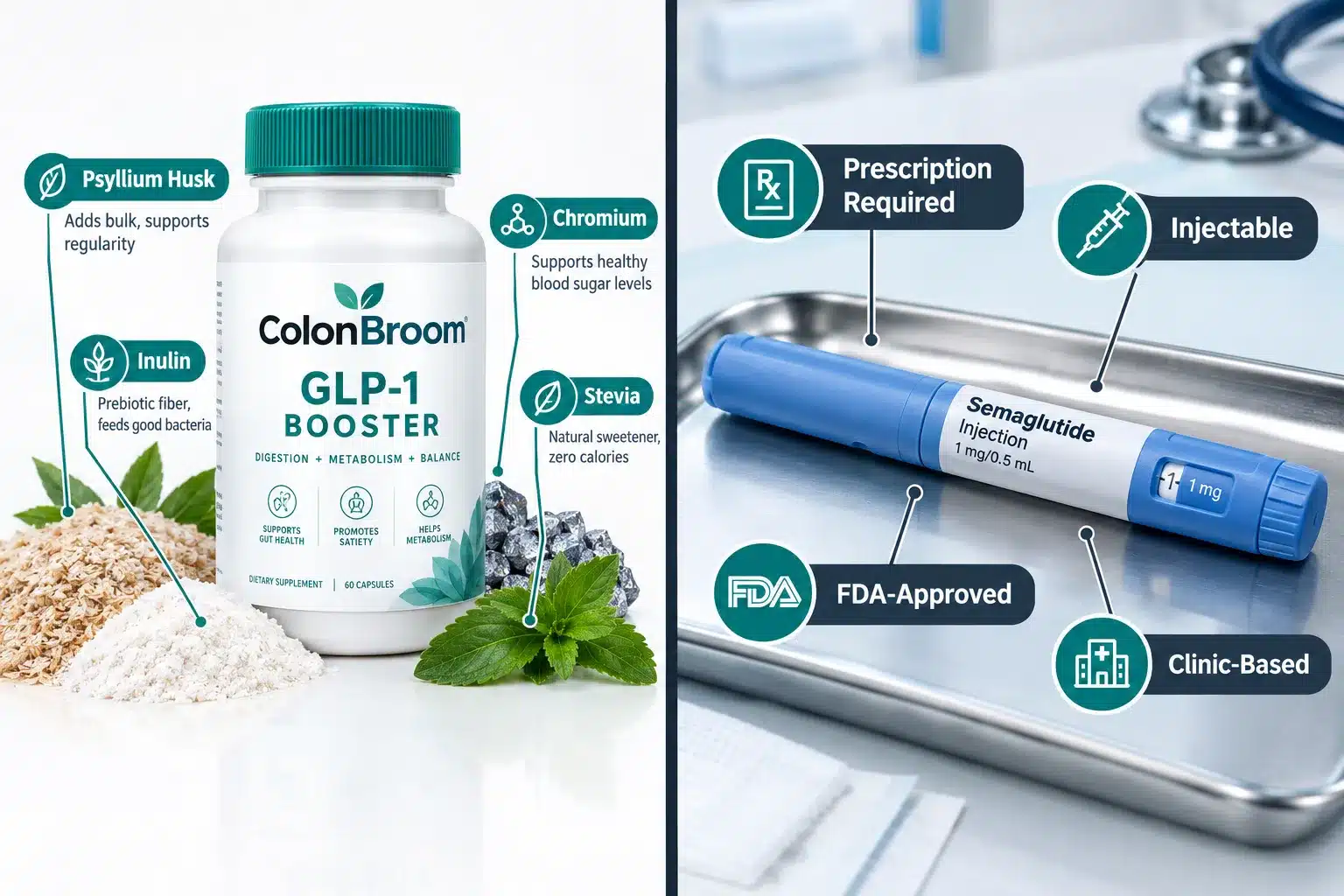
| Feature | ColonBroom GLP-1 Booster | Ozempic / Semaglutide |
|---|---|---|
| Type | Dietary supplement | Prescription medication |
| GLP-1 mechanism | Indirect (fiber stimulates natural release) | Direct GLP-1 receptor agonist |
| Average weight loss | Modest (1-3 lbs, diet-dependent) | Clinically significant (10-15% body weight in trials) |
| FDA status | Not FDA-approved for any indication | FDA-approved (type 2 diabetes, obesity) |
| Prescription required | No | Yes |
| Side effect profile | Mild GI (gas, bloating) | Nausea, vomiting, potential serious GI events |
| Best for | Digestive support, mild satiety | Obesity, type 2 diabetes management |
If you are considering actual GLP-1 medications and want to understand cost options, our guide to finding the cheapest pharmacy for semaglutide covers that in detail. For another supplement-based GLP-1 product comparison, see Shed GLP-1 reviews.
ColonBroom GLP-1 Booster Price and Cost
ColonBroom GLP-1 Booster is sold primarily through the brand’s official website, with occasional availability on Amazon. Pricing as of 2026 follows a tiered structure where multi-pack purchases reduce the per-serving cost.
General pricing structure (verify current rates on the official site):
- Single bottle (30-day supply): approximately $50 to $60
- Three-bottle bundle: approximately $35 to $45 per bottle
- Six-bottle bundle: approximately $28 to $35 per bottle
The brand frequently runs promotional pricing, and a subscription option is typically available at a 10 to 20% discount. Read the subscription terms carefully before enrolling, particularly the cancellation policy and auto-renewal schedule.
Refund policy: ColonBroom has historically offered a 14-day money-back guarantee on some products. Confirm the current return window before purchasing, as terms can change.
Value assessment: At roughly $1.50 to $2.00 per day for a single bottle, it is affordable compared to prescription GLP-1 therapy, which can run $900 to $1,200 per month without insurance. However, the clinical outcomes are not comparable, so cost-per-result is a more meaningful metric than cost alone.
ColonBroom GLP-1 Booster Side Effects and Safety
ColonBroom GLP-1 Booster is generally considered safe for healthy adults. The side effect profile is driven almost entirely by the fiber content rather than any exotic or high-risk compounds.
| Concern | What’s Known | What to Do |
|---|---|---|
| Bloating and gas | Common in weeks 1-2 as gut adjusts to increased fiber | Start with half a serving; increase gradually |
| Loose stools | Possible if fiber intake increases too quickly | Reduce dose; ensure adequate hydration |
| Constipation worsening | Can occur if taken with insufficient water | Drink at least 8 oz of water per serving |
| Medication absorption | Psyllium may slow absorption of some oral medications | Take medications 1-2 hours before or after the supplement |
| Pregnancy/breastfeeding | Insufficient safety data for this population | Consult a clinician before use |
| Bowel obstruction history | Psyllium is contraindicated in bowel obstruction | Do not use; consult a gastroenterologist |
Medical disclaimer: If you take prescription medications, have a diagnosed GI condition, or are managing diabetes or cardiovascular disease, discuss this supplement with your doctor or pharmacist before starting.
Who Should Take ColonBroom GLP-1 Booster?
This supplement is best suited to a specific type of user. It is not a universal weight-loss solution, and being clear about fit saves time and money.
Best for:
- Adults with mild to moderate digestive irregularity who want a fiber-based daily supplement
- People in the early stages of a weight-loss effort who want a low-risk tool to support satiety alongside dietary changes
- Individuals who are not candidates for or not yet ready for prescription GLP-1 therapy
- Those who prefer a supplement approach before committing to a medically supervised program
Not ideal for:
- Adults with obesity (BMI 30+) seeking clinically meaningful weight loss without additional medical intervention
- People expecting the appetite-suppressing power of semaglutide or tirzepatide from a supplement
- Those with a history of bowel obstruction, esophageal stricture, or severe IBS
- Anyone already on a high-fiber diet who is unlikely to see additional benefit
If you are in the category of needing more clinical support, reviewing tirzepatide patient reviews or compounded semaglutide options may be a better next step.
How Long Does ColonBroom GLP-1 Booster Take to Work and Before and After Results
Digestive benefits typically appear within 5 to 14 days of consistent use. Appetite and satiety changes, if they occur, usually become noticeable around weeks 3 to 4. Any weight-related changes take at least 8 to 12 weeks to assess meaningfully.
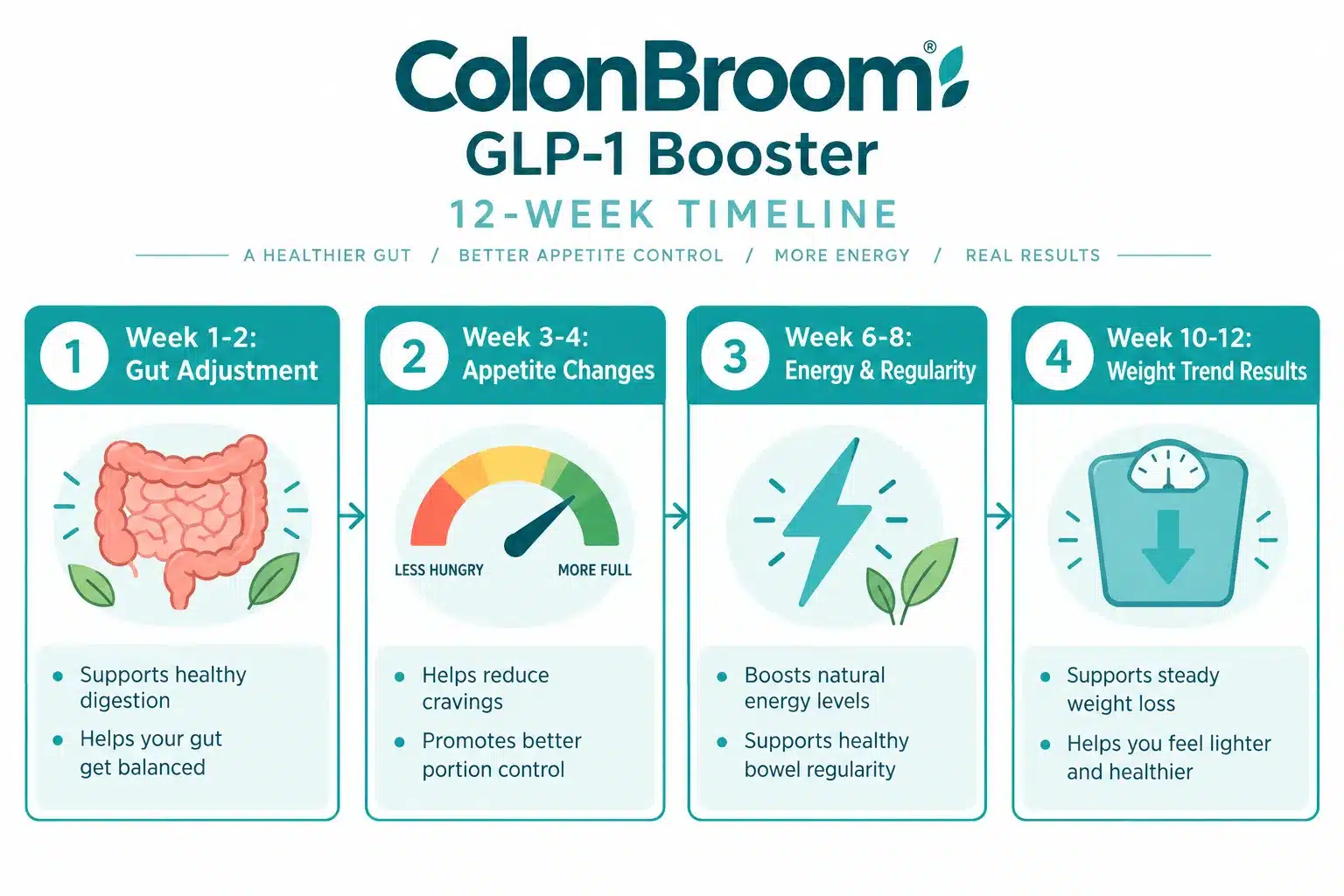
Realistic timeline based on colonbroom glp 1 booster reviews and fiber research:
- Days 1-7: Digestive adjustment phase. Expect possible bloating or gas. Stool consistency may change.
- Weeks 2-4: Regularity typically improves. Some users begin noticing reduced between-meal hunger.
- Weeks 4-8: If appetite reduction is going to occur, it usually becomes more consistent during this window.
- Weeks 8-12: Any weight trend becomes visible, particularly in users who have also made dietary adjustments.
Before and after reality check: User-submitted before and after photos on the brand’s website and social media should be viewed with appropriate skepticism. Most dramatic transformations involve concurrent dietary and lifestyle changes. The supplement alone is unlikely to produce the results shown in marketing imagery.
ColonBroom GLP-1 Booster Alternatives
If ColonBroom GLP-1 Booster does not seem like the right fit, several alternatives are worth considering depending on your goals.
For digestive support only:
- Generic psyllium husk powder (Metamucil or store brand) at a fraction of the cost
- Inulin or FOS prebiotic supplements
- Other fiber-based products like acacia fiber or partially hydrolyzed guar gum
For actual GLP-1 weight-loss therapy:
- Compounded semaglutide through a licensed telehealth provider (requires a prescription)
- Brand-name Wegovy or Ozempic through a physician
- Tirzepatide (Mounjaro/Zepbound) for dual GIP/GLP-1 action
For structured weight-loss programs:
- Meal-replacement plans like Nutrisystem provide caloric structure alongside community support
- Medically supervised weight-loss programs that combine dietary coaching with GLP-1 prescriptions where appropriate
For users interested in other supplement-based metabolic products, Gluco Cleanse Tea reviews and Leptozan reviews cover similar product categories with comparable evidence levels.
ColonBroom GLP-1 Booster Reviews: Real-World Pros and Cons
Pros- Core ingredient (psyllium husk) has strong evidence for digestive support
- No prescription required; widely accessible
- Mild, manageable side effect profile for most adults
- Significantly more affordable than prescription GLP-1 drugs
- May support satiety when combined with dietary changes
- Not a pharmaceutical GLP-1 agent; cannot replicate Ozempic results
- Evidence for the finished formula’s weight-loss efficacy is limited
- Exact ingredient dosages not always clearly disclosed
- Subscription auto-renewal terms require careful review
- Bloating and gas common in the first 1-2 weeks
Final Verdict: Is ColonBroom GLP-1 Booster Worth It?
ColonBroom GLP-1 Booster is a legitimate fiber supplement with reasonable ingredients and a modest evidence base for digestive and satiety support. It is not a scam, but it is also not a weight-loss medication.
Consider it if: You want a low-risk daily fiber supplement to support digestive regularity and mild appetite control, you understand the evidence is limited for weight loss, and you are pairing it with genuine dietary changes.
Skip it if: You need clinically meaningful weight loss, you have relevant GI contraindications, or you are expecting the appetite suppression that only prescription GLP-1 therapy can deliver.
My editorial assessment: The “GLP-1 booster” branding is clever marketing that capitalizes on the current interest in GLP-1 medications. The product itself is essentially a well-formulated fiber supplement. For its actual category, it performs reasonably well. The problem is the gap between what the name implies and what the product can realistically deliver.
Frequently Asked Questions
Is ColonBroom GLP-1 Booster safe?
For most healthy adults, yes. The ingredients are well-tolerated and the side effects are primarily mild GI symptoms during the adjustment period. People with bowel obstruction history, certain GI conditions, or those on medications that may interact with fiber should consult a clinician first.
How long does ColonBroom GLP-1 Booster take to work?
Digestive changes typically appear within 5 to 14 days. Appetite-related effects, if they occur, are usually noticeable by weeks 3 to 4. Meaningful weight trends require at least 8 to 12 weeks of consistent use alongside dietary adjustments.
Does ColonBroom GLP-1 Booster contain semaglutide?
No. It contains no pharmaceutical GLP-1 compounds. It is a dietary supplement, not a medication.
Can I take ColonBroom GLP-1 Booster with my current medications?
Psyllium husk can slow the absorption of some oral medications. Take your medications at least one to two hours before or after the supplement. Consult your pharmacist or doctor if you are on diabetes medications, thyroid drugs, or anticoagulants.
What happens if I stop taking ColonBroom GLP-1 Booster?
Digestive regularity may return to baseline over one to two weeks. There is no known dependency or withdrawal effect. Any weight-related benefit is also likely to reverse if dietary habits do not change.
Is ColonBroom GLP-1 Booster a scam?
No. It is a real product with real ingredients. The concern is not fraud but rather marketing language that overstates the connection to pharmaceutical GLP-1 therapy. Manage expectations accordingly.
Where is ColonBroom manufactured?
ColonBroom products are manufactured in the United States in facilities that are reported to be GMP-certified, though third-party testing certification should be verified on the current product label.
Does ColonBroom GLP-1 Booster have a money-back guarantee?
The brand has historically offered a limited money-back window (often 14 days). Confirm the current policy on the official website before purchasing, as terms change.
Where can I buy ColonBroom GLP-1 Booster?
The primary purchase channel is the official ColonBroom website. It is also available on Amazon. Buying from the official site typically offers the best bundle pricing and access to the refund policy.
How does it compare to other GLP-1 supplements?
Similar products like Shed GLP-1 use comparable fiber and prebiotic formulas. None of them replicate pharmaceutical GLP-1 potency. The differences between them are mostly in flavoring, price, and minor formula variations rather than clinical outcomes.
Can I use ColonBroom GLP-1 Booster while on Ozempic?
Theoretically possible, but adding extra fiber to an already GLP-1-suppressed appetite could worsen GI side effects. Discuss with your prescribing physician before combining.
Is it worth the price compared to plain psyllium husk?
If digestive support is your only goal, plain psyllium husk powder costs far less and delivers the same core benefit. You are paying a premium for the branding, flavoring, and the addition of inulin and chromium, which have moderate supporting evidence.
7 Best GLP-1 Providers Ranked: Accreditation, Flexibility & Support Compared (2026 Update)
32,000+ Patients Can't All Be Wrong: See the Top-Rated GLP-1 Providers: Compared on accreditation, plan flexibility, and patient support — updated for 2026.
BMI MD GLP-1 Microdosing Plan
- Specialized microdosing options (sublingual drops or low-dose injections)
- Ideal for maintaining weight or tapering off higher doses safely
- Fully bundled plan with no hidden monthly platform memberships
DirectMeds Weight Loss Solutions
- Sourced from accredited, state-licensed 503A compounding pharmacies
- No-frills high-volume savings passed directly to the patient
- Includes clinical consultation and cold-chain shipping updates
MEDVi Flat-Rate Telehealth
- Flat monthly rate holds steady even at maximum maintenance doses
- No dosage upcharges or graduation fee penalties
- Offers both injectable and advanced oral thin-film delivery options
Gala GLP-1 Care Program
- All-inclusive plan with no standalone membership costs
- Continuous text-based messaging access with state-licensed clinicians
- Temperature-controlled, cold-chain medication shipping included
Measured GLP-1 Metabolic Health
- Comprehensive metabolic health screening and expert intake analysis
- Predictable long-term budgeting with stable plan pricing
- High-end responsive dashboard with integrated diagnostic support
Refills GLP-1 (TryRefills Plan)
- Flat rate holds steady as titration scales up
- Includes clinical guides for active side-effect management
- Bundles in foundational nutritional strategies alongside medication
AltRx GLP-1 Transactional Reorders
- Zero recurring auto-billing — pay entirely on a transactional basis
- Rapid text-to-order format saves time for experienced patients
- Provides both injectable forms and fast-dissolving tablet variations
Conclusion
ColonBroom GLP-1 Booster occupies a specific, honest niche: it is a fiber-forward supplement that may support digestive regularity and mild satiety, and it uses the GLP-1 connection as a marketing frame to appeal to people interested in the current wave of weight-loss medications.
The colonbroom glp 1 booster reviews from real users confirm that it works reasonably well for what it actually is, which is a fiber supplement, not a pharmaceutical. For adults with digestive complaints who want an accessible, low-risk daily supplement, it is worth considering. For adults who need meaningful weight loss and appetite control, the evidence points toward prescription GLP-1 therapy as the more effective path.
Actionable next steps:
- If digestive support is your primary goal, compare the per-serving cost of ColonBroom GLP-1 Booster against plain psyllium husk before deciding.
- If weight loss is your primary goal, consult a clinician about whether prescription GLP-1 therapy is appropriate for you. Our guide to semaglutide tablets and reviews is a useful starting point.
- If you purchase ColonBroom GLP-1 Booster, start with half a serving for the first week and drink at least 8 oz of water with each dose to minimize GI side effects.
- Review the subscription terms carefully before enrolling in auto-renewal.
- Track your results over at least 8 weeks before drawing conclusions about effectiveness.
References
- Baxter NT, Schmidt AW, Venkataraman A, Kim KS, Waldron C, Martens EC, Martens EC, Schloss PD. “Dynamics of Human Gut Microbiota and Short-Chain Fatty Acids in Response to Dietary Interventions with Three Fermentable Fibers.” mBio. 2019. https://doi.org/10.1128/mBio.02566-18
- Chambers ES, Viardot A, Psichas A, et al. “Effects of targeted delivery of propionate to the human colon on appetite regulation, body weight maintenance and adiposity in overweight adults.” Gut. 2015. https://doi.org/10.1136/gutjnl-2014-307913
- Gibb RD, McRorie JW Jr, Russell DA, Hasselblad V, D’Alessio DA. “Psyllium fiber improves glycemic control proportional to loss of glycemic control: a meta-analysis of data in euglycemic subjects, patients at risk of type 2 diabetes mellitus, and patients being treated for type 2 diabetes mellitus.” American Journal of Clinical Nutrition. 2015. https://doi.org/10.3945/ajcn.115.106989
- Holst JJ. “The physiology of glucagon-like peptide 1.” Physiological Reviews. 2007. https://doi.org/10.1152/physrev.00034.2006
- U.S. Food and Drug Administration. “Dietary Supplements.” FDA.gov. https://www.fda.gov/food/dietary-supplements


