
glp 1 patch reviews
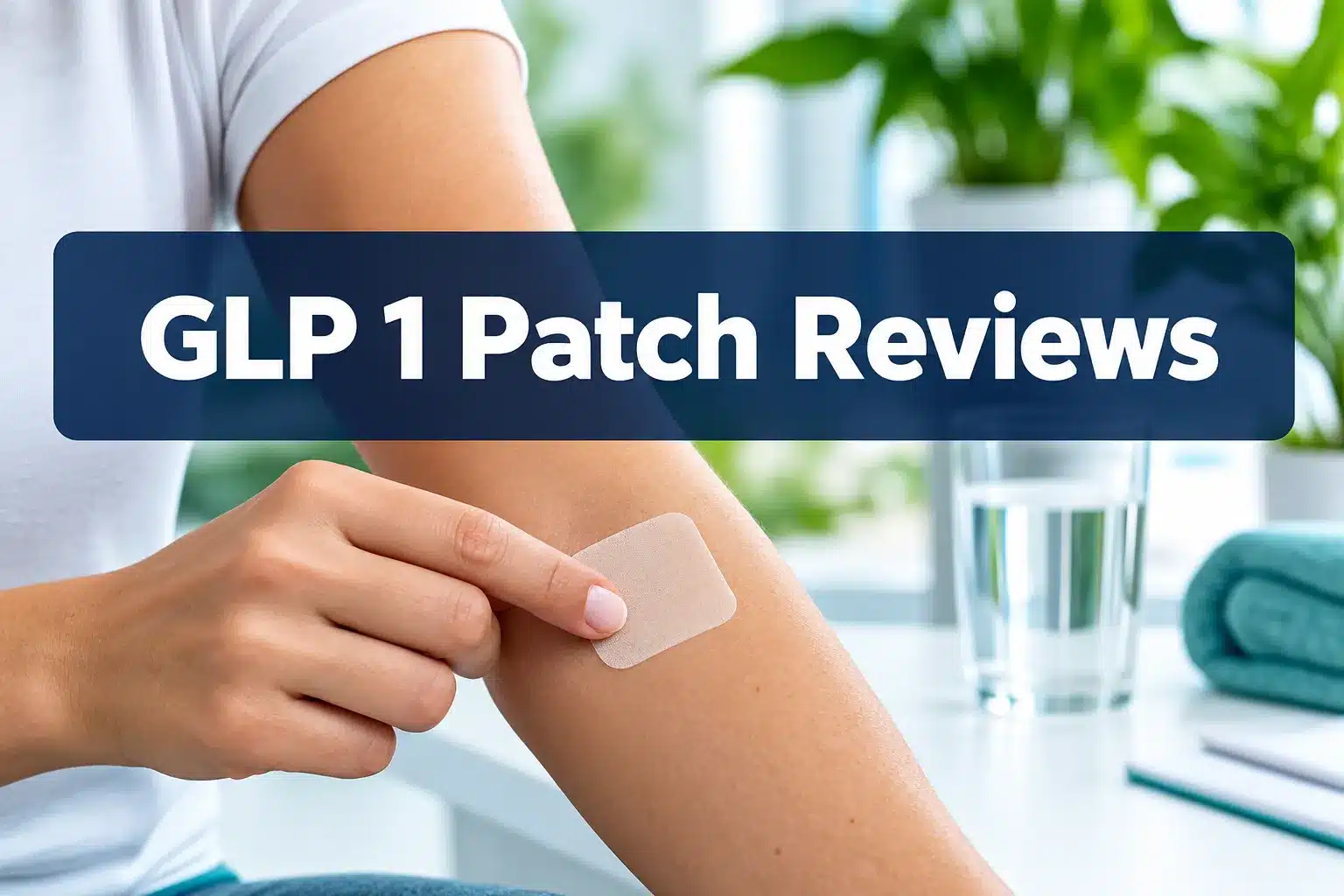
Last updated: September 25, 2026
Quick Answer
GLP-1 patches are transdermal products marketed to support weight loss and appetite control by delivering GLP-1-related compounds through the skin. Unlike FDA-approved injectable GLP-1 medications such as semaglutide or tirzepatide, most patches sold over the counter contain herbal or peptide-adjacent ingredients and have not been proven to deliver active GLP-1 hormones into the bloodstream at therapeutic levels. Based on current evidence, they are not equivalent to prescription GLP-1 medications, and buyers should approach GLP-1 patch reviews with that distinction clearly in mind.
Key Takeaways
- Most GLP-1 patches sold without a prescription do not contain actual semaglutide or liraglutide; they typically use plant-based compounds marketed as GLP-1 “stimulators.”
- No over-the-counter GLP-1 patch has FDA approval to treat obesity or type 2 diabetes as of 2026.
- Real GLP-1 receptor agonists (semaglutide, tirzepatide) are available only by prescription, as injections or oral tablets, not as transdermal patches.
- User reviews of GLP-1 patches are mixed: some report mild appetite suppression, while many report no noticeable effect.
- Side effects from OTC GLP-1 patches are generally mild (skin irritation, redness), but the ingredients vary widely between brands.
- Cost ranges from roughly $30 to $90 per month for OTC patches, compared to $800 to $1,400 per month for brand-name prescription GLP-1 medications without insurance.
- Compounded semaglutide and oral GLP-1 medications are more affordable prescription alternatives worth discussing with a clinician.
- Anyone with diabetes, cardiovascular disease, or who takes prescription medications should consult a doctor before using any GLP-1 patch.
What Is a GLP-1 Patch and How Does It Work?
A GLP-1 patch is a transdermal adhesive product worn on the skin, designed to deliver compounds that may influence glucagon-like peptide-1 (GLP-1) activity in the body. GLP-1 is a naturally occurring hormone that signals fullness to the brain, slows gastric emptying, and stimulates insulin release after eating.
7 Best GLP-1 Providers Ranked: Accreditation, Flexibility & Support Compared (2026 Update)
32,000+ Patients Can't All Be Wrong: See the Top-Rated GLP-1 Providers. We compared the leading online GLP-1 providers based on program features, clinical support, convenience, and overall value.
BMI MD GLP-1 Microdosing Plan
- Specialized microdosing options, including sublingual drops and low-dose injections
- Designed for people interested in maintaining weight or gradually adjusting treatment
- Bundled program structure without a separate monthly platform membership
- Online access makes the process convenient from home

DirectMeds Weight Loss Solutions
- Online weight-loss program with a straightforward patient experience
- Compounded medication options through state-licensed compounding pharmacies
- Includes clinical consultation as part of the process
- Provides shipping updates to help patients track their orders
MEDVi Flat-Rate Telehealth
- Flat-rate telehealth approach designed for easier budgeting
- No dosage-based pricing increases within the advertised program structure
- Offers injectable and oral thin-film delivery options
- Includes medical screening and asynchronous provider consultations
Gala GLP-1 Care Program
- Text-based access to state-licensed clinicians
- Cold-chain medication shipping included in the program
- Month-to-month program structure
- Designed for people who value convenient ongoing support
Measured GLP-1 Metabolic Health
- Comprehensive metabolic health screening and intake analysis
- Designed around longer-term metabolic health management
- Responsive dashboard with integrated health tracking tools
- Useful option for patients who value a more data-focused experience
Refills GLP-1 (TryRefills Plan)
- Clinical guidance designed to help patients manage common treatment concerns
- Includes foundational nutritional strategies alongside medication
- Designed around predictable ongoing treatment
- No hidden startup or processing fees according to the program information provided
AltRx GLP-1 Transactional Reorders
- Transactional reorder model without recurring auto-billing
- Designed for patients who already understand their treatment routine
- Fast text-to-order process for convenient reorders
- Offers injectable and fast-dissolving tablet variations
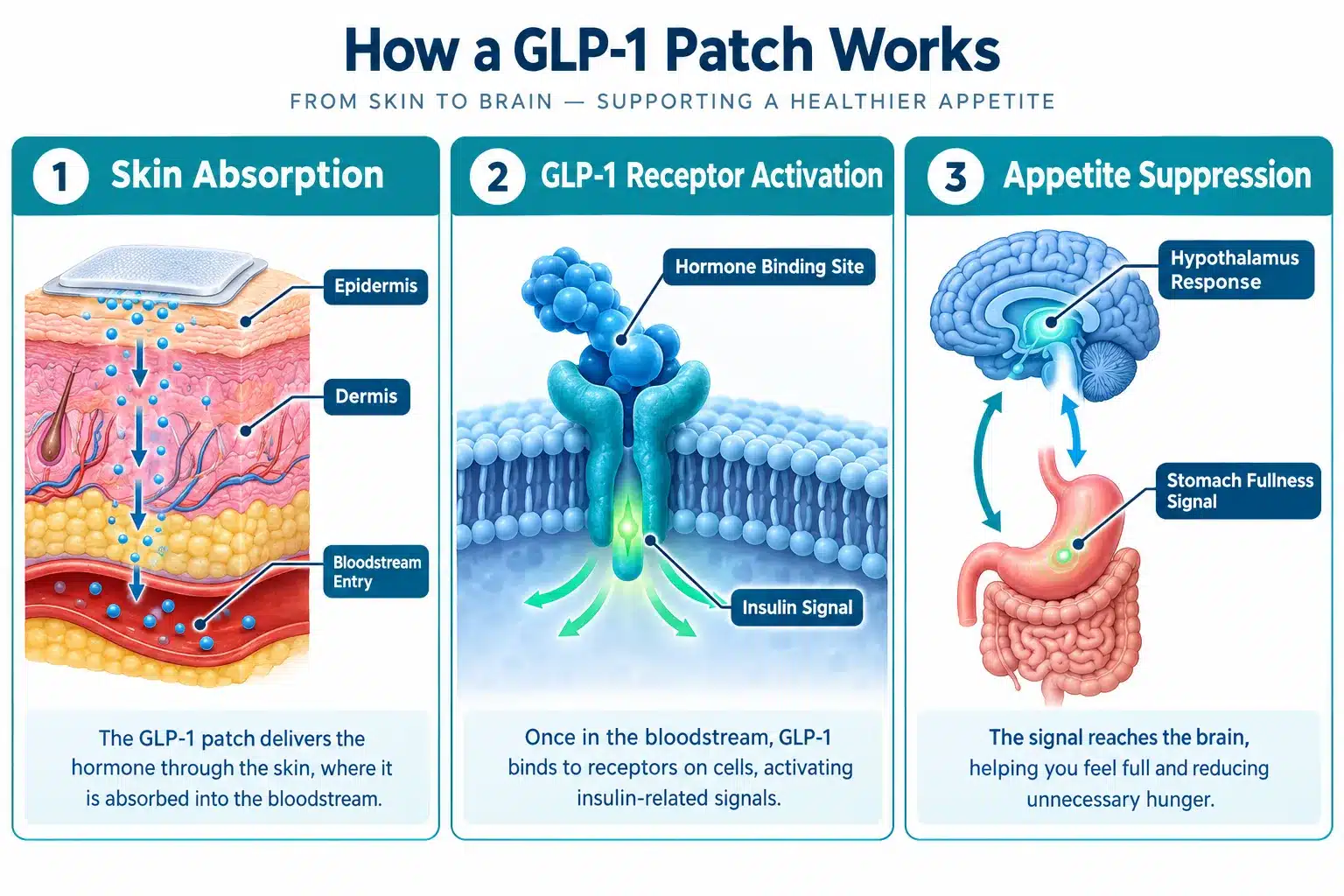
Here is where the distinction matters most: pharmaceutical GLP-1 receptor agonists (like semaglutide) work because they are structurally similar to human GLP-1 and bind directly to GLP-1 receptors. Over-the-counter patches cannot legally contain semaglutide or liraglutide. Instead, they typically include ingredients such as:
- Berberine, a plant alkaloid with some evidence for blood sugar regulation (moderate evidence, primarily from oral studies)
- Gymnema sylvestre, an herb traditionally used to reduce sugar cravings (limited human trial data)
- African mango extract, studied for modest effects on weight and lipids (limited evidence)
- Green tea extract (EGCG), associated with small increases in metabolic rate (moderate evidence for oral use)
- Chromium picolinate, may support insulin sensitivity at adequate doses (mixed evidence)
The core scientific problem is that most of these ingredients have only been studied in oral form. Transdermal delivery of large herbal molecules is significantly less efficient than oral ingestion, and no peer-reviewed study as of 2026 has confirmed that any OTC GLP-1 patch delivers these compounds into the bloodstream at clinically meaningful concentrations.
Bottom line: OTC GLP-1 patches may have mild supportive effects for some users, but they do not replicate the mechanism of prescription GLP-1 medications.
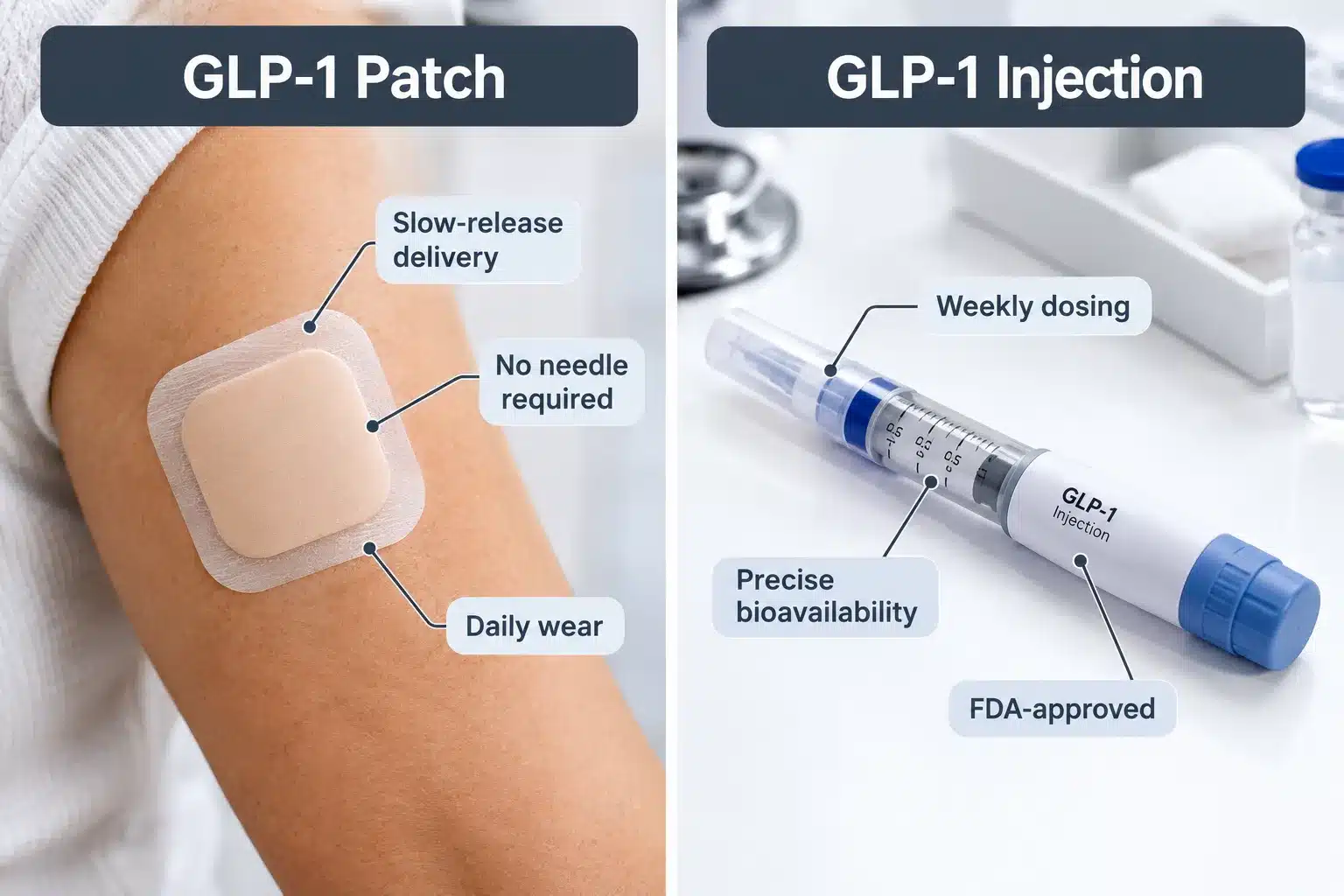
GLP-1 Patch vs Injections: Which Is Better?
Prescription GLP-1 injections (semaglutide, tirzepatide) are significantly more effective than any current OTC patch for weight loss and blood sugar control. The clinical evidence for injectable GLP-1 medications is strong; the evidence for OTC patches is limited to absent.
| Feature | OTC GLP-1 Patch | Prescription GLP-1 Injection |
|---|---|---|
| Active ingredient | Herbal/plant compounds | Semaglutide or tirzepatide |
| FDA approval | No | Yes (for specific indications) |
| Avg. weight loss (clinical) | Not established | 10-22% body weight (per NEJM trials) |
| Requires prescription | No | Yes |
| Monthly cost (est.) | $30,$90 | $800,$1,400 (brand-name) |
| Delivery method | Transdermal patch | Subcutaneous injection |
| Side effect profile | Mild (skin irritation) | Nausea, vomiting, GI effects |
For people who cannot access or afford prescription GLP-1 medications, OTC patches may feel like a reasonable bridge. But they should not be treated as equivalent. If cost is the barrier to prescription GLP-1 therapy, exploring compounded semaglutide options or semaglutide tablets may be a more effective path.
GLP-1 Patch vs Oral Medication Comparison
Oral GLP-1 medications (such as Rybelsus, the oral form of semaglutide) are prescription-only and have documented clinical efficacy. OTC GLP-1 patches contain different compounds entirely and have not been tested head-to-head against oral GLP-1 medications in clinical trials.
If you’re weighing options:
- Choose oral prescription GLP-1 (e.g., Rybelsus) if you want a needle-free, clinically proven option and have access to a prescribing clinician.
- Choose an OTC GLP-1 patch only if you understand it is a wellness supplement, not a medication, and you want a low-risk, low-cost option to support lifestyle changes.
- Consider compounded semaglutide if cost is your main barrier to prescription therapy. See our breakdown of tirzepatide patient reviews and semaglutide real results for context.
Best GLP-1 Patches in 2026: Reviews of Popular Brands
No single OTC GLP-1 patch has strong clinical evidence behind it, but some brands are more transparent about their ingredients and dosing than others. Here is what current GLP-1 patch reviews reveal about the most searched products.
Kind Patches (GLP-1 Weight Loss Patch)
Kind Patches markets a transdermal patch containing berberine, Gymnema sylvestre, and chromium. Our detailed Kind Patches review found that the ingredient list is transparent, but the transdermal bioavailability of berberine specifically is not well-documented in peer-reviewed literature. User reviews are mixed: some report reduced cravings after two to three weeks, while others report no change.
Evidence level: Limited. Best for: Adults wanting a low-risk supplement alongside diet changes.
Purisaki Berberine Patches
Purisaki focuses specifically on berberine delivery. Our Purisaki berberine patch review notes that berberine has moderate evidence for blood sugar and lipid support when taken orally, but transdermal absorption studies are lacking. Some users report mild digestive comfort improvements.
Evidence level: Limited for transdermal use. Best for: People interested in berberine who prefer patches over capsules.
Shed GLP-1
Shed positions itself as a GLP-1 “activator” patch. Our Shed GLP-1 review found a proprietary blend that limits dose transparency. Without knowing exact ingredient amounts, it is difficult to assess whether any active compound reaches a therapeutic threshold.
Common mistake: Buyers assume “GLP-1” in the product name means the patch contains actual semaglutide. It does not.
Does a GLP-1 Patch Work for Weight Loss?
For meaningful, clinically significant weight loss, OTC GLP-1 patches do not have the evidence to support strong claims. Prescription GLP-1 medications produce 10-22% body weight reduction in clinical trials (New England Journal of Medicine, 2021-2023). No OTC patch has replicated this in a controlled study.
That said, some users in GLP-1 patch reviews report:
- Reduced appetite and fewer cravings, particularly for sugar
- Modest weight loss of 2-5 lbs over 4-8 weeks when combined with dietary changes
- Improved energy and reduced snacking frequency
These outcomes are plausible given the ingredient profiles (berberine, chromium, Gymnema), but they are not guaranteed and likely reflect the combination of the supplement with lifestyle changes rather than the patch alone.
Decision rule: If you have 10 lbs or fewer to lose and are committed to dietary changes, an OTC patch may provide modest support. If you have significant weight to lose or a metabolic condition, discuss prescription GLP-1 options with a clinician.
GLP-1 Patch Side Effects: What to Expect
OTC GLP-1 patches have a relatively mild side effect profile compared to prescription GLP-1 injections. The most common issues reported in GLP-1 patch reviews are:
Medical Disclaimer:This article is for informational purposes only. Anyone with diabetes, cardiovascular disease, kidney disease, or who takes prescription medications should consult a licensed clinician before using any GLP-1 patch or supplement.
| Concern | What’s Known | What to Do |
|---|---|---|
| Skin irritation / redness | Common at application site | Rotate patch location daily |
| Allergic reaction | Possible with adhesive or herbal ingredients | Discontinue and consult a doctor |
| Mild GI discomfort | Reported with berberine-containing patches | Start with shorter wear time |
| Medication interactions | Berberine may interact with metformin, blood thinners | Consult a pharmacist |
| Pregnancy / breastfeeding | Safety not established for most herbal patches | Avoid unless cleared by a doctor |
Prescription GLP-1 injections carry a more significant side effect profile, including nausea, vomiting, diarrhea, and in rare cases, pancreatitis. OTC patches do not carry these risks because they do not contain active GLP-1 receptor agonists.
GLP-1 Patch Cost and Insurance Coverage
OTC GLP-1 patches are not covered by insurance because they are classified as dietary supplements, not medications. Prescription GLP-1 medications may be covered depending on your plan and diagnosis.
Estimated costs in 2026:
- OTC GLP-1 patches: $30,$90 per month
- Compounded semaglutide (prescription): $150,$400 per month (varies by pharmacy and dose)
- Brand-name Ozempic / Wegovy: $800,$1,400 per month without insurance
For people focused on cost, our guide to the cheapest pharmacy options for semaglutide breaks down where compounded options are most affordable. You can also review DirectMeds GLP-1 reviews for a telehealth-based prescription pathway.
Most OTC patch brands offer subscription pricing that reduces per-unit cost. Read subscription cancellation terms carefully before enrolling, as some brands make cancellation difficult.
Who Should Not Use GLP-1 Patches
Most healthy adults can use OTC GLP-1 patches without serious risk, but certain groups should avoid them or consult a clinician first.
Avoid or consult a doctor if you:
- Take metformin, blood thinners, or insulin (berberine interactions are possible)
- Have a history of thyroid cancer or MEN2 syndrome (relevant for prescription GLP-1s; less so for OTC, but worth noting)
- Are pregnant or breastfeeding
- Have a known adhesive or latex allergy
- Have liver or kidney disease (some herbal compounds are metabolized hepatically)
- Are under 18 years old
OTC patches are best suited for healthy adults who want supplemental appetite support alongside a structured diet and exercise plan.
GLP-1 Patch Reviews From Real Users: What People Are Saying
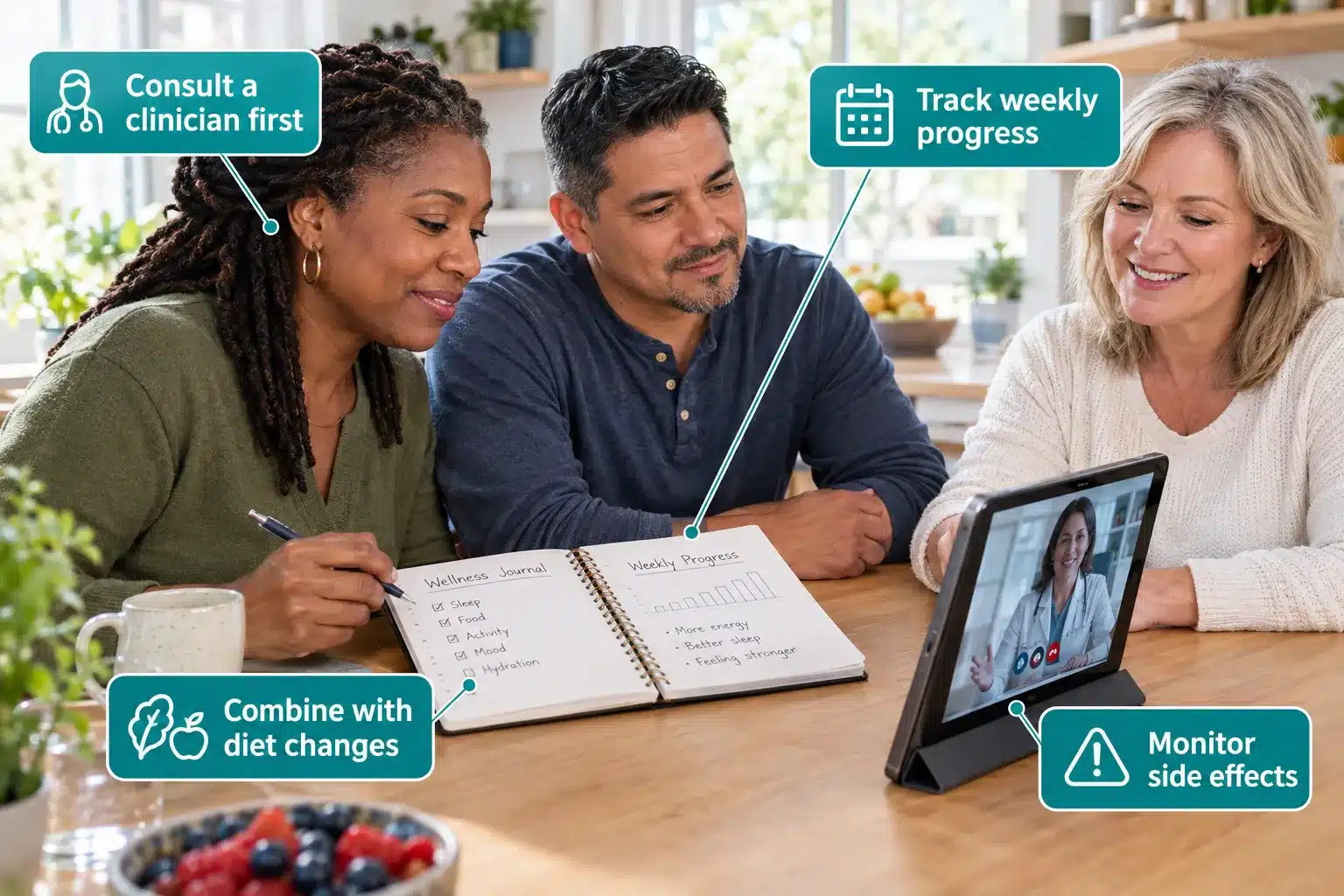
Across major retail platforms and independent forums, GLP-1 patch reviews in 2026 reveal a consistent pattern. Users who combine patches with dietary changes report the most positive outcomes. Those who use patches as a standalone solution without lifestyle changes report little to no effect.
Common positive themes in user reviews:
- “Noticed fewer cravings for sweets within two weeks”
- “Skin irritation was minimal when I rotated the patch site”
- “Not a magic fix, but helped me stay on track with my diet”
Common negative themes:
- “Saw no difference after a full month”
- “Patch adhesive left a rash on my arm”
- “Expected it to work like Ozempic, it doesn’t”
The most consistent finding: users who entered with realistic expectations (supplement, not medication) tended to rate their experience more positively than those who expected prescription-level results.
For comparison, real patient stories on compounded semaglutide show significantly stronger outcomes for those seeking clinical weight loss results.
How Long Does a GLP-1 Patch Take to Work?
Most OTC GLP-1 patch brands suggest a trial period of 4 to 8 weeks before evaluating results. This is consistent with the timeframes studied for oral berberine and similar compounds.
Realistic timeline:
- Week 1-2: Some users notice mild appetite changes; most notice nothing yet
- Week 3-4: Cravings may begin to reduce if the patch contains adequate berberine or Gymnema
- Week 6-8: Most appropriate point to assess whether the product is working for you
If you see no change after 8 weeks of consistent use combined with dietary effort, the patch is unlikely to produce results for you. This is an important edge case: some users continue purchasing for months without benefit because they attribute lack of progress to their diet rather than the product.
GLP-1 Patch Not Working: What Should You Do?
If a GLP-1 patch is not producing results after 6-8 weeks, consider these steps before giving up on GLP-1 therapy entirely.
- Confirm proper application, patches should be applied to clean, dry skin, rotated daily, and worn for the full recommended duration.
- Assess your diet, patches provide supplemental support; they cannot override a high-calorie diet.
- Check the ingredient label, if the product uses a proprietary blend without disclosed doses, you may not be getting a meaningful amount of any active ingredient.
- Consider prescription options, if you have a BMI over 30 or over 27 with a weight-related condition, you may qualify for prescription GLP-1 therapy. Telehealth platforms have made access significantly easier in 2026. Our Evolve Telemed review covers one accessible option.
- Consult a clinician, a doctor or registered dietitian can help identify whether metabolic, hormonal, or behavioral factors are limiting your progress.
GLP-1 Patch Alternatives for Diabetes and Weight Loss
If an OTC GLP-1 patch is not the right fit, several alternatives are worth considering depending on your goals and medical situation.
- Prescription injectable GLP-1s (semaglutide/Ozempic, Wegovy; tirzepatide/Mounjaro, Zepbound): strongest evidence, require prescription
- Oral prescription GLP-1 (Rybelsus): needle-free, clinically proven, requires prescription
- Compounded semaglutide: more affordable prescription option; see our compounded semaglutide review
- Oral berberine supplements: better-studied delivery route than transdermal for berberine specifically
- Structured meal programs: services like those reviewed in our Nutrisystem diabetic program reviews can support blood sugar and weight goals without medication
- Lifestyle-focused telehealth: platforms offering nutrition coaching alongside GLP-1 prescriptions
Common Mistakes People Make With GLP-1 Patches
Mistake 1: Assuming “GLP-1” in the name means the patch contains semaglutide.
It does not. OTC products cannot legally contain prescription GLP-1 receptor agonists.
Mistake 2: Using the patch without any dietary changes.
The ingredients in OTC patches are supportive, not transformative. Without caloric awareness, results will be minimal.
Mistake 3: Applying the patch to the same skin location every day.
Repeated application to the same site increases irritation risk. Rotate locations.
Mistake 4: Stopping too early.
Most herbal compounds require 4-6 weeks of consistent use before effects become noticeable.
Mistake 5: Not reading the subscription terms.
Several GLP-1 patch brands auto-enroll buyers in monthly subscriptions. Read the fine print before your first purchase.
Frequently Asked Questions
Is a GLP-1 patch the same as Ozempic?
No. Ozempic contains semaglutide, a prescription GLP-1 receptor agonist. OTC GLP-1 patches contain herbal ingredients that may support GLP-1 activity but do not contain semaglutide or any FDA-approved GLP-1 medication.
Do GLP-1 patches require a prescription?
OTC GLP-1 patches do not require a prescription. Prescription GLP-1 medications (semaglutide, tirzepatide) always require a prescription from a licensed clinician.
How long should I wear a GLP-1 patch each day?
Most brands recommend 8-12 hours of daily wear. Follow the specific instructions on your product’s label.
Can I use a GLP-1 patch if I have type 2 diabetes?
You should consult your doctor first. Some ingredients (particularly berberine) can interact with diabetes medications and may affect blood sugar levels.
Are GLP-1 patches safe for long-term use?
Long-term safety data for OTC GLP-1 patches is limited. Most herbal ingredients in these products have reasonable short-term safety profiles, but extended use beyond 6 months has not been formally studied in this delivery format.
Is there a money-back guarantee on GLP-1 patches?
This varies by brand. Many offer 30-day satisfaction guarantees, but terms differ. Confirm the return policy before purchasing, especially if you sign up for a subscription.
Can GLP-1 patches help with blood sugar control?
Some ingredients (berberine, chromium) have modest evidence for blood sugar support when taken orally. Whether transdermal delivery achieves the same effect is not confirmed by current research.
What is the best GLP-1 patch in 2026?
Based on ingredient transparency and user reviews, Kind Patches and Purisaki are among the more credible options. Neither has clinical trial data confirming efficacy. The “best” patch is one with a fully disclosed ingredient list, reasonable cost, and no auto-renewal traps.
Can I use a GLP-1 patch while taking metformin?
Berberine, found in many GLP-1 patches, may have additive effects with metformin. Consult your prescribing physician before combining them.
Are GLP-1 patches a scam?
They are not outright scams, but many are marketed with misleading comparisons to prescription GLP-1 medications. They are supplements with modest, unproven effects, not medications. Evaluate them on those terms.
7 Best GLP-1 Providers Ranked: Accreditation, Flexibility & Support Compared (2026 Update)
32,000+ Patients Can't All Be Wrong: See the Top-Rated GLP-1 Providers: Compared on accreditation, plan flexibility, and patient support — updated for 2026.
BMI MD GLP-1 Microdosing Plan
- Specialized microdosing options (sublingual drops or low-dose injections)
- Ideal for maintaining weight or tapering off higher doses safely
- Fully bundled plan with no hidden monthly platform memberships
DirectMeds Weight Loss Solutions
- Sourced from accredited, state-licensed 503A compounding pharmacies
- No-frills high-volume savings passed directly to the patient
- Includes clinical consultation and cold-chain shipping updates
MEDVi Flat-Rate Telehealth
- Flat monthly rate holds steady even at maximum maintenance doses
- No dosage upcharges or graduation fee penalties
- Offers both injectable and advanced oral thin-film delivery options
Gala GLP-1 Care Program
- All-inclusive plan with no standalone membership costs
- Continuous text-based messaging access with state-licensed clinicians
- Temperature-controlled, cold-chain medication shipping included
Measured GLP-1 Metabolic Health
- Comprehensive metabolic health screening and expert intake analysis
- Predictable long-term budgeting with stable plan pricing
- High-end responsive dashboard with integrated diagnostic support
Refills GLP-1 (TryRefills Plan)
- Flat rate holds steady as titration scales up
- Includes clinical guides for active side-effect management
- Bundles in foundational nutritional strategies alongside medication
AltRx GLP-1 Transactional Reorders
- Zero recurring auto-billing — pay entirely on a transactional basis
- Rapid text-to-order format saves time for experienced patients
- Provides both injectable forms and fast-dissolving tablet variations
Conclusion
GLP-1 patch reviews in 2026 tell a consistent story: these products occupy a real but limited space in the weight loss market. They are not equivalent to prescription GLP-1 medications, and anyone expecting Ozempic-level results from a transdermal patch will be disappointed. However, for adults who want a low-risk, affordable supplement to support appetite control alongside genuine lifestyle changes, some OTC patches offer reasonable ingredient profiles at accessible price points.
Your actionable next steps:
- Set realistic expectations, treat any OTC GLP-1 patch as a supplement, not a medication.
- Read the ingredient label, choose brands that disclose exact ingredient amounts rather than hiding behind proprietary blends.
- Combine with dietary changes, no patch works in isolation from caloric awareness.
- If you qualify for prescription GLP-1 therapy, explore compounded semaglutide or telehealth-based prescribing pathways, which are significantly more affordable than brand-name options.
- Consult a clinician if you have diabetes, take prescription medications, or have a BMI that qualifies you for prescription treatment.
The gap between OTC patches and prescription GLP-1 medications is wide. Knowing which side of that gap you are on is the most important decision you can make before spending a dollar on either.
References
- Wilding, J.P.H., et al. “Once-Weekly Semaglutide in Adults with Overweight or Obesity.” New England Journal of Medicine, 2021. https://www.nejm.org/doi/full/10.1056/NEJMoa2032183
- Jespersen, S., et al. “Tirzepatide Once Weekly for the Treatment of Obesity.” New England Journal of Medicine, 2022. https://www.nejm.org/doi/full/10.1056/NEJMoa2206038
- Yin, J., et al. “Efficacy of Berberine in Patients with Type 2 Diabetes Mellitus.” Metabolism, 2008. https://www.metabolismjournal.com/article/S0026-0495(08)00049-X/fulltext
- U.S. Food and Drug Administration. “Dietary Supplements.” FDA.gov. https://www.fda.gov/food/dietary-supplements
- Astell, K.J., et al. “A Pilot Study Investigating the Effect of Gymnema sylvestre Supplementation on Glycemia.” Journal of Dietary Supplements, 2013.


