
compound pharmacy glp 1 reviews
Last updated: September 25, 2026
Quick Answer: Compounded GLP-1 medications, primarily semaglutide and tirzepatide prepared by licensed compounding pharmacies, have become a widely used alternative to brand-name drugs like Ozempic and Wegovy for adults seeking affordable weight loss support. Most compound pharmacy GLP-1 reviews report meaningful appetite suppression and gradual weight loss, though quality, safety, and results vary significantly depending on which pharmacy you use and whether a licensed provider supervises your care.
Key Takeaways
- Compounded GLP-1 medications contain the same active ingredients as brand-name versions but are prepared by licensed pharmacies at a lower price point.
- Most patients in compound pharmacy GLP-1 reviews report noticeable appetite reduction within the first two to four weeks.
- Compounded GLP-1 drugs are not FDA-approved as finished products, but they can be legally dispensed under specific federal guidelines when prepared by accredited pharmacies.
- A valid prescription from a licensed provider is always required, regardless of where you order.
- Cost savings compared to brand-name GLP-1 drugs can be substantial, often ranging from 60% to 80% less per month (based on publicly available pharmacy pricing as of 2026).
- Side effects mirror those of brand-name GLP-1 drugs: nausea, fatigue, and gastrointestinal discomfort are most commonly reported.
- Choosing an accredited, PCAB-certified or 503B-registered pharmacy is the single most important factor in getting a safe, effective product.
- Insurance rarely covers compounded GLP-1 medications, so out-of-pocket cost planning matters.
What Is a Compound Pharmacy GLP-1?
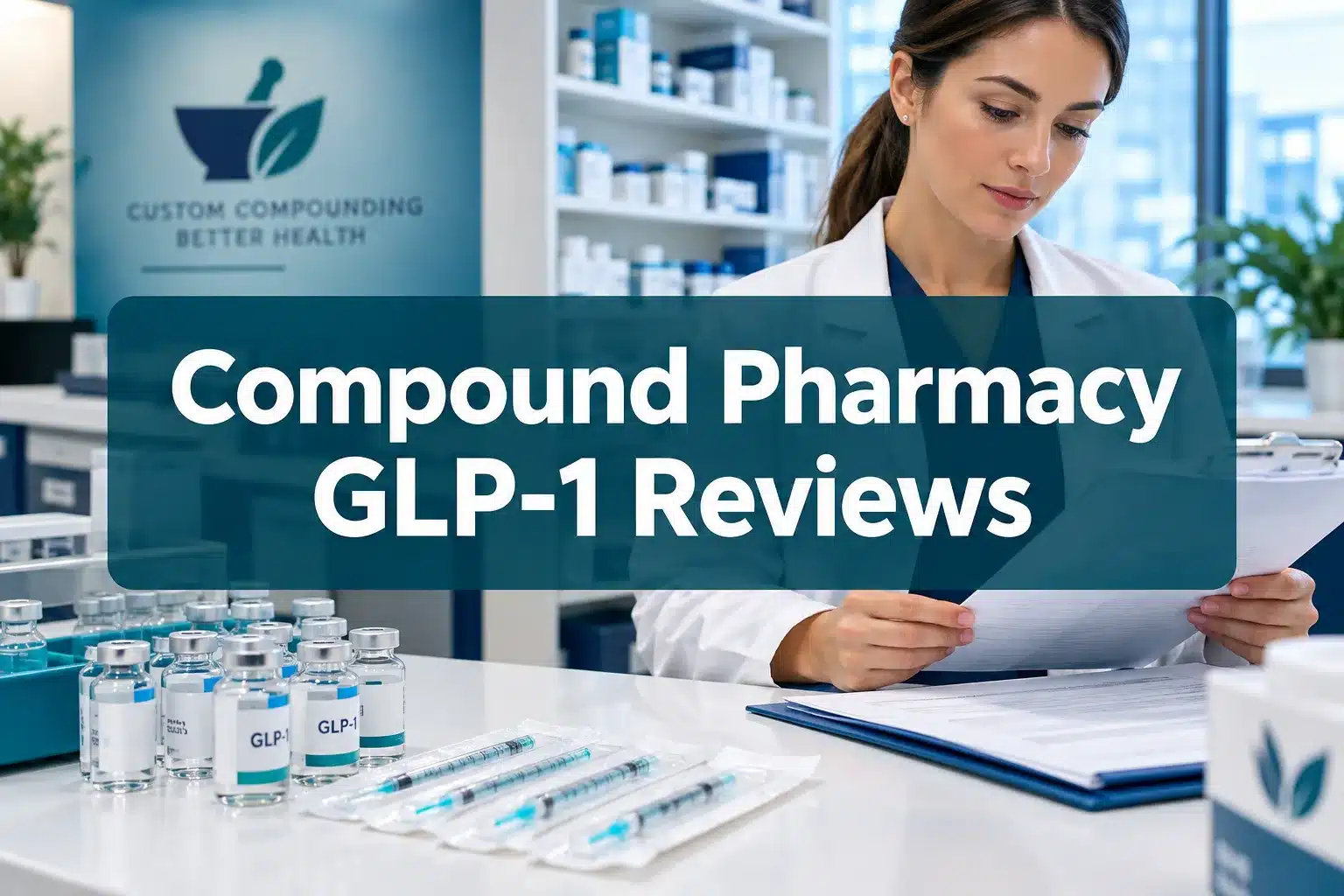
A compound pharmacy GLP-1 is a glucagon-like peptide-1 receptor agonist medication, most commonly semaglutide or tirzepatide, that a licensed compounding pharmacy prepares from pharmaceutical-grade ingredients rather than manufacturing it as a finished branded product. These pharmacies mix, measure, and package the medication to a prescriber’s specifications, often as an injectable solution.
7 Best GLP-1 Providers Ranked: Accreditation, Flexibility & Support Compared (2026 Update)
32,000+ Patients Can't All Be Wrong: See the Top-Rated GLP-1 Providers. We compared the leading online GLP-1 providers based on program features, clinical support, convenience, and overall value.
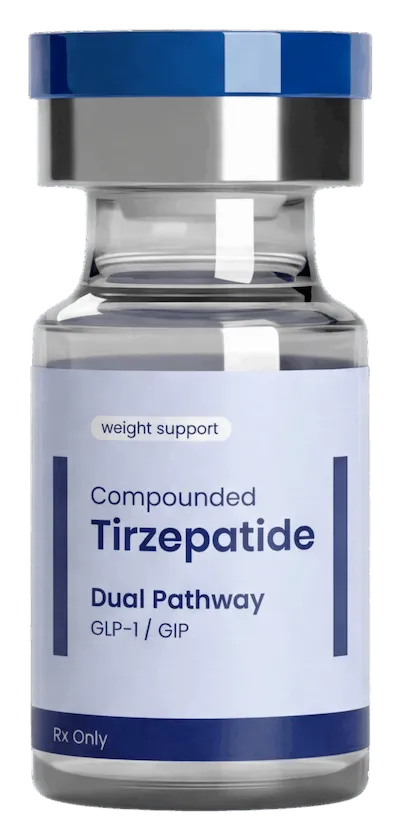
BMI MD GLP-1 Microdosing Plan
- Specialized microdosing options, including sublingual drops and low-dose injections
- Designed for people interested in maintaining weight or gradually adjusting treatment
- Bundled program structure without a separate monthly platform membership
- Online access makes the process convenient from home

DirectMeds Weight Loss Solutions
- Online weight-loss program with a straightforward patient experience
- Compounded medication options through state-licensed compounding pharmacies
- Includes clinical consultation as part of the process
- Provides shipping updates to help patients track their orders
MEDVi Flat-Rate Telehealth
- Flat-rate telehealth approach designed for easier budgeting
- No dosage-based pricing increases within the advertised program structure
- Offers injectable and oral thin-film delivery options
- Includes medical screening and asynchronous provider consultations
Gala GLP-1 Care Program
- Text-based access to state-licensed clinicians
- Cold-chain medication shipping included in the program
- Month-to-month program structure
- Designed for people who value convenient ongoing support
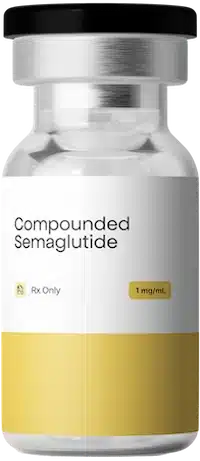
Measured GLP-1 Metabolic Health
- Comprehensive metabolic health screening and intake analysis
- Designed around longer-term metabolic health management
- Responsive dashboard with integrated health tracking tools
- Useful option for patients who value a more data-focused experience
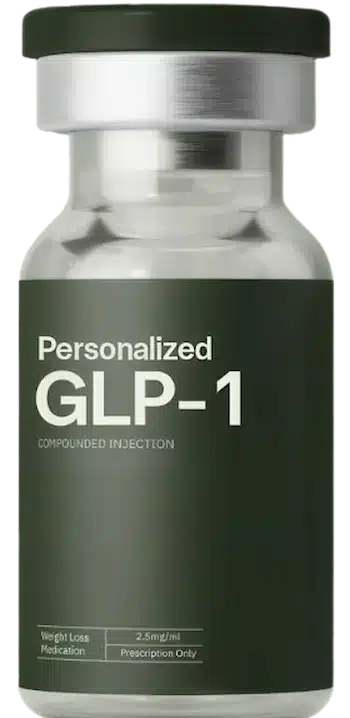
Refills GLP-1 (TryRefills Plan)
- Clinical guidance designed to help patients manage common treatment concerns
- Includes foundational nutritional strategies alongside medication
- Designed around predictable ongoing treatment
- No hidden startup or processing fees according to the program information provided
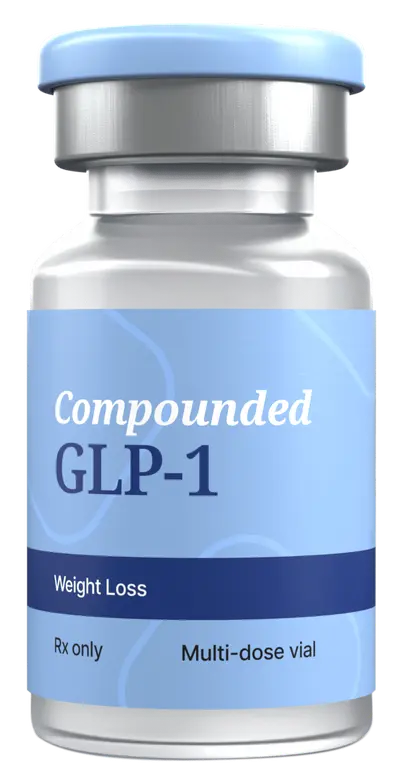
AltRx GLP-1 Transactional Reorders
- Transactional reorder model without recurring auto-billing
- Designed for patients who already understand their treatment routine
- Fast text-to-order process for convenient reorders
- Offers injectable and fast-dissolving tablet variations
GLP-1 receptor agonists work by mimicking a gut hormone that signals fullness, slows gastric emptying, and reduces appetite. The same mechanism that makes Ozempic and Wegovy effective is at work in compounded versions, because the active ingredient is chemically identical.
For a deeper background on how this category works, see this complete guide to what a compounding pharmacy GLP-1 is.
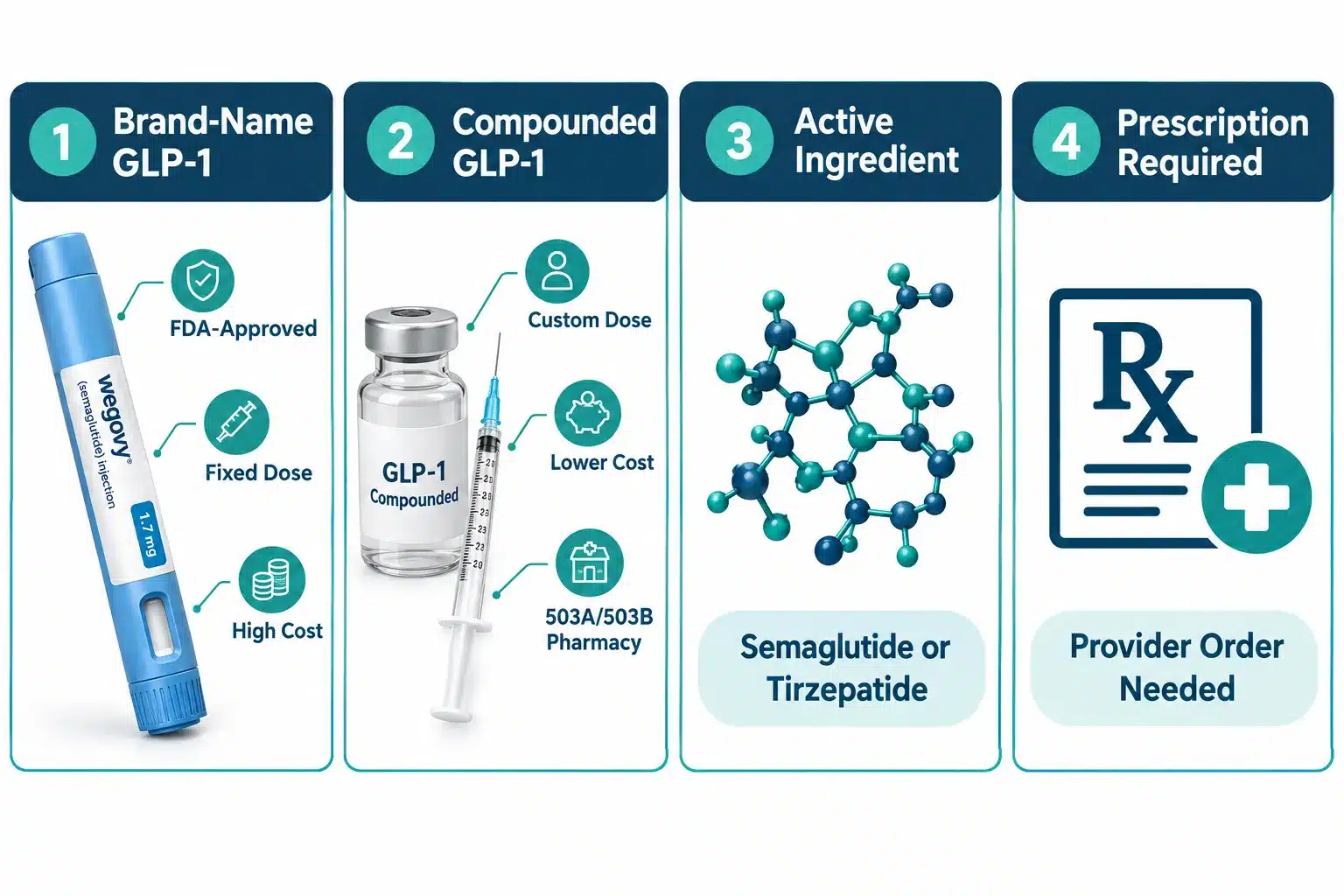
How Does Compounded GLP-1 Differ from Brand Name?
The core active ingredient is the same, but the differences in formulation, packaging, regulatory status, and pricing are meaningful. Brand-name products like Ozempic (semaglutide for type 2 diabetes) and Wegovy (semaglutide for weight management) go through full FDA approval, including clinical trials for the finished product. Compounded versions do not.
Here is a direct comparison:
| Feature | Brand-Name GLP-1 | Compounded GLP-1 |
|---|---|---|
| FDA Approval | Yes (finished product) | No (active ingredient only) |
| Active Ingredient | Semaglutide / Tirzepatide | Semaglutide / Tirzepatide |
| Prescription Required | Yes | Yes |
| Custom Dosing | Fixed doses only | Flexible titration possible |
| Typical Monthly Cost | $900,$1,400 without insurance | $150,$400 at many pharmacies |
| Availability | Retail pharmacy | Compounding pharmacy (online or local) |
Key decision rule: Choose brand-name if your insurance covers it or if you want the highest level of regulatory oversight. Choose compounded if cost is a barrier and you’re working with a provider who monitors your progress.
Is Compounded GLP-1 Safe and FDA Approved?
Compounded GLP-1 medications are not FDA-approved as finished drug products, but they are legal to dispense under federal law when prepared by a 503A or 503B-registered compounding pharmacy following USP standards. Safety depends heavily on the pharmacy’s quality controls, not just the ingredient itself.
The FDA has issued guidance about compounded semaglutide, particularly around the use of salt forms (like semaglutide sodium) versus the base form used in approved drugs. Reputable pharmacies use pharmaceutical-grade semaglutide base, not unapproved salt forms. This distinction matters for both safety and efficacy.
What to look for in a safe compounding pharmacy:
- PCAB accreditation (Pharmacy Compounding Accreditation Board)
- 503B outsourcing facility registration with the FDA
- Certificate of Analysis (COA) from a third-party lab for each batch
- Sterile compounding in a USP 797-compliant cleanroom
- Requires a valid prescription before dispensing
For more on this, read about why sterile compounding matters for GLP-1 medications.
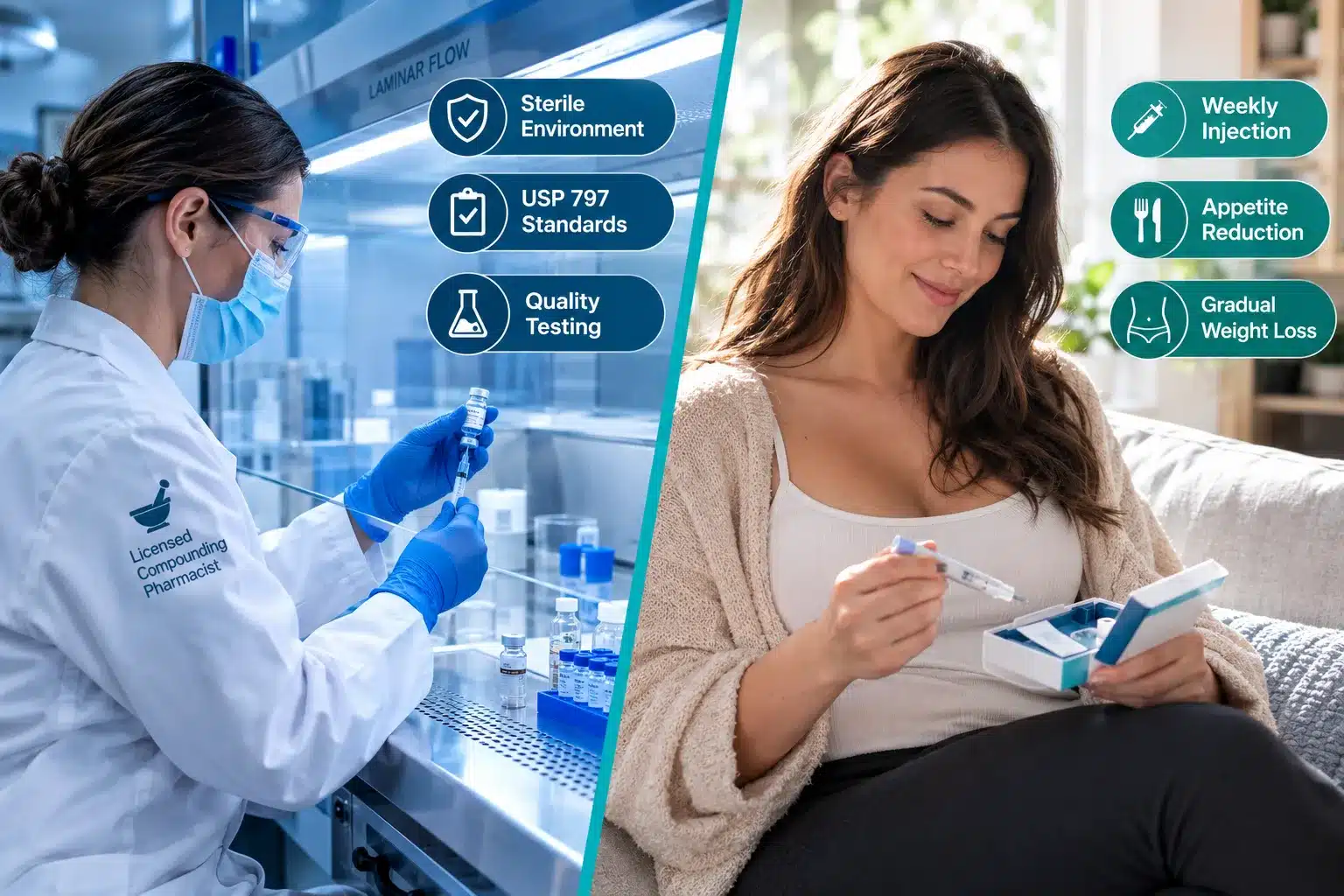
Compound Pharmacy GLP-1 Cost vs. Ozempic
The cost difference is the primary reason most patients explore compounded options. Brand-name semaglutide without insurance commonly runs $900 to over $1,300 per month at retail pharmacies as of 2026. Compounded semaglutide from accredited pharmacies typically ranges from $150 to $400 per month, depending on dose and provider fees.
That gap is significant for anyone paying out of pocket. For a detailed breakdown, see this compounding pharmacy semaglutide cost breakdown.
Factors that affect your total cost:
- Starting dose and titration schedule
- Whether the pharmacy bundles telehealth provider fees
- Subscription vs. one-time order pricing
- Shipping fees (some pharmacies include these, others do not)
- Add-ons like B12 or L-carnitine in the formulation
Best Compound Pharmacies for GLP-1 in 2026
The best compound pharmacies for GLP-1 medications are those with 503B registration or PCAB accreditation, transparent third-party testing, and a clear requirement for a valid prescription. No single pharmacy is universally “best” for every patient, because cost, location, and telehealth integration vary.
When reading compound pharmacy GLP-1 reviews, patients consistently highlight a few qualities that separate reputable providers from lower-quality ones:
- Transparent sourcing: The pharmacy discloses where its active pharmaceutical ingredient (API) comes from.
- Lab testing: Each batch has a COA available on request.
- Provider integration: A licensed prescriber reviews your health history before dispensing.
- Responsive support: Questions about dosing or side effects get answered by qualified staff.
For ranked options, see our guide to the best compounding pharmacy for semaglutide in 2026 and our picks for online compounding pharmacies for semaglutide.
Compound GLP-1 Side Effects and Risks
Side effects of compounded GLP-1 medications closely mirror those of their brand-name counterparts, because the active ingredient is the same. The most commonly reported issues in compound pharmacy GLP-1 reviews are gastrointestinal, especially in the first few weeks of use.
Common side effects:
- Nausea (most frequent, especially at dose increases)
- Vomiting or loose stools
- Fatigue or low energy in the first week
- Injection site redness or mild irritation
- Reduced appetite (this is the intended effect, but can feel uncomfortable initially)
Less common but serious risks to know:
- Pancreatitis (rare; stop use and seek care if you have severe abdominal pain)
- Thyroid C-cell changes (seen in animal studies; patients with a personal or family history of medullary thyroid carcinoma should avoid GLP-1 drugs)
- Gallbladder issues with rapid weight loss
- Hypoglycemia if combined with other diabetes medications
Who should avoid compounded GLP-1 medications:
- People with a personal or family history of medullary thyroid carcinoma or MEN2 syndrome
- Those currently pregnant or breastfeeding
- Anyone with a history of pancreatitis without provider clearance
- People who have not consulted a licensed provider
Always discuss your full medication list with your prescriber before starting. Drug interactions with insulin and sulfonylureas are particularly relevant.
How Long Does Compounded GLP-1 Take to Work?
Most patients notice appetite suppression within the first one to two weeks of starting a compounded GLP-1 medication. Meaningful weight loss, typically defined as 5% or more of body weight, generally takes eight to twelve weeks at an effective maintenance dose.
The timeline depends on your starting dose, how quickly you titrate up, your diet, and your activity level. Patients who start at very low doses to minimize side effects may take longer to reach the dose where weight loss accelerates.
Realistic expectations by timeframe:
- Weeks 1-2: Reduced hunger, possible nausea, early scale changes of 1-3 lbs
- Weeks 4-8: More consistent appetite reduction, 3-8 lbs lost on average for most patients
- Weeks 12-24: Sustained weight loss if dose is optimized; many patients report 10-20% body weight reduction over six months at therapeutic doses
“I didn’t expect much in the first month, but by week three I genuinely forgot to eat lunch for the first time in years.”, Patient review shared on a telehealth platform (paraphrased from publicly posted reviews, 2025)
For more patient experiences, see compounded semaglutide reviews from real patients.
Can I Get Compounded GLP-1 Without a Prescription?
No. Compounded GLP-1 medications are prescription drugs, and any pharmacy dispensing them without a valid prescription from a licensed provider is operating illegally. This applies to both local compounding pharmacies and online telehealth platforms.
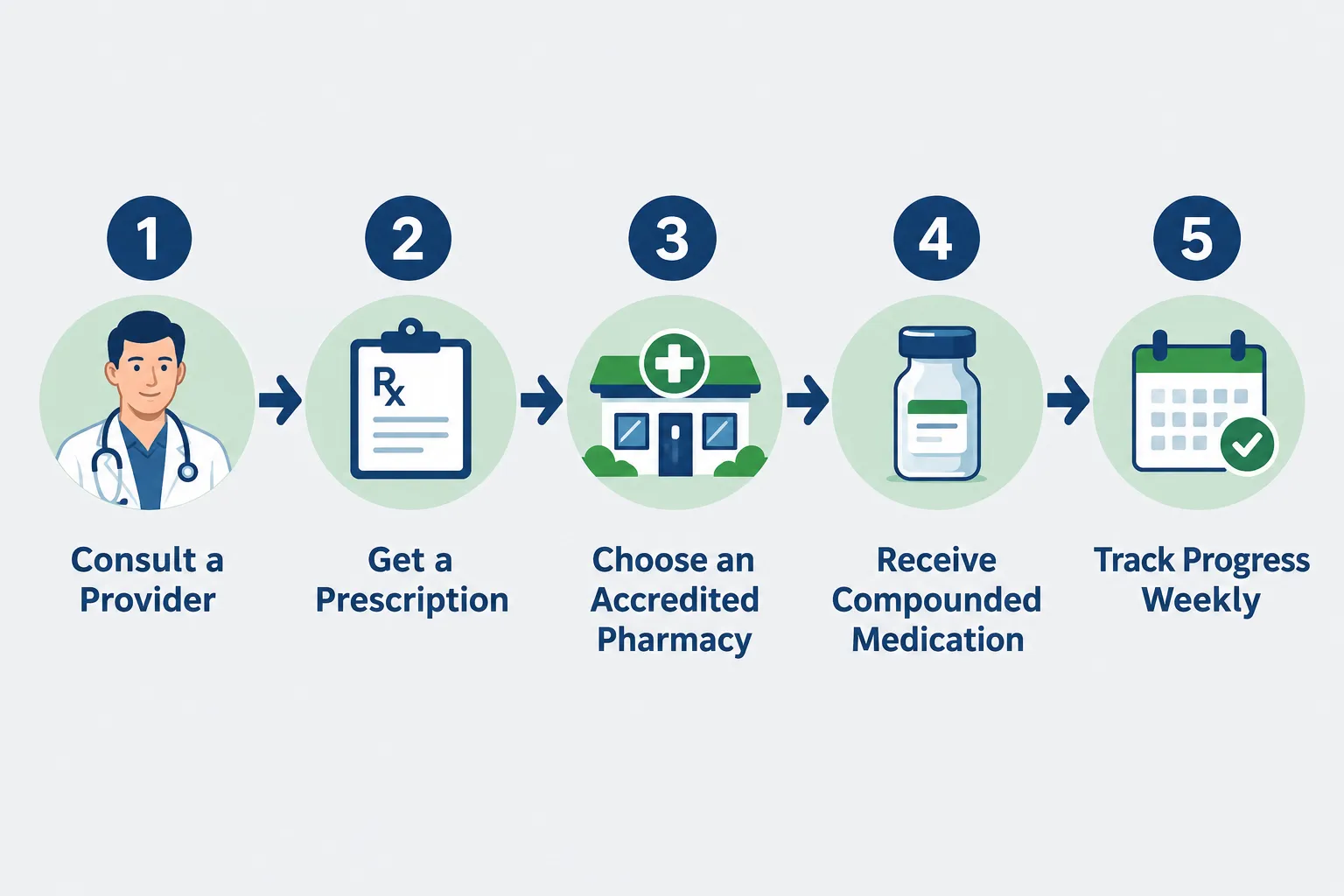
Legitimate online programs include a medical consultation, either synchronous (live video) or asynchronous (questionnaire reviewed by a provider), before a prescription is issued. If a website offers to ship you compounded semaglutide or tirzepatide without any provider involvement, treat that as a serious red flag.
To learn how to safely order through a legitimate channel, see how to order from a compounding pharmacy online.
Compound GLP-1 vs. Semaglutide: Which Is Better?
Compounded GLP-1 and semaglutide are not opposites. Semaglutide is the active ingredient in many compounded GLP-1 products. The real comparison most patients mean is: compounded semaglutide vs. brand-name semaglutide (Ozempic or Wegovy), or compounded semaglutide vs. compounded tirzepatide.
Compounded semaglutide vs. brand-name semaglutide:
The active ingredient is the same. The practical differences are cost, regulatory oversight, and flexibility in dosing. Brand-name wins on regulatory certainty; compounded wins on affordability.
Compounded semaglutide vs. compounded tirzepatide:
Tirzepatide (the active ingredient in Mounjaro and Zepbound) acts on both GLP-1 and GIP receptors, which clinical trial data suggests produces greater average weight loss than semaglutide alone. However, tirzepatide compounded formulations may cost slightly more. See our best compounding pharmacy for tirzepatide guide for current options.
Choose compounded semaglutide if: you want the most studied GLP-1 option at a lower cost than brand-name.
Choose compounded tirzepatide if: you want potentially stronger appetite suppression and greater average weight loss, and your provider agrees it’s appropriate.
Compound Pharmacy GLP-1 Weight Loss Results: What Reviews Actually Show
Across hundreds of publicly available compound pharmacy GLP-1 reviews, the most consistent finding is meaningful weight loss when patients stay on the medication for at least three months and pair it with dietary changes. Results vary widely based on dose, adherence, and lifestyle factors.
What the reviews consistently report:
- Appetite suppression is the most universally noted effect, often described as “food noise” going quiet
- Average self-reported weight loss in reviews ranges from 10 to 25 lbs over three to six months
- Patients who titrate slowly report fewer side effects but slower initial results
- Those who stop the medication without a maintenance plan often report weight returning
Common problems reported in reviews:
- Nausea that disrupts daily life, especially at higher doses
- Inconsistent product quality from less reputable pharmacies
- Delayed shipping causing gaps in dosing
- Confusion about injection technique for first-time users
How to Know If a Compound Pharmacy Is Legit
A legitimate compounding pharmacy for GLP-1 medications will always require a prescription, hold verifiable accreditation, and provide batch-specific testing documentation on request. Patients can verify a pharmacy’s status through the NABP (National Association of Boards of Pharmacy) website or by checking the FDA’s list of registered 503B outsourcing facilities.
Quick verification checklist:
- Requires a prescription before dispensing (non-negotiable)
- Listed on NABP’s database or FDA’s 503B registry
- Provides a Certificate of Analysis for each batch
- Has a licensed pharmacist available to answer questions
- Does not make disease-treatment claims or guarantee specific weight loss numbers
- Has a physical address and state pharmacy license number
For a full walkthrough, see our guide on how to verify a legitimate compounding pharmacy.
Does Insurance Cover Compounded GLP-1?
Insurance almost never covers compounded GLP-1 medications. Most health plans that cover GLP-1 drugs cover only FDA-approved brand-name products, and even those often require prior authorization, a documented BMI threshold, or a type 2 diabetes diagnosis.
Some patients use HSA or FSA funds to pay for compounded GLP-1 medications, which can reduce the effective out-of-pocket cost. A few employer-sponsored plans have begun covering telehealth weight management programs that include compounded medications, but this is still uncommon as of 2026.
If you want to explore coverage options:
- Ask your insurance plan specifically about GLP-1 coverage for weight management
- Check whether your employer’s benefits include any telehealth weight loss programs
- Confirm with your HSA/FSA administrator that the medication qualifies
- Compare total costs including provider fees, not just medication price
Frequently Asked Questions
Is compounded GLP-1 the same as Ozempic?
Compounded GLP-1 medications use the same active ingredient (semaglutide) as Ozempic, but they are not the same product. Ozempic is an FDA-approved finished drug; compounded semaglutide is prepared by a licensed pharmacy and has not gone through the same approval process as a finished product.
How do I find compound pharmacy GLP-1 reviews I can trust?
Look for reviews on telehealth platform pages, independent health forums, and sites that disclose their editorial methodology. Be skeptical of reviews on the pharmacy’s own website, since those are curated. Third-party review aggregators and patient communities tend to be more balanced.
What is the starting dose for compounded semaglutide?
Most providers start patients at 0.25 mg per week for the first four weeks to minimize side effects, then titrate upward. Your prescriber determines the exact schedule based on your response and tolerance.
Can I switch from Ozempic to a compounded version?
Yes, many patients make this switch for cost reasons. Your provider should guide the transition, including timing and dose matching. Do not switch without provider oversight.
Are there any compounded GLP-1 options in pill form?
Oral semaglutide exists as a brand-name product (Rybelsus), but compounded oral GLP-1 formulations are less common and have more variable absorption data. Injectable compounded semaglutide remains the most widely used form.
What happens if I stop taking compounded GLP-1?
Most patients experience a return of appetite and some weight regain after stopping, consistent with what is seen with brand-name GLP-1 drugs. A structured tapering plan and lifestyle maintenance strategy can help minimize rebound.
Is tirzepatide available from compounding pharmacies?
Yes. Compounded tirzepatide is available from accredited pharmacies with a valid prescription. It may produce stronger weight loss results than semaglutide for some patients, but it also carries similar side effect risks.
What is a 503B compounding pharmacy?
A 503B outsourcing facility is a compounding pharmacy registered with the FDA that produces medications in larger quantities under stricter quality standards than a traditional 503A pharmacy. For GLP-1 medications, 503B registration is a strong quality indicator.
7 Best GLP-1 Providers Ranked: Accreditation, Flexibility & Support Compared (2026 Update)
32,000+ Patients Can't All Be Wrong: See the Top-Rated GLP-1 Providers: Compared on accreditation, plan flexibility, and patient support — updated for 2026.
BMI MD GLP-1 Microdosing Plan
- Specialized microdosing options (sublingual drops or low-dose injections)
- Ideal for maintaining weight or tapering off higher doses safely
- Fully bundled plan with no hidden monthly platform memberships
DirectMeds Weight Loss Solutions
- Sourced from accredited, state-licensed 503A compounding pharmacies
- No-frills high-volume savings passed directly to the patient
- Includes clinical consultation and cold-chain shipping updates
MEDVi Flat-Rate Telehealth
- Flat monthly rate holds steady even at maximum maintenance doses
- No dosage upcharges or graduation fee penalties
- Offers both injectable and advanced oral thin-film delivery options
Gala GLP-1 Care Program
- All-inclusive plan with no standalone membership costs
- Continuous text-based messaging access with state-licensed clinicians
- Temperature-controlled, cold-chain medication shipping included
Measured GLP-1 Metabolic Health
- Comprehensive metabolic health screening and expert intake analysis
- Predictable long-term budgeting with stable plan pricing
- High-end responsive dashboard with integrated diagnostic support
Refills GLP-1 (TryRefills Plan)
- Flat rate holds steady as titration scales up
- Includes clinical guides for active side-effect management
- Bundles in foundational nutritional strategies alongside medication
AltRx GLP-1 Transactional Reorders
- Zero recurring auto-billing — pay entirely on a transactional basis
- Rapid text-to-order format saves time for experienced patients
- Provides both injectable forms and fast-dissolving tablet variations
Conclusion
Compound pharmacy GLP-1 reviews paint a consistent picture: when patients work with an accredited pharmacy, follow a provider-supervised titration schedule, and pair the medication with dietary changes, results are real and often significant. The cost advantage over brand-name drugs is substantial, making this a practical option for adults who cannot access or afford Ozempic or Wegovy.
Actionable next steps:
- Consult a licensed provider (telehealth or in-person) to determine whether a GLP-1 medication is appropriate for your health profile.
- Verify any pharmacy you consider using through the NABP database or FDA’s 503B registry before ordering.
- Request a Certificate of Analysis for the specific batch you receive.
- Start at the lowest recommended dose and titrate slowly to reduce side effects.
- Track your results monthly and maintain regular check-ins with your prescriber.
- Compare total program costs, including provider fees and shipping, not just the medication price alone.
For a broader look at your options, explore our compounding pharmacy for weight loss full guide and our cheapest pharmacy for semaglutide rankings and reviews.
Sources
- U.S. Food and Drug Administration. Compounding and the FDA: Questions and Answers. FDA.gov. https://www.fda.gov/drugs/human-drug-compounding/compounding-and-fda-questions-and-answers (2023)
- Wilding, J.P.H., et al. “Once-Weekly Semaglutide in Adults with Overweight or Obesity.” New England Journal of Medicine. 2021. https://www.nejm.org/doi/full/10.1056/NEJMoa2032183
- Jastreboff, A.M., et al. “Tirzepatide Once Weekly for the Treatment of Obesity.” New England Journal of Medicine. 2022. https://www.nejm.org/doi/full/10.1056/NEJMoa2206038
- National Association of Boards of Pharmacy (NABP). Compounding Pharmacy Accreditation. NABP.pharmacy. https://nabp.pharmacy (2024)
- U.S. Food and Drug Administration. FDA’s Human Drug Compounding Oversight: 503A and 503B. FDA.gov. https://www.fda.gov/drugs/human-drug-compounding (2024)


