
5 Most Affordable GLP‑1 covered by insurance (2026 Buyer’s Guide)


The biggest barrier to GLP-1 weight loss isn’t access—it’s cost. So what’s the most affordable GLP-1 covered by insurance?
The real savings come from understanding how insurance companies decide what they will—and won’t—cover. The same medication can cost one person $25 per month and another over $800, simply based on approval criteria and plan rules.
Drugs like Ozempic and Wegovy are often covered differently, and the difference can mean saving hundreds every month.
This guide breaks down exactly how to get the lowest price possible—without guesswork.
Quick Answer: Getting GLP-1 covered by insurance in 2026 is harder than it was a year ago, but it’s still possible. Medicare covers GLP-1s for type 2 diabetes and cardiovascular conditions, and a new temporary bridge program covers select weight-loss drugs starting July 1, 2026. Some private and employer plans still cover weight-loss GLP-1s, but almost always require prior authorization. The five most commonly covered GLP-1 medications are Ozempic, Rybelsus, Wegovy, Zepbound, and Saxenda, though coverage varies significantly by plan type and diagnosis.
Quick Summary — Read This First
- 🏥 Medicare won’t cover GLP-1s for weight loss starting in 2026, but a temporary bridge program covers Wegovy, Foundayo, and Zepbound KwikPen for eligible Part D members beginning July 1, 2026. [6]
- 💊 Ozempic and Rybelsus (for type 2 diabetes) remain the most broadly covered GLP-1s across Medicare, Medicaid, and private insurance.
- 🚫 Many private insurers dropped weight-loss GLP-1 coverage effective January 1, 2026, including Wegovy, Zepbound, and Saxenda when used for obesity alone. [7]
- 📋 88% of patients who still have coverage will face prior authorization or step therapy requirements before their insurer pays. [1]
- 💰 Manufacturer savings programs from Novo Nordisk and Eli Lilly can reduce costs significantly for those without coverage.
- 🏛️ Some employer plans are adding coverage in 2026, so checking your benefits package is worth the effort. [9]
- 📝 A prior authorization (PA) denial isn’t the end — appeals succeed more often than most people realize, especially with strong documentation.
- ✅ California Medi-Cal ended weight-loss GLP-1 coverage effective January 1, 2026, though coverage continues for MASH and cardiovascular indications. [3]

What Does “GLP-1 Covered by Insurance” Actually Mean in 2026?
GLP-1 coverage means your health insurance pays part or all of the cost of a GLP-1 receptor agonist medication. But in 2026, what that coverage includes depends heavily on why you’re taking the drug.
Here’s the core distinction that drives everything:
- For type 2 diabetes: Ozempic, Rybelsus, Trulicity, and Victoza are widely covered by Medicare Part D, Medicaid, and most private plans.
- For weight loss only: Coverage has shrunk dramatically. Multiple insurers dropped Wegovy, Zepbound, and Saxenda for obesity starting January 1, 2026. [7]
- For cardiovascular disease or sleep apnea: Medicare Part D continues covering certain GLP-1s under these indications even when weight loss is a secondary benefit.
The bottom line: If you have type 2 diabetes, your odds of getting a GLP-1 covered by insurance are still reasonably good. If you’re seeking coverage purely for weight loss, you’ll need to do more homework in 2026.
Why did coverage shrink? Covering GLP-1s for obesity would cost Medicare an estimated $35 billion from 2026 to 2034, while generating only $3.4 billion in savings during that same period. [2] That math led the Trump Administration to reverse the Biden-era proposal to expand coverage in April 2026.
Which GLP-1 Medications Are Most Likely to Be Covered by Insurance?
The five GLP-1 medications with the broadest insurance coverage in 2026 are Ozempic, Rybelsus, Wegovy, Zepbound, and Saxenda. Coverage for each depends on your plan type and diagnosis.
Here’s a practical breakdown:
| Medication | Active Ingredient | FDA Indication | Most Likely Covered By |
|---|---|---|---|
| Ozempic | Semaglutide | Type 2 diabetes | Medicare Part D, Medicaid, most private plans |
| Rybelsus | Semaglutide (oral) | Type 2 diabetes | Medicare Part D, many private plans |
| Wegovy | Semaglutide | Chronic weight management | Select employer plans, Medicare bridge (July 2026) |
| Zepbound | Tirzepatide | Chronic weight management | Select employer plans, Medicare bridge (KwikPen, July 2026) |
| Saxenda | Liraglutide | Chronic weight management | Some ACA plans (with strict criteria) |
Choose Ozempic or Rybelsus if: You have a type 2 diabetes diagnosis and want the highest chance of insurance approval.
Choose Wegovy or Zepbound if: You’re on Medicare Part D and qualify for the bridge program starting July 1, 2026, or your employer plan still covers weight-loss GLP-1s.
Choose Saxenda if: Your ACA plan covers it and you meet the BMI and program participation requirements.
For a complete breakdown of all approved options, the GLP-1 drugs list for 2026 covers every FDA-approved medication with dosing and indication details.
At a Glance: Top 3 Affordable GLP-1 Providers
Use this table to find the program that fits your specific medical and financial needs.
We have listed the “🥇 Gold Standard“, ” 🥈 Silver Standard“, and lastly the ” 🥉Bronze Standard” GLP-1 products of 2026 in the united states.
| Service | Best For | Cost/(Mo.) | Key Feature | Medical Oversight |
|---|---|---|---|---|
| 🥇 DirectMeds (Henry Meds) | Premium results on a budget | $297+ | Most established telehealth provider | High-touch clinical support. Network of 600+ U.S. doctors |
| 🥈MyStart GLP-1 | Predictable flat-rate pricing | $254 (flat rate) | Price never increases with dosage | Includes physician & coaching |
| 🥉MEDVi GLP-1 | Absolute lowest cost | $99 – $399 | Price-match guarantee, broad access | U.S. licensed doctors |
Have you struggled to manage your weight despite diet and exercise? You aren’t alone—and a specific class of medication is changing the conversation.
If you’ve heard the buzz surrounding names like Ozempic or Wegovy, you’re likely wondering: why is it making such waves in the medical community? We’ll break down the Most Affordable GLP 1 Without Insurance, and why it has become a cornerstone of modern weight loss treatment.
The 3 Most Affordable GLP 1 Without Insurance (2026 Ranked)
🥇 #1 Best Overall: Zepbound (Triple-Action Option)
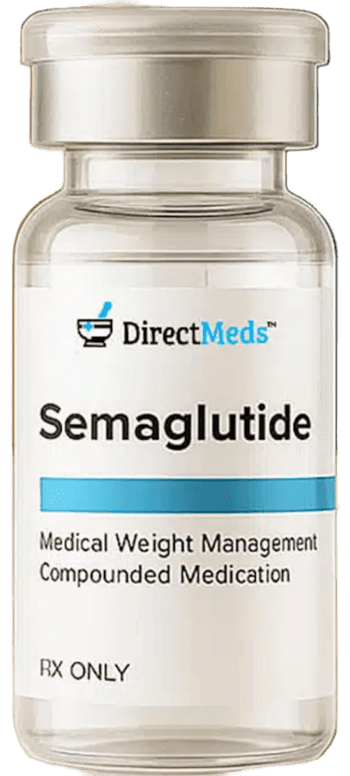
🥇 Best Overall (9.9/10)
DirectMeds GLP1 provides a budget-friendly alternative to Ozempic/Wegovy while maintaining strong appetite control and weekly fat loss results. Everything is included—from telehealth visits to medication shipping—making it ideal for people wanting premium results at the lowest cost.
DirectMeds is a LegitScript-certified telehealth platform that connects patients with licensed U.S. physicians who evaluate whether compounded GLP-1 medications are clinically appropriate.
It is one of the most established providers in this space and is particularly well-suited to patients who want high-touch clinical oversight without paying brand-name prices.
How it works: Complete a secure online health intake form. A licensed medical provider reviews your profile and determines eligibility. If approved, your prescription is sent to a certified U.S. compounding pharmacy and medication is shipped directly to your door. All-inclusive pricing covers medical consultation, medication, and 24/7 support — no surprise charges.
◉ Clinical Note: DirectMeds’ LegitScript certification is a meaningful differentiator in this market. It requires compliance with pharmacy laws, prescription standards, and advertising guidelines — reducing the risk of receiving substandard compounded medications. For patients new to telehealth GLP-1 programs, this certification provides a meaningful layer of accountability. — Dr. Sarah Jenkins, Co-Author
🎯 Ideal for: Patients who want an established, verified provider with strong clinical support and are comfortable paying slightly more than the absolute floor price for greater peace of mind.
🥈#2 Best for Long-Term Cost Certainty: MyStart GLP-1
🥈 Silver Standard — Best Flat-Rate Pricing
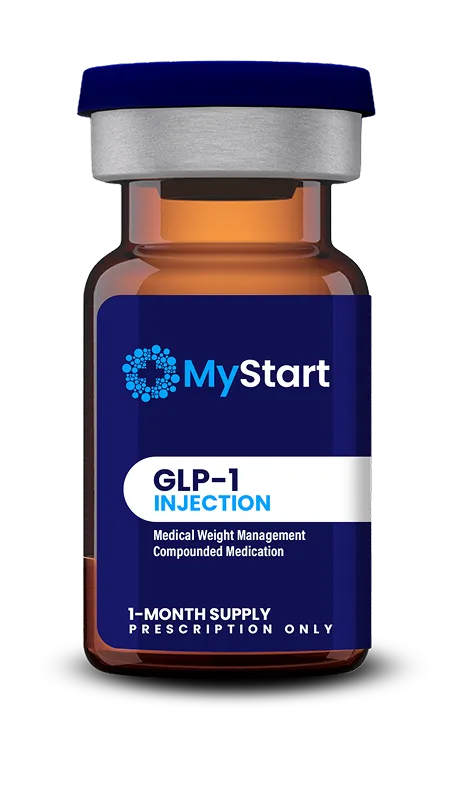
- Rating: ⭐️⭐️⭐️⭐️⭐️ – (9.9/10) High Potency GLP1
MyStart GLP-1 offers a smooth, beginner-friendly GLP-1 program using FDA-backed medications and simple weekly injections or tablets. Great for people wanting easy onboarding, rapid fat loss, and physician oversight—without the high price of traditional clinics.
MyStart GLP-1 uses a unique flat-rate membership model where your medication cost is fixed regardless of how high your therapeutic dose increases over time. For patients who will be on GLP-1 therapy for 12 months or more, this pricing structure can save $600 to $1,800 annually compared to platforms that charge progressively more as doses escalate.
How it works: Pay a monthly membership ($79) plus a flat medication fee (e.g., $175 for compounded semaglutide). The combined total stays fixed at $254 per month from starter dose through maximum maintenance dose. Medical consultation, all medication, dedicated care team access, and nutritional coaching are included.
◉ Clinical Note: The flat-rate model is financially sound for long-term GLP-1 use. GLP-1 therapy is most effective when sustained for 12+ months, and avoiding dose-related price increases removes a common reason patients discontinue treatment early. The included nutritional coaching adds meaningful clinical value, as sustainable weight loss requires both medication and lifestyle change. — Dr. Sarah Jenkins, Co-Author
🎯 Ideal for: Patients committed to long-term treatment (12+ months) who want price certainty as doses increase, and who value behavioral coaching as part of their program.
Best for: People who want a more advanced GLP-1 approach at a reduced price. 👉 SKIP THE WAITLIST. START FOR $199
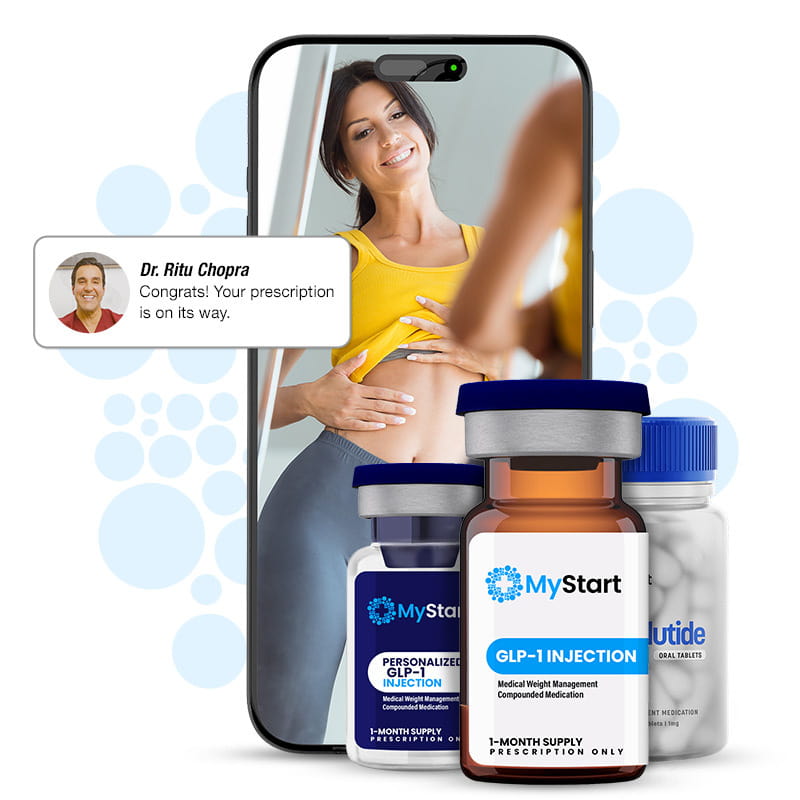
Thousands of people are losing weight with MyStart GLP-1 medications. People like you are transforming their lives, feeling better, and looking their best with the help of GLP-1 (Dual-Action Option) medications.
🥉 #3 Best for Absolute Lowest Entry Cost: MEDVi GLP-1
🥉 Bronze Standard — Lowest Entry Price
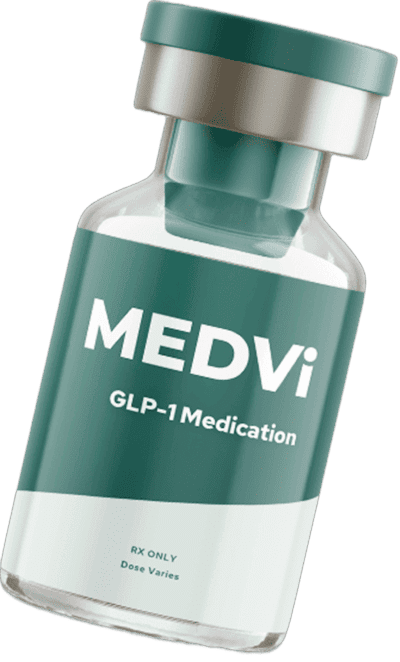
- Rating: ⭐️⭐️⭐️⭐️⭐️ – (9.9/10) Excellent
MEDVi GLP-1 delivers fast, medical-grade weight loss with doctor-guided dosing and personalized coaching. Patients report losing 1–3 lbs per week with steady appetite control and reduced cravings. Qualify in minutes and access 600+ U.S. doctors with no membership fees.
MEDVi offers the most accessible entry price point in the compounded GLP-1 market, with starter doses beginning as low as $99 per month and a published price-match guarantee.
The platform provides both injectable and oral compounded GLP-1 options, giving prescribers flexibility to match the medication form to the patient. Clinical follow-up is primarily quarterly rather than monthly, which keeps costs lower but means less frequent dose adjustment guidance than the two options above.
How it works: Complete an online consultation. If qualified, your prescription is sent to a partner compounding pharmacy and medication is shipped to you within 48 hours. Customer support is available, and clinical check-ins are typically quarterly. No membership fees are charged on top of medication pricing.
◉ Clinical Note: MEDVi is a legitimate, cost-effective option for budget-focused patients who have researched compounded medications and are comfortable with less frequent clinical contact. Always ask your provider which specific compounding pharmacy fulfills your prescription — a reputable 503A or 503B state-licensed pharmacy is non-negotiable for safety. — Dr. Sarah Jenkins, Co-Author
🎯 Ideal for: Budget-focused patients who have done their research on compounded GLP-1 medications, are comfortable managing more of their own care independently, and want the lowest possible entry price with a price-match guarantee.

How Does Medicare Cover GLP-1 Medications in 2026?
Medicare covers GLP-1s for type 2 diabetes and cardiovascular disease under Part D, but does not cover them for weight loss alone — with one important exception starting July 2026.
What Medicare Part D covers:
- Ozempic and Rybelsus for type 2 diabetes management
- Wegovy for cardiovascular risk reduction in patients with existing heart disease
- GLP-1s prescribed for sleep apnea treatment
The Medicare GLP-1 Bridge Program (Starting July 1, 2026):
CMS launched a temporary bridge program that provides early access to weight-loss GLP-1s for eligible Medicare Part D beneficiaries. [6] The three covered medications under this program are:
- Foundayo®
- Wegovy®
- Zepbound® KwikPen®
This is a temporary program, so eligibility criteria and duration are subject to change. Check directly with CMS or your Part D plan for the most current enrollment requirements.
What Medicare does NOT cover:
- Wegovy, Zepbound, or Saxenda for obesity alone (outside the bridge program)
- Any compounded GLP-1 formulations
📌 Common mistake: Many Medicare beneficiaries assume that because Wegovy is “the same drug” as Ozempic (both are semaglutide), they’re interchangeable for coverage purposes. They’re not. Coverage is tied to the FDA indication on your prescription, not just the active ingredient.
To understand how to navigate Medicare appeals and prior authorization, see our guide on how to get GLP-1 covered by insurance.
Does Private Insurance Still Cover GLP-1 Weight-Loss Drugs in 2026?
Some private insurers still cover GLP-1s for weight loss, but coverage has narrowed significantly. Multiple commercial plans dropped weight-loss GLP-1 coverage effective January 1, 2026. [7]
Plans that may still cover weight-loss GLP-1s:
- Employer-sponsored plans: Some large employers have added or retained GLP-1 weight-loss coverage as a benefit. According to Mercer, some employers are actively considering expanding coverage in 2026, while others are cutting it. [9] Check your Summary of Benefits and Coverage document.
- ACA-compliant marketplace plans: Some ACA plans cover GLP-1s for weight loss when deemed medically necessary, but requirements are strict: BMI over 40, participation in a comprehensive weight management program for at least 6 months, and prior authorization. [5]
- Specialty plans like EncircleRx: Harvard’s BCBS and HUGHP plans continue covering GLP-1s for weight loss through a structured program called EncircleRx with updated clinical criteria starting January 1, 2026. [4]
Plans that dropped weight-loss GLP-1 coverage:
- Fallon Health eliminated commercial coverage for Wegovy, Zepbound, and Saxenda for weight loss effective January 1, 2026. [7]
- California Medi-Cal ended weight-loss GLP-1 coverage on the same date, though coverage continues for MASH and cardiovascular indications. [3]
The 88% barrier: Even among patients who retain coverage, GoodRx data shows that 88% will face prior authorization or step therapy requirements — meaning you’ll likely need to prove other treatments failed first. [1]
How to Get GLP-1 Covered by Insurance: A Step-by-Step Process
Getting GLP-1 covered by insurance in 2026 requires documentation, persistence, and knowing which buttons to push. Here’s a practical process that works:
Step 1: Confirm your diagnosis on record Your insurer will check your medical records. Make sure your doctor has documented your BMI, any comorbidities (type 2 diabetes, cardiovascular disease, sleep apnea), and previous weight-loss attempts.
Step 2: Ask your doctor to submit a prior authorization (PA) Most covered GLP-1s require a PA. Your doctor’s office typically handles this, but you can speed things up by asking them to include:
- Your BMI and weight history
- Comorbid conditions
- Previous medications tried (step therapy documentation)
- A letter of medical necessity
Step 3: Know your plan’s step therapy requirements Many plans require you to try and fail a cheaper medication (like metformin or Saxenda) before approving a more expensive GLP-1. Ask your insurer exactly what’s required.
Step 4: If denied, appeal immediately PA denials are common and often overturned. You have the right to an internal appeal and, if that fails, an external review. Strong appeals include a physician letter explaining why the specific medication is medically necessary for you.
For detailed appeal strategies, see our guide on how to appeal an insurance denial for semaglutide.
Step 5: Explore manufacturer programs as a backup If coverage falls through, Novo Nordisk and Eli Lilly both offer direct-to-consumer savings programs. [1] These won’t replace insurance, but they can bridge the gap while you appeal.
What Are the Real Costs of GLP-1s With and Without Insurance in 2026?
With insurance, your monthly out-of-pocket cost for a GLP-1 can drop from over $1,000 to as little as $25–$100 depending on your plan’s copay structure. Without insurance, brand-name GLP-1s are expensive.
Estimated monthly costs (2026):
| Medication | List Price (No Insurance) | Typical Insured Copay | Manufacturer Program |
|---|---|---|---|
| Ozempic | ~$900–$1,000/mo | $25–$75/mo | Novo Nordisk savings card |
| Rybelsus | ~$800–$900/mo | $25–$50/mo | Novo Nordisk savings card |
| Wegovy | ~$1,300–$1,400/mo | $25–$100/mo | WeGoTogether savings |
| Zepbound | ~$1,000–$1,100/mo | $25–$100/mo | Eli Lilly savings card |
| Saxenda | ~$1,300–$1,400/mo | $30–$100/mo | Novo Nordisk savings card |
Note: List prices are estimates based on publicly available pharmacy pricing as of early 2026. Actual costs vary by pharmacy, location, and plan.
If you don’t have insurance coverage, compounded semaglutide from a licensed pharmacy has been a lower-cost alternative — though the FDA has raised quality concerns about some compounders. For a detailed breakdown, see our semaglutide cost guide for 2026.
If you’re exploring options outside insurance entirely, our guide to affordable GLP-1 medications without insurance covers programs starting from $199/month.
Common Mistakes That Get GLP-1 Insurance Claims Denied
Most GLP-1 insurance denials come down to a few predictable problems. Knowing them in advance can save you weeks of back-and-forth.
Mistake 1: Wrong indication on the prescription If your doctor writes “weight loss” as the only indication and your plan doesn’t cover weight-loss GLP-1s, it will be denied. If you also have type 2 diabetes or cardiovascular disease, make sure those diagnoses are included.
Mistake 2: Skipping step therapy Many plans require documented proof that you tried a cheaper option first. Jumping straight to Wegovy or Zepbound without that documentation is a fast path to denial.
Mistake 3: Missing the prior authorization renewal window Prior authorizations that were approved before December 31, 2025 expired at year-end. [3] If you didn’t renew, your coverage lapsed even if you were previously approved.
Mistake 4: Not appealing a denial Many people accept the first denial and either stop treatment or pay full price. Appeals succeed regularly, especially when your doctor submits a detailed letter of medical necessity.
Mistake 5: Assuming Medicaid covers weight-loss GLP-1s Most state Medicaid programs, including California Medi-Cal, ended weight-loss GLP-1 coverage in 2026. [3] Coverage through Medicaid now applies mainly to diabetes and specific cardiovascular or liver disease indications.
FAQ: GLP-1 Covered by Insurance in 2026
Q: Does Medicare cover Ozempic in 2026? Yes. Medicare Part D covers Ozempic (semaglutide) for type 2 diabetes management. It does not cover Ozempic specifically for weight loss.
Q: Does Medicare cover Wegovy in 2026? Medicare Part D covers Wegovy for cardiovascular risk reduction in patients with existing heart disease. Starting July 1, 2026, Wegovy is also covered under the temporary Medicare GLP-1 Bridge program for eligible beneficiaries. [6]
Q: Is Zepbound covered by Medicare? The KwikPen formulation of Zepbound is covered under the Medicare GLP-1 Bridge program beginning July 1, 2026. [6] Outside of that program, Medicare coverage for Zepbound for weight loss is not available.
Q: Will my employer insurance cover Wegovy or Ozempic? It depends on your specific plan. Some employers retained or added GLP-1 weight-loss coverage in 2026, while others eliminated it. [9] Check your plan’s formulary or call your HR benefits team directly.
Q: What happens if my insurer denies my GLP-1 prior authorization? You can appeal. Request an internal appeal first, then an external review if needed. Ask your doctor to submit a letter of medical necessity. Many denials are overturned on appeal.
Q: Does Medicaid cover GLP-1 weight-loss drugs? Most state Medicaid programs, including California Medi-Cal, ended coverage for Wegovy, Zepbound, and Saxenda for weight loss effective January 1, 2026. [3] Coverage for diabetes and other indications generally continues.
Q: What’s the cheapest GLP-1 with insurance? Rybelsus (oral semaglutide) often has the lowest copay on plans that cover it for type 2 diabetes, sometimes as low as $25/month with a Novo Nordisk savings card stacked on top.
Q: Can I use a GoodRx coupon if my insurance doesn’t cover GLP-1s? Yes. GoodRx coupons can reduce the cost at the pharmacy counter, though savings vary. They cannot be combined with insurance in most cases — you’d use one or the other.
Q: What is step therapy for GLP-1 medications? Step therapy means your insurer requires you to try and fail a less expensive medication before approving a more costly GLP-1. For weight loss, this might mean trying a lifestyle program or a cheaper drug like metformin first.
Q: Is compounded semaglutide covered by insurance? No. Insurance plans do not cover compounded GLP-1 formulations. Only FDA-approved brand-name medications are eligible for coverage.
Q: What is the Medicare GLP-1 Bridge program? It’s a temporary CMS program that provides early access to Foundayo, Wegovy, and Zepbound KwikPen for eligible Medicare Part D beneficiaries, beginning July 1, 2026. [6]
Q: How do I find out if my plan covers GLP-1s? Call the member services number on your insurance card and ask specifically about your plan’s formulary coverage for semaglutide and tirzepatide. You can also check your plan’s online drug formulary tool.
Conclusion: Your Next Steps for Getting GLP-1 Covered by Insurance
Getting a GLP-1 covered by insurance in 2026 is more complicated than it was two years ago, but it’s far from impossible. The key is knowing which medications your plan covers, under which diagnoses, and what documentation your insurer needs before they’ll say yes.
Here’s what to do this week:
- Call your insurer and ask specifically which GLP-1 medications are on your formulary and under what conditions they’re covered.
- Schedule an appointment with your doctor to review your diagnoses, BMI, and treatment history — and discuss which GLP-1 is the best fit for your situation.
- Ask your doctor to initiate a prior authorization if you’re ready to start. Give them your insurer’s PA fax number and ask them to include all relevant diagnoses and a letter of medical necessity.
- If you’re on Medicare, ask your Part D plan about the GLP-1 Bridge program eligibility starting July 1, 2026.
- If coverage is denied, don’t stop there. File an appeal and ask your doctor to support it with documentation.
- If insurance won’t cover your medication, explore manufacturer savings programs and compare costs for affordable GLP-1 weight-loss programs that don’t require insurance.
The landscape for GLP-1 coverage shifted significantly in early 2026, but patients who understand the system and advocate for themselves are still getting access to these medications at manageable costs. You have more options than you might think.
References
[1] How To Afford GLP-1s In 2026: What To Know About Insurance Coverage And Alternative Options – [1]
[2] Anti-Obesity Drugs Will Not Be Covered By Medicare And Medicaid In 2026 – [2]
[3] GLP-1 Changes (Medi-Cal) – [3]
[4] GLP-1 Clinical Changes FAQ (Harvard) – [4]
[5] Weight Loss Drugs (GLP-1) Coverage – [5]
[6] Medicare GLP-1 Bridge Program – [6]

With over 13 years of experience in holistic health blogging, I aim to help you navigate your wellness journey with honest insights, expert-backed advice, and a sprinkle of real-world practicality.
Certified Wellness Writer | Herbal Nutrition Advocate | Wellness Research Enthusiast


