
Best GLP1 Payment Plans for Ozempic, Wegovy & Zepbound Compared
Last updated: May 21, 2026

Quick Answer: GLP-1 payment plans are structured pricing options, telehealth subscriptions, manufacturer savings programs, and compounded medication routes that reduce the monthly cost of drugs like semaglutide and tirzepatide.
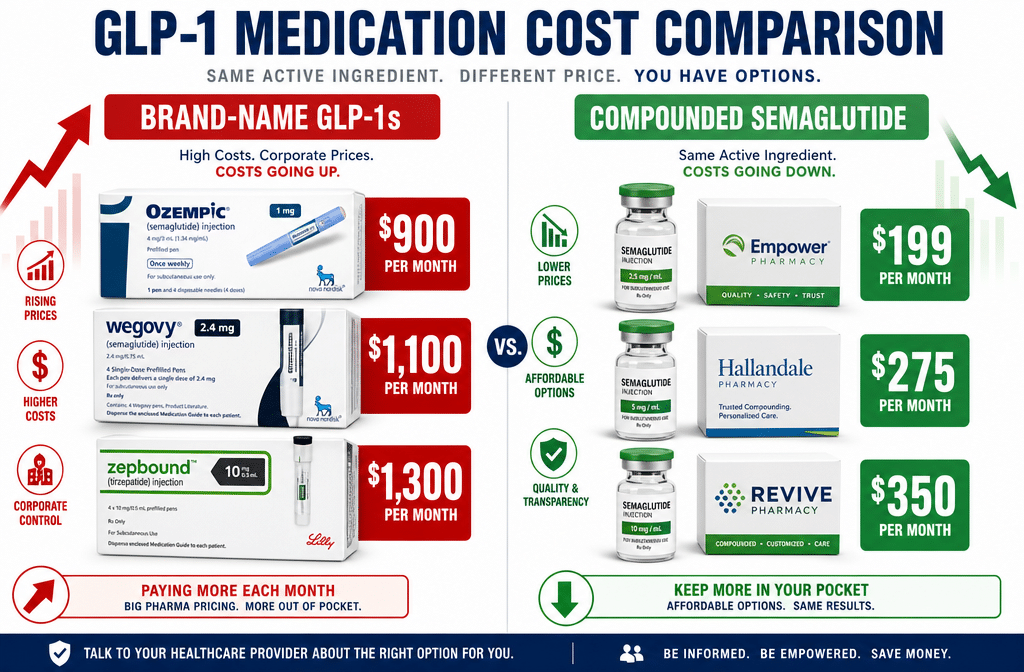
Brand-name GLP-1 medications can cost $900 to $1,300 per month without insurance, but several legitimate options can bring that cost down to $199 to $400 per month or less, depending on your eligibility and the provider you choose.
Key Takeaways
- Brand-name GLP-1 drugs (Ozempic, Wegovy, Zepbound) cost $900–$1,300/month without insurance in 2026
- Compounded semaglutide and tirzepatide from telehealth providers can cost as little as $199–$350/month
- Manufacturer savings cards (Novo Nordisk, Eli Lilly) can reduce costs for commercially insured patients
- Patient assistance programs exist for uninsured or low-income individuals who meet income criteria
- Most insurance plans cover GLP-1 drugs only for Type 2 diabetes, not weight loss
- GoodRx and similar discount cards can reduce out-of-pocket costs at participating pharmacies
- Compounded GLP-1 medications are legal but carry different safety and quality considerations than FDA-approved brands
- DirectMeds GLP-1 Semaglutide is currently one of the most affordable telehealth GLP-1 options available in 2026
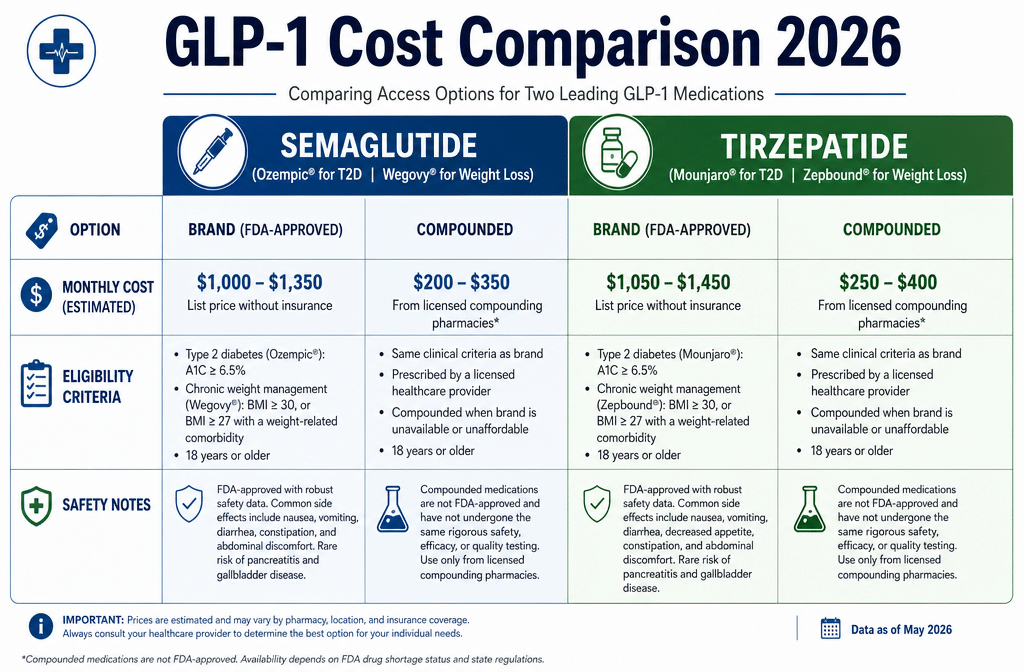
- Non-diabetic adults with a BMI of 30+ (or 27+ with a weight-related condition) generally qualify for GLP-1 prescriptions
- Combining a GLP-1 plan with a structured weight-loss meal plan improves long-term results
How Much Do GLP-1 Medications Cost Without Insurance?
Without insurance, brand-name GLP-1 medications are expensive — often prohibitively so. As of 2026, the list prices for the most popular GLP-1 drugs are roughly as follows:
| Medication | Active Ingredient | Approved Use | Est. Monthly Cost (No Insurance) |
|---|---|---|---|
| Ozempic | Semaglutide | Type 2 Diabetes | ~$900–$1,000 |
| Wegovy | Semaglutide | Weight Loss | ~$1,300 |
| Mounjaro | Tirzepatide | Type 2 Diabetes | ~$1,000–$1,100 |
| Zepbound | Tirzepatide | Weight Loss | ~$1,000–$1,300 |
| Rybelsus | Semaglutide (oral) | Type 2 Diabetes | ~$800–$900 |
These are list prices and vary by pharmacy and dosage. Most people without insurance pay close to these amounts unless they use a discount card, savings program, or compounded alternative.
The bottom line: Without a payment plan, savings card, or compounded option, GLP-1 drugs are out of reach for most uninsured adults. That’s exactly why GLP-1 payment plans matter.
For a detailed monthly cost breakdown, see our GLP-1 price per month comparison guide.
Which GLP-1 Drug Is the Cheapest for Weight Loss?
For weight loss specifically, compounded semaglutide from a licensed telehealth provider is currently the most affordable option. Brand-name Wegovy and Zepbound are the only FDA-approved GLP-1 drugs for weight management, but their high list prices push most budget-conscious patients toward compounded versions or telehealth subscription plans.
Affordable options ranked by typical monthly cost (2026 estimates):
- Compounded semaglutide via telehealth — $199 to $350/month
- Compounded tirzepatide via telehealth — $250 to $450/month
- Zepbound (brand, with savings card) — as low as $550/month for eligible patients
- Wegovy (brand, with savings card) — varies; Novo Nordisk’s NovoCare program may help
- Oral semaglutide (Rybelsus) — lower cost than injectables in some cases; see our Semaglutide oral tablets guide
Choose compounded semaglutide if you don’t have insurance coverage, you’re primarily focused on weight loss, and you’re working with a reputable licensed telehealth provider. Choose brand-name if you have commercial insurance that covers it or you qualify for a manufacturer savings program.
DirectMeds GLP-1 Semaglutide offers one of the most competitive compounded semaglutide pricing structures available today. 👉 Check your eligibility and current pricing here.
Why Are GLP-1 Drugs So Expensive?
GLP-1 drugs are expensive primarily because they are still under patent protection, require complex biological manufacturing, and face enormous demand that outpaces supply. Novo Nordisk (maker of Ozempic and Wegovy) and Eli Lilly (maker of Mounjaro and Zepbound) set list prices based on the clinical value these drugs deliver, and without generic competition, there’s little market pressure to lower prices.
Key cost drivers include:
- Patent exclusivity — no true generics exist yet for semaglutide or tirzepatide
- Biological manufacturing complexity — these are peptide-based drugs that require sophisticated production
- High demand — global shortages have persisted since 2022, keeping prices elevated
- Pharmacy benefit manager (PBM) pricing — rebate structures often inflate list prices while keeping net prices lower for insurers
To understand how these medications work before committing to a cost, read our guide on what GLP-1 is and how it works for weight loss.
What Insurance Plans Cover GLP-1 Drugs?
Most insurance plans cover GLP-1 drugs only for Type 2 diabetes, not for obesity or weight management. This is one of the biggest frustrations for patients in 2026. Coverage for weight-loss indications (Wegovy, Zepbound) remains inconsistent across commercial plans, Medicare, and Medicaid.
General coverage landscape:
- Commercial insurance (employer plans): Some cover Wegovy or Zepbound for obesity; many do not. Check your formulary directly.
- Medicare: As of 2026, Medicare Part D covers GLP-1 drugs for cardiovascular risk reduction in certain patients (following the SELECT trial results), but coverage for weight loss alone remains limited.
- Medicaid: Varies significantly by state. Some states have expanded coverage; others exclude weight-loss drugs entirely.
- VA/Tricare: Coverage exists for diabetes indications; weight-loss coverage is expanding but inconsistent.
Common mistake: Assuming your plan covers Wegovy just because it covers Ozempic. These are different FDA-approved indications (diabetes vs. weight loss), and insurers treat them separately.
Who Qualifies for GLP-1 Medication Discounts and GLP-1 Payment Plans?
Eligibility for GLP-1 payment plans and discounts depends on the specific program. Most manufacturer savings cards require commercial insurance, while patient assistance programs target uninsured or underinsured patients with income below a certain threshold.
Manufacturer savings programs:
- Novo Nordisk NovoCare — for Ozempic and Wegovy; income-based eligibility for uninsured patients
- Eli Lilly’s Lilly Cares Foundation — for Mounjaro and Zepbound; income limits apply
- Savings cards for insured patients — can reduce copays to as low as $25–$50/month for eligible commercially insured patients
Who qualifies for compounded GLP-1 telehealth plans:
- Adults with a BMI of 30 or higher
- Adults with a BMI of 27 or higher plus at least one weight-related condition (high blood pressure, sleep apnea, Type 2 diabetes)
- No insurance required for most telehealth providers
For a full breakdown of the most affordable options, see our guide to most affordable GLP-1 without insurance.

How Do Patient Assistance Programs Work for GLP-1 Drugs?
Patient assistance programs (PAPs) are manufacturer-funded programs that provide free or heavily discounted medication to patients who cannot afford it. For GLP-1 drugs, both Novo Nordisk and Eli Lilly operate PAPs, though the application process takes time and requires documentation.
How to apply (general steps):
- Get a valid prescription from a licensed provider
- Visit the manufacturer’s official PAP website (NovoCare for Novo Nordisk drugs; LillyCares for Eli Lilly drugs)
- Complete the application with income documentation (pay stubs, tax returns)
- Have your prescribing provider sign the application
- Wait for approval — typically 2 to 6 weeks
- Receive medication by mail or at a designated pharmacy
Edge case: If you’re in urgent need and can’t wait for PAP approval, compounded semaglutide through a telehealth provider is often faster to access while your PAP application is processed.
👉 Start with DirectMeds GLP-1 Semaglutide today — no insurance needed, fast online consultation.
Can I Get Wegovy or Ozempic on a Budget? GLP-1 Payment Plans Explained
Yes, you can access GLP-1 therapy on a budget, but it requires knowing which route fits your situation. GLP-1 payment plans through telehealth providers are the most accessible option for most uninsured adults in 2026.
Budget-friendly routes:
- GoodRx discount cards: Can reduce Ozempic costs at some pharmacies. See our Ozempic GoodRx coupon guide for current savings estimates.
- Telehealth subscription plans: Providers like DirectMeds offer monthly subscription-style GLP-1 payment plans that bundle the consultation, prescription, and medication into one predictable monthly cost.
- Compounded tirzepatide: For those who want tirzepatide specifically, see our tirzepatide cost comparison for current pricing.
- Splitting doses (only with provider guidance): Some providers allow lower starting doses at reduced cost while titrating up — never do this without medical supervision.
DirectMeds GLP-1 Semaglutide is structured as a monthly plan with no hidden fees, making it one of the clearest GLP-1 payment plans on the market for budget-conscious patients.
Are There Generic Versions of GLP-1 Medications?
There are no true FDA-approved generic versions of semaglutide or tirzepatide as of 2026. Both drugs remain under patent protection. However, compounded versions — made by licensed compounding pharmacies — are legally available and serve as a lower-cost alternative during periods of FDA-designated drug shortage.
Important distinctions:
- Compounded ≠ generic: Compounded medications are custom-prepared but are not FDA-approved as finished drug products
- Legality: Compounding is legal when done by a 503A or 503B licensed pharmacy and when a valid shortage designation exists
- Quality: Reputable compounding pharmacies follow USP standards, but quality can vary — always verify your provider’s pharmacy credentials
Are Compounded GLP-1 Medications Safe?
Compounded GLP-1 medications can be safe when sourced from a licensed, reputable compounding pharmacy, but they carry more variability than FDA-approved brand-name drugs. The FDA has raised concerns about some compounders using unapproved salt forms (such as semaglutide sodium), so the pharmacy source matters significantly.
How to verify safety:
- Confirm the compounding pharmacy holds a 503A or 503B accreditation
- Ask your telehealth provider which pharmacy compounds their medication
- Avoid providers who cannot or will not disclose their pharmacy partner
- Look for providers that offer Certificates of Analysis (CoA) for their compounded products
For a deeper look at how GLP-1 injectables work and what to expect, read our guide on GLP-1 injectables: how they work, cost, and who they’re for.

Can I Use GLP-1 Drugs If I Don’t Have Diabetes?
Yes. GLP-1 medications are FDA-approved for weight management in non-diabetic adults who meet BMI criteria. Wegovy (semaglutide) and Zepbound (tirzepatide) are both approved for chronic weight management in adults with a BMI of 30 or higher, or 27 or higher with at least one weight-related health condition.
Non-diabetic patients make up a large portion of GLP-1 users in 2026. Telehealth providers routinely prescribe compounded semaglutide or tirzepatide to non-diabetic patients who meet these criteria after a medical evaluation.
What Are Common Side Effects of GLP-1 Medications?
The most common side effects of GLP-1 medications are gastrointestinal: nausea, vomiting, diarrhea, and constipation. These are most pronounced when starting the medication or increasing the dose, and they typically improve over several weeks as the body adjusts.
Common side effects (most to least frequent):
- Nausea (most common, especially in the first 4–8 weeks)
- Constipation or diarrhea
- Vomiting
- Decreased appetite (often the intended effect)
- Fatigue
- Injection site reactions (for injectable forms)
Less common but serious: Pancreatitis, gallbladder disease, and a rare risk of thyroid C-cell tumors (noted in animal studies; human risk not confirmed but warrants caution in those with a personal or family history of medullary thyroid carcinoma).
Always discuss your full medical history with a licensed provider before starting any GLP-1 therapy.
How to Choose the Right GLP-1 Payment Plan for Your Situation
The right GLP-1 payment plan depends on your insurance status, budget, and medical needs. Here’s a quick decision framework:
| Your Situation | Best Option |
|---|---|
| Have commercial insurance | Check formulary; use manufacturer savings card if covered |
| Uninsured, income below 400% FPL | Apply for manufacturer PAP (NovoCare or LillyCares) |
| Uninsured, need fast access | Telehealth compounded semaglutide (e.g., DirectMeds) |
| Want tirzepatide affordably | Compounded tirzepatide via telehealth; see Mounjaro cost guide |
| Have insurance but high copay | GoodRx or manufacturer copay card to reduce out-of-pocket |
| Prefer oral medication | Rybelsus or oral GLP-1 options; see best oral GLP-1 for weight loss |
FAQ
What are GLP-1 payment plans exactly?
GLP-1 payment plans are pricing structures that make GLP-1 medications more affordable. They include telehealth monthly subscriptions, manufacturer savings programs, patient assistance programs, and discount card options. They’re designed for patients who can’t afford the $900–$1,300/month list price of brand-name GLP-1 drugs.
How much does compounded semaglutide cost per month?
Compounded semaglutide through telehealth providers typically costs $199 to $350 per month in 2026, depending on the provider and dosage. This is significantly less than brand-name Wegovy, which lists at approximately $1,300/month without insurance.
Is DirectMeds GLP-1 Semaglutide legit?
Yes. DirectMeds GLP-1 Semaglutide is a telehealth-based GLP-1 program that connects patients with licensed providers and licensed compounding pharmacies. It’s one of the most competitively priced options for compounded semaglutide in 2026.
Can I use a GoodRx coupon for Ozempic?
Yes, GoodRx coupons can reduce the cost of Ozempic at participating pharmacies, though savings vary by location and pharmacy. Our Ozempic GoodRx coupon guide covers current estimated savings.
Do GLP-1 payment plans require a prescription?
Yes. All GLP-1 medications, including compounded versions, require a valid prescription from a licensed medical provider. Telehealth platforms handle this through an online consultation, which is typically included in the monthly subscription cost.
How long do I need to stay on a GLP-1 medication?
Most clinical guidelines and providers recommend staying on GLP-1 therapy for at least 12 to 16 weeks to assess effectiveness. Long-term use (12+ months) is common for sustained weight management. Weight often returns after stopping, so discuss a long-term plan with your provider.
What happens if my insurance denies GLP-1 coverage?
If your insurance denies coverage, you can appeal the decision, apply for a manufacturer patient assistance program, use a GoodRx discount card, or switch to a compounded GLP-1 through a telehealth provider. Compounded options are often the fastest and most affordable path forward.
Are there GLP-1 payment plans with no credit check?
Most telehealth subscription plans charge a flat monthly fee via credit or debit card and do not require a credit check. You simply pay month to month and can cancel if needed.
Is tirzepatide or semaglutide better for weight loss?
Clinical trial data suggests tirzepatide (Zepbound/Mounjaro) produces slightly greater average weight loss than semaglutide (Wegovy/Ozempic), but both are highly effective. The best choice depends on your medical history, tolerability, and cost. See our least expensive GLP-1 guide for a cost-focused comparison.
Can I combine GLP-1 therapy with diet changes for better results?
Yes, and it’s strongly recommended. GLP-1 medications work best alongside a calorie-appropriate diet and regular physical activity. A healthy eating and weight-loss meal plan can significantly improve your outcomes.
Conclusion: Your Next Steps for Affordable GLP-1 Access
GLP-1 medications are among the most effective weight-loss tools available in 2026, but the cost barrier is real. The good news is that GLP-1 payment plans, compounded alternatives, and patient assistance programs have made these medications accessible to far more people than the brand-name list price would suggest.
Here’s what to do next:
- Check your insurance formulary — call your insurer or log into your benefits portal to see if Wegovy or Zepbound is covered for your diagnosis
- Compare telehealth options — if you’re uninsured or underinsured, get a quote from a reputable provider like DirectMeds GLP-1 Semaglutide
- Apply for a PAP if eligible — if your income qualifies, manufacturer assistance programs can provide medication at little or no cost
- Use a discount card as a bridge — while waiting for insurance approval or PAP processing, GoodRx or similar cards can reduce your immediate costs
- Pair your medication with lifestyle support — combine your GLP-1 plan with a structured weight-loss plan for the best long-term results
👉 Ready to start? Check your eligibility for DirectMeds GLP-1 Semaglutide today — one of the most affordable GLP-1 payment plans available in 2026, with no insurance required.
Medical References
The SELECT cardiovascular outcomes trial for semaglutide published in the New England Journal of Medicine provides key clinical evidence on semaglutide’s benefits beyond weight loss.
The SURMOUNT-1 trial for tirzepatide in the New England Journal of Medicine demonstrates the efficacy of tirzepatide for chronic weight management in adults without diabetes.
The FDA’s guidance on compounded drug products explains the legal framework for compounded GLP-1 medications and 503A/503B pharmacy requirements.
The American Diabetes Association Standards of Care outlines GLP-1 receptor agonist prescribing criteria, including use in patients with obesity and Type 2 diabetes.
The Obesity Medicine Association’s clinical practice guidelines cover GLP-1 eligibility criteria, BMI thresholds, and combination therapy recommendations for weight management.

With over 13 years of experience in holistic health blogging, I aim to help you navigate your wellness journey with honest insights, expert-backed advice, and a sprinkle of real-world practicality.
Certified Wellness Writer | Herbal Nutrition Advocate | Wellness Research Enthusiast


